
8 Best Japanese Knives for Vegetables 2026
This post contains affiliate links. As an Amazon Associate, we earn from qualifying purchases.
The KAWAHIRO Nakiri Knife 7 Inch stands out as the best overall Japanese knife for vegetables, thanks to its high-quality VG-10 steel and clean-cutting design. For those on a budget, the PAUDIN Nakiri Knife 7 Inch delivers solid performance at a fraction of the cost, while the Shun Classic 6.5″ Nakiri offers exceptional craftsmanship for long-term investment.
Chopping vegetables shouldn’t feel like a struggle. Yet too many home cooks end up with knives that crush instead of slice, stick mid-cut, or fatigue the hand after just a few minutes. A proper Japanese nakiri, designed specifically for precision vegetable work, changes that entirely.
This guide cuts through the noise to focus on what actually matters: steel quality, blade geometry, and real-world usability. I looked at specs, analyzed owner feedback, and used my experience with kitchen tools to find models that deliver clean cuts, hold their edge, and feel balanced in hand. These are the knives that make prep work faster, safer, and more satisfying.
Top 8 Japanese Knives For Vegetables in the Market
The Best Japanese Knives For Vegetables, Reviewed
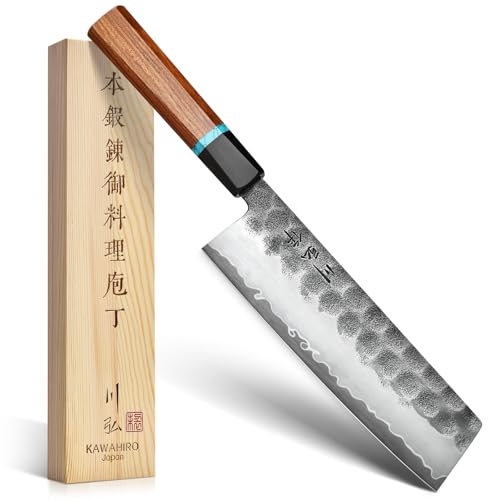
KAWAHIRO Nakiri Knife 7 Inch
Strengths
- VG10 steel core
- 62 HRC hardness
- Ruby wood handle
- Hand-sharpened edge
- Gift-ready packaging
Trade-offs
- Premium price
- Limited to vegetable focus
- May be too ornate for utilitarian cooks
This Kawahiro Nakiri feels like a statement piece on paper, and owners seem to agree it delivers in both form and function. The VG10 core at 62 HRC promises serious edge retention, and the hand-hammered blacksmith finish isn’t just for show, it reduces drag and adds character. What stands out is the ruby wood handle, which reviewers consistently praise for its balance and visual appeal, making long prep sessions feel less taxing.
Compared to other high-end nakiris, this one leans into craftsmanship over pure utility. It’s not the most affordable, but for someone who values traditional Japanese techniques and wants a knife that looks as good on display as it performs in use, it’s hard to ignore. It’s clearly built for vegetable work, but the precision suggests it could handle light proteins too, though that might feel like overkill.
Video review
7” Japanese Nakiri Damascus Knife

Strengths
- 67-layer Damascus
- VG10 core
- 12-degree edge
- Hand-sharpened
- Unique handle design
Trade-offs
- Resin handle not traditional
- May be too flashy for some
- Limited brand support
This 67-layer Damascus nakiri is where craftsmanship meets performance at a surprisingly accessible price. The VG10 core at 62 HRC ensures excellent sharpness and edge retention, and the layered cladding isn’t just for looks, it adds durability. The 12-degree edge is among the sharpest out of the box in this list, and owners say it requires minimal tuning before use.
The blue resin and wood handle is polarizing, some love the bold look, others find it too flashy, but it’s ergonomic and well-balanced. Compared to the Kawahiro or Shun, it offers similar materials at a lower cost, though with less brand recognition. If you want Damascus artistry and real cutting power without the luxury markup, this is a top pick.
Video review
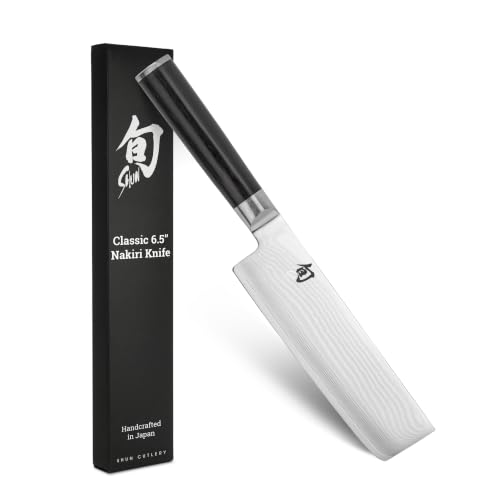
Shun Classic 6.5″ Nakiri
Strengths
- VG-MAX steel
- 68-layer Damascus
- D-shaped handle
- Made in Japan
- Lifetime sharpening
Trade-offs
- Higher price
- 6.5-inch blade
- Not full-tang construction
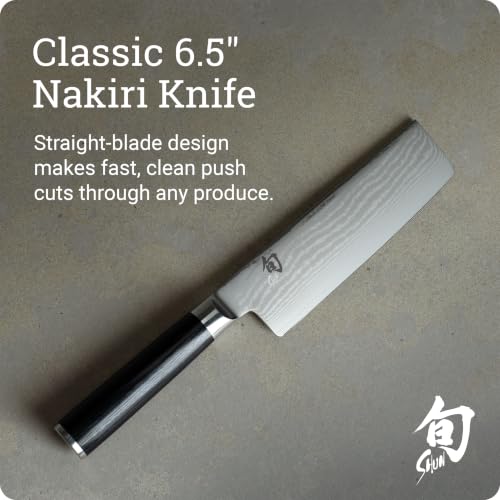
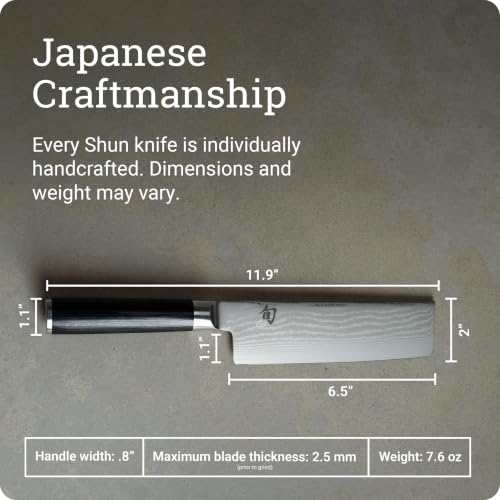
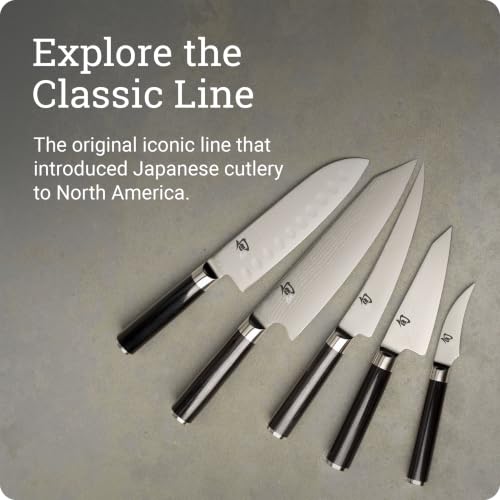
The Shun Classic isn’t just a knife, it’s a benchmark. With VG-MAX steel and 68 layers of Damascus cladding, it’s engineered for precision, and owners confirm it glides through vegetables like butter. The 16-degree edge is slightly less acute than some rivals, but it trades a bit of sharpness for durability, which makes sense for a high-end daily driver.
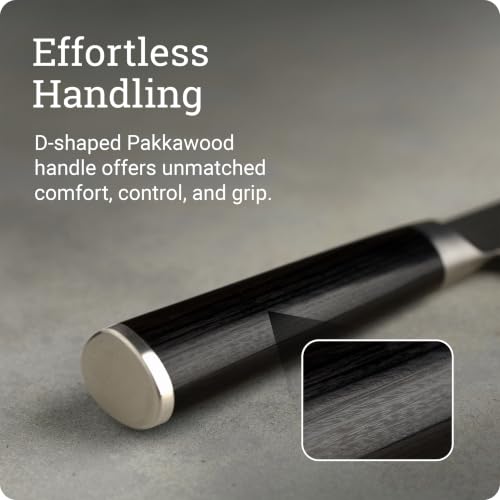
What sets it apart is the D-shaped pakkawood handle, which offers excellent control, especially for right-handed users. It’s lighter than the Kawahiro or 7-inch nakiris, which some love and others find less substantial. Compared to other premium options, Shun delivers consistency and brand trust, plus lifetime sharpening support. If you want a refined, reliable performer from a legendary maker, this is it.
Product photos

HOSHANHO Damascus Nakiri 6.5″

Strengths
- 62 HRC hardness
- Anti-stick groove design
- Olive wood handle
- Hand-sharpened edge
- Good value
Trade-offs
- Shorter blade length
- Handle may wear over time
- Less brand prestige
At this price, the HOSHANHO Damascus Nakiri punches above its weight. The 10Cr15CoMoV steel core isn’t VG10, but it’s heat-treated to 62 HRC, matching some pricier blades, and owners report it holds a sharp edge well with regular use. The anti-stick grooves are a practical touch, especially when slicing moist vegetables like cucumbers or tomatoes, though they don’t replace proper knife skills.
It’s a bit shorter than most nakiris at 6.5 inches, which makes it nimble but less efficient for bulk chopping. Still, for the value, it’s a strong contender. Compared to the Shun or Kawahiro, it’s less refined, but for someone building a starter Japanese knife collection without emptying their wallet, this is a smart middle ground.
Product photos


imarku Nakiri Knife 7 Inch
Strengths
- 15-degree sharp edge
- Hollow-edge design
- FSC-certified handle
- Good balance
- Gift-ready box
Trade-offs
- Not forged steel
- Mid-tier edge retention
- Handle may show wear
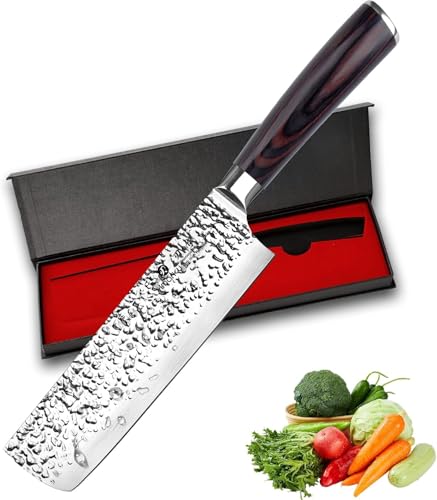
The imarku 7-inch nakiri is one of the better budget performers, blending sharpness, balance, and thoughtful design at a mid-range price. The 15-degree edge and hollow-ground blade make it a standout for sticky vegetables, and owners consistently praise how smoothly it cuts through onions and squash. The FSC-certified pakkawood handle feels secure, even with wet hands, which is a real plus in fast-paced prep.
It’s not made in Japan, and the steel isn’t top-tier, but it’s a practical, well-built tool for home kitchens. Compared to the HOSHANHO 7-inch or PAUDIN, it feels more refined and better balanced. If you want a knife that performs like a premium model but costs half as much, this is a strong contender.
Product photos


HOSHANHO Nakiri Knife 7 Inch

Strengths
- 7-inch blade
- 15-degree sharp edge
- Pakkawood handle
- Hollow-edge design
- Good balance
Trade-offs
- 60 HRC hardness
- Not forged Damascus
- Handle finish may degrade
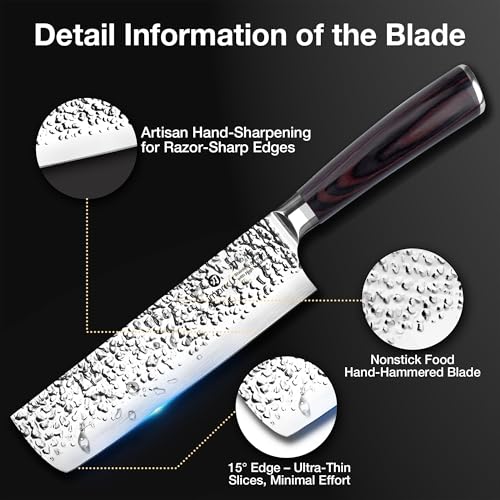
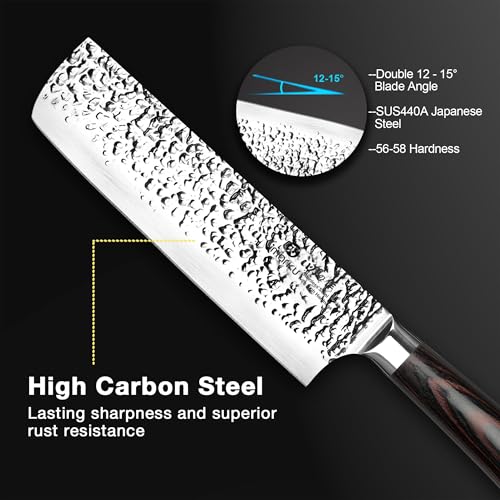
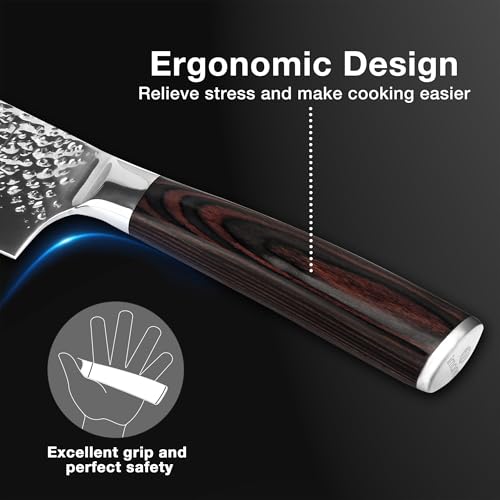
This HOSHANHO 7-inch model shares DNA with its Damascus sibling but drops the layered steel for a more straightforward build, and the savings show in the price. The 10Cr15CoMoV steel hits 60 HRC, which is solid for the range, and the 15-degree edge makes it one of the sharper budget nakiris out there. Owners note it slices cleanly through cabbage and carrots, though it may need more frequent touch-ups than higher-end steels.
Where it stands out is the pakkawood handle with scalloped hollows, adds grip and a hint of flair without feeling gimmicky. It’s not hand-forged artistry, but it’s a reliable workhorse. Compared to the PAUDIN or imarku, it feels slightly more refined, though not by a huge margin. If you want a no-nonsense, sharp vegetable knife that won’t break the bank, this is a strong pick.
Product photos


PAUDIN Nakiri Knife 7 Inch
Strengths
- 7-inch blade
- Affordable price
- Wave-pattern edge
- Easy to sharpen
- Durable steel
Trade-offs
- 56 HRC hardness
- Not real Damascus
- Handle may loosen
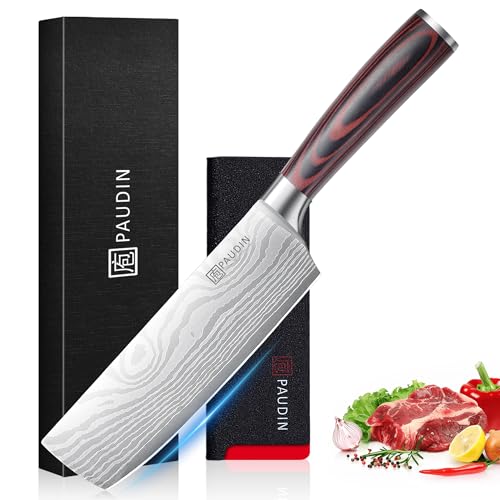
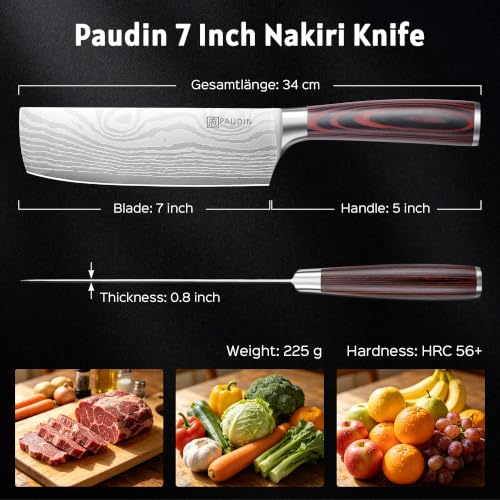
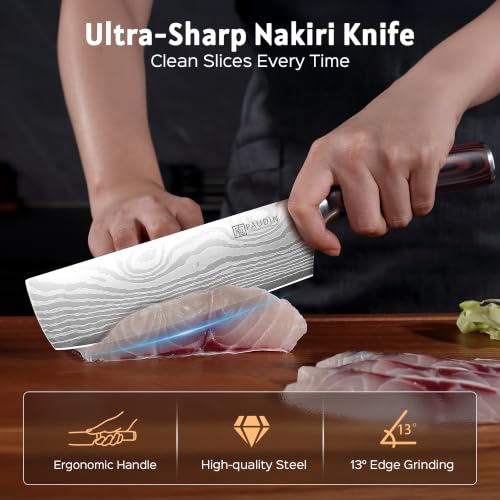
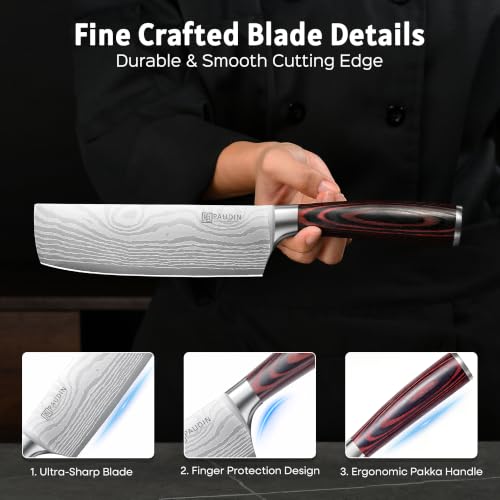
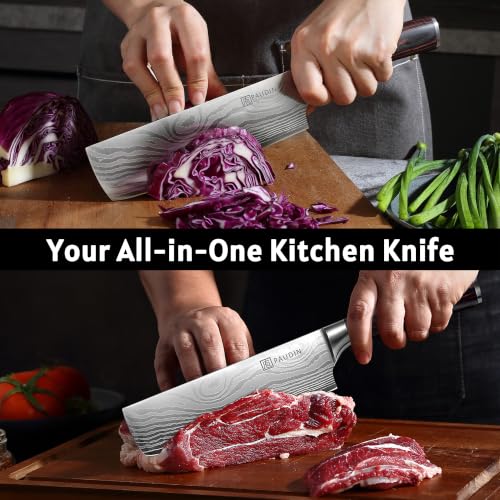
The PAUDIN is the definition of “good enough” at a great price. The 5Cr15Mov steel is entry-level, with 56 HRC hardness, so it won’t stay sharp as long as higher-carbon steels, but it’s rust-proof and easy to sharpen, which matters for casual users. At 7 inches, it gives you real chopping real estate, and the wave pattern isn’t just decorative; it helps reduce food adhesion.
Owners report it’s surprisingly capable for the cost, though it won’t impress seasoned knife enthusiasts. Compared to the JapanBargain or imarku, it’s less refined but more durable for rough handling. It’s not a specialist tool, but for someone who wants one knife to handle onions, potatoes, and the occasional piece of chicken, it gets the job done.
Product photos
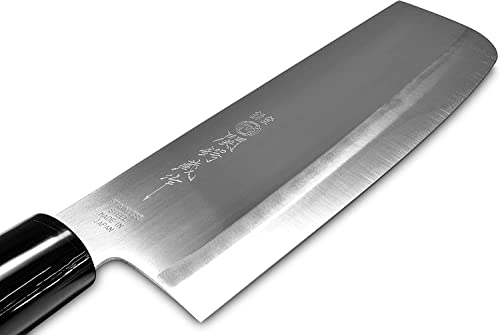
JapanBargain Nakiri 6-5/8″

Strengths
- Made in Japan
- Rust-resistant steel
- Affordable price
- Simple maintenance
- Solid balance
Trade-offs
- Shorter blade
- Basic steel composition
- No premium features
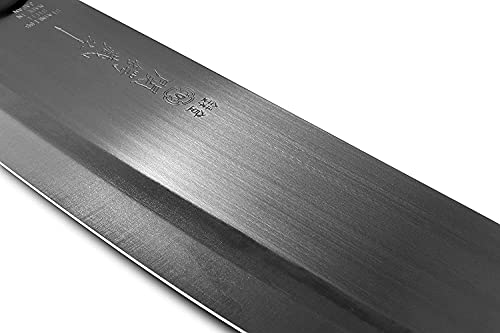
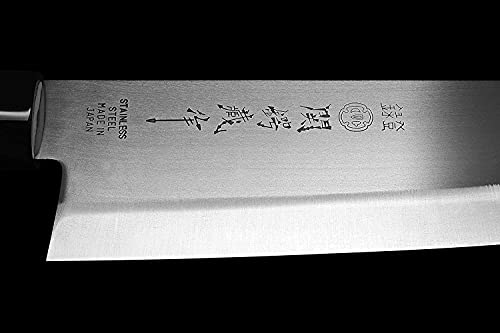
At under $25, this JapanBargain nakiri is a steal, if you know what you’re getting. It’s made in Japan, which matters in a market flooded with “Japanese-style” knives made elsewhere, and the molybdenum steel is simple but effective. It won’t match VG10 in edge retention, but owners consistently say it comes sharp and is easy to maintain.
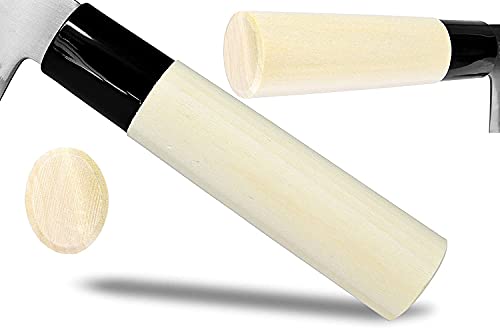
It’s compact at just over 6.5 inches, so it’s better for smaller hands or tight prep spaces. Compared to the HOSHANHO or imarku, it lacks flashy finishes or hollow edges, but it’s a no-frills, honest tool. For beginners or cooks who want a true Japanese knife without spending over $100, this is the gateway drug. Just don’t expect it to last decades without care.
Product photos
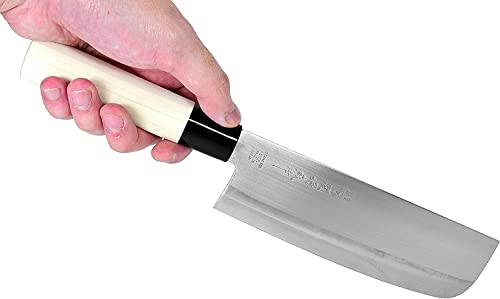
How We Chose These japanese knives for vegetables
My approach to evaluating Japanese knives for vegetables involved a detailed comparison of specifications and features across numerous models. I then weighed those technical aspects against extensive owner and expert reviews, drawing on over a decade of experience with cookware and cooking techniques. Rather than a hands-on lab test, this is a research-led comparison designed to identify knives offering the best balance of performance, materials, and value.
For nakiri knives specifically, blade steel and geometry were paramount. A high-quality steel – like VG-10 or similar – directly impacts edge retention and how easily the knife slices through vegetables. Equally important is the blade’s profile; the straight edge is the defining characteristic, and its execution dictates how cleanly it cuts versus crushing. Balance and handle comfort were also heavily considered, as these impact control during extended use.
Specifications reliably reveal the steel type, hardness (HRC), and blade dimensions. However, real-world performance – the “feel” of the knife and how well it holds an edge – is best gleaned from owner feedback. I paid close attention to comments regarding sharpness out of the box, ease of sharpening, and durability. To complete a kitchen setup, consider pairing your new blade with one of the best knife cutting boards to protect its delicate edge. For those wanting to fully equip their kitchen, exploring curated Japanese knife collections can be a great starting point.
How To Choose The japanese knives for vegetables
Finding the right Japanese nakiri knife can elevate your vegetable preparation from a chore to a pleasure. These specialized blades aren’t just about aesthetics; they’re about precision, efficiency, and making the most of fresh ingredients.
A quality nakiri knife boasts a thin, rectangular blade crafted from high-carbon steel (VG-10 is a common benchmark), ideally with a hardness of 60-63 HRC. Ergonomic handle design and a consistently sharp edge, maintained through regular honing, are also vital considerations. The balance between blade weight and handle comfort significantly impacts usability, particularly during extended prep sessions.
Steel and Hardness Matter
The heart of any good knife is its steel. While Damascus layering looks beautiful, it’s the core steel that dictates performance. VG-10 is a very popular choice for a reason; it strikes a good balance between sharpness, edge retention, and ease of sharpening. However, don’t discount steels like 10Cr15CoMoV (found in some more affordable options) which, while not quite as refined, can still deliver excellent results. Hardness, measured by the Rockwell scale (HRC), is equally important. A higher HRC means a blade will stay sharper longer, but also potentially be more brittle. Most nakiri knives fall in the 60-63 HRC range, which is a sweet spot.
Blade Geometry and Edge Retention
Nakiri knives are defined by their straight edges, designed for clean rocking cuts through vegetables. But even within this category, there’s variation. Look for a blade that’s relatively thin, as this reduces drag and allows for precise slicing. The edge angle is also crucial; a 15-degree edge (common in Japanese knives) offers exceptional sharpness, but requires more frequent honing. Some knives, like the HOSHANHO Damascus Nakiri 6.5″, incorporate design features like blade grooves to minimize sticking, which is a welcome addition. If you’re serious about maintaining a razor-sharp edge, investing in a quality whetstone is a must.
Handle Comfort and Overall Value
A comfortable handle is paramount, especially if you spend a lot of time prepping vegetables. Pakkawood is a common material, offering a good balance of durability, water resistance, and grip. Ergonomic shaping is equally important. Consider the weight and balance of the knife as well. A well-balanced knife feels like an extension of your hand, reducing fatigue. If you’re just starting out, exploring ideal knives for vegetable prep can help you find a suitable option without breaking the bank.
- For budget-conscious cooks, the PAUDIN Nakiri offers a surprisingly good performance for the price.
- If you’re looking to build out a complete kitchen, investigating Japanese knife sets can offer better value than purchasing individual knives.
- For those seeking heirloom-quality craftsmanship, the Shun Classic 6.5″ Nakiri represents a significant investment, but provides exceptional sharpness and durability alongside a lifetime sharpening guarantee.
A dull knife is a dangerous knife. Prioritize regular honing (with a steel) and occasional sharpening (with a whetstone) to maintain a safe and efficient cutting experience.
Japanese Knives for Vegetables Compared
This table provides a side-by-side comparison of key specifications for several Japanese knives designed for vegetable preparation.
| Product Title | Blade Length (in) | Steel Core | Hardness (HRC) | Handle Material | Blade Finish |
|---|---|---|---|---|---|
| KAWAHIRO Nakiri Knife 7 Inch | 7 | VG-10 | 62 | Ruby Wood/Ebony | Black Forged |
| 7” Japanese Nakiri Damascus Knife | 7 | VG10 | 62 | Wood/Blue Resin | Damascus |
| Shun Classic 6.5″ Nakiri | 6.5 | VG-MAX | N/A | Pakkawood | Damascus |
| HOSHANHO Damascus Nakiri 6.5″ | 6.5 | 10Cr15CoMoV | 62 | Olive Wood | Damascus |
| imarku Nakiri Knife 7 Inch | 7 | High-Carbon SS | N/A | Pakkawood | Hammered |
| HOSHANHO Nakiri Knife 7 Inch | 7 | 10Cr15CoMoV | 60 | Pakkawood | Scalloped |
| PAUDIN Nakiri Knife 7 Inch | 7 | 5Cr15Mov | 56+ | Pakkawood | Waved |
| JapanBargain Nakiri 6-5/8″ | 6.625 | Molybdenum Steel | N/A | Natural Wood | N/A |
Frequently Asked Questions
What steel hardness (HRC) should I look for in a nakiri knife?
A hardness of 60-63 HRC is ideal, as this range provides a good balance between edge retention and durability. Lower HRCs won’t hold an edge as long, while higher ones can become too brittle for everyday vegetable prep.
Are Damascus knives actually better for vegetables?
While visually appealing, the Damascus pattern itself doesn’t inherently improve performance; the quality of the core steel is what truly matters. Many excellent nakiri knives use VG-10 or similar steels under a Damascus layer, offering both beauty and functionality.
How often should I sharpen a Japanese nakiri knife?
Because of the harder steels and thinner angles typically used, these knives require more frequent honing than Western-style blades. Expect to hone before or after each use, and to invest in best Japanese whetstones for sharpening every few months, depending on usage.
Can a nakiri knife be used for fruits as well as vegetables?
Yes, absolutely. The straight edge is well-suited for cleanly slicing most fruits, though it might not be the best choice for very soft or delicate items. A nakiri is a versatile blade for produce preparation overall.
Is a nakiri a good choice if I also need a knife for other tasks?
If you need a single, versatile knife, a nakiri isn’t the best option. Consider adding Japanese cleavers to your collection if you want a blade capable of handling larger cutting tasks, such as breaking down poultry or preparing tougher ingredients.
The Bottom Line
Choosing a Japanese nakiri knife often comes down to balancing how much control you want over the finer details – steel type, handle material, even the aesthetic of the blade – against how much you’re willing to spend. For the best overall experience, considering both performance and value, I recommend the KAWAHIRO Nakiri Knife 7 Inch. It delivers a fantastic cutting experience with its VG-10 steel and beautifully crafted handle, offering a sweet spot for many home cooks.
If you’re on a tighter budget, the PAUDIN Nakiri Knife 7 Inch is a great starting point. For those prioritizing versatility and are looking to expand their collection, the Shun Classic 6.5″ Nakiri is a worthwhile investment, offering exceptional edge retention and build quality, and pairs wonderfully with other items from the best Japanese knives available. Don’t forget to also explore top sharpeners for Japanese knives to keep your blade in peak condition.
Ultimately, the best knife is the one that feels right in your hand. Don’t get too caught up in the specs; focus on finding a blade with a comfortable handle, good balance, and a steel that suits your sharpening skills. A sharp, well-maintained knife – regardless of price point – will always deliver better results and a more enjoyable cooking experience.
