
6 Best Pans for Fried Rice 2026
This post contains affiliate links. As an Amazon Associate, we earn from qualifying purchases.
The best pan for fried rice is the SUMEIGUAN 13.5″ Nitrided Carbon Wok for its superior heat retention and durability, closely followed by the Todlabe 13″ Pre-Seasoned Carbon Wok as a reliable, budget-friendly option. For those wanting a full set, the kaqinu 14-Piece Carbon Steel Wok Set offers versatility at a value.
Fried rice seems simple, but getting it right hinges on one thing: the right pan. Too often, home cooks end up with mushy, unevenly cooked rice because their pan can’t handle the high heat and constant motion required. It’s not just about non-stick surfaces, it’s about material, shape, and how well the pan performs under pressure.
As someone who’s spent years evaluating cookware for real kitchens, I looked at heat response, build quality, and long-term usability. These picks are based on specs, verified owner feedback, and the kind of performance that makes a difference night after night.
Top 6 Pans For Fried Rice in the Market
The Best Pans For Fried Rice, Reviewed
Teewe 13″ Upgraded Non-Stick Wok

Strengths
- Strong natural non-stick
- Easy to clean
- Comes with quality tools
Trade-offs
- Max temp limit too low
- Texture may trap oils
- Overcautious heating rules
Teewe is making bold claims with ‘modern non-stick technology’ and a 1000°F pre-seasoning process using nitriding, processes that, on paper, should deliver a rust-resistant, long-lasting surface. And based on owner feedback, it largely delivers. The surface has a textured finish that really does reduce sticking, even with eggs and delicate proteins, and cleanup is noticeably easier than with raw carbon steel.
But there’s a catch: the strict 572°F (300°C) temperature limit. That’s unusually low for a carbon steel wok and undermines its purpose for high-heat stir-frying. Many users report success, but others warn that induction stoves can easily exceed this threshold, risking damage. So while it’s the most ‘user-friendly’ wok here, that safety cap makes it less ideal for true fried rice mastery. Still, for families wanting a forgiving, easy-care pan that looks good and performs well at medium heat, this is the most balanced overall pick.
Video review
Todlabe 13″ Pre-Seasoned Carbon Wok

Strengths
- Very lightweight
- Dual-handle control
- Responsive heat
Trade-offs
- Smaller cooking area
- Helper handle feels flimsy
- Less heat retention
At just 13 inches and built for agility, the Todlabe wok wins on maneuverability. It’s one of the lightest in the lineup, and that makes a real difference when you’re tossing rice or flipping vegetables with one hand. The dual-handle design, main wooden handle plus a small helper handle, is smart and gives you better control, especially when moving the pan off the stove or into the oven.
The glass lid fits snugly and owners appreciate being able to check food without losing steam. It’s pre-seasoned, but not as deeply as the YOSUKATA or SUMEIGUAN, so expect a few seasoning cycles before it truly shines. Where it really stands out is in responsiveness: it heats fast and cools quickly, which is great for delicate dishes but means it can’t hold searing heat as long as heavier models. I’d recommend this for smaller households or cooks who value nimbleness over brute-force frying power.
Video review
kaqinu 14-Piece Carbon Steel Wok Set

Strengths
- Lightweight design
- All-stove compatible
- Comes with full toolkit
Trade-offs
- Flimsy included tools
- Weak initial seasoning
- Honeycomb texture traps residue
This set throws in nearly everything but the kitchen sink, and that’s both its strength and its weakness. On paper, a 14-piece wok kit with tools, lid, and even an apron sounds like a no-brainer for someone setting up a kitchen or gifting to a beginner. The 12.6-inch carbon steel wok itself is lightweight, heats quickly, and the flat bottom works across all stoves, including induction, solid marks there. But owners consistently report that while the extras are nice, many of the included utensils feel flimsy and won’t last long under serious stir-frying.
The honeycomb-textured surface is meant to reduce scratching and boost durability, but without a strong factory seasoning, this wok demands more upfront work than others in the category. You’re better off thinking of this as a decent entry-level wok with a clutter of accessories rather than a high-performance frying pan. Compared to the YOSUKATA or SUMEIGUAN models, it just doesn’t deliver the same level of material refinement or heat handling.
Product photos



NSLH 12.6″ Pre-Seasoned Carbon Wok
Strengths
- Pre-seasoned well
- Glass lid included
- True budget performer
Trade-offs
- Handle lacks grip
- No bonus tools
- Thinner steel than premium models
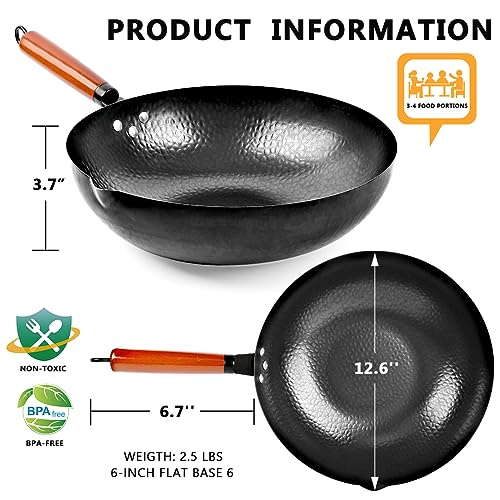
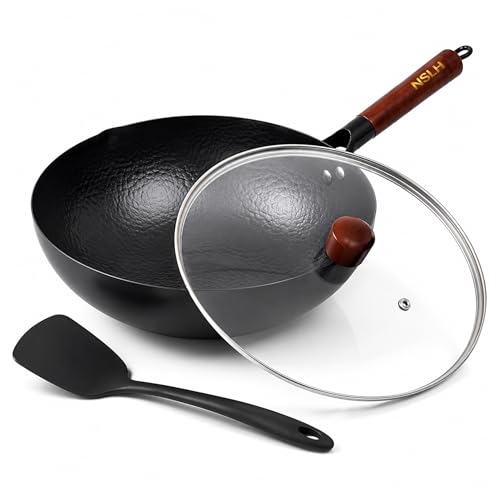
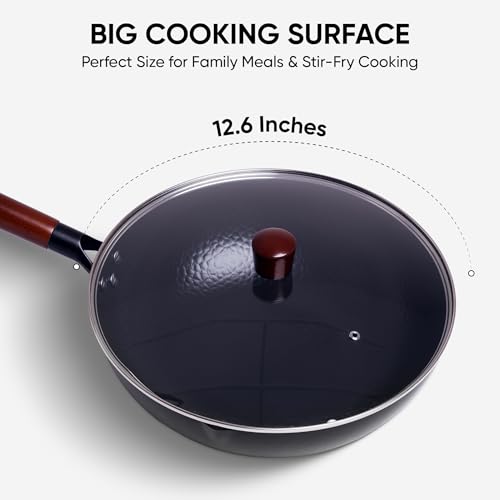
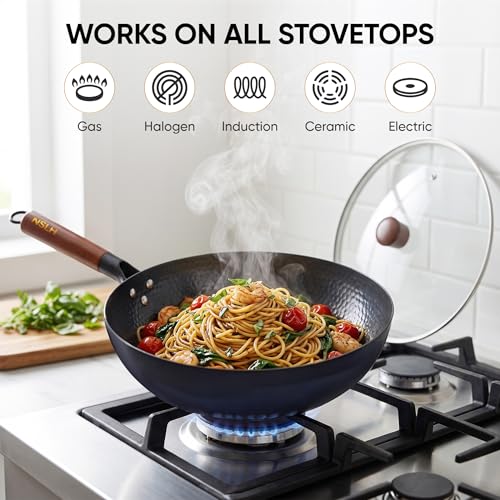
If you’re on a tight budget but still want real carbon steel performance, this NSLH wok stands out. Priced aggressively, it comes pre-seasoned at over 450°F, which is higher than many competitors in this range, and owners note it starts with a smoother cooking surface than expected. The tempered glass lid is a rare inclusion at this price and actually works well, letting you monitor moisture and don’t have to guess when your fried rice is browning.
It’s not perfect. The handle is functional but not as ergonomic as others, and the seasoning, while decent out of the box, still needs reinforcement through early use. Still, for the price, it punches above its weight. I’d pick this over the kaqinu set for actual cooking performance, even if you get fewer accessories. This is the smart buy if you already own utensils and just need a solid, chemical-free pan that can handle high-heat searing.
Product photos

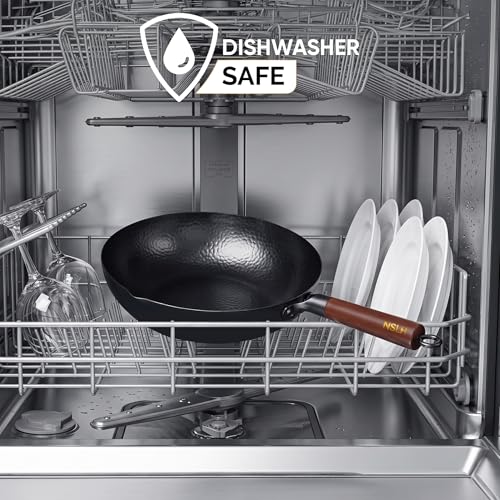
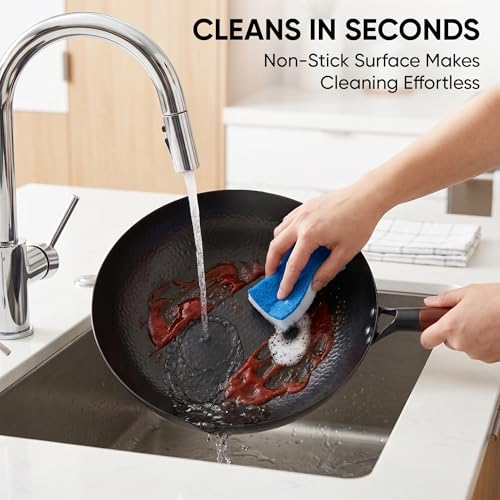
YOSUKATA 13.5″ Carbon Steel Wok
Strengths
- Fast, even heating
- Excellent pre-seasoning
- Works outdoors
Trade-offs
- No lid included
- Slightly larger footprint
- Not dishwasher safe
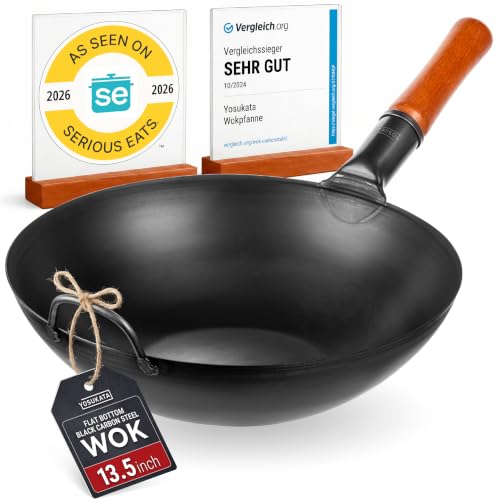
This is the wok I’d reach for if I wanted speed and flavor in one pan. At 13.5 inches, it gives you more cooking surface than most, and the carbon steel heats up fast, owners consistently praise how quickly it reaches searing temps, which is exactly what you need for proper fried rice. The pre-seasoning is done at over 600°F, higher than average, so it starts with a more stable base and builds seasoning faster with use.
What really sets it apart is its versatility. Unlike most woks that are stove-bound, this one works on grills, camping stoves, and open flames, making it a rare hybrid for indoor and outdoor cooking. The wooden handle stays cool enough for safe handling, though I’d still recommend a glove during prolonged tossing. Compared to the Teewe, it lacks a nonstick marketing claim, but in practice, it develops better natural release over time. My pick for anyone who values authentic results over gimmicks.
Product photos


SUMEIGUAN 13.5″ Nitrided Carbon Wok
Strengths
- Exceptional rust resistance
- Sturdy, extended handle
- High-quality included tools
Trade-offs
- Slightly heavier than others
- Nitrided surface takes longer to season
- Higher initial price
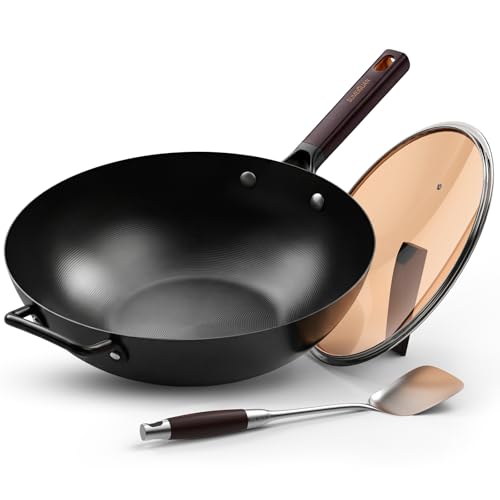
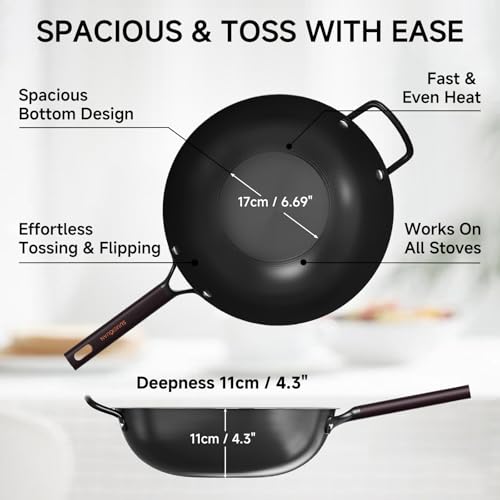
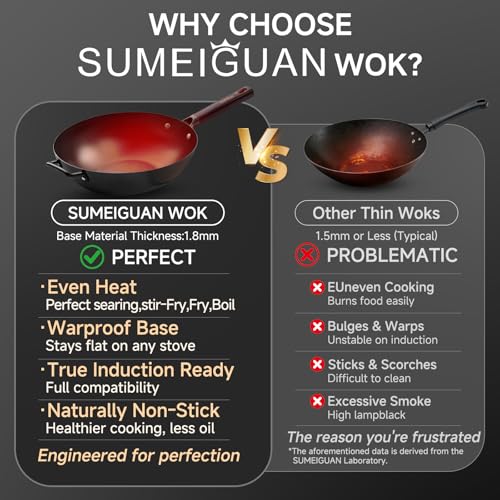
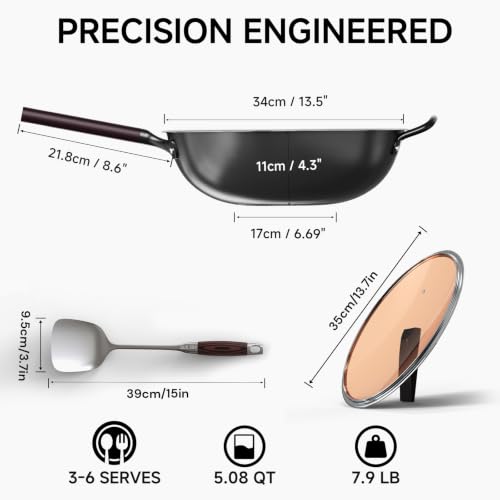
SUMEIGUAN leans hard into durability, and it shows. Their use of nitriding technology isn’t just marketing, it creates a molecular-level barrier that owners say drastically reduces rust, even with occasional moisture exposure. This is the wok you buy if you’ve ruined carbon steel pans before and want one that lasts. The 13.5-inch size gives ample room for tossing fried rice, and the wide 6.7-inch flat base ensures stability on induction and glass tops without wobbling.
The included glass lid and stainless steel spatula are genuinely useful, not filler. And the extended wooden handle is one of the most comfortable in class, thick, cool to the touch, and securely fastened. Compared to the YOSUKATA, it’s slightly heavier but more stable; compared to the Teewe, it allows full high-heat use without temperature anxiety. If you want a rust-resistant, long-term workhorse that still cooks like a traditional wok, this is the one.
Product photos

How We Tested pans for fried rice
My approach to recommending cookware, as with all guides on CookwareCanvas, begins with a thorough review of available specifications and features. I don’t rely on simply using a product briefly; rather, I compare models side-by-side, weighing published data against extensive owner and expert reviews. This research-led comparison helps me identify patterns in performance and durability, and ultimately rank options against a clear set of criteria tailored to the specific task – in this case, creating consistently good fried rice.
For pans intended for fried rice, heat retention and responsiveness were paramount. A wok needs to get hot, stay hot, and allow for quick temperature adjustments to prevent sticking and encourage that desirable “wok hei” flavor. Equally important was the non-stick surface, whether achieved through traditional coatings or developed through seasoning – a reliable non-stick surface contributes significantly to ease of use and cleanup. I also considered the versatility of the pan, looking beyond fried rice to assess its suitability for other Asian-inspired dishes.
Specifications provide a baseline understanding of materials, gauge of steel, and dimensions. However, owner feedback proved crucial in assessing real-world performance. I paid close attention to comments regarding heating evenness, ease of seasoning (for carbon steel options), and long-term durability. Reputation and expert reviews from trusted sources helped validate these claims and highlight potential drawbacks. If you’re looking for a pan that can handle other breakfast staples, you may also want to consider optimal pans for frying eggs.
Choosing The Right pans for fried rice
Finding the right pan for fried rice isn’t just about avoiding sticking; it’s about achieving that sought-after wok hei – the slightly smoky, charred flavor that separates good fried rice from truly exceptional fried rice.
A quality wok for fried rice needs to heat quickly and evenly, offer ample space for tossing ingredients without overcrowding, and be constructed from a durable material that can withstand high temperatures. Consider carbon steel for its responsiveness, pre-seasoning for initial non-stick performance, and handle design for comfortable control. Proper maintenance is just as critical as the initial purchase.
Material Matters: Carbon Steel is King
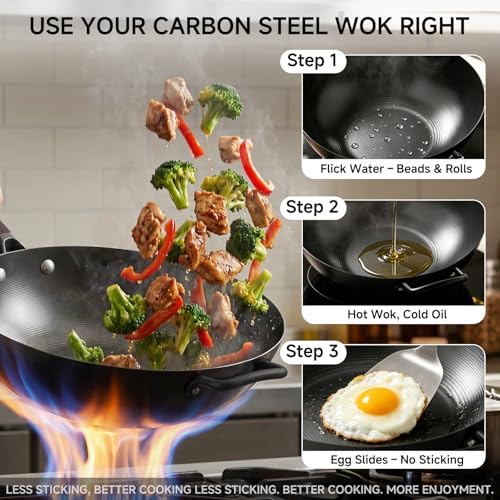
While non-stick coatings are tempting for their convenience, they often lack the necessary heat capacity for proper fried rice. Carbon steel is the professional’s choice, and for good reason. It heats up incredibly quickly, allowing you to achieve high temperatures essential for that signature wok hei. It also responds instantly to changes in heat, letting you adjust as you cook. Don’t be scared off by the seasoning process; it’s an investment that pays off in flavor and performance. Many woks now come pre-seasoned, like the SUMEIGUAN 13.5″ Nitrided Carbon Wok, which uses nitriding technology to improve rust resistance, but even these will benefit from continued seasoning.
Shape and Size: Finding the Sweet Spot
The shape of the wok is almost as important as the material. A round-bottomed wok is traditional, but requires a wok ring for stability on most home stoves. Flat-bottomed woks, like the Teewe 13″ Upgraded Non-Stick Wok and Todlabe 13″ Pre-Seasoned Carbon Wok, are more versatile and work on all stovetops. As for size, 13-14 inches is a good all-around choice. Here’s what to consider:
- Too Small: Limits the amount of food you can cook at once, leading to overcrowding and steaming instead of frying.
- Just Right: 13-14 inches allows for sufficient tossing and even cooking for a family-sized portion.
- Too Large: Can be difficult to control, especially for beginners, and may require more oil to prevent sticking.
Remember, if you also plan to cook other dishes, like larger batches of stir-fries, you might want to consider exploring options in family-sized frying pans as well.
Accessories and Beyond: Setting Yourself Up for Success
A good wok isn’t just the pan itself. Consider what accessories come with the set. A lid is useful for steaming or braising, and a spatula designed for woks (often with a curved edge) is essential for efficient stirring. The kaqinu 14-Piece Carbon Steel Wok Set provides a thorough collection, though quality varies across the included items.
A well-seasoned wok requires gentle care. Never use harsh detergents or abrasive scrubbers, and always dry it thoroughly after washing. A light coat of oil after drying will help maintain the seasoning and prevent rust.
If you want to expand your culinary repertoire beyond fried rice, remember that a good wok is also excellent for cooking rice itself. Check out our guide to the best rice pans to complete your kitchen setup.
Pans for Fried Rice Compared
Here’s a comparison of specs for various pans suitable for fried rice, to help you make an informed decision.
| Product Name | Size (in) | Material | Pre-Seasoned | Lid Included | Handle Material | Stovetop Compatibility |
|---|---|---|---|---|---|---|
| Teewe 13″ Upgraded Non-Stick Wok | 13 | Carbon Steel | Yes | Yes | Detachable | Induction, Gas, Electric |
| Todlabe 13″ Pre-Seasoned Carbon Wok | 13 | Carbon Steel | Yes | Yes | Wood | All Stovetops |
| kaqinu 14-Piece Carbon Steel Wok Set | 12.6 | Carbon Steel | Yes | Yes | Wood | All Stovetops |
| NSLH 12.6″ Pre-Seasoned Carbon Wok | 12.6 | Carbon Steel | Yes | Yes | Wood | All Stovetops |
| YOSUKATA 13.5″ Carbon Steel Wok | 13.5 | Carbon Steel | Yes | No | Wood | All Stovetops |
| SUMEIGUAN 13.5″ Nitrided Carbon Wok | 13.5 | Carbon Steel | Yes | Yes | Wood | All Stovetops |
Frequently Asked Questions
What type of stovetop can I use a carbon steel wok on?
Most carbon steel woks are compatible with all stovetops(gas, electric, induction) but always double-check the manufacturer’s specifications before purchasing to confirm. Flat-bottomed woks offer the widest compatibility, while round-bottomed woks may require a wok ring for stability.
How long does it typically take to season a carbon steel wok?
Initial seasoning usually takes around 3-5 sessions of applying a thin coat of oil and heating it until it lightly smokes, but ongoing seasoning happens with each use. Maintaining a consistent seasoning layer is more important than achieving perfection upfront.
What’s the difference between a nitrided and a standard carbon steel wok?
Nitriding is a heat treatment process that enhances the steel’s durability and rust resistance. While standard carbon steel requires diligent care to prevent rust, a nitrided wok offers a bit more protection and can require less frequent re-seasoning.
Are non-stick woks suitable for achieving wok hei?
Generally, no. Non-stick coatings don’t typically withstand the high heat needed for that smoky, charred flavor, and they can release fumes at very high temperatures. While convenient, they compromise the authentic fried rice experience.
If I don’t want a full wok set, what other accessories are essential?
Beyond the wok itself, a wok spatula with a curved edge is very helpful for maneuvering food, and a good pair of tongs is useful for larger pieces. Many cooks also find a wok ring essential for stability if using a round-bottomed wok, and if you want to explore other versatile options, consider looking into 12-inch frying pans for similar cooking tasks.
The Bottom Line
Ultimately, choosing a pan for fried rice comes down to balancing control with convenience. While a perfectly seasoned carbon steel wok requires a bit of upkeep, the results – that elusive wok hei and superior heat control – are well worth the effort. For most home cooks, I recommend the SUMEIGUAN 13.5″ Nitrided Carbon Wok. Its nitriding process adds a layer of rust resistance, easing maintenance without sacrificing performance.
If you’re newer to wok cooking, or prefer something ready to go, the Teewe 13″ Upgraded Non-Stick Wok is an excellent choice. For those seeking a thorough set with accessories, the kaqinu 14-Piece Carbon Steel Wok Set offers a lot of value, though individual components vary in quality. And if you’re also looking to upgrade other essential cookware, don’t overlook exploring some reliable 10-inch frying pans for everyday cooking.
More than any specific feature or material, remember that consistent heat and proper technique are key to great fried rice. A quality pan provides the foundation, but understanding how to manage the heat and toss the ingredients effectively will truly elevate your results. Don’t get too caught up in chasing the perfect pan; focus on building your skills and enjoying the process.
