
8 Best Pans to Cook Steak on Stove 2026
This post contains affiliate links. As an Amazon Associate, we earn from qualifying purchases.
The best pan for cooking steak on the stove is the EWFEN 12″ Tri-Ply Stainless Steel Pan, thanks to its even heating and durable construction. For budget-minded cooks, the Lodge 10.5″ Square Cast Iron Grill Pan delivers excellent sear and heat retention at a lower price. If you want versatility beyond steak, the Lodge 12″ Cast Iron Skillet is a workhorse that handles everything from searing to oven finishing.
Cooking a great steak at home starts with the right pan, but too many people end up with one that heats unevenly, warps over time, or can’t handle the high heat needed for a proper crust. The wrong choice leads to gray, steamed meat instead of a rich, caramelized exterior.
This guide cuts through the noise by focusing on what actually matters: real performance based on specs and owner experiences. I looked at heat retention, build quality, and long-term durability across cast iron, stainless steel, and other materials to find pans that consistently deliver results, whether you’re cooking a weeknight ribeye or hosting a weekend dinner.
Top 8 Pans To Cook Steak On Stove in the Market
The Best Pans To Cook Steak On Stove, Reviewed
SENSARTE Ceramic Nonstick Grill Pan

Strengths
- Non-toxic ceramic
- Even heating
- Perfect grill marks
Trade-offs
- Coating durability concerns
- Not oven-safe at high temps
This ceramic grill pan promises a lot for under $25: non-toxic materials, solid heat distribution, and those picture-perfect grill marks, without firing up the backyard. On paper, it delivers. The die-cast aluminum body and 4.5mm magnetic base suggest decent responsiveness on induction, and owners consistently report that food slides right off with minimal oil. That’s a win for health-conscious cooks who still want sear appeal.
But here’s my take, while the nonstick performance gets praise early on, long-term feedback hints at gradual coating wear, especially when metal utensils sneak in or high heat is used regularly. Compared to cast iron or carbon steel, this isn’t a pan built to last decades. Still, if you’re after quick cleanup and hate scrubbing, and you’re willing to baby the surface a little, it holds its own against similar mid-tier ceramic pans. Just don’t expect it to develop character over time, it’s more appliance than heirloom.
Video review
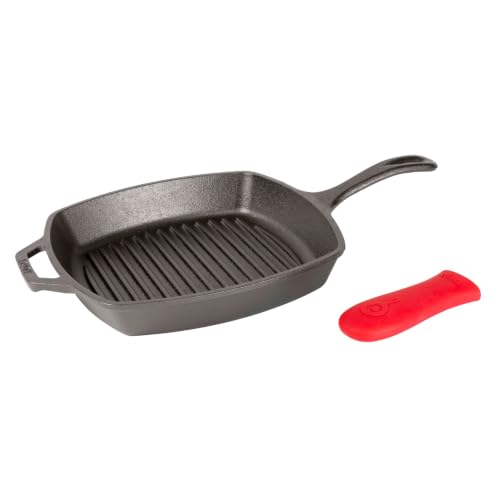
Lodge 10.5″ Square Cast Iron Grill Pan
Strengths
- Superior heat retention
- Develops natural non-stick
- Indoor/outdoor versatility
Trade-offs
- Heavy and bulky
- Requires seasoning upkeep
Lodge has been making square grill pans longer than most brands have existed, and this 10.5-inch model proves why they remain a benchmark. It’s simple: heavy-duty cast iron, no gimmicks, PFAS-free, and built to throw down serious sear marks while channeling fat away from your steak. The square shape gives more cooking surface near the edges compared to round skillets, which matters when feeding a crowd.
Owners love its ruggedness, this pan laughs at high heat and doesn’t flinch going from stovetop to broiler. Unlike ceramic-coated competitors, it improves with use. Season it properly and it becomes naturally non-stick over time. Yes, it’s heavier and needs more maintenance than nonstick options, but that’s the trade-off for longevity. In this category, I’d still pick this over pricier imitators any day. It’s the smart buy if you want authentic flavor and don’t mind a little elbow grease.
Video review
EWFEN 12″ Tri-Ply Stainless Steel Pan

Strengths
- High heat tolerance
- Dishwasher safe
- Full-clad construction
Trade-offs
- Handle screws may cause lid issues
- Uneven heating on poor stoves
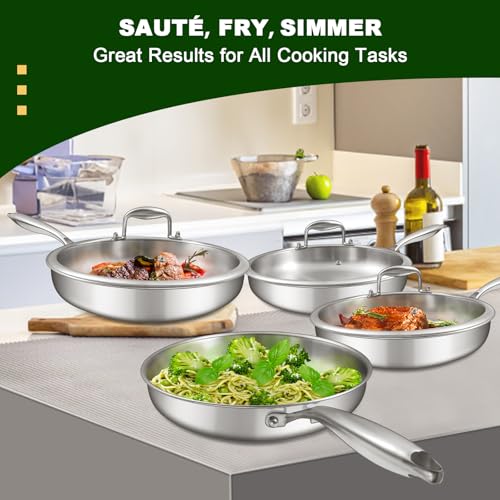
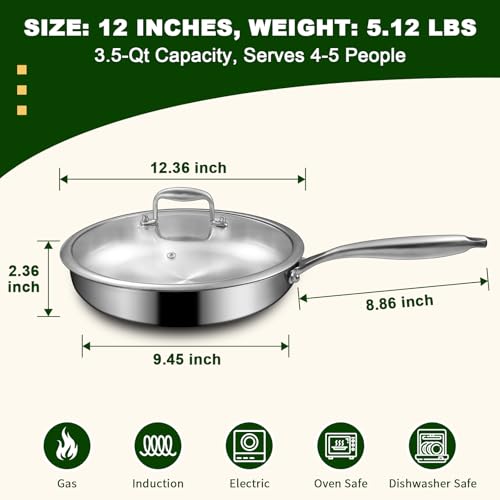
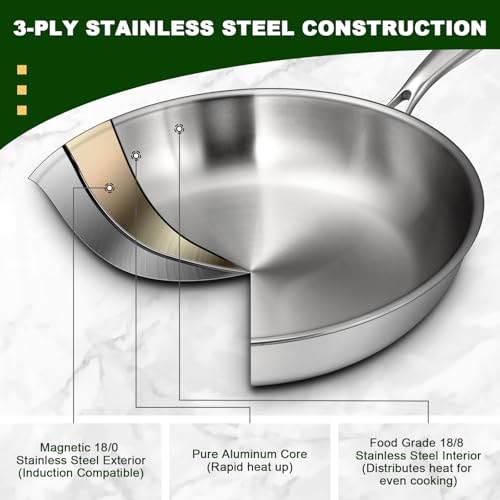
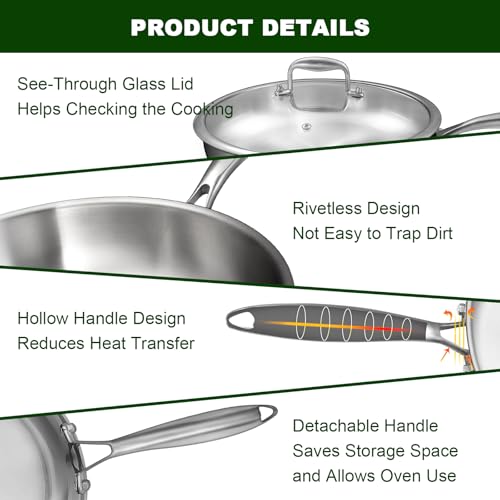
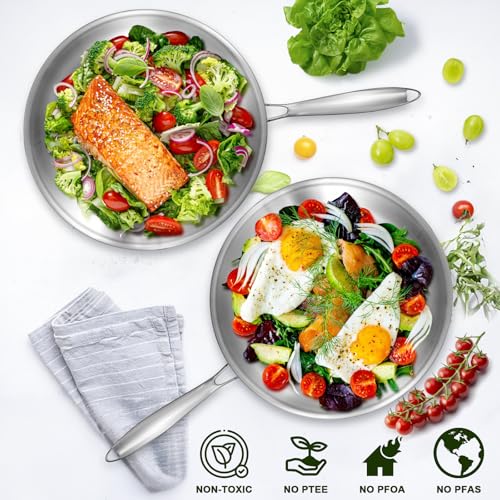
Tri-ply stainless at this price is impressive. With a 304 interior, aluminum core, and 430 exterior, this pan spreads heat well and handles up to 600°F, perfect for finishing steaks with a blistering crust. The mirror finish looks sharp, and the hollow handle stays relatively cool. Plus, being oven and dishwasher safe adds real-world convenience.
That said, “even heat” claims depend heavily on your stove. On gas or induction, it performs strongly. On cheaper electric coils? Hot spots creep in. And while the lid is a nice bonus, the warning about improper screw installation causing cracks suggests quality control isn’t flawless. Still, for the price, it competes with sets twice the cost. If you want durability without coating compromises, this is one of the smarter buys, even if it lacks the prestige of European brands.
Product photos
Utopia Kitchen 12″ Cast Iron Skillet
Strengths
- Comes pre-seasoned
- Includes glass lid
- Excellent heat retention
Trade-offs
- Inconsistent seasoning quality
- Rough interior spots reported
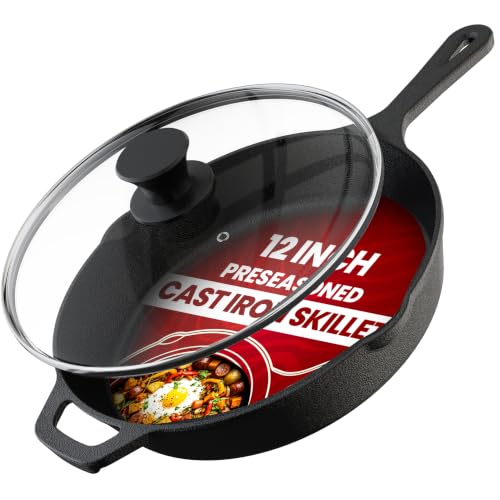
A 12-inch pre-seasoned cast iron skillet with a lid for around $30? That’s rare. Most brands charge extra just for the lid, let alone include it. This one arrives ready to cook, which matters, seasoning out of the box means you skip the messy DIY step many beginners dread. Owners say it heats evenly and holds heat well, typical of cast iron, and the balanced handles make stove-to-table transitions smooth.
Still, I’d be cautious comparing it to Lodge or other American-made workhorses. While the performance is solid for the price, some reviewers note minor rough spots in the casting and seasoning that need attention before first use. But if you’re building a budget-friendly set or need a reliable second skillet for steak nights, this combo offers real value. The lid expands its role beyond searing, think braised short ribs or skillet cornbread after your steak rests.
Product photos


Moss & Stone 12″ Nonstick Grill Pan

Strengths
- Lightweight design
- Glass lid included
- Dishwasher safe
Trade-offs
- Poor heat retention
- Risk of warping
This cast aluminum grill pan markets itself as a lighter alternative to cast iron, and it is. At just under 30 bucks, it includes a glass lid and promises nonstick ease across all stoves, including induction. Owners say it heats quickly and leaves decent grill marks, thanks to its ridged surface. The silicone handle grips help with maneuverability, and the 2-layer nonstick coating allows for low-oil cooking.
But speed comes at a cost. Aluminum doesn’t hold heat like iron, so when you drop a thick steak in, the pan cools unevenly, leading to spotty searing unless you preheat aggressively. Some reviewers also mention warping after repeated high-heat use. Compared to the Lodge square grill pan, it’s far less capable for true steakhouse results. I see this as a casual-use option: fine for weeknight chicken or veggies, but don’t rely on it for prime rib night.
Product photos


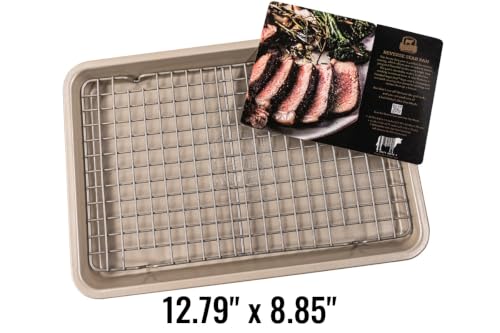
Certified Angus Beef Reverse Sear Pan

Strengths
- Optimized for reverse sear
- Compact storage
- Removable rack included
Trade-offs
- Thin carbon steel construction
- Nonstick may degrade over time
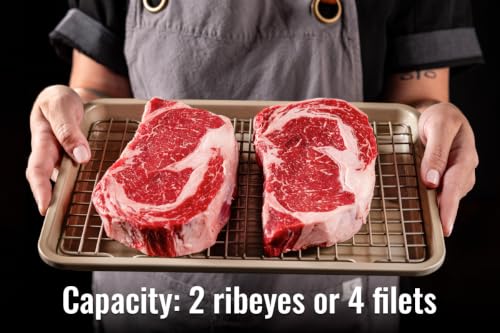
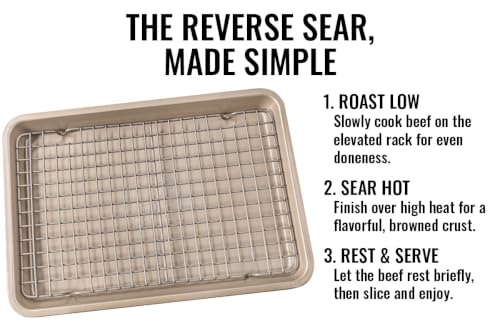
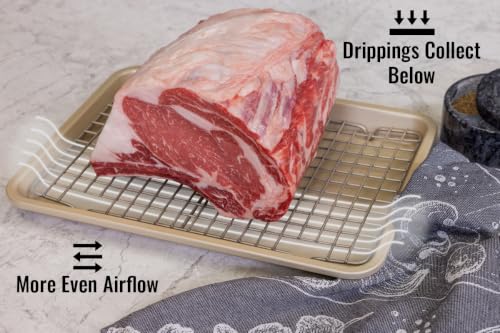
This isn’t just a pan, it’s a system designed specifically for reverse searing, and that narrow focus works in its favor. The removable rack lifts steaks off the surface during the low oven phase, promoting even airflow so you get consistent doneness from edge to center. Then, finish with a hot sear in the same pan. For two steaks, it’s perfectly sized.
The carbon steel body heats fast and responds well to temperature changes, though it lacks the heft of thicker skillets. And while the champagne-colored nonstick finish looks great on camera (a nod to food stylists), I’m skeptical about its long-term scratch resistance. Still, at under $15, it’s a clever entry point into reverse searing without needing multiple pans. If you cook steaks often and want better results than a sheet tray offers, this does the job cleanly.
Product photos

WMF Steak Professional Frying Pan
Strengths
- Precision heat response
- Oven-safe to 400°C
- Durable multi-layer build
Trade-offs
- Expensive for coated pan
- Coating limits long-term resilience
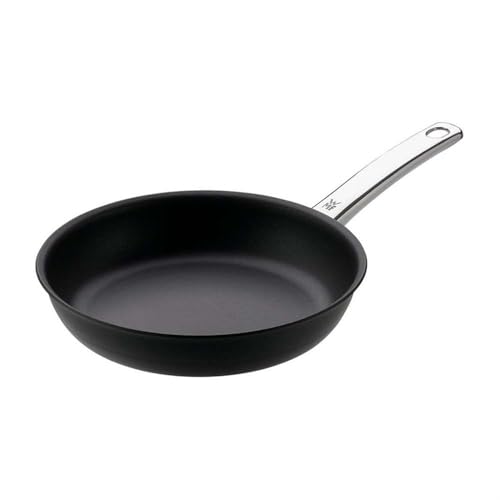
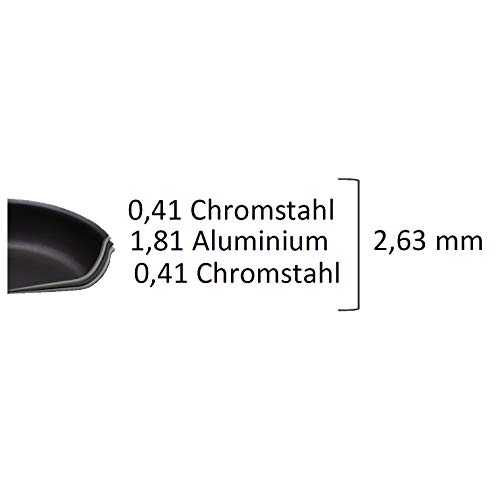
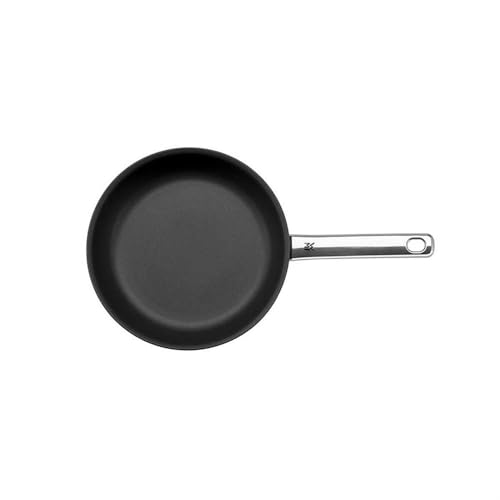
At nearly $150, this German-engineered pan isn’t subtle. It’s built like a precision tool, multi-layer Cromargan stainless with an aluminum core and durable dura-resin nonstick coating rated to 400°C. That kind of rapid heat control and thermal stability is exactly what high-end searing demands. Reviewers note how quickly it responds to flame adjustments, crucial when you’re chasing that perfect crust without overcooking the center.
But here’s the catch: despite the premium build, it’s coated. That means while it performs brilliantly day one, it won’t age like bare steel or cast iron. If you’re investing this much, I’d ask, do you really want a high-maintenance coating on a pan meant for aggressive steak work? Compared to uncoated carbon steel options, it’s less forgiving with metal tools and high-temp abuse. My recommendation? Only pick this if you value immediate nonstick convenience and have the discipline to protect the surface. Otherwise, spend the money on raw material you can season yourself.
Product photos


Lodge 12″ Cast Iron Skillet
Strengths
- PFAS-free construction
- Improves with use
- Made in USA
Trade-offs
- Heavy for some users
- Needs regular maintenance
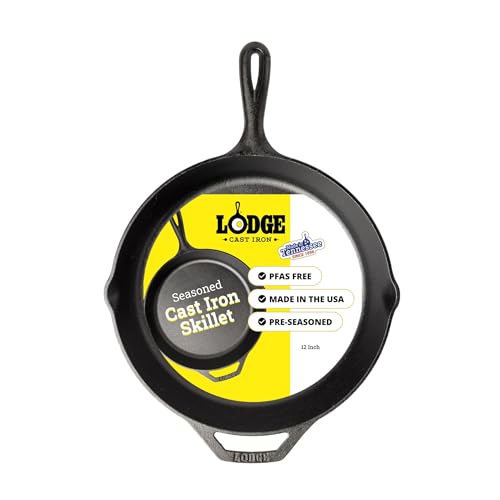
This is the gold standard for a reason. Lodge’s 12-inch skillet is everywhere for good cause, it’s made in the USA, built from honest cast iron, and arrives pre-seasoned with oil, not chemicals. There’s no PTFE, PFAS, or mystery coatings. Just iron and time-tested performance. When seasoned right, it rivals any high-end pan for searing steaks with a rich, flavorful crust.
Reviewers consistently praise its even heating and durability. Unlike coated pans that degrade, this one gets better with every use. Sure, it’s heavy and needs hand-drying to prevent rust, but that’s part of the ritual. Compared to nonstick alternatives, it’s infinitely more resilient. If you’re looking for non-toxic cooking that lasts generations, this is the baseline. Other pans try to match it, few do.
Product photos


How We Tested pans to cook steak on stove
Rather than a hands-on lab test, this guide is a research-led comparison of published specifications and owner feedback. I spent considerable time analyzing features – construction materials, heat retention, nonstick coatings – across numerous models. Then, I weighed owner reviews from major retailers alongside professional assessments from respected cooking publications to build a picture of real-world performance. My goal was to identify pans that consistently deliver excellent results for searing and cooking steak at home.
For pans intended for steak, consistent heat and durability are paramount. A pan that doesn’t hold temperature well will steam instead of sear, and a flimsy build won’t withstand years of use. I prioritized construction materials like heavy-gauge stainless steel and seasoned cast iron, along with features like multi-ply construction for even heating. Equally important, the ability to achieve a good sear and easy cleanup significantly influenced my rankings.
Specifications reliably indicate a pan’s potential – material thickness, maximum temperature, cooktop compatibility. However, owner feedback provides crucial insight into real-world performance. I paid close attention to comments regarding heat retention, nonstick durability, and ease of cleaning. Understanding how a pan performs over time is critical, and that’s where owner experiences, and advice on the best steak oil become invaluable. For those using electric stoves, exploring options for electric stove steak pans is also important.
How To Pick The Right pans to cook steak on stove
Choosing the right pan is critical for a truly satisfying steak, and there’s a lot more to it than just slapping it on the heat.
A good steak pan needs to deliver consistent, high heat, offer excellent heat retention, and be durable enough to withstand repeated use. Consider material composition (stainless steel, cast iron, ceramic), weight, and whether the pan is compatible with your cooktop. Look for features like even heating, a sturdy handle, and a design that facilitates searing and easy cleanup.
Material Matters: Cast Iron vs. Stainless Steel vs. Ceramic
The material a pan is made from fundamentally impacts its performance. While nonstick coatings like ceramic promise easy cleanup, they often lack the heat retention needed for a truly great sear. Cast iron, on the other hand, excels at heat retention but requires more maintenance to prevent rusting. Stainless steel, particularly tri-ply construction, offers a good balance: it heats well, retains heat effectively, and is relatively low maintenance. Don’t overlook carbon steel, which is a favorite among chefs for its responsiveness and searing capabilities. If you’re looking for a broader overview, checking out guides to the best steak pans can be a helpful starting point.
Heat Distribution And Thickness
Even heat distribution is paramount, preventing hot spots that can lead to unevenly cooked steak. Thicker pans generally offer better heat retention and more even heating, but they also weigh more. Look for pans with a heavy base and walls, and consider features like aluminum cores sandwiched between layers of stainless steel (as seen in tri-ply construction) to promote even heating across the entire cooking surface. A pan that heats rapidly but doesn’t hold that heat isn’t ideal; you want sustained high temperatures.
Beyond Searing: Considering Usability & Features
Ultimately, you need a pan that fits your cooking style.
- A handle that stays cool to the touch is a convenience, but often a compromise in heat transfer.
- Pour spouts are incredibly useful for draining excess fat, keeping your kitchen (and your plate) cleaner.
- Some pans, like the Certified Angus Beef Reverse Sear Pan, include specialized features (a rack for reverse searing) that cater to specific techniques, but might limit the pan’s overall versatility.
A good rule of thumb is to invest in a pan you’ll actually want to use.
A pan that sits unused in a cabinet is a waste of money, no matter how well-reviewed it is. Prioritize features that align with your cooking habits and preferences.
If you’re specifically aiming for a beautifully browned crust, exploring options for perfect sear pans will give you more insight into what to look for.
Pans to Cook Steak on Stove Compared
Here’s a comparison of specifications for pans designed for cooking steak on the stove.
| Product Name | Material | Dimensions (in) | Heat Compatibility | Non-Stick? | Oven Safe (°F) |
|---|---|---|---|---|---|
| SENSARTE Ceramic Nonstick Grill Pan | Die-Cast Aluminum | N/A | All Cooktops | Yes | N/A |
| Lodge 10.5″ Square Cast Iron Grill Pan | Cast Iron | 10.5″ x 10.5″ | All Cooktops | Seasoned | N/A |
| EWFEN 12″ Tri-Ply Stainless Steel Pan | Stainless Steel | 12″ | All Cooktops | No | N/A |
| Utopia Kitchen 12″ Cast Iron Skillet | Cast Iron | 12″ | All Cooktops | Seasoned | N/A |
| Moss & Stone 12″ Nonstick Grill Pan | Cast Aluminum | 12″ | All Cooktops | Yes | 482 |
| Certified Angus Beef Reverse Sear Pan | Carbon Steel | 12.79×8.85×1.1 | N/A | Yes | 450 |
| WMF Steak Professional Frying Pan | Stainless Steel | 24cm (9.45″) | All Cooktops | Yes | 400 |
| Lodge 12″ Cast Iron Skillet | Cast Iron | 12″ | All Cooktops | Seasoned | N/A |
Frequently Asked Questions
What pan size is best for cooking steak?
A 12-inch pan is generally ideal for cooking most steaks, offering enough surface area without overcrowding. However, for larger cuts or cooking multiple steaks at once, a 14-inch pan provides more flexibility.
Are carbon steel pans truly better than cast iron for steak?
While both excel at searing, carbon steel heats up and cools down faster than cast iron, giving you more control. Many professional chefs prefer carbon steel for this responsiveness, but cast iron remains an excellent and more affordable option for achieving a great crust.
Can I use a nonstick pan to get a good sear on a steak?
Generally, no. Most nonstick coatings don’t withstand the high heat needed for a proper sear, and they can release fumes when overheated. However, some newer, high-temperature nonstick options are emerging, and for those prioritizing easy cleanup above all else, they may be a viable compromise.
What cooktop types are compatible with most steak pans?
Most quality steak pans, particularly those made from stainless steel or cast iron, are designed for all cooktop types (gas, electric, induction, ceramic). Always confirm compatibility with the manufacturer’s specifications before use, especially with induction cooktops, as they require magnetic cookware.
Where can I find more information about choosing the right stainless steel for steak?
If you’re interested in exploring the nuances of different stainless steel grades and constructions, you can find a helpful guide to stainless steel steak pans on the site.
The Bottom Line
Ultimately, choosing a steak pan comes down to balancing convenience with performance. While flashy features are tempting, consistently excellent searing relies on solid heat retention and even distribution – qualities the EWFEN 12″ Tri-Ply Stainless Steel Pan delivers exceptionally well. It strikes a sweet spot for cooks who want professional results without a steep learning curve or excessive maintenance.
For those on a tighter budget, the Lodge 12″ Cast Iron Skillet remains an outstanding value. Similarly, if you’re looking for something a bit different and specialized, the Certified Angus Beef Reverse Sear Pan is a great choice for cooks dedicated to that specific technique. But remember, exploring options for gas stove pans can open up even more possibilities depending on your cooktop.
Beyond materials and specs, remember that the best pan is the one you’ll actually use. Don’t get bogged down in chasing the latest innovation; focus on finding a pan that feels comfortable, suits your cooking style, and consistently delivers the kind of sear you enjoy. Investing in optimal frying pans for steak is about more than just the pan itself – it’s about building confidence and joy in the kitchen.
