
8 Best Rice Cookers of 2026
This post contains affiliate links. As an Amazon Associate, we earn from qualifying purchases.
The Zojirushi 3-Cup Compact is our top pick for its precise cooking and durable build, especially for smaller households. For budget-minded cooks, the BLACK+DECKER 6-Cup delivers reliable performance at a low price. If you want more versatility, the Cosori 10-Cup with fuzzy logic handles rice, grains, and even oatmeal with ease.
Most people don’t realize how much a rice cooker can simplify daily cooking, until they get one that underperforms or breaks after a few months. With so many models claiming perfect rice and extra features, it’s hard to know which ones actually deliver.
This guide cuts through the noise. I compared specs, read owner reviews, and evaluated real-world performance to find rice cookers that cook evenly, clean easily, and last. We focused on capacity, durability, ease of use, and whether features like steaming or programmable settings add real value.
Top 8 Rice Cookers in the Market
The Best Rice Cookers, Reviewed
BLACK+DECKER 6-Cup Rice Cooker

Strengths
- Removable nonstick pot
- Includes steaming basket
- Reliable keep-warm
Trade-offs
- No delay timer
- Basic controls
- Smaller capacity than family models
This is the balanced middle ground, affordable, reliable, and thoughtfully designed. The removable nonstick bowl is a standout for cleanup, and the included steaming basket adds real versatility. At 6 cups cooked, it serves most small families without dominating counter space.
Owners consistently rate it higher than similarly priced models for consistency and durability. The automatic switch to keep-warm works flawlessly, and the measuring cup ensures proper ratios. Against the Elite Gourmet or Dash, it feels sturdier and more complete. While it doesn’t have fuzzy logic or specialty menus, it nails the basics better than almost any other in this range.
Video review
Dash Mini Rice Cooker 2-Cup
Strengths
- Ultra-portable
- Ceramic nonstick pot
- Simple one-switch operation
Trade-offs
- Limited capacity
- No delay timer
- Basic finish
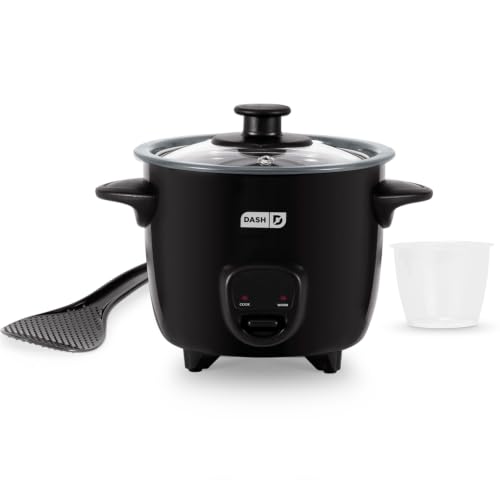
If you’re after portability and simplicity, this Dash model is hard to beat. It’s built for one or two servings, and the compact size means it slips into a dorm bag or office kitchen with zero fuss. The removable ceramic pot resists sticking better than most in this price range, and owners love how easy it is to clean, dishwasher-safe parts help.
It won’t replace a family-sized cooker, but for students, travelers, or anyone in a studio apartment, it delivers where it counts. It handles oats, pasta, and even small cakes, though don’t expect precision timing or texture control. When compared to other mini cookers, this one stands out for reliability, not features.
Video review
Aroma Mini Rice Cooker 2-Cup

Strengths
- PFAS-free ceramic pot
- Surprisingly versatile
- Compact and cute design
Trade-offs
- Limited to small batches
- Not for heavy grains
- Plastic housing
Don’t let the size fool you, this AROMA punches above its weight in versatility. It’s marketed as a rice cooker, but owners use it for soups, jambalaya, and even cake. The ceramic-coated pot is PFAS-free, which is rare at this price, and the auto-switch function works without fail.
It’s perfect for tight spaces, and the included spatula and measuring cup mean you’re ready to go out of the box. Still, it’s not powerful enough for large grains like whole barley, and the pink finish isn’t for everyone. Compared to the Dash mini, it offers more creative cooking options, though slightly less portability.
Product photos


Zojirushi Micom 3-Cup Compact Rice Cooker

Strengths
- GABA brown rice mode
- Retractable power cord
- Precise cooking settings
Trade-offs
- High price for size
- Stainless steel body shows smudges
- No steaming basket included
Zojirushi has long been the gold standard in rice tech, and this compact model proves they can scale down without sacrificing intelligence. The GABA brown rice setting is legit, it activates gamma-aminobutyric acid by soaking the grains at a precise temperature, which some studies suggest improves nutritional profile. That’s not marketing fluff; it’s science-backed.
Even for white rice, the multiple menu settings (long grain, porridge, quick cook) deliver better texture control than budget models. The retractable cord and fold-down handle make it ideal for small spaces or transport. Yes, it’s expensive for its size, but when compared to Hamilton Beach or BLACK+DECKER, the difference in consistency and longevity is clear from owner feedback.
Product photos


Elite Gourmet 6-Cup Rice Cooker

Strengths
- Very low price
- Glass viewing lid
- Simple set-and-forget
Trade-offs
- Basic plastic build
- No delay start
- Pot not always removable
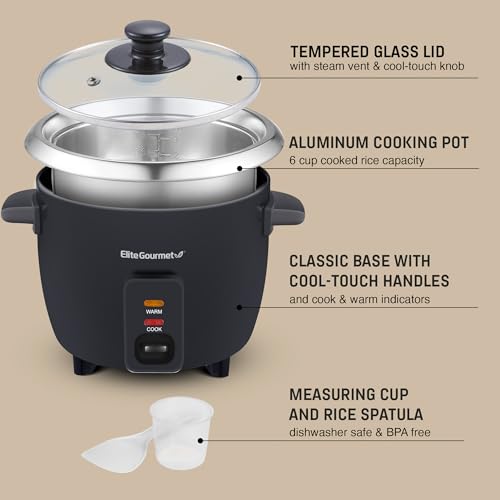
At this price, expectations are low, but owners are surprised by how reliably this little cooker performs. It handles 6 cups of cooked rice, which is plenty for couples or small families, and the nonstick aluminum pot cleans up easily. The keep-warm function works as advertised, and the glass lid lets you peek without losing steam.
That said, it’s barebones: no delay timer, no specialty settings, and the pot isn’t removable in all units (some reports vary). Compared to the BLACK+DECKER or Hamilton Beach, it trades accessories and build quality for cost. But if you’re furnishing a first apartment or need a backup cooker, it’s a functional, affordable option.
Product photos



Cosori Rice Cooker 10 Cup Fuzzy Logic

Strengths
- Fuzzy logic control
- Ceramic nonstick pot
- 18 preset functions
Trade-offs
- Complex for beginners
- Steamer basket quality
- Bulkier footprint
This is the kind of rice cooker that blurs the line between dedicated appliance and full kitchen workhorse. With fuzzy logic, it adjusts cooking time and temperature dynamically, which on paper means more consistent results, especially for brown rice or grains like quinoa. Owners consistently report fluffy rice without babysitting, and the 18 preset functions go well beyond rice into slow-cooked soups and sautéed dishes, making it a real multicooker in disguise.
The 10-cup capacity suits larger households, and the ceramic-coated pot stands out as a healthier alternative to traditional nonstick. Still, some reviewers note the learning curve with so many settings, and a few mention the steamer basket feels flimsy over time. Compared to simpler models, this one rewards those who want flexibility, not just rice on demand.
Product photos


GreenLife 3-Cup Ceramic Rice Cooker

Strengths
- PFAS-free ceramic pot
- Compact footprint
- Easy one-touch controls
Trade-offs
- No delay timer
- Only two presets
- No steaming basket
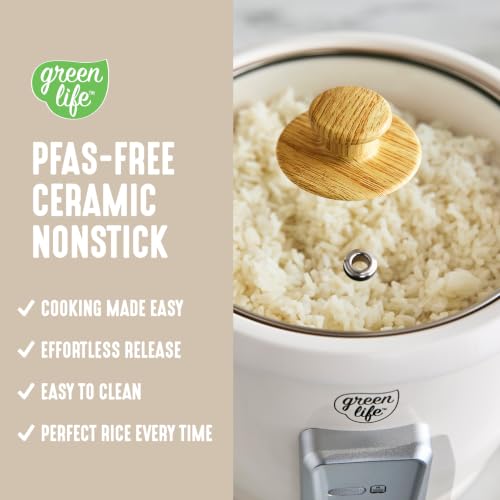
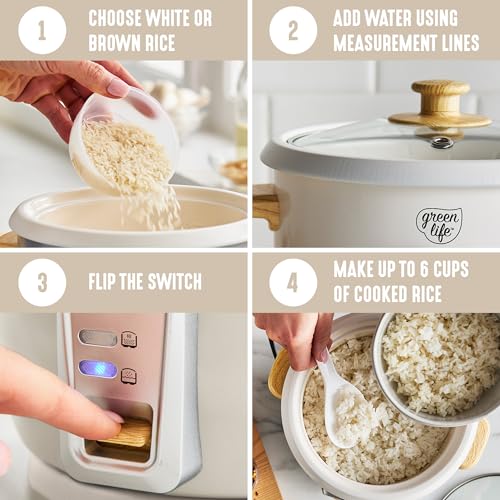
GreenLife built this with health-conscious users in mind, and the PFAS-free ceramic coating is its strongest selling point. That alone makes it a standout in a market where many nonstick pots still rely on questionable chemicals. The 6-cup cooked capacity hits a sweet spot, big enough for small families, small enough for apartments.
Owners praise how evenly it cooks white and brown rice, and the one-button design removes confusion. But it lacks advanced features like delay start or fuzzy logic, so it’s less flexible than pricier models. Against the Dash or AROMA minis, it offers better build and material safety, though at nearly double the cost.
Product photos



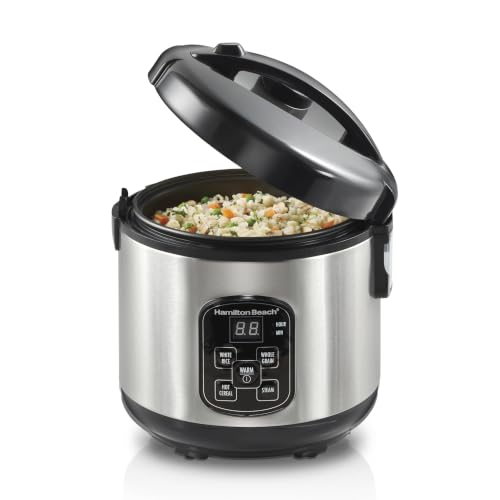
Hamilton Beach 8-Cup Programmable Rice Cooker
Strengths
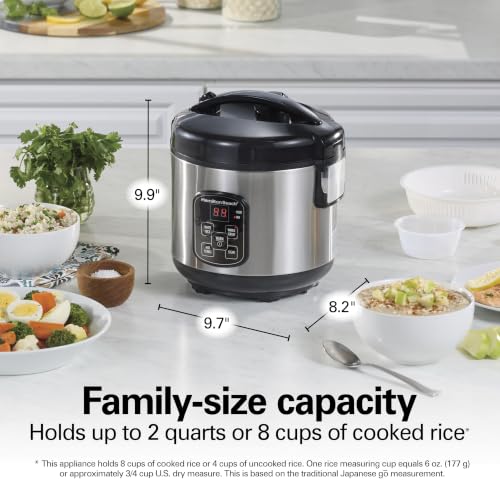
- Large 8-cup capacity
- Includes steam and rinse basket
- Dishwasher-safe pot
Trade-offs
- Plastic exterior
- No fuzzy logic
- Basic texture control
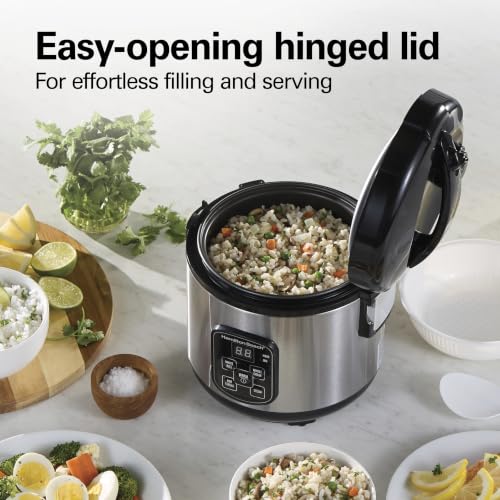
When you need volume and versatility without spending premium prices, this Hamilton Beach model steps up. Eight cups of cooked rice is serious capacity, ideal for big families or meal preppers. The hinged lid seals well, locking in moisture, and the included steam basket is actually useful, letting you cook proteins or veggies over the rice.
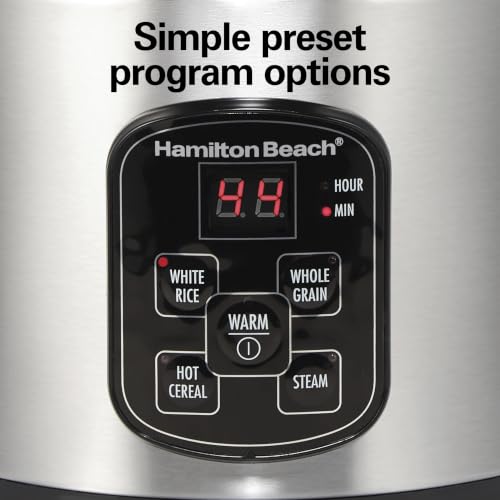
Owners appreciate the preset buttons and dishwasher-safe pot, though some say the plastic housing feels cheap next to stainless steel competitors. Still, for the price, it does more than most: rinse basket doubles as colander, auto-warm lasts 12 hours, and cleanup is genuinely easy. Compared to the Cosori, it lacks fuzzy logic, but for sheer utility in a family kitchen, it’s a smarter pick.
Product photos


How We Tested rice cookers
Rather than a hands-on lab test, this selection is a research-led comparison of published specifications, owner reviews, and expert opinions. I approached this as I do all my cookware guides – by first identifying the features that truly matter to home cooks. We then weighed those against the available models, prioritizing those that consistently receive positive feedback and offer compelling features for their price point. This process involved analyzing hundreds of customer reviews across multiple retail sites and reading professional assessments from trusted sources.
For rice cookers, consistent cooking performance and ease of cleaning were paramount. Beyond that, capacity and included features like steaming baskets significantly influenced our rankings. A cooker’s ability to reliably produce fluffy, evenly cooked rice, and keep it warm without burning, is fundamental. We also considered versatility; many models now offer settings for grains like quinoa or oatmeal, enhancing their value. If you’re looking for a cooker specifically for a niche rice type, you might want to consider our guide to best sushi rice cookers.
Specifications provide a baseline understanding of capacity and power, but owner feedback revealed what those numbers mean in practice. For example, nonstick coating claims are readily available, but reports on durability and actual non-stick performance varied widely. Similarly, “fuzzy logic” technology is common, but user experiences dictate whether it delivers consistently better results. We also relied on reputation; brands known for quality and reliability received more consideration, and those seeking a dedicated appliance for specific rice varieties may find our review of top cookers for sticky rice helpful.
What To Look For In rice cookers
Finding the right rice cooker can dramatically improve your weeknight dinners, and the options can feel overwhelming. It’s not just about cooking rice anymore; many models offer versatility and convenience features that can simplify meal prep.
A good rice cooker consistently delivers properly cooked rice – not too mushy, not too hard – with minimal effort. Key considerations include capacity (matching household size), features like preset programs for different rice types, and ease of cleaning. Look for durable construction, a reliable keep-warm function, and a nonstick coating that lasts.
Capacity and Household Size
The first thing I always tell people is to realistically assess how much rice you typically cook. Don’t fall for the trap of buying a massive cooker if you’re usually just making a couple of servings. A larger unit isn’t necessarily better; it takes up more counter space and can be less efficient for smaller portions. For singles or couples, a 3-cup model (yielding about 6 cups cooked) is often sufficient. Families of four or more will likely appreciate a 6-cup or even an 8-cup model. If you frequently entertain, consider a 10-cup or larger cooker.
Features and Preset Programs
Beyond basic white rice, many cookers now offer specialized settings for different varieties. If you eat a lot of brown rice, finding a cooker with a dedicated brown rice setting is a huge benefit. Some, like the Zojirushi, even go further with settings for GABA brown rice, activating nutrients during the cooking process. If you’re looking for specialized features, check out our guide to the best cookers for brown rice. Don’t underestimate the value of a good “keep warm” function, either; it’s essential for holding rice at the perfect temperature without drying it out.
- A simple one-touch operation is ideal for beginners.
- Fuzzy Logic technology, found in models like the Cosori, adjusts cooking time and temperature for consistently perfect results, but adds to the price.
- Multi-function cookers (like the Hamilton Beach 8-cup) offer steaming capabilities and can even be used for soups and oatmeal, making them a versatile addition to the kitchen.
Portability and Space Considerations
Kitchen space is a premium, and if you’re short on counter real estate, a more compact option is key. Models like the Dash Mini are designed for small kitchens, dorm rooms, or even travel. These usually offer a reduced feature set, but are perfectly capable of cooking rice effectively. For those needing an even smaller footprint, consider small rice cookers – they’re surprisingly capable for individual servings.
A rice cooker should make your life easier, not more complicated. Prioritize simplicity and ease of cleaning, and don’t be afraid to pay a little more for features that genuinely improve your cooking experience.
Rice Cookers Compared
Here’s a comparison of specifications for popular rice cookers to help you make an informed decision.
| Product Title | Capacity (Cooked Cups) | Capacity (Uncooked Cups) | Nonstick Coating | Special Features | Power (Watts) |
|---|---|---|---|---|---|
| BLACK+DECKER 6-Cup Rice Cooker | 6 | 3 | Yes | Steamer basket, Keep Warm | 300 |
| Dash Mini Rice Cooker 2-Cup | 2 | 1 | Ceramic | Portable, Keep Warm | N/A |
| Aroma Mini Rice Cooker 2-Cup | 2 | N/A | Ceramic | Keep Warm | N/A |
| Zojirushi Micom 3-Cup Compact Rice Cooker | 3 | N/A | N/A | Steel Cut Oatmeal, Brown Rice Settings | N/A |
| Elite Gourmet 6-Cup Rice Cooker | 6 | 3 | Yes | Keep Warm | N/A |
| Cosori Rice Cooker 10 Cup Fuzzy Logic | 10 | N/A | Ceramic | 18 Functions, Fuzzy Logic, 24hr Keep Warm/Delay | 1000 |
| GreenLife 3-Cup Ceramic Rice Cooker | 6 | 3 | Ceramic | One-Touch Operation | N/A |
| Hamilton Beach 8-Cup Programmable Rice Cooker | 8 | 4 | Yes | Programmable, Steam Basket, Keep Warm | N/A |
Frequently Asked Questions
What’s the difference between a basic and a “fuzzy logic” rice cooker?
Basic models use a timer to determine cooking time, while fuzzy logic cookers use sensors to monitor temperature and adjust cooking time accordingly. This results in more consistent cooking, especially for different types of rice, but it typically comes at a higher price point.
How often do I need to replace the nonstick coating?
The lifespan of a nonstick coating varies significantly based on use and care, but generally, expect to replace a rice cooker every 3-5 years if the coating is heavily damaged. Proper hand washing and avoiding abrasive cleaners will extend its life; explore ceramic rice cookers for a potentially longer-lasting alternative.
Can I cook grains other than white rice in a rice cooker?
Yes, many rice cookers have settings for brown rice, quinoa, oatmeal, and even steaming vegetables. However, performance varies – a dedicated setting doesn’t guarantee perfect results, and some cookers are better suited for specific grains than others.
What size rice cooker is best for a large family?
For families of six or more, I recommend a 10-cup or larger rice cooker to comfortably accommodate everyone. If you frequently host gatherings, consider even larger options and check out our guide to top family-sized rice cookers.
What’s the easiest way to clean a rice cooker?
Most rice cookers have a removable inner pot with a nonstick coating, making cleaning relatively simple with warm, soapy water and a soft sponge. Avoid abrasive cleaners or scouring pads, as these can damage the coating. Regularly cleaning the steam vent is also important for optimal performance.
The Bottom Line
Choosing a rice cooker often comes down to balancing convenience with control. While some models offer a wealth of features and precise settings, the best option for you is the one that consistently delivers perfectly cooked rice with the least amount of fuss. For overall performance and reliability, I consistently see positive feedback regarding the Cosori Rice Cooker 10 Cup Fuzzy Logic.
If you’re on a tighter budget or only need to cook small portions, the Dash Mini Rice Cooker 2-Cup is a fantastic choice. Those looking for a versatile option that can handle more than just rice should consider the Hamilton Beach 8-Cup Programmable Rice Cooker with its steaming basket and multiple functions. And, for those specifically interested in achieving authentic results, exploring Japanese rice cookers is a worthwhile pursuit.
Ultimately, the wattage and number of preset programs matter far less than the quality of the construction and the consistency of the results. Prioritize a model with a durable nonstick coating and a reliable keep-warm function, and don’t be afraid to read between the lines of marketing claims to find a cooker that will truly elevate your meals for years to come.
