
9 Best Pans for Cooking Steak of 2026
This post contains affiliate links. As an Amazon Associate, we earn from qualifying purchases.
The Lodge Square Cast Iron Grill Pan is the best overall for cooking steak, delivering unmatched heat retention and a reliable sear. For a more budget-friendly option, the SENSARTE Nonstick Grill Pan offers solid performance with less maintenance. If you want versatility beyond steak, the EWFEN 12 Inch Tri-Ply Skillet handles high-heat searing and transitions well to other tasks.
Getting a great steak at home starts with the right pan, but not all pans deliver the crust, control, or durability you need. Too many people end up with uneven searing, stuck meat, or pans that warp after a few uses.
This guide cuts through the noise by focusing on what actually matters, heat retention, surface contact, and long-term reliability, based on specs, owner feedback, and deep knowledge of cookware performance. I looked at how each pan handles high heat, builds flavor, and fits into real kitchens.
Top 9 Types Of Pan To Cook Steak in the Market
The Best Types Of Pan To Cook Steak, Reviewed
SENSARTE Nonstick Grill Pan 11 Inch

Strengths
- Superior nonstick coating
- Works on all cooktops including induction
- Cool-touch handle
Trade-offs
- Less heat retention
- Not for high-temp searing
If you want grill marks without the mess or maintenance, this SENSARTE pan hits a sweet spot. The ILAG nonstick coating is a standout, owners say food slides right off, even with minimal oil, and cleanup takes seconds. It’s made from die-cast aluminum, so it heats fast and stays relatively flat, though it won’t match the thermal mass of cast iron.
Where it really pulls ahead is versatility. It works on induction, has pour spouts for draining fat, and the stay-cool handle makes it safe for oven use. Compared to the Cooks Standard hard-anodized model, it’s lighter and more user-friendly, though not quite as durable under extreme heat. For most home cooks, this is the smarter buy: reliable nonstick performance without the premium price.
Video review
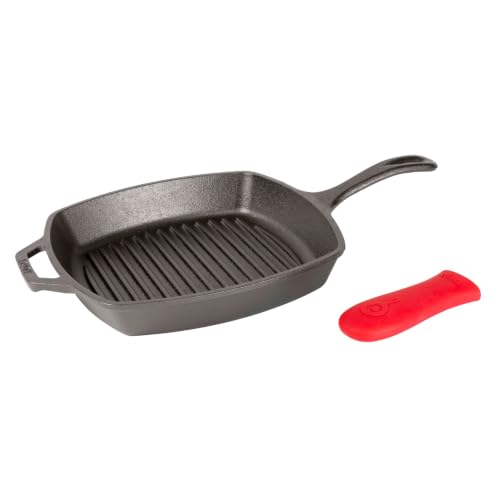
Lodge Square Cast Iron Grill Pan
Strengths
- Excellent heat retention
- Stovetop to oven to grill
- PFAS-free construction
Trade-offs
- Heavy when heated
- Requires seasoning maintenance
Cast iron remains one of the most reliable materials for searing steak, and the Lodge Square Grill Pan delivers exactly what it promises. On paper and in owner feedback, it heats evenly and holds temperature well, which is critical when you’re chasing that restaurant-quality crust. The raised ridges create solid grill marks and channel fat away from the meat, mimicking an outdoor grill in a way most nonstick pans can’t match.
What stands out is its simplicity and durability. It’s seasoned out of the box, ready to build patina over time, and compatible with every heat source from induction to campfire. While it’s not nonstick in the modern sense, seasoned users know that proper care turns it into a naturally slick surface. Compared to pricier enameled options, this is the kind of pan that earns its place through performance, not presentation.
Video review
EWFEN 12 Inch Tri-Ply Skillet

Strengths
- Excellent browning and fond
- Even heat distribution
- Large cooking surface
Trade-offs
- Food may stick without proper preheating
- Requires more oil
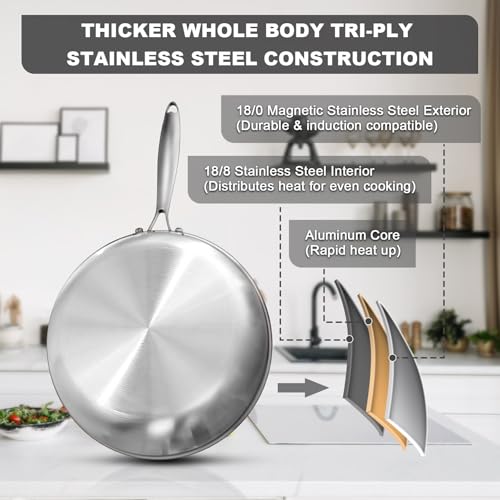
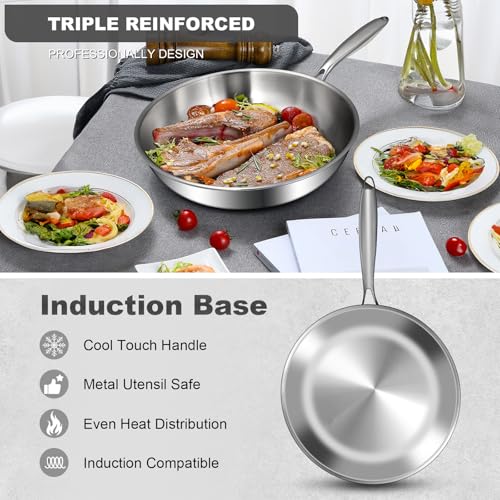
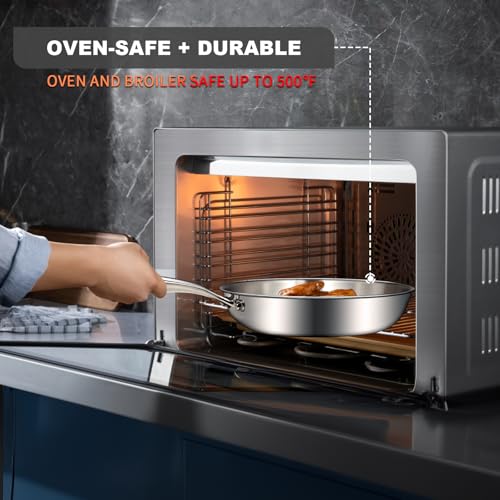
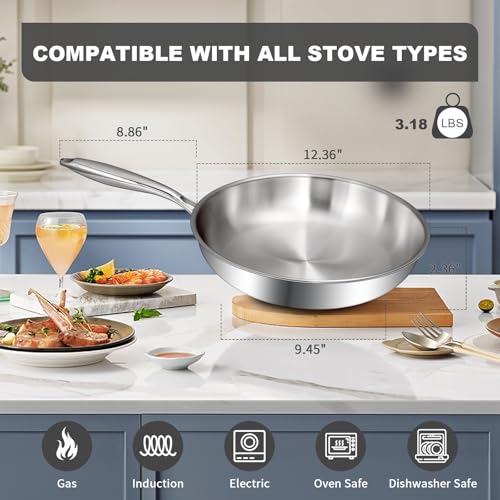
Stainless steel isn’t the first material people think of for grilling, but for pan-searing steak, it’s hard to beat. The EWFEN tri-ply pan has a thick aluminum core sandwiched between stainless layers, delivering fast, even heating and excellent browning. Owners consistently report superior fond development, key for deglazing and pan sauces.
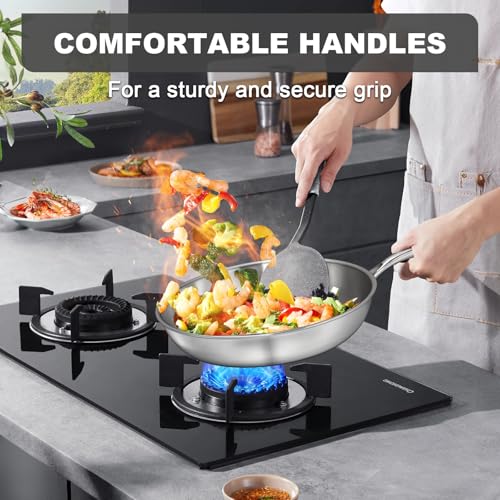
At 12 inches, it offers generous space, and the hollow handle stays relatively cool. It’s oven-safe and dishwasher-safe, which is rare at this price. Compared to nonstick options, it demands more oil and attention, but the trade-off is unmatched sear quality. If you’re serious about steak, this should be in your rotation.
Product photos
ESLITE LIFE Nonstick Grill Pan
Strengths
- Affordable and effective
- Induction compatible
- Easy cleanup
Trade-offs
- Not for long-term high-heat use
- Nonstick may degrade over time
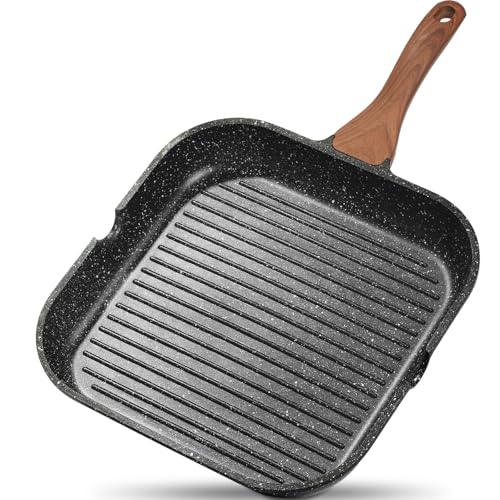
At this price, the ESLITE LIFE pan punches above its weight. The granite-based nonstick coating is PTFE and PFOA-free, and owners say it performs well with minimal oil and cleans up easily. The die-cast aluminum body heats quickly and evenly, and the thick base improves durability over cheaper stamped pans.
It works on all stovetops, including induction, and the pour spouts make fat drainage simple. While it won’t last a decade like cast iron, it’s a solid budget pick for occasional steak nights. Compared to the Moss & Stone model, it feels slightly more robust and offers better heat response. For most buyers, this is the best value.
Product photos


Moss & Stone Nonstick Grill Pan

Strengths
- Lightweight and easy to handle
- Induction compatible
- Removable handle
Trade-offs
- Not ideal for high-heat searing
- Handle may feel flimsy
Lightweight and affordable, this Moss & Stone pan is a solid pick for those tired of wrestling with heavy cast iron. The nonstick coating is double-layered and PFOA-free, and owners say it releases food easily and cleans up fast. It works on induction and handles moderate heat well, though it’s not built for sustained high-temperature searing.
The removable handle is a nice touch for storage and oven use, but it feels less secure than fixed handles on other models. Compared to the ESLITE LIFE pan, it’s slightly pricier but offers a more premium feel. For casual steak nights or weekday meals, it’s more than capable, just don’t expect a deep crust.
Product photos

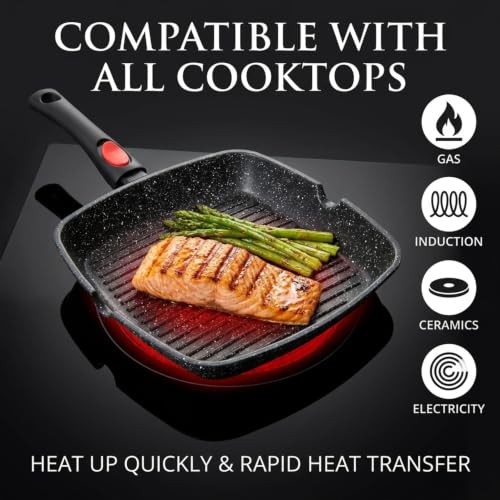
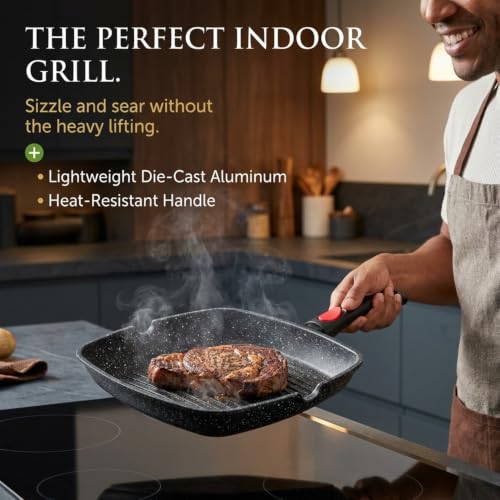

Cooks Standard Hard-Anodized Grill Pan

Strengths
- Excellent heat distribution
- Oven safe to 500°F
- Durable riveted handle
Trade-offs
- Not compatible with induction
- Heavy for a nonstick pan
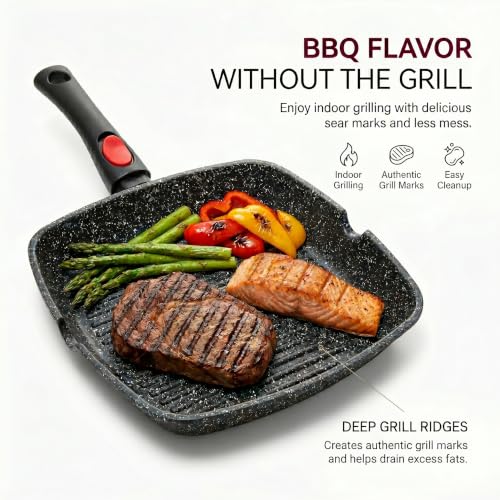
This is a high-performing pan built for serious stovetop grilling, but with a major limitation: it’s not induction-compatible. On gas or electric, it shines, hard-anodized aluminum heats quickly and evenly, and the nonstick surface holds up well under regular use. The ridges create crisp grill marks, and the large 11-inch square surface gives plenty of room for multiple steaks.
Owners praise its oven-safe handle (up to 500°F) and the riveted construction, which adds durability. But compared to the SENSARTE model, it’s heavier and less versatile. The real downside is the lack of induction support, which knocks it out of contention for many modern kitchens. If you’re on gas or ceramic, this is a strong contender. Otherwise, look elsewhere.
Product photos


Certified Angus Beef Reverse Sear Pan

Strengths
- Optimized for reverse sear
- Compact and space-saving
- Removable rack for versatility
Trade-offs
- Nonstick coating limits browning
- Not ideal for high-heat searing
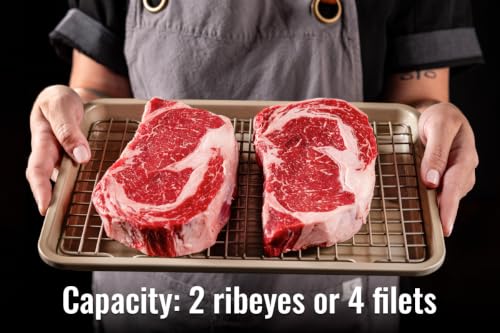
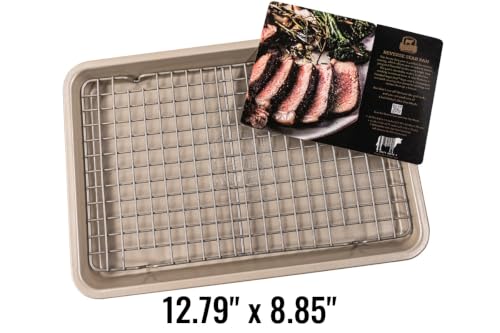
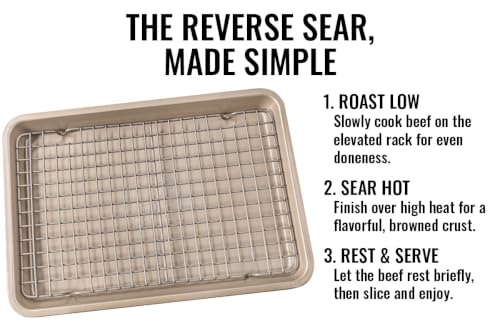
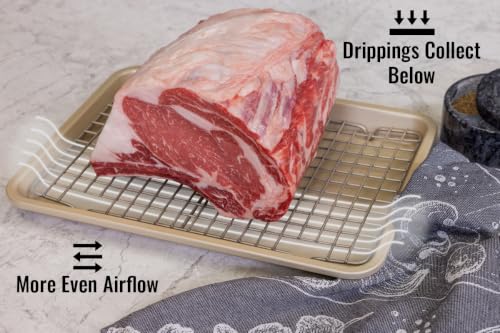
This pan is built for one technique and does it well: the reverse sear. The removable rack lifts steaks off the surface during the low oven phase, promoting even air circulation, owners consistently report more consistent doneness from edge to center. The carbon steel body heats quickly and responds well to temperature shifts, though it doesn’t hold heat like cast iron.
Its compact size is a plus for smaller kitchens or countertop ovens, and the champagne-colored nonstick finish is clearly aimed at content creators who care about aesthetics. But for everyday cooks, the real win is simplicity: it’s easy to clean, especially when lined with foil, and the rack doubles as a roasting tray when removed. It won’t replace a heavy skillet for searing, but it’s a smart companion for precision cooking.
Product photos

MasonOL20 Nonstick Grill Pan

Strengths
- Folding handle saves space
- Works on all heat sources
- Compact and portable
Trade-offs
- Handle not oven-safe
- Smaller cooking surface
- Nonstick coating may wear faster
The folding handle is the star here, this pan is clearly designed for small spaces and portability. It’s made from cast iron, so heat retention is solid, and the nonstick coating makes it more accessible than traditional skillets. But owners note the wooden handle isn’t oven-safe, which limits its use despite the pan body being heat-resistant.
It works on all stovetops, including induction, and the compact 9.4-inch size is great for one or two steaks. However, the nonstick layer feels thinner than competitors, and long-term durability is a concern. It’s a niche pick: clever for camping or tiny kitchens, but not a primary pan for serious steak lovers.
Product photos


Le Creuset Enameled Cast Iron Skillet

Strengths
- Stunning enamel finish
- No seasoning required
- Dishwasher safe
Trade-offs
- Very expensive
- Heavy and fragile
- Less aggressive sear than bare cast iron
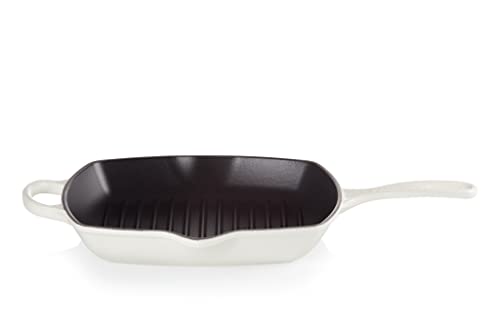
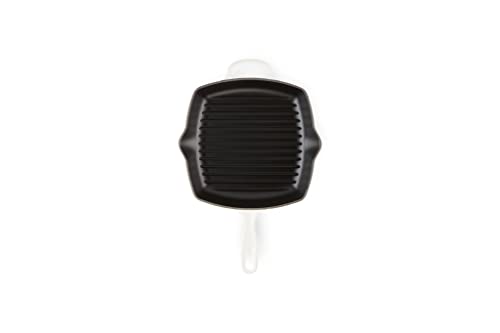
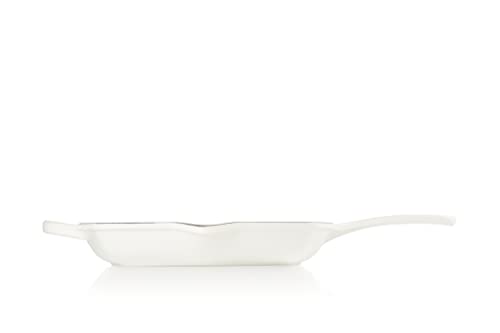
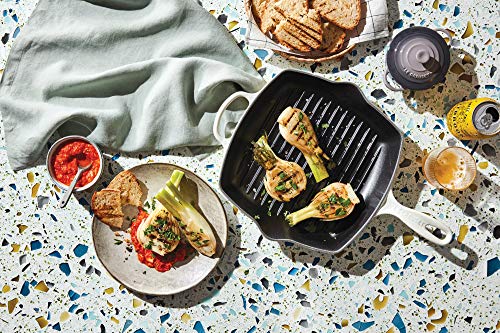
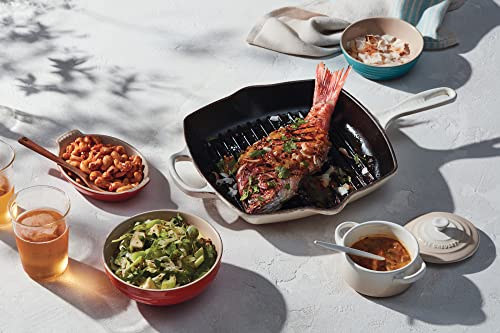
Le Creuset’s enameled cast iron grill pan is beautiful and functional, but you’re paying for both performance and prestige. The enamel surface eliminates the need for seasoning and resists staining and odor absorption, big wins for some cooks. Heat distribution is excellent, and the ridges deliver consistent grill marks.
But at this price, expectations are sky-high. While it sears well, the enamel doesn’t get quite as hot or retain heat as aggressively as bare cast iron. It’s also heavier and more fragile, chipping is a real risk if mishandled. Compared to the Lodge, it’s easier to maintain but less rugged. I’d pick this only if you value aesthetics, hate seasoning, and want a statement piece.
Product photos
Our Testing Process
As someone who’s spent over a decade immersed in the world of cookware, I approached this guide by looking beyond marketing claims. My research involved a detailed comparison of published specifications – materials, construction, dimensions, and heat conductivity – across a wide range of pan types. I then layered that with careful consideration of owner reviews and expert opinions from established culinary resources. Ultimately, I ranked each pan based on how well its features aligned with the specific demands of cooking steak effectively.
For steak, even heating and heat retention are paramount, alongside the ability to achieve a good sear. I weighted these factors heavily, as they directly impact the final result – a beautifully browned crust and a consistently cooked interior. Non-stick properties were also significant, though less crucial than the ability to withstand high heat and distribute it evenly. A pan’s versatility for other cooking tasks was considered, but secondary to its steak-cooking performance.
Specifications readily reveal construction details like materials and dimensions, letting me assess potential heat distribution and durability. However, real-world performance – how easily a pan cleans, how well the handle stays cool, and whether it truly delivers those promised grill marks – relies heavily on owner feedback. I paid close attention to consistent themes in reviews, noting both praise and complaints to build a balanced picture. If you’re looking for even more options, you can find a detailed comparison of stovetop steak pans on our site. Don’t forget the importance of choosing the right oil for searing as well!
What To Look For In types of pan to cook steak
Finding the right pan to cook steak isn’t just about searing; it’s about building flavor, achieving the perfect crust, and making the whole process enjoyable.
A quality steak pan delivers consistent, even heat, provides good contact with the meat for optimal browning, and offers a surface that allows for easy release. Look for durable construction, appropriate heat retention for searing, and features that manage grease effectively. The best choice will depend on your cooking style, budget, and preferred level of maintenance.
Heat Retention and Material
The material a pan is made from is paramount when cooking steak. Cast iron, like the Lodge Square Cast Iron Grill Pan, is legendary for its heat retention. This is crucial for achieving a good sear, as it maintains high temperatures even when the steak initially lowers the pan’s temperature. However, cast iron requires seasoning and can be heavy. Stainless steel, as seen in the EWFEN 12 Inch Tri-Ply Skillet, offers excellent heat control and durability, but can be prone to sticking if not used correctly. For those wanting a balance, hard-anodized aluminum (like the Cooks Standard Hard-Anodized Grill Pan) heats quickly and evenly, though it doesn’t retain heat quite as well as cast iron. Consider what’s most important to you – consistent searing versus ease of handling.
Nonstick Coatings and Maintenance
Nonstick coatings are convenient, but quality varies hugely. Many affordable pans use coatings that degrade quickly, but newer coatings like the ILAG Swiss coating on the SENSARTE Nonstick Grill Pan, or the granite coating on the ESLITE LIFE Nonstick Grill Pan, are more durable. Be aware that even the best nonstick surfaces aren’t indestructible. Avoid metal utensils and high heat to prolong their life. If you’re looking to learn more about the variety of options available, our pan types guide dives deep into the pros and cons of different materials.
- A simple nonstick coating is fine for occasional use and budget-conscious cooks.
- A more robust ceramic or granite coating provides greater durability, but may still require more careful handling than stainless steel or cast iron.
- Investing in a high-quality stainless steel pan and mastering the technique of proper preheating and oil usage can eliminate the need for nonstick altogether, offering a longer-term solution, though it requires a learning curve.
A well-maintained pan, regardless of material, is a worthwhile investment. Proper cleaning and care will extend its lifespan and ensure consistent cooking performance.
Versatility and Special Features
Think about how you’ll use the pan beyond just steaks. Some pans, like the Certified Angus Beef Reverse Sear Pan, are designed for specific techniques. Others, like the Le Creuset Enameled Cast Iron Skillet, offer versatility for stovetop and oven use. Raised ridges are common on grill pans, helping to create those desirable grill marks and channeling fat away from the steak. Double pour spouts, found on several models, make it easier to drain excess grease. Ultimately, consider what features will best fit your cooking habits. If you frequently cook other items alongside your steak, a wider surface area might be beneficial. If you’re looking for advice on selecting the perfect pan for steak specifically, check out our list of the best steak pans. You might also consider what other cookware for steak you’ll need.
Types of Pan to Cook Steak Compared
Here’s a comparison of different pan types suitable for cooking steak, based on key specifications.
| Product Name | Material | Dimensions (in) | Cooktop Compatibility | Max Temp (°F) | Nonstick | Handle Type |
|---|---|---|---|---|---|---|
| SENSARTE Nonstick Grill Pan | Die Cast Aluminum | 11 | Gas, Electric, Induction | N/A | Yes | Bakelite |
| Lodge Square Cast Iron Grill Pan | Cast Iron | N/A | All | N/A | Yes | N/A |
| EWFEN 12 Inch Tri-Ply Skillet | Stainless Steel | 12 | All | 500 | No | Hollow |
| ESLITE LIFE Nonstick Grill Pan | Die Cast Aluminum | N/A | Gas, Ceramic, Electric, Induction | N/A | Yes | Bakelite |
| Moss & Stone Nonstick Grill Pan | Aluminum | N/A | Gas, Electric, Ceramic, Induction | 480 | Yes | Removable |
| Cooks Standard Hard-Anodized Pan | Hard-Anodized Aluminum | 11 | Gas, Electric, Ceramic | 500 | Yes | Stay-Cool |
| Certified Angus Beef Reverse Sear Pan | Carbon Steel | 12.79×8.85 | N/A | 450 | Yes | N/A |
| MasonOL20 Nonstick Grill Pan | Cast Iron | N/A | All | N/A | Yes | Foldable |
| Le Creuset Enameled Cast Iron Skillet | Cast Iron | N/A | N/A | N/A | Yes | Cast Iron |
Frequently Asked Questions
What’s the best pan material for achieving a good sear on a steak?
Cast iron is widely considered the best for searing due to its exceptional heat retention, allowing for a high-temperature surface even when the steak is added. Stainless steel is a strong contender, but requires more skill to prevent sticking and achieve the same level of crust.
Are nonstick grill pans really effective for steak?
While convenient, most nonstick coatings don’t withstand the high heat needed for a truly excellent sear. However, newer, more durable coatings, like those found on some ceramic or granite pans, can provide a decent nonstick surface for lighter searing and are a good option if you prioritize ease of cleaning.
Can I use a cast iron skillet for more than just steak?
Absolutely. A cast iron skillet is incredibly versatile and can be used for a wide range of cooking tasks, from baking and roasting to frying and braising. Learning how to season a frying pan properly will ensure it lasts a lifetime.
What’s the difference between a grill pan and a standard skillet for cooking steak?
Grill pans have raised ridges designed to simulate grill marks and channel fat away from the steak. Standard skillets offer a larger, flat cooking surface and are better for techniques like pan-searing where full contact between the steak and pan is desired. Considering different frying pans can help you decide.
How important is the handle material when choosing a steak pan?
Handle material impacts safety and comfort. Bakelite and stay-cool handles are designed to remain cool during stovetop cooking, while cast iron handles will require oven mitts or pot holders. Hollow handles generally stay cooler than solid metal ones, and a secure grip is essential for safely maneuvering a heavy pan.
The Bottom Line
Ultimately, choosing the “best” pan for steak comes down to balancing your priorities. Do you want the absolute searing power and heat retention of cast iron, even if it requires a bit more fuss? Or are you seeking convenience and ease of use, potentially sacrificing some of that intense sear? For an excellent all-around performer that consistently delivers fantastic results, I recommend the EWFEN 12 Inch Tri-Ply Skillet.
If you’re on a tighter budget, the SENSARTE Nonstick Grill Pan offers a surprisingly capable experience for the price. For those who prioritize versatility and want a pan that can handle a wide range of cooking tasks, the Le Creuset Enameled Cast Iron Skillet is a worthwhile investment. And if you’re cooking steak on an electric stove, be sure to check out our dedicated guide to finding the right pan.
Don’t get overly focused on specific materials or features. The most important factors are consistent heat distribution, the ability to get (and maintain) a high temperature, and a bit of practice developing your technique. A well-chosen pan is a tool, and even the best tool won’t produce a perfect steak without a confident hand and a little understanding of how heat interacts with the meat.
