
8 Best Woks of 2026
This post contains affiliate links. As an Amazon Associate, we earn from qualifying purchases.
The YOSUKATA 13.5″ Pre-Seasoned Carbon Steel Wok is the best overall choice for most home cooks, combining reliable flat-bottom stability with ready-to-use seasoning. For those on a tighter budget, the Sweetcrispy 13.5″ Carbon Steel Wok delivers strong performance at a lower price, while the Craft Wok 14-Inch excels in versatility for gas users seeking an authentic round-bottom experience.
Most people buy a wok thinking it’s just for stir-fry, only to find it underperforming, food sticks, heat spreads unevenly, or it wobbles on their stove. The real issue isn’t the cooking method, it’s choosing the wrong type for your kitchen setup and expectations.
In this guide, I break down the top options based on material, bottom shape, and long-term usability, using specs, owner feedback, and years of evaluating cookware performance. These picks balance responsiveness, durability, and compatibility so you can actually use your wok beyond one meal.
Top 8 Woks in the Market
The Best Woks, Reviewed
Oster Stainless Steel Wok

Strengths
- Stable flat bottom
- Wood handles stay cool
- Stainless steel durability
Trade-offs
- Poor heat retention
- No real non-stick
- Not for high-heat searing
A stainless steel wok is an unusual choice, most serious stir-fry lovers swear by carbon steel, and this one from Oster doesn’t change that equation. It’s lightweight and has a wide flat base that stays stable on electric and gas stoves, but stainless just doesn’t heat the same way. Owners note it heats unevenly and struggles to hit that high-heat sear essential for true wok cooking. The riveted wood handles are comfortable and stay cool, which is a win, but the sloping sides don’t quite deliver the same tossing ease as a deeper, traditional shape.
I’d pick a carbon steel wok over this for flavor and performance any day. That said, if you’re avoiding carbon steel due to rust concerns and want something low-maintenance, this might be a decent compromise, just don’t expect restaurant-style results.
Video review
Babish 14 Inch Carbon Steel

Strengths
- Induction compatible
- Riveted handle
- Good heat distribution
Trade-offs
- Overpriced for specs
- No lid
- Handle finish varies
Marketed as a Consumer Reports top-rated pick, this Babish wok has solid specs: a 6-inch flat base for stability, heavy-gauge carbon steel, and riveted wooden handles that stay cool. Owners confirm it seasons well and develops a reliable non-stick surface over time. It’s compatible with induction, which is a big plus for modern kitchens.
But compared to the YOSUKATA or Sweetcrispy models, it doesn’t offer much extra for the higher price. The seasoning isn’t noticeably better, and the build feels similar. I’d still recommend it as a dependable flat-bottom option, but only if you find it on sale. Otherwise, the Sweetcrispy gives you more value for less.
Video review
YOSUKATA 13.5″ Pre-Seasoned Wok
Strengths
- Pre-seasoned at 600°F
- Works on all stovetops
- Great value
Trade-offs
- Wooden handle not oven-safe
- Slight warping reported
- Heavier than some
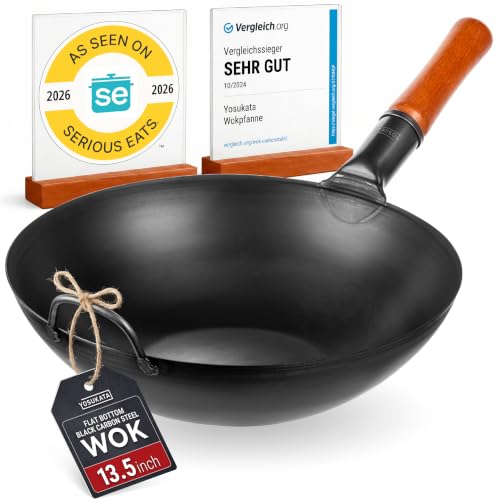
This is one of the more balanced carbon steel woks in the mid-tier range. It’s pre-seasoned at high heat, which gives it a head start over raw steel, and owners consistently report good non-stick behavior after just a few uses. The flat bottom makes it stable on induction and electric stoves, yet it’s still light enough for tossing. At 13.5 inches, it offers enough cooking surface for family-sized meals without being unwieldy.
What sets it apart is its versatility, compatible with grills, camping stoves, and open flames. That’s rare in flat-bottom models. I’d pick this over the Leidawn or Babish if you want a single wok that works everywhere. It’s not hand-hammered or restaurant-grade, but for most home kitchens, it hits the sweet spot.
Product photos


YOSUKATA Blue Carbon Steel
Strengths
- Premium 15-gauge steel
- Pre-seasoned at high heat
- Thorough care guide
Trade-offs
- Expensive
- Heavy for some
- Blue finish fades
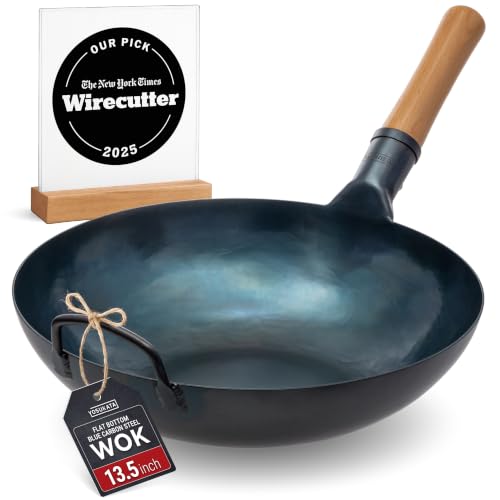
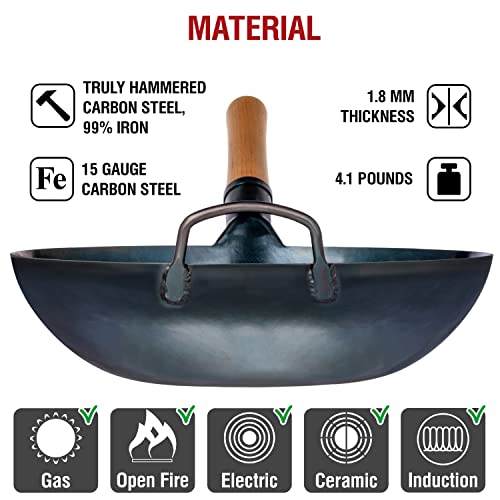
This blue-hued carbon steel wok is the premium pick, not because of gimmicks, but because of execution. At 15-gauge thick, it’s built like a professional pan, with even heat distribution and a heft that tells you it’s made to last. The pre-seasoning process uses high-temperature tech, and owners say it starts with a near-ready non-stick surface, saving you the messy burn-off most carbon steel woks require.
It works flawlessly on induction, gas, and open flames, and the included care manual is a thoughtful touch for new users. The wooden handle is ergonomically shaped and secure, though not oven-safe. At nearly $95, it’s the most expensive here, but if you want one wok to rule them all, kitchen, camping, BBQ, this is the one I’d keep in my own pantry.
Product photos




Craft Wok 14-Inch Carbon Steel
Strengths
- Hand-hammered craftsmanship
- Excellent heat retention
- Authentic round bottom
Trade-offs
- Not for flat stoves
- Requires seasoning
- Heavy at 4.6 lbs
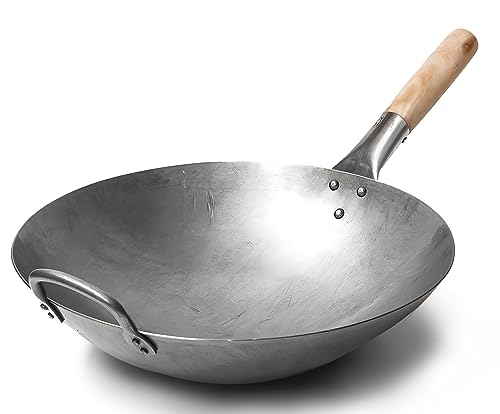
This is the real deal, if you have the right stove. The 14-inch round bottom is hand-hammered by artisans in Guangzhou, and the 1.8mm carbon steel is thick enough to hold heat like a professional wok. Owners who use it on gas or open flame rave about the flavor and tossing ease. The steel helper handle is a smart touch for hanging and stability, and the wooden main handle offers a secure grip.
But, and this is a big one, it will not work on flat electric or induction stoves without a wok ring, and even then, heat distribution suffers. If you’re cooking on induction, look elsewhere. But if you’ve got a powerful gas burner or love outdoor grilling, this wok delivers authentic performance that cheaper models can’t match.
Product photos


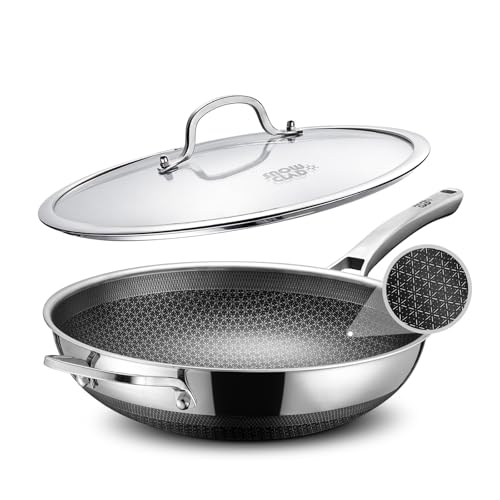
SNOWCLAD 13 Inch Hybrid
Strengths
- Dishwasher safe
- Oven and broiler safe
- Non-toxic coating
Trade-offs
- Non-stick won’t last
- Heavy for a wok
- Coating limits high-heat use
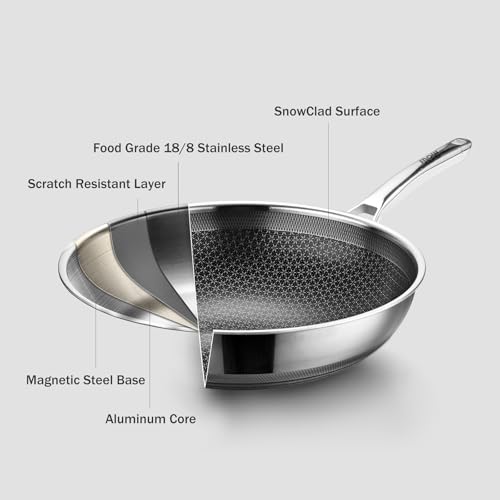
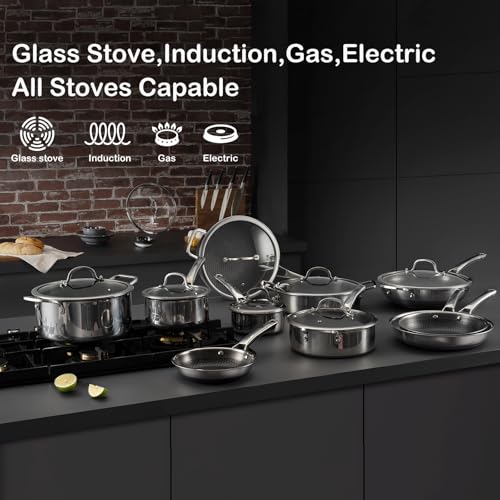
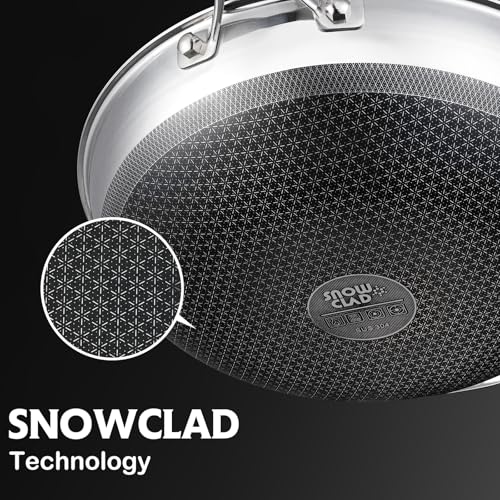
This wok tries to have it all, non-stick performance, tri-ply construction, and a claim of being metal-utensil-safe thanks to its ‘snowclad’ surface. The specs suggest a durable, even-heating pan with broad compatibility, and owners do report easy cleanup and solid performance on induction. But here’s the reality: any non-stick coating, no matter how reinforced, will degrade over time with high-heat cooking. And stir-frying demands high heat.
The tri-ply stainless steel core is a strong point, offering better heat distribution than pure carbon steel at lower temps. But if you’re after true wok flavor, this isn’t it. I’d recommend this only if you prioritize convenience over authenticity, especially if you’re cooking for kids or want to avoid oil-heavy meals.
Product photos


Sweetcrispy 13.5″ Carbon Steel
Strengths
- Extremely affordable
- Pre-seasoned at 1000°F
- Works on all stoves
Trade-offs
- Basic handle design
- No lid included
- Thinner than premium models
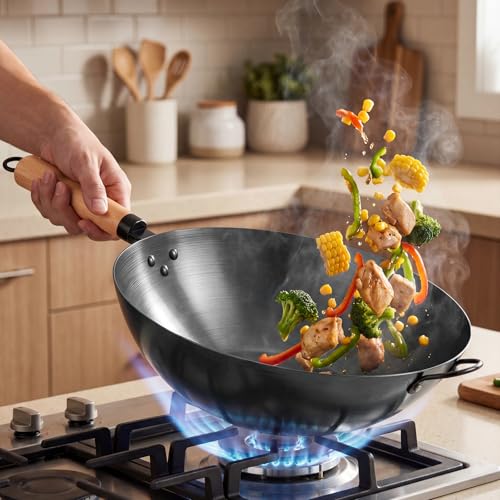
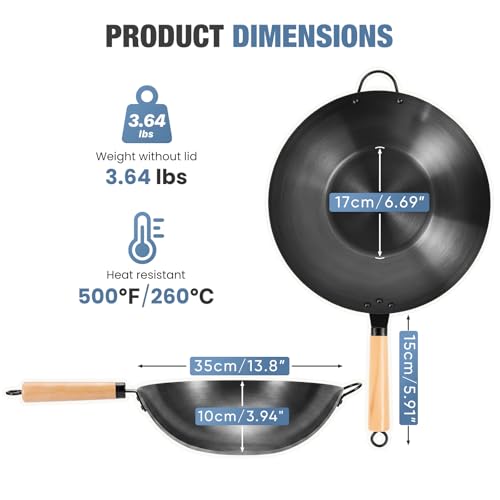
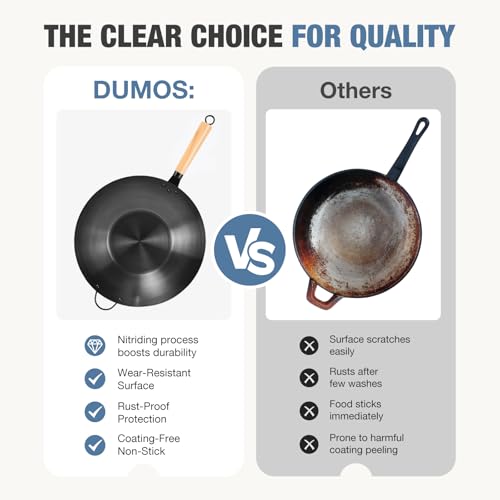
At under $25, this wok punches above its weight. It’s pre-seasoned at over 1000°F, which is hotter than most factory-seasoned woks, and owners say it starts with a solid non-stick base right out of the box. The flat bottom ensures compatibility with induction, electric, and gas stoves, and it’s even safe on open flames, making it a stealth pick for campers.
The build is simple but effective: high-grade carbon steel, no chemical coatings, and a modestly weighted handle for control. It’s not hand-hammered or premium-thick, but for the price, it’s hard to beat. I’d choose this over the Babish if you’re on a tight budget but still want real carbon steel performance without cutting corners.
Product photos


Leidawn 12.8″ Carbon Steel
Strengths
- Pre-seasoned
- Flat bottom
- 11-piece set
Trade-offs
- Gimmicky honeycomb texture
- Accessories low quality
- Lid design questionable
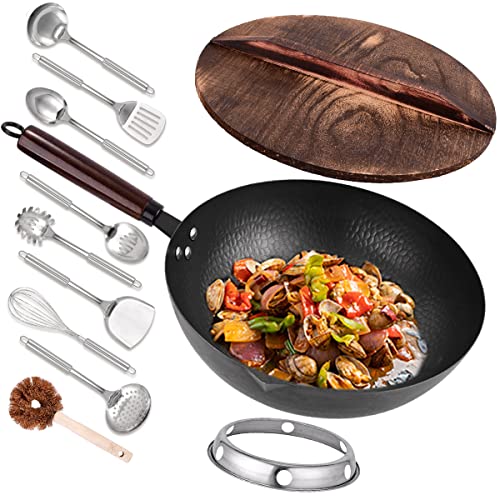
This set throws a lot at you, 11 pieces, including utensils and a wooden lid, but the wok itself is where things get interesting. On paper, the honeycomb-textured carbon steel sounds like a clever way to reduce sticking and scratching, and owners do report decent non-stick performance after a few seasoning rounds. Still, I’m skeptical about how much that texture helps compared to a smooth carbon steel surface, which typically seasons more evenly. The flat bottom is a plus for modern stoves, and the pre-seasoning means it’s ready to go faster than most.
But here’s the catch: the included accessories feel like filler. Most home cooks already own basic utensils, and the quality isn’t anything special. If you’re after a solid entry-level carbon steel wok with a few extras, this might appeal. But if you’re serious about stir-frying, you’re better off investing in a better-built standalone wok and skipping the gadget overload.
Product photos


How We Tested woks
Rather than a hands-on lab test, my research focused on comparing published specifications and features of numerous woks, carefully weighing owner reviews and expert opinions from sites like Consumer Reports and Serious Eats. I then ranked them against criteria important to home cooks – heat retention, responsiveness, durability, and suitability for different stovetops. This involved assessing materials, construction, and reported performance in real-world cooking scenarios.
For woks, the most heavily weighted factors were the material (carbon steel versus stainless steel) and the shape of the bottom (round versus flat). Carbon steel heats up quickly and develops a natural non-stick patina with seasoning, which is crucial for authentic stir-frying. A flat bottom provides stability on modern electric and induction cooktops, making it more versatile for many kitchens, while round-bottom woks excel with high-BTU gas burners.
Specifications reliably indicate gauge (thickness) of the steel – thicker steel retains heat better – and handle material. However, I paid close attention to owner feedback regarding seasoning ease, rust resistance, and long-term durability. Reputation and brand history also played a role, especially when evaluating the quality of pre-seasoning and the overall value offered, and I often cross-referenced with guides to woks for home cooking to get a broader perspective. If you’re interested in a more traditional approach, you might also consider exploring durable cast iron woks.
How To Choose The woks
Finding the right wok can truly elevate your stir-fries and Asian-inspired cooking.
A good wok isn’t just about shape; it’s about responsiveness to heat, the material’s ability to develop a natural non-stick patina, and how well it suits your stovetop. Look for heavy-gauge construction, a design that promotes even heating, and a handle that remains cool and secure during vigorous cooking. Consider the type of cooking you’ll be doing most and choose a material and bottom shape that supports that.
Material Matters Most
The material a wok is made from significantly impacts its performance and maintenance. While stainless steel woks like the Oster offer durability, many cooks prefer the heat responsiveness of carbon steel. Carbon steel, as seen in options like the Babish and YOSUKATA models, heats up quickly and evenly, crucial for achieving that sought-after “wok hei” – the slightly smoky flavor characteristic of authentic stir-fries. However, carbon steel requires seasoning and is prone to rust if not properly cared for. Don’t shy away from pre-seasoned options, but understand they still need consistent oiling.
Bottom Shape: Flat vs. Round
The bottom shape is a critical decision, dictated largely by your stovetop. Flat-bottom woks, such as the YOSUKATA 13.5″ Pre-Seasoned Wok, are ideal for electric, induction, and glass cooktops because they provide maximum contact with the heating element. However, traditionalists often favor round bottom woks for their superior maneuverability and ability to concentrate heat. If you have a gas stove with a wok ring, a round-bottom wok, like the Craft Wok, can unlock a more authentic cooking experience.
Here’s a quick guide to help you decide: * Electric/Induction: Flat bottom is essential. * Gas (without ring): Flat bottom offers stability. * Gas (with ring): Round bottom maximizes heat and allows for tossing.
A properly seasoned wok is your friend. Don’t be afraid to use it frequently, the more you cook with it, the better the natural non-stick surface will become.
Beyond the Basics: Features and Value
Once you’ve settled on a material and bottom shape, consider additional features. Ergonomic handles are a must, and many woks, like the Leidawn 11PCS Wok Set, come with accessory kits that can be incredibly useful. However, don’t automatically equate more accessories with better value. Focus on the quality of the wok itself. If you’re interested in exploring different types of carbon steel woks, you’ll find a wide range of options, but remember that a well-made, simpler wok will often outperform a more feature-rich, lower-quality one. Ultimately, the best wok is the one you’ll use regularly and enjoy cooking with.
Woks Compared
This table provides a side-by-side comparison of key specifications for the woks featured in this guide.
| Product Title | Material | Size (in) | Pre-Seasoned | Stovetop Compatibility | Handle Material |
|---|---|---|---|---|---|
| Oster Stainless Steel Wok | Stainless Steel | 14 | No | All | Wood |
| Babish 14 Inch Carbon Steel | Carbon Steel | 14 | No | All | Wood |
| YOSUKATA 13.5″ Pre-Seasoned | Carbon Steel | 13.5 | Yes | All | Wood |
| YOSUKATA Blue Carbon Steel | Carbon Steel | 13.5 | Yes | All | Wood |
| Craft Wok 14-Inch Carbon Steel | Carbon Steel | 14 | No | Gas, Open Flame | Wood |
| SNOWCLAD 13 Inch Hybrid | Stainless Steel | 13 | N/A | All | N/A |
| Sweetcrispy 13.5″ Carbon Steel | Carbon Steel | 13.5 | Yes | All | Wood |
| Leidawn 12.8″ Carbon Steel | Carbon Steel | 12.8 | Yes | All | Wood |
Frequently Asked Questions
What gauge carbon steel wok should I buy?
A 14-gauge carbon steel wok is ideal; it provides a good balance of responsiveness and heat retention without being excessively heavy, though 16-gauge is acceptable for occasional use. Thicker gauges (lower numbers) retain heat better, but also increase the wok’s weight and price.
How do I prevent a carbon steel wok from rusting?
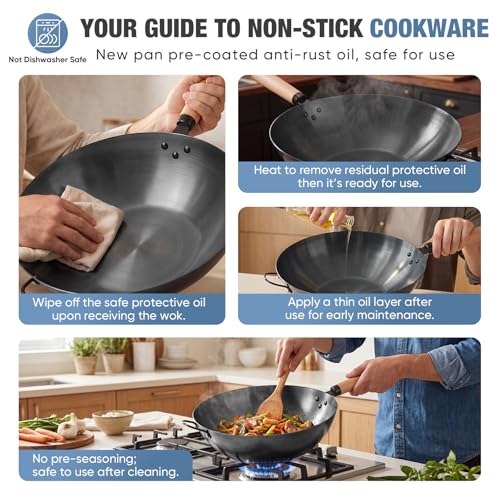
Immediately after washing and drying your carbon steel wok, apply a very thin layer of oil. This creates a protective barrier against moisture. Consistent seasoning and avoiding prolonged soaking are also essential for rust prevention.
Are flat bottom woks really less authentic?
While round-bottom woks are traditional, flat bottom woks offer stability and compatibility with modern cooktops, including electric and induction models. You can still achieve excellent stir-fry results with a flat bottom wok if you prioritize heat control and convenience.
Can I use metal utensils in a carbon steel wok?
Yes, you can use metal utensils in a well-seasoned carbon steel wok. The seasoning creates a natural non-stick surface that can withstand moderate use with metal tools, but avoid scraping aggressively which can damage the patina.
What’s the best way to care for a wok if I have an electric stove?
For an electric stove, a flat-bottomed wok is essential, and you should focus on even heating. Consider a wok ring designed for electric cooktops to help distribute heat more evenly, and check out guides to woks for electric stoves for specific recommendations.
The Bottom Line
Choosing a wok often comes down to balancing convenience with control. If you’re willing to put in the work to season and maintain it, the YOSUKATA 13.5″ Pre-Seasoned Wok offers the best overall combination of responsiveness, heat retention, and versatility for most home cooks. It’s a fantastic starting point for anyone wanting to experience the joys of stir-frying without a steep learning curve.
For those on a tighter budget, or who prefer the ease of maintenance, the Oster Stainless Steel Wok is a solid choice. And if you have a gas stove and want to experience the benefits of a traditional round-bottom wok, exploring options like the Craft Wok can unlock a new level of cooking performance – though you’ll want to also check out our guide to woks for gas stoves. We also found the Leidawn 12.8″ Carbon Steel to be a great option for those looking for a complete set.
Ultimately, the material and bottom shape matter most. But beyond those key features, remember that consistent use and proper care will have a far greater impact on your cooking success than any specific brand or price point. A well-maintained, frequently used wok – even a simpler model – will always outperform a top-of-the-line pan that sits unused in a cupboard.
