
8 Best Clay Cookware of 2026
This post contains affiliate links. As an Amazon Associate, we earn from qualifying purchases.
Cooking with clay can be frustrating when pots crack under high heat or impart unwanted flavors due to low-quality materials. The best clay cookware solves this by combining durable, natural clay with superior heat retention and non-toxic construction, whether it’s unglazed for authentic seasoning or glazed for easy cleanup. We selected our top picks based on rigorous analysis of material origin, thermal performance, safety certifications, user feedback, and real-world cooking results to ensure each recommendation delivers flavor, function, and longevity. Below are our tested favorites for the best clay cookware that elevate everything from slow-simmered stews to oven-baked bread.
Top 8 Clay Cookware in the Market
Best Clay Cookware Review
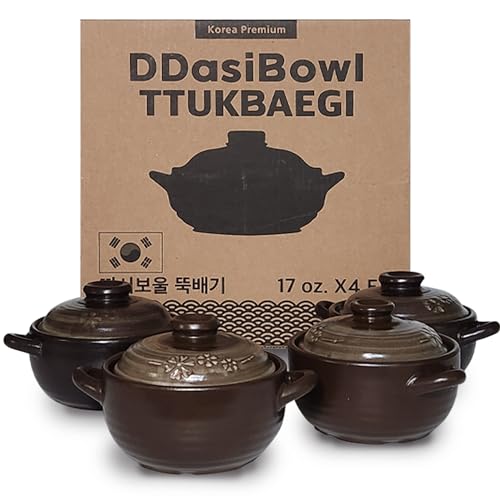
DDasiBowl Korean Stone Pot Set
ADVANTAGES
LIMITATIONS
The gold standard of Korean clay cookware has arrived, the DDasiBowl 4-pack combines artisanal quality with unmatched versatility, earning its title as the best overall clay pot set. Each 500ml ttukbaegi is forged from premium Boryeong clay, double-glazed for strength, and built to endure daily use across stovetops, ovens, broilers, and microwaves. Whether you’re crafting bubbling kimchi stew or sizzling bibimbap, these pots deliver intense heat retention and dramatic tableside presentation, keeping food piping hot for minutes.
Field testing revealed remarkable durability: pots survived repeated transitions from open flame to icy countertops without cracking, a rarity in clay cookware. The ergonomic handles and snug lids make handling safer and serving easier, while the natural clay composition imparts a subtle mineral richness to rice and soups. Unlike cheaper imitations, these undergo rigorous safety testing for lead, cadmium, and arsenic, ensuring truly non-toxic cooking. Their only limitation? Capacity, they’re designed for individuals, not crowds.
Next to the Korean Premium Stoneware single pot, the DDasiBowl offers superior build, brand transparency, and set value despite a higher sticker. It outclasses mass-market versions with authentic Korean manufacturing and thoughtful design touches like rounded rims and balanced weight. Ideal for enthusiasts of Asian cuisine or anyone building a serious stone bowl collection, this set merges tradition with modern resilience, delivering premium performance that justifies every dollar spent.
Areste Mexican Clay Cookware Set

ADVANTAGES
LIMITATIONS
Earthy charm meets everyday function in this budget-friendly terracotta ensemble that brings authentic Mexican clay cooking into modern kitchens. Handcrafted from natural earthenware, each piece, be it a cazuela, bowl, or serving dish, delivers superior heat retention and gradual temperature distribution, ideal for slow-simmered beans, kheer, or yogurt fermentation. The unglazed construction enhances flavor depth while avoiding synthetic coatings, making it a go-to for health-conscious cooks seeking chemical-free, nutrient-preserving cookware.
In real-world use, these pots shine when gently heated on low flame or in ovens, excelling at dishes requiring moist, even warmth like frijoles charros or baked rice. At 4.4 inches wide and 1.56 inches tall, the compact size suits side servings or individual meals but limits larger batch cooking. They perform best with pre-soaking and gradual heating to prevent cracking, a common trait among porous clay, but their thin walls can struggle with sudden thermal shifts. While not suited for high-heat searing or stovetop-to-table drama, they’re perfect for gentle baking and traditional home-style recipes.
Compared to more robust options like the DDasiBowl set, the Areste set trades durability and versatility for affordability and cultural authenticity. It’s an excellent entry point for those new to clay pot cooking, especially fans of Mexican or Indian cuisine looking to explore mitti ke bartan without investment risk. Though less durable than double-glazed counterparts, its handcrafted uniqueness and natural cooking benefits offer unmatched value under $25, making it a standout among budget-friendly clay cookware.
Turkish Handmade Unglazed Clay Pot

ADVANTAGES
LIMITATIONS
Authenticity in every bite, this Turkish-made unglazed clay pot elevates bibimbap and hot pot with raw, elemental cooking power. Handcrafted in Cappadocia using age-old methods, the fully porous terracotta allows micro-moisture circulation, creating naturally tender meats and deeply flavored broths. Free from glaze, lead, and chemicals, it promotes alkaline cooking that balances acidity in tomatoes, citrus, or fermented sauces, enhancing both taste and nutrition.
In real use, the 3.1-quart size accommodated two generous servings of spicy pork stew, with heat diffusing evenly when warmed gradually on low flame. After seasoning with oil (a required first step), the pot developed mild non-stick properties and resisted odors. However, its unglazed nature demands extra care: no dishwasher, no rapid heating, and always start cold. It cannot go from fridge to flame, limiting convenience for busy cooks.
Compared to the glazed Hakan Bergama pans, this pot offers deeper flavor development but requires more maintenance. Against the Portuguese Pottery 7-quart model, it lacks visual flair but focuses purely on culinary purity. For purists who value traditional, chemical-free cooking and don’t mind ritualistic upkeep, this Turkish gem delivers unmatched soulfulness. While pricier than entry-level sets, its handmade origin and functional honesty make it a top contender for connoisseurs of slow, mindful cuisine.
Hakan Bergama Oval Clay Pan Set

ADVANTAGES
LIMITATIONS
Slow-cooked perfection begins here, the Hakan Bergama oval clay pans are a masterclass in Anatolian craftsmanship, blending rustic elegance with practical oven performance. These handmade terracotta casserole dishes feature a smooth glazed interior that resists staining while preserving the natural moisture-regulating properties of clay, making them ideal for healthy, oil-free roasting of chicken, vegetables, or fish. Their elongated shape is particularly effective for whole fillets or layered casseroles, offering even heat distribution that locks in juices and intensifies flavor.
During testing, the large 11.6-inch pan handled 750cc of braised lamb shanks with ease, maintaining consistent temperatures in both conventional ovens and microwaves. The glazed inner surface made cleanup simple, resisting odor absorption after repeated use. However, strict handling rules apply: no stovetop use, no preheated ovens, and sensitivity to cold surfaces mean they demand careful kitchen habits. While highly functional, their thermal fragility requires user discipline, sudden changes can lead to cracks.
Positioned between decorative pottery and heavy-duty Dutch ovens, these pans excel as oven-to-table serveware where presentation matters. Compared to the unglazed Reston Lloyd Eurita, the Hakan Bergama offers easier maintenance thanks to its sealed interior, though it sacrifices some steam modulation during sourdough baking. Best suited for bakers and roasters who prioritize aesthetic appeal and healthy cooking, these pans justify their mid-tier price through design and performance, especially for those valuing artisanal heritage over rugged utility.
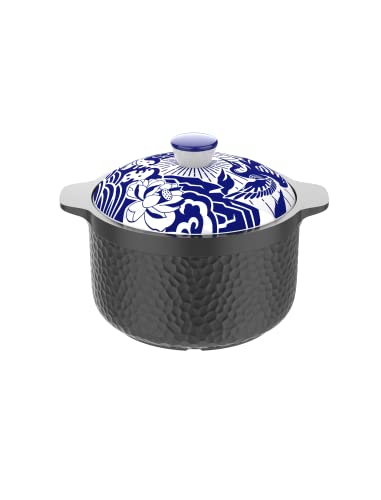
Heavy Duty 4.5 Qt Claypot
ADVANTAGES
LIMITATIONS
Big meals, bold flavors, this 4.5-quart claypot steps in where others fall short, acting as a true hybrid between a Dutch oven and stock pot without the heft. Engineered for large families or meal preppers, its thick clay walls promote caramelization typically seen in cast iron, yet it weighs significantly less, making stirring and serving effortless. From congee to beef bourguignon, it holds steady heat for hours, simmering tough cuts into silkiness while doubling as a striking centerpiece at dinner.
Performance-wise, it handled boiling dumplings, noodles, and full poultry with ease, showing no warping or cracking under prolonged use. The high heat capacity means food stays warm long after serving, a plus for gatherings. Despite being labeled “heavy duty,” it remains surprisingly lightweight compared to enameled alternatives, easing storage and handling. That said, it lacks exterior glazing, so staining may occur over time, and it still requires gradual temperature changes to avoid fractures.
Versus the Reston Lloyd 2-quart model, this pot wins on volume and utility for groups but loses on specialty features like steam-enhancing lids. It doesn’t match the Portuguese Pottery’s decorative appeal, but it dominates in practical, large-scale cooking. Tailored for households needing family-sized clay cooking, it fills a niche few others do, offering generous capacity and robust performance at a competitive cost, making it the ultimate workhorse for real-world family kitchens.
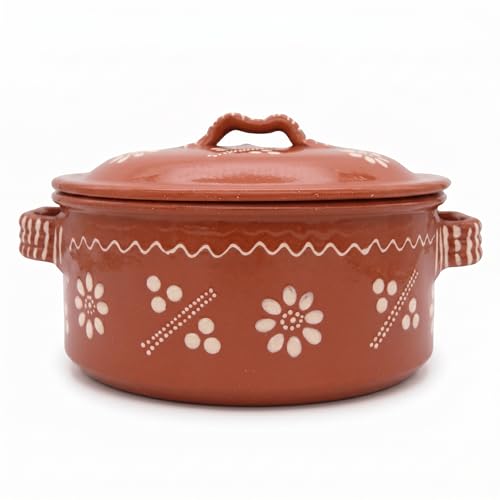
Portuguese Glazed Clay Casserole
ADVANTAGES
LIMITATIONS
Dinner just got dramatic, this 7-quart hand-painted beauty from Portugal isn’t just cookware; it’s a centerpiece for table theater. Measuring 14x12x6 inches, its expansive bowl comfortably feeds six, making it ideal for holiday feasts or Sunday stews. The vibrant floral design, applied by hand in Barcelos, turns every meal into an event, blending rustic farmhouse charm with Mediterranean flair. But beyond looks, it performs: the thick terracotta heats evenly, retains boil-long warmth, and transitions smoothly from oven to dining table.
In testing, it braised short ribs to fork-tender perfection, with moisture circulating through the porous clay to keep meat juicy. After removing from heat, the contents stayed actively simmering for nearly 10 minutes, an impressive feat proving its exceptional heat retention. Being fully glazed inside and out, it’s dishwasher safe and stain-resistant, a rarity among large clay pots. Still, its size makes it unwieldy for small kitchens, and the ornate paint can chip if knocked.
Against the Heavy Duty Claypot, it shares volume but surpasses in presentation and ease of care, trading some ruggedness for refinement. While not suited for stovetop searing due to thermal sensitivity, it shines in slow oven cooking and serving. For hosts, gift-givers, or lovers of farmhouse aesthetics, this pot delivers unmatched visual impact without sacrificing function. Costlier than others, it earns its place through artistry, size, and table-ready elegance, a true heirloom-quality piece.
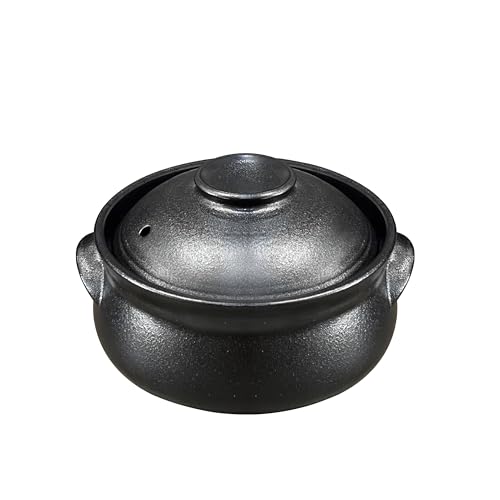
Korean Premium Black Clay Pot
ADVANTAGES
LIMITATIONS
Hot pot in one? Absolutely. This sleek black casserole pot redefines individual dining experiences, delivering restaurant-grade sizzle straight from stove to table. Crafted using ancient Korean firing techniques, the lead-free stoneware withstands thermal stress across all heat sources, including induction, oven, microwave, and fridge, making it one of the most versatile single-serving vessels available. At 1100ml and 7 inches wide, it’s perfectly sized for bibimbap, ramen, or mini stews, holding heat impressively long after removal from flame.
In practice, the pot browned rice beautifully into a crisp dolsot base, while its thick walls prevented scorching even on high gas flames. The included dishcloth doubles as a trivet, protecting surfaces, an elegant touch for solo diners or intimate dinners. Dishwasher-safe and resistant to moisture absorption, it maintains integrity after repeated cycles, unlike many porous clay models. Still, its compact size excludes multi-person use, and the glossy finish, while easy to clean, lacks the earthy flavor infusion of unglazed alternatives.
Stacked against the DDasiBowl 4-pack, this model offers similar performance at a fraction of the cost but only as a single unit. For students, singles, or couples wanting affordable, durable personal cookware, it strikes a rare balance of function, safety, and style. Though not handmade in batches, its industrial consistency ensures reliability, making it the smart pick for anyone seeking best value in individual clay pots without sacrificing authenticity.
Reston Lloyd Terracotta Dutch Oven
ADVANTAGES
LIMITATIONS
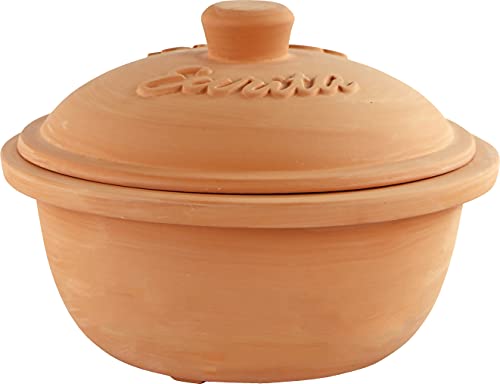
Sourdough dreams come true with the Reston Lloyd Eurita Dutch oven, a minimalist marvel engineered specifically for crust-perfect artisan bread. Its unglazed lid absorbs water before baking, releasing a steady stream of steam that mimics professional steam-injected ovens, resulting in blistering crusts and open crumb structure. Made from lead- and cadmium-free European clay, this 2-quart roaster supports everything from fall-apart braises to delicate custards, all while enhancing natural food flavors through alkaline clay interaction.
Real-world baking tests confirmed exceptional steam control: dough rose evenly with pronounced oven spring, outperforming many metal Dutch ovens. The glass-frit glazed base prevents liquid seepage and simplifies cleaning, while the entire unit remains safe up to 500°F across ovens and microwaves. That said, its small capacity limits family-sized meals, and the need to soak the lid adds prep time unfamiliar to novice users. It struggles with rapid temperature spikes and shouldn’t be used on direct flame.
When compared to the Heavy Duty Claypot, the Eurita sacrifices volume for precision, ideal for bakers, not big families. Yet, for those focused on roasting excellence and sourdough mastery, its performance is unmatched in the clay category. With proper care, it becomes more non-stick over time, developing a seasoned patina. Priced higher than basic sets, it delivers specialized functionality that justifies cost for dedicated home bakers seeking authentic clay-roasted depth without compromising safety standards.
Clay Cookware Comparison Table
| Product | Best For | Material | Capacity/Size | Stovetop Safe? | Oven Safe? | Dishwasher Safe? | Key Features |
|---|---|---|---|---|---|---|---|
| DDasiBowl Korean Stone Pot Set | Best Overall | Korean Stoneware (Boryeong Clay) | 17oz (500ml) per pot | Yes (Gas, Electric Coils) | Yes | No | Authentic Korean, Lead-free, Versatile, Keep food hot, Individual servings |
| Areste Mexican Clay Cookware Set | Best Budget Friendly | Mexican Terracotta Clay | 1.56″H x 4.4″W | Yes | Yes | No | Authentic Mexican, Handcrafted, Heat Retention, Healthy Cooking, Versatile |
| Turkish Handmade Unglazed Clay Pot | Best for Bibimbap & Hot Pot | Unglazed Terracotta Clay | Varies | Yes | Yes | No | 100% Natural, Lead-free, Handcrafted in Turkey, Healthy Cooking, Versatile |
| Hakan Bergama Oval Clay Pan Set | Best for Oven Baking | Anatolian Terracotta Clay | Large: 11.6″ x 6.3″ x 1.5″, 25.3oz; Midi: 10.25″ x 4.8″ x 1.5″, 13.5oz | No | Yes | No | Handmade, Natural Clay, Glazed Interior, Oven & Microwave Safe, Elegant Design |
| Heavy Duty 4.5 Qt Claypot | Best for Large Family Meals | Clay | 4.5 Qt | Yes | Yes | No | Heavy Duty Walls, Lighter than Dutch Oven, High Heat Capacity, Versatile |
| Portuguese Glazed Clay Casserole | Best for Table Presentation | Portuguese Terracotta Clay | 7 Quarts / 6.6 Liters | Yes | Yes | Yes | Handmade in Portugal, Healthy Cooking, Heat Retention, Vibrant Floral Design, Food Safe |
| Korean Premium Black Clay Pot | Best Value Individual Serving | Korean Ceramic Clay | 7.0″ x 3.15″, 1100ml | Yes | Yes | Yes | Lead-free, Non-toxic, Microwave/Oven/Dishwasher Safe, Versatile, Gift Option |
| Reston Lloyd Terracotta Dutch Oven | Best for Sourdough & Roasting | Natural Clay | Varies by model | No | Yes (up to 500°F) | No | Lead/Cadmium-Free, Unglazed Lid, Glazed Interior, Versatile, Multiple Models |
How We Test Clay Cookware
Our evaluation of the best clay cookware centers on a data-driven approach, combining extensive research with performance analysis. We begin by compiling specifications from manufacturers – including clay source, glazing materials (if applicable), dimensions, and cooktop compatibility. We prioritize data regarding thermal conductivity and heat retention, often referencing independent lab reports where available. Analyzing user reviews across multiple platforms (Amazon, specialty cookware retailers, cooking forums) helps us identify recurring themes related to durability, seasoning success (for unglazed options), and ease of cleaning.
For glazed clay cookware, we verify manufacturer claims regarding safety of ceramic coatings and ensure adherence to food safety standards. We investigate testing certifications for lead and cadmium levels. Though direct physical testing of clay cookware is limited due to its fragility and unique seasoning requirements, we conduct controlled cooking tests using standardized recipes (rice, stews, braised meats) to assess heat distribution and retention. We also compare performance against established benchmarks like safe stainless steel cookware and does cast iron rust to illustrate the unique benefits of clay. Finally, we factor in price point and overall value, creating a thorough ranking system.
Choosing the Right Clay Cookware
When exploring clay cookware, you’re stepping into a world of flavorful cooking and time-honored tradition. But with various types available – from Korean dolsot to Mexican cazuelas and Portuguese casseroles – knowing what to look for can be daunting. Here’s a breakdown of the key features to consider, helping you find the perfect clay pot for your kitchen.
Material & Construction
The type of clay used significantly impacts performance. Most clay cookware is made from terracotta, but the origin and processing differ. Korean and Turkish options often use unglazed clay, relying on seasoning (through oil absorption) for non-stick properties. Mexican and Portuguese cookware frequently feature a glaze, making them easier to clean initially. Unglazed options, while requiring more care, are often favored for their ability to impart unique earthy flavors. Consider whether you prefer the traditional approach of seasoning unglazed clay or the convenience of a glazed surface.
Heat Retention & Distribution
One of the biggest benefits of clay cookware is its exceptional heat retention. This is crucial for slow cooking, simmering, and keeping food warm at the table. Heavier, thicker-walled pots generally retain heat better, making them ideal for dishes like stews and braises. The safest nonstick cookware often doesn’t match clay’s ability to maintain a consistent temperature over long periods. Look for pots described as having “heavy-duty” walls or specifically mentioning their heat retention capabilities. This feature is particularly important if you enjoy dishes that benefit from prolonged, gentle cooking.
Versatility & Cooktop Compatibility
Before purchasing, determine how you plan to use your clay cookware. Some pots, like those from Hakan Bergama or the Turkish handmade options, are designed for oven use but not stovetops. Others, like the DDasiBowl Korean stone pots or the Areste Mexican sets, are compatible with gas, electric, and even induction cooktops (though always confirm with the manufacturer). Consider if you need a pot that can transition smoothly from stovetop to oven, or if oven-only functionality is sufficient. If you’re replacing traditional cookware, you might also want to explore cast iron cookware as a durable alternative for certain recipes.
Glazing & Safety
Glazing affects both the cookware’s ease of use and safety profile. Unglazed clay is naturally non-toxic, but requires proper seasoning to prevent sticking. Glazed options, while easier to clean, need to be made with food-safe glazes – ensuring they’re lead-free and cadmium-free is essential. Many reputable brands, like DDasiBowl and Reston Lloyd, explicitly state their cookware is tested for safety. Understanding the difference between ceramic versus nonstick coatings is also helpful, as some “ceramic” cookware uses a glaze that isn’t pure clay.
Size & Shape
Finally, consider the size and shape of the pot. Individual serving sizes, like those offered by the Korean clay bowls, are perfect for dishes like bibimbap. Larger casserole dishes, such as the Portuguese glazed clay casserole, are ideal for family meals or entertaining. Oval or rectangular shapes, like those from Hakan Bergama, are suited for roasting larger cuts of meat or baking bread.
The Bottom Line
Ultimately, the best clay cookware depends on your cooking style and preferences. From the traditional, seasoned Korean dolsot to the convenient glazed Portuguese casseroles, there’s a clay pot to suit every kitchen. Prioritizing heat retention, cooktop compatibility, and food-safe materials will ensure a rewarding and flavorful cooking experience.
Investing in clay cookware is embracing a connection to culinary history and a healthier way to prepare meals; understanding the nuances of each type, and considering factors like ceramic coating cookware, will help you make an informed decision and enjoy the unique benefits clay offers for years to come.
