
Safety of Slow Cooker Liners: The Essential 400°F Rule
This post contains affiliate links. As an Amazon Associate, we earn from qualifying purchases.
Slow cooker liners are safe for single-use cooking when they are made of FDA-compliant, BPA-free nylon resin and used correctly in a functional slow cooker. The key is the 400°F temperature ceiling on the liner material, a spec that far exceeds a slow cooker’s normal 170°–280°F operating range, which is why they don’t melt under standard conditions.
That 400°F spec is your guardrail. It’s printed on the box for Reynolds and Crock-Pot liners because it’s the failure point. The material is a specific heat-resistant nylon, not generic plastic. This changes the safety question from a vague worry to a check of three things: your liner’s certification, your cooker’s health, and your own handling steps.
What follows: the exact FDA rule these liners pass, the two ways a “safe” liner can still fail, and the manufacturer instructions almost everyone reads but half ignore.
Key Takeaways
- The safety hinges on FDA regulation 21CFR 177.1500 for nylon resins. Both Reynolds and Crock-Pot liners are certified to this standard and are BPA-free.
- Liners have a 400°F maximum temperature rating. A functioning slow cooker operates between 170°F and 280°F, creating a wide safety buffer.
- Never tuck the liner between the ceramic bowl and the metal heating unit. Drape it over the rim only. Tucking it invites direct contact with a hotter surface and is the most common user-caused failure.
- Do not store or freeze food in the liner. The material provides no barrier against moisture loss, and lifting a full liner risks tears and burns.
- An older slow cooker that doesn’t reach 185°F is a food safety hazard, regardless of liners. If it’s over two years old and can’t hit that temperature, stop using it.
The Material & Temperature Science
Forget “plastic bag.” The liner in a box of Reynolds or Crock-Pot liners is a nylon resin engineered for food contact. The specific safety standard is US FDA 21CFR 177.1500, which governs nylon resins for cooking.
Slow cooker liners sold by major brands like Reynolds Kitchens and Crock-Pot are made from a BPA-free nylon resin that complies with US FDA regulation 21CFR 177.1500. This material is rated to withstand temperatures up to 400°F (204°C), which is significantly higher than the 170°F to 280°F range of a standard slow cooker’s low, high, and warm settings.
That 400°F rating isn’t arbitrary. It’s the tested threshold where the material’s integrity is guaranteed. Your slow cooker’s heating element, even on “High,” is designed to bring food to a simmer, not to sear it. The massive buffer between operating temperature and failure temperature is the whole reason the concept works.
If your liner melts or distorts, the 400°F buffer has been breached. That points to one of two problems: a malfunctioning cooker running dangerously hot, or user error placing the liner against a hotter surface than the food-filled bowl.
How to Use Them Correctly (The Non-Negotiables)
Safety isn’t passive. It’s a sequence. Missing one step turns a convenient tool into a liability.
Before you start: Unplug the slow cooker. A liner should never go into a live unit. Fit the liner snugly against a clean, dry bowl. The crease goes at the bottom center.
The Fitting & Cooking Sequence
- Match the liner size to your pot. A Regular size (3-8 quart) liner crumpled into a 7-quart pot creates folds that can trap food and weaken. A Small size (1-3 quart) stretched over a 6-quart rim will be tissue-thin. Mismatching size is the first subtle risk.
- Drape the excess over the rim. Do not trim it. Do not tuck it. The extra material must hang outside the bowl, over the edge. This is the step everyone skims past.
- Add ingredients and cook per your recipe. No need for cooking spray. The liner is non-stick. You can stir with a wooden, silicone, or nylon utensil. Metal or sharp edges can puncture it.
- Serve food directly from the lined bowl. Do not lift the liner. A gallon of stew weighs over eight pounds. The thin nylon isn’t rated for that weight when hot and will almost certainly tear.
- Cool completely, then discard. Once the cooker is off and cooled to room temperature, lift the empty liner out by the draped edges and toss it. Wipe the bowl clean. You’re done.
| Do This | Not This | Why It Matters |
|---|---|---|
| Drape liner over the rim | Tuck liner between bowl & heating unit | The heating unit’s exterior can exceed 400°F at the contact point, melting the nylon. |
| Use liner for cooking only | Store or freeze leftovers in the liner | The material loses moisture rapidly. Food freezer-burns, and lifting it risks spills. |
| Cool completely before removal | Pull liner while bowl is still warm | Residual heat weakens the nylon, making a tear and a messy cleanup more likely. |
| Stir with soft utensils | Use metal spoons or whisks | A small puncture leaks broth into the ceramic pot, defeating the purpose. |
Common Mistakes That Create Real Risks
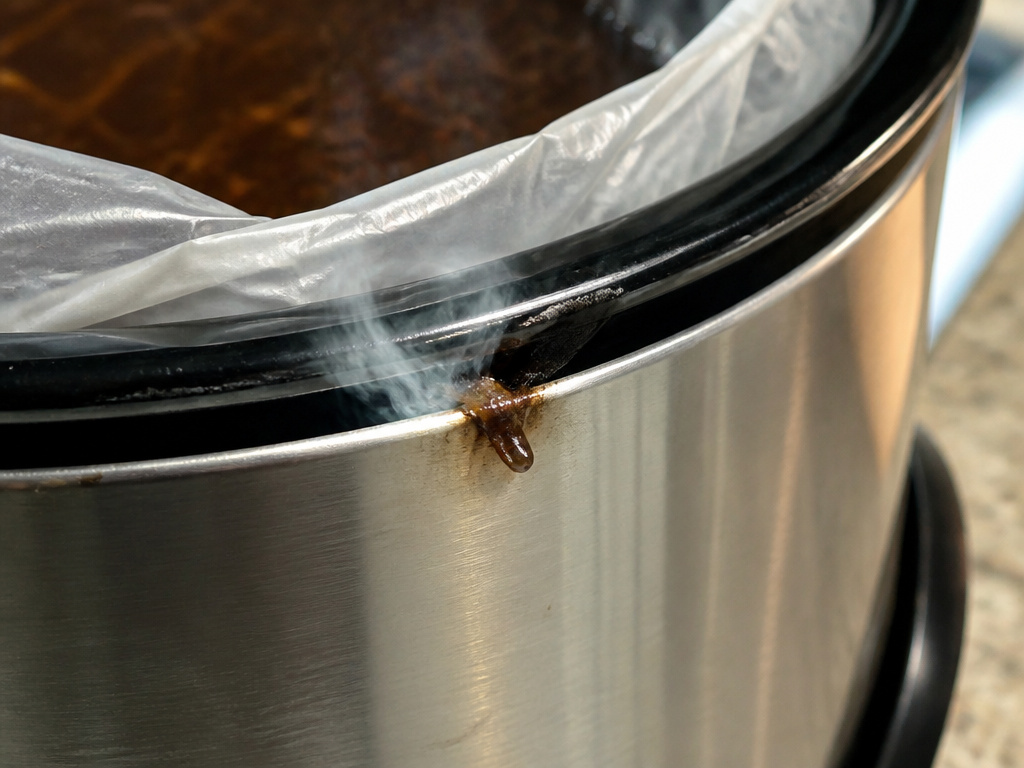 The instructions on the box are clear. People still get it wrong because the consequences aren’t listed next to the steps.
Where this goes sideways: Tucking the liner between the bowl and the base. The outer wall of the heating unit gets much hotter than the food chamber. That direct contact can locally exceed 400°F, melting a small section of the liner into the gap within one cooking cycle.
Another classic error is treating the liner like a storage bag. Both Reynolds and Crock-Pot state you should only store food in the liner if the liner remains inside the slow cooker bowl. Even then, they don’t recommend it for more than a short fridge stint, and never for the freezer. The nylon offers zero moisture barrier. Your chili will develop a leathery skin overnight.
Reheating is a separate hazard. The USDA slow cooker safety guidelines explicitly advise against reheating leftovers in a slow cooker. The appliance heats too slowly, allowing food to linger in the bacterial “danger zone” (40°F–140°F) for too long. Reheat on the stove or in a microwave until it hits 165°F, then transfer to the slow cooker to keep warm.
When the Problem Isn’t the Liner
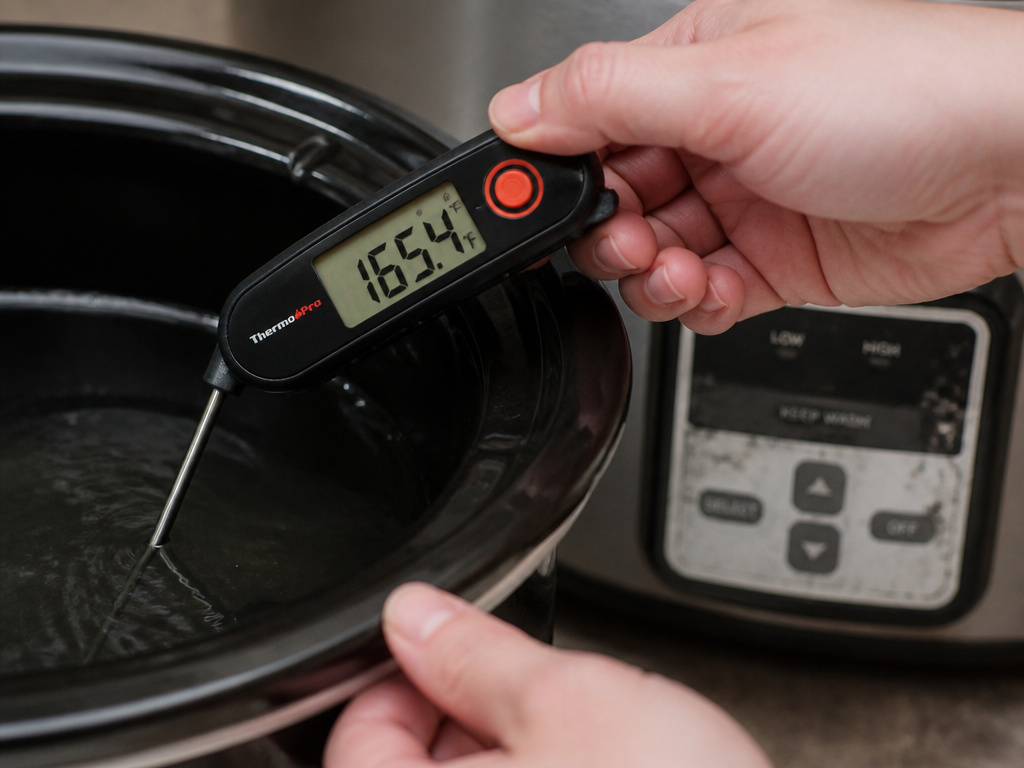 Sometimes, the liner is the symptom, not the cause. If a liner melts or your food never seems to get hot enough, your slow cooker might be failing.
A slow cooker’s job is to get food to a safe temperature quickly and hold it there. According to the Michigan State University slow cooker PDF, a cooker should reach at least 185°F to destroy pathogens efficiently. You can test this with a pot of water and a food thermometer.
If your unit is older than two years and can’t pass that test, the heating element is likely degrading. It might be running cooler (a food safety issue) or, in rarer cases, running sporadically hotter (a liner-melting issue). This is a core slow cooker fire safety concern. A faulty appliance is a risk with or without a liner.
Liners vs. Other Kitchen Bags
A slow cooker liner is not a universal bag. Its size, shape, and material are tailored for one job.
| Product | Designed For | Max Temperature | Can it substitute? |
|---|---|---|---|
| Slow Cooker Liner | Slow cooker bowl | 400°F | No — wrong size/shape. |
| Oven Bag | Roasting pan in oven | Varies (often lower) | No — may melt at slow cooker’s sustained heat. |
| Plastic Storage Bag | Refrigeration, freezing | Not heat-safe | Never. Will melt. |
| Sous Vide Bag | Immersion in water bath | ~190°F | No — not rated for dry, radiant heat. |
This is why using oven-safe liners is a firm no. The Reynolds brand liners you have are not oven-safe. The same goes for stovetops, grills, air fryers, and countertop roaster ovens. The heating methods are too direct or too intense.
The Bottom Line
Are slow cooker liners safe? With a Reynolds or Crock-Pot liner in a working cooker, following the draping (not tucking) rule, yes. The 400°F nylon is over-engineered for the task, which is how good safety products are built.
But they are single-use, disposable aids, not magic. They don’t replace basic cleaning a slow cooker routine for the ceramic insert. They don’t change the rules for overnight use or food storage. If your cooker is old, test its temperature. If you hate the idea of single-use plastic, skip them, a well-seasoned stoneware pot cleans up with a soak.
They’re a convenience with clear boundaries. Respect the boundaries, and the convenience is real.
Frequently Asked Questions
Can you reuse a slow cooker liner?
No. They are designed and tested for one cooking cycle only. Washing and reusing them risks tears, leaks, and the material breaking down under repeated heat stress.
Do liners change cooking times or taste?
Manufacturers state they do not. The thin nylon doesn’t insulate the food, so heat transfer is the same. No taste transfer from the liner occurs because the material is inert and designed for food contact.
What if my liner sticks to the pot?
This usually means the liner had a small tear, allowing food juices to seep through and bake onto the stoneware. Let everything cool completely, then soak the pot in warm, soapy water. The stuck-on bits should release. Avoid using abrasive scrubbers on the ceramic.
Are there alternatives to plastic liners?
For easier cleanup, you can spray your stoneware with cooking spray before adding ingredients. For a non-plastic liner, look for reusable silicone slow cooker liners, which are dishwasher-safe and rated for high heat. Always check that a silicone liner is specifically sized for your cooker.
My liner melted. What now?
First, discard the food, it may have contacted degraded material. Unplug the cooker and let it cool. Carefully clean the pot. Then, diagnose: was the liner tucked? Is your cooker extremely old? If the cooker itself seems faulty, especially if it’s under warranty, contact the manufacturer. A melting liner is a sign that something exceeded 400°F.
