
9 Best 1 Quart Saucepans of 2026
This post contains affiliate links. As an Amazon Associate, we earn from qualifying purchases.
The Cuisinart French Classic Tri-Ply is the best 1 quart saucepan for even heating and long-term durability, especially if you cook with stainless steel. For a budget-friendly nonstick option, the Cuisinart Contour PURELYCERAMIC delivers solid performance without breaking the bank.
Small saucepans get used constantly – for melting butter, reheating leftovers, or making single servings – but too many scorch food or warp after a few months. Finding one that heats evenly and holds up over time is harder than it should be.
In this guide, I break down the top 1 quart saucepans based on construction, real-world feedback, and how well they handle delicate tasks. These picks reflect what matters most: consistent performance, solid materials, and designs that make sense for daily cooking.
Top 9 1 Quart Saucepans in the Market
The Best 1 Quart Saucepans, Reviewed
Cuisinart French Classic Tri-Ply Saucepan

Strengths
- True tri-ply build
- Excellent heat control
- Sturdy handle
- Oven safe
- Polished finish
Trade-offs
- Heavier than average
- Higher price
- No measurement markings
On paper, this is what a premium 1-quart saucepan should be: true tri-ply construction with an aluminum core sandwiched between two layers of 18/10 stainless steel. That build translates to excellent heat retention and even conduction, making it ideal for delicate tasks like reducing a sabayon or simmering a custard without scorching. Reviewers note it heats smoothly and responds well to temperature adjustments, something thinner pans can’t match.
It’s heavier than most in this category at 2.4 pounds, which adds stability but might feel cumbersome for light tasks. The stay-cool handle is securely riveted and comfortable, though some users report it warming up on high heat over time. Against the KC-Emier tri-ply option, this one has broader brand trust and a longer track record, even if the specs look similar. For serious home cooks, this is the benchmark.
Video review
Cuisinart Chef’s Classic Stainless Saucepan

Strengths
- Measurement markings
- Affordable
- Drip-free pouring
- Dishwasher safe
- Lifetime warranty
Trade-offs
- Thinner base than tri-ply
- Lid quality is average
This Chef’s Classic model is nearly identical to the Professional Series but adds measurement markings inside the pan, a small but meaningful upgrade for precision tasks like making rice or custard. That alone makes it a smarter pick for most home kitchens, especially since the price difference is minimal. The aluminum-encapsulated base performs well, delivering even heat without warping, and the stainless cooking surface remains neutral and non-reactive.
It lacks the layered core of the French Classic, so it won’t hold heat as evenly, but for everyday use, warming sauces, boiling eggs, melting butter, it’s more than sufficient. The handle is the same cool-grip design found across Cuisinart’s lines, and the flavor lock lid seals well. Compared to the 8919-14, this one offers slightly better utility for only a few dollars more.
Video review
Cuisinart Professional Series Stainless Saucepan

Strengths
- Mirror finish
- Even heating
- Drip-free rim
- Dishwasher safe
- Lifetime warranty
Trade-offs
- Lid feels lightweight
- No measurement markings
This Cuisinart model stands out in the budget stainless steel segment, and owners consistently report it punches above its price. The aluminum-encapsulated base delivers solid heat distribution, which is rare at this price point, and helps prevent the hot spots that plague thinner pans. The mirror-finish stainless steel isn’t just for looks, it’s durable, resists staining, and doesn’t react with acidic foods, which matters when reducing tomato-based sauces or lemon butter.
The flavor lock lid and drip-free rim are small touches that add real usability, and the riveted handle stays relatively cool during stovetop use. While it doesn’t have the layered construction of higher-end tri-ply sets, it’s a dependable workhorse for basic tasks. Compared to the Chef’s Classic line, this one feels slightly more refined in balance and finish, though both share similar core features.
Product photos

Cuisinart Contour PURELYCERAMIC Nonstick Saucepan

Strengths
- PFAS-free coating
- Oven safe to 500°F
- Hard-anodized core
- Comfortable handle
- Drip-free rim
Trade-offs
- Nonstick may degrade with metal utensils
- Higher price than basic nonstick
This Cuisinart hits a sweet spot for health-conscious buyers who still want performance. The PURELYCERAMIC nonstick coating is PFAS-free, which means no toxic off-gassing at high heat, and owners confirm it holds up well with moderate use. The hard-anodized aluminum core provides excellent heat distribution, and the pan is oven-safe up to 500°F, higher than most ceramic-coated models.
The contoured handle is riveted and stays cool, offering better ergonomics than many in this class. The tempered glass lid has a stainless rim, adding durability. Compared to the Cooks Standard hard-anodized pan, this one has a slight edge in safety and build refinement, even if the performance is similar. For those avoiding synthetic chemicals, it’s a top contender.
Product photos
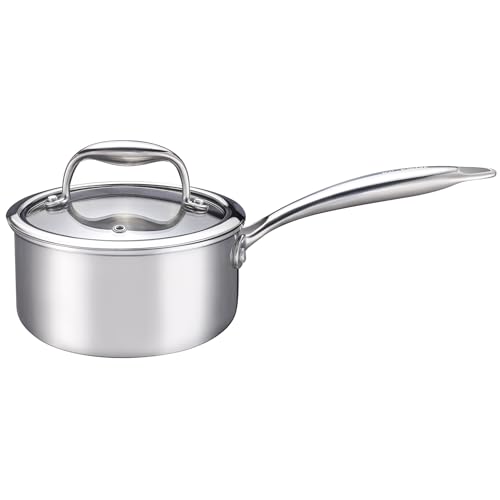
KC-Emier Tri-Ply Stainless Saucepan
Strengths
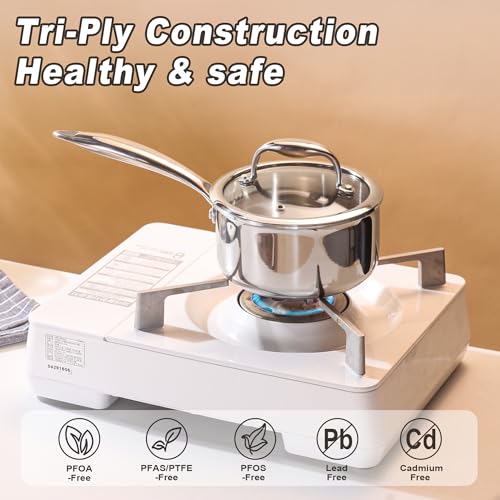
- True tri-ply build
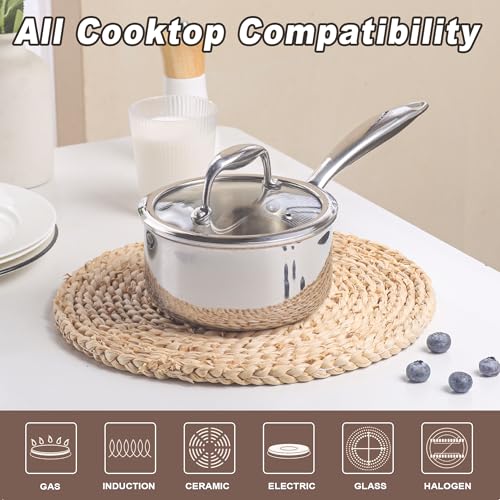
- Induction compatible
- Seamless interior
- Dishwasher safe
- All-stove safe
Trade-offs
- No volume markings
- Shorter warranty
- Handle not oven-rated
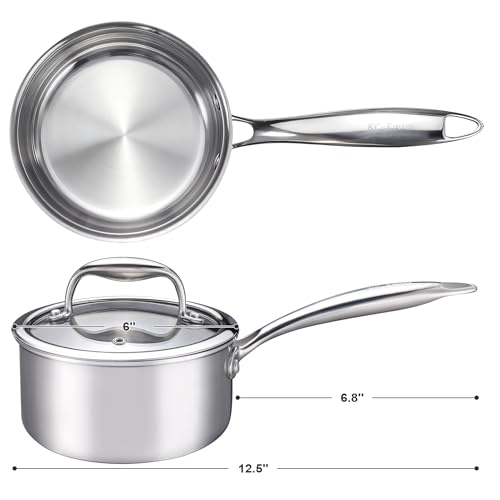
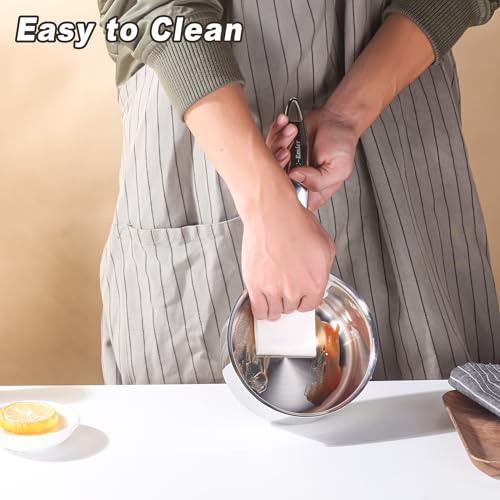
The KC-Emier stands out for offering true tri-ply stainless steel at a price well below the Cuisinart French Classic. The 18/10 stainless cooking surface is non-reactive and built to last, and the seamless one-piece design makes cleanup easier, no crevices for sauce to hide in. Owners appreciate the polished look and solid feel, and the stay-cool handle performs as expected on gas and electric stoves.
It’s fully induction-compatible, which the French Classic is not, giving it an edge for modern kitchens. While it lacks measurement markings and the brand recognition of Cuisinart, it delivers where it counts: durable, even heating with no chemical coatings. For those wanting professional-grade materials without the premium name, this is a quiet winner.
Product photos
MICHELANGELO Granite Nonstick Saucepan

Strengths
- Non-toxic coating
- Quick heating
- Comfortable handle
- PFOA/PFAS free
- Nonstick performance
Trade-offs
- Not induction safe
- Oven limit 350°F
- Base prone to hot spots
This nonstick option delivers where it counts: easy release and cleanup. The granite-based coating is marketed as non-toxic and free of PFOA and PFAS, which aligns with growing demand for safer cookware. Owners report food slides out effortlessly, even sticky reductions or scrambled eggs, and cleanup often requires just a quick wipe. The aluminum alloy base heats quickly, though it can develop hot spots if the burner is too large.
It’s oven-safe only up to 350°F and not compatible with induction, which limits versatility compared to hard-anodized or stainless options. The stainless steel handle stays relatively cool, but it’s not contoured, so grip comfort varies by hand size. Against the Mirro ceramic model, this one feels slightly more durable, though both serve the same basic nonstick role.
Product photos


P&P CHEF Stainless 1QT Saucepan

Strengths
- Affordable
- Non-toxic steel
- Glass lid
- Lightweight
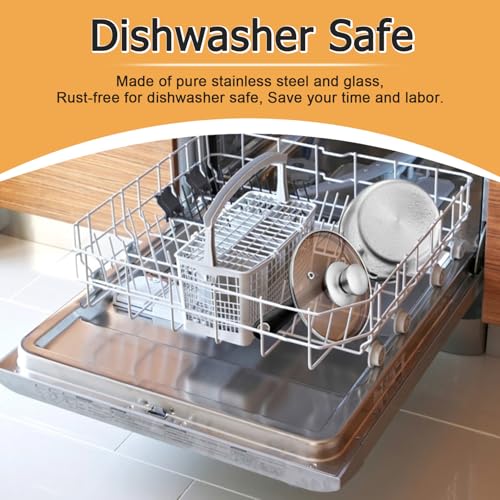
- Dishwasher safe
Trade-offs
- Thin base
- Uneven heating
- No measurement marks
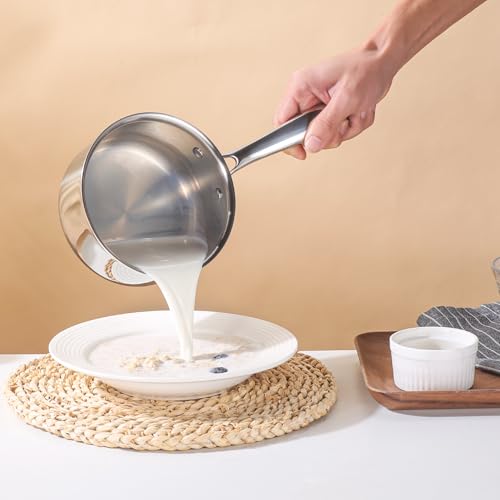
This is the definition of no-frills utility. The 18/10 stainless steel construction is a win for health and durability, and the tempered glass lid lets you monitor cooking without lifting. It’s lightweight, which makes it easy to maneuver, and the bakelite handle stays cool and offers a secure grip. Reviewers note it works well for single servings, warming milk, boiling an egg, or melting butter.
But it’s thin, with no encapsulated base, so heat spreads unevenly and it’s prone to hot spots. It lacks the refined balance of Cuisinart’s budget models and doesn’t have measurement markings. For basic tasks in small kitchens or as a backup pan, it’s functional. But compared to the Chef’s Classic, it’s a step down in performance.
Product photos


MIRRO Get a Grip Ceramic Saucepan
Strengths
- Very affordable
- Soft-grip handle
- Ceramic nonstick
- Glass lid
- Lightweight
Trade-offs
- Thin construction
- Not oven safe above 350°F
- Not induction compatible
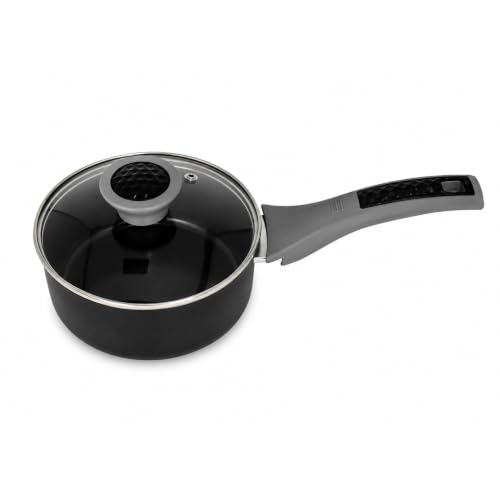
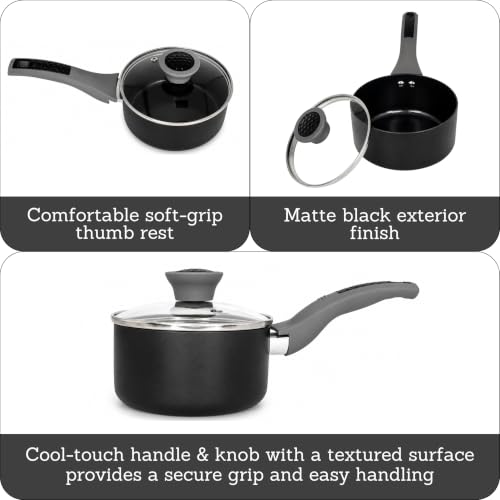
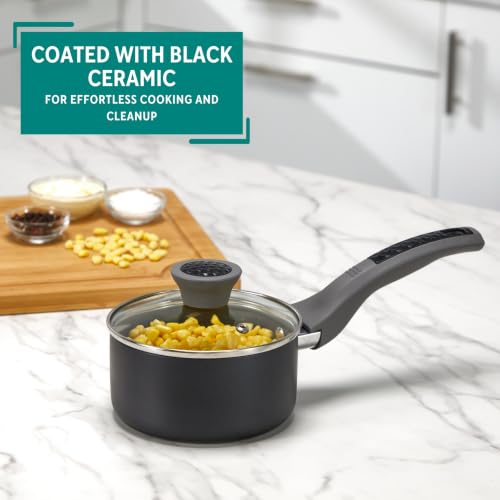
At this price, the Mirro saucepan is a solid pick for minimalists or occasional cooks. The ceramic nonstick coating works well for light tasks, melting butter, warming soup, or making oatmeal, and cleanup is consistently praised in owner feedback. The soft-touch handle offers good grip and stays cool, a rare plus in budget cookware, and the glass lid with steam vent lets you monitor food without lifting.
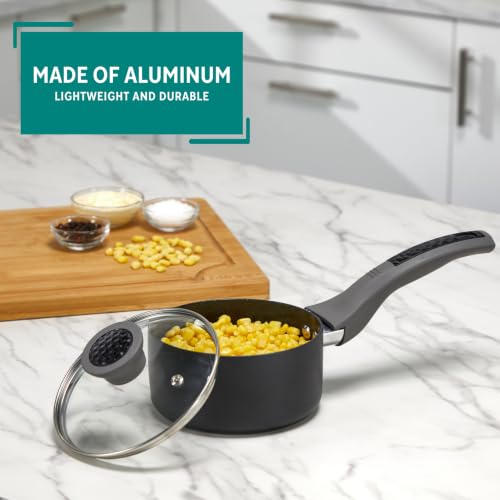
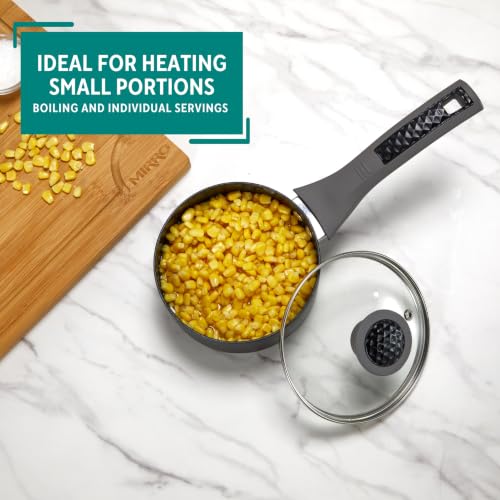
But it’s built to do one thing well: small, simple jobs. The aluminum body is thin, so heat distribution is uneven, and it’s not oven-safe beyond 350°F. Compared to the Michelangelo, it feels less durable long-term, though both occupy the same entry-level niche. If you need a no-frills pan for dorms, RVs, or single servings, this fits the bill.
Product photos

Cooks Standard Hard Anodized Saucepan
Strengths
- Hard-anodized durability
- Oven safe to 500°F
- Even heating
- Secure handle
- Tempered glass lid
Trade-offs
- Lid oven-safe only to 350°F
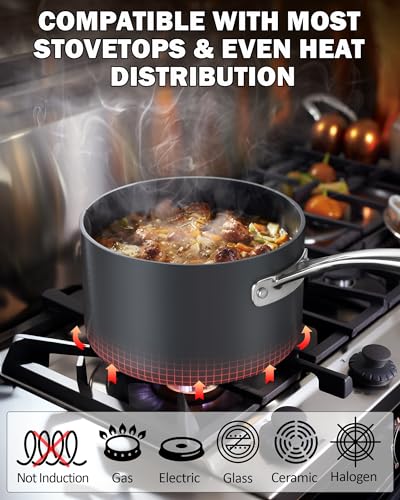
- Not induction compatible
- Handle heats in oven
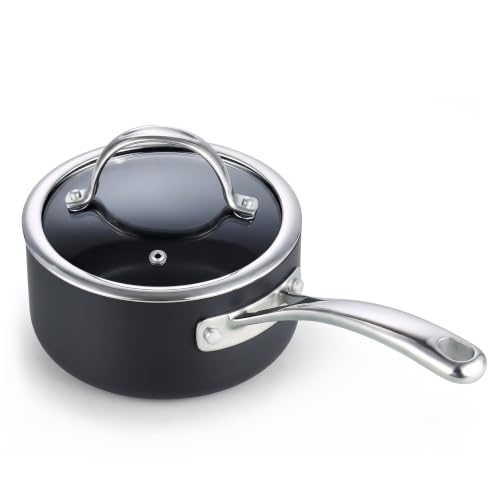
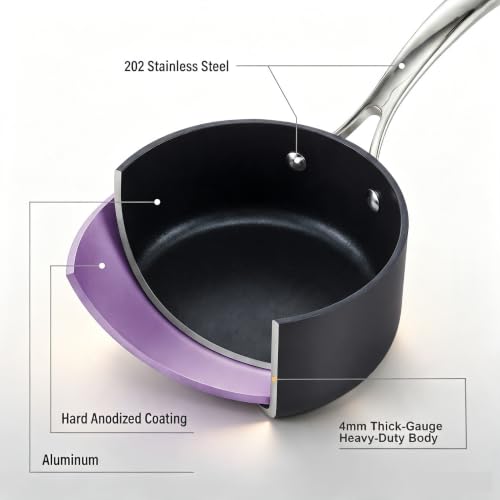
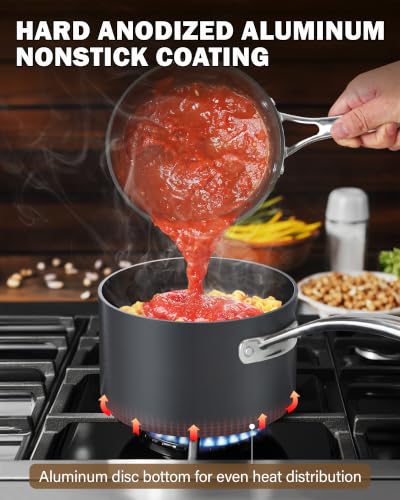
This pan is built for performance, not compromises. The hard-anodized construction is significantly more scratch-resistant than standard nonstick, and owners report it holds up well over months of regular use. It heats quickly and evenly thanks to its heavy-duty aluminum base, and the 500°F oven-safe rating makes it versatile for finishing dishes under the broiler.
The riveted stainless handle is wide and secure, though it can get hot in the oven, something to watch given the glass lid is only rated to 350°F. It’s not induction-safe, which is a notable limitation. Against the Cuisinart Contour model, it trades chemical-free assurances for raw durability. If you want a nonstick pan that can take high heat and last, this is a strong pick.
Product photos


How We Evaluated 1 quart saucepans
Rather than a hands-on lab test, my research for these 1 quart saucepans was a comparison of published specifications and features, combined with a careful weighing of owner reviews and expert opinions. I looked at materials, construction, heat distribution claims, and ease of cleaning. To arrive at recommendations, I applied my experience with cookware materials and assessed how each saucepan performed against key criteria for this size – versatility for small tasks and even heating for delicate sauces.
For 1 quart saucepans, consistent heat distribution and ease of cleanup are paramount. I weighted these factors most heavily because this size is often used for sauces and melting, where scorching is a real concern. Durability also played a significant role; a small saucepan should withstand frequent use without warping or losing its nonstick properties. You’ll find our small saucepan recommendations reflect these priorities.
Specifications reliably indicate materials and construction – tri-ply stainless steel versus aluminum, ceramic versus traditional nonstick. However, I relied more on owner feedback to judge long-term nonstick performance, handle comfort, and how well a pan actually resists warping over time. Expert reviews helped validate claims about heat distribution and build quality, guiding me toward the options that consistently receive praise in the broader saucepan buying guide.
How To Choose The 1 quart saucepans
Choosing the right saucepan can dramatically improve your cooking experience, and a 1-quart size is surprisingly versatile.
A quality saucepan prioritizes even heating for consistent results, durable construction for longevity, and comfortable handling for safe use. Look for materials like tri-ply stainless steel or hard-anodized aluminum, and pay attention to handle attachment (riveted is best) and lid fit. Consider your stove type and whether oven compatibility is a must-have feature.
Material Matters Most
The material of a saucepan dictates its heat conductivity, responsiveness, and ultimately, how evenly your food cooks. Stainless steel, particularly tri-ply construction (like in the Cuisinart French Classic), offers excellent heat distribution and durability, though it can take a bit longer to heat up. Nonstick options, such as the Cuisinart Contour PURELYCERAMIC, are convenient for delicate foods like eggs or sauces, but the coating won’t last forever. Ultimately, consider what you’ll be cooking most often. If it’s primarily sauces and you want easy cleanup, nonstick is a good choice; if you’re searing or simmering frequently, stainless steel is more reliable.
Handle Design & Construction
Don’t underestimate the importance of a comfortable and secure handle. A flimsy or loose handle can be a safety hazard, especially when the pan is full. Look for handles that are riveted – not welded or glued – to the pan body. Riveting provides a much stronger and more permanent connection.
Here’s what I often tell people to look for in a handle: * Short length: for better control. * Medium thickness: Comfortable to grip without being bulky. * Full tang construction: Where the handle material extends through the entire handle body, providing added strength and balance.
A heat-resistant handle is also crucial, though even “stay-cool” handles will get warm over prolonged use on the stovetop.
Budget vs. Longevity
It’s tempting to opt for the cheapest saucepan, but a higher initial investment often pays off in the long run. A well-made saucepan, even a smaller 1-quart size, will last for years with proper care. Consider what features are truly essential and where you can compromise. The P&P CHEF Stainless 1QT Saucepan offers a basic, functional option at a lower price point, while the KC-Emier Tri-Ply Stainless Saucepan prioritizes durability. Investing in quality materials and construction minimizes the need for frequent replacements, and remember that burnt saucepan cleaning is easier with a durable surface.
A well-maintained saucepan is a kitchen workhorse. Don’t skimp on quality; a slight upgrade in materials or construction can mean the difference between frustration and enjoyment in the kitchen.
Finally, remember to check stainless steel oven safety if you plan to use your saucepan for oven-to-stovetop cooking.
1 Quart Saucepans Compared
This table provides a detailed comparison of specifications for various 1 quart saucepans.
| Product Name | Capacity | Material | Nonstick | Lid Included | Oven Safe (°F) |
|---|---|---|---|---|---|
| Cuisinart French Classic Tri-Ply | 1 Qt | Tri-Ply Stainless | No | Yes | N/A |
| Cuisinart Chef’s Classic | 1 Qt | Stainless Steel | No | Yes | N/A |
| Cuisinart Professional Series | 1 Qt | Stainless Steel | No | Yes | N/A |
| Cuisinart Contour PURELYCERAMIC | 1 Qt | Ceramic | Yes | Yes | 500 |
| KC-Emier Tri-Ply Stainless | 1 Qt | Tri-Ply Stainless | No | N/A | N/A |
| MICHELANGELO Granite Nonstick | 1 Qt | Aluminum | Yes | N/A | 350 |
| P&P CHEF Stainless | 1 Qt | Stainless Steel | No | Yes | N/A |
| MIRRO Get a Grip Ceramic | 1 Qt | Aluminum | Yes | Yes | N/A |
| Cooks Standard Hard Anodized | 1 Qt | Hard Anodized | Yes | Yes | 500 |
Frequently Asked Questions
What’s the biggest difference between tri-ply stainless steel and ceramic nonstick in a 1-quart saucepan?
Tri-ply stainless steel offers superior durability and even heating, making it better for simmering and reducing sauces, while ceramic nonstick provides a convenient, easy-to-clean surface initially, but the coating will degrade over time with use. Ultimately, consider how frequently you anticipate using the saucepan and the types of foods you’ll be preparing.
Are 1-quart saucepans too small for most cooking tasks?
Despite their size, 1-quart saucepans are quite versatile. They excel at heating liquids, making small batches of sauces, melting butter, and cooking grains like quinoa or rice for one or two people. For larger quantities, you’ll want to refer to our saucepan size guide to determine the best option.
How can I tell if a saucepan handle is securely attached?
Riveted handles are the most secure; the rivets are visible on both the inside and outside of the pan. Welded or glued handles are more prone to loosening or breaking over time. A firmly attached handle is vital for safe lifting and maneuvering, especially when the pan is full.
Is oven compatibility a standard feature in 1-quart saucepans?
No, oven compatibility isn’t guaranteed. Stainless steel saucepans generally have higher oven-safe temperatures than those with nonstick coatings, but always check the manufacturer’s specifications. If you anticipate oven-to-stovetop cooking, confirm the saucepan can withstand the necessary heat.
Where can I find 1-quart saucepans that include a well-fitting lid?
Many 1-quart saucepans are sold with lids, but it’s not universal. Look for options specifically described as including a lid, and read owner reviews to assess the lid’s fit. We’ve compiled a list of quality saucepans with lids to help you find a great match.
The Bottom Line
Choosing a 1-quart saucepan often comes down to balancing convenience with long-term performance. While a nonstick coating offers easy cleanup, especially for delicate sauces, it won’t last indefinitely. For an overall excellent choice that prioritizes durability and even heating, I recommend the Cuisinart French Classic Tri-Ply.
For those on a tighter budget, the P&P CHEF Stainless 1QT Saucepan provides a functional option, and if you specifically want the benefits of a nonstick surface, the Cuisinart Contour PURELYCERAMIC is a solid pick. Should you need a saucepan with oven-safe capabilities, the Cooks Standard Hard Anodized stands out as a versatile choice.
Ultimately, remember that the most important qualities in a saucepan are consistent heat distribution and a comfortable, securely attached handle. Paying attention to these fundamentals – and learning how to perform stainless steel dishwasher safety – will yield more enjoyment in the kitchen than focusing on any single feature or brand.
