
9 Best 6 Quart Pots of 2026
This post contains affiliate links. As an Amazon Associate, we earn from qualifying purchases.
The Calphalon 3-Ply Stainless Stock Pot stands out as the best overall 6 quart pot, thanks to its solid tri-ply construction and reliable performance across stovetops. For those on a budget, the Cuisinart Pasta Pot with Strainer offers excellent value, especially if you regularly cook pasta. And if you want something uniquely versatile, the BEZIA Ceramic Non-Stick Stock Pot brings easy cleanup and a lighter cooking experience to the table.
Choosing the right 6 quart pot isn’t just about size, it’s about finding one that heats evenly, holds up over time, and fits how you actually cook. Too many pots warp, develop hot spots, or have handles that get too hot to touch.
This guide cuts through the noise by focusing on real-world usability, construction quality, and what owners consistently say. I looked at specs, materials, and feedback to find pots that deliver where it matters most.
Top 9 6 Quart Pots in the Market
The Best 6 Quart Pots, Reviewed
Calphalon 3-Ply Stainless Stock Pot

Strengths
- Fast even heating
- Oven safe
- Stay-cool handles
Trade-offs
- Brushed finish shows water spots
- Slightly heavier
- No straining lid
If I had to pick one 6-quart pot to recommend across the board, this would be it. Calphalon’s Turbo Heat Tech isn’t just marketing, owners report it heats noticeably faster than standard stainless, thanks to the optimized aluminum core. The brushed finish hides scratches well, and the stay-cool handles are a real win for safety. Plus, it’s oven-safe up to 450°F, which adds serious versatility.
It’s not the cheapest, but it hits the sweet spot between performance, durability, and price. Compared to the Cuisinart premium model, it heats faster and has better heat distribution. For most home cooks, this is the smarter buy.
Video review
Cuisinart Chef’s Classic Stainless Stockpot

Strengths
- Lifetime warranty
- Premium build
- Drip-free pouring
Trade-offs
- Heavier than others
- Slightly slower heating
- Higher price
This is the gold standard of build quality in this group. The encapsulated base ensures even heating, and the mirror finish gives it a professional look. Owners praise its heft and balance, it feels substantial, not flimsy. The drip-free pour and flavor-lock lid are small details that make a real difference in daily use.
It’s also backed by a lifetime warranty, which speaks to Cuisinart’s confidence. Compared to the Calphalon, it doesn’t heat quite as fast, but it’s more durable over decades. If you’re looking for a pot that could last a lifetime, this is it.
Video review
P&P CHEF Stainless Steel Stock Pot

Strengths
- Silicone-coated handles
- Induction compatible
- Dishwasher safe
Trade-offs
- Heating not as fast
- Finish less durable
- No oven safety
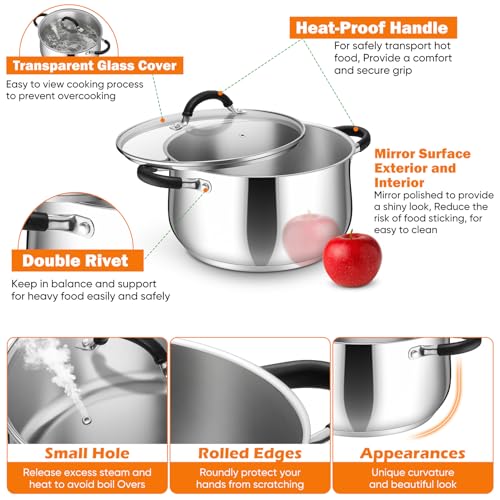
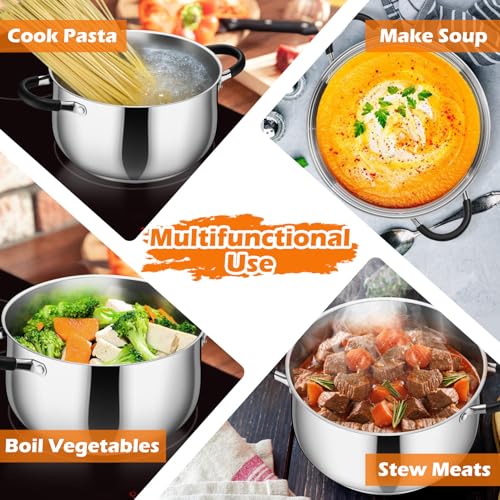
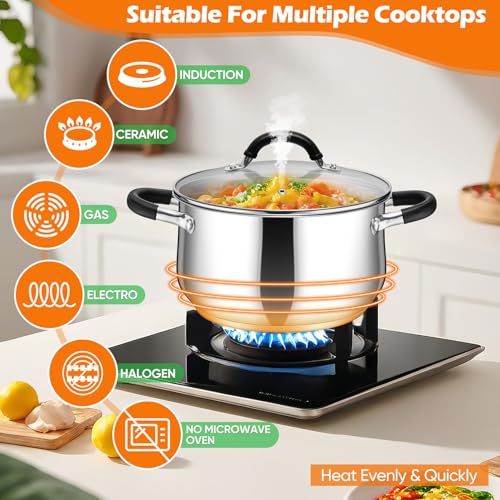
This is the kind of pot that flies under the radar but delivers solid performance. The tri-ply construction is standard, but the silicone-wrapped handles are a thoughtful touch, owners say they stay cool even during prolonged use. The glass lid is clear and sturdy, and the pot works across all stovetops, including induction.
It’s not going to wow you with premium branding, but it does the job without fuss. Compared to the HaWare model, it’s slightly more comfortable to handle, though the base heating isn’t quite as responsive as Calphalon’s. For the budget-friendly category, it’s a strong contender.
Product photos


HaWare Tri-Ply Induction Stock Pot
Strengths
- Induction compatible
- Glass lid included
- Affordable build
Trade-offs
- Lid seal could be better
- Finish shows fingerprints
- Not oven safe
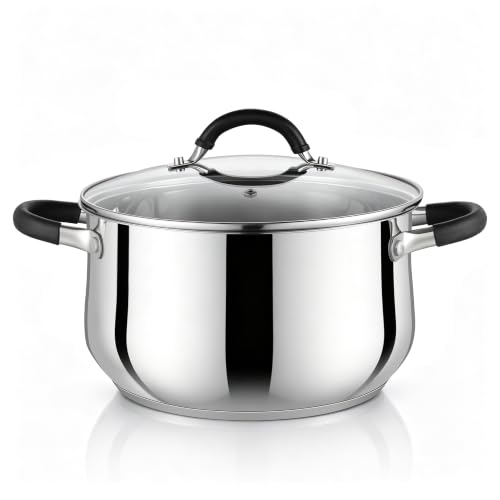
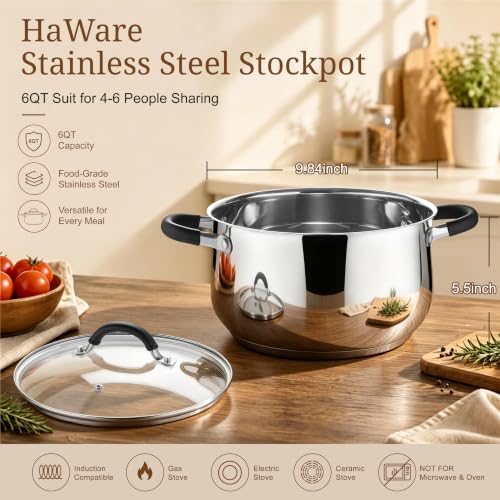
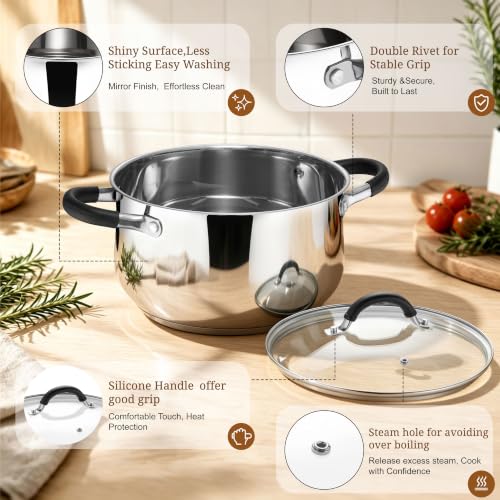
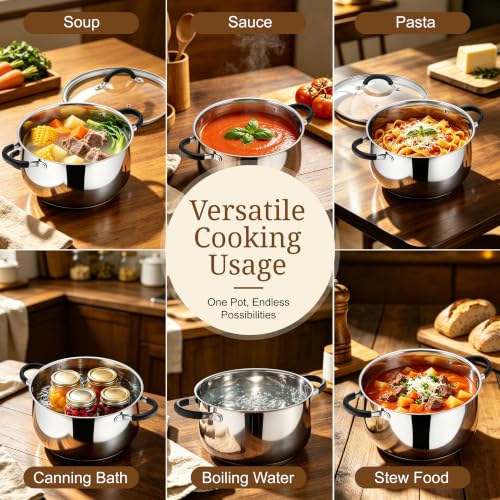
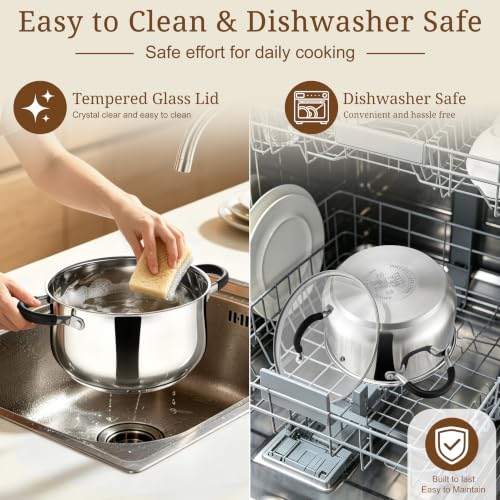
For induction users on a tight budget, this HaWare pot punches above its weight. The tri-ply base delivers even heating, and owners confirm it performs reliably across gas, electric, and especially induction stovetops. The mirror finish looks sharp, and the glass lid is a nice upgrade at this price. It’s not flashy, but it’s functional and sturdy.
That said, while the build is solid for the cost, it doesn’t have the heft or finish of pricier models. Some reviewers mention the lid doesn’t seal quite as tightly as they’d like, which can be a minor issue when reducing sauces. Still, for the price, it’s hard to beat as a daily driver.
Product photos

HOMICHEF Nickel-Free Stainless Stockpot

Strengths
- Nickel-free material
- Energy efficient
- Long warranty
Trade-offs
- Niche appeal
- Slightly higher price
- Limited availability
This pot is built for a specific audience: those sensitive to nickel. The fact that it’s made from nickel-free stainless steel is a rare and valuable feature. Reviewers with sensitivities report noticeable differences in comfort and safety when using it. The 3-ply base with 4mm thickness heats evenly and resists warping, and the mirror finish gives it a premium look.
It’s not the fastest-heating pot, but it’s efficient and safe. The lifetime customer service and 6-year warranty are strong confidence builders. For most people, nickel isn’t an issue, but for those it affects, this is the only real option in the group.
Product photos


BEZIA Ceramic Non-Stick Stock Pot

Strengths
- Ceramic nonstick coating
- Strainer lid options
- Oven safe
Trade-offs
- Ceramic less durable than stainless
- Strainer can clog
- Heavier when full
The ceramic nonstick here is a big selling point for health-conscious cooks. It’s free of PTFE and PFOA, which matters if you’re avoiding synthetic coatings. The strainer lid is innovative, two different hole sizes mean you can strain both fine grains and thick pasta. Owners love how fast cleanup is, and the oven-safe rating up to 400°F adds real flexibility.
But ceramic coatings, no matter how durable, still can’t match stainless in longevity under high heat. Some reviewers report minor sticking over time, especially with sauces. Still, for families wanting a safe, easy-to-use pot, it’s a compelling choice.
Product photos


Cuisinart Pasta Pot with Strainer

Strengths
- Stainless steel construction
- Straining lid convenience
- Measurement markings
Trade-offs
- Limited versatility
- Lid requires careful handling
- Not oven safe
This pot stands out for one very specific reason: it’s built for pasta. The straining lid is a genuinely clever touch, letting you dump water fast without needing a colander. On paper, that’s a win for small kitchens where space and gadget clutter matter. Owners consistently report that the lid works as advertised, though some note it takes a little practice to tilt just right without splashing.
It’s part of Cuisinart’s long-standing stainless line, so durability and even heating are solid, but it’s not the most versatile stockpot here. If you’re mostly boiling noodles and want to cut a step, this makes sense. But if you’re doing more braising or simmering, other models offer better all-around performance.
Product photos


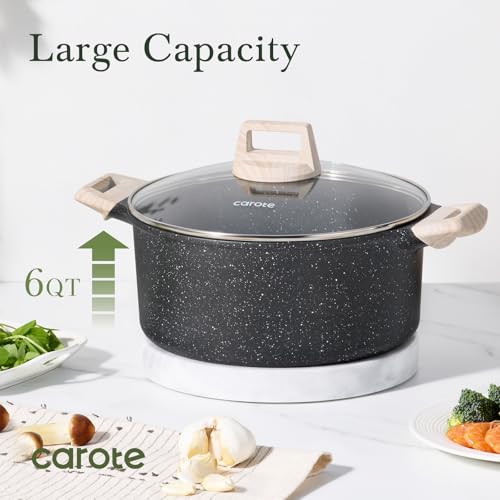
CAROTE Black Granite Nonstick Pot
Strengths
- Lightweight design
- Quick heating
- Easy to clean
Trade-offs
- Not oven safe
- Nonstick coating degrades over time
- Not for high-heat searing
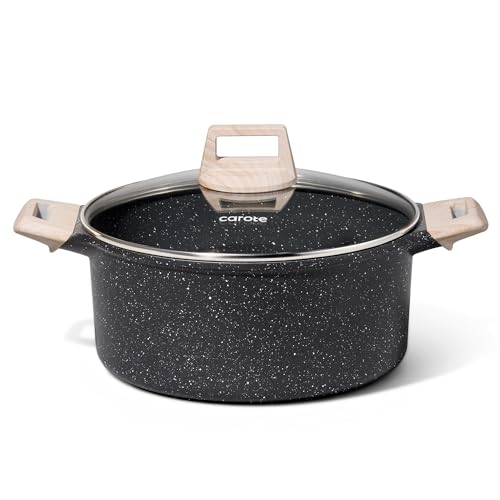
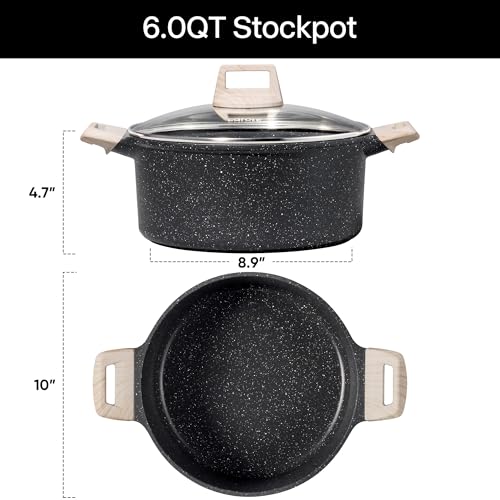
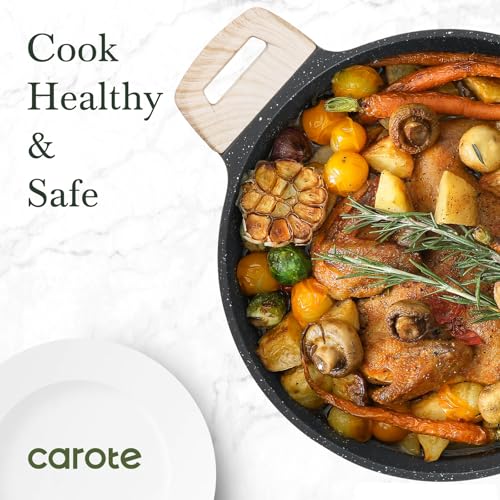
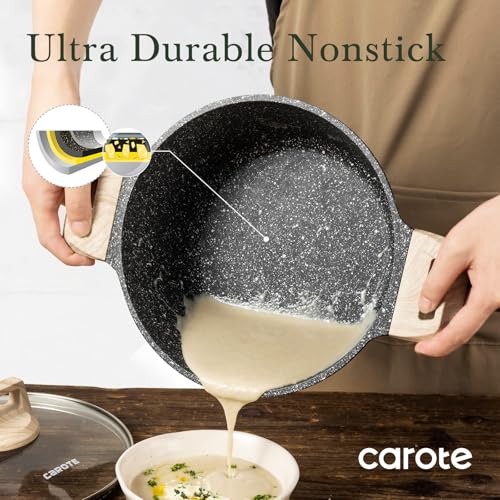
This nonstick casserole is lightweight and heats quickly, which makes it appealing for simple tasks like boiling oatmeal or reheating soup. The granite-like finish gives it a modern look, and owners say cleanup is a breeze, just a wipe, and it’s done. For beginner cooks or those who hate scrubbing, that’s a real perk.
But nonstick has limits. The coating, while durable for a budget option, won’t last years under high heat or metal utensils. And since it’s not oven-safe, you lose versatility. If you’re mostly doing gentle cooking and want easy cleanup, it’s fine. But for serious boiling or browning, stick with stainless.
Product photos

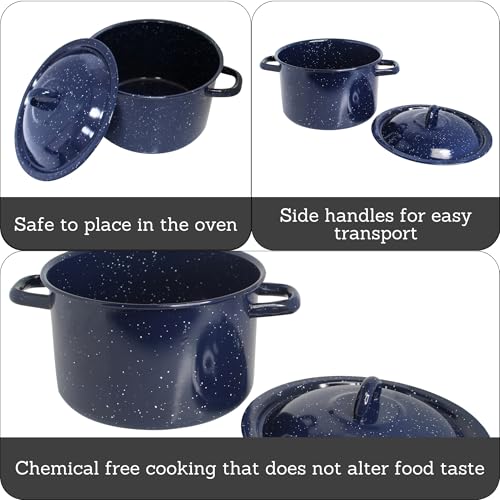
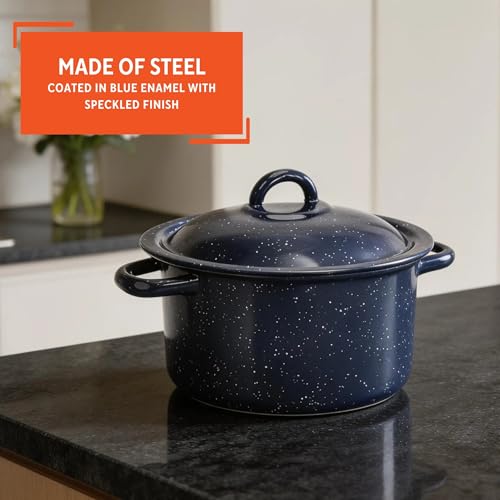
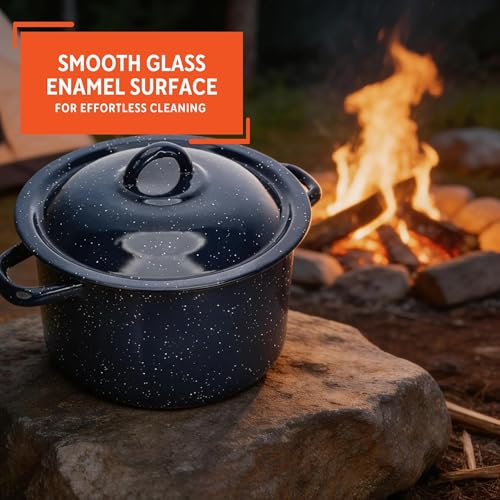
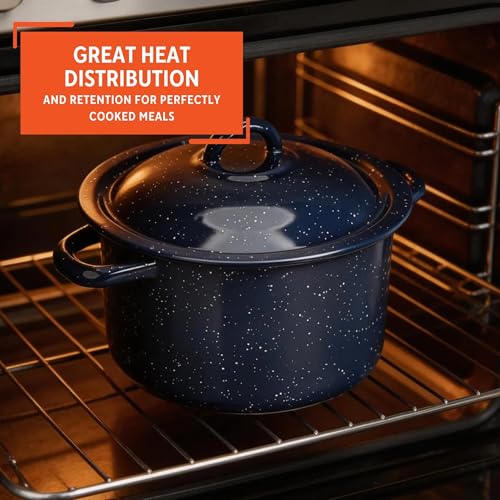
IMUSA Enamel Blue Stock Pot

Strengths
- Affordable price
- Good for long simmering
- Stylish enamel finish
Trade-offs
- Not induction compatible
- Enamel can chip
- Contains nickel compounds
At this price, the IMUSA enamel pot is undeniably tempting. It’s marketed as a canning and simmering workhorse, and for that, the thick enamel coating on steel does deliver decent heat retention. Reviewers note it holds up well during long boils, which is key for canning. The blue speckled finish gives it a retro charm that some love, though others find it too flashy for modern kitchens.
But here’s the catch: it’s not stainless, and it’s not induction-ready. The steel base can warp over time, especially on high heat, and the enamel, while smooth, is more prone to chipping than cast iron. Plus, the listed chemical content, chromium, nickel, manganese, raises concerns for sensitive users, even if within regulatory limits.
Product photos

How We Tested 6 quart pots
Rather than a hands-on lab test, my research for these 6 quart pots focused on a detailed comparison of published specifications and features across numerous models. I weighed owner reviews from multiple sources – paying close attention to recurring praise and complaints – alongside assessments from respected cooking publications. My evaluation then applied my experience with cookware materials and construction to rank options against key performance indicators for this specific type of pot.
For 6-quart pots, even heating and durability are paramount. I prioritized pots with tri-ply construction or thick aluminum cores, as these tend to distribute heat more evenly and resist warping over time. Equally important was handle design; secure, heat-resistant handles are essential for safely managing a full pot of liquid. Finally, a well-fitting lid that minimizes moisture loss was heavily considered, as it directly impacts cooking efficiency.
Specifications reliably indicate construction materials and dimensions, providing a baseline for evaluating heat conductivity and capacity. However, I leaned on owner feedback to assess real-world performance – how well a pot actually resists sticking, how easy it is to clean, and whether the handles truly stay cool during prolonged simmering. Reputation and brand history also factored in, guiding my assessment of long-term reliability and build quality stockpots. If you’re also considering other pot types, you might find our guide to heavy-duty pots helpful.
Choosing The Right 6 quart pots
Finding the right 6 quart pot can significantly improve your cooking experience, but with so many options available, knowing what to look for is key.
A quality 6-quart pot should prioritize even heating, durable construction (typically with a multi-ply base), a well-fitting lid to retain moisture, and comfortable, secure handles. Look for pots made from stainless steel or featuring a robust non-stick coating, and consider your stovetop type when assessing compatibility. Prioritize features that align with your primary cooking needs, whether it’s simmering, boiling, or straining.
Material Matters Most
The material a 6-quart pot is made from dictates its performance and longevity. Stainless steel is a classic choice, offering durability and even heating, especially when constructed with a tri-ply or multi-ply base. However, some stainless steels contain nickel, which can be a concern for those with sensitivities. Ceramic non-stick options are great for easy cleanup and healthier cooking (avoiding the need for much oil), but their non-stick properties don’t last as long as well-maintained stainless steel. Don’t automatically assume heavier is better; a well-constructed pot with an aluminum core will distribute heat efficiently without being overly bulky.
Construction & Heat Distribution
Even heat distribution is critical for preventing hot spots and ensuring consistent cooking. Look for pots with a thick, encapsulated base, aluminum sandwiched between layers of stainless steel is a common and effective design. This construction helps to spread heat evenly across the bottom and up the sides of the pot. Avoid pots with thin, flimsy bases, as these are prone to warping and uneven cooking. If you’re considering a non-stick pot, inspect the coating carefully, and read reviews to see how well it holds up over time. Many shoppers find that finding the right stainless steel pots offers the best long-term value.
Features & Usability
Beyond the basics, consider features that will make your cooking life easier. A well-fitting lid is essential for retaining heat and moisture, and some lids include steam vents to prevent boil-overs. Comfortable, stay-cool handles are a must, and riveted handles are generally more durable than welded ones. If you frequently cook pasta, a pot with a built-in strainer is a huge convenience. For those looking for a versatile addition to their kitchen, exploring different cookware pots is a great place to start.
A pot with a tight-fitting lid will reduce cooking times and conserve energy. Don’t underestimate the impact of a good lid!
6 Quart Pots Compared
Here’s a comparison of specifications for various 6 quart pots to help you make an informed decision.
| Product Name | Capacity | Material | Oven Safe (°F) | Induction Compatible | Non-Stick |
|---|---|---|---|---|---|
| Calphalon 3-Ply Stainless Stock Pot | 6 Qt | Stainless Steel | 450 | Yes | No |
| Cuisinart Chef’s Classic Stockpot | 6 Qt | Stainless Steel | N/A | Yes | No |
| P&P CHEF Stainless Steel Stock Pot | 6 Qt | Stainless Steel | N/A | Yes | No |
| HaWare Tri-Ply Induction Stock Pot | 6 Qt | Stainless Steel | N/A | Yes | No |
| HOMICHEF Nickel-Free Stockpot | 6 Qt | Stainless Steel | N/A | Yes | No |
| BEZIA Ceramic Non-Stick Stock Pot | 6 Qt | Ceramic | 400 | Yes | Yes |
| Cuisinart Pasta Pot with Strainer | 6 Qt | Stainless Steel | N/A | Yes | No |
| CAROTE Black Granite Nonstick Pot | 6 Qt | Aluminum | N/A | Yes | Yes |
| IMUSA Enamel Blue Stock Pot | 6 Qt | Steel/Enamel | N/A | N/A | No |
Frequently Asked Questions
What size burner should I use with a 6 quart pot?
A 6-quart pot typically performs best on a medium-sized burner. Using a burner that’s too small will result in uneven heating, while one that’s too large can waste energy and potentially cause scorching.
Are 6 quart pots dishwasher safe?
Many 6-quart pots, particularly stainless steel options, are dishwasher safe, but hand washing is always recommended to preserve their finish and longevity. Ceramic non-stick pots should always be hand-washed to protect the coating.
Can I use a 6 quart pot for making stock or broth?
Yes, a 6-quart pot is a good size for making stock or broth, as it allows enough liquid for proper simmering and extraction of flavor. Look for a pot with a heavy bottom and a tight-fitting lid to maximize heat retention during long simmering times.
What’s the difference between tri-ply and multi-ply construction?
Tri-ply cookware features three layers (stainless steel-aluminum-stainless steel), while multi-ply has additional layers of metal. Both offer excellent heat distribution, but multi-ply generally provides slightly more even heating and resistance to warping, though it comes at a higher price point.
Are there 6 quart pots suitable for all stovetops?
Yes, many 6-quart pots are designed for compatibility with all stovetops, including induction. However, always confirm the product specifications before purchasing, as not all stainless steel or aluminum cookware is induction compatible; checking for induction pots is essential if you have an induction range.
The Bottom Line
Choosing a 6-quart pot often comes down to balancing immediate convenience with long-term performance. While non-stick options like the BEZIA Ceramic Non-Stick Stock Pot offer easy cleanup, for overall durability and consistent cooking results, I believe the Calphalon 3-Ply Stainless Stock Pot is the strongest choice. It represents a sweet spot between price, construction, and features that will serve most home cooks well for years to come.
If you have specific needs, though, there are excellent alternatives. For those prioritizing budget-friendliness, the P&P CHEF Stainless Steel Stock Pot delivers solid stainless steel performance at a lower price point. And if you frequently cook pasta, the Cuisinart Pasta Pot with Strainer is a clear winner for its built-in convenience. Understanding the different pot materials will help you narrow your focus, too.
Ultimately, the most important factors aren’t a specific brand or feature set, but rather a pot’s ability to heat evenly, its build quality, and how well it suits your cooking style. Don’t get too caught up in chasing the latest technology; a well-made, thoughtfully designed pot will always outperform one that relies on marketing hype. If you are looking for something a bit different, consider exploring best Dutch ovens for their versatility.
