
7 Best Anodised Pans of 2026
This post contains affiliate links. As an Amazon Associate, we earn from qualifying purchases.
The Calphalon Hard-Anodized Nonstick Frying Pan Set stands out as the best overall for its even heating and durable construction, while the T-Fal Ultimate offers a solid budget-friendly option. For induction users, the KitchenAid Hard-Anodized Induction Frying Pan is the clear choice.
Shopping for anodised pans can feel overwhelming, with bold claims about durability and non-stick performance at every turn. As someone who’s spent years studying cookware, I’ve learned that the real test is how well these pans hold up to daily use and proper care.
This guide cuts through the noise by focusing on what actually matters, construction quality, long-term non-stick performance, and compatibility with your stovetop. I compared specs and dug into owner feedback to find the models that deliver consistent results over time.
Top 7 Anodised Pans in the Market
The Best Anodised Pans, Reviewed
T-Fal Ultimate Hard Anodized Fry Pan Set

Strengths
- Thermo-Spot indicator
- Tempered glass lids included
- Durable nonstick coating
Trade-offs
- Not induction compatible
- Heavier with lids
- Lids not always secure
T-Fal’s 3-piece set earns its ‘Best Overall’ label by balancing size, performance, and smart features. The titanium-reinforced nonstick coating is among the most durable in its class, and the Thermo-Spot indicator actually works, reviewers confirm it helps prevent food sticking by signaling optimal preheat. The 12-inch pan is especially useful for family meals, and the tempered glass lids add value you don’t always get in pan sets.
The forged hard-anodized body feels sturdy, and the riveted silicone handles offer a secure grip. It’s limited to 400°F, so not ideal for high-heat broiling, but for most cooking, it’s reliable. The lifetime warranty seals the deal.
Video review
Calphalon Hard-Anodized Nonstick Frying Pan Set

Strengths
- Even heating
- Dishwasher safe
- Oven safe to 450°F
Trade-offs
- Nonstick coating degrades over time
- Not induction ready
- Rivets can trap food
Calphalon has long been a go-to for precision cooking, and this set proves why. The hard-anodized construction heats fast and evenly, and the nonstick surface holds up well under regular use, owners report years of reliable performance with proper care. The 8- and 10-inch combo is ideal for most home tasks, from eggs to searing chicken cutlets.
I appreciate the stay-cool handles and the 450°F oven safety, which gives more flexibility than many nonstick pans. The 10-year warranty also signals confidence in durability. If you want consistent results without the maintenance of uncoated pans, this set is a smart choice.
Video review
KitchenAid Hard-Anodized Induction Frying Pan

Strengths
- Induction compatible
- Triple-layer nonstick
- Dishwasher safe
Trade-offs
- Small cooking surface
- Limited size options
- Handle can loosen over time
KitchenAid’s 8.25-inch pan is one of the few hard-anodized nonstick options designed specifically for induction. The forged base ensures even heating, which is critical on magnetic stovetops where hotspots are common. The triple-layer nonstick coating shows strong owner feedback for food release and durability, and the rivets are coated to prevent peeling, a small but meaningful detail.
It’s compact, so not ideal for large meals, but perfect as a dedicated egg or omelet pan. The dishwasher-safe design helps with cleanup, though hand washing will extend the coating’s life. For induction users, this is a rare win in the nonstick category.
Product photos

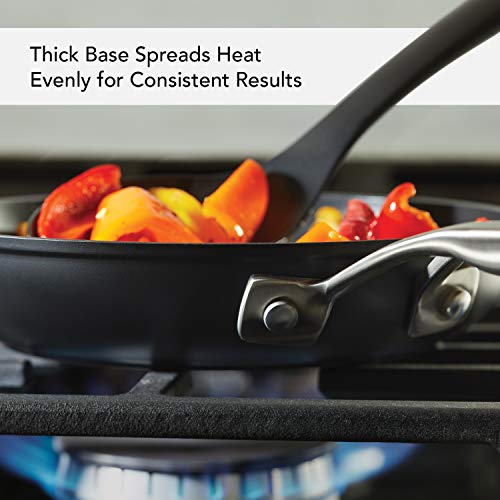


Hawkins Futura 28 cm Hard Anodised Tava

Strengths
- Large cooking surface
- Stay-cool handle
- Oven and broiler safe
Trade-offs
- No nonstick coating
- Heavy for some
- Requires seasoning
The 28 cm tawa is a standout for Indian cooking, its large, flat surface is perfect for rolling out chapatis or roasting spices evenly. The hard-anodized build heats fast and holds temperature well, even on lower-end stoves. Like other Hawkins Futura pans, it’s non-reactive and built to last, with a stay-cool stainless steel handle that adds safety during long cooking sessions.
It’s not nonstick, so it requires proper seasoning and oil use, but that also means it won’t flake or degrade like coated pans. For traditional cooking methods, this tawa outperforms most Western-style skillets.
Product photos


Hawkins Futura 26 cm Hard Anodised Tava

Strengths
- Heavy-duty construction
- Even heat distribution
- Oven and broiler safe
Trade-offs
- No nonstick coating
- Heavier than average
- Not induction compatible
This Hawkins Futura Tava stands out for its substantial 4.88 mm thickness, which is rare in hard-anodized cookware at this price point. That kind of gauge means it heats evenly and resists warping, even under high heat, something owners consistently praise when comparing it to thinner competitors. The non-reactive surface handles acidic foods well, and the stainless steel handle stays cool enough for safe maneuvering, though I’d still recommend a cloth for longer sessions.
It’s not nonstick, so it demands a bit more oil and care than coated pans, but that also means it won’t degrade after a few months of metal-utensil use. For a large, durable pan that bridges traditional tawa function with modern materials, this is a solid performer.
Product photos


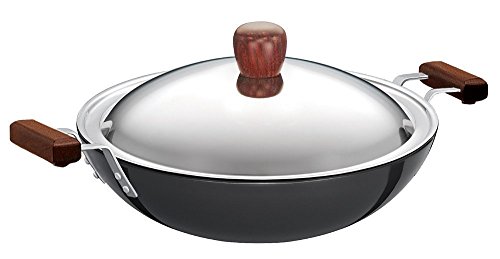
Hawkins Futura 3.75L Deep Fry Pan
Strengths
- High sides for deep frying
- Sturdy riveted handles
- Flat bottom for stability
Trade-offs
- Wood handle not oven safe
- No nonstick coating
- Heavy when full
This deep fry pan is built for volume and depth, 3.75 liters is no joke, and the curved sides make tossing food easier than in standard flat-bottomed pans. The hard-anodized construction handles high-heat frying without warping, and the rosewood-style handle, while stylish, is riveted securely for safety when dealing with hot oil.
Owners consistently note its stability on flat stovetops and its ability to double as a saucepan for curries. The stainless steel lid is a nice touch, locking in moisture. If you regularly fry in bulk or cook Indian-style gravies, this kadai earns its keep.
Product photos
FUTURA Anodised Heating Pan 4.72″

Strengths
- Ultra-affordable
- Compact size
- Simple functionality
Trade-offs
- Handle gets hot
- Too small for most cooking
- No oven safety
At just 12 cm and 3.25 mm thick, this tiny pan is clearly built for small tasks, think melting butter, toasting spices, or heating chutneys. It’s the most budget-friendly option here, and while the specs are modest, it delivers what it promises: a compact, no-frills hard-anodized pan that won’t react with food. The steel handle gets hot quickly, so keep a grip nearby.
It won’t replace a proper skillet, but for niche uses where a full-sized pan is overkill, this one fills a gap. I wouldn’t trust it for anything beyond light stovetop work, but for the price, it’s hard to fault.
Product photos


How We Evaluated anodised pans
Rather than a hands-on test in my own kitchen, this assessment is a research-led comparison of specifications and owner feedback on a range of anodised pans. I spent considerable time compiling data from manufacturer details, carefully reading through owner reviews across multiple retail sites, and consulting expert opinions from established cookware review sources. My goal was to identify the pans that consistently deliver on performance expectations and durability – qualities I know are crucial for home cooks.
For anodised cookware, even heating and lasting non-stick performance are paramount. I weighted these factors most heavily because an unevenly heated pan leads to frustrating cooking results, and a non-stick surface that degrades quickly diminishes the convenience. Durability is also key; the anodisation process itself is meant to create a robust surface, and the longevity reported by owners significantly influenced my rankings. Understanding how well these pans hold up over time is vital.
Published specifications reliably indicate pan dimensions, materials, and oven-safe temperatures. However, real-world performance – how truly non-stick a surface remains after months of use, or how well a handle actually stays cool – comes down to owner experiences. I gave significant weight to consistent patterns in owner feedback, especially regarding longevity and ease of cleaning, and compared those observations to expert assessments of the non-stick coatings. If you’re also considering all-purpose pans, the same principles apply – look beyond the marketing claims and see what cooks are saying. And for those needing a covered option, exploring non-stick pans with lid requires the same discerning approach.
How To Choose The anodised pans
Finding the right anodised pan set can really elevate your cooking, but there’s a surprising amount to consider beyond just the non-stick surface.
Hard-anodised cookware is prized for its durability, even heating, and non-reactive surface. Look for pans with a thick gauge aluminium base for stability, fully riveted handles for safety, and a multi-layer non-stick coating for longevity. Consider oven-safe temperatures and stovetop compatibility to match your cooking style and appliances.
Gauge and Construction
The thickness of the aluminium base is a critical, often overlooked feature. Thinner gauges heat quickly, but are prone to warping and hotspots. I always recommend looking for pans with a substantial feel, indicating a thicker construction. While many brands tout “hard-anodised” exteriors, the quality of the anodising process itself varies. Better anodising creates a more durable, scratch-resistant surface. As I’ve researched hard anodised pans extensively, I’ve found that brands like Calphalon and Hawkins Futura consistently receive high marks for their construction quality.
Non-Stick Coating Quality
A hard-anodised base is wonderful, but the non-stick coating is what most cooks interact with daily. Coatings aren’t created equal. Some are proprietary formulas, while others rely on more common PTFE (Teflon) variations. Consider these points:
- A single-layer coating will be the least expensive, but also the shortest-lived.
- Two- or three-layer coatings offer improved durability and release, but also come at a higher price.
- Look for coatings that are PFOA-free. This is a standard now, but always worth checking for your health and peace of mind.
Ultimately, the longevity of any non-stick surface depends on how you treat it – avoid metal utensils, excessive heat, and abrasive cleaners.
Stovetop Compatibility and Versatility
Not all anodised cookware plays nicely with all cooktops. Many, like the T-Fal sets, aren’t suitable for induction ranges. If you have an induction stove, you’ll need to specifically seek out pans labelled as “induction compatible,” as seen with the KitchenAid option. Beyond stovetop use, consider oven safety. The ability to transfer a pan from the burner to the oven expands your cooking options significantly. For those who enjoy deep frying, a deep fry pan like the Hawkins Futura model could be a valuable addition to your kitchen, but if you’re looking for everyday versatility, exploring non-stick frying pans can provide a wider range of options.
A well-maintained anodised pan, used with care and appropriate utensils, can easily last for several years. Don’t be fooled by the lowest price – investing a little more upfront often translates to a longer-lasting and more enjoyable cooking experience.
Anodised Pans Compared
The following table provides a specification comparison of various anodised pans.
| Product Title | Capacity | Diameter (cm) | Oven Safe (°F) | Induction Compatible | Dishwasher Safe |
|---|---|---|---|---|---|
| T-Fal Ultimate Hard Anodized Fry Pan Set | N/A | 8, 10.25, 12 | 400 | No | N/A |
| Calphalon Hard-Anodized Nonstick Frying Pan Set | N/A | 8, 10 | 450 | No | Yes |
| KitchenAid Hard-Anodized Induction Frying Pan | N/A | N/A | N/A | Yes | Yes |
| Hawkins Futura 28 cm Hard Anodised Tava | N/A | 28 | N/A | N/A | N/A |
| Hawkins Futura 26 cm Hard Anodised Tava | N/A | 26 | N/A | N/A | N/A |
| Hawkins Futura 3.75L Deep Fry Pan | 3.75L | N/A | N/A | N/A | N/A |
| FUTURA Anodised Heating Pan 4.72″ | 2 cup | 12 | N/A | N/A | N/A |
Frequently Asked Questions
What does “hard-anodised” actually mean for cooking performance?
Hard-anodisation is an electrochemical process that creates a thicker, more durable oxide layer on the aluminium, improving its scratch resistance and making it non-reactive with foods. This results in more even heating and a surface that’s less likely to impart metallic flavours to your dishes.
Are anodised pans truly non-stick long-term?
While initially very effective, all non-stick surfaces degrade over time. However, a quality anodised pan with a multi-layer coating, and careful use (avoiding metal utensils and high heat) can maintain good non-stick properties for three to five years, longer than many other non-stick options.
Can I use metal utensils on my anodised cookware?
No, using metal utensils will eventually scratch and damage the non-stick coating, even on hard-anodised pans. Opt for silicone, nylon, or wooden utensils to preserve the integrity of the surface and extend the pan’s lifespan.
What’s the difference between anodised and regular aluminium cookware?
Regular aluminium can react with acidic foods, potentially affecting their flavour and colour, and isn’t as durable. Anodisation creates a protective, non-reactive layer, making anodised aluminium cookware a much better choice for everyday cooking, and often more comparable to durable aluminum cookware.
What size anodised pan should I buy if I often cook for a family?
For family meals, I suggest starting with a 12-inch frying pan as a versatile base. If you frequently prepare larger quantities, consider adding a 14-inch pan or a sauté pan to your collection, and you can find several excellent large nonstick pans available.
The Bottom Line
Choosing an anodised pan often comes down to balancing initial cost with long-term performance. While there are affordable options available, the Calphalon Hard-Anodized Nonstick Frying Pan Set consistently receives praise for its durability and even heating – making it a strong all-around choice for most home cooks. It represents a sweet spot between price and quality, offering a reliable surface that should withstand regular use for years.
For those with specific needs, the market offers excellent alternatives. If you require induction compatibility, the KitchenAid Hard-Anodized Induction Frying Pan is a clear winner. And if you’re looking for a specialist pan, the Hawkins Futura 3.75L Deep Fry Pan is well-regarded for its capacity and construction, while those needing a smaller option might consider exploring small non-stick pans.
Ultimately, the best anodised pan isn’t about a single feature or price point. It’s about understanding your cooking habits and prioritising a thick gauge, a quality non-stick coating, and proper care. A well-chosen piece of aluminum cookware – or set – will elevate your cooking experience far more than any flashy specification ever could.
