
7 Best Backpacking Pots of 2026
This post contains affiliate links. As an Amazon Associate, we earn from qualifying purchases.
The TOAKS Titanium 750ml Pot is our top pick for most backpackers, offering the best balance of ultralight weight and durability, while the Fire-Maple Petrel G2 750ml stands out as a smart budget-friendly alternative with strong heat efficiency. For those cooking for two, the TOAKS Titanium 1100ml Pot with Pan adds serious versatility without a major weight penalty.
Most backpackers don’t realize how much a poorly chosen pot can drag down a trip, whether it’s adding unnecessary weight, wasting fuel, or taking up too much space. As someone who’s spent years evaluating cookware performance, I know the right pot should be reliable, efficient, and easy to pack.
This guide cuts through the noise by focusing on real-world specs and feedback from the trail. We looked at weight, material, heat efficiency, and packability to find pots that deliver where it matters most.
Top 7 Backpacking Pots in the Market
The Best Backpacking Pots, Reviewed
TOAKS Titanium 750ml Pot

Strengths
- Extremely lightweight
- Durable titanium
- Nesting capability
Trade-offs
- No heat exchanger
- Minimalist design
- No lid markings
If you’re looking for a no-frills, ultralight pot that just works, this TOAKS model is a benchmark in the category. At just 3 ounces, it’s among the lightest titanium pots available, and the pure titanium build means it won’t corrode or warp, even after years of use. The gradation marks are a small but meaningful touch, useful when measuring water for dehydrated meals.
It nests well with fuel canisters and mugs, and the foldable handles make it easy to manage over a flame. While it lacks a heat exchanger, its simplicity is part of the appeal. Compared to the Fire-Maple models, it’s less efficient on fuel, but I’d still pick it for reliability and packability on long-distance hikes.
Video review
Fire-Maple Petrel G3 600ml

Strengths
- Extremely lightweight
- Good heat distribution
- Ventilated lid
Trade-offs
- Small capacity
- Less durable than titanium
- Handle insulation
At 162g, the Petrel G3 is one of the lightest full-featured pots on the market, and that’s its biggest selling point. The hard anodized aluminum construction keeps it tough without adding weight, and the heat exchanger improves fuel efficiency, though not quite as much as the G2. The 600ml capacity is tight for anything beyond water or a single-serving meal, but that’s the trade-off for cutting every possible gram.
The insulated plastic handles stay cool, and the vented lid gives you control over steam. Owners note it’s less stable than titanium pots when balanced on a stove, but it’s plenty reliable for straightforward use. Compared to the TOAKS titanium options, it’s cheaper and lighter, but I wouldn’t trust it on a multi-week expedition.
Video review
Fire-Maple Petrel G2 750ml

Strengths
- Fast boiling time
- Efficient heat exchanger
- Compact design
Trade-offs
- Aluminum less durable
- Handle stability
- No fire compatibility
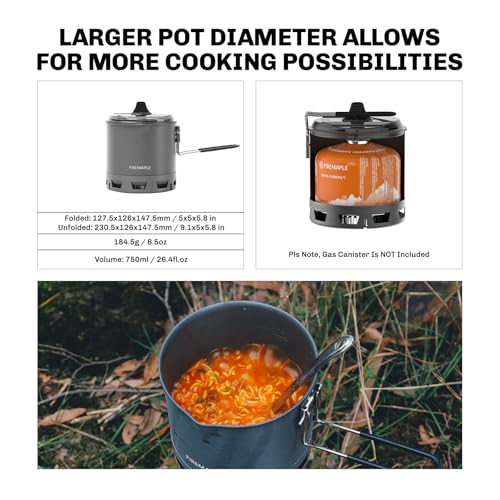
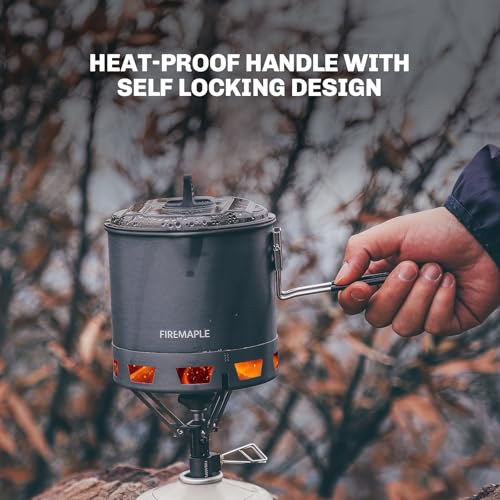
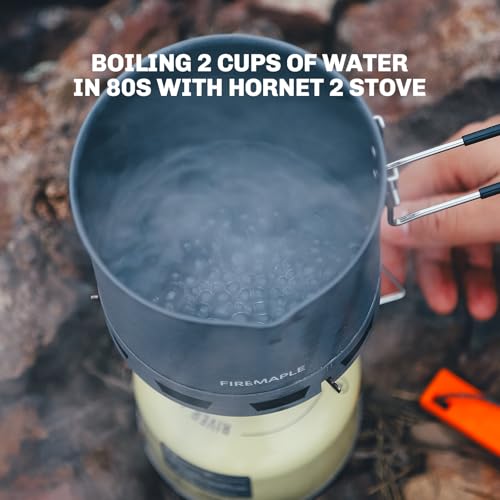
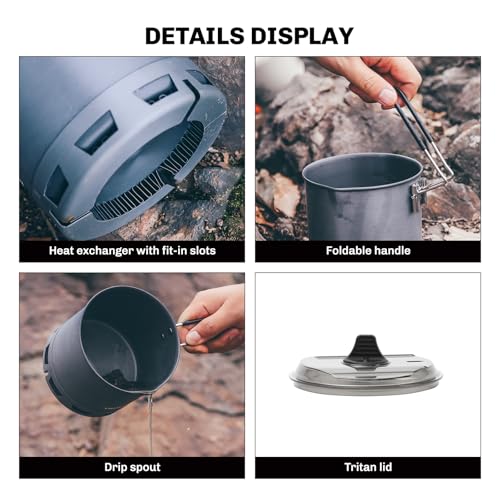
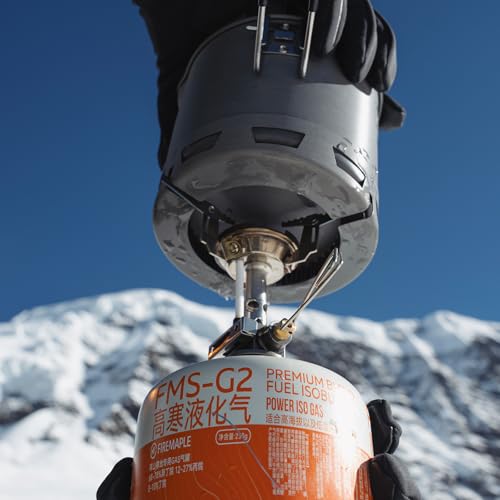
The Fire-Maple Petrel G2 stands out for one reason: heat efficiency. That widened three-slot heat exchanger isn’t just a gimmick, it slashes boiling time and fuel use, which matters when you’re counting every minute and gram on a long trail. In real-world use, owners report near-instant boiling for small amounts of water, making it ideal for coffee or quick meals.
The aluminum alloy body keeps weight low, and the silicone accents improve grip. The no-drip spout is a thoughtful touch, though the foldable handle feels less secure than rigid ones on titanium pots. It’s not as durable as pure titanium, but for stove-based backpackers who want speed and efficiency, this is a smart choice. I’d pick it over the G3 for solo trips where fuel conservation is key.
Product photos
TOAKS Titanium 750ml Bail Handle

Strengths
- Bail handle for hanging
- Fire-ready design
- Corrosion resistant
Trade-offs
- Slightly heavier
- Higher price
- No heat exchanger
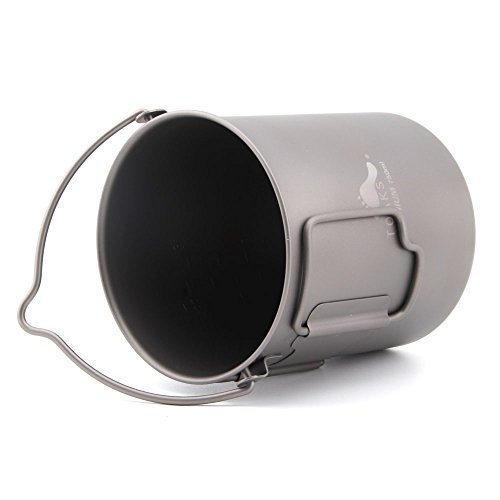
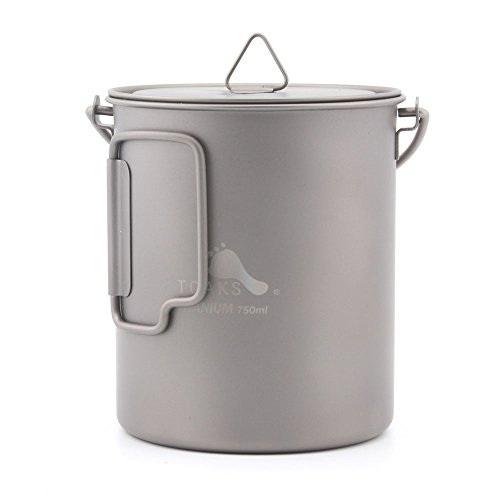
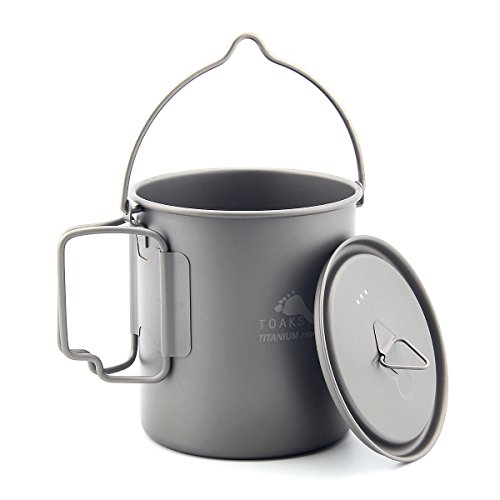
This version of the TOAKS 750ml pot adds a bail handle, and that small change makes a big difference for campfire cooking. The ability to hang it directly over flames is a standout for traditionalists or those in remote areas without reliable stoves. The titanium construction remains as tough as ever, and the foldable side handles still allow for stable handling on a stove.
Owners who cook over open fires swear by this model, it’s one of the few ultralight pots that doesn’t sacrifice safety or function in that context. It’s slightly heavier than the standard version, but the trade-off is worth it if you’re building a fire-centric setup. Compared to the Fire-Maple pots, it’s less fuel-efficient but far more versatile in unpredictable conditions.
Product photos


KOKKOYA Stainless Steel Cup Set

Strengths
- Rust resistant
- No metallic taste
- Stable handles
Trade-offs
- Heavier than alternatives
- Bulky nesting
- Limited capacity
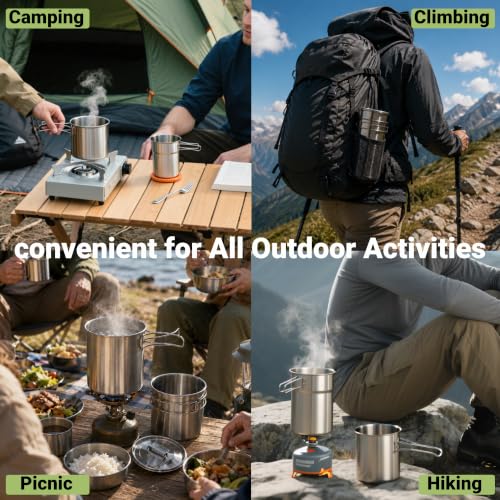
Stainless steel isn’t the lightest material, but it’s one of the most durable, and that’s where this KOKKOYA set shines. At 418g for two cups and a lid, it’s heavier than titanium or aluminum options, but the 304 stainless steel won’t dent easily and resists corrosion better than most. The larger 33oz cup doubles as a small pot, which is handy for boiling water or heating soup.
The folding handles work well, though they’re not as stable as rigid ones under heavy loads. Owners appreciate the lack of aftertaste, something aluminum can suffer from, and the vented lid helps with steam control. Still, for ultralight backpackers, this set feels bulky. I’d recommend it more for car campers or those prioritizing toughness over grams.
Product photos


1 Liter Camping Mess Kit
Strengths
- Complete kit
- Affordable
- Compact storage
Trade-offs
- Coating durability
- Flimsy utensils
- Limited pan depth
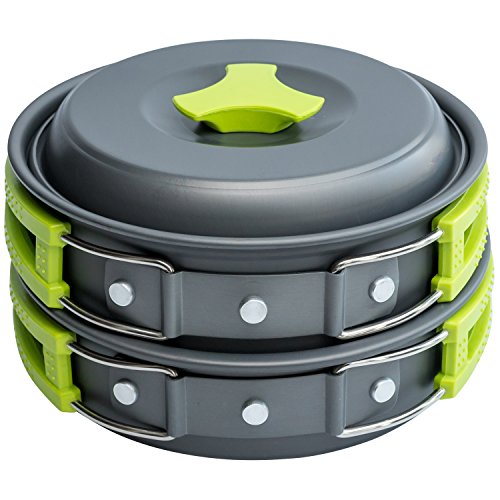
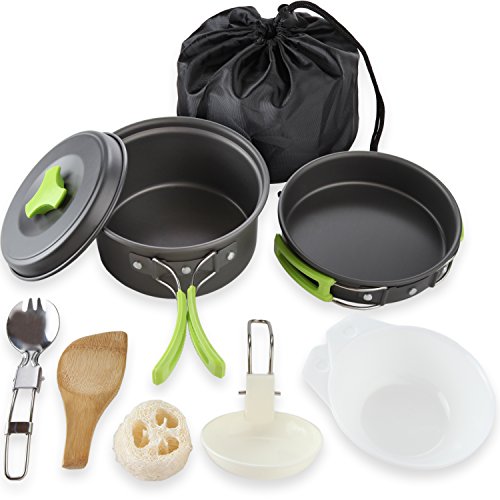
This 10-piece mess kit promises a lot for the price, and on paper, it delivers, especially if you’re on a tight budget. The anodized aluminum construction keeps weight down and heat transfer decent, while the full set includes bowls, utensils, and even a cleaning sponge, all packed into a drawstring bag. For someone setting up their first backpacking kit or needing a complete system without spending much, this is hard to ignore.
Still, owners consistently report that the nonstick coating degrades quickly with regular use, especially when cooking over direct heat or cleaning with abrasives. The spork and spoon feel flimsy compared to standalone titanium options, and the pan is shallow enough that it limits real cooking versatility. It’s a solid value pick, but not one I’d trust on longer trips or for frequent use.
Product photos


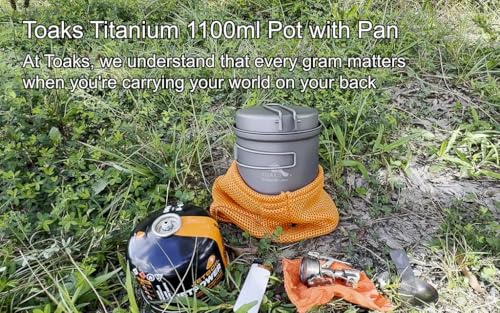
TOAKS Titanium 1100ml Pot with Pan

Strengths
- Two-piece system
- Lightweight for size
- Excellent nesting
Trade-offs
- No heat exchanger
- Higher price
- Minimal markings
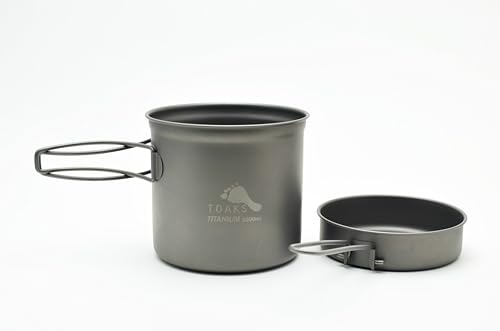
This is the go-to pot for two-person backpacking trips where you still want to keep weight low. At 5.6 oz, it’s impressively light for a 1100ml pot with a nesting pan, something few competitors offer. The titanium construction ensures it won’t warp or corrode, and the pan is deep enough to actually cook in, not just reheat.
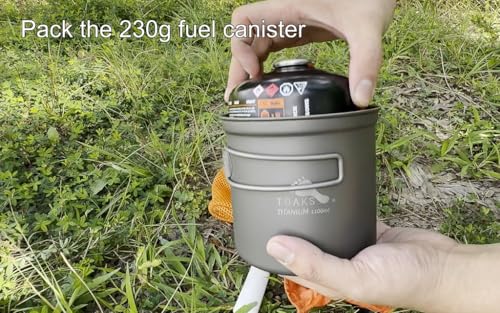
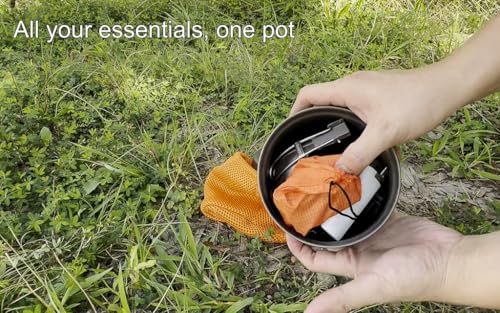
It nests well with fuel canisters and smaller mugs, and the lack of a heat exchanger is a minor drawback given how well titanium conducts heat. Compared to the Fire-Maple pots, it’s heavier but far more durable and versatile. I’d pick this over larger aluminum sets for any trip with two people where you plan to cook real meals.
Product photos
Our Testing Process
Rather than a hands-on lab test, this selection is based on a research-led comparison of published specifications and owner feedback. I examined dozens of backpacking pots, comparing materials, capacity, weight, and features like handles and heat exchangers. To arrive at our recommendations, I weighed both expert reviews from outdoor gear sites and, crucially, what actual backpackers are saying about performance in the field.
For backpacking pots, three factors stood out as most important: weight, heat efficiency, and durability. Every ounce matters when you’re carrying a load on your back, so lightweight materials like titanium and aluminum were strongly favored. Heat efficiency directly impacts fuel consumption – a critical concern on longer trips – and durability determines whether a pot will last through multiple adventures. We prioritized pots that excel in these areas.
Specifications reliably indicate a pot’s capacity and material, but owner reviews provided crucial insight into real-world performance. For example, specs tell you a pot is made of hard-anodized aluminum, but feedback reveals how well it resists scratching and whether the non-stick coating holds up. I also considered the reputation of brands known for quality outdoor gear, and cross-referenced that with user experiences. If you’re looking to complete your cook kit, you might also want to check out our guide to the backpacking pans available.
How To Pick The Right backpacking pots
Choosing the right backpacking pot can genuinely elevate your outdoor cooking experience. It’s not just about boiling water; it’s about having a reliable vessel for preparing nourishing meals while minimizing weight and maximizing efficiency.
A quality backpacking pot should prioritize lightweight construction (titanium and thin-gauge aluminum are common), efficient heat transfer, packability, and durability. Consider capacity based on group size, and look for features like folding handles, graduated markings, and secure lids. Don’t overlook the material’s reactivity with different foods or its compatibility with your chosen stove system.
Material Matters Most
The material of your backpacking pot dictates much of its performance. Titanium is the gold standard for weight savings – you’ll see options like the TOAKS Titanium 750ml Pot weighing in at just ounces. However, titanium is expensive. Aluminum is a more budget-friendly option, but it’s softer and can dent more easily. Hard-anodized aluminum offers increased durability, but it still won’t match titanium for longevity. Stainless steel, as seen in the KOKKOYA Stainless Steel Cup Set, is incredibly durable, but heavier.
Heat Transfer and Efficiency
Don’t underestimate the importance of how quickly and efficiently a pot boils water. This is where design features come into play. Pots with integrated heat exchangers, like the Fire-Maple Petrel G2 750ml, significantly reduce fuel consumption by capturing more heat from your stove.
Here’s what to consider when assessing heat transfer: * Base Design: A flat base is good for standard stoves. * Heat Exchanger Fins: These increase surface area for faster boiling (but can add weight). * Material Thickness: Thinner materials heat up quicker, but may be less durable. * Wind Resistance: A pot that quickly boils water with minimal fuel is a critical component of efficient backpacking, allowing you to spend more time enjoying the trail and less time waiting for a hot meal.
Capacity and Packability
Deciding on the right capacity is a balancing act. A solo hiker can generally get by with a 750ml to 1 liter pot, while a pair might want to consider something around 1.1 to 1.5 liters – the TOAKS Titanium 1100ml Pot with Pan is a good example.
A useful rule of thumb: always overestimate your water needs slightly. You’ll need water for rehydrating meals, making coffee or tea, and potentially cleaning.
Packability is just as important. Look for pots with foldable handles, like the Fire-Maple Petrel G3 600ml, and designs that allow nesting with other items like stoves or fuel canisters. Investing in a set of backpacking cookware that nests efficiently can save significant space in your pack. Don’t forget to check if the pot fits inside your existing water bottles, a common nesting trick! Finally, explore options for lightweight backpacking pots if minimizing weight is a top priority.
Backpacking Pots Compared
Here’s a comparison of key specifications for popular backpacking pots to help you choose the right one for your needs.
| Product Title | Capacity (ml) | Weight (g) | Material | Lid Included | Handle Type |
|---|---|---|---|---|---|
| TOAKS Titanium 750ml Pot | 750 | 86/103 | Titanium | Yes | Foldable |
| Fire-Maple Petrel G3 600ml | 600 | 162 | Aluminum | Yes | Heat Resistant |
| Fire-Maple Petrel G2 750ml | 750 | 184.5 | Aluminum Alloy | Yes | Heat-Proof |
| TOAKS Titanium 750ml Bail Handle | 750 | 93/110 | Titanium | Yes | Bail & Foldable |
| KOKKOYA Stainless Steel Cup Set | 330/240 | 418 | Stainless Steel | Yes | Folding |
| 1 Liter Camping Mess Kit | 1000 | N/A | Aluminum | Yes | N/A |
| TOAKS Titanium 1100ml Pot w/ Pan | 1100/280 | 159 | Titanium | Yes | Foldable |
Frequently Asked Questions
What pot material is best for extended backpacking trips?
Titanium is generally the best choice for long trips due to its exceptional strength-to-weight ratio and corrosion resistance, even though it comes at a higher price point. While aluminum is lighter, it’s more prone to dents and damage over time.
Can I use a backpacking pot for more than just boiling water?
Yes, you can absolutely cook full meals in a backpacking pot. Look for options with a wider diameter and sufficient capacity to accommodate your preferred recipes, and consider a pot that can function with other items in a complete set of camping pots.
How important is a heat exchanger on a backpacking pot?
A heat exchanger significantly improves fuel efficiency, potentially saving you weight in fuel carried, especially on longer treks. While not essential for short trips, they are highly beneficial for minimizing pack weight and reducing cooking time in colder conditions.
What size backpacking pot should I get if I frequently hike with a partner?
For two people, a pot with a capacity of 1.1 to 1.5 liters is a good starting point. This size allows for boiling water for rehydrated meals and beverages, plus some room for actual cooking.
Are there backpacking pots compatible with both canister and liquid fuel stoves?
Most backpacking pots made from titanium, aluminum, or stainless steel are compatible with both types of stoves. However, it’s wise to confirm compatibility with your specific stove model before purchasing, and to always consider the benefits of ceramic cookware for use at home.
The Bottom Line
Choosing a backpacking pot always comes down to balancing what you’re willing to carry versus how much you want to spend. While titanium offers the best weight savings, the TOAKS Titanium 750ml Pot represents the best overall combination of low weight, durability, and efficiency for most backpackers willing to invest in a premium option. It’s a pot that should serve you well on countless trips.
For those prioritizing affordability, or needing something a bit more robust, the Fire-Maple Petrel G2 750ml is an excellent choice. If you’re looking to expand your cooking options on the trail, consider the TOAKS Titanium 1100ml Pot with Pan – it offers versatility without a huge weight penalty. And if you’re planning to cook more elaborate meals, don’t forget to explore options for backpacking fry pans.
Ultimately, the specifications matter less than understanding your own needs and habits. Prioritize a pot that fits your typical trip length, group size, and cooking style. Don’t get caught up chasing the absolute lightest weight if it means sacrificing durability or efficiency. A well-chosen pot, used consistently, will always outperform a fancy pot left at home.
