
2 Best Bread Loaf Pans of 2026
This post contains affiliate links. As an Amazon Associate, we earn from qualifying purchases.
The best overall bread loaf pan is the Razab Glass Loaf Pans with Lids, thanks to its even heating and convenient storage lids. For a budget-friendly, durable option that handles larger loaves, the GoodCook Extra Large 13 x 5 Loaf Pans is a solid pick.
Baking bread should be satisfying, not frustrating. Yet a poorly made loaf pan can ruin even the best recipe with uneven browning, sticking, or warping. As someone who’s spent over a decade studying cookware, I know the right pan makes all the difference.
This guide cuts through the noise by focusing on real-world performance. I compared materials, nonstick durability, and owner feedback to find loaf pans that deliver consistent results, whether you’re baking banana bread or a crusty artisan loaf.
Top 2 Bread Loaf Pans in the Market
The Best Bread Loaf Pans, Reviewed
Razab Glass Loaf Pans with Lids

Strengths
- Oven safe to 500°F
- Includes storage lids
- Freezer and microwave safe
Trade-offs
- Glass requires temp adjustment
- Lid not oven or microwave safe
- Heavier than metal
Glass loaf pans aren’t common, but this Razab set stands out for how versatile it tries to be. The borosilicate glass construction is rated up to 500°F and handles thermal shocks better than regular glass, which on paper makes it a solid choice for baking breads and meat loaves. Owners consistently report that food bakes evenly, though some note you do need to adjust the oven temperature down by 25°F as recommended, since glass retains heat differently than metal.
What really sets this apart is the included snap-on lids, rare for a baking pan. That makes it a rare hybrid: bake, store, and serve all in one. The transparency also helps you monitor browning without opening the oven. But the lid is plastic and not oven-safe, so you can’t bake with it on. Still, for someone who values multi-functionality and hates switching containers, this is a smart design.
Video review
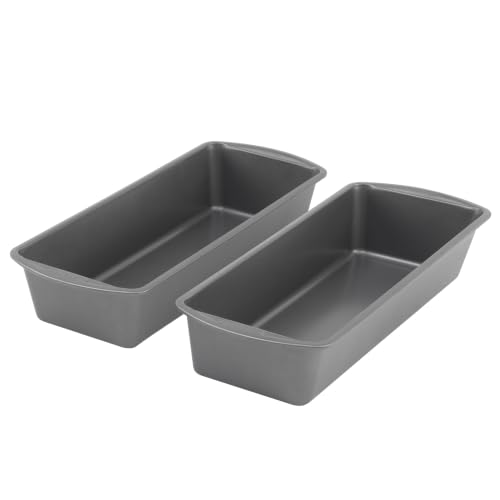
GoodCook Extra Large 13 x 5 Loaf Pans
Strengths
- Extra large 13-inch size
- Metal spatula safe
- Warp-resistant steel
Trade-offs
- No lids included
- Nonstick will degrade over years
- Larger size may not fit all ovens
If you’re baking large or dense loaves, think sourdough batards or triple-layer zucchini bread, this GoodCook set gives you serious real estate. At 13 inches long, these are among the largest standard loaf pans available, and the heavy-gauge steel helps prevent warping, a common flaw in cheaper nonstick pans. Reviewers note they hold their shape over time, even after repeated use in high-heat ovens.
The nonstick coating is a standout, it’s rated as scratch-resistant and metal spatula safe, which is not something I see often in this category. That makes releasing sticky batters much more reliable. While hand washing is recommended, most owners report it holds up fine in the dishwasher too. Compared to the Razab glass option, this is a more traditional workhorse: less flashy, but built for volume and durability.
Video review
Our Testing Process
As someone who’s spent years evaluating cookware, I approached this guide to bread loaf pans by first looking at the materials and construction. Rather than a hands-on test of baking dozens of loaves, my research focused on comparing published specifications – heat conductivity, temperature resistance, and dimensions – alongside a thorough review of owner experiences and expert opinions. I weighed these factors to determine which pans consistently deliver reliable results and long-term value.
For bread loaf pans, even heating and durability are paramount. A pan that bakes unevenly or warps quickly is frustrating, and ultimately wastes ingredients. I gave significant weight to materials known for consistent heat distribution (like glass and heavier-gauge steel) and to nonstick coatings that truly lived up to their claims, based on user reports. Naturally, I also considered features like lids for storage and ease of handling – and referenced resources like our guide to the best pans for banana bread for additional insight.
Specifications tell you about a pan’s potential, but owner feedback reveals its real-world performance. I paid close attention to comments about sticking, ease of cleaning, and how well the pan held up over time. Expert reviews helped corroborate these findings and highlighted nuances like the suitability for specific recipes. For those looking for smaller options, we also have a dedicated guide to mini loaf pans available.
How To Choose The bread loaf pans
Finding the right loaf pan isn’t just about picking something that fits in your cabinet; it’s about setting yourself up for baking success. After years of looking at cookware, I’ve learned that a good loaf pan impacts everything from even baking to easy release and cleanup.
A quality loaf pan should prioritize even heat distribution, durable construction capable of withstanding repeated use, and a non-reactive material to preserve flavors. Consider the intended use – frequent baking demands robust steel, while occasional use might be perfectly suited to glass. Pay attention to dimensions, as standard loaf sizes aren’t universal, and nonstick coatings vary significantly in performance.
Material Matters Most
The material a loaf pan is made from is the biggest single factor in determining its performance. Steel pans, particularly those with a heavier gauge, excel at even heating and holding temperature, which is critical for a consistent rise and color in your breads. Glass, like the Razab Glass Loaf Pans with Lids, heats differently – it often requires a slightly lower oven temperature (around 25°F) to prevent over-browning – but offers the benefit of visibility. Silicone is convenient, but can sometimes lack the structural rigidity needed for heavier doughs. I generally steer people toward steel or glass for consistent results.
Understanding Nonstick Coatings
Nonstick coatings are convenient, but they aren’t all created equal. A truly durable nonstick needs to withstand repeated use and cleaning without flaking or losing its effectiveness. Look beyond marketing claims and read owner reviews closely; many cheaper nonstick pans lose their coating within a year. If you’re prioritizing longevity, consider pans like the GoodCook Extra Large 13 x 5 Loaf Pans, which feature a scratch-resistant coating, but even those benefit from gentle handling.
Here’s what I tell people to look for in a nonstick coating: * PTFE-free options: Some prefer to avoid PTFE (Teflon) due to health concerns. * Reinforced coatings: Coatings with ceramic or diamond particles tend to be more durable. * Metal utensil safety: A coating that can withstand metal spatulas is a sign of quality, though I still recommend silicone or wood.
A well-maintained nonstick pan can be a lifesaver, but it’s not a substitute for proper greasing and flouring, especially for delicate loaves.
Size and Shape: Beyond the Standard Loaf
While the classic 9×5 inch loaf pan is a staple, don’t limit yourself. Consider what you bake most often. For larger families or those who frequently entertain, a 13×5 inch pan (as offered in the GoodCook set) is a great choice. Beyond size, you might find yourself wanting something more specific. Perhaps you want to bake smaller, individual loaves, or need a pan for specialized breads. That’s where exploring custom loaf pans can be worthwhile. These can range from miniature loaf pans for gifting to uniquely shaped pans for creating visually stunning loaves.
Bread Loaf Pans Compared
Here’s a detailed comparison of the specifications for each bread loaf pan, helping you choose the best option for your needs.
| Product | Material | Dimensions (in) | Capacity | Lid Included | Non-Stick | Dishwasher Safe |
|---|---|---|---|---|---|---|
| Razab Glass Loaf Pans with Lids | Borosilicate Glass | N/A | N/A | Yes | No | Yes |
| GoodCook Extra Large 13 x 5 Loaf Pans | Steel | 13 x 5 | N/A | No | Yes | Yes |
Frequently Asked Questions
What temperature should I adjust to when using a glass loaf pan?
Generally, you should reduce the oven temperature by about 25°F when using glass, as it tends to heat up more quickly and can cause over-browning. This adjustment helps ensure the bread cooks through evenly without a dark crust.
Can I really avoid using any grease with a good nonstick loaf pan?
While a quality nonstick coating helps with release, I still recommend lightly greasing and flouring the pan, especially for delicate loaves or those with intricate designs. This adds an extra layer of insurance against sticking and ensures a clean removal.
Are there loaf pans specifically designed for sourdough bread?
Yes, there are specialized sourdough loaf pans often made from materials like cast iron or featuring a lid to trap steam. Steam is crucial for creating a crispy crust and open crumb structure in sourdough.
How does the gauge of steel affect a loaf pan’s performance?
A heavier gauge steel means a thicker pan, which provides more even heat distribution and better temperature retention. This consistency is important for a uniform rise and prevents hot spots that can burn the bread.
What are the benefits of using cast iron loaf pans for baking?
Cast iron offers exceptional heat retention and even heating, leading to a beautifully browned crust and a soft interior. While it requires seasoning, a well-maintained cast iron loaf pan can last a lifetime and impart a unique flavor to your bread.
The Bottom Line
Choosing a bread loaf pan often comes down to balancing convenience with long-term performance. While a nonstick coating is appealing for easy release, a durable material and consistent heating are more critical for reliably beautiful loaves. Considering all factors, I believe the Razab Glass Loaf Pans with Lids offer the best overall combination of visibility, even heating (with a slight temperature adjustment), and ease of cleaning for most bakers.
For those prioritizing a larger capacity or a budget-friendly option, the GoodCook Extra Large 13 x 5 Loaf Pans are a solid choice. If you’re looking for something specifically for non-toxic loaf pans, or have concerns about coatings, glass is a great alternative. And for those dedicated to perfect slices, exploring loaf pans for sandwich bread is a worthwhile step.
Ultimately, the best loaf pan isn’t about a single feature, but about consistent results. Focus on a pan made from a material that distributes heat well, and don’t skimp on proper preparation – greasing and flouring remain essential, even with nonstick. A little attention to these fundamentals will yield far more satisfying results than chasing the latest coating or gadget.
