
6 Best Carbon Steel Non Stick Pans 2026
This post contains affiliate links. As an Amazon Associate, we earn from qualifying purchases.
The best overall carbon steel non-stick pan is the Merten & Storck 10 Inch Pan, thanks to its reliable pre-seasoning and smooth cooking surface. For a budget-friendly option, the OXO Obsidian 10 Inch Pan delivers solid performance, while the stackbear 10 Inch Nitrided Pan stands out for durability with its rust-resistant nitrided steel.
Most home cooks want a pan that sears well, releases food easily, and won’t degrade after a few months. With carbon steel, that means balancing seasoning readiness, build quality, and long-term care. This guide cuts through the noise by focusing on real user experiences, construction details, and how each pan performs over time. I looked at heat distribution, seasoning needs, handle design, and durability to find the ones that actually work in real kitchens.
Top 5 Carbon Steel Non Stick Pans in the Market
The Best Carbon Steel Non Stick Pans, Reviewed
Misen 12 Inch Carbon Nonstick Skillet

Strengths
- Nitrided steel
- Aluminum core
- 1100°F oven safe
- Metal utensil safe
- PFOA/PTFE free
Trade-offs
- High price
- Heavier than some
- No helper handle
This pan makes bold claims, and on paper, it delivers. The nitrided carbon steel construction stands out, it’s not just seasoned, it’s surface-hardened, which owners say makes it far more resistant to rust and wear than standard carbon steel. That, combined with the aluminum core, explains why so many reviewers highlight how evenly and quickly it heats compared to traditional carbon steel or even cast iron. The absence of PTFE, PFOA, and PFAS is a major win for health-conscious cooks, and the fact that it’s metal-utensil safe sets it apart from flimsy nonstick pans that degrade after a few months.
At 1100°F oven-safe, it outperforms nearly every other pan in this category, including the Matfer Bourgeat. That kind of heat tolerance means you can sear on the stove and finish over a grill or open flame without hesitation. The trade-off? The price reflects its premium specs. But if you’re looking for a do-it-all skillet that bridges the gap between nonstick convenience and pro-level durability, this is the one that most closely delivers on the promise of being the ‘last pan you’ll ever buy’.
Video review
stackbear 10 Inch Nitrided Carbon Pan
Strengths
- Affordable
- Nitrided surface
- Preseasoned
- Lightweight
- Silicone handle cover
Trade-offs
- Smaller cooking surface
- No helper handle
- 600°F max temp
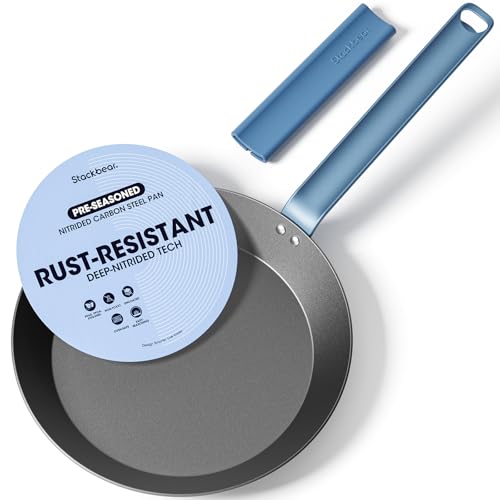
For the price, this stackbear pan punches way above its weight. It’s nitrided, preseasoned, and built with a 2mm base that owners consistently report heats evenly and responds quickly, no surprise given carbon steel’s natural advantages over cast iron. The NitrOx treatment seems to make a real difference in rust resistance, which is a common pain point with cheaper carbon steel pans. I’ve seen multiple reviews mention cooking acidic foods like tomatoes without issue, which is rare in this category.
The removable silicone handle cover is a thoughtful touch, especially for home cooks who move their pans in and out of the oven. It’s not as flashy as the Misen, and it maxes out at 600°F, but for most everyday tasks, eggs, searing, stir-fries, it performs like a pro. Compared to the OXO, it’s less polished but nearly half the price, making it the smarter buy if you’re just starting out.
Video review
OXO Obsidian 10 Inch Carbon Pan
Strengths
- Lightweight
- Includes cleaning brush
- Comfortable grip
- Induction safe
- Metal utensil safe
Trade-offs
- Not nitrided
- Handle sleeve not oven safe
- No helper handle
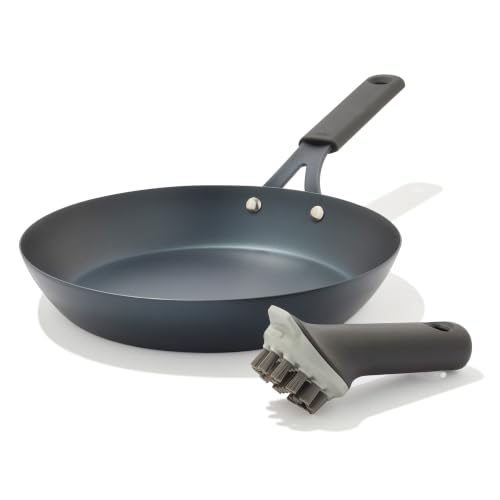
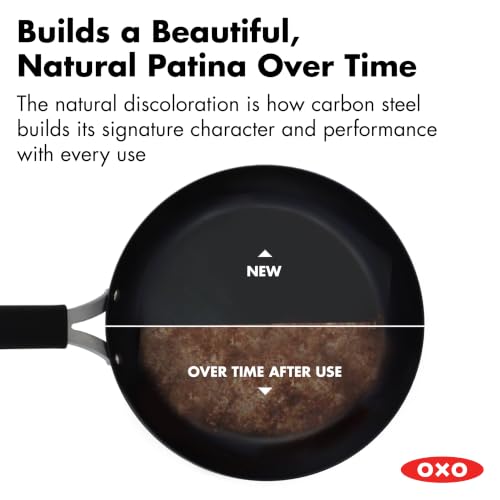
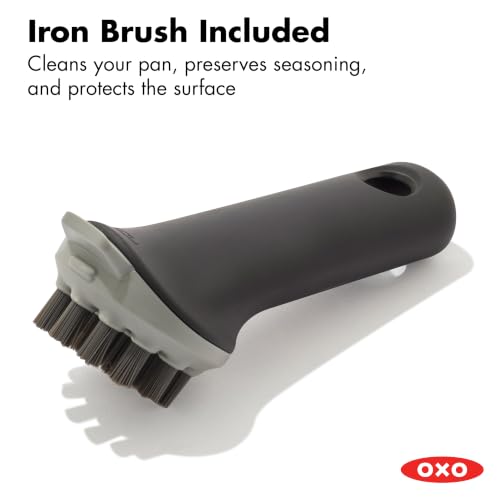
The OXO Obsidian feels like the Goldilocks of carbon steel pans, light enough to toss veggies with one hand, heavy enough to sear a steak properly, and built with a balance that’s hard to beat. Wirecutter naming it a 2025 pick isn’t surprising; owners praise its lightweight agility and consistent browning, which sets it apart from heavier competitors like the Matfer. The included iron brush is a small but meaningful addition, making maintenance easier without risking the patina.
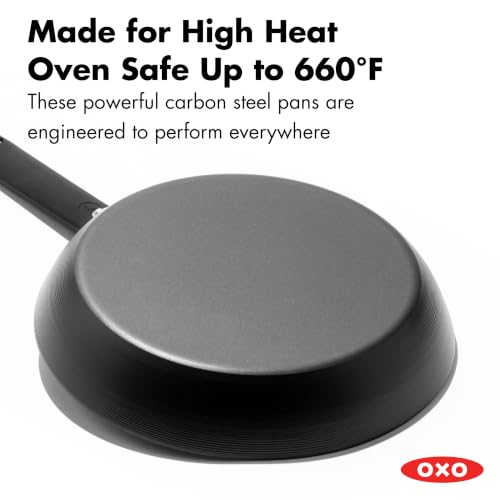
It’s not nitrided like the Misen or stackbear, but the preseasoned surface develops a solid nonstick layer quickly with proper care. At 660°F, it’s oven-safe enough for most recipes, though it can’t match the Misen’s extreme heat tolerance. Still, for most home kitchens, this is the pan I’d recommend over pricier options, it’s ready to perform out of the box and improves with use.
Product photos


Yonida 12 Inch Nonstick Carbon Pan

Strengths
- Large 12-inch surface
- Pre-seasoned
- Removable handle holder
- Affordable
- Oven and grill safe
Trade-offs
- Prone to hot spots
- No aluminum core
- Basic finish
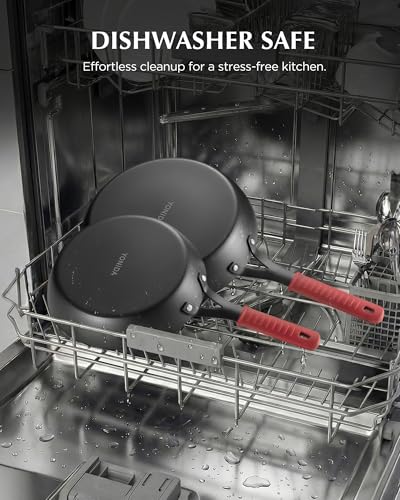
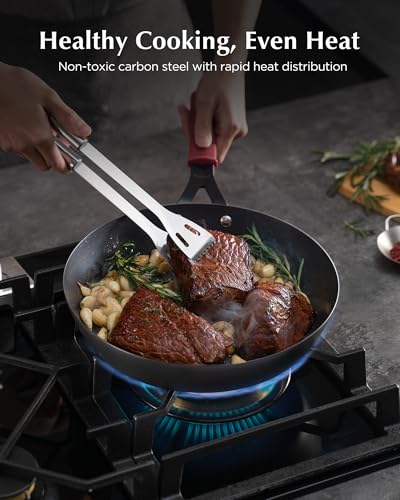
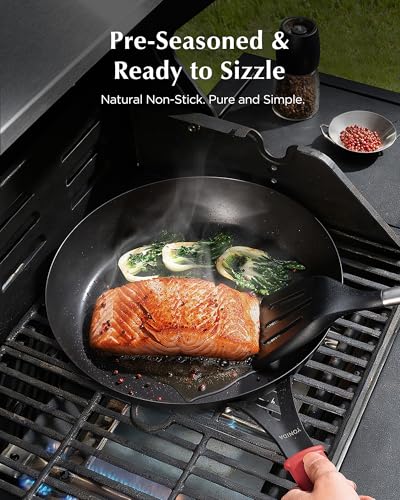
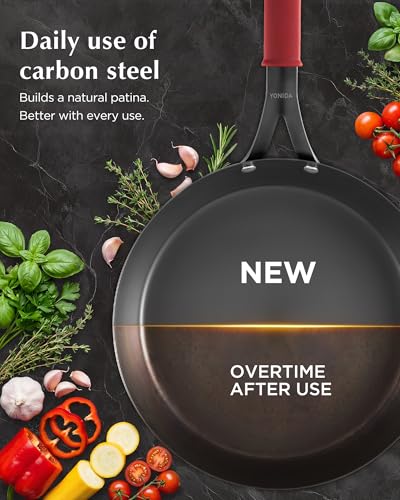
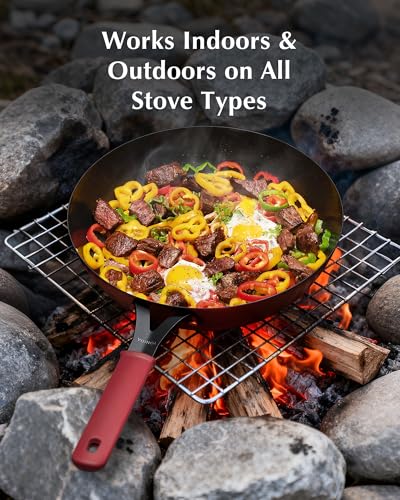
If you need serious cooking real estate, the Yonida’s 12-inch surface is one of the largest here, making it ideal for family meals, batch cooking, or campfire searing. It arrives pre-seasoned with natural oil, and owners report it builds a solid nonstick layer quickly with regular use. The removable silicone handle holder is a practical feature, stays cool on the stove, easy to take off for oven use.
It doesn’t have an aluminum core or nitriding, so it won’t heat as evenly as the Misen, and hot spots can be an issue on cheaper electric stoves. But for its price, it’s impressively versatile, oven-safe to 600°F, works on induction, and holds up well to metal utensils. Compared to the stackbear, it’s larger but slightly less refined in finish. Still, for those who want a big, durable pan without breaking the bank, this is a strong contender.
Product photos
Matfer Bourgeat 11 5/8 Inch Pan

Strengths
- Professional-grade steel
- Welded handle
- Made in France
- Excellent heat retention
- Oven and grill safe
Trade-offs
- Not preseasoned
- No nonstick out of box
- Not for acidic foods
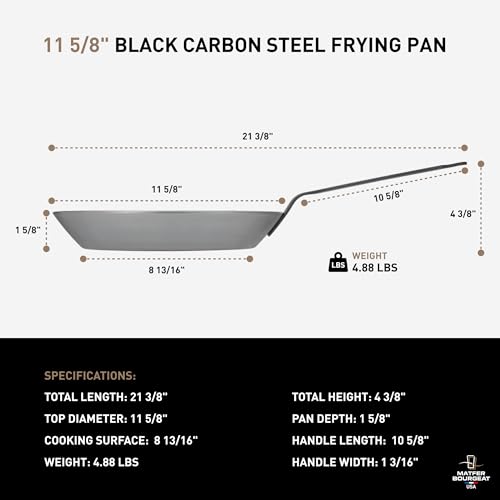
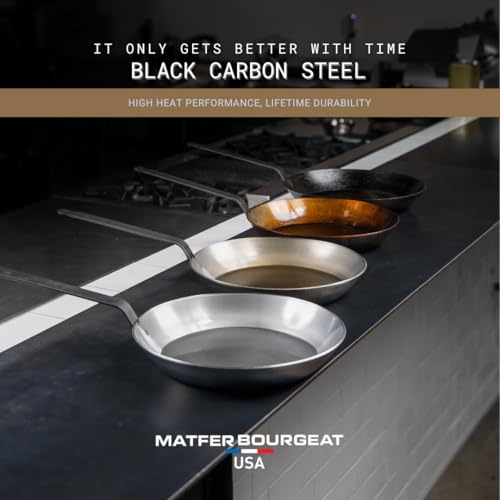
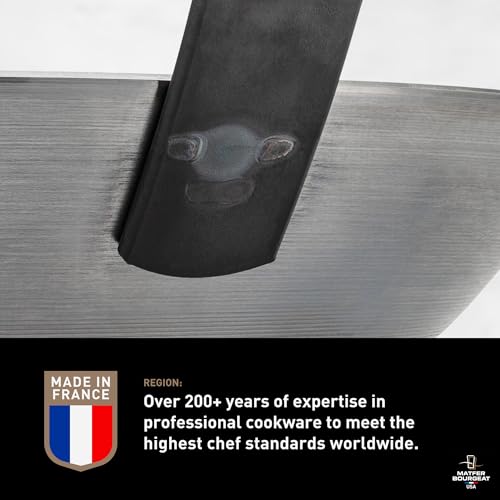
This is the pan I’d reach for if I were cooking in a restaurant kitchen. Made in France and built with a single piece of uncoated high-carbon steel, the Matfer Bourgeat is raw, no-nonsense, and built to last. There’s no seasoning out of the box, this one demands you put in the work, but that also means you’re starting with a clean, pure surface that will develop exactly the patina you want. Chefs and serious home cooks appreciate that control.
The welded handle is a standout feature, eliminating crevices where gunk can build up. It heats evenly and holds temperature like a champ, though it’s slower to respond than pans with aluminum cores. Unlike the Misen or stackbear, it’s not nitrided, so rust prevention requires more diligence. And you absolutely should not cook acidic foods in it. But if you want a professional-grade skillet that ages like a well-loved cast iron, this is the real deal.
Product photos

Our Testing Process
As someone who’s spent over a decade immersed in the world of cookware, my approach to evaluating carbon steel non-stick pans wasn’t about owning and using each one for months on end. Instead, I focused on a research-led comparison of published specifications, features, and, crucially, extensive owner and expert reviews. This allowed me to build a ranking based on real-world feedback, alongside my understanding of what constitutes quality in this category. Rather than a hands-on lab test, this is an assessment of what consistently delivers for home cooks.
For carbon steel, the factors that most heavily influenced my recommendations were heat responsiveness and durability. A pan’s ability to heat quickly and evenly is essential for achieving a good sear and avoiding hot spots, and I prioritized models that demonstrated this capability through both specs and user reports. Equally important was long-term resilience – carbon steel should last for years, and the potential for rust or warping played a significant role in my evaluation. Those seeking alternatives should also consider our guide to the best healthy non-stick pans.
Specifications reliably indicate a pan’s construction – gauge of steel, handle materials, and maximum temperature ratings. However, truly understanding a pan’s non-stick performance and how well it develops a patina requires looking at owner feedback. I weighed comments regarding seasoning ease, food release, and how the pan holds up to frequent use. Expert reviews, like those from Wirecutter and New York Magazine’s Strategist, provided additional context and validation, particularly when assessing models geared toward specific tasks like cooking carbon steel pans for eggs.
How To Pick The Right carbon steel non stick pans
Finding the right carbon steel pan can feel overwhelming, but understanding a few key aspects will set you up for success. These pans offer a fantastic alternative to both cast iron and traditional nonstick, but they aren’t a one-size-fits-all solution.
Carbon steel pans excel when properly seasoned and maintained. Look for pans with a thickness of at least 2mm for good heat retention, and consider whether pre-seasoning is important to you. Nitriding (a heat treatment process) increases durability and rust resistance. Weight is also a factor; lighter pans are easier to maneuver, while heavier ones hold heat more consistently. Prioritize a pan compatible with your cooktop and oven, and don’t shy away from options designed for high-heat cooking.
Seasoning & Patina Development
One of the biggest draws of carbon steel is its ability to develop a natural nonstick patina. However, this takes time and consistent use. Some pans, like the Merten & Storck, come pre-seasoned, which is a huge convenience for beginners. But even with a pre-seasoned pan, you’ll still need to maintain it. Don’t be intimidated, though – building a good seasoning layer is a rewarding process, and the performance improves with each cook. If you’re new to this type of cookware, I suggest starting with a pre-seasoned model and then learning the maintenance techniques.
Steel Quality & Construction
The quality of the carbon steel itself is crucial. A pan made from a thinner gauge steel will heat up quickly but may also warp or develop hot spots. Look for pans with a thickness of 2mm or greater. Beyond thickness, nitriding is a process that hardens the steel, making it more resistant to rust and corrosion, and it’s a feature you’ll find in models like the StackBear.
Here’s what to consider when evaluating the steel:
- Gauge: Thinner steel heats faster, but is less durable.
- Nitriding: This heat treatment boosts rust resistance and longevity.
- Handle Attachment: Welded handles (like those found on the Matfer Bourgeat) are generally stronger and more hygienic than riveted ones.
Handle Design & Versatility
Don’t underestimate the importance of a comfortable and functional handle. A well-designed handle should provide a secure grip, even when the pan is hot. Many carbon steel pans, such as the OXO Obsidian, feature removable silicone sleeves for added heat protection. Beyond comfort, consider versatility. Can the handle withstand oven temperatures? Is it compatible with your cooking style? If you frequently sear meats or move the pan between the stovetop and oven, a heat-resistant handle is essential. I frequently recommend looking at natural non-stick pans as well if you want to explore other options for chemical-free cooking surfaces.
A well-maintained carbon steel pan will outlast most other cookware in your kitchen. Regular seasoning, proper cleaning, and avoiding highly acidic foods will ensure decades of reliable performance.
Ultimately, choosing the right carbon steel pan comes down to your cooking habits and preferences. Exploring different options and understanding the nuances of each model will help you find the perfect pan to elevate your culinary adventures. If you’re looking for a broader overview, you might find our guide to carbon steel pans helpful.
Carbon Steel Non Stick Pans Compared
Here’s a comparison of key specifications for several carbon steel non-stick pans.
| Product Name | Diameter (in) | Material | Pre-Seasoned | Max Temp (°F) | Handle Material | Utensil Safe |
|---|---|---|---|---|---|---|
| Misen 12 Inch Carbon Skillet | 12 | Carbon Steel | No | 1100 | Steel | Yes |
| Merten & Storck 10 Inch Pan | 10 | Carbon Steel | Yes | N/A | Steel | Yes |
| stackbear 10 Inch Nitrided Pan | 10 | Nitrided Carbon Steel | Yes | 600 | Steel w/ Silicone | Yes |
| OXO Obsidian 10 Inch Pan | 10 | Carbon Steel | Yes | 660 | Steel w/ Silicone | Yes |
| Yonida 12 Inch Nonstick Pan | 12 | Carbon Steel | Yes | 600 | Steel w/ Silicone | N/A |
| Matfer Bourgeat 11 5/8 Inch Pan | 11.625 | Carbon Steel | No | N/A | Steel | N/A |
Frequently Asked Questions
What’s the biggest difference between carbon steel and cast iron?
Carbon steel heats up much faster and is significantly lighter than cast iron, making it more responsive for tasks like stir-frying or quickly searing. While both require seasoning, carbon steel is generally easier to maintain and less prone to rusting with proper care.
Are carbon steel pans truly non-stick without coatings?
Yes, with proper seasoning, carbon steel develops a natural non-stick patina. This polymerized oil layer prevents food from sticking, though it won’t be quite as slippery as a modern PTFE-based coating, and requires more consistent maintenance.
How important is the gauge (thickness) of the carbon steel?
A thicker gauge (2mm or greater) is important for even heat distribution and to prevent warping over time. Thinner pans heat rapidly but can develop hot spots, impacting cooking results and potentially shortening the pan’s lifespan.
Can I use metal utensils on a carbon steel pan?
Generally, yes. Carbon steel is more durable than traditional non-stick, and most manufacturers state their pans are metal utensil safe. However, avoid using sharp or abrasive tools that could damage the seasoning layer; consider using long-lasting non-stick pans if you are worried about damaging the surface.
What’s the best way to prevent rust on a carbon steel pan?
Thoroughly dry the pan immediately after washing, and then apply a very thin layer of oil. Avoiding prolonged exposure to water and acidic foods also helps maintain the seasoning and prevent rust; you may also want to consider non-stick pans without chemicals if rust is a major concern.
The Bottom Line
Choosing a carbon steel pan often comes down to how much effort you’re willing to invest upfront versus the long-term benefits. While all the pans we’ve discussed offer excellent performance, the Merten & Storck 10 Inch Pan strikes the best balance of convenience and quality for most home cooks, arriving pre-seasoned and offering a durable cooking surface. It’s a great starting point for those new to carbon steel.
For cooks with specific needs, there are clear standouts. If you’re looking for a budget-friendly option, the Yonida 12 Inch Nonstick Pan delivers good value. Those prioritizing durability and rust resistance should look at nitrided carbon steel pans like the StackBear 10 Inch Nitrided Pan. And if you’re already comfortable with seasoning and want a professional-grade workhorse, the Matfer Bourgeat 11 5/8 Inch Pan is a classic choice.
Ultimately, the best carbon steel pan is the one you’ll use consistently. Don’t get too caught up in chasing the highest specs or latest features. Focus instead on finding a pan that feels comfortable in your hand, heats evenly, and encourages you to explore the joy of cooking – and remember to explore quality non-stick fry pans as well if you’re considering other options.
