
7 Best Cast Iron Teapots of 2026
This post contains affiliate links. As an Amazon Associate, we earn from qualifying purchases.
The Ufine Koi Fish Cast Iron Teapot Set is our top pick for its excellent heat retention, stovetop compatibility, and thoughtful design. For a more budget-friendly option, the 300ml Mini Cast Iron Teapot works well for solo tea drinkers. If you’re serving guests regularly, the Sotya 40oz Cherry Blossom Teapot offers generous capacity and reliable performance.
Buying a cast iron teapot isn’t just about finding something that looks good on the stove. Many people end up frustrated with poor heat distribution, chipped enamel, or lids that don’t seal properly, issues that can ruin both the tea and the teapot over time.
As someone who’s spent years evaluating cast iron cookware, I focused on models that balance durability, function, and value. These picks are based on a close look at materials, owner feedback, and key features like enamel quality and infuser design, all to help you find a teapot that lasts and brews great tea.
Top 7 Cast Iron Teapots in the Market
The Best Cast Iron Teapots, Reviewed
Ufine Koi Fish Cast Iron Teapot Set

Strengths
- Complete set
- Drip-free spout
- Excellent heat retention
Trade-offs
- Cups are small
- No gold accents
The Ufine set earns its ‘Best Overall’ tag not just for performance but for completeness. The 26oz teapot strikes a sweet spot, large enough for two to three servings, small enough to heat quickly. The koi fish design is detailed without being gaudy, and the black enameled interior resists staining and simplifies cleaning. Owners consistently praise the curved spout for drip-free pouring, a detail often overlooked in cheaper models.
What really sets it apart is the included trivet and four small cups, which elevate it from kitchen tool to full tea experience. The stainless steel infuser fits well and allows for full leaf expansion. Compared to the Velaze, it offers more cups and better spout control, making it my top pick for most buyers.
Product photos


Suyika 900ml Japanese Tetsubin Teapot

Strengths
- Great price
- Enameled interior
- Even heat retention
Trade-offs
- Basic spout design
- Minimal iron infusion
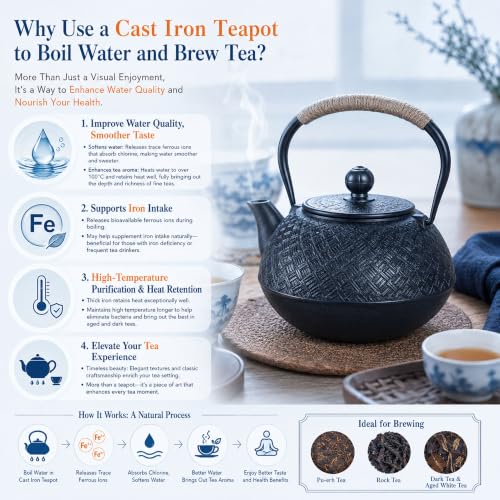
At just under $31, the suyika tetsubin punches above its weight in value, offering a solid 30oz capacity and a fully enameled interior that makes upkeep simple. The design leans traditional, and while it lacks the ornate detailing of pricier models, owners say it feels substantial and heats evenly on gas and electric stoves. The claimed health benefits, iron ion release and chloride absorption, are often repeated in listings, but in practice, those effects are minimal with enameled interiors since the coating limits direct water-to-iron contact.
Still, it does retain heat well, and the included infuser is a nice perk at this price. Some users mention the spout could be more precise in its pour, with a few drips after serving. Compared to the Dachenus or Velaze, it’s less about extras and more about core function done affordably.
Video review
Dachenus 1000ml Honeycomb Design Teapot

Strengths
- Large 1000ml capacity
- Enameled interior
- Includes infuser
Trade-offs
- Handle heats up
- Bulky for small kitchens
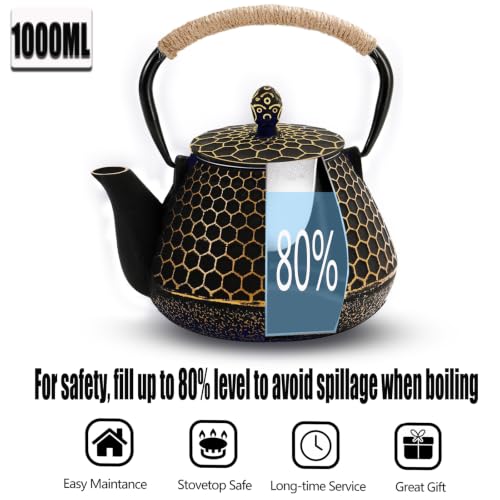
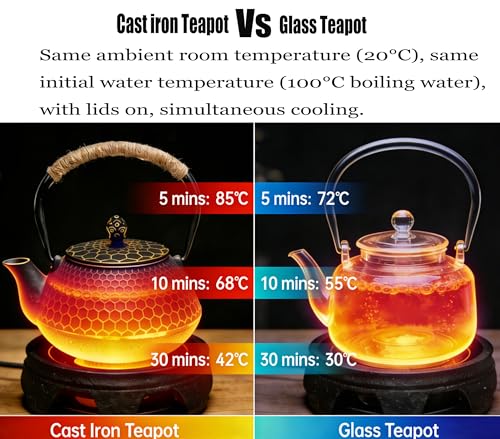
With a 1000ml capacity, the Dachenus teapot is the largest in this lineup, ideal for families or frequent hosts. The honeycomb pattern with gold accents gives it a modern twist on the classic tetsubin, and owners appreciate how it holds heat over long sessions. The removable stainless steel infuser works well with loose leaf teas, and the enameled interior keeps maintenance simple, just rinse and dry.
That said, its size can be a drawback on smaller stovetops or for solo drinkers. The handle is functional but not as ergonomically shaped as the Ufine or Velaze models, and a few reviewers mention it gets uncomfortably hot during prolonged boils. Still, if volume is your priority, this one fills the role without breaking the bank.
Product photos


300ml Mini Cast Iron Teapot
Strengths
- Ideal for solo use
- Even heat distribution
- Fine-mesh infuser
Trade-offs
- Too small for groups
- No accessories
- Basic finish
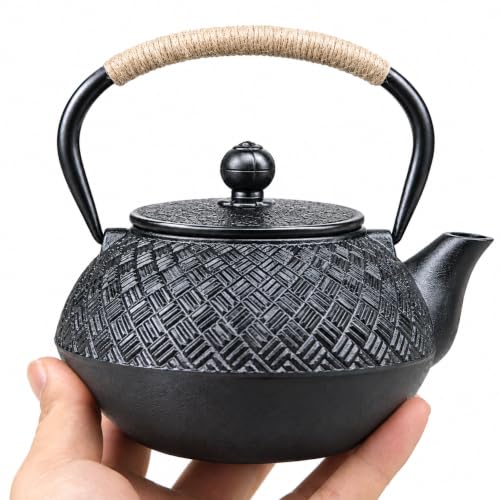
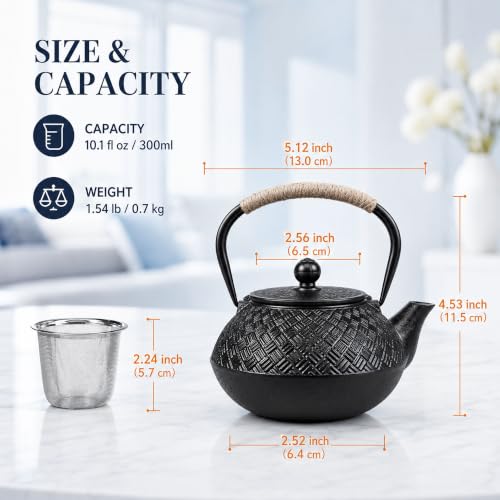
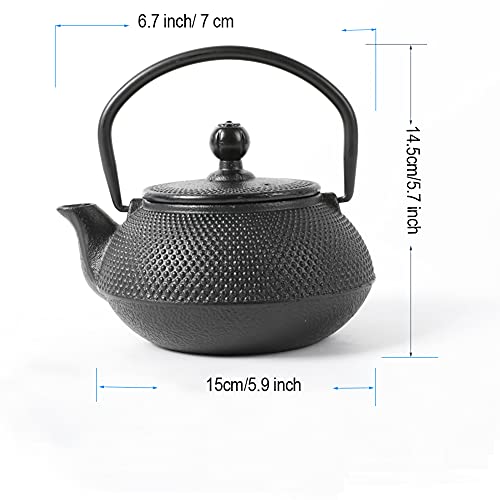
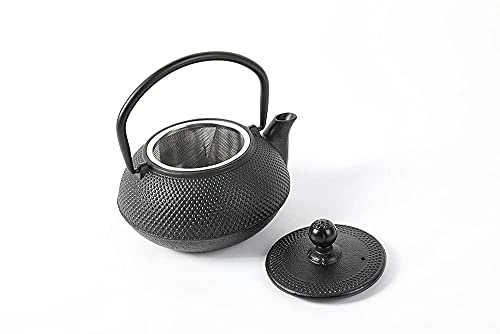
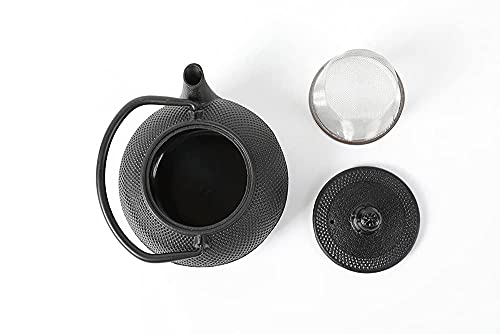
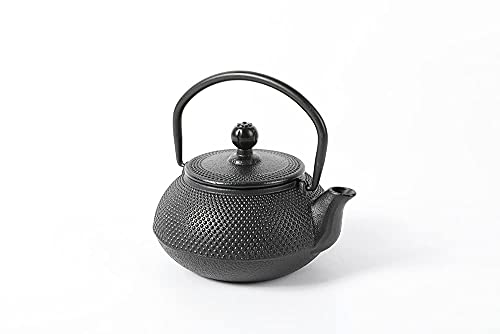
This 300ml tetsubin is the smallest here, and that’s its entire purpose, it’s designed for one. The compact size makes it perfect for a single serving of Pu-erh or oolong, where high heat and concentrated steeping matter. Owners say it heats quickly and maintains temperature well, enhancing the depth of complex teas. The stainless steel infuser is proportioned just right for the chamber, allowing leaves to expand fully.
It’s not meant for sharing, and the minimalist design lacks any extras like a trivet or cups. But for a tea drinker who values ritual and precision, this one delivers focus. Compared to the HAWOK, it’s more intentional in design, even if both are budget options.
Product photos
Velaze 700ml Japanese Style Teapot Set

Strengths
- Includes trivet and cups
- Beautiful design
- Good heat retention
Trade-offs
- Only two cups
- Trivet feels light
- Limited capacity
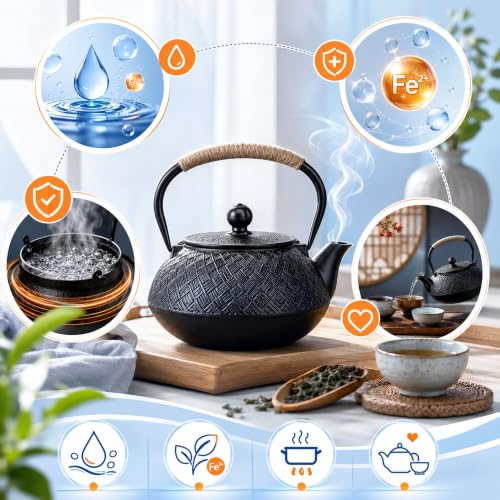
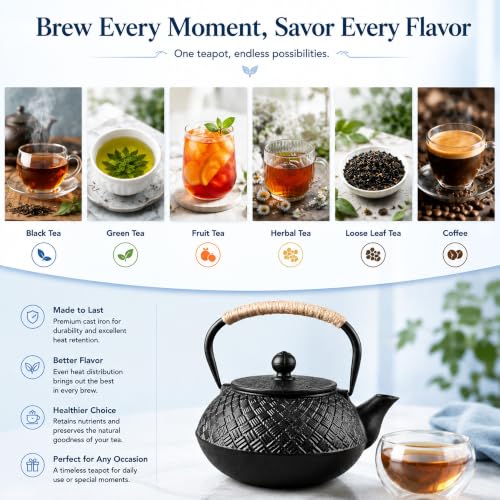
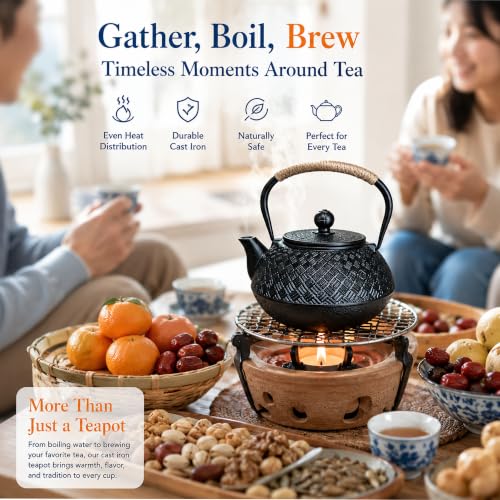
The Velaze set leans into the traditional Japanese aesthetic with a clean, elegant finish and a matching trivet and two cast iron cups. At 700ml, it’s sized for intimate gatherings, and the included infuser is well-made, allowing for proper leaf expansion. The enameled interior keeps maintenance easy, and owners say it holds heat impressively long, great for slow sipping.
However, the set only includes two cups, which limits its appeal for larger groups. Some users also note the trivet doesn’t feel as heavy-duty as it looks. While it competes with the Ufine, it falls just short due to the smaller serving count and slightly less precise pour. Still, for couples or solo drinkers who value ritual and presentation, it’s a strong choice.
Video review
Sotya 40oz Cherry Blossom Teapot

Strengths
- Large capacity
- Enameled interior
- Stainless steel infuser
Trade-offs
- Infuser fit can be loose
- Overflow risk if overfilled
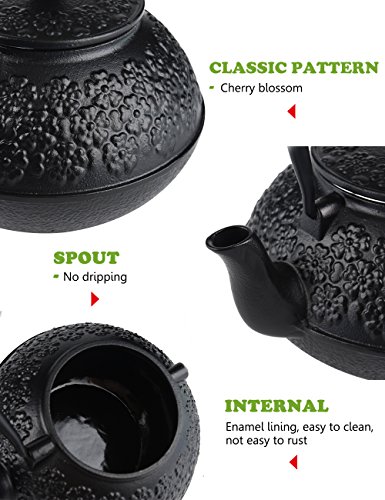
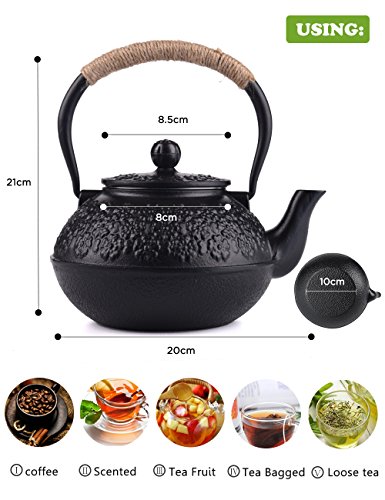
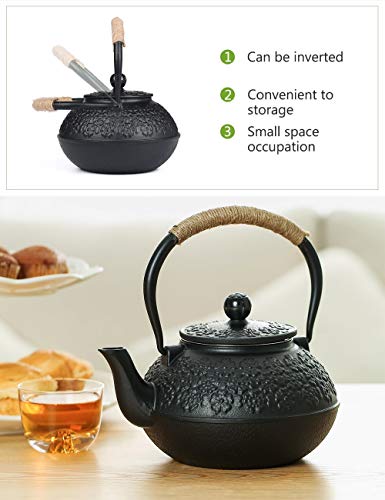
The Sotya 40oz tetsubin stands out for its bold aesthetic and generous capacity, making it a strong contender if you value presentation and want to brew for a small group. The cherry blossom motif is eye-catching, and owners consistently report it becomes a conversation piece on the countertop. On paper, the enamel interior is a smart touch for rust resistance, which matters for beginners who might not dry the pot thoroughly after each use.
The stainless steel infuser is a functional bonus, though some reviewers note it doesn’t always fit snugly in the wider body, leading to occasional leaf escape. It’s also worth noting that the full 40oz capacity isn’t safe for boiling, stick to 30oz to avoid overflow. For those who prioritize beauty and ease of care over traditional seasoning rituals, this one delivers.
Product photos

HAWOK 600ml Cast Iron Teapot

Strengths
- Very affordable
- Durable build
- Enameled interior
Trade-offs
- Poor spout control
- Small infuser
- No extras
The HAWOK is the most budget-friendly option here, and it shows in both size and finish. At 600ml, it’s modest but sufficient for one or two cups, and the enameled interior ensures it won’t rust with regular use. It lacks any included accessories or standout design, but owners say it’s surprisingly sturdy for the price and performs the basics without issue.
Where it falls short is in pour quality and handle comfort, several users note a tendency to drip, and the infuser is smaller than ideal for full leaf expansion. Compared to the suyika or Dachenus, it offers less value per ounce, but if you’re just dipping into cast iron tea brewing, it’s a low-risk entry point.
Product photos
How We Picked These cast iron teapots
Rather than a hands-on lab test, my research for these recommendations focused on a detailed comparison of published specifications and features across numerous models. I then weighed owner reviews – paying close attention to recurring praise and complaints – alongside assessments from reputable cookware experts. As someone who’s spent years understanding what makes cookware perform, I applied my category knowledge to assess how each teapot’s design and materials contribute to the overall tea-brewing experience.
For cast iron teapots, heat retention, enamel quality, and the effectiveness of the infuser were the most heavily weighted factors. Good heat retention is critical for maintaining temperature during brewing and for the enjoyment of multiple cups. The enamel coating is vital for preventing rust and simplifying cleaning, while a well-designed infuser ensures a clean, flavorful brew. These three elements directly impact the long-term usability and enjoyment of the teapot.
Specifications reliably indicate capacity and material composition. However, I found owner feedback to be far more insightful when evaluating the quality of the enamel (its durability and resistance to chipping) and the practicality of the spout design (dripping or pouring smoothly). Reputation also played a role; brands consistently praised for quality cast iron construction generally delivered on their promises, as did those with attentive customer service.
Choosing The Right cast iron teapots
Finding the right cast iron teapot isn’t simply about aesthetics; it’s about understanding how the material interacts with tea and how construction affects longevity.
A quality cast iron teapot should offer even heating, a protective enamel interior to prevent rust and maintain tea flavor, and a design that balances functionality with traditional craftsmanship. Consider the intended use – individual servings versus brewing for a group – and prioritize a teapot with a well-fitted lid and a spout designed for drip-free pouring.
Capacity and Use Case
The size of a cast iron teapot is the first thing to consider. Don’t assume bigger is better. A 300ml teapot, like the Mini Cast Iron Teapot, is perfect if you primarily drink tea alone. It heats quickly and minimizes wasted tea. Conversely, a 1200ml option, such as the Sotya 400oz Cherry Blossom Teapot, is better suited for entertaining or those who enjoy multiple infusions throughout the day. Think about how often you’ll use it, and for how many people, before committing to a size. It’s also worth noting that most manufacturers recommend not filling the teapot to its maximum capacity when boiling, to avoid overflow.
Interior Coating and Material Quality
Cast iron itself can impart a metallic taste to your tea and is prone to rust. That’s why the interior coating is critical. Most quality teapots use a full enamel coating, preventing direct contact between the tea and the iron. This preserves the tea’s delicate flavors and simplifies cleaning. Beyond the enamel, the quality of the cast iron itself matters. Cheaper options may use thinner iron, making them more susceptible to cracking with temperature fluctuations. Learning about the basics of cast iron will help you differentiate between a durable piece and one that won’t last.
Design Details and Maintenance
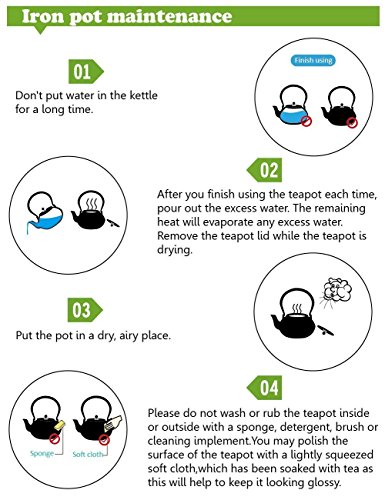
A beautiful teapot is a joy to use, but don’t let aesthetics overshadow functionality. Look for a teapot with a well-attached handle that remains cool to the touch, even when the teapot is hot. The spout should be designed to pour without dripping, and the lid should fit snugly to retain heat. Speaking of heat, understanding how to prevent cast iron rust is crucial for longevity. Here’s a simple rule of thumb:
Always dry your cast iron teapot thoroughly after each use to prevent rust. Even with an enamel coating, moisture can seep in and cause damage over time.
Here’s a quick look at what to prioritize in design:
- A snug-fitting lid: Critical for heat retention.
- A comfortable handle: Especially important for larger teapots.
- A well-designed spout: Prevents drips and allows for controlled pouring, a feature found in models like the Ufine Koi Fish Cast Iron Teapot Set.
Cast Iron Teapots Compared
Here’s a comparison of specifications for various cast iron teapots to help you make an informed purchase.
| Product Title | Capacity (ml) | Infuser Included | Stovetop Safe | Material | Features |
|---|---|---|---|---|---|
| Ufine Koi Fish Cast Iron Teapot Set | 750 | Yes | Yes | Cast Iron | Trivet & 4 Cups |
| Suyika 900ml Japanese Tetsubin Teapot | 900 / 750 | N/A | Yes | Cast Iron | Enamel Interior |
| Dachenus 1000ml Honeycomb Design Teapot | 1000 | Yes | N/A | Cast Iron | Honeycomb Design |
| 300ml Mini Cast Iron Teapot | 300 | Yes | N/A | Cast Iron | For Single Serving |
| Velaze 700ml Japanese Style Teapot Set | 700 | Yes | N/A | Cast Iron | Cups & Trivet |
| Sotya 40oz Cherry Blossom Teapot | 1200 / 900 | Yes | Yes | Cast Iron | Cherry Blossom |
| HAWOK 600ml Cast Iron Teapot | 600 | Yes | N/A | Cast Iron | Enamel Interior |
Frequently Asked Questions
What type of tea is best suited for a cast iron teapot?
Generally, black and pu-erh teas are ideal, as they benefit from the consistent heat retention. More delicate teas, like white or green tea, can sometimes take on a metallic taste if the enamel coating is compromised, so choose a pot with a high-quality, fully enameled interior.
Can I use my cast iron teapot on an open flame or induction cooktop?
Many cast iron teapots are stovetop safe, but always check the manufacturer’s specifications first. Direct flame use can sometimes cause thermal shock, and not all models are compatible with induction, so confirming compatibility prevents damage.
How often should I re-season my cast iron teapot?
Unlike a seasoned cast iron | what is seasoning skillet, a fully enameled cast iron teapot doesn’t require traditional seasoning. However, if the enamel coating chips, and bare iron is exposed, you should address it immediately to prevent rust and flavor transfer.
Are cast iron teapots dishwasher safe?
No, cast iron teapots should never be put in the dishwasher. Harsh detergents can damage the enamel coating and cause rust, significantly shortening the teapot’s lifespan. Handwashing with warm water and a soft sponge is always recommended.
What’s the best way to prevent rust inside an enameled cast iron teapot?
While the enamel protects against rust, thoroughly drying the teapot after each use is still essential. Leaving even a small amount of water inside can lead to corrosion over time, especially around the lid and spout.
The Bottom Line
Ultimately, choosing a cast iron teapot comes down to balancing convenience with a commitment to care. While all the models we considered offer the benefits of cast iron’s heat retention, the Ufine Koi Fish Cast Iron Teapot Set stands out as the most well-rounded option. It provides a beautiful aesthetic, a functional infuser, and includes everything you need for a complete tea service – making it a fantastic choice for both everyday use and special occasions.
For those seeking a budget-friendly entry point, the 300ml Mini Cast Iron Teapot is excellent. It’s perfectly sized for individual servings and provides a solid introduction to the material. If you prioritize a larger capacity and a traditional aesthetic, the Sotya 400oz Cherry Blossom Teapot delivers on both fronts, though it will require a bit more diligence in terms of proper cast iron care.
At the end of the day, the most expensive teapot won’t brew a better cup of tea if it isn’t properly maintained. Focusing on understanding maintaining cast iron, a snug-fitting lid, and a well-designed spout will deliver a more satisfying experience than chasing the latest features or highest capacity.
