
8 Best Ceramic Egg Pans 2026
This post contains affiliate links. As an Amazon Associate, we earn from qualifying purchases.
The Redchef 8 Inch Ceramic Frying Pan stands out as the best overall ceramic egg pan for its durable coating and even heating, while the Blue Diamond Mini Egg Pan is a solid budget pick that resists sticking in early use. For families or batch cooks, the HUPECHAM 4-Cup Granite Egg Pan offers strong versatility with its multi-cup design and reliable stovetop performance.
Most people want a pan that delivers perfectly cooked eggs without sticking or scrubbing, but too many ceramic pans fail after just a few months. I’ve seen the pattern, great results at first, then flaking, scratching, and frustration.
That’s why this guide focuses on models with consistent owner feedback, strong base construction, and coatings that hold up under regular use. I looked at specs, real-world reviews, and long-term durability trends to find ceramic egg pans that actually perform beyond the first few meals.
Top 8 Ceramic Egg Pans in the Market
The Best Ceramic Egg Pans, Reviewed
Redchef 8 Inch Ceramic Frying Pan

Strengths
- Triple ceramic coating
- Oven-safe to 842°F
- Induction compatible
Trade-offs
- Higher price point
- Heavier than average
- Hand wash recommended
This Redchef pan stands out with its triple-layer ceramic coating and an impressive 842°F oven-safe rating, the highest in this lineup. That kind of heat tolerance is rare in ceramic nonstick and suggests a well-engineered build. Owners consistently praise its even heating and long-term food release, especially when cooking eggs and pancakes without oil. The double-riveted stainless handle feels secure and stays cool, a big plus for safety during stovetop-to-oven moves.
Compared to others, it’s one of the most versatile, induction-safe, dishwasher-safe, and built to last with forged aluminum. While it’s pricier than budget picks, the performance justifies it. I’d pick this over most for its balance of durability, safety, and flexibility.
Video review
Blue Diamond Mini Egg Pan

Strengths
- Diamond-infused coating
- Metal utensil safe
- Compact and lightweight
Trade-offs
- Not induction compatible
- Low oven-safe temp
- Smaller cooking surface
On paper, the diamond-infused ceramic coating sounds like a bold upgrade over standard nonstick surfaces, and owners do report noticeably better scratch resistance, especially when using metal utensils. The 5x harder claim holds weight when you consider the forged base and stainless steel handle, which add real structural confidence. Still, the 350°F oven limit feels low compared to others in this category, and the lack of induction compatibility narrows its range.
For a mini pan, it delivers where it counts: quick egg prep with minimal sticking and easy cleanup. But its compact size and stovetop limitations make it feel more like a niche tool than an everyday skillet. If you’re on a tight budget and cook mostly on gas or electric, it’s a solid entry point.
Video review
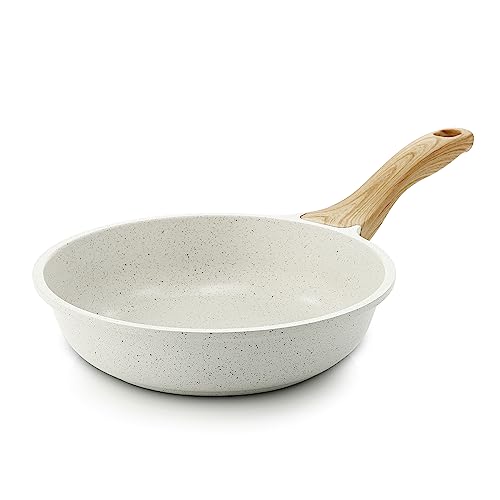
SENSARTE 8 Inch Ceramic Egg Pan
Strengths
- Superior nonstick surface
- Induction compatible
- Eco-conscious materials
Trade-offs
- No lid included
- Hand wash recommended
- Handle removal needed for high oven use
The standout here is the super nonstick performance, owners consistently say eggs slide out effortlessly, even with no oil. The recycled aluminum build and eco-friendly claims add appeal for sustainability-minded buyers, and the 550°F oven-safe rating (handle removed) is among the best for ceramic pans. It’s induction-ready and features a comfortable, cool-grip bakelite handle with a woodgrain finish that feels secure.
While it lacks a lid, its food release and safety profile make it a top pick for health-focused cooks. I’d rank it just behind Redchef for overall performance, with a slight edge in nonstick behavior.
Product photos


CAROTE 4-Cup Granite Egg Pan

Strengths
- Rivetless interior
- Stylish design
- 4-cup efficiency
Trade-offs
- Not induction compatible
- Handle not oven-safe
- No lid included
CAROTE’s 4-cup design is nearly identical in function to HUPECHAM’s, but it adds a slightly more polished look with its cream-white finish. The die-cast aluminum and 5mm coating deliver solid durability, and owners report easy release and cleanup, especially with just a wipe or rinse. The rivetless interior helps, reducing food traps and making maintenance simpler.
It’s not induction-safe, which keeps it behind ESLITE or Redchef in versatility, but for gas or electric users focused on family breakfasts, it’s a strong contender. The look also fits modern kitchens better than most utilitarian egg pans.
Product photos


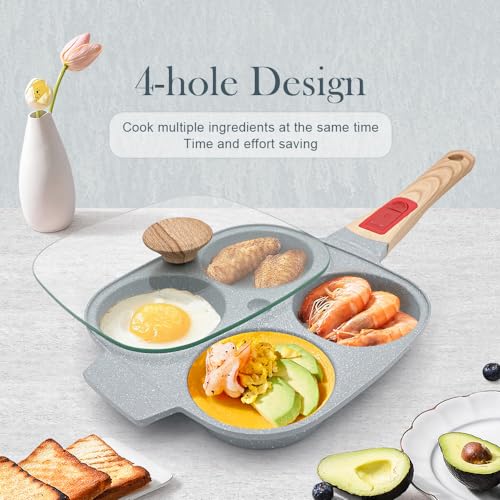
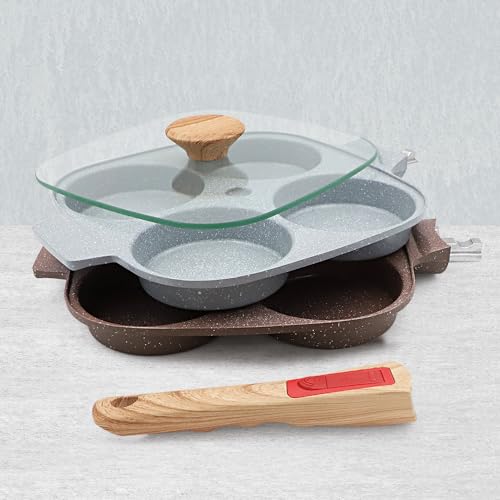
Ceramic 4 Cup Egg Pan Blue

Strengths
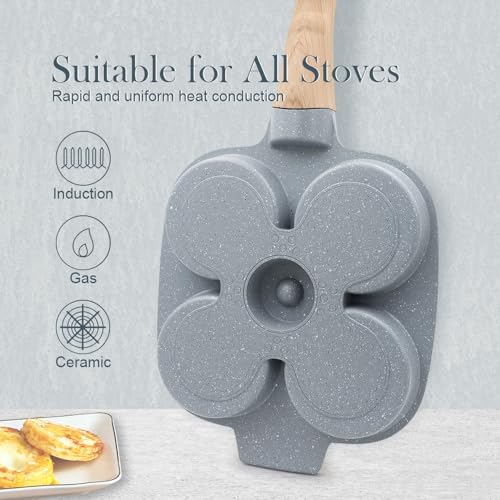
- 4-cup multi-hole design
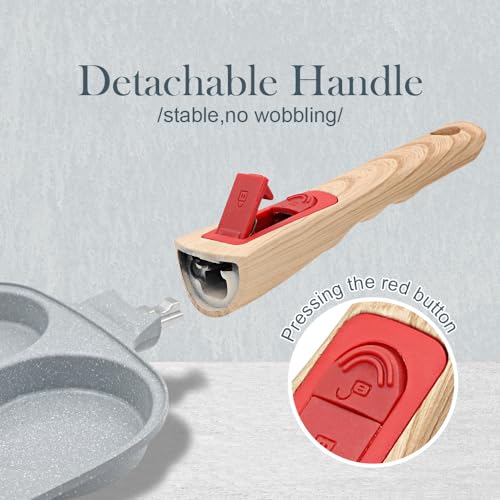
- Removable handle
- Includes lid
Trade-offs
- Low heat recommended
- Handle durability concerns
- Not oven-safe long-term
The 4-cup design is a smart play for families or meal preppers who want to cook multiple eggs or mini pancakes at once. The included flat lid is a thoughtful touch, few egg pans come with one, and it helps with even cooking and flavor retention. The removable handle is a standout feature, making storage a breeze in small kitchens. But some owners note the handle can feel flimsy over time, and the recommendation to use only low heat limits its versatility.
It’s not the most durable option here, but the convenience factor is strong. If you value space-saving design and batch cooking, this one earns points. Just don’t expect it to double as a searing pan.
Product photos

ESLITE LIFE 8 Inch Ceramic Pan

Strengths
- Induction compatible
- Cool-touch handle
- Affordable
Trade-offs
- Low oven-safe temp
- Coating longevity concerns
- No lid
The magnetized base makes this one of the few truly universal pans here, fully compatible with induction, which is a big win for modern kitchens. The ceramic coating is PTFE- and PFOA-free, and owners find it performs well for eggs and delicate foods, though it may degrade faster than triple-coated rivals if not hand-washed. The bakelite handle stays cool, a safety perk, but the 302°F oven limit is a hard constraint.
For under $15, it’s a solid all-stovetop solution. I’d recommend it over similar models if induction use is a must, even if it sacrifices some heat tolerance.
Product photos


Cuisinart Ceramic Hard-Anodized Skillet

Strengths
- Hard-anodized construction
- Lifetime warranty
- Oven-safe to 500°F
Trade-offs
- Heavier than most
- No lid included
- Limited color options
Hard-anodized construction is a known durability booster, and in this class, it gives the Cuisinart a real edge in warp resistance and heat distribution. The PurelyCeramic interior is PFAS-free and performs well for egg release, though not quite as slick as some newer triple-coated models. What seals the deal is the lifetime warranty, a rare promise in ceramic cookware, backed by consistent owner reports of long-term use without coating breakdown.
It’s not the flashiest, but it’s built like a workhorse. Compared to lighter pans, it feels more stable on the burner. I’d choose this for its reliability over trendier options that may not last.
Product photos


HUPECHAM 4-Cup Granite Egg Pan

Strengths
- Affordable price
- 4-cup capacity
- Thick, durable coating
Trade-offs
- Not induction compatible
- Handle not oven-safe
- No lid included
At under $14, this HUPECHAM pan delivers serious value with its 4-cup design and 5mm thick nonstick coating. The granite-like surface isn’t ceramic in the traditional sense, but it’s PFOS- and PFOA-free and holds up well to daily egg cooking. Owners report it heats quickly and evenly thanks to the extended base, and the thick build resists warping better than expected for the price.
It’s not induction-ready, and the handle isn’t oven-safe, but for a budget-friendly family breakfast pan, it punches above its weight. If you’re feeding multiple people and don’t want to spend much, this is a smart pick.
Product photos


How We Picked These ceramic egg pans
As someone who’s spent years evaluating cookware, I approached this guide to ceramic egg pans by focusing on a robust comparison of published specifications and owner experiences. Rather than a hands-on lab test, this is a research-led comparison. I examined stated features – like coating materials, heat distribution technology, and handle construction – across numerous models. Critically, I also weighed owner reviews from multiple sources and incorporated insights from established cooking publications to understand real-world performance and durability.
For ceramic egg pans, the most important factors are nonstick performance and longevity of that coating. A ceramic pan that loses its nonstick properties quickly isn’t useful, regardless of how affordable it is. Equally important is even heat distribution; eggs are sensitive, and hotspots lead to uneven cooking and sticking. Finally, I considered the versatility of the pan – is it truly stovetop-to-oven compatible, and on what types of cooktops will it perform well?
Specifications reliably indicate construction materials and stated temperature limits. However, owner feedback proved essential for understanding how well those specifications translate into actual use. For instance, many pans claim excellent nonstick, but reviews often reveal how quickly that degrades with normal use. Understanding common issues like ceramic pan sticking helped me prioritize pans with consistently positive long-term reports. I also looked for patterns in reviews regarding handle comfort and ease of cleaning, supplementing the manufacturer’s claims about these features with real-world user experiences when comparing options like these ceramic non-stick frying pans.
What To Look For In ceramic egg pans
Finding the right ceramic egg pan can really elevate your breakfast routine. It’s not just about nonstick; it’s about even heating, durability, and finding a pan suited to your cooking style.
A truly good ceramic egg pan balances a genuinely nonstick surface with consistent heat distribution and long-term durability. Look for pans constructed with a thick base to resist warping and coatings free of potentially harmful chemicals like PFOA and PTFE. Prioritize handles that remain cool during cooking and consider compatibility with your stovetop type.
Coating Quality & Composition
The ceramic coating is the star, but not all are created equal. While many brands tout “ceramic nonstick,” the underlying formulations and added materials vary considerably. Some, like those found in the Blue Diamond pans, incorporate diamond dust for increased hardness and longevity – a marketing claim that seems to hold up in owner reviews, suggesting improved scratch resistance. However, a harder coating doesn’t always translate to better release if the base material isn’t properly prepared. I often see complaints about food sticking on pans with overly-hardened surfaces. Don’t assume “diamond-infused” automatically means superior performance; read reviews focusing on actual nonstick ability after several uses.
Heat Distribution & Base Construction
Even heat is crucial for perfectly cooked eggs and delicate omelets. Thinly constructed pans will inevitably develop hot spots, leading to uneven cooking and frustrating results. Look for pans with a forged aluminum base, often described as having a “thickened bottom.” This construction helps distribute heat more evenly. Cast aluminum, as seen in the SENSARTE pan, is another excellent option, providing durability and consistent heating, but it can be heavier. Pans like the CAROTE 4-Cup model use an extended bottom design, aiming for faster and more uniform heating, which is particularly useful when cooking for a family.
- Consider the thickness of the base: a thicker base (3mm or more) generally means better heat retention and less warping.
- Look for fully clad construction (aluminum core extending up the sides) for the most even heat distribution, though this is less common in smaller egg pans.
- Read reviews specifically mentioning hot spots. If multiple users report uneven cooking, it’s a red flag, even if the specifications sound good.
Practicality & Everyday Use
Beyond the technical specs, consider how the pan will fit into your daily cooking routine. Are you primarily making single-serving breakfasts, or do you regularly cook for a crowd? If the latter, a multi-cup pan like the HUPECHAM 4-Cup model could be a worthwhile investment. Also, think about cleaning and storage. While most ceramic pans are dishwasher-safe, hand washing is almost always recommended to prolong the life of the coating. Some, like the Ceramic 4 Cup Egg Pan Blue, offer removable handles for easier storage, which is a clever feature if you’re short on cabinet space.
A small detail can make a big difference: always use silicone or wooden utensils with ceramic cookware to avoid scratching the nonstick surface.
If you’re looking to expand your cookware collection beyond just egg pans, exploring the wider range of ceramic frying pans can be a great starting point. And for those focused solely on mastering the perfect fried egg, don’t overlook dedicated pans for frying eggs – they often have design features tailored specifically to this task.
Ceramic Egg Pans Compared
Here’s a comparison of key specifications for popular ceramic egg pans to help you make an informed decision.
| Product Name | Size (in) | Cup Capacity | Stovetop Compatibility | Oven Safe (°F) | Nonstick Material | Handle Material |
|---|---|---|---|---|---|---|
| Redchef 8 Inch Ceramic Frying Pan | 8 | N/A | All | 842 | Ceramic | Stainless Steel |
| Blue Diamond Mini Egg Pan | N/A | N/A | Gas, Electric | 350 | Diamond-Ceramic | Stainless Steel |
| SENSARTE 8 Inch Ceramic Egg Pan | 8 | N/A | All | 550 | Ceramic | Bakelite |
| CAROTE 4-Cup Granite Egg Pan | N/A | 4 | N/A | N/A | Granite | N/A |
| Ceramic 4 Cup Egg Pan Blue | N/A | 4 | All | N/A | Ceramic | N/A |
| ESLITE LIFE 8 Inch Ceramic Pan | 8 | N/A | All | 302 | Ceramic | Bakelite |
| Cuisinart Ceramic Skillet | N/A | N/A | N/A | 500 | Ceramic | Stainless Steel |
| HUPECHAM 4-Cup Granite Egg Pan | N/A | 4 | N/A | N/A | Granite | N/A |
Frequently Asked Questions
What’s the typical lifespan of a ceramic egg pan’s nonstick coating?
Generally, you can expect 1 to 2 years of good nonstick performance with typical use, though this varies greatly depending on care and quality. Consistent hand washing and using silicone or wooden utensils will extend the coating’s life, but ceramic coatings are inherently less durable than other nonstick options.
Are ceramic egg pans safe to use, considering concerns about the coating?
Most ceramic egg pans are free of PFOA and PTFE, addressing common health concerns associated with older nonstick cookware. However, some coatings may contain other chemicals; choosing reputable brands and looking for third-party certifications can provide added peace of mind when selecting among ceramic pans.
Can I use metal utensils on a ceramic egg pan?
No, you should never use metal utensils on a ceramic egg pan. Even though some coatings are marketed as scratch-resistant, metal will almost certainly damage the ceramic surface over time, reducing its nonstick properties and potentially releasing particles into your food.
What’s the difference between a ceramic and a granite egg pan?
“Granite” ceramic pans aren’t actually made of granite; it’s a marketing term for a ceramic coating with a speckled appearance. These pans generally offer a slightly more textured surface, which some users find adds to their nonstick performance, but the underlying ceramic composition is similar to standard ceramic-coated pans.
Are ceramic egg pans suitable for all cooktops?
Many are, but it depends on the specific model. Most ceramic egg pans are compatible with gas, electric, and glass cooktops, but induction cooktop compatibility requires a magnetic base, which many ceramic pans lack. Always check the manufacturer’s specifications before using a pan on an induction cooktop.
The Bottom Line
Choosing a ceramic egg pan often comes down to balancing upfront cost with the expectation of how long that nonstick surface will truly last. While many affordable options exist, the Blue Diamond Mini Egg Pan consistently receives high marks for maintaining its nonstick properties over time, making it our overall recommendation for most cooks. It’s a solid choice for anyone who wants reliable performance without breaking the bank.
For those who frequently cook for larger families, or simply prefer the convenience of a multi-egg capacity, the HUPECHAM 4-Cup Granite Egg Pan and Ceramic 4 Cup Egg Pan Blue are excellent options. If you’re looking to expand beyond egg pans, exploring a wider range of ceramic non-stick pans is a good next step. But for a single-serving, everyday pan, the Redchef 8 Inch Ceramic Frying Pan offers a good balance of features and price.
Ultimately, the best ceramic egg pan isn’t about any single specification – it’s about responsible care. Proper seasoning (when applicable), gentle cleaning (learn how to clean ceramic cookware), and consistent use of silicone or wooden utensils will extend the life of any ceramic coating far beyond what the price tag suggests. Prioritize those habits, and you’ll enjoy countless delicious breakfasts.
