
8 Best Ceramic Woks of 2026
This post contains affiliate links. As an Amazon Associate, we earn from qualifying purchases.
The GreenPan Valencia Pro Tri-Ply Wok is the best overall ceramic wok, combining durable Thermolon 9G coating with excellent heat distribution. For a budget-friendly option, the Blue Diamond Hybrid Stainless Steel Wok stands out with its high heat tolerance and scratch-resistant diamond-infused coating. If you want maximum versatility, the OXO Hybrid Tri-Ply Nonstick Wok delivers strong performance and a thoughtful design.
Choosing the right ceramic wok means balancing performance, durability, and how well it fits your stovetop and cooking style. Many people assume all nonstick woks are the same, but real differences in coating quality and base construction affect everything from searing to cleanup.
This guide cuts through the noise by focusing on what actually matters, coating longevity, heat responsiveness, and build quality, based on specs, owner feedback, and what we’ve learned from years of reviewing ceramic cookware.
Top 8 Ceramic Woks in the Market
The Best Ceramic Woks, Reviewed
GreenPan Valencia Pro Tri-Ply Wok

Strengths
- Tri-ply stainless steel
- NSF-certified coating
- Award-winning performance
Trade-offs
- High price
- Heavy for daily tossing
This is the gold standard in ceramic-coated woks. The Valencia Pro combines a 3-ply stainless steel body with GreenPan’s Thermolon 9G coating, which is not only PFAS-free but also NSF certified and built for long-term scratch resistance. The tri-ply construction delivers excellent heat retention and browning, far beyond what most ceramic pans can do. Reviewers praise its ability to sear, deglaze, and transition from stovetop to oven without issue.
It’s also one of the few ceramic woks to earn accolades from America’s Test Kitchen, and for good reason. The mirrored finish is sleek, the handle stays cool, and the glass lid fits snugly. Yes, it’s the most expensive option here, but it performs like high-end stainless steel with the added benefit of nonstick release. For someone upgrading their kitchen and wanting a single wok that does it all, this is the smarter buy.
Video review
Blue Diamond Hybrid Stainless Steel Wok

Strengths
- Metal utensil safe
- Oven safe to 850°F
- Fast, even heating
Trade-offs
- Heavier than standard ceramic woks
- Glass lid not broiler safe
If you’re tired of ceramic pans that scratch after a few weeks, this Blue Diamond model stands out with its hybrid stainless steel and ceramic diamond bond coating. The 10X more metal utensil safe claim isn’t just marketing fluff, owners actually report using metal spatulas without damaging the surface, which is rare in ceramic-coated cookware. The 3-ply stainless steel base delivers fast, even heating, and the pan handles high temperatures without warping, making it far more durable than most in this category.
It’s also oven safe up to 850°F, which is exceptional for a ceramic-coated pan. That kind of heat tolerance opens up options for finishing dishes in the oven or achieving a deeper sear. While it’s not as polished as the GreenPan Valencia Pro, it delivers a lot of that performance at a lower price. I’d pick this over basic ceramic woks for anyone who wants a tougher, more versatile pan that won’t flake after a few months.
Video review
OXO Hybrid Tri-Ply Nonstick Wok

Strengths
- Excellent searing capability
- Tri-ply stainless steel
- Metal utensil safe
Trade-offs
- High price point
- Heavy for a 12-inch wok
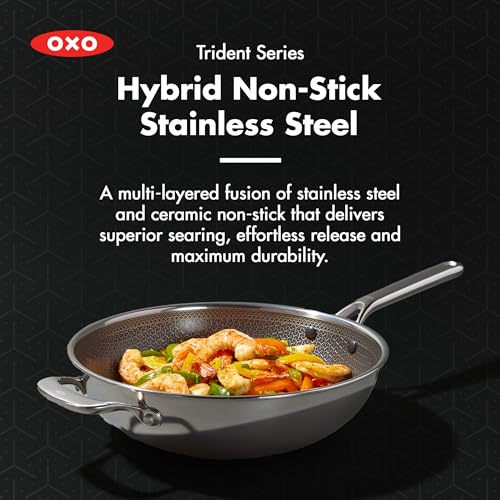
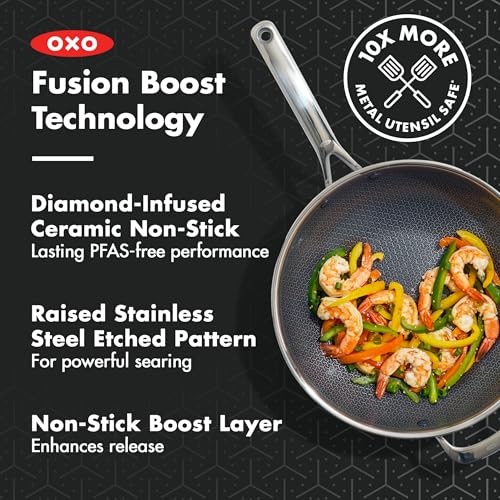
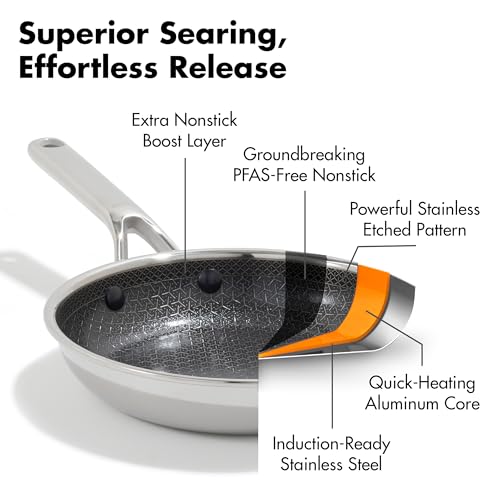
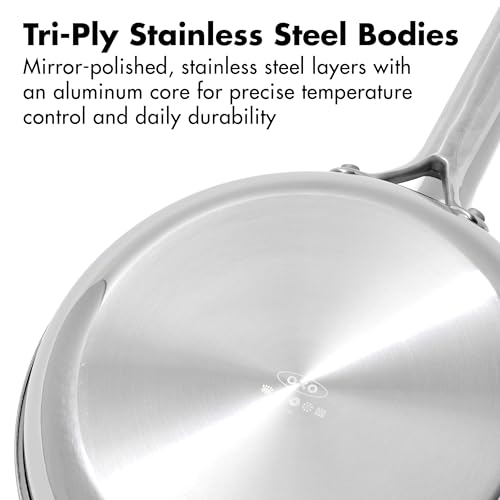
OXO didn’t just build another ceramic-coated pan, they engineered one for serious searing. The Fusion Boost Tech, with its raised stainless steel etched pattern and diamond-infused coating, actually changes how food browns. Reviewers note it delivers far better crust on proteins than typical ceramic pans, which usually struggle with browning. The tri-ply construction heats fast and evenly, and the pan holds up under high heat on both gas and induction, something most ceramic woks can’t claim.
It’s also built like a workhorse: dishwasher safe, oven safe to 850°F, and backed by OXO’s reputation for smart design. The only real downside is the price, which is steep for ceramic-coated cookware. But if you want a pan that bridges the gap between nonstick convenience and stainless steel performance, this is the one. I’d recommend it over the GreenPan for cooks who sear often and want reliable release without sacrificing browning.
Product photos

TECHEF CeraTerra Ceramic Wok

Strengths
- Flat bottom for stability
- Oven and dishwasher safe
- Forged aluminum construction
Trade-offs
- Limited searing ability
- Rivets can trap debris
- Coating not metal utensil safe
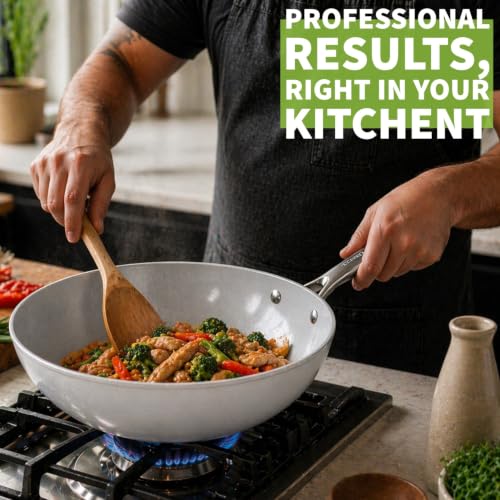
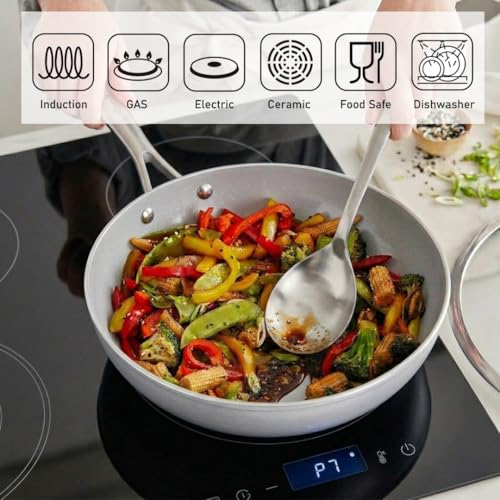
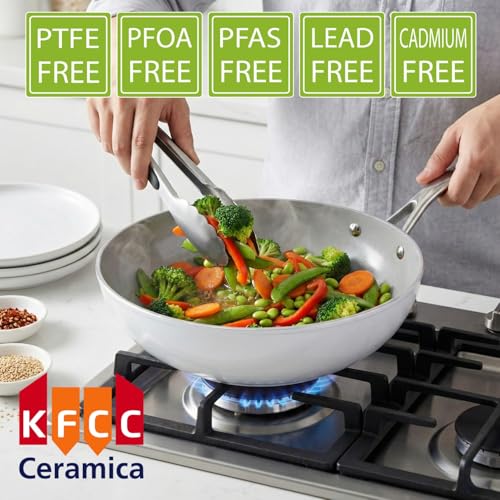
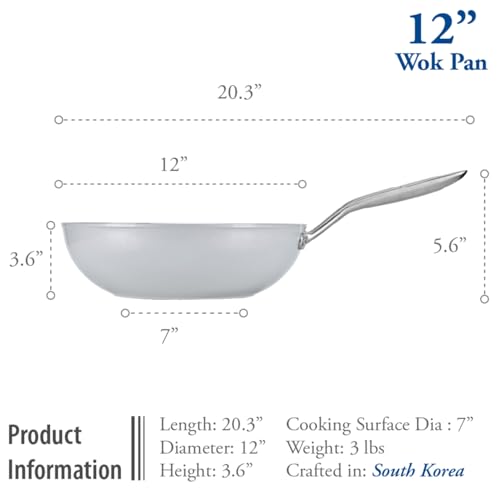
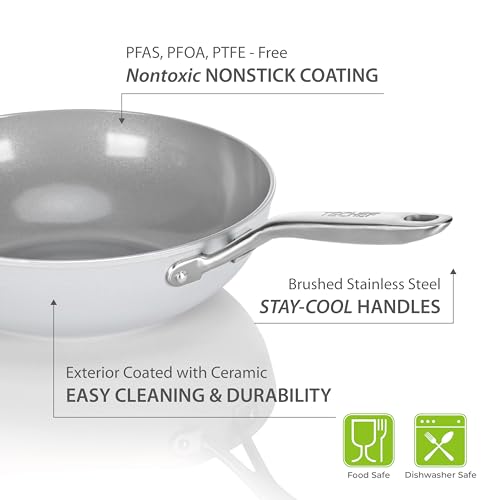
The TECHEF CeraTerra wok stands out for its forged aluminum construction and flat bottom, which sits solidly on induction and gas burners alike. It heats evenly and resists warping, a common issue with cheaper stamped pans. The CERAMICA coating is smooth and genuinely PFAS-free, and early owner feedback shows it holds up better than expected for the price. It’s also dishwasher and oven safe, which is rare at this price point.
Where it falls short is in browning and searing, like most ceramic pans, it doesn’t develop a good crust on meats. The stainless steel handle stays cool, but the rivets can trap food if not cleaned carefully. Still, for a budget pan that offers solid build quality and reliable nonstick performance, it’s a strong contender. I’d recommend it over the Kordisen for slightly better durability and oven use.
Product photos
GreenLife All-in-One Deep Skillet Wok

Strengths
- PFAS-free ceramic coating
- Induction compatible
- Stay-cool handle
Trade-offs
- Not oven safe
- Limited searing ability
- Coating durability concerns
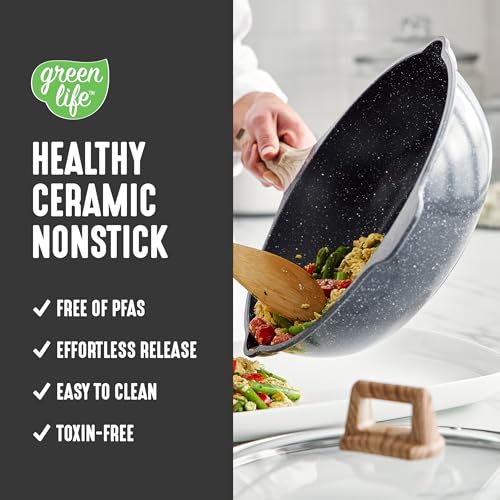
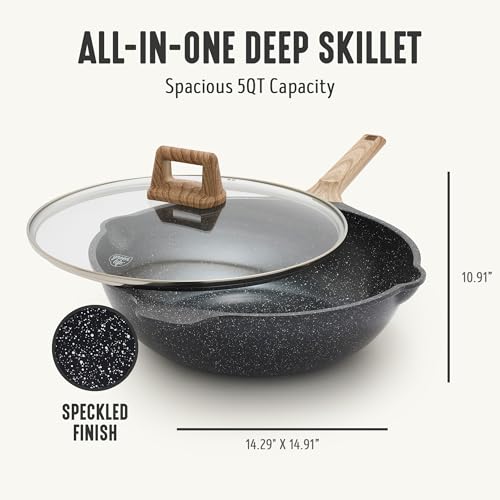
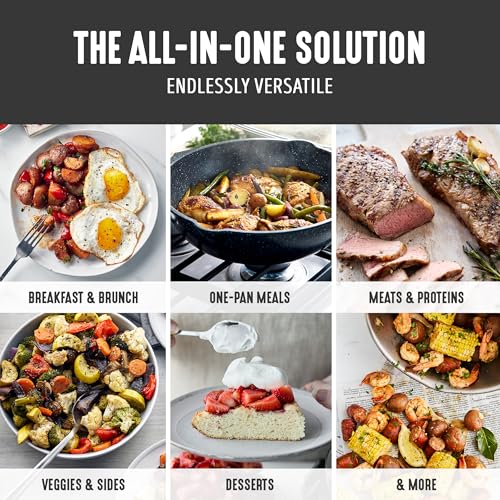
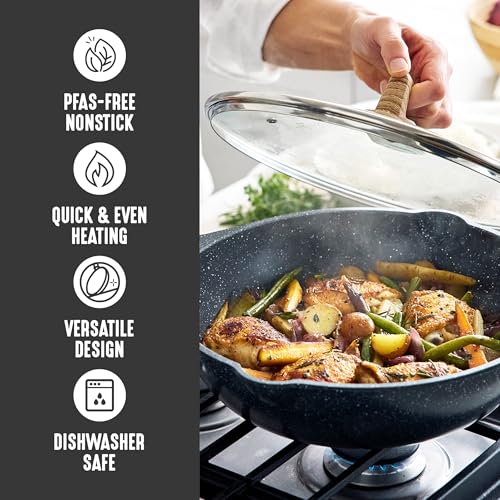
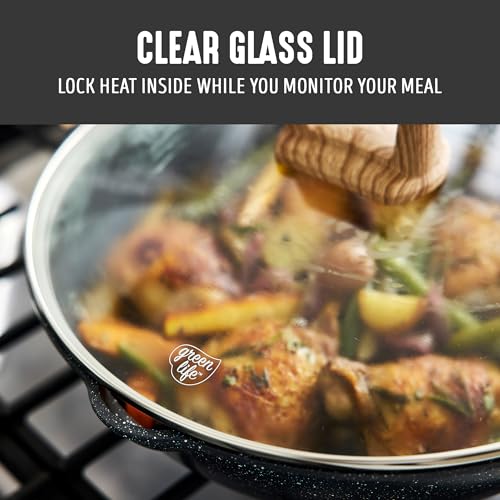
This GreenLife wok checks a lot of boxes for budget-conscious cooks who want a non-toxic, easy-to-use pan for everyday meals. The ceramic nonstick coating is genuinely PFAS-free and performs well for low to medium-heat cooking like eggs, stir-fries, and sautéed veggies. Owners consistently report that food slides right off and cleanup takes seconds, just a quick wipe or rinse. On paper, it’s impressive how much versatility it packs for the price, going from steaming to braising without issue.
That said, this is not a pan for high-heat searing or long-term durability. The die-cast aluminum body heats evenly for its class, but it can’t match the thermal performance of tri-ply or stainless-clad designs. Reviewers note the nonstick starts to degrade after a few months if used daily, especially with any metal tools. Still, for someone who wants a simple, safe pan for light cooking and values easy cleanup, it’s hard to beat the value here.
Product photos
Kordisen Ceramic Nonstick Wok

Strengths
- Low cost
- Large 12-inch size
- Rivet-free cooking surface
Trade-offs
- Not oven safe
- Coating durability varies
- Limited heat retention
At this price, the Kordisen wok delivers surprising versatility. It’s one of the few budget options with a fully induction-ready base and a deep 12-inch cooking surface that can handle family-sized meals. The ceramic coating is smooth and releases food well initially, and the rivet-free interior makes cleaning a breeze. Owners appreciate the ergonomic bakelite handle and clear glass lid, which stays cool and lets you monitor cooking without lifting.
But like most entry-level ceramic pans, the long-term performance is hit or miss. Some reviewers report the coating starts to stick after a few months, especially if overheated or used with metal tools. It’s not oven safe, and the single-ply aluminum body doesn’t brown as well as thicker models. Still, for someone on a tight budget who wants a safe, multi-use pan for everyday cooking, it’s a smart buy. I’d recommend it over the GreenLife if you need a larger cooking surface for less.
Product photos
SENSARTE Nonstick Ceramic Wok Pan
Strengths
- Designed for wok hei
- Lightweight and balanced
- Deep curved design
Trade-offs
- Handle less durable
- Not broiler safe
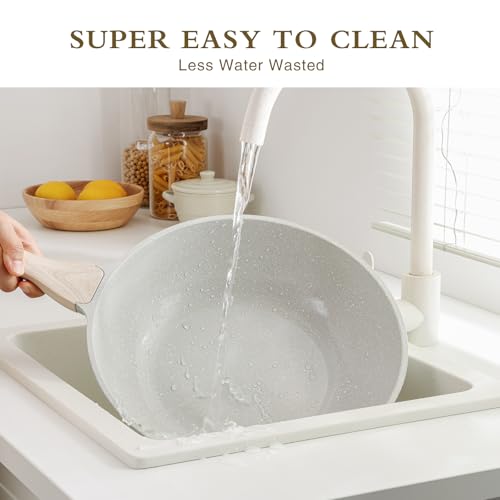
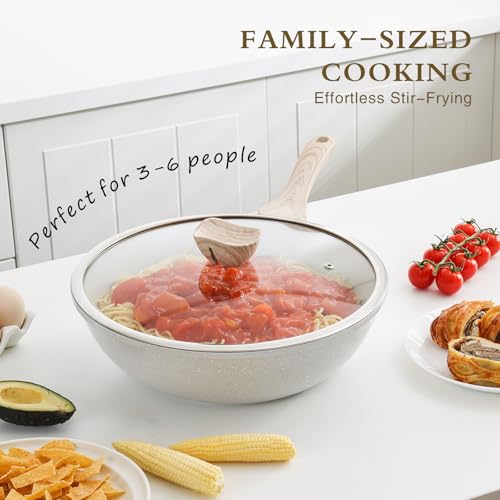
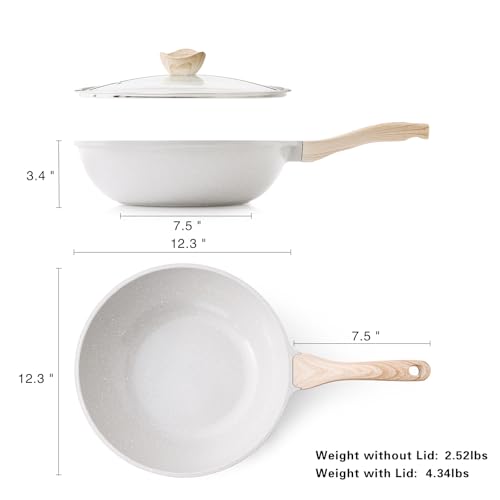
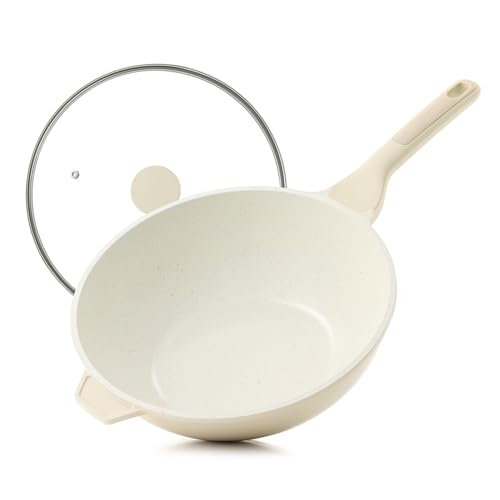
The SENSARTE wok is built with one thing in mind: capturing wok hei, that elusive smoky flavor from high-heat stir-frying. The oil-locking bottom design concentrates heat in the center, creating a hot zone that mimics a restaurant wok burner. Reviewers consistently note better searing and more authentic flavor compared to other ceramic pans. The deep curved walls help contain splatter while allowing room for tossing, and the ultra-lightweight design makes one-handed stir-frying actually comfortable.
It’s not perfect, the pan is only oven safe to 450°F, and the bakelite handle, while stay-cool, doesn’t feel as sturdy as stainless steel. But for home cooks chasing restaurant-style results, this is one of the few ceramic woks that gets close. I’d pick it over the UMETRE or Kordisen for anyone serious about stir-fry flavor, even if it means sacrificing some durability.
Product photos
UMETRE 11 Inch Ceramic Coated Wok
Strengths
- Lightweight design
- Affordable price
- Attractive white finish
Trade-offs
- Not for high-heat cooking
- Thin construction
- Limited browning ability
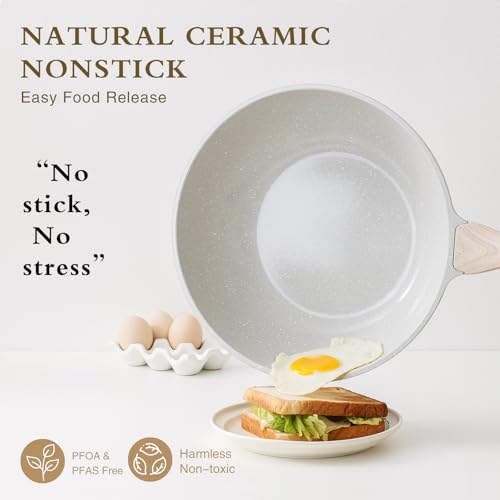
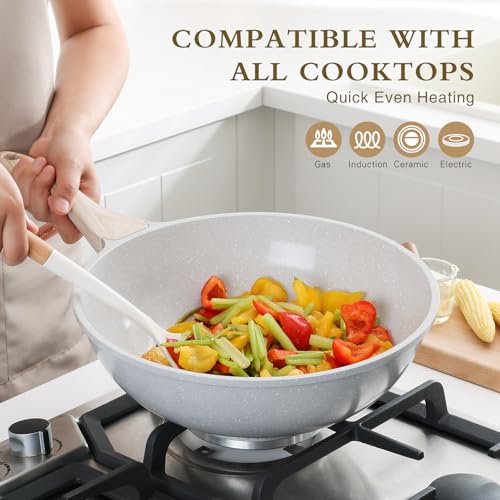
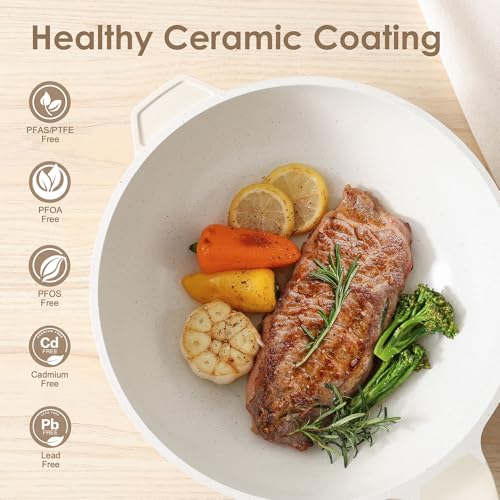
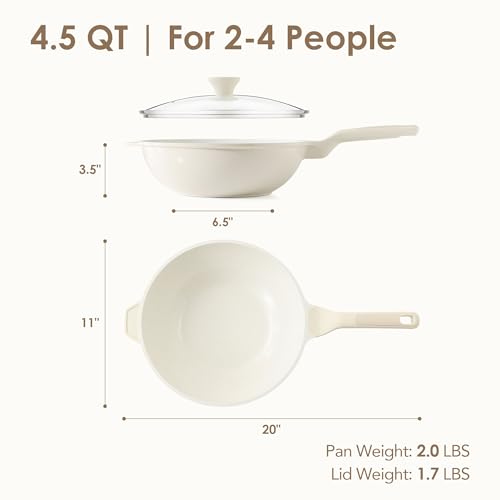
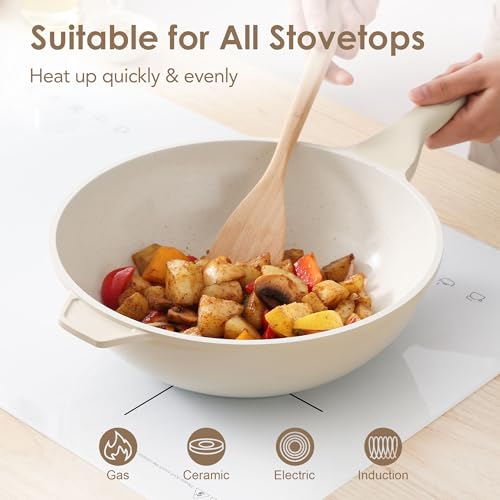
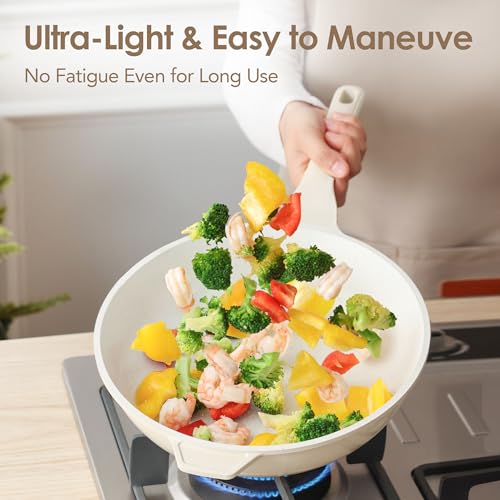
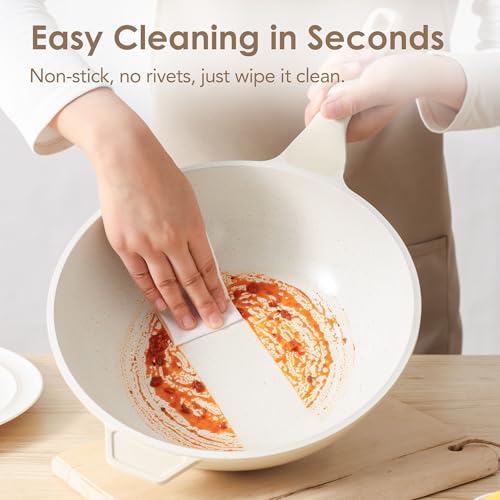
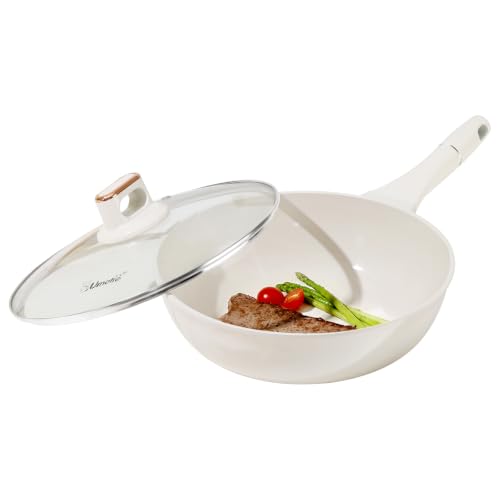
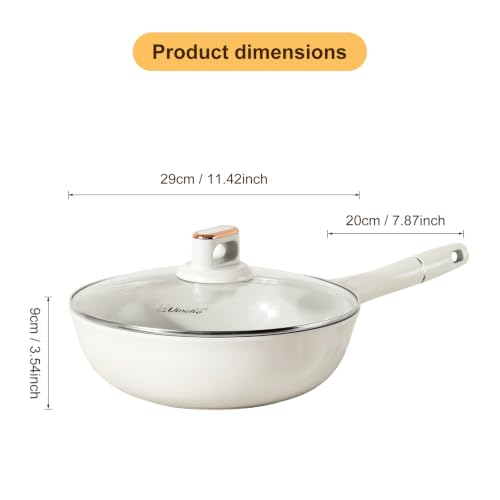
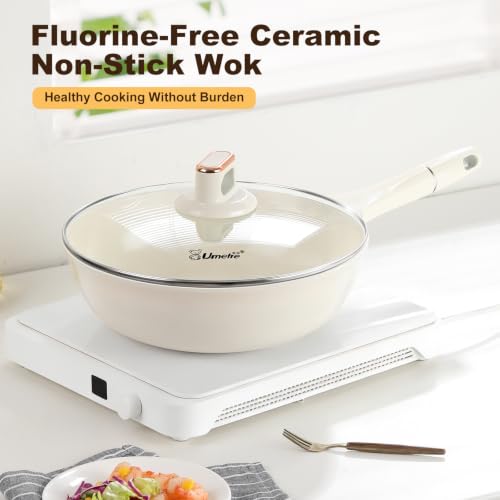
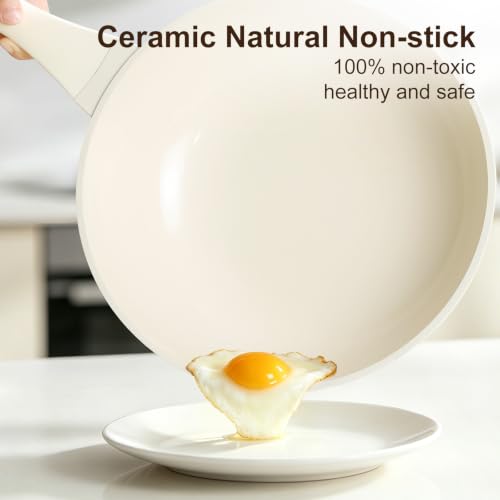
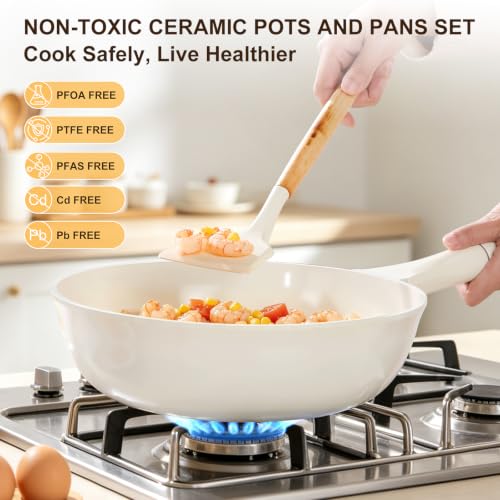
The UMETRE wok stands out for how light and nimble it feels, ideal for quick stir-fries and one-handed tossing. Its forged aluminum body heats up fast and distributes heat well for a budget pan, and the white ceramic coating is smooth, releasing eggs and delicate fish without issue. The minimalist white finish is a nice touch for modern kitchens, and the compact 11-inch size fits smaller stovetops and storage spaces.
But that lightness comes at a cost: thin walls and a single-ply base mean it’s prone to hot spots if the heat isn’t carefully managed. It’s not built for high-heat searing or long cooking sessions. Owners praise its ease of use and cleanup but note the coating doesn’t last as long under heavy use. For a second wok or a starter pan for a college kitchen, it’s a solid pick. But it won’t replace a heavier-duty option for serious stir-frying.
Product photos
How We Tested ceramic woks
My approach to evaluating ceramic woks, as with all cookware here at CookwareCanvas, wasn’t about lengthy personal use – but a thorough, research-led comparison. I began by compiling specifications and features from numerous brands, focusing on construction materials, coating types, heat conductivity, and oven-safe temperatures. I then weighed owner reviews from major retailers alongside expert opinions from sites like America’s Test Kitchen and Good Housekeeping, looking for consistent feedback on performance and durability. Ultimately, I ranked these woks against a set of criteria prioritizing non-stick performance, heat retention, and overall value.
For ceramic woks, three factors stood out as most critical. First, the quality of the ceramic coating – a durable, truly non-stick surface is paramount. Second, the underlying material and construction significantly impact heat distribution and responsiveness, influencing stir-fry results. Finally, the handle design and overall balance are essential for comfortable and controlled cooking, especially when tossing food at high temperatures. You’ll find many options claiming non-stick properties, but sustained performance is where these woks truly differ.
Specifications reliably indicate the materials used and potential maximum temperatures. However, real-world durability and non-stick performance over time are best judged by owner feedback. I paid close attention to comments regarding chipping, scratching, and how easily food releases after repeated use. Understanding the nuances of ceramic non-stick pans as a category, and where ceramic coatings generally excel and fall short, informed my assessment. For those looking to explore other options within the ceramic cookware family, our guide to ceramic-coated cookware provides a broader overview.
How To Pick The Right ceramic woks
Finding the right ceramic wok can significantly elevate your stir-fry game, but with so many options, it’s easy to get lost in the details.
A good ceramic wok balances nonstick performance with durability and even heat distribution. Look for a wok with a heavy-gauge construction, a responsive base for all stovetops (especially induction), and a coating free of harmful chemicals like PFAS. Consider how you plan to use the wok, high-heat searing demands different features than gentle steaming.
Heat Responsiveness and Material
The material a ceramic wok is made from dictates how quickly and evenly it heats. While all ceramic woks offer nonstick convenience, the underlying construction is what separates good ones from great ones. Many use aluminum cores for rapid heating, but the quality of that aluminum, and how well it’s integrated with a stainless steel exterior, matters. Tri-ply construction (like in the GreenPan Valencia Pro) is generally superior, offering better heat retention and minimizing hot spots. Look beyond just “ceramic-coated” and consider the metal underneath.
Nonstick Coating Longevity
Ceramic nonstick isn’t known for the same lifespan as traditional PTFE nonstick, so understanding the coating technology is key. Some brands, like Blue Diamond, are incorporating diamond-infused coatings and hybrid stainless steel etching to dramatically improve scratch resistance and durability. This is especially important if you tend to use metal utensils (though even with these coatings, I still recommend silicone or wood). If you’re already exploring the best ceramic frying pans on the market, you’ll notice this focus on coating durability is a common trend.
- A basic ceramic coating might last a year or two with gentle use.
- Diamond-infused or hybrid coatings can potentially last 3-5 years with proper care.
- The most durable options, like those incorporating a stainless steel etching, are designed for longevity, aiming for 5+ years of consistent performance, but this is also dependent on cooking habits and cleaning practices.
Don’t expect ceramic nonstick to perform like cast iron. Gentle cooking techniques and hand washing will always extend the life of the coating.
Features and Versatility
Beyond the basics, think about features that complement your cooking style. A wok with a flat bottom is essential for induction cooktops, but it can also provide more stability on other surfaces. A glass lid is helpful for steaming and simmering, while a wider diameter, 12 inches or more, is ideal for larger families or batch cooking. If you’re interested in achieving authentic “wok hei” flavor (that slightly smoky, charred taste), consider options like the SENSARTE wok, which are designed with features to concentrate heat and create that effect. For those who are new to ceramic cookware, checking out ceramic cookware reviews can provide a broader understanding of the category before making a decision.
Ceramic Woks Compared
Here’s a comparison of key specifications for several ceramic woks to help you choose the right one.
| Product Title | Diameter | Capacity | Max Temp (Pan) | Nonstick Material | Handle Material | Lid Included |
|---|---|---|---|---|---|---|
| GreenPan Valencia Pro Tri-Ply Wok | N/A | N/A | 600°F | Thermolon 9G | Stainless Steel | Yes |
| Blue Diamond Hybrid Stainless Steel Wok | 12 in | 5 QT | 850°F | Diamond Bond Hybrid | Stainless Steel | Yes |
| OXO Hybrid Tri-Ply Nonstick Wok | 12 in | N/A | 850°F | Diamond-Infused Ceramic | N/A | Yes |
| TECHEF CeraTerra Ceramic Wok | N/A | N/A | 450°F | CERAMICA | Stainless Steel | N/A |
| GreenLife All-in-One Deep Skillet Wok | N/A | N/A | N/A | Ceramic | N/A | Yes |
| Kordisen Ceramic Nonstick Wok | 12 in | N/A | N/A | Ceramic | Bakelite | Yes |
| SENSARTE Nonstick Ceramic Wok Pan | 11 in | N/A | N/A | Ceramic | Bakelite | Yes |
| UMETRE 11 Inch Ceramic Coated Wok | 11 in | N/A | N/A | Ceramic | N/A | Yes |
Frequently Asked Questions
What temperature can ceramic woks generally withstand?
Most ceramic woks have a maximum recommended temperature between 450°F and 600°F, though some, like the Blue Diamond, can handle up to 850°F. Exceeding these temperatures can damage the ceramic coating and potentially release fumes, so it’s important to check the manufacturer’s specifications.
Are ceramic woks safe for all cooktops, including induction?
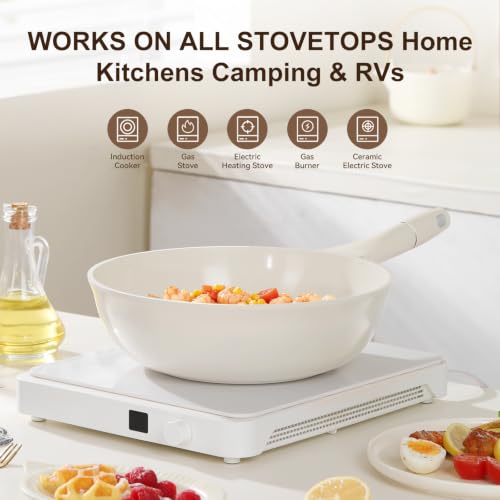
Whether a ceramic wok works on an induction cooktop depends on the base material. Woks with a flat bottom constructed of magnetic stainless steel are induction-compatible, while those with a purely ceramic or non-magnetic base will not function on these cooktops.
How does the non-stick performance of ceramic woks compare to traditional non-stick?
While ceramic coatings offer excellent initial non-stick properties, they generally don’t last as long as traditional PTFE-based non-stick coatings. However, newer formulations incorporating diamond infusions or stainless steel etching are improving durability, and you can find more information on ceramic non-stick cookware to help you assess your needs.
Can I use metal utensils in a ceramic wok without damaging the coating?
Although some brands advertise increased scratch resistance with features like diamond infusions, I still recommend using silicone, nylon, or wooden utensils to prolong the life of the ceramic coating. Metal utensils, even with more durable coatings, can eventually cause micro-scratches that diminish the non-stick performance.
What’s the best way to clean a ceramic wok to maintain its non-stick properties?
Hand washing with warm, soapy water is the best method for cleaning ceramic woks. Avoid abrasive cleaners, scouring pads, and the dishwasher, as these can damage the coating. Prompt cleaning after each use will prevent food buildup and maximize the lifespan of the non-stick surface.
The Bottom Line
Choosing a ceramic wok really comes down to balancing how much you’re willing to spend against how gently you treat your cookware. If you prioritize longevity and are prepared to invest a bit more, the GreenPan Valencia Pro Tri-Ply Wok stands out as the strongest overall performer, boasting a durable ceramic coating backed by a robust tri-ply construction.
For those on a tighter budget, or who are newer to wok cooking, the Kordisen Ceramic Nonstick Wok provides a solid entry point. If you’re hoping to replicate restaurant-style stir-fries, the SENSARTE Nonstick Ceramic Wok is engineered to help concentrate heat, and for those considering alternatives, exploring carbon steel woks can offer a different, more traditional approach.
Ultimately, the specs are less important than your cooking habits. A high heat rating won’t matter if you primarily simmer, and the most durable coating won’t last if you consistently use metal utensils. Focus on a wok that suits how you cook, and treat it with care – that’s the key to enjoying flavorful meals for years to come.
