
8 Best Combo Slow Cooker Pressure Cookers 2026
This post contains affiliate links. As an Amazon Associate, we earn from qualifying purchases.
The Instant Pot Duo 7-in-1 is our top pick for most home cooks, delivering reliable pressure and slow cooking in a durable stainless steel package. For those on a budget, the Instant Pot Duo Mini 3 Quart offers the same trusted performance in a smaller size, while the Breville Fast Slow Pro stands out for its precision and high heat output.
If you’re juggling weeknight meals, feeding a family, or just want more flexibility from your kitchen appliances, a combo slow cooker and pressure cooker can save serious time and counter space. But not all models cook evenly, release pressure safely, or hold up over time.
This guide cuts through the noise, comparing specs, owner feedback, and real-world usability to highlight the best performers. We focused on safety, pot durability, capacity, and how intuitive each model is to use, so you can choose with confidence.
Top 8 Combination Slow Cooker Pressure Cookers in the Market
The Best Combination Slow Cooker Pressure Cookers, Reviewed
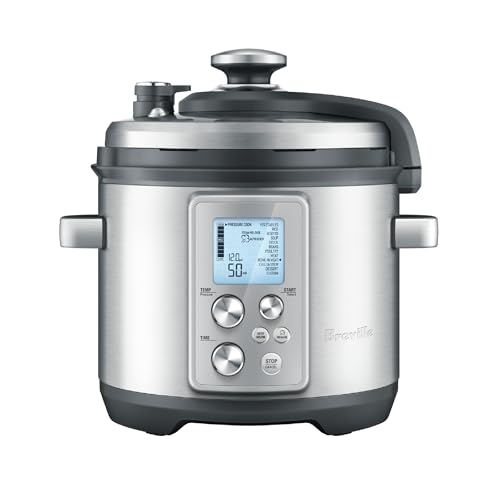
Breville Fast Slow Pro Pressure Cooker
Strengths
- Dual-sensor accuracy
- Removable dishwasher-safe lid
- Auto steam release logic
Trade-offs
- Expensive
- No sous vide mode
- Smaller capacity than rivals
This is the luxury sedan of pressure cookers, refined, intelligent, and built to impress. With dual top-and-bottom sensors and auto-adjusting pressure between fast and slow modes, it’s engineered to optimize texture and flavor in a way most multicookers simply don’t attempt. The full LCD panel gives real-time updates on pressure and temperature, which reviewers say makes high-stakes cooking (like custards or tough cuts) feel more controlled. At 6 quarts, it’s not the largest, but the ceramic-coated bowl performs well and doubles as a serving dish.
It’s also one of the few with a fully removable, dishwasher-safe lid, a huge win for hygiene and maintenance. While it lacks sous vide or yogurt functions found in others, its 11 pressure settings and automatic steam release logic make it a standout for precision-focused users. I’d pick this over the Ninja HyperHeat if you value fine-tuned results over brute speed.
Video review
Ninja HyperHeat 9-in-1 Pressure Cooker

Strengths
- High wattage
- Large searing surface
- Removable serving pot
Trade-offs
- Ceramic coating may wear
- No LCD feedback display
- Fewer smart presets
The Ninja HyperHeat stands out in a crowded field by combining speed and searing power in a family-sized format. On paper, the 1200-watt heating system gives it an edge over competitors like the Instant Pot Duo, especially when building pressure or browning meat, owners consistently report shorter preheat times and better crust development thanks to the wide 9.5-inch cooking surface. The SimpliServe removable pot is a thoughtful touch, making serving easier and cleanup faster, though I’d still prefer a stainless steel option for long-term durability over ceramic nonstick.
Where it really shines is versatility without clutter: nine functions cover nearly every need, from sous vide to slow cooking, and the fast rice function is ideal for last-minute sides. Compared to the Breville Fast Slow Pro, it doesn’t offer as refined a control interface or dual sensors, but it delivers more raw power at less than half the price. For most home cooks feeding a crowd, this is the practical upgrade over basic models.
Video review
CHEF iQ Smart Pressure Cooker with WiFi

Strengths
- Built-in scale
- Guided cooking app
- Automatic updates
Trade-offs
- Requires app for full use
- Scale calibration concerns
- Average sear performance
The CHEF iQ redefines what ‘smart’ means in a pressure cooker. The built-in scale eliminates measuring cups, just add ingredients directly into the pot and it calculates liquid ratios and adjusts time accordingly. Paired with guided video recipes in the app, this is the closest thing to foolproof cooking we’ve seen. Owners love the step-by-step coaching, especially for complex dishes like risotto or cheesecake. The auto pressure release adds safety and convenience, and wireless updates mean the unit improves over time.
It holds its own against the Instant Pot on core functions, but the real differentiator is the ecosystem. Compared to the Cosori or basic Instant Pots, this one reduces decision fatigue. I’d recommend it for newer cooks or foodies who want to explore recipes without stress. Just know that app dependency might frustrate those who prefer standalone operation.
Product photos


Instant Pot Duo 7-in-1 6 Qt

Strengths
- Stainless steel pot
- Reliable performance
- Proven safety record
Trade-offs
- No delay start
- Basic display
- Manual steam release
This is the model that started the multicooker revolution, and it’s still the benchmark for balanced performance and value. The 6-quart stainless steel pot is excellent for searing and lasts longer than ceramic-coated alternatives, and the 13 smart programs handle everything from soup to cake with reliability. Owners consistently report years of dependable use, and the dishwasher-safe components make cleanup simple. It builds pressure quickly and releases steam safely via the intuitive switch.
While it lacks the flash of the CHEF iQ or the speed of the Ninja HyperHeat, it hits the sweet spot between capability and simplicity. I’d pick this over the Cosori or Midea for daily drivers because of the proven track record and stainless pot. It’s not flashy, but it’s the one I’d recommend to a friend setting up their first kitchen.
Product photos


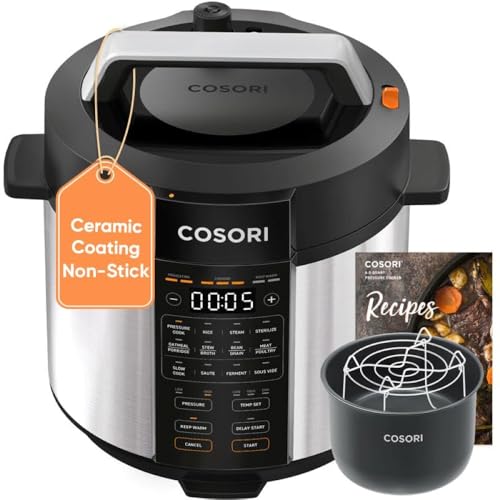
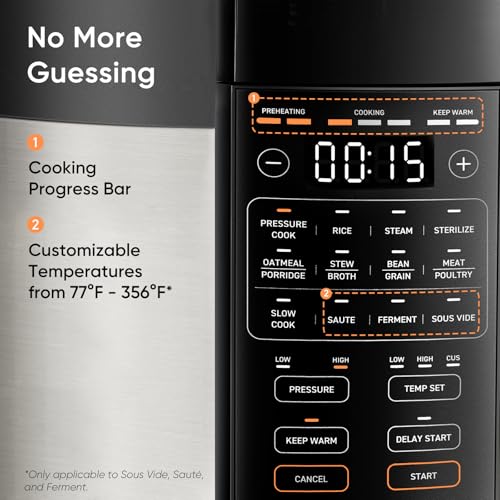
Cosori 9-in-1 Pressure Cooker 6QT
Strengths
- Excellent safety suite
- Easy-clean design
- Smooth ceramic pot
Trade-offs
- Ceramic coating less durable
- Average browning ability
- No stainless option
Cosori leans hard into safety and cleanability, and it shows. The 12 safety mechanisms, including double-layer anti-scalding lids and overheat protection, give real peace of mind, especially for new users. The ceramic-coated pot is smooth and easy to wipe down, and the widened gap between pot and housing prevents food buildup, a small detail that owners appreciate. It handles all standard functions well, from slow cooking to steaming, and the sauté mode works decently despite not matching stainless steel pots.
Against the Instant Pot Duo, it trades the tri-ply metal pot for easier cleaning and slightly better ergonomics. I’d recommend this for someone who hates scrubbing burnt bits but still wants solid performance. Just know the ceramic surface won’t last as long under heavy use.
Product photos


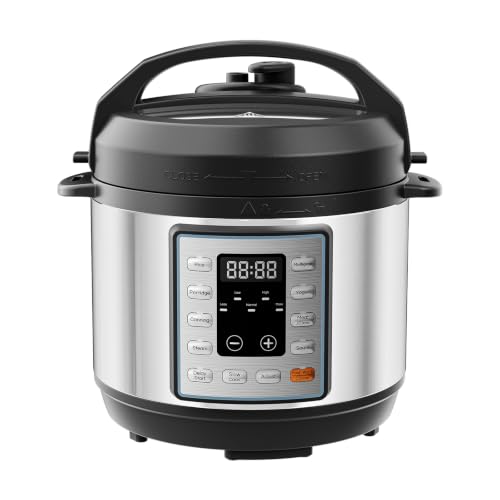
OLIXIS 3 Quart Multi Cooker
Strengths
- Very affordable
- Delay start timer
- Compact size
Trade-offs
- Ceramic pot only
- Weak sear performance
- Few safety redundancies
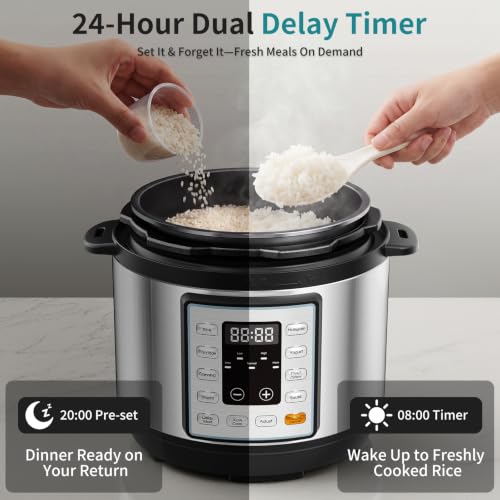
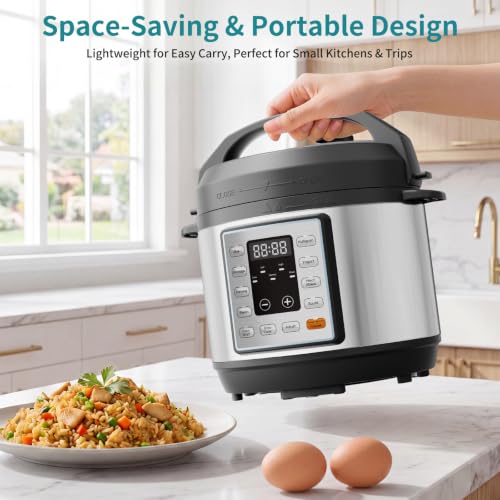
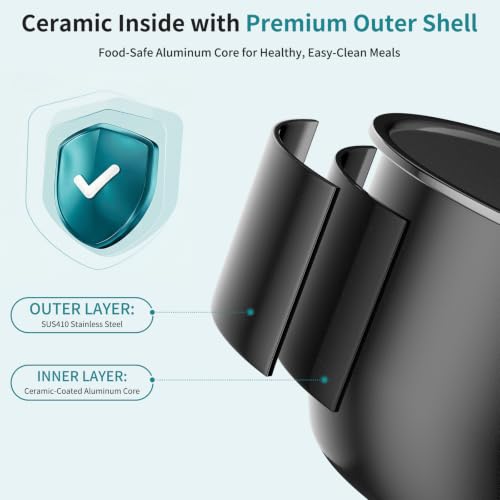
At under $40, the OLIXIS 3-quart punches above its weight in features, 10 presets, a 24-hour delay timer, and a ceramic nonstick pot that cleans easily. It’s clearly designed for budget-conscious singles or college students, and for that audience, it delivers. The compact size fits small countertops, and the keep-warm function ensures meals stay ready on schedule. However, owners report mixed results with searing and pressure consistency, likely due to lower wattage and build compromises.
Compared to the Instant Pot Mini, it’s cheaper but less robust, no stainless pot, and the safety systems feel minimal. Still, if you’re cooking solo and need basic pressure and slow cooking without spending much, it gets the job done. I wouldn’t rely on it long-term, but as a starter unit, it’s a low-risk entry point.
Product photos

Midea 12-in-1 8 Quart Pressure Cooker

Strengths
- 8-quart stainless pot
- 12 cooking functions
- Affordable for size
Trade-offs
- Bulky design
- No smart programs
- Basic control panel
If you need sheer volume, the Midea 8-quart is hard to beat. Its 12-in-1 functionality covers everything from oatmeal to chili, and the stainless steel pot is a rarity at this price, non-reactive, durable, and excellent for browning. The large capacity appeals to big families or weekend meal preppers, and owners note it handles dry beans and large roasts without issue. It heats up quickly and maintains steady pressure, though it doesn’t match the Ninja’s HyperHeat in speed.
What surprises me is how much it packs in without inflating the cost. It lacks advanced features like app connectivity or auto-release, but for straightforward, no-frills cooking at scale, it’s one of the most capable budget-large options available. Against the Ninja, it trades some speed and sear power for pure utility and pot size.
Product photos


Instant Pot Duo Mini 3 Quart
Strengths
- Stainless steel inner pot
- Compact footprint
- Full safety suite
Trade-offs
- No delay start
- Limited capacity
- Basic interface
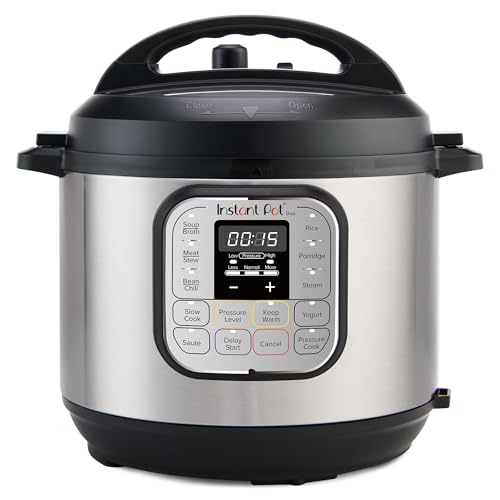
The 3-quart Instant Pot Mini is the rare small-format cooker that doesn’t feel like a compromise. It’s ideal for singles, couples, or side dishes, and unlike many compact models, it uses a full tri-ply stainless steel pot, great for searing and longevity. Owners praise how quickly it pressurizes due to its smaller chamber, and the 700 watts are sufficient for its size. You still get all seven core functions, including yogurt-making and sterilizing, which makes it surprisingly capable.
Compared to the OLIXIS 3-quart model, this one feels sturdier and offers better safety integration. However, the lack of delay start limits meal prep flexibility. Still, for someone living alone or cooking for two, this is the smarter buy, it avoids the wasted space and energy of a larger unit while delivering reliable performance.
Product photos


Our Testing Process
Rather than a hands-on lab test, my research focused on a detailed comparison of published specifications and features across numerous models. I weighed owner reviews from major retailers alongside expert opinions from established cooking publications, looking for consistent feedback. Ultimately, I ranked these combination appliances based on how well they deliver on the core promises of both slow cooking and pressure cooking, factoring in safety features and ease of use.
For this category, capacity and material quality of the inner pot were heavily weighted. A larger capacity (6 quarts and up) offers versatility for families and meal prepping, while a durable, non-reactive pot, whether stainless steel or a quality ceramic nonstick, directly impacts cooking evenness and long-term performance. Safety features, like multiple pressure release options and lid locking mechanisms, were also crucial considerations given the inherent risks of pressure cooking. Understanding the pressure cooker functions is key to safe and effective use.
Specifications reliably indicate capacity, wattage (which influences heating speed), and the number of pre-programmed settings. However, I found owner feedback far more valuable for assessing real-world usability. Reports on ease of cleaning, durability of controls, and the accuracy of pre-sets heavily influenced my rankings. Ultimately, discerning the nuances between an Instant Pot vs slow cooker Instant Pot vs slow cooker requires considering these factors beyond just the listed features.
Choosing The Right combination slow cooker pressure cookers
Finding the right combination slow cooker and pressure cooker can truly transform your kitchen, but with so many options available, knowing what to prioritize is key.
A good combination cooker balances versatility with safety and ease of use. Look for models offering multiple functions, robust safety features (especially around pressure release), a durable inner pot material suited to your cooking style, and intuitive controls. Consider capacity needs based on household size, and don’t overlook features that simplify cleaning and maintenance.
Capacity and Household Size
The size of the cooker is directly tied to how you plan to use it. A 3-quart model, like the Instant Pot Duo Mini 3 Quart, is fantastic for individuals or couples, excelling at side dishes or smaller meals. However, if you regularly cook for a family of four or more, you’ll want to lean towards a 6-quart or 8-quart capacity. Larger capacities offer more flexibility, allowing you to batch cook for meal prep or prepare larger roasts, but remember they require more storage space. Don’t automatically assume “bigger is better”; an underfilled larger cooker may not perform optimally.
Inner Pot Material and Coating
The inner pot is where the magic happens, and the material significantly impacts cooking performance and maintenance. Stainless steel is incredibly durable, heats evenly, and doesn’t react with acidic foods. However, it can be prone to sticking. Ceramic non-stick coatings, as found in the Cosori 9-in-1 Pressure Cooker 6QT, offer excellent food release and easy cleanup, but their non-stick properties can degrade over time with heavy use and abrasive cleaning.
Here’s a breakdown to consider:
- Stainless Steel: Best for searing and long-term durability.
- Non-Stick Ceramic: Easiest cleanup, ideal for delicate foods, but requires gentle handling.
- Coated Aluminum: Lightweight and affordable, but can be less durable and may react with acidic foods.
A well-maintained inner pot is the heart of any combination cooker. Regularly inspect the coating for scratches or damage, and avoid using metal utensils that can compromise its integrity.
Smart Features and Automation
While not essential, smart features can elevate your cooking experience. Models like the CHEF iQ Smart Pressure Cooker with WiFi offer app connectivity, guided recipes, and even built-in scales. These features can be particularly helpful for beginners or those who want to experiment with new cuisines. However, if you prefer a more straightforward approach, a simpler model with intuitive manual controls might be a better fit. Understanding the basics of a slow cooker can also help you decide how much automation you really need.
Combination Slow Cooker Pressure Cookers Compared
Here’s a comparison of key specifications for several combination slow cooker and pressure cooker models.
| Product Title | Capacity (Qt) | Power (Watts) | Smart Features | Pot Material | Safety Features | # of Functions |
|---|---|---|---|---|---|---|
| Breville Fast Slow Pro | 6 | 1100 | No | Ceramic Coated | 3-Way | 11 + Slow Cook |
| Ninja HyperHeat 9-in-1 | 6.5 | 1200 | No | Ceramic Nonstick | N/A | 9 |
| CHEF iQ Smart Pressure Cooker | N/A | N/A | WiFi, App | Stainless Steel | Auto Release | N/A |
| Instant Pot Duo 7-in-1 | 6 | 1000 | No | Stainless Steel | 10+ | 7 |
| Cosori 9-in-1 Pressure Cooker | 6 | N/A | No | Ceramic Coated | 12 | 9 |
| OLIXIS 3 Quart Multi Cooker | 3 | N/A | No | Ceramic Non-Stick | Triple | 10 |
| Midea 12-in-1 8 Quart | 8 | N/A | No | Stainless Steel | REALSAFE SYSTEM | 12 |
| Instant Pot Duo Mini | 3 | 700 | No | Stainless Steel | 10+ | 7 |
Frequently Asked Questions
What’s the typical lifespan of a combination slow cooker pressure cooker?
With proper care, you can generally expect a combination appliance to last 5-10 years. Longevity depends heavily on the frequency of use, the quality of components, and how well you follow the manufacturer’s cleaning and maintenance guidelines.
Are combination models as effective at pressure cooking as dedicated pressure cookers?
Generally, yes, though some dedicated pressure cookers may reach slightly higher pressures. Most combination units perform admirably for typical pressure cooking tasks, and the convenience of having both functions in one appliance often outweighs any minor performance differences.
Can I use the slow cooker function with the lid locked as if I were pressure cooking?
No, that’s a serious safety risk. The lid locking mechanism is specifically for pressure cooking to maintain a sealed environment. When slow cooking, the lid should be vented or loosely placed to allow steam to escape, preventing pressure buildup.
What should I look for in safety features beyond a basic locking lid?
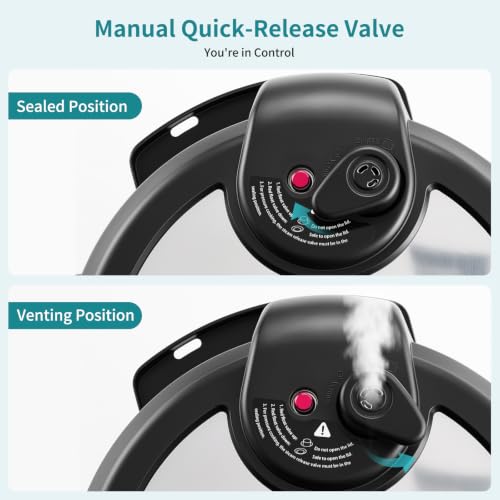
Multiple pressure release options – both natural and quick release – are crucial. Additionally, look for features like overheating protection, a secure steam release valve, and a robust lid design that prevents accidental opening during operation. Some models, like those featuring a REALSAFE SYSTEM, offer extra peace of mind.
Beyond soups and stews, what else can I cook in a combination cooker?
You’re not limited to traditional slow cooker fare! These versatile appliances excel at cooking slow cooker recipes like pulled pork and chili, but also rice, yogurt, cheesecake, and even entire meals in a single pot. Exploring recipes designed for both pressure and slow cooking will reveal the full potential of these tools.
The Bottom Line
Choosing between a combination slow cooker and pressure cooker often comes down to balancing control and convenience. While many models offer a wealth of pre-programmed settings, the Instant Pot Duo 7-in-1 strikes an excellent balance; it provides reliable performance in both modes without overwhelming you with unnecessary features, making it our overall top pick. It really delivers on the core functionality most home cooks are after.
For those with smaller households or limited counter space, the Instant Pot Duo Mini 3 Quart remains a fantastic choice. If you’re eager to explore smart cooking and guided recipes, the CHEF iQ Smart Pressure Cooker with WiFi offers a connected experience, and the Cosori 9-in-1 Pressure Cooker 6QT delivers a ceramic non-stick pot for easy cleanup.
Ultimately, the best combination cooker isn’t about the flashiest features or the highest price tag. It’s about finding a model that feels comfortable and intuitive to you, one that encourages you to explore new pressure cooker recipes and simplifies the process of getting a delicious, home-cooked meal on the table. Don’t get lost in specs; focus on capacity, pot material, and safety features, those fundamentals matter most.
