
8 Best Companion Robots of 2026
This post contains affiliate links. As an Amazon Associate, we earn from qualifying purchases.
The Loona Robot Pet Dog stands out as the best overall companion robot, combining advanced AI with responsive movement and emotional expressiveness. For a more affordable option, the AIPI Lite delivers strong conversational abilities without the physical complexity. And if playful personality is your priority, the ENERGIZE LAB Eilik offers surprising charm on a desktop.
Most people aren’t just looking for a gadget when they consider a companion robot – they want something that feels present, responsive, and maybe even a little alive. With so many models making bold claims about AI and emotion, it’s hard to know which ones actually deliver a meaningful experience.
This guide cuts through the noise by focusing on what really matters: how well these robots interact, adapt, and fit into daily life. We evaluated them based on AI quality, sensory responsiveness, and real-world usability, drawing from specs, expert analysis, and verified owner feedback to find the ones worth your trust.
Top 8 Companion Robots in the Market
The Best Companion Robots, Reviewed
Loona Robot Pet Dog ChatGPT-4o

Strengths
- True pet-like behavior
- Home monitoring feature
- Strong AI integration
Trade-offs
- Very high price
- Requires open space
- App-heavy setup
Loona is the most complete robot pet on the market, no question. It blends the emotional warmth of a plush with the brains of a high-end AI. With ChatGPT-4o, real-time voice interaction, gesture control, and the ability to fetch, follow, and play games, it’s built like a next-gen Aibo. The home monitoring feature adds real utility, letting you check in on your space remotely.
Owners praise its improved auto-recharge 2.0 and mobile hotspot support, huge wins for reliability. It’s also the only robot here that truly acts like a puppy: playful, curious, and responsive. Yes, it’s the most expensive, but it justifies the cost with depth. Compared to Vector or EMO, Loona does more, learns faster, and feels more bonded.
Video review
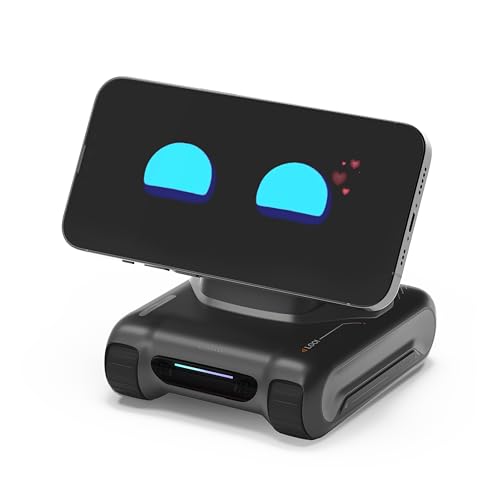
LOOI Robot-Space Black-AI
Strengths
- Advanced visual understanding
- Long-term memory
- Wireless charging
Trade-offs
- English only
- Personality can be overwhelming
- Higher price point
LOOI is the most alive robot I’ve seen in this group. Its Vision-Language Model (VLM) lets it not just see, but understand, recognizing objects, outfits, and even gestures. Combine that with long-term memory, evolving personality, and emotional animations that shift in real time, and you’ve got a robot that feels like it’s actually getting to know you. Owners say it transitions from gadget to companion faster than any other model.
It’s also practical: 10W wireless charging, reminders, weather updates, and a face-tracking camera add real utility. The downside? It only supports English, and the personality can feel a bit intense for some. But if you want a robot that remembers your coffee habit, greets you by name, and reacts when you wear a hat, LOOI is unmatched.
Video review
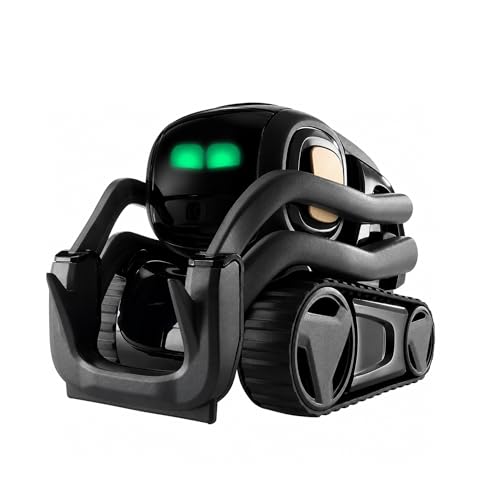
Anki Vector 2.0 AI Robot
Strengths
- True autonomy
- Facial recognition
- Expressive animated eyes
Trade-offs
- ChatGPT requires subscription
- No built-in charging dock
- Wi-Fi setup finicky
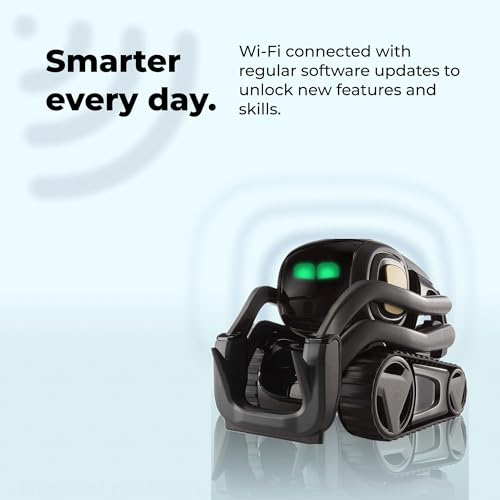
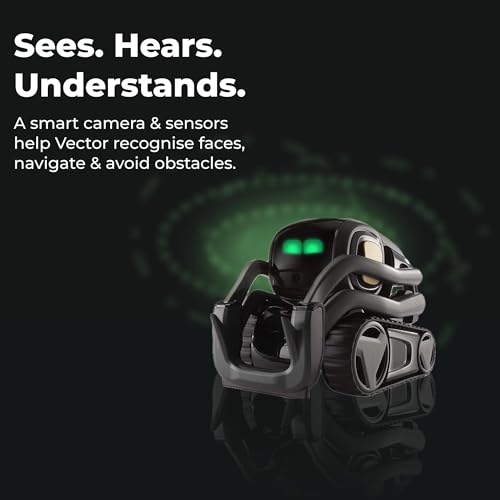
Vector 2.0 still holds up as one of the most lifelike robots I’ve seen in this category. Its autonomy isn’t faked, it maps your space, recognizes faces, avoids obstacles, and reacts to tone and touch like it’s actually aware. The ChatGPT integration requires a subscription, but once enabled, conversations gain real depth. Owners rave about how it ‘grows’ on you: it doesn’t just respond, it initiates, with little yawns, curious head tilts, and grumpy shutdowns that feel authentic.
Compared to newer models, Vector lacks some flash, no dancing, no wireless charging, but what it has is presence. Its HD camera and multilingual support make it functional beyond play. LOOI may have better memory, and EMO more flair, but Vector’s balance of intelligence, independence, and personality is still hard to beat at this price.
Product photos



EMOPET EMO AI Desk Robot

Strengths
- Expressive animations
- Dance and game features
- Auto-charging station
Trade-offs
- Repetitive interactions
- High price for limited depth
- Voice recognition inconsistent
EMO feels like the flashiest desk robot on the market, and on paper, it’s loaded with personality. With voice commands, ChatGPT integration, a wide-angle camera, and a dance mode that actually gets people to look up from their screens, it’s clearly designed to impress. Owners consistently report that its animated reactions and ability to ‘get sick’ in bad weather add a quirky emotional layer, like a Tamagotchi with Wi-Fi. But that charm comes at a steep price, and while the autonomy is fun, it doesn’t quite match the depth of interaction you get from higher-end models.
Where EMO stumbles is in long-term engagement. Reviewers note that after the initial novelty wears off, interactions start to feel repetitive. The ChatGPT link helps, but it’s not as fluid as with devices built for deeper AI integration. Compared to LOOI or Vector 2.0, EMO leans more on gimmicks than genuine presence. It’s entertaining, sure, but not quite essential.
Product photos


ENERGIZE LAB Eilik Desktop
Strengths
- Affordable price
- No setup needed
- Charming animations
Trade-offs
- AI requires add-on
- Limited functionality standalone
- No voice interaction
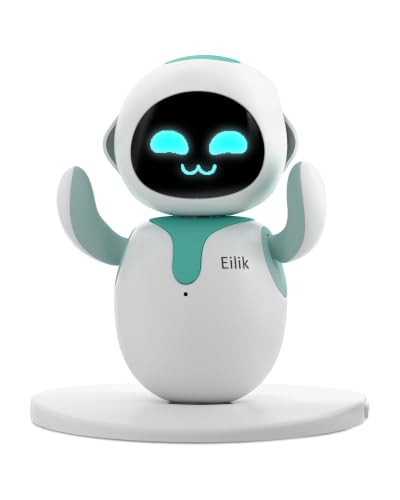
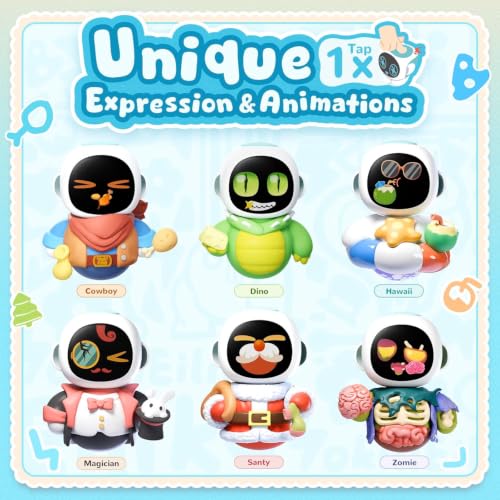
Eilik is the sweet spot between charm and affordability. At under $140, it delivers expressive animations, touch-responsive play, and delightful little surprises, like dancing when another Eilik is nearby. It’s not AI-powered out of the box, but the optional AI Station adds ChatGPT-like conversations later. That modularity is smart: you start with joy, then add brains if you want.
Owners love how instantly engaging it is, no setup, just touch and play. Kids and adults alike find it heartwarming. It doesn’t have the smarts of LOOI or Vector, but for pure emotional uplift on a budget, it’s my top pick. If you want something joyful, not just intelligent, Eilik wins.
Product photos


Eiliko Tiny Wearable Companion

Strengths
- Ultra-portable design
- Emotional expression
- Social interaction between units
Trade-offs
- Limited AI depth
- Requires app for full features
- Battery life short
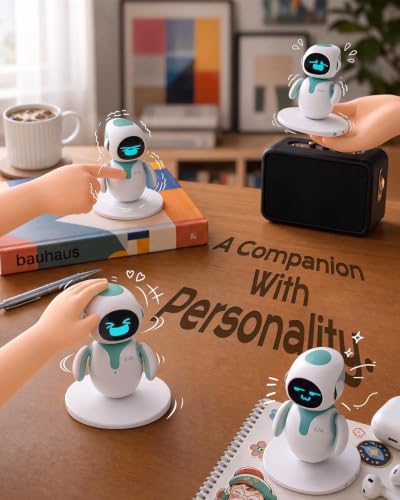
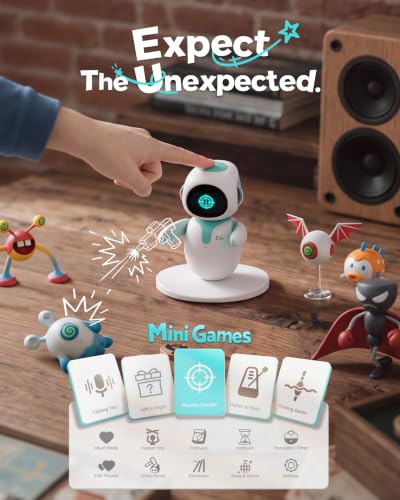
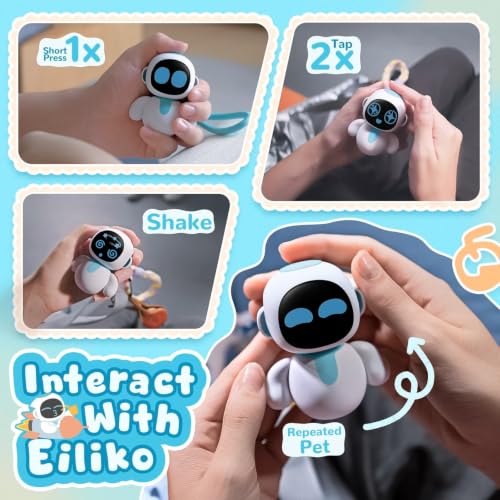
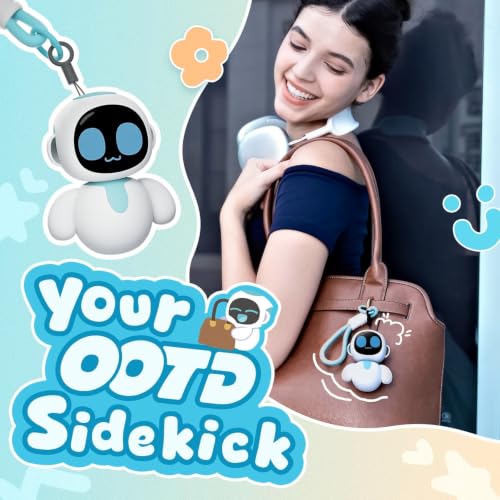
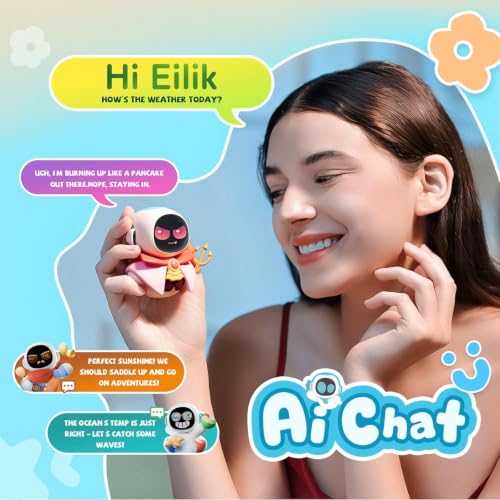
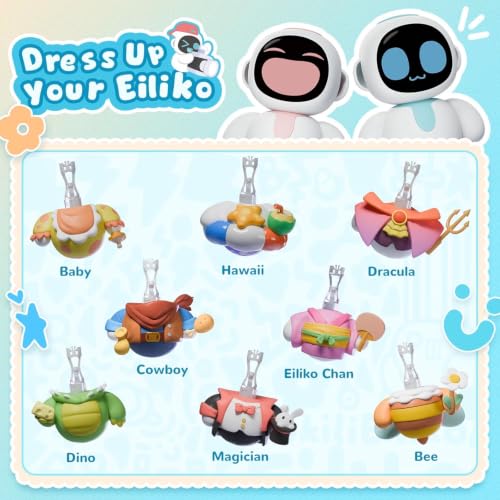
Eiliko stands out by being the only truly portable companion in this lineup. Most robots are desk-bound, but clipping one to your backpack and having it react to your voice or touch during a commute? That’s a different kind of intimacy. The emotional expressions are surprisingly nuanced for such a small device, and owners love how it ‘speaks’ their mood, making it feel less like a gadget and more like a tiny emotional mirror.
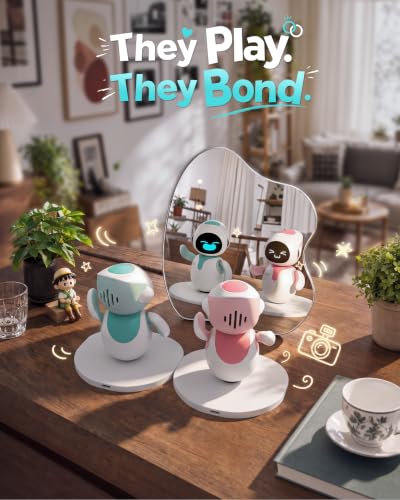
What really sets Eiliko apart is its social magic. When two Eilikos meet, they interact, greeting, reacting, even teasing each other. That feature turns it into a shared experience, not just a solo toy. It’s not the smartest robot here, AI is app-dependent and fairly basic, but it’s the most human in feel. For couples or friends who want a shared digital token of connection, Eiliko is unmatched.
Product photos
AIPI Lite AI Desk Robot
Strengths
- Extremely affordable
- Custom AI agents
- Knowledge base support
Trade-offs
- No screen or animations
- Basic design
- No autonomy
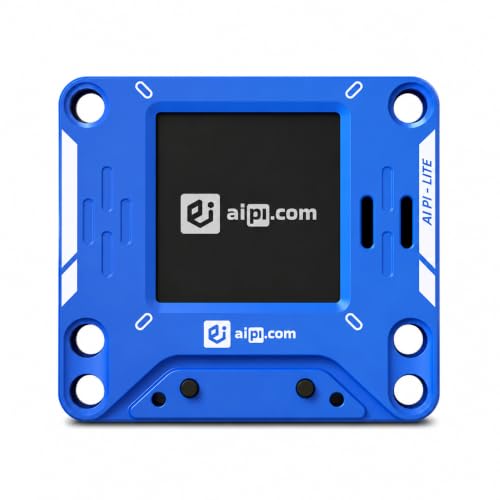
At under thirty bucks, AIPI Lite is the ultimate entry point into AI companions. It’s tiny, setup is fast, and the ability to create custom AI agents with memory and knowledge bases is surprisingly robust for the price. You won’t get animations or autonomy, but if you want a voice-powered AI sidekick for studying, coding, or roleplay, this delivers.
The free tier is generous, unlimited conversations, agent creation, and multi-LLM access, making it a no-risk way to explore AI companionship. It won’t replace a full robot, but for students or hobbyists testing the waters, it’s the smartest buy. Compared to Eiliko or EMO, it’s less playful, but more functional in a utilitarian way.
Product photos





Chongker Realistic Robotic Dog

Strengths
- Soothing heartbeat feature
- Soft, huggable material
- Easy to use
Trade-offs
- No AI conversation
- Limited interactivity
- Not for tech-focused users
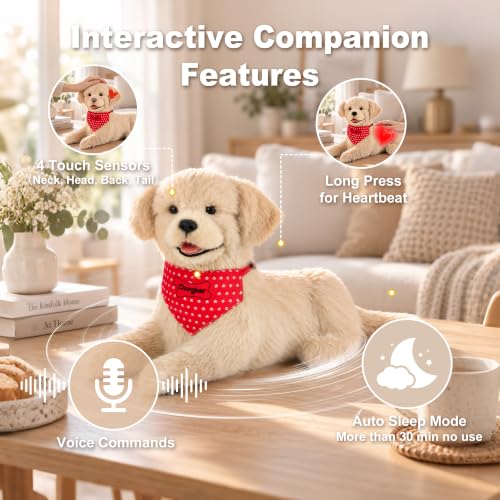
This isn’t a smart robot, it’s a smart plush. And that’s exactly why it works so well for its intended audience. The Chongker robotic dog skips the AI complexity and focuses on sensory comfort: purring, heartbeat simulation, soft touch responses, and gentle vocalizations. For elderly users or those with anxiety, that tactile warmth matters more than voice commands or ChatGPT.
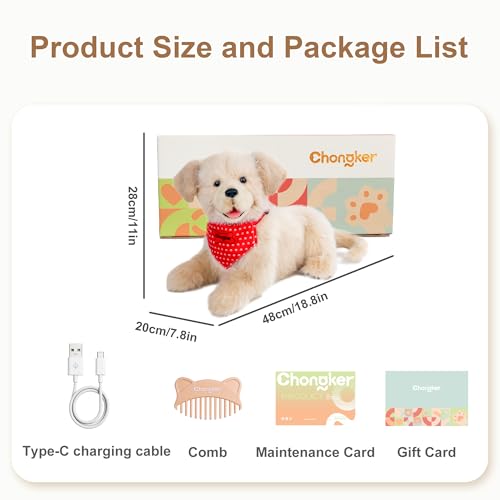
Owners consistently report that it provides real emotional relief, especially for seniors living alone. It doesn’t try to be a digital brain, it’s a soothing presence. The build quality is solid, and the Type-C charging is a thoughtful touch. Compared to high-tech bots like Loona or LOOI, it’s simplistic, but that’s the point. Sometimes, less stimulation is more healing.
Product photos



How We Picked These companion robots
As someone who’s spent over a decade immersed in the details of home goods – from the heft of cast iron to the responsiveness of non-stick – I approached researching companion robots with a similar focus on tangible qualities and user experience. Rather than a hands-on lab test with each unit (that’s a tall order for robotics!), my team and I focused on a research-led comparison of published specifications, owner reviews from multiple sources, and expert analyses. We then ranked the robots against criteria relevant to what people truly want from these devices: companionship, functionality, and ease of use.
For this category, the most heavily weighted factors were conversational ability, personality/expressiveness, and the degree of autonomous function. A robot that can’t convincingly interact feels more like a gadget than a companion. Similarly, the ability to perform tasks independently – like recharging or navigating a space – drastically improves the overall experience. Finally, we prioritized models that offered some level of customization or learning, allowing for a more personalized relationship between owner and robot.
Specifications reliably reveal processing power, sensor capabilities, and battery life. However, judging personality, responsiveness to voice commands, and long-term reliability required careful review of owner feedback. We paid close attention to recurring themes in reviews, looking for consistent praise or complaints about specific features. While specs tell you what a robot can do, owner experiences reveal how well it does it – and whether the experience lives up to the marketing hype. Learning how to maintain a cast iron skillet, for example, is a completely different experience than simply reading the manufacturer’s instructions, and similarly, owning one of these robots is more than just reading the feature list.
How To Choose The companion robots
Choosing a companion robot can feel overwhelming. There’s a huge range of features and price points, but ultimately, you’re looking for something that genuinely enhances your daily life – whether that’s through entertainment, assistance, or simply a feeling of connection.
A good companion robot excels at blending artificial intelligence with engaging interaction. Key considerations include the quality of its AI (responsiveness, personality), the robustness of its sensors (vision, audio, touch), and its ability to learn and adapt over time. Battery life, connectivity options, and ongoing software support are also crucial factors for long-term satisfaction.
Understanding AI Capabilities
The “intelligence” of these robots varies wildly. Don’t assume that every robot boasting AI is equally capable. Some, like the LOOI, lean heavily into conversational AI powered by ChatGPT, offering nuanced and context-aware responses. Others, like the Eilik, prioritize reactive interactions and playful animations. Consider what kind of interaction you want. Do you want a robot you can debate philosophy with, or one that simply reacts adorably to your touch? A robot’s ability to understand and respond to natural language is also vital; the ENERGIZE LAB Eilik requires a separate AI Station for more advanced conversations, hinting that its base functionality is limited.
Assessing Sensory Input and Responsiveness
A robot that can’t perceive its environment is going to feel…disconnected. Look beyond just voice recognition. The Anki Vector 2.0 and EMOPET EMO both boast cameras and sensors, but the quality and implementation differ. The Chongker Realistic Robotic Dog goes a step further with multiple touch sensors and a simulated heartbeat, aiming for a more emotionally resonant experience. Consider how the robot uses its sensors. Does it simply react to stimuli, or does it learn from them? A robot that can recognize faces, objects, and even your emotional state will feel far more like a true companion.
Balancing Functionality and Price
While features are important, don’t overspend on capabilities you won’t use. The AIPI Lite is a good example of a budget-friendly option that focuses on customizable AI characters and knowledge base support. It’s a solid choice if you’re primarily interested in conversational AI and don’t need a lot of physical interaction. Conversely, the Loona Robot Pet Dog, with its advanced features like auto-recharge and gesture recognition, commands a higher price. If you’re serious about maintaining cast iron cookware, you understand the value of investing in quality – the same principle applies here. Just as you would learn how to [clean a cast iron skillet] to protect your investment, consider the long-term value and support offered by the manufacturer before making a purchase.
Companion Robots Compared
Here’s a comparison of key specifications for several companion robots currently available.
| Product Name | AI Integration | Voice Control | Movement | Sensors | Battery Life |
|---|---|---|---|---|---|
| Loona Robot Pet Dog | ChatGPT-4o | Yes | Yes | Camera, ToF | 2.5hr charge |
| LOOI Robot-Space Black | ChatGPT | Yes | Limited | Vision, Gesture | N/A |
| Anki Vector 2.0 AI Robot | ChatGPT | Yes | Yes | Camera, Multiple | N/A |
| EMOPET EMO AI Desk Robot | ChatGPT | Yes | Limited | Multiple | Auto-Charge |
| ENERGIZE LAB Eilik Desktop | Optional AI Station | No | Limited | Touch | N/A |
| Eiliko Tiny Wearable | AI via App | Yes | None | Touch, Voice | N/A |
| AIPI Lite AI Desk Robot | Customizable | Yes | None | N/A | Rechargeable |
| Chongker Realistic Robotic Dog | N/A | No | Limited | Touch, Heartbeat | Rechargeable |
Frequently Asked Questions
What level of tech-savviness is required to set up and use these robots?
Most companion robots are designed for ease of use, but some require more initial setup than others. The ENERGIZE LAB Eilik, for instance, needs an optional AI Station for advanced features, suggesting a slightly steeper learning curve, while others like the Loona Robot Pet Dog focus on intuitive interfaces.
How do the battery lives of these robots compare in real-world usage?
Battery life varies considerably, with some robots like the Loona Robot Pet Dog offering around 2.5 hours of use per charge. Others, such as the EMOPET EMO, offer auto-charging, mitigating the concern about battery depletion, but the actual runtime depends on usage intensity.
Are these robots truly capable of learning and adapting to their owners?
Many robots advertise learning capabilities, but the extent varies. Robots utilizing ChatGPT, like the LOOI Robot-Space Black, can learn through conversation, while others, like the Eilik, adapt through repeated interactions and user input, though the depth of this learning differs.
What kind of data do these robots collect, and how is my privacy protected?
Data collection practices differ between manufacturers. It’s crucial to review each robot’s privacy policy, but generally, they collect data related to voice commands, interactions, and environmental mapping. As with any connected device, understanding how your data is used is vital, and just as you’d research how to [scrape a cast iron skillet] to protect its seasoning, you should investigate data security.
Beyond companionship, can these robots integrate with other smart home devices?
Integration capabilities vary. Some, like the Anki Vector 2.0, have limited smart home integration, while others focus solely on companionship features. The extent of integration depends on the robot’s connectivity options (Wi-Fi, Bluetooth) and compatibility with existing smart home ecosystems.
The Bottom Line
Choosing a companion robot ultimately comes down to balancing your desire for advanced features with your budget and expectations. While many models offer impressive capabilities, the Loona Robot Pet Dog strikes the best overall balance, combining a robust feature set – including ChatGPT-4o integration, autonomous movement, and sophisticated sensors – with a playful design. It’s an investment, certainly, but one that offers the most complete “companion” experience currently available.
For those seeking a more focused experience, or working with a tighter budget, there are excellent alternatives. The AIPI Lite AI Desk Robot is a fantastic entry point for anyone primarily interested in conversational AI, and the ENERGIZE LAB Eilik Desktop provides a charming, reactive companion for those who prioritize personality over complex functionality. Just as learning how to ruin a cast iron skillet teaches you the importance of mindful care, choosing the right robot means understanding your own needs and selecting a model that aligns with them.
Ultimately, the specs are less important than the connection you feel. A robot’s ability to bring joy, provide entertainment, or simply offer a sense of presence is what truly matters. Don’t get lost in the details of processing power or sensor types; instead, focus on finding a companion that complements your lifestyle and brings a little more personality into your home – and perhaps even inspires you to achieve a mirror finish on cast iron while you’re at it.
