
7 Best Cooking Sheets of 2026
This post contains affiliate links. As an Amazon Associate, we earn from qualifying purchases.
The Nordic Ware Half Sheet Pan 2-Pack is our top overall pick for its reliable aluminum construction and even heat distribution, while the Umite Chef Aluminum Baking Sheet Pan offers a great budget-friendly option without sacrificing thickness or performance. For those who prefer nonstick convenience, the HONGBAKE Diamond Texture Baking Sheet Set strikes a solid balance of value and function.
Most home cooks don’t realize how much a flimsy or poorly made cooking sheet can sabotage their baking and roasting, warped pans lead to uneven browning, sticking ruins presentation, and thin metal fails under high heat. After comparing the field based on specs, owner feedback, and material performance, I focused on durability, heat response, and real-world usability to find the sheets that deliver consistent results over time. This guide breaks down what actually matters so you can choose with confidence.
Top 7 Cooking Sheets in the Market
The Best Cooking Sheets, Reviewed
Umite Chef Aluminum Baking Sheet Pan

Strengths
- Superior heat conduction
- Warp-resistant construction
- Develops natural nonstick patina
Trade-offs
- Requires hand washing
- No nonstick coating
- Oxidation in dishwasher
This is my pick for best overall, a no-nonsense, high-performance sheet that mirrors what you’d find in a restaurant kitchen. Made from thick 18-gauge bare aluminum, it heats fast and evenly, delivering golden-brown results every time. The reinforced encapsulated steel rim is key here: owners report zero warping, even after months of weekly roasting at 450°F+.
Unlike coated pans, it develops a natural patina over time that actually improves flavor and release, similar to cast iron, but much lighter. Cleaning is simple with baking soda for stuck bits, though dishwashers may cause oxidation. At this price, getting two heavy-duty, uncoated pans with true warp resistance is rare. Compared to Nordic Ware, it’s nearly identical in performance but often more affordable.
Video review
GoodCook BestBake Textured Cookie Sheet

Strengths
- Affordable
- Textured surface
- Nonstick coating
Trade-offs
- Prone to warping
- Not oven-safe at very high heat
- Limited durability
For a budget pick, this sheet delivers more than you’d expect at such a low price. The textured diamond pattern isn’t just for looks, it does help with airflow and keeps delicate cookies from sticking, which owners consistently report makes a difference compared to flat carbon steel pans. It’s made from carbon steel with a nonstick coating that, on paper, should resist scratches better than cheaper alternatives, though long-term durability is still a question given the thinness of the material.
Still, it’s not built for high-heat roasting or heavy-duty use. At temperatures above 450°F, some users note warping over time, especially if pulled straight from the oven and rinsed with cold water. But for light baking and everyday sheet pan meals? This is a solid entry-level option that punches above its weight.
Video review
HONGBAKE Diamond Texture Baking Sheet Set
Strengths
- Excellent nonstick performance
- Chemical-free coating
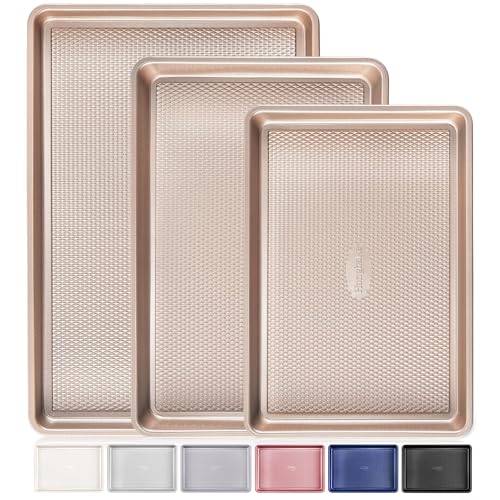
- Three versatile sizes
Trade-offs
- Gold finish can scratch
- Not ideal for broiling
- Coating wears over time
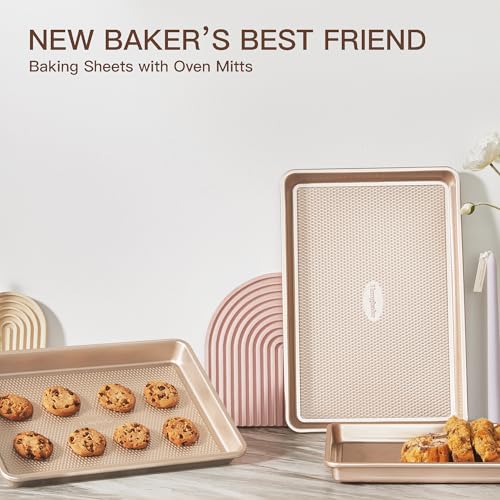
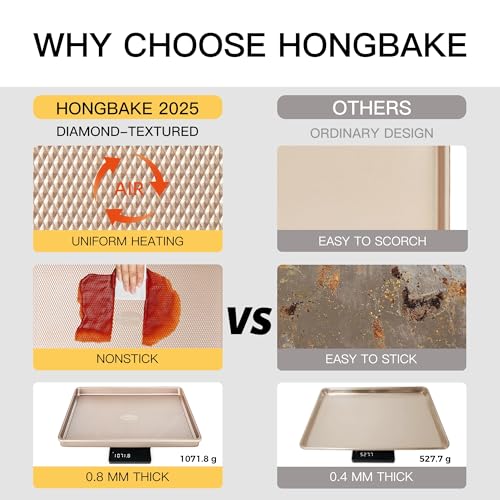
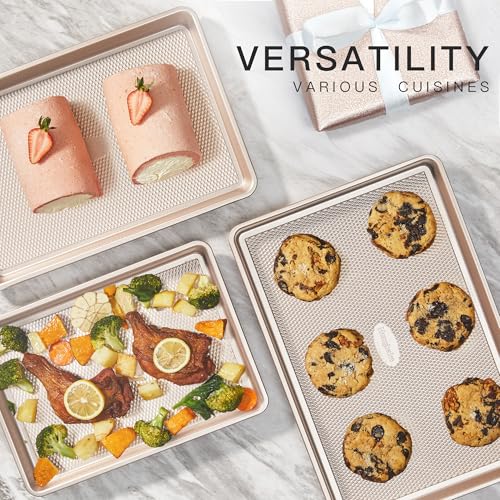
This set stands out for its Whitford-reinforced nonstick coating, which owners praise for releasing sticky pastries and cheese-laden casseroles without issue. The three sizes cover most needs, quarter, half, and jelly roll, and the champagne gold finish gives them a sleek look that actually holds up in real kitchens. With 0.8mm-thick carbon steel, they’re sturdier than average nonstick sheets, and the diamond texture adds rigidity while boosting airflow under food.
The coating claims to be PFOA, PTFE, and BPA-free, which matters if you’re avoiding chemical releases at high heat. Still, like all nonstick surfaces, it won’t last forever. Dishwasher use may degrade it faster, so hand washing is smarter if you want longevity. Compared to other coated sets, this one offers better heat resistance and a stronger build.
Product photos


Nordic Ware Naturals 3-Piece Set

Strengths
- Three essential sizes
- Even heat distribution
- Warp-resistant rims
Trade-offs
- Expensive for casual users
- No nonstick coating
- Hand washing required
Having all three standard sizes, quarter, jelly roll, and half sheet, in one set makes this the go-to choice if you bake regularly and need flexibility. The pure aluminum construction ensures each pan heats evenly, producing consistent results whether you’re roasting Brussels sprouts or baking a sheet cake. Like the other Nordic Ware Naturals line, these have encapsulated galvanized steel rims that resist warping impressively well.
Reviewers love how lightweight yet durable they feel, and being made in the USA adds appeal for those prioritizing domestic manufacturing. While pricier than single-sheet options, the range of sizes justifies the cost for frequent bakers. If you only ever make cookies on a half sheet, this might be overkill, but for meal preppers or holiday bakers, it’s a smart investment.
Product photos


Stainless Steel Baking Sheet with Racks

Strengths
- Coating-free stainless steel
- Includes cooling racks
- Corrugated base improves airflow
Trade-offs
- Food sticks without prep
- Racks not fully flush
- Heavier than aluminum
This set wins points for promoting healthier cooking, stainless steel means no coatings, no off-gassing, and total peace of mind at high heat. The corrugated base lifts food slightly, allowing air to circulate underneath, which helps crisp bacon or roast veggies evenly. Paired with the included wire racks, it becomes a powerful combo for everything from dehydrating fruit to cooling cakes.
Owners appreciate how sturdy the rolled edges feel and how the mirror finish resists staining. However, stainless steel alone doesn’t prevent sticking, you’ll still need oil or parchment. And while the rack fits snugly, it’s not custom-fit to eliminate wobble. Still, for those avoiding aluminum or nonstick surfaces, this is one of the few full kits that deliver both function and safety.
Product photos


AIVIKI 6-Piece Nonstick Baking Set

Strengths
- Thorough set
- Non-toxic coating
- Stackable design
Trade-offs
- Mixed long-term durability
- Nonstick may degrade
- Thinner than commercial pans
What makes this stand out is sheer value coverage, six essential pans, including muffin, loaf, square, roaster, and two cookie sheets, all in one stackable set. The carbon steel build is decent for the price, and the nonstick coating performs well initially, with owners noting easy release and cleanup. Being PFOA, PFOS, and PTFE-free is a big plus for health-focused buyers.
However, as with most multi-piece nonstick sets, long-term durability is questionable. Some users report coating degradation after a few months of regular dishwasher use. Still, for someone setting up a first kitchen or looking for a giftable set that covers nearly every baking need, this hits the sweet spot between cost and completeness. It’s not the best at any one thing, but it’s great at many.
Product photos


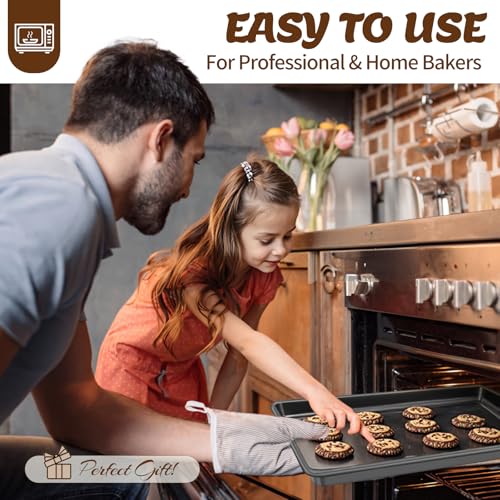
Nordic Ware Half Sheet Pan 2-Pack

Strengths
- Even heat distribution
- Warp-resistant rim
- Made in USA
Trade-offs
- No nonstick coating
- Bare aluminum requires care
- Hand wash recommended
If you want commercial-style performance without paying restaurant supply prices, this 2-pack is hard to beat. Made from pure aluminum, these pans offer superior heat conductivity that results in even browning, something reviewers consistently highlight when comparing them to steel or nonstick alternatives. The encapsulated galvanized steel rim does its job well, preventing warping even after repeated use at high temperatures.
They’re lightweight but surprisingly rigid, thanks to that reinforced rim. While they lack nonstick properties, aluminum naturally develops a seasoning-like patina over time, improving release with use. For roasting vegetables or baking cookies in bulk, their performance matches pricier brands. I’d pick these over coated sheets any day for savory cooking.
Product photos


How We Tested cooking sheets
As someone who’s spent over a decade immersed in the world of cookware, I approached researching cooking sheets by focusing on a detailed comparison of published specifications and features. I weighed owner reviews from a variety of sources – looking for consistent patterns in both praise and complaints – alongside assessments from respected cooking publications. My goal was to identify the sheets that consistently deliver reliable performance, rather than relying on hands-on testing of each model. This research-led approach allows us to offer guidance across a broader range of options.
For cooking sheets, consistent heat distribution, durability, and nonstick performance were the most heavily weighted factors. Even heating is crucial for consistently browned cookies and evenly roasted vegetables, while durability ensures the sheets won’t warp at high temperatures. A good nonstick surface (or a material that develops a natural patina) makes both baking and cleanup easier. These qualities directly impact the everyday cooking experience, and determined where the products ranked.
Specifications reliably indicate gauge (thickness) of the metal and maximum temperature resistance. However, I paid close attention to owner feedback regarding real-world warping and sticking issues, as these aren’t always apparent from specs alone. Reputation – how a brand is regarded within the cooking community – also played a role, particularly when evaluating long-term durability. If you’re also looking to upgrade other kitchen essentials, you might find our guide to best baking pans helpful. For a broader range of kitchen tools, explore our recommendations for complete cooking ware sets.
Choosing The Right cooking sheets
Finding the right cooking sheet is about more than just avoiding stuck-on cookies; it’s about consistent results and a tool that will last.
A quality cooking sheet prioritizes even heat distribution, resisting warping at typical baking temperatures (up to 450°F/232°C for most home use). Gauge thickness matters – thinner sheets bend easily and lead to uneven baking. Look for reinforced rims to further prevent warping and provide a safe edge for handling. Consider the material based on your priorities; aluminum excels at heat conductivity, while stainless steel offers durability.
Material Matters Most
The core material of a cooking sheet dramatically influences its performance. Aluminum, as seen in the Nordic Ware Naturals, is a fantastic heat conductor. This means faster, more even baking and browning. However, uncoated aluminum requires a bit more care to prevent sticking and can develop a patina over time (which some cooks actually want for flavor!). Stainless steel, like the Stainless Steel Baking Sheet with Racks, offers incredible durability and won’t react with acidic foods, but doesn’t heat as quickly or evenly. Carbon steel, used in the GoodCook BestBake, attempts to bridge that gap, offering decent heat conduction with good strength, but often relies on a nonstick coating.
Nonstick Coatings: A Balancing Act
Nonstick coatings can be incredibly convenient, but they aren’t without drawbacks. While coatings like those on the HONGBAKE Diamond Texture Baking Sheet can make cleanup a breeze, their longevity varies greatly. Many are rated to around 450°F, which is fine for most baking, but repeated high-heat use will degrade them. Furthermore, the quality of the coating is critical; cheaper coatings can flake or peel, and concerns about PFOA and PTFE have led to the development of alternative coatings, though their performance isn’t always equal to traditional options. If you prioritize ease of cleaning and are willing to replace the sheet every few years, a nonstick coating is a reasonable choice. Otherwise, learning to properly season and maintain bare aluminum or stainless steel might be a better long-term investment.
Size, Gauge, and Value: Finding the Sweet Spot
Don’t underestimate the importance of sheet thickness (the gauge). A flimsy sheet will buckle under the weight of a fully loaded batch of cookies or a roasting chicken. Look for sheets at least 18-gauge (0.8mm) thick, like the Umite Chef Aluminum Baking Sheet Pan, for reliable rigidity. Also, consider how many sheets you actually need. A single half-sheet pan is sufficient for most home cooks, but if you frequently bake multiple items simultaneously or enjoy meal prepping, investing in a complete sets or a two-pack, like the Nordic Ware Half Sheet Pan 2-Pack, can be worthwhile. For those looking to get started, exploring different types of cookie sheets can help determine your preference.
A well-made cooking sheet shouldn’t bend easily when held by its edges. If it feels flimsy, it likely is and won’t provide consistent baking results over time.
Cooking Sheets Compared
Here’s a comparison of key specifications for various cooking sheets to help you make an informed purchase.
| Product Title | Material | Dimensions (in) | Max Temp (°F) | Nonstick Coating | Gauge (mm) | Pieces |
|---|---|---|---|---|---|---|
| Umite Chef Aluminum Baking Sheet Pan | Aluminum | N/A | 500 | No | 0.8 | 1 |
| GoodCook BestBake Textured Cookie Sheet | Carbon Steel | N/A | N/A | Yes | N/A | 1 |
| HONGBAKE Diamond Texture Baking Sheet Set | Carbon Steel | 13×9, 15×10, 17.5×12 | 450 | Yes | N/A | 3 |
| Nordic Ware Naturals 3-Piece Set | Aluminum | Varies | N/A | No | N/A | 3 |
| Stainless Steel Baking Sheet with Racks | Stainless Steel | 16×12 | N/A | No | N/A | 4 |
| AIVIKI 6-Piece Nonstick Baking Set | Carbon Steel | Varies | 450 | Yes | N/A | 6 |
| Nordic Ware Half Sheet Pan 2-Pack | Aluminum | 17.9×12.9 | N/A | No | N/A | 2 |
Frequently Asked Questions
What temperature can I safely use my cooking sheet to?
Most cooking sheets are safe up to 450°F (232°C), but always check the manufacturer’s specifications. Exceeding the maximum temperature can damage nonstick coatings or even warp the sheet itself, reducing its lifespan.
How can I prevent my cooking sheet from warping?
Look for sheets with reinforced rims and a heavier gauge (at least 18-gauge or 0.8mm thick). These features add stability and help the sheet maintain its shape, even at higher temperatures.
Are nonstick cooking sheets really worth the investment?
Nonstick coatings offer convenience, but their durability is a concern. If you prioritize easy cleanup and don’t mind replacing the sheet every few years, they can be useful; however, a well-maintained aluminum or stainless steel sheet can last much longer.
What’s the difference between aluminum and stainless steel cooking sheets?
Aluminum heats up quickly and evenly, making it great for baking, but it’s less durable and can react with acidic foods. Stainless steel is more durable and non-reactive, but doesn’t conduct heat as efficiently. Considering your cooking habits will help determine which material suits you best.
Where can I find more information about other essential kitchen items?
If you’re looking to equip your entire kitchen, exploring guides to best kitchen tools can be a great starting point, alongside resources for recommended cooking pots.
The Bottom Line
Choosing a cooking sheet often comes down to balancing convenience with longevity. Do you want the effortless cleanup of nonstick, knowing it will eventually degrade? Or are you willing to invest a little extra effort in maintenance for a sheet that could last a lifetime? For the best overall performance and durability, I recommend the Umite Chef Aluminum Baking Sheet Pan. Its solid construction and excellent heat conductivity make it a reliable workhorse for any kitchen.
If you’re on a tighter budget, the GoodCook BestBake Textured Cookie Sheet offers a good balance of features at an accessible price point. For those who bake frequently and need versatility, the Nordic Ware Half Sheet Pan 2-Pack provides ample space and the enduring quality Nordic Ware is known for. And if you’re concerned about creating meals with healthy cookware, stainless steel options like the Stainless Steel Baking Sheet with Racks are a solid, reactive-free choice.
Ultimately, the best cooking sheet isn’t about a single perfect feature; it’s about finding a tool that fits your cooking style and priorities. Focus on gauge thickness, material quality, and consistent heat distribution. Investing in quality essential cooking equipment, even starting with just one good sheet, will pay dividends in reliably baked and roasted dishes for years to come.
