
3 Best Cooking Spoons of 2026
This post contains affiliate links. As an Amazon Associate, we earn from qualifying purchases.
The overall best cooking spoon is the Wooden Spoons for Cooking – 10 Pcs Teak Set, thanks to its durable teak construction and versatile set size. For a more budget-friendly option, the Riveira Dark Bamboo 6-Piece set offers solid performance, while the HAKSEN 2 PCS Acacia spoons stand out for their long 12-inch handles, ideal for deep pots.
Choosing the wrong cooking spoon can mean scratched pans, warped utensils, or an uncomfortable grip when you’re mid-stir. After years of researching how tools interact with cookware, I know that the right spoon makes a real difference in both protecting your gear and making cooking more enjoyable.
This guide cuts through the clutter by focusing on what actually matters: material, handle design, and long-term durability. I compared specs and dug into owner feedback to find spoons that deliver on real kitchen demands, not just pretty packaging.
Top 3 Cooking Spoons in the Market
The Best Cooking Spoons, Reviewed
Wooden Spoons for Cooking – 10 Pcs Teak Set

Strengths
- Full 10-piece set
- Durable teak construction
- Scratch-safe for non-stick
Trade-offs
- Hand wash only
- Higher price point
- Some shade variation
This 10-piece teak set checks every box if you’re looking to fully stock your kitchen with wooden spoons and utensils. On paper, the range is impressive, flat spatula, slotted spoon, spaghetti server, soup ladle, seasoning spoon, even a salad fork, which means most home cooks won’t need to buy anything else. Owners consistently report that the teak wood holds up well over time, showing minimal cracking or warping when cared for properly, and the smooth finish makes them a pleasure to hold and use.
The fact that they’re made from solid, one-piece teak adds to their durability and food safety, since there are no glued joints where bacteria can hide. While they’re not dishwasher-safe (a given with quality woodware), that’s standard across the category. Compared to bamboo sets, teak tends to be denser and more water-resistant, which likely contributes to the better long-term performance reviewers mention. I’d pick this over lower-end sets if you want something that feels substantial and could realistically last years.
Video review
HAKSEN 2 PCS Wooden Cooking Spoons Acacia

Strengths
- Extra-long 12-inch handle
- Safe for high heat
- Prevents boil-overs
Trade-offs
- Only two spoons
- No variety in shapes
- Not a full utensil set
If you regularly cook deep stews, fry at high heat, or hate hovering over boiling pots, these 12-inch acacia spoons are worth considering just for the extended handle design. The near-foot-long reach keeps hands safely away from steam and splatters, which is something I always recommend for safer handling of large volumes. Owners highlight how useful they are for Dutch ovens and stockpots, and the round bowl shape helps scrape corners efficiently, no more burnt bits stuck in the edges.
Beyond length, the acacia wood is naturally dense and heat-resistant, so the handles stay cool and the spoons don’t react with acidic foods like tomato sauces. Some users even use them to prevent boil-overs by resting the spoon across the pot, clever, and it works. While it’s only two spoons, that might be all you really need for heavy-duty tasks. Compared to full sets, this is more of a specialist tool, but a highly functional one.
Video review
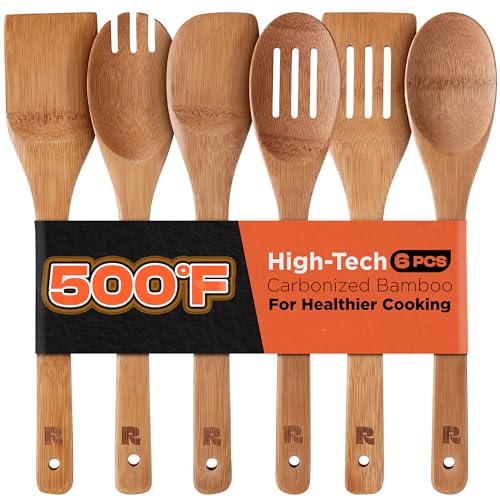
Riveira Dark Bamboo Wooden Spoons 6-Piece
Strengths
- Affordable 6-piece set
- Stain-resistant bamboo
- Lifetime warranty included
Trade-offs
- Less durable than teak
- Not for high-heat searing
- May wear faster over time
At this price, the Riveira 6-piece bamboo set stands out as a smart budget buy that doesn’t feel like a total compromise. The brand leans into its organic bamboo construction, which owners say resists staining and odor absorption better than cheaper wooden spoons, something I’ve seen play out across the category, where bamboo generally performs well with acidic foods and frequent use. The set includes the essentials: slotted and solid spoons, turner, ladle, and a spoon fork, so it covers most daily tasks.
What pushes this ahead of other budget sets is the limited lifetime warranty, a rare promise in this space. That signals confidence in longevity, and reviewers note these utensils don’t splinter easily, even after months of use. Still, bamboo isn’t quite as dense as teak, so I wouldn’t expect them to last as long under heavy use. But for a starter kitchen or apartment setup, this is the smarter buy over random $5 Amazon packs that fall apart in weeks.
Product photos


How We Picked These cooking spoons
As someone who’s spent years observing how cookware interacts with everyday cooking, I approached evaluating cooking spoons by looking beyond marketing claims. Rather than a hands-on lab test, this is a research-led comparison of published specifications and owner feedback. I weighed features, materials, and construction against what cooks are actually saying about performance and durability. My goal is to help you find spoons that will stand up to regular use and enhance your time in the kitchen, and that means understanding both the promises and the practicalities.
For cooking spoons, the most important factors are material and handle design. A spoon’s material dictates how gentle it is on cookware – crucial for protecting non-stick surfaces – as well as its heat resistance and potential for imparting flavors. Handle length and shape influence comfort and safety, especially when stirring hot liquids. These two elements heavily influenced my rankings, with a focus on finding spoons that balance functionality with long-term usability.
Specifications reliably reveal material composition and dimensions, but owner reviews are where the real story emerges. I paid close attention to comments about how the spoons hold up to repeated use, whether they stain or absorb odors, and how comfortable they are to grip. Reputation matters too; established brands with a history of quality tend to deliver more consistent results, and I factored that into my assessment alongside feedback on these and other essential kitchen tools. I also looked into alternative materials like sustainable bamboo spoons.
What To Look For In cooking spoons
Finding the right cooking spoon feels deceptively simple, but a little thought goes a long way. You’ll quickly discover that not all wooden spoons are created equal, and the best one for you depends on how you cook.
A truly good cooking spoon balances heat resistance, durability, and a comfortable feel in hand. Look for single-piece construction to avoid cracking, a smooth finish to protect cookware, and a material that won’t impart unwanted flavors to your food. Consider handle length for different tasks and prioritize ease of cleaning.
Material Matters Most
The material of your cooking spoon is the biggest deciding factor. While silicone has its place, a good wooden spoon remains a kitchen staple for a reason. Teak, like you see in the Woodenhouse set, is incredibly dense and naturally oily, making it exceptionally durable and water-resistant. Acacia, as HAKSEN offers, is another excellent choice, often a bit lighter in weight but still very strong. Bamboo, while budget-friendly, is softer and may show wear more quickly, though it’s still perfectly functional for many tasks. Don’t automatically dismiss bamboo; it’s a great option if you’re on a tighter budget.
Handle Length & Shape
Don’t underestimate the importance of handle length. A shorter handle is fine for stirring sauces in a saucepan, but a longer handle, like the 12-inch design from HAKSEN, is essential for safely stirring deep pots of stock or simmering liquids on the stovetop. It keeps your hands a safe distance from heat and splatters. Beyond length, consider the shape. A rounded spoon is versatile, while a more flat, paddle-like shape is better for scraping the bottom of a pan.
Here’s what I recommend considering when it comes to handle shape:
- Rounded: Best for stirring and scooping.
- Flat/Paddle: Ideal for deglazing pans and getting into corners.
- Slotted: Excellent for retrieving food from boiling water or skimming foam, offering more control.
A good rule of thumb: if you frequently make soups, stews, or deep-fry, invest in at least one spoon with a long handle.
Balancing Budget and Longevity
Price can vary dramatically, but don’t assume the most expensive spoon is always the best. The Riveira bamboo set demonstrates that you can find perfectly serviceable options without breaking the bank. However, a higher price often correlates with better quality materials and craftsmanship. If you’re looking to protect your investment in safe nonstick cookware utensils, choosing a well-made wooden spoon – even if it costs a little more – will pay off in the long run by preventing scratches. Ultimately, the best cooking spoon is the one you’ll reach for again and again, and that often comes down to personal preference and how well it fits your cooking style.
Cooking Spoons Compared
Here’s a comparison of the specifications for the featured cooking spoons to help you make an informed decision.
| Product Title | Material | Length | Pieces Included | Dishwasher Safe | Heat Resistance | Non-Stick Safe |
|---|---|---|---|---|---|---|
| Wooden Spoons for Cooking – 10 Pcs Teak Set | Teak Wood | N/A | 10 | No | Yes | Yes |
| HAKSEN 2 PCS Wooden Cooking Spoons Acacia | Acacia Wood | 12″ | 2 | No | Yes | Yes |
| Riveira Dark Bamboo Wooden Spoons 6-Piece | Bamboo | N/A | 6 | No | Yes | Yes |
Frequently Asked Questions
Will a wooden cooking spoon really last longer than a silicone one?
Generally, yes. High-density woods like teak and acacia are incredibly durable and, with proper care, can outlast silicone spoons which are prone to melting or degrading with repeated exposure to high heat.
Are slotted cooking spoons useful even if I don’t deep fry?
Absolutely. A slotted spoon is surprisingly versatile; it’s great for scooping cooked vegetables from boiling water, removing poached eggs, or even quickly draining excess fat from a pan after browning meat.
What’s the best way to care for a wooden cooking spoon to prevent it from cracking?
Avoid soaking wooden spoons for extended periods and always dry them thoroughly after washing. Regularly oiling them with food-grade mineral oil helps to replenish the natural oils and prevent cracking, keeping them in good condition for years.
Can I use any type of wooden spoon with my non-stick pans?
You can, but some are better than others. Look for spoons with a very smooth finish, as rough wood can potentially scratch non-stick coatings. Choosing from safe cooking utensil materials is always a good idea.
What should a beginner cook look for in their first cooking spoon?
For essential tools for new cooks, a simple, rounded wooden spoon made of acacia or bamboo is a great starting point. It’s versatile enough for most tasks and won’t break the bank while you’re building your kitchen collection.
The Bottom Line
Choosing a cooking spoon often comes down to balancing immediate cost with long-term value. While a basic set will get the job done, the Woodenhouse Teak set represents the best overall combination of durability, gentle handling of cookware, and comfortable use – it’s a worthwhile investment for anyone serious about their time in the kitchen.
For those on a budget, or looking for a dedicated set for lighter tasks, the Riveira bamboo spoons are a fantastic option. If versatility is your priority, and you frequently work with deep pots, the HAKSEN Acacia spoons offer the reach and robust construction needed for a wide range of recipes. And for cooks looking to expand their essential kitchen utensils, don’t forget to explore other essential cooking gear to complete your toolkit.
Ultimately, the most expensive spoon isn’t always the best. Prioritize a comfortable grip, a material that won’t damage your cookware, and construction that will hold up to regular use. Those fundamentals will serve you far better than any fancy feature or brand name.
