
8 Best Cookware for Pasta 2026
This post contains affiliate links. As an Amazon Associate, we earn from qualifying purchases.
The Made In 8 Qt Stainless Stock Pot stands out as the best overall cookware for pasta, thanks to its even heating, sturdy build, and induction compatibility. For a more budget-friendly option, the Cuisinart 6 Qt Pasta Pot delivers solid performance with a built-in strainer. If you’re after maximum versatility, the Rachael Ray Oval Pasta Braiser handles long noodles and sauce-making with ease.
Cooking pasta shouldn’t mean wrestling with a pot that boils over, sticks, or drains poorly. Too many pots are either too small, poorly balanced, or lack the features that make draining and serving actually convenient.
This guide cuts through the clutter, focusing on real-world usability, durability, and smart design. I compared specs, analyzed owner feedback, and applied my years of cookware research to highlight the pots that consistently deliver, whether you’re boiling spaghetti or simmering a sauce.
Top 8 Cookware For Pasta in the Market
The Best Cookware For Pasta, Reviewed
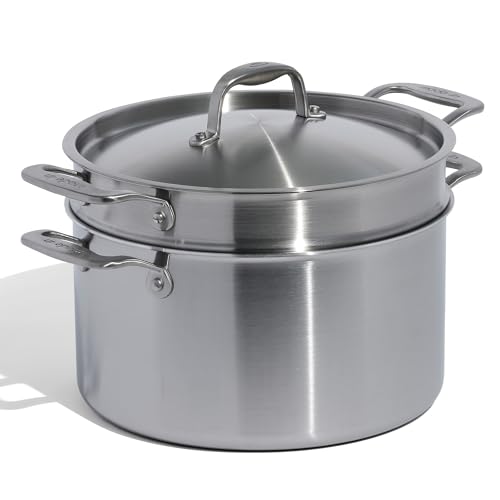
Made In 8 Qt Stainless Stock Pot
Strengths
- 5-ply professional build
- Includes pasta insert
- Oven and induction safe
Trade-offs
- Very expensive
- Heavy when full
- No measurement markings
Made In’s 8-quart 5-ply stock pot is the gold standard for serious home cooks. The five-layer clad construction, alternating stainless and aluminum, delivers exceptional heat responsiveness and even distribution, rivaling professional cookware. It heats fast, retains heat well, and transitions smoothly from stovetop to oven.
The included pasta insert is a standout, lift out noodles without draining in the sink. Owners consistently report restaurant-level performance. Yes, it’s expensive, but it’s built to last decades. When compared to department store sets, this pot justifies its price with materials and craftsmanship you can feel.
Video review
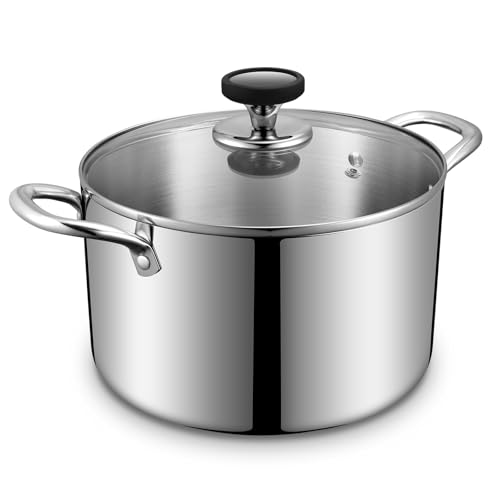
Tri-Ply 6.5 Qt Stock Pot
Strengths
- Affordable price
- Even heating
- Induction compatible
Trade-offs
- No measurement markings
- No strainer lid
- Lightweight feel
At under $25, this 6.5-quart tri-ply stock pot punches well above its weight for the price. The three-ply construction, stainless steel, aluminum core, and magnetic exterior, delivers solid heat distribution, especially for boiling pasta or making soups, and owners consistently report no warping even after repeated use. It’s induction-ready, oven-safe to 500°F, and the glass lid has a steam vent, which is a thoughtful touch for monitoring without lifting.
I’d pick this over cheaper single-ply pots any day. While it lacks measurement markings and a strainer lid, it’s a reliable, no-frills workhorse that performs like more expensive models. For home cooks on a budget, this is one of the smarter buys in basic stainless steel cookware.
Video review
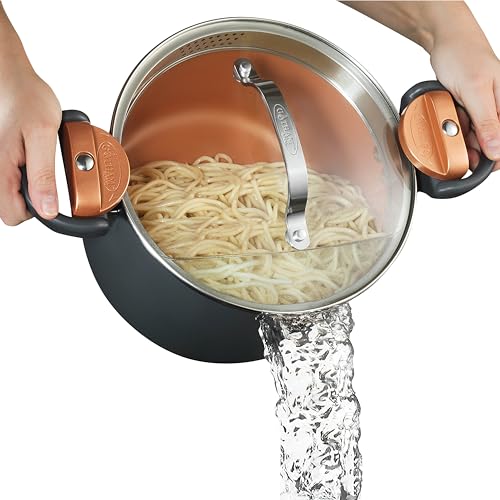
Gotham Steel 5 Qt Stock Pot
Strengths
- Locking strainer lid
- Lightweight design
- Toxin-free coating
Trade-offs
- Not induction compatible
- Oven safe only to 300°F
- Aluminum body dents easily
Gotham Steel’s 5-quart nonstick pot with a locking strainer lid is a hit for good reason. The twist-and-lock lid keeps the strainer secure during draining, so you can tip the pot without fear of spills or scalding. The titanium-reinforced ceramic coating handles sticky sauces and cleanup with ease, and owners say food releases well even after months of use.
It’s lightweight and heats evenly thanks to the solid aluminum body. But it’s not induction-compatible, and the oven-safe limit is only 300°F, which limits versatility. Still, for quick pasta meals where convenience is king, this pot delivers.
Product photos


Cuisinart 6 Qt Pasta Pot

Strengths
- Straining lid works well
- Durable stainless steel
- Measurement markings
Trade-offs
- Heavy when full
- No glass lid
- Basic handle design
Cuisinart’s 6-quart pasta pot stands out for one reason: you can boil and drain in one pot. The straining lid is securely designed and owners say it locks in place well, letting you pour off water without losing noodles or needing a separate colander. That convenience alone makes it a standout for quick weeknight pasta meals.
The stainless steel build is from their reliable Chef’s Classic line, known for durability and even heating. It’s heavier than nonstick alternatives, but that also means better heat retention. If you hate juggling pots and colanders, this is the smarter one-pot solution, even if it doesn’t have the flashiest extras.
Product photos


Anyday Glass Microwave Pasta Cooker

Strengths
- Microwave to storage
- Non-toxic glass
- Stackable design
Trade-offs
- Not for long noodles
- Smaller capacity
- Fragile if dropped
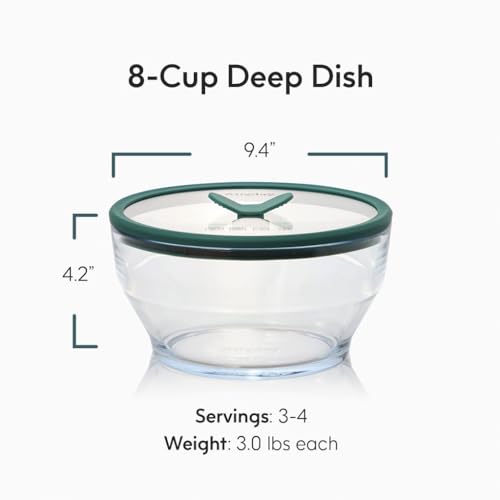
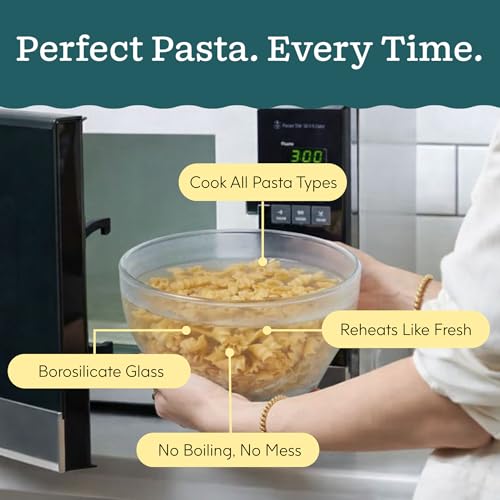
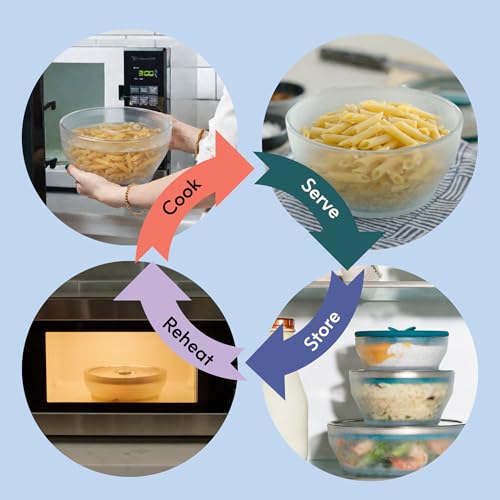
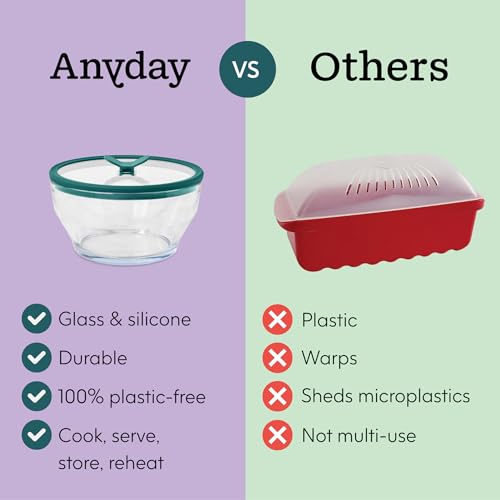
The Anyday glass pasta cooker changes the game if you rely on your microwave. Made from borosilicate glass, it’s safe for microwave, oven, freezer, and dishwasher, no plastic involved. You can cook short pasta like penne or rigatoni straight in the bowl, then store leftovers without transferring.
Owners say it cuts cooking time and cleanup to almost nothing. The vented lid lets steam escape during cooking, then seals for storage. It’s not ideal for long spaghetti, but for quick single servings or side dishes, it’s incredibly efficient. For small households or microwave-first kitchens, this is a quiet standout.
Product photos

Rachael Ray Oval Pasta Braiser

Strengths
- Excellent for sauces
- Oven safe to 500°F
- Dishwasher safe
Trade-offs
- Nonstick coating degrades over time
- Bulky oval shape
- Not for metal utensils
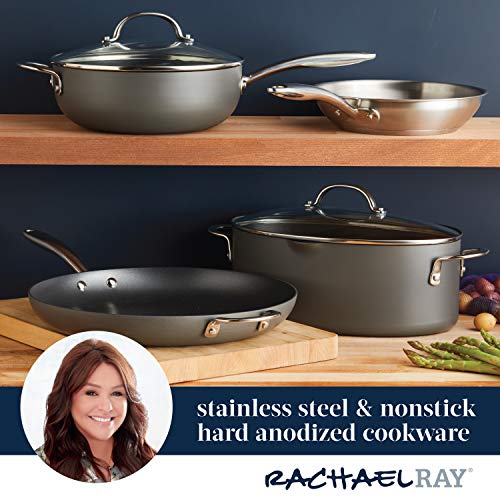
Rachael Ray’s 8-quart oval nonstick pot is built for more than just boiling, its real strength is in braising and simmering sauces. The hard-anodized aluminum base heats quickly and evenly, and the nonstick surface handles thick tomato or cream sauces without scorching. Owners praise how easy it is to clean, even after reducing heavy sauces.
It’s oven-safe to 500°F, so you can sear, simmer, and finish in the oven with no transfer needed. The tempered glass lid seals in moisture, and the double-riveted handles stay cool. But the nonstick coating, while durable, won’t last decades like stainless. Still, for sauce-heavy pasta dishes, it’s a solid performer.
Product photos


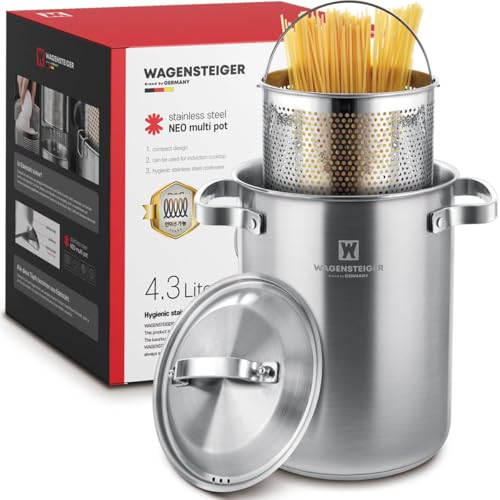
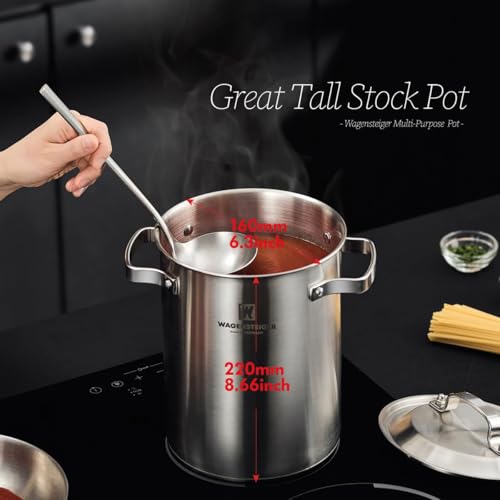
WAGENSTEIGER Asparagus Steamer Pot
Strengths
- Includes steamer basket
- Even heat distribution
- Stays cool handles
Trade-offs
- Smaller capacity
- No measurement markings
- Basket not dishwasher safe
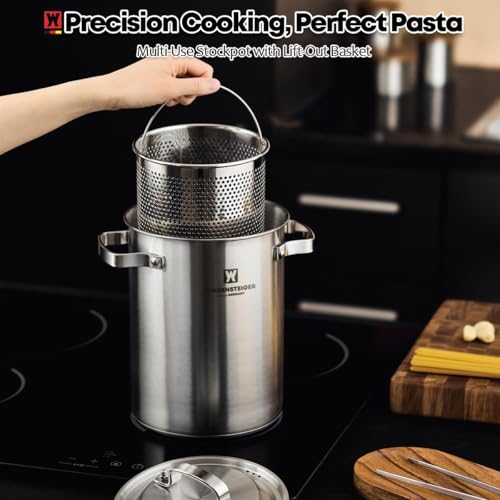
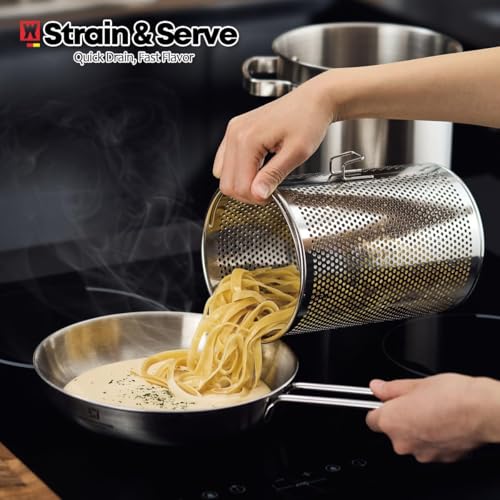
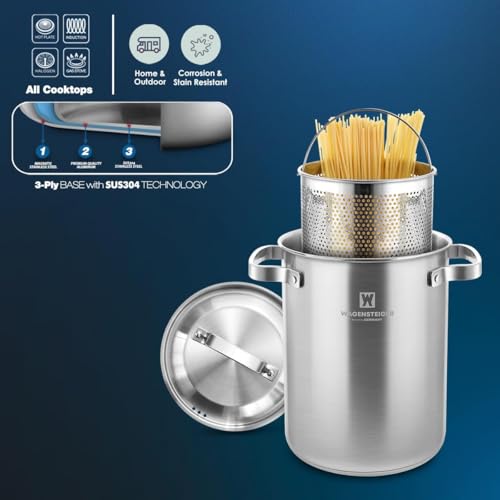
WAGENSTEIGER’s 4.3-liter steamer pot is built for versatility, boil pasta, steam vegetables, or cook seafood with the included perforated basket. The 3-ply base with aluminum core ensures even heating, and owners report no warping, even on high heat. The brushed stainless finish resists scratches and looks sharp over time.
The steamer basket doubles as a colander, so you can lift food right out of the pot. It’s induction-safe, oven-safe, and dishwasher-safe, making it a no-fuss option for health-conscious cooks. While the capacity is smaller than some stock pots, the steaming function adds real value for those who care about nutrient retention.
Product photos

CAROTE 8 Qt Tri Ply Stock Pot

Strengths
- Full tri-ply construction
- Drip-free pouring
- Oven safe to 500°F
Trade-offs
- No measurement markings
- Lid handle gets hot
- Basic packaging
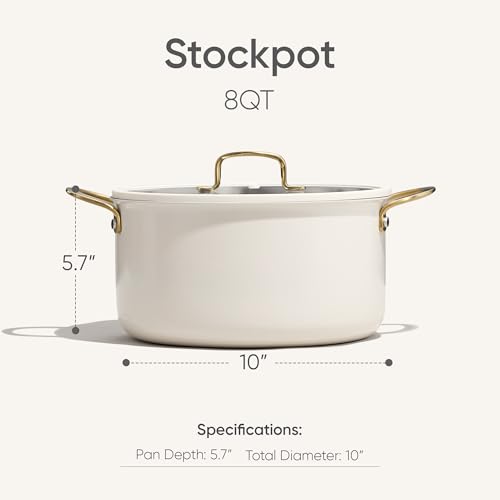
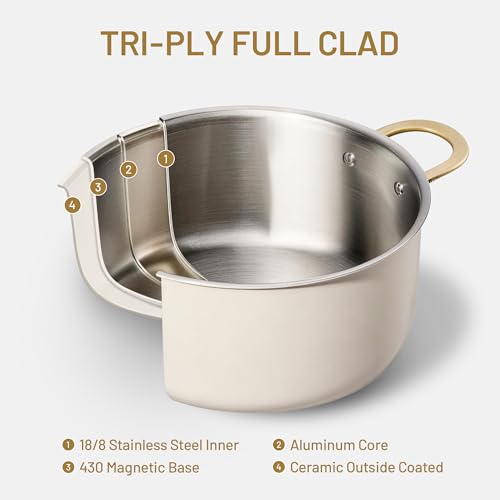
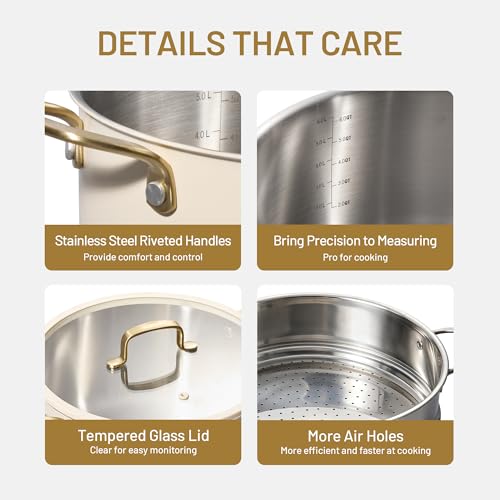
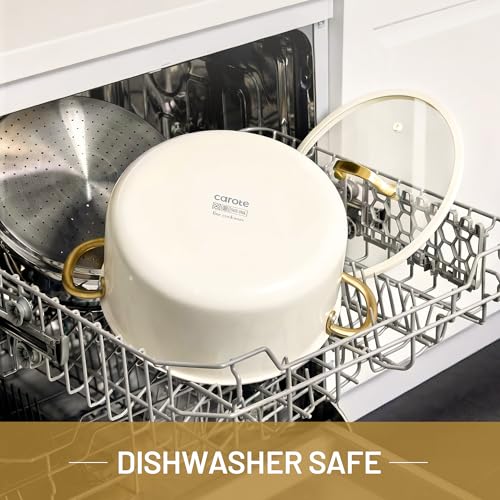
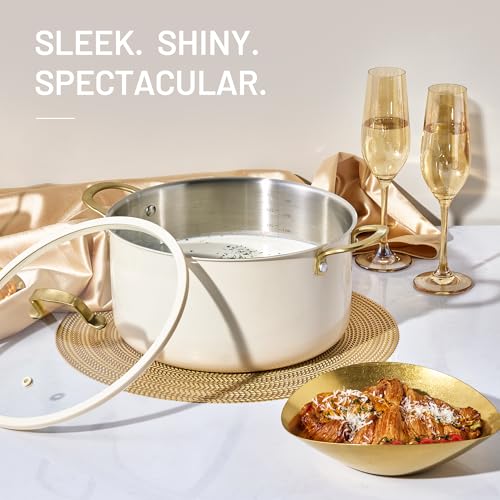
CAROTE’s 8-quart tri-ply stock pot is a strong contender for best value in full-clad stainless steel. The entire body is layered, no thin-walled sides, so heat spreads evenly without hot spots. It’s induction-safe, oven-safe to 500°F, and the glass lid seals well for faster boiling.
Owners appreciate the drip-free spout and sturdy double-riveted handles. At under $35, it’s part of a growing wave of affordable, well-made cookware that doesn’t cut corners on construction. While the brand isn’t as established as All-Clad, the specs and feedback suggest solid performance for the price.
Product photos
How We Picked These cookware for pasta
Rather than a hands-on lab test, my research for this guide focused on a detailed comparison of published specifications and features across numerous pasta cookware options. I weighed owner reviews from major retailers alongside professional assessments from established cooking publications. As someone who’s spent years understanding what makes cookware perform, I applied my knowledge of materials, construction, and design to rank these pots based on what truly matters for cooking pasta and related sauces.
For pasta cookware, even heat distribution, capacity, and draining functionality were the most heavily weighted factors. Consistent heating is critical for evenly cooked pasta and preventing sticking, while a generous capacity allows for larger batches and prevents boil-overs. Integrated draining features – whether a built-in strainer or a well-designed pouring rim – significantly streamline the cooking process and reduce cleanup. Understanding stainless steel safety was also key, as many shoppers prioritize material health.
Specifications reliably indicate construction quality (ply count, materials) and stovetop compatibility. However, I heavily considered owner feedback regarding real-world performance – particularly regarding how easily the cookware cleans, whether it truly resists sticking (even with starchy pasta water), and if the handles remain cool during extended use. Many users report issues with stainless steel cookware sticking, so that experience informed my assessment of the nonstick options as well.
Choosing The Right cookware for pasta
Finding the right pot for pasta can dramatically improve your cooking, and it’s not just about size.
A truly useful pasta pot balances heat conductivity for even cooking, capacity for various noodle shapes and sauce volumes, and convenient features like integrated straining or secure handles. Look for durable construction – stainless steel is a popular choice – and compatibility with your cooktop. Consider whether nonstick coatings or specialized draining features will best suit your cooking style.
Capacity and Dimensions
The size of your pasta pot is the first thing to consider, but don’t automatically assume “bigger is better.” A pot that’s too large will take longer to bring to a boil, wasting energy. Most families will find a 6 to 8-quart pot sufficient for most pasta dishes. However, if you frequently cook for large gatherings, or enjoy making substantial batches of sauce simultaneously, an 8-quart or larger pot will be more practical. Also, think about the length of pasta you typically cook; certain pots are designed to accommodate long noodles like spaghetti without needing to break them.
Material and Construction
Stainless steel is the workhorse material for pasta pots, offering durability and even heating. Tri-ply construction (like in the Tri-Ply 6.5 Qt Stock Pot) is a step up, sandwiching a layer of aluminum between stainless steel for superior heat distribution. Nonstick options (such as the Gotham Steel 5 Qt Stock Pot) are convenient for sauces that tend to stick, but the coating won’t last forever and may not be ideal for high-heat cooking. While some people swear by the even heating and heat retention of cast iron cookware, it’s generally too heavy for frequent pasta cooking and requires more maintenance.
Features for Convenience
Beyond the basics, consider features that simplify the pasta-making process. Built-in strainers (found in the Cuisinart 6 Qt Pasta Pot) are incredibly convenient, eliminating the need for a separate colander and reducing the risk of spills. Secure, heat-resistant handles are essential for safe pouring.
- A simple, flared rim helps prevent drips when pouring off water.
- Measurement markings inside the pot can be incredibly useful for adding water and seasoning accurately.
- A well-fitting lid is crucial for maintaining a rapid boil, and a tempered glass lid allows you to monitor the cooking process without releasing too much heat. Some pots, like the Rachael Ray Oval Pasta Braiser, are even designed specifically to accommodate long pasta without breaking it.
Never underestimate the value of a pot with well-secured handles. A loose handle can lead to accidents, especially when dealing with a pot full of boiling water.
Ultimately, the best pasta pot for you will depend on your cooking habits and preferences. If you’re looking for something durable and versatile, a good quality stainless steel pot is a solid choice. If you want maximum convenience, a pot with a built-in strainer might be the way to go. And if you’re concerned about nonstick coatings and prefer the even heating of cast aluminum cookware, look for a tri-ply stainless steel option.
Cookware for Pasta Compared
Here’s a comparison of key specifications for different cookware options designed for pasta preparation.
| Product Name | Capacity (Qt) | Material | Nonstick Coating | Strainer Lid | Induction Compatible | Oven Safe (°F) |
|---|---|---|---|---|---|---|
| Made In 8 Qt Stainless Stock Pot | 8 | Stainless Steel | No | Yes | Yes | N/A |
| Tri-Ply 6.5 Qt Stock Pot | 6.5 | Tri-Ply Stainless | No | No | Yes | 500 |
| Gotham Steel 5 Qt Stock Pot | 5 | Aluminum | Ti-Cerama | Yes | No | 300 |
| Cuisinart 6 Qt Pasta Pot | 6 | Stainless Steel | No | Yes | N/A | N/A |
| Anyday Glass Microwave Pasta Cooker | 8 Cup | Borosilicate Glass | No | Vented Lid | No | 400/500 |
| Rachael Ray Oval Pasta Braiser | 8 | Hard-Anodized | Yes | No | Yes | 500 |
| WAGENSTEIGER Asparagus Steamer Pot | N/A | Stainless Steel | No | Basket | Yes | N/A |
| CAROTE 8 Qt Tri Ply Stock Pot | 8 | Tri-Ply Stainless | No | No | Yes | N/A |
Frequently Asked Questions
What size pasta pot do I really need?
A 6 to 8-quart pot is generally sufficient for most families, but if you frequently cook for larger groups or make substantial sauces, an 8-quart or larger pot will be more practical.
Is a built-in strainer worth the extra cost?
Yes, a built-in strainer is a convenient feature that eliminates the need for a separate colander and minimizes the risk of spills when draining pasta.
What’s the difference between tri-ply and standard stainless steel cookware?
Tri-ply cookware, with its aluminum core, offers significantly more even heat distribution than standard stainless steel, which helps prevent pasta from sticking and ensures consistent cooking.
Can I use any of these pots on an induction cooktop?
Many of the options are induction compatible, but not all. Specifically, the Made In, Tri-Ply, CAROTE, and Rachael Ray pots listed are confirmed to work on induction cooktops, while the Gotham Steel and Anyday Glass options are not.
How does the durability of nonstick compare to stainless steel for pasta pots?
While convenient, nonstick coatings like Ti-Cerama will degrade over time and aren’t as durable as stainless steel. If you prefer a long-lasting pot, or are interested in a ceramic vs nonstick comparison, stainless steel is a better investment.
The Bottom Line
Ultimately, choosing the right cookware for pasta comes down to balancing how much control you want over the process versus how much convenience you’re after. For those who prioritize durability, even heating, and long-term performance, I believe the Made In 8 Qt Stainless Stock Pot represents the best overall value. It offers generous capacity, a built-in strainer, and the reliable performance stainless steel is known for, making it a solid foundation for any pasta enthusiast’s kitchen.
If your needs are more specific, there are excellent options to consider. For those on a budget, the Gotham Steel 5 Qt Stock Pot provides a convenient nonstick surface and integrated strainer at an accessible price point. And if you’re looking for versatility, the Rachael Ray Oval Pasta Braiser is well-suited for both long pasta and simmering sauces. Don’t overlook options like the Anyday Glass Microwave Pasta Cooker if you’re short on stovetop space or looking for a quick, single-serving solution.
At the end of the day, the most important aspects of pasta cookware aren’t fancy features or specific materials, but consistent heat distribution and sufficient capacity. Choosing cookware that’s compatible with your cooktop – especially if you need induction cookware – and that feels comfortable and secure in your hands will contribute far more to successful pasta dishes than any single specification.
