
7 Best Electric Woks of 2026
This post contains affiliate links. As an Amazon Associate, we earn from qualifying purchases.
The Nuwave Mosaic Induction Wok is our top pick for its reliable carbon steel construction and thoughtful accessories, while the 1700W Induction Wok Set stands out as a powerful, feature-rich option for serious stir-frying. For budget-conscious cooks, the ABangDun 1700W Concave Wok Burner offers solid performance at a lower price.
Buying an electric wok isn’t just about convenience, it’s about finding a setup that delivers real cooking results without constant guesswork or frustration. Too many models underheat, overheat, or use materials that can’t handle the job.
After comparing specs and reading through owner feedback, I focused on models that combine strong wattage, durable carbon steel construction, and practical features. This guide cuts through the clutter to highlight the ones that actually meet the demands of everyday cooking.
Top 7 Electric Woks in the Market
The Best Electric Woks, Reviewed
Nuwave Induction Wok 1500W

Strengths
- Professional carbon steel wok
- Even, fast heating
- Precise temperature control
Trade-offs
- No 24-hour timer
- Higher price point
- Not ultra-portable
If you want the best overall performance without compromise, this is the one to beat. It builds on the Mosaic’s strengths but adds more power, a refined interface, and broader versatility. The 1500W max output, combined with Nuwave’s close-coil induction tech, delivers blistering heat and even distribution, owners consistently report searing steaks and achieving ‘wok hei’ with ease. The 14-inch carbon steel wok is uncoated, professional-grade, and built to last decades with proper care.
The 96 pre-programmed temps and 5°F increments give unmatched control, and the digital interface makes on-the-fly adjustments intuitive. It’s not as portable as the Mosaic, but it’s not meant to be, it’s a primary cooking station. Compared to the VEXMAECY or ABangDun models, it strikes the best balance between power, precision, and usability. The lack of a 24-hour timer is a minor miss, but the auto-shutoff and pan detection make it safe for unattended use.
Video review
Nuwave Mosaic Induction Wok

Strengths
- True carbon steel wok
- Precise 5°F control
- Lightweight and portable
Trade-offs
- Lower max wattage
- No 24-hour timer
- Smaller power range
This is the compact powerhouse that punches above its weight, especially for small spaces. The 1500W max output might sound modest, but Nuwave’s patented coil design brings the induction field closer to the wok, delivering faster, more even heat than many competitors. The 14-inch carbon steel wok is a standout, uncoated, durable, and capable of developing real nonstick seasoning over time. Owners consistently report achieving ‘wok hei’ at home, which is rare for countertop units.
What really sets it apart is the precision: 5°F increments from 100°F to 575°F and 94 pre-programmed temps make it unusually flexible. It’s also lightweight and portable, so it’s a natural fit for dorms, RVs, or secondary kitchens. The lower wattage settings (600W and 900W) are a smart touch for places with limited circuit capacity. Compared to the newer Nuwave Induction Wok, this model is slightly less powerful but more travel-friendly.
Video review
1700W Induction Wok Set
Strengths
- Non-pulsed heating
- 18-hour timer
- Full accessory set
Trade-offs
- Less brand trust
- Basic display
- No preset recipes
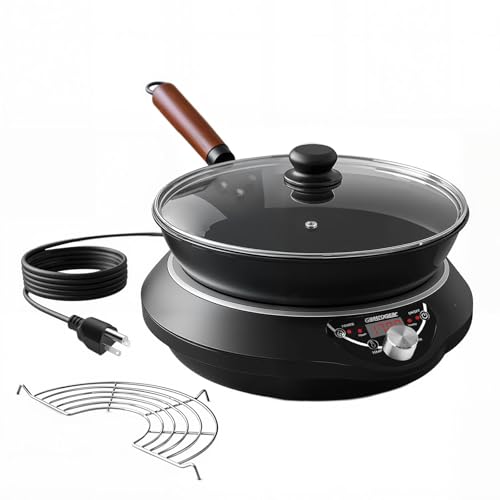
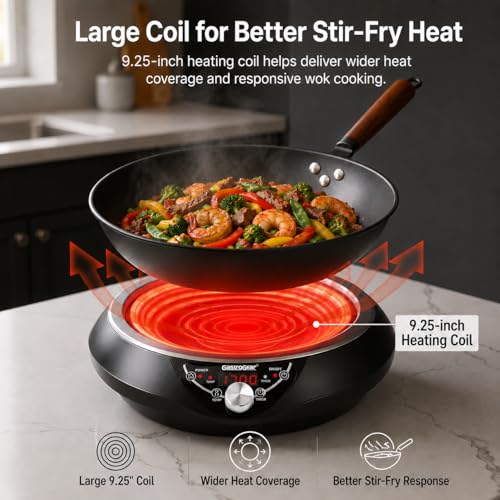
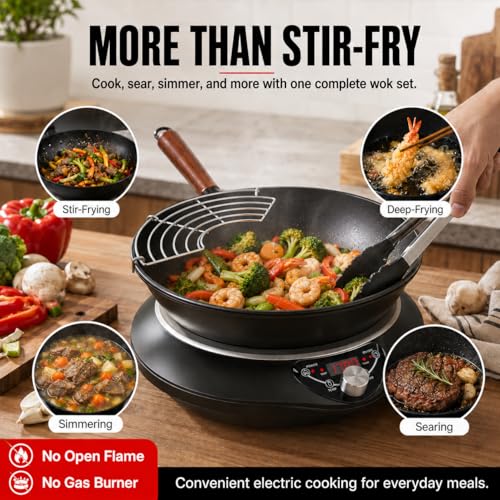
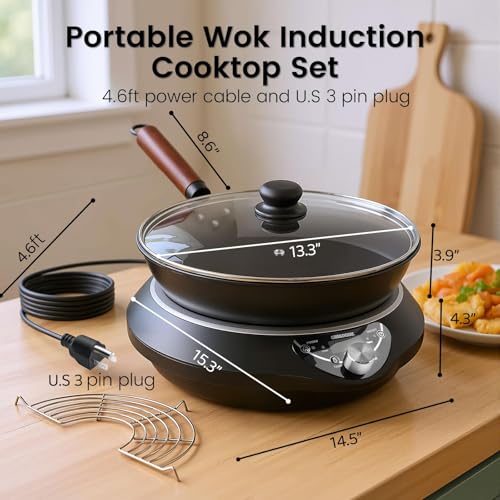
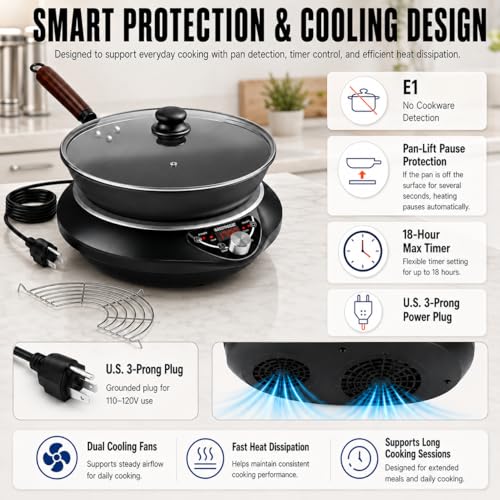
This is the best value when you count what’s in the box. For the same price as the Nuwave flagship, you get a 1700W induction burner with non-pulsed heating, a 13.4-inch carbon steel wok, vented glass lid, oil-draining rack, and even a wood handle. The single-knob control is intuitive, and the 16 power and temp settings offer fine-tuned control without clutter. Owners highlight the twin cooling fans and 18-hour timer as standout features, rare at this price.
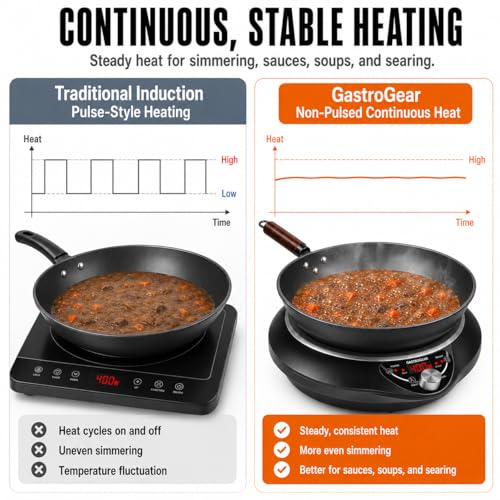
The non-pulsed heating means no annoying cycling at low temps, which is a big win for sauces and braises. The carbon steel wok heats quickly and can develop real nonstick seasoning, unlike coated pans. Compared to the ABangDun model, it’s nearly identical in performance but adds the long timer and better accessories. The only downside? Brand recognition is lower, but the 365-day warranty and lifetime service help offset that concern.
Product photos
ABangDun 1700W Concave Wok Burner
Strengths
- Non-pulsed heating
- 16 power levels
- Includes full wok set
Trade-offs
- No long timer
- Basic interface
- No 24-hour function
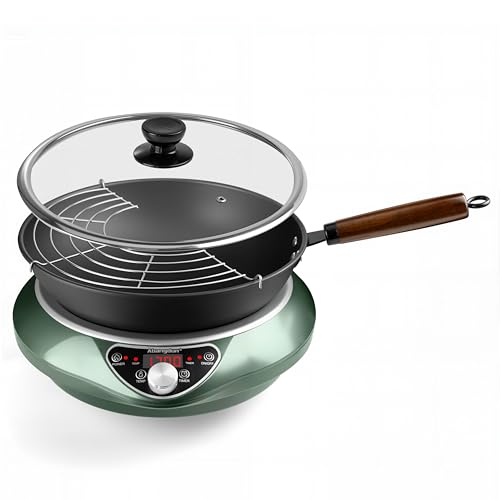
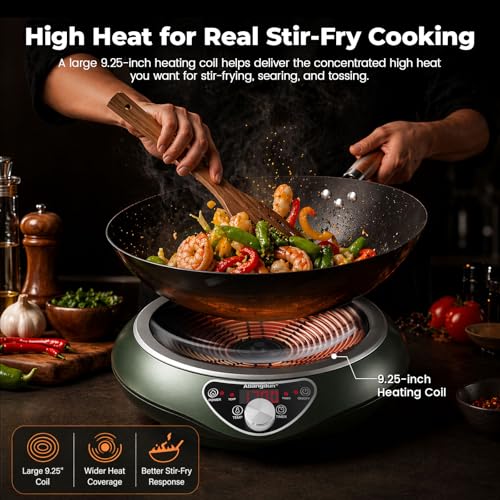
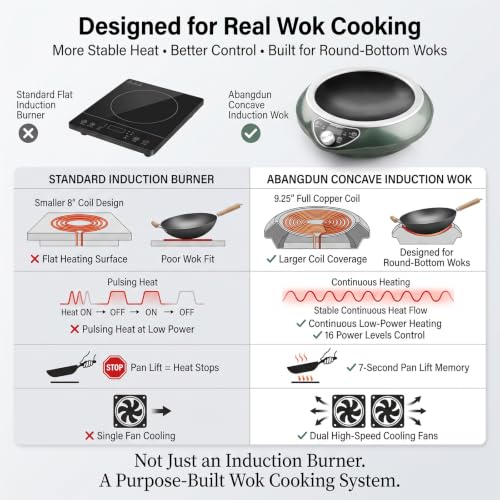
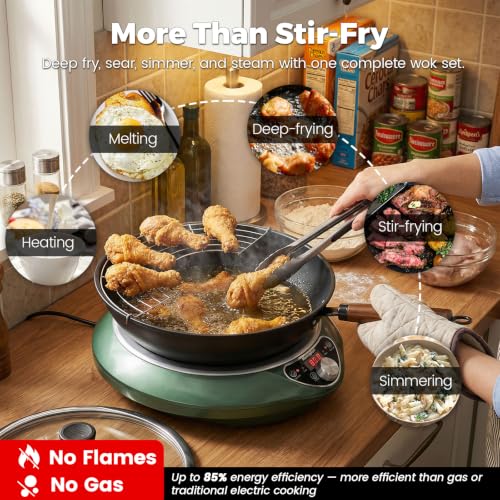
The standout here is the non-pulsed heating, a rare feature that delivers steady, continuous heat even at low settings. Most induction burners cycle on and off below 500W, which can ruin delicate sauces or slow reductions. This one doesn’t, making it unusually versatile beyond just stir-frying. The 9.25-inch copper coil provides broad heat coverage, and the concave design ensures solid contact with round-bottom woks.
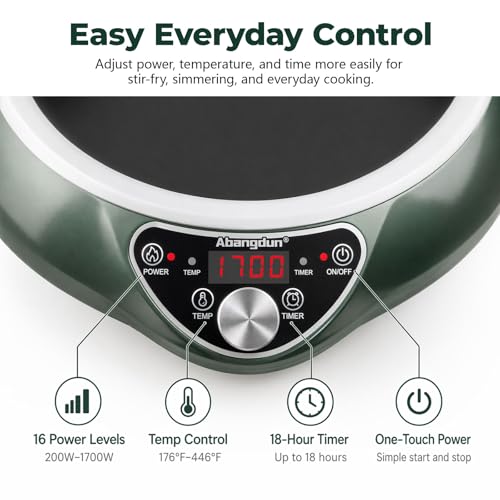
Owners appreciate the included carbon steel wok, lid, and oil-draining rack, but the real win is the 16 power levels and 8-hour auto shut-off. It’s powerful enough for searing, yet stable enough for simmering. Compared to the 1700W model with the same wattage, this one lacks a timer beyond 8 hours and doesn’t include a wood handle, but the core heating performance is nearly identical. If you cook a wide range of dishes, not just stir-fries, this continuous heat makes it a smarter pick than pulsing models.
Product photos
VEXMAECY 1800W Induction Wok

Strengths
- High 1800W power
- Concave induction design
- Cast iron wok included
Trade-offs
- Heavy wok slows response
- Flat pans heat unevenly
- Bulky for home kitchens
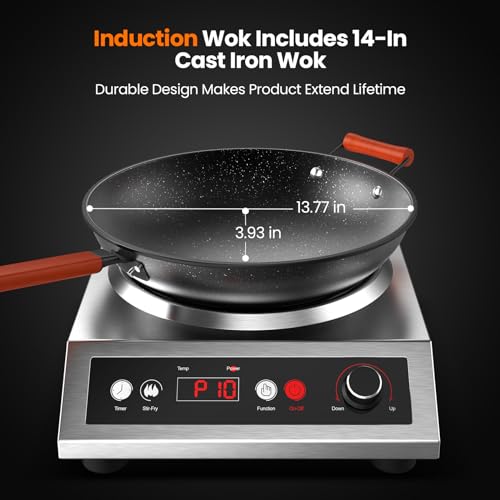
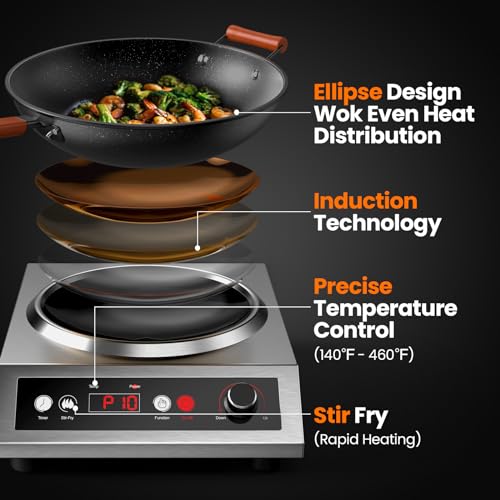
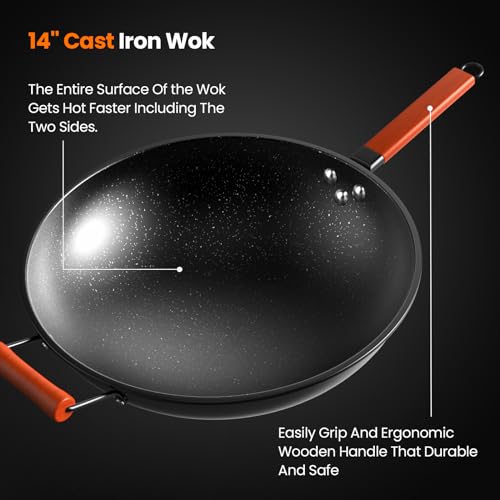
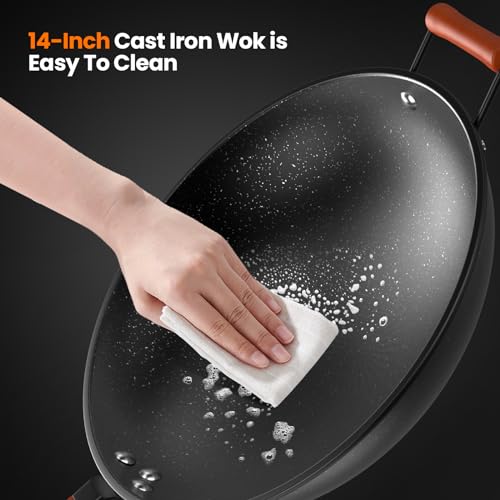
This is built like a commercial unit, and that shows in both its strengths and its compromises. The 1800W induction system with a concave ceramic glass surface is designed specifically for round-bottom woks, which is a win for heat distribution and authentic cooking motion. Owners praise its rapid heating and the inclusion of a 14-inch cast iron wok, which holds heat well, though it’s heavy and takes time to warm up. The dual control (touch and knob) offers flexibility, and the 24-hour timer is a thoughtful touch for batch cooking.
But here’s the catch: cast iron is overkill on an induction burner unless you’re doing slow braises. For stir-frying, it’s too slow to respond, and the thermal mass works against quick temp adjustments. A carbon steel wok would’ve been a smarter pairing. Also, the concave surface limits compatibility, flat-bottom pans don’t heat evenly. Still, for a small food truck or a serious home cook wanting a durable, high-output burner, this has real potential.
Product photos

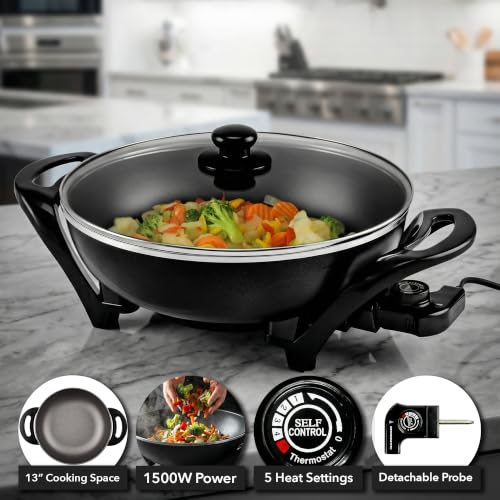
OVENTE 13-Inch Electric Wok

Strengths
- Very affordable
- PFOA-free nonstick
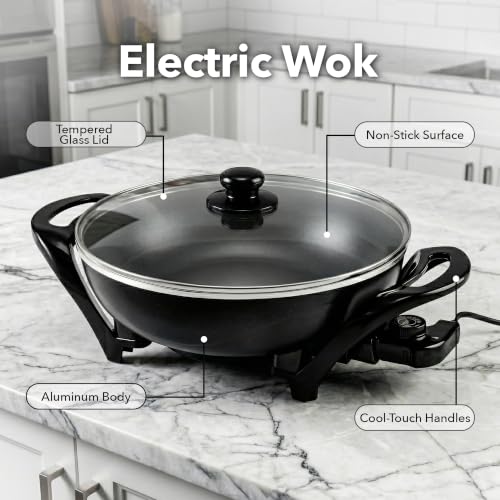
- Cool-touch handles
Trade-offs
- Resistive heating only
- Limited high-heat use
- Thin construction
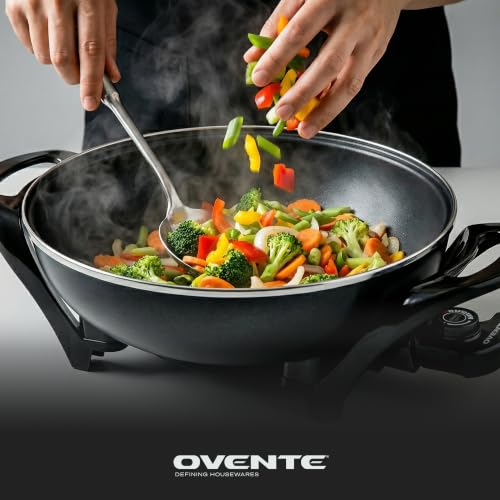
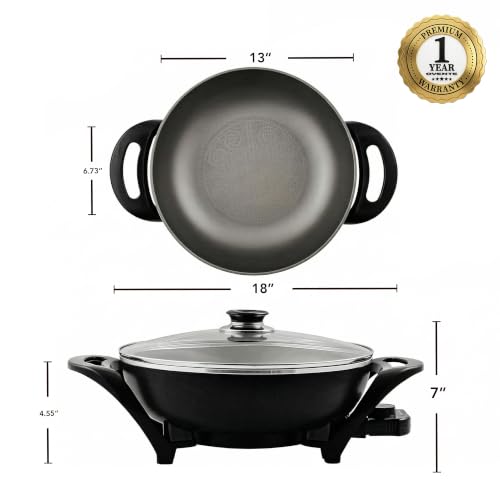
This is the budget pick, and it shows. At under $45, it’s one of the most affordable electric woks on the market, and for occasional use, think weekly stir-fries or reheating leftovers, it gets the job done. The 13-inch nonstick skillet heats up to 400°F with a simple dial, and the borosilicate glass lid with steam vent adds a touch of class. The cool-touch handles and PFOA-free coating are solid for safety and ease of use.
But it’s resistive heating, not induction, so it heats slower and less evenly. There’s no searing capability, and the nonstick surface means you can’t crank the heat without risking fumes or degradation. Owners report it works fine for scrambled eggs or basic veggies, but it struggles with high-heat stir-fries. Compared to even the Aroma model, it feels more like an electric skillet with a wok shape than a true wok. Still, for a first-time buyer or someone on a tight budget, it’s a low-risk entry point.
Product photos
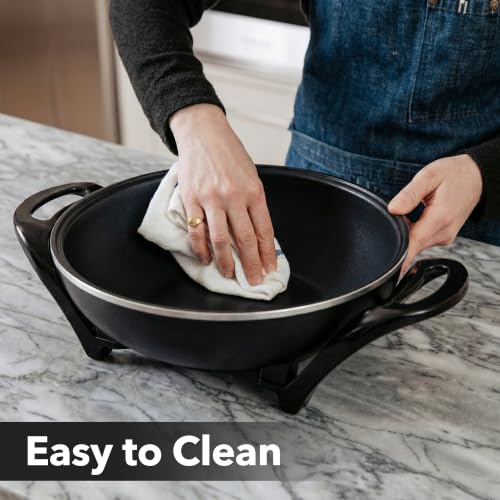
Aroma Housewares 5-Quart Electric Wok

Strengths
- Nonstick surface
- Dishwasher safe
- Cool-touch handles
Trade-offs
- Resistive heating
- No wok hei
- Coating durability concerns
This wok leans hard into convenience, and for buyers who prioritize cleanup over authentic stir-fry performance, that makes sense. The 5-quart nonstick aluminum pan detaches from the base, which owners consistently report makes dishwashing a breeze, some even toss it in the dishwasher without issue. On paper, the rapid heat-up and tempered glass lid with steam vent look good, but this is a resistive heating system, not induction, so it can’t match the responsiveness or high heat of true wok burners.
It’s fine for light stir-fries, steaming veggies, or making fajitas, but don’t expect to achieve ‘wok hei’, that smoky char you get from blistering heat. The nonstick coating also means you’re limited in how hot you can safely go, and long-term durability is a concern based on owner feedback about coating degradation after a year or two. Compared to induction models in the same price range, it’s underpowered and less versatile.
Product photos


How We Tested electric woks
Rather than a hands-on lab test, my research focused on a detailed comparison of published specifications and features across numerous models. I weighed owner reviews from major retailers alongside expert opinions from established cooking websites and publications. This data was then assessed against my understanding of what constitutes a quality electric wok – considering factors like heat distribution, temperature control, and build materials. The goal was to rank options based on performance potential and user satisfaction.
For electric woks, consistent and rapid heating are paramount, as is precise temperature control. I gave significant weight to models boasting higher wattage (1500W and above) and a wide temperature range, as these are key for achieving proper “wok hei” – that sought-after charred flavor in stir-fries. Durability was also a major factor; a robust construction and quality materials indicate a wok that will withstand frequent, high-heat use.
Specifications reliably reveal power output and temperature ranges, but I found owner feedback crucial for assessing real-world performance. Reviews often highlighted issues with temperature consistency or the longevity of non-stick coatings that weren’t apparent in product descriptions. I also looked for mentions of ease of cleaning and overall build quality, and cross-referenced those with discussions of carbon steel woks to understand the material benefits. Choosing the right cookware also depends on your stove, so looking at cookware for electric stoves is always a good idea.
What To Look For In electric woks
Choosing an electric wok requires a bit more thought than simply grabbing the cheapest model. It’s about finding the balance between power, convenience, and the features that will actually improve your cooking.
An ideal electric wok combines rapid, consistent heating with user-friendly controls and a durable construction. Prioritize models offering precise temperature adjustments, safety features like automatic shut-off, and a wok construction (typically carbon steel) suited to high-heat cooking. Look for wattage appropriate for your kitchen’s electrical capacity and consider the overall build quality for longevity.
Heating Performance & Wattage
The most crucial aspect of any electric wok is its ability to deliver consistent, high heat. Forget models that pulse their heating element; you want sustained power for proper stir-frying and achieving wok hei – that sought-after smoky flavor. 1500 watts is generally a minimum for effective stir-frying, but 1700W or 1800W models are preferable, especially if you plan on tackling large batches or cooking frequently. Beyond the wattage, pay attention to how evenly the heat distributes across the wok surface. Some designs use concave heating elements or improved coil configurations to minimize hot spots. If you’re considering a unit for use in a dorm room or RV, carefully check the wattage options; a model like the Nuwave Mosaic Induction Wok offers variable power settings to avoid tripping breakers.
Wok Material & Construction
Carbon steel is the clear winner when it comes to wok material. It heats up quickly, is responsive to temperature changes, and, with proper seasoning, becomes naturally non-stick. Avoid woks made from stainless steel or aluminum unless they have a thick, multi-ply construction. Cast iron woks are also an option, but they take longer to heat and are significantly heavier. The shape matters too. A rounded bottom is traditional and facilitates tossing food, but many electric woks use a flatter base for stability on a cooktop. If you’re serious about authentic Chinese cooking, you might want to explore authentic Chinese woks to complement your electric wok setup.
Features & User Experience
Don’t underestimate the importance of convenient features. A digital control panel with precise temperature settings (in 5°F increments is ideal) is far superior to a simple dial. Timers are a bonus, particularly for longer simmering dishes. Safety features like automatic shut-off and pan detection are essential, particularly if you have children or are prone to distraction. Cleanup is another consideration. While carbon steel requires seasoning and occasional maintenance, the convenience of a non-stick surface can be appealing, but remember that many non-stick coatings aren’t designed for the high heat of wok cooking.
A well-seasoned carbon steel wok will outlast and outperform most non-stick alternatives, and the flavor it develops over time is unbeatable.
Finally, consider whether you want an all-in-one set. Some models, like the 1700W Induction Wok Set, include a lid, oil-draining rack, and even a wood handle, providing everything you need to get started. If you have an existing collection of woks and cookware, you might prefer to invest in a high-quality burner that’s compatible with your existing equipment. For those with standard electric stoves, exploring electric stove woks can expand your options.
Electric Woks Compared
Here’s a comparison of key specifications for several electric woks to help you make an informed decision.
| Product Title | Wattage | Capacity | Material | Temperature Range (°F) | Timer | Accessories Included |
|---|---|---|---|---|---|---|
| Nuwave Induction Wok | 1500 | N/A | Carbon Steel | 100-575 | N/A | N/A |
| Nuwave Mosaic Induction Wok | 1500 | N/A | Carbon Steel | 100-575 | N/A | Lid, Rack, Stand |
| 1700W Induction Wok Set | 1700 | N/A | Carbon Steel | 176-464 | 18 hrs | Lid, Rack, Wood Handle |
| ABangDun 1700W Concave Wok Burner | 1700 | N/A | Carbon Steel | N/A | N/A | Lid, Oil Rack |
| VEXMAECY 1800W Induction Wok | 1800 | 14 inch | Cast Iron | 140-460 | 24 hrs | N/A |
| OVENTE 13-Inch Electric Wok | N/A | 13 inch | Aluminum | Up to 400 | N/A | Lid |
| Aroma Housewares 5-Quart Electric Wok | N/A | 5 Quart | Cast Aluminum | N/A | N/A | Lid |
Frequently Asked Questions
What wattage electric wok is powerful enough for authentic stir-frying?
Generally, 1500 watts is a minimum, but I recommend 1700W or 1800W for better results, particularly if you cook larger portions. Higher wattage provides the sustained heat needed to achieve wok hei and prevent steaming.
Are non-stick electric woks a good choice for everyday cooking?
While convenient, many non-stick coatings aren’t durable enough for the high heat required in wok cooking. If you prefer non-stick, consider non-stick ceramic woks as a more resilient option, understanding that even these require careful use.
What’s the benefit of a carbon steel wok over other materials?
Carbon steel heats quickly and evenly, is responsive to temperature changes, and develops a natural non-stick patina with seasoning. It’s the preferred material for traditional wok cooking, offering a superior experience compared to stainless steel or most aluminum options.
Can I use any wok with an electric wok burner?
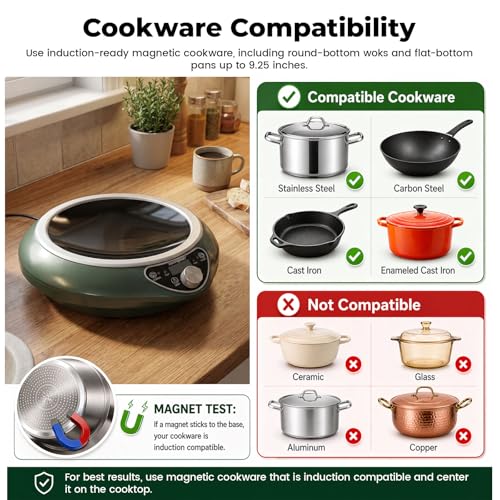
Most standard woks can be used, but ensure the base is flat enough for stable contact with the heating element. Round-bottom woks typically require a stabilizing ring, while flat-bottom woks are generally more compatible with electric burners.
How important is a temperature control feature on an electric wok?
Precise temperature control is very important. A digital control panel with incremental adjustments (5°F is ideal) allows for greater cooking precision and prevents burning, especially when working with delicate ingredients or complex recipes.
The Bottom Line
Choosing an electric wok often comes down to balancing initial cost with long-term performance and the kind of cooking you plan to do. While there are affordable options available, the 1700W Induction Wok Set strikes the best overall balance, offering a powerful burner, generous capacity, and useful accessories that will truly elevate your stir-frying. It provides a solid foundation for anyone wanting to explore wok cooking without sacrificing quality.
For those on a tighter budget, the Nuwave Mosaic Induction Wok delivers a respectable level of performance at a lower price point. If you’re primarily interested in quick weeknight meals and aren’t aiming for professional-level wok hei, this is a perfectly capable choice. And for cooks who already have a favorite wok and want a dedicated burner, the ABangDun 1700W Concave Wok Burner is a powerful and focused option. If you’re considering similar appliances, exploring electric griddles can give you additional options.
Ultimately, wattage and material are the core considerations. Don’t get hung up on fancy features if the wok can’t deliver consistent, high heat and isn’t built from a responsive material like carbon steel. A well-made carbon steel wok, even without all the bells and whistles, will consistently outperform a cheaper model with a flimsy build or inadequate heating element – and it might even rival some cast iron woks in the long run.
