
8 Best Everyday Pans of 2026
This post contains affiliate links. As an Amazon Associate, we earn from qualifying purchases.
The Non Stick Frying Pan 12 Inch is the best overall for its even heating and durable build, while the Our Place Always Pan 2.0 stands out as a versatile, all-in-one option for smaller kitchens. If you’re watching your budget, the CAROTE 8 Inch Granite Skillet delivers solid performance at a lower price.
Most home cooks don’t need a cluttered drawer of specialty pans. What they do need is one or two reliable skillets that handle daily tasks without fuss, whether that’s scrambled eggs, seared chicken, or stir-fries. Too many pans warp over time, develop weak nonstick coatings, or are awkward to maneuver.
This guide cuts through the noise by focusing on real-world performance. I compared specs, construction details, and owner feedback to find everyday pans that balance durability, heat distribution, and ease of use. These picks aren’t based on flashy marketing, they’re built on what actually works in a real kitchen.
Top 8 Everyday Pans in the Market
The Best Everyday Pans, Reviewed
Le Creuset 11″ Enameled Cast Iron Pan

Strengths
- Superior heat retention
- Durable enamel finish
- Oven safe to high temps
Trade-offs
- High price point
- Requires hand washing
- Heavier than nonstick
This 11-inch enameled cast iron pan is the gold standard for a reason. Le Creuset’s reputation isn’t built on hype, it’s built on decades of consistent performance, and this pan delivers on heat retention, even cooking, and long-term durability. The enamel interior resists staining and chipping better than most competitors, and the black satin finish actually improves with use, developing a natural nonstick patina over time.
It’s lighter than traditional cast iron by volume, which makes it more manageable for everyday use. Owners praise its ability to go from stovetop to oven smoothly, whether braising short ribs or baking a frittata. Yes, it’s expensive, but compared to cheaper imitations, it holds its value and performance for years. I’d pick this over any nonstick pan for serious cooking, especially if you value heirloom-quality tools.
Video review
Our Place Always Pan 2.0

Strengths
- Innovative modular lid
- Includes steamer and spatula
- Even heating on low-medium
Trade-offs
- Not ideal for high-heat searing
- Ceramic coating needs gentle care
- Higher price for ceramic
The Always Pan 2.0 is one of those products that turns heads not just for how it looks, but for how it rethinks what an everyday pan should do. With its 10-in-1 functionality and thoughtful extras like the steamer basket and nesting spatula, it’s clearly designed for people who value efficiency and aesthetics in equal measure. The Thermakind ceramic coating is PFAS-free and performs well for low to medium-heat cooking, owners praise how easily eggs and delicate fish release without oil.
What sets it apart from other multi-use pans is the modular lid and deep design, which actually make steaming and braising viable in a single vessel. It’s not the most durable option for high-heat work, but for the type of cooking most people do daily, soups, grains, veggies, light proteins, it’s impressively capable. I’d pick this over the Goodful pan for its better build and included accessories, even at the higher price.
Video review
Non Stick Frying Pan 12 Inch
Strengths
- Metal-utensil safe
- Even heat distribution
- Durable laser-etched surface
Trade-offs
- Higher price for hybrid
- Nonstick effect diminishes over time
- Heavier than pure nonstick
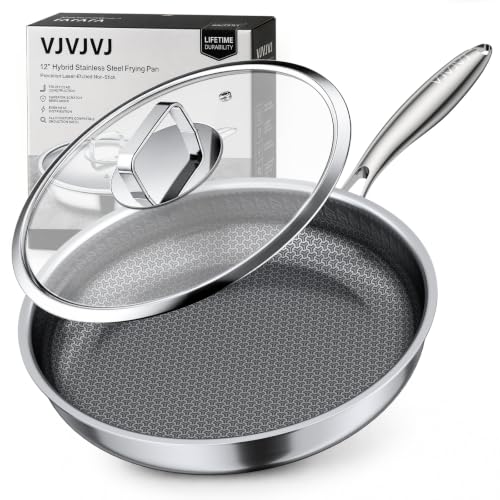
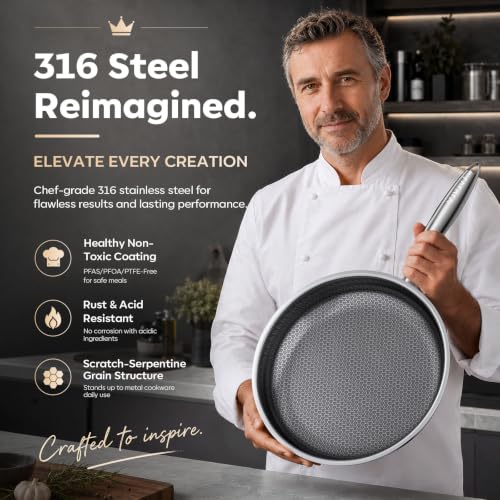
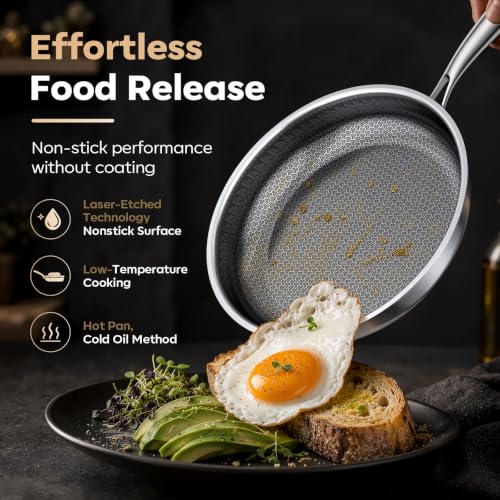
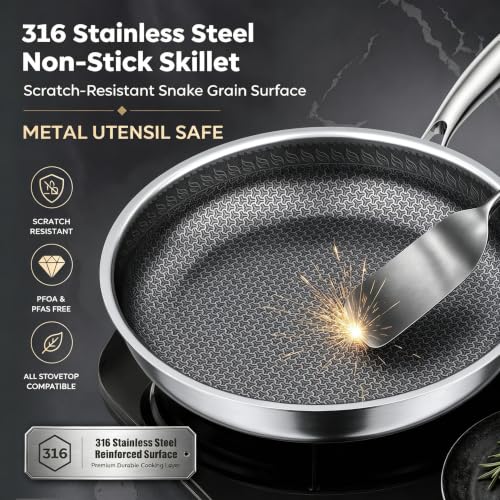
This hybrid skillet is a fascinating blend of stainless steel durability and nonstick convenience. The tri-ply clad construction ensures even heating, while the laser-etched interior adds a subtle texture that improves food release and scratch resistance, making it one of the few nonstick pans that can tolerate metal utensils. That alone makes it a standout in a category where most coatings degrade quickly.
Owners appreciate how well it sears and browns without sticking, thanks to the stainless cooking surface with nonstick properties. It’s induction-ready and oven-safe, bridging the gap between traditional stainless and ceramic pans. Compared to the KOCH SYSTEME or Moss & Stone, it’s less about aesthetics and more about performance. I’d pick this as the smartest hybrid option for cooks who want the best of both worlds.
Product photos

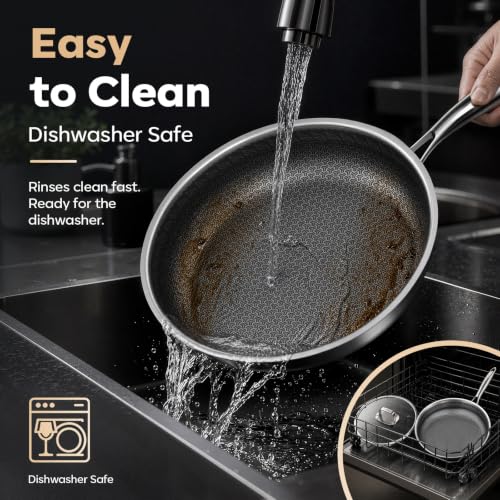
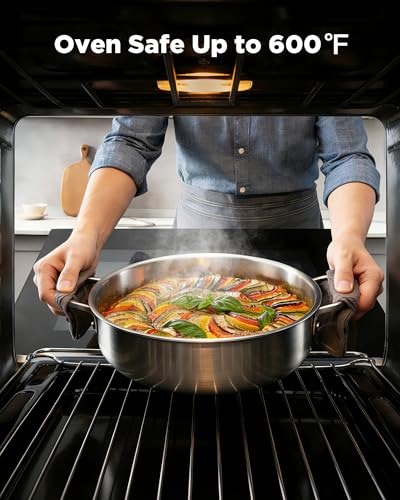
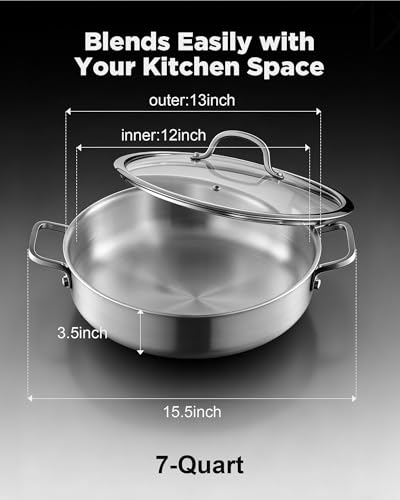
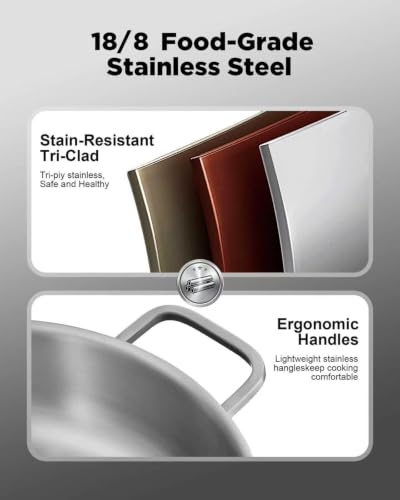
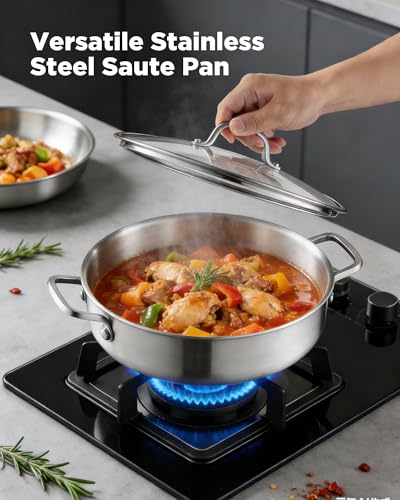
12 Inch 7QT Tri-Ply Saute Pan

Strengths
- Large 7-quart capacity
- Even heat distribution
- Oven and dishwasher safe
Trade-offs
- Heavier than nonstick
- Requires more oil to prevent sticking
- Handle can get hot
If you’re looking for serious capacity without spending a fortune, this 12-inch tri-ply stainless steel pan is a standout. The 7-quart depth is no gimmick, owners use it for family-sized pasta, braised short ribs, and big-batch soups with real success. The tri-ply construction delivers even heat distribution, and the induction-compatible base means it performs reliably across stovetops. Unlike many budget stainless pans, this one doesn’t warp easily, and the included lid seals well for moisture retention.
It’s not flashy, but it’s functional in the way stainless steel should be: durable, oven-safe, and metal-utensil friendly. Compared to nonstick options, it demands a bit more attention to prevent sticking, but that’s the trade-off for longevity. For the price, it outperforms many mid-range sets. I’d recommend it over the Moss & Stone nonstick if you want a pan that will last a decade, not just a few years.
Product photos

Goodful All-in-One Nonstick Pan

Strengths
- Lightweight design
- Multi-function use
- PFAS-free coating
Trade-offs
- Coating durability concerns
- Not metal-utensil safe
- Limited depth vs capacity claims
This 11-inch ceramic nonstick pan promises to replace half your cookware, and on paper, it’s hard to argue with that. The 4.4-quart depth and multi-use design make it a solid contender for one-pan meals, and owners consistently report success with everything from stir-fries to simmered sauces. The ceramic coating is PFAS-free, which aligns with growing demand for safer nonstick options, and the lightweight cast aluminum body makes it easy to handle, especially compared to heavier skillets.
Still, I’d temper expectations around durability. While the specs suggest long-term performance, real-world feedback shows the nonstick surface can degrade faster than expected with frequent use, especially when metal utensils are involved. It’s a smart pick for light to moderate cooking, but not the go-to if you’re searing daily or feeding a big family. Compared to pricier ceramic options, it holds its own in convenience but not in longevity.
Product photos


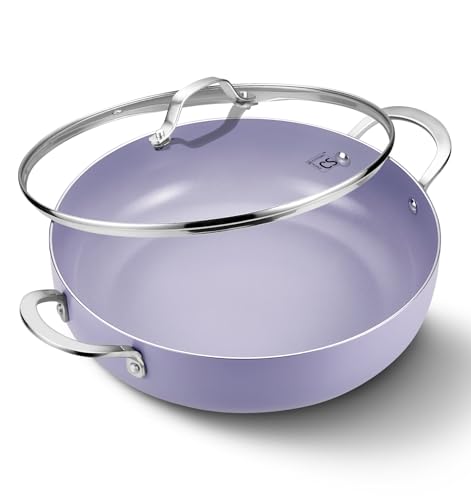
KOCH SYSTEME Purple Ceramic Pan
Strengths
- Stylish gradient finish
- Double handles for control
- Toxin-free ceramic coating
Trade-offs
- Bold color may not match all kitchens
- Lid not cool-touch
- Requires gentle cleaning
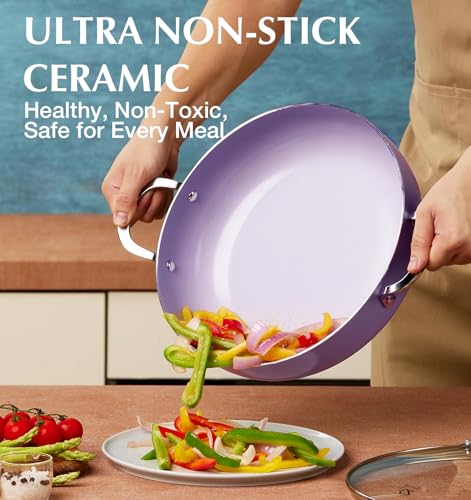
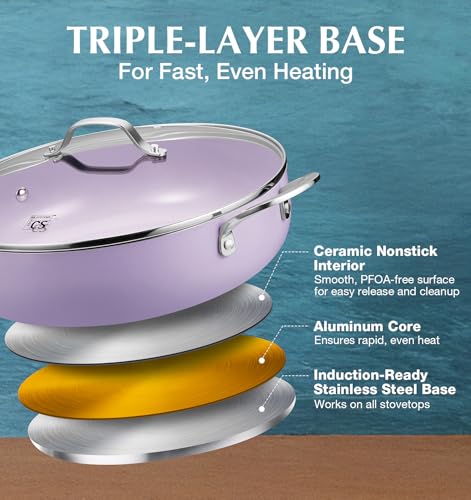
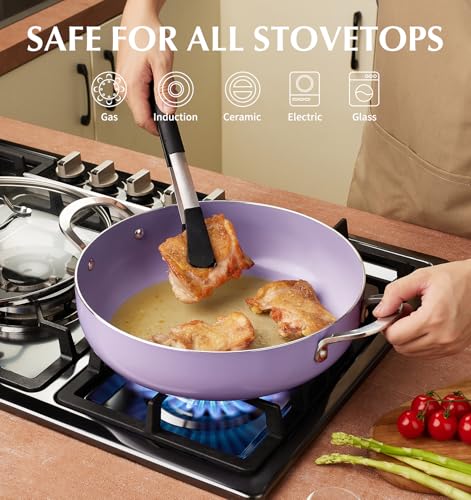
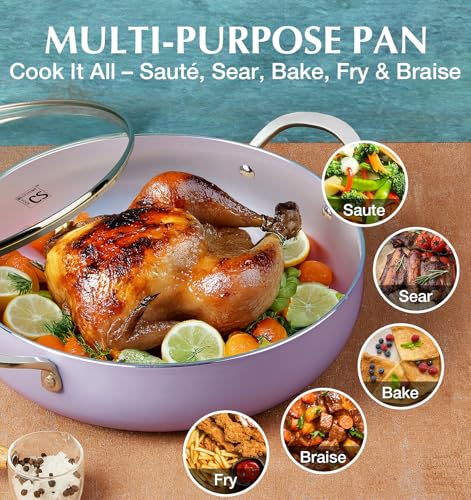
This 12-inch purple ceramic nonstick pan stands out not just for its bold look, but for how well it balances style and function. The gradient finish isn’t just for show, it’s part of a durable, toxin-free ceramic coating that resists scratching and performs well under daily use. Owners consistently report excellent food release, even with minimal oil, and the 5.5-quart depth handles family-sized meals with ease.
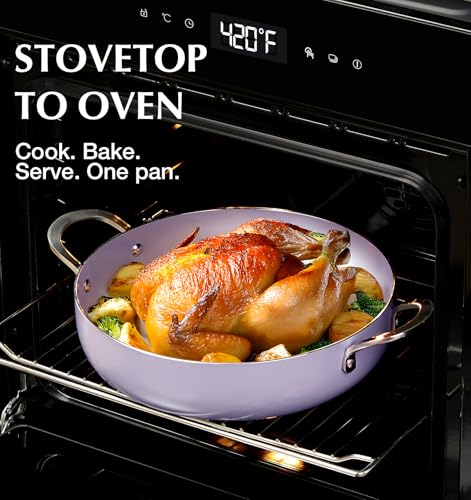
The double stainless-steel handles are a smart addition, offering better grip when moving heavy dishes from stove to oven. It’s oven-safe and induction-compatible, making it one of the most versatile ceramic pans in this lineup. While the color may not be for everyone, the performance is hard to ignore. I’d choose this over the Moss & Stone if you want a more durable build and better handling.
Product photos
Moss & Stone 12″ Deep Skillet

Strengths
- High oven-safe temperature
- Deep 3.4-inch design
- Even heating
Trade-offs
- Lid not oven safe
- Coating longevity varies
- Handle not cool-touch
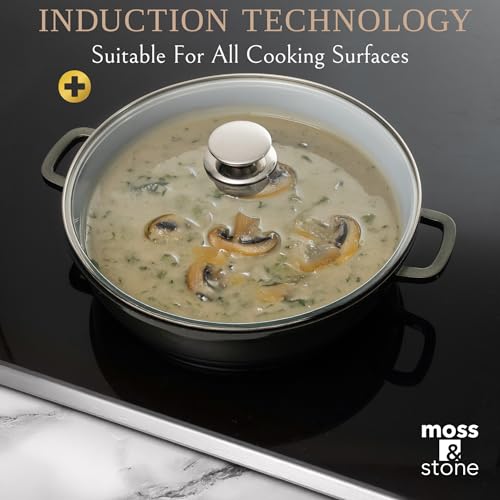
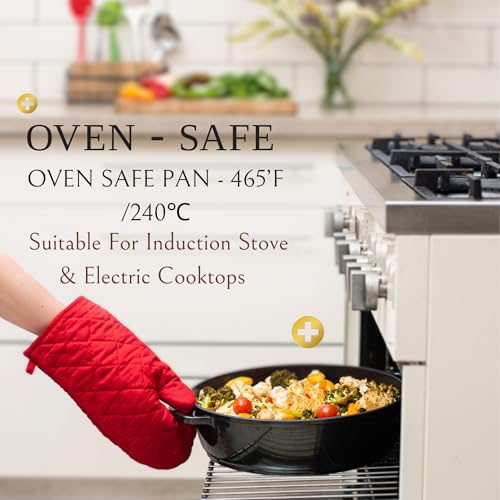
This deep 12-inch skillet hits a sweet spot for nonstick pans that can actually go in the oven. With a 465°F oven-safe rating (pan only), it’s one of the few budget-friendly nonstick options that can handle finishing a frittata or browning the top of a casserole. The die-cast aluminum body heats quickly and evenly, and owners consistently report strong food release, especially with eggs and fish. The glass lid is a nice touch, making it easy to monitor simmering dishes without lifting.
Where it edges out the Goodful and CAROTE pans is in depth and heat tolerance. It’s deeper than most 12-inch skillets, which helps reduce splatter and allows for more liquid-based cooking. But like all ceramic-coated pans in this range, the nonstick layer isn’t indestructible, stick to silicone or wood utensils. I’d choose this over the Our Place pan if oven use is a priority and you want a larger cooking surface.
Product photos



CAROTE 8 Inch Granite Skillet
Strengths
- Ultra-affordable
- Compact and lightweight
- Easy cleanup
Trade-offs
- Too small for family meals
- Limited heat retention
- Not oven safe
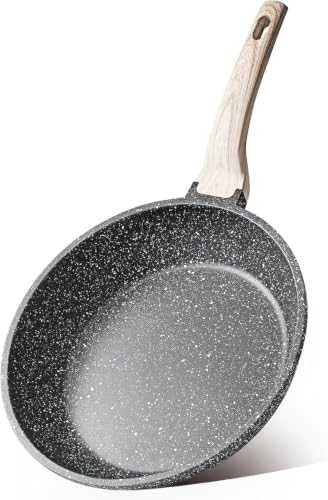
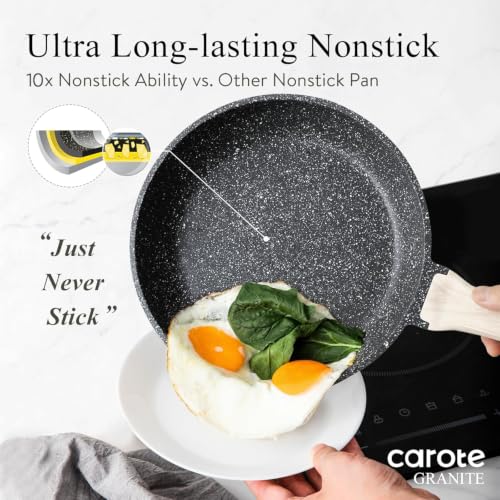
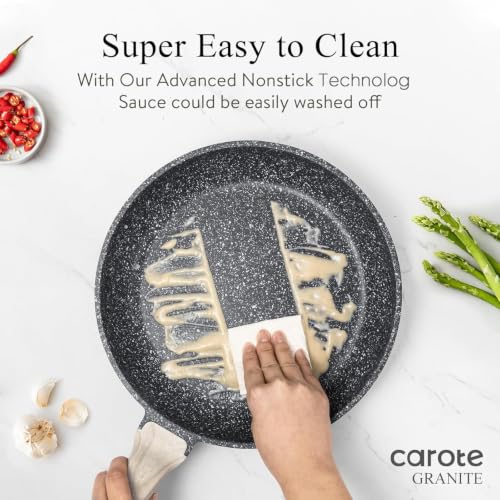
At just 8 inches, this little skillet isn’t meant to feed a crowd, but it’s perfect for what it does. The compact size makes it ideal for small stovetops, dorm rooms, or quick breakfasts. The granite-look ceramic coating is PFOS and PFOA-free, and owners love how easy it is to wipe clean after cooking eggs or reheating leftovers. It heats quickly on induction and gas, and the lightweight design makes it easy to maneuver.
But its size limits versatility. You won’t be searing steaks or making stir-fries here. Compared to larger pans, it’s a niche tool, more of a specialty item than an everyday workhorse. Still, for solo cooks or as a backup pan, it’s a smart, affordable buy. I’d pair it with a larger skillet rather than rely on it alone.
Product photos



How We Picked These everyday pans
Rather than a hands-on lab test, my research for these everyday pans focused on a detailed comparison of published specifications and features. I weighed owner reviews from multiple sources – looking for consistent praise and complaints – alongside assessments from reputable cooking publications. This was combined with my own understanding of what makes cookware perform well over the long term, ultimately ranking each pan against criteria important for daily use.
For everyday pans, heat distribution and nonstick durability were the most heavily weighted factors. Consistent heating prevents hot spots and ensures even cooking, while a reliable nonstick surface drastically simplifies cleanup and reduces the need for excess oil. Capacity was also significant; I prioritized pans that offered enough room for typical family meals without being unnecessarily bulky, and considered how well each pan balanced size with maneuverability.
Specifications reliably indicate construction materials and dimensions, but I found owner feedback crucial for assessing real-world nonstick performance and long-term durability. While specs can tell you a pan is induction compatible, for example, reviews reveal how well it actually maintains that compatibility over time. Reputation and brand history played a role, too, especially when evaluating ceramic coatings – some brands consistently deliver longer-lasting performance than others. You can find more information about versatile cookware on our site as well.
Choosing The Right everyday pans
Choosing the right pan feels simple, but a lot goes into finding one that will truly earn a place in your kitchen.
A good pan distributes heat evenly, feels comfortable to handle, and can withstand regular use without quickly degrading. Consider the material, construction, and how the pan aligns with your typical cooking style. Look for features like oven-safety and compatibility with your stovetop; durability is key, as is ease of cleaning.
Material Matters
The material a pan is made from hugely impacts its performance and how you care for it. Stainless steel offers durability and can handle high heat, but it’s notorious for sticking. Nonstick coatings (ceramic or traditional PTFE) are convenient for eggs and delicate foods, but their lifespan is limited. Cast iron excels at heat retention, making it fantastic for searing, but requires seasoning and is heavy. I often recommend starting with a solid understanding of how you cook. Are you a frequent baker who needs oven-safe options? Do you prioritize quick cleanup? Or are you focused on achieving restaurant-quality searing? Choosing a material that aligns with your needs will make a big difference.
Heat Distribution & Construction
Even heat distribution is critical for consistent cooking, and it’s largely determined by how a pan is constructed. Tri-ply stainless steel (like in the Non Stick Frying Pan 12 Inch) is an excellent choice, bonding a core of aluminum between layers of stainless steel to provide both durability and even heating. Thicker gauge materials will generally retain heat better, but also take longer to heat up initially. Look beyond the marketing buzzwords and consider the weight of the pan – a heavier pan often indicates a more substantial construction.
Here’s what I see as essential when evaluating construction:
- Weight: A lighter pan is easier to maneuver.
- Base thickness: Thicker bases resist warping and hot spots.
- Full-clad vs. disc-bottom: Full-clad construction (where the aluminum extends up the sides of the pan) offers more consistent heat compared to a disc-bottom where only the base is clad.
Balancing Value and Usability
It’s tempting to spend a fortune on cookware, but it’s not always necessary. A well-made pan doesn’t have to break the bank. Consider the features you actually need. Do you really need a pan that can do everything, like the Our Place Always Pan 2.0, or would a dedicated skillet and saucepan serve you better? Don’t overspend on features you won’t use.
A pan is an investment, but a more expensive price tag doesn’t always equal better performance. Focus on quality construction, appropriate materials for your cooking style, and a design that fits your needs.
If you’re building a kitchen from scratch, starting with a few versatile pieces – a good 8-inch frying pan perfect pan for eggs and a 12-inch skillet – is a smart approach. From there, you can expand your collection of essential pans for home cooks as your culinary skills and needs evolve.
Everyday Pans Compared
Here’s a comparison of key specifications for several everyday pans to help you choose the right one for your needs.
| Product Title | Capacity | Material | Nonstick? | Oven Safe (°F) | Stovetop Compatibility |
|---|---|---|---|---|---|
| Le Creuset 11″ Enameled Cast Iron Pan | N/A | Cast Iron | Yes | N/A | N/A |
| Our Place Always Pan 2.0 | N/A | Aluminum | Yes | 450 | All |
| Non Stick Frying Pan 12 Inch | N/A | Stainless Steel | Yes | N/A | All |
| 12 Inch 7QT Tri-Ply Saute Pan | 7 QT | Stainless Steel | No | N/A | All |
| Goodful All-in-One Nonstick Pan | N/A | Aluminum | Yes | N/A | Electric, Gas, Glass |
| KOCH SYSTEME Purple Ceramic Pan | 5.5 QT | Aluminum | Yes | N/A | All |
| Moss & Stone 12″ Deep Skillet | 5 QT | Aluminum | Yes | 465 | All |
| CAROTE 8 Inch Granite Skillet | N/A | Aluminum | Yes | N/A | All |
Frequently Asked Questions
What cookware material is easiest to clean?
Nonstick-coated pans, whether ceramic or PTFE, are the easiest to clean because food releases with minimal effort. However, remember that even the best nonstick surfaces require gentle handling and aren’t immune to wear and tear over time.
How can I tell if a pan will actually heat evenly?
Look for pans constructed with tri-ply stainless steel or a thick aluminum core that extends up the sides (full-clad). Owner reviews often mention uneven heating as a major flaw, so pay attention to those comments when researching.
Are ceramic nonstick pans as durable as traditional PTFE nonstick?
Generally, ceramic coatings don’t last as long as traditional PTFE nonstick. While they offer a “greener” alternative, they tend to lose their nonstick properties more quickly, and you’ll likely need to replace them sooner.
What size pan should I buy if I’m cooking for a family of four?
A 12-inch frying pan or skillet is a good all-around size for a family of four, providing enough room for most meals. If you frequently cook larger quantities or enjoy 12-inch frying pans a 14-inch pan might be a better fit.
Is a disc-bottom pan okay, or is full-clad really necessary?
While disc-bottom pans are more affordable, full-clad construction offers superior heat distribution and consistency. For frequent use, especially with delicate foods, the investment in a full-clad pan is worth it, and you’ll find many excellent 5-quart sauté pans built this way.
The Bottom Line
Ultimately, choosing everyday pans involves balancing how much control you want in the cooking process with how much fuss you’re willing to tolerate with cleanup. For the best overall experience – a pan that delivers reliable performance and is built to last – I recommend the Non Stick Frying Pan 12 Inch. It offers a great combination of even heating, durable construction, and a nonstick surface that simplifies daily cooking.
If you’re building a kitchen on a budget, the CAROTE 8 Inch Granite Skillet is a fantastic starting point, providing good nonstick performance at an accessible price. Those seeking maximum versatility will appreciate the Our Place Always Pan 2.0; it aims to replace several tools, though it does require a bit of a learning curve. And for those looking for a reliable 10-inch sauté pan to round out their collection, you’ll find many excellent options in our guide to 10-inch sauté pans.
At the end of the day, the most important factors aren’t a specific material or feature, but rather how well a pan distributes heat, how comfortable it is to use, and how consistently it performs over time. Don’t get caught up in chasing the latest trends or highest specs; focus on finding a pan, or a small set, that feels right in your hands and suits your cooking style.
