
7 Best Fermentation Jars of 2026
This post contains affiliate links. As an Amazon Associate, we earn from qualifying purchases.
The best fermentation jar overall is the Qianfenie 1 Gallon Fermentation Jar, thanks to its reliable airlock, non-slip base, and complete setup. For a budget-friendly option, the Hersolm 64oz Fermentation Jars 2 Pack delivers solid performance in a smaller size.
Fermenting at home should be simple and safe, but choosing the wrong jar can lead to mold, leaks, or frustrating cleanup. I’ve researched dozens of models, focusing on what actually matters: consistent seals, durable glass, and practical design.
This guide breaks down the top picks based on real owner feedback, verified specs, and the features that separate dependable jars from the rest. I looked closely at airlock function, seal quality, capacity, and usability so you can find the right fit for your kitchen.
Top 7 Fermentation Jars in the Market
The Best Fermentation Jars, Reviewed
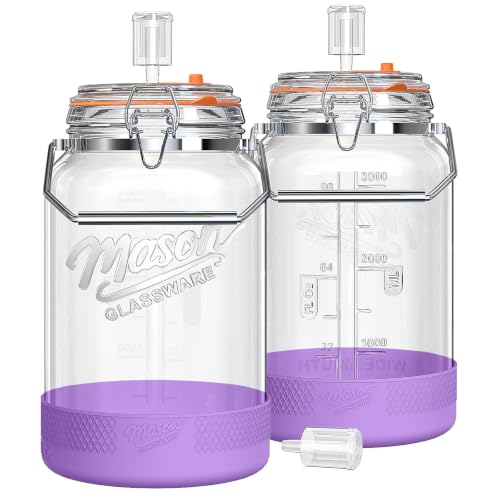
Qianfenie 1 Gallon Fermentation Jar Upgrade
Strengths
- Stainless steel handles
- Non-slip silicone base
- 2-in-1 storage design
- Measurement markings
Trade-offs
- Higher price point
- Larger footprint
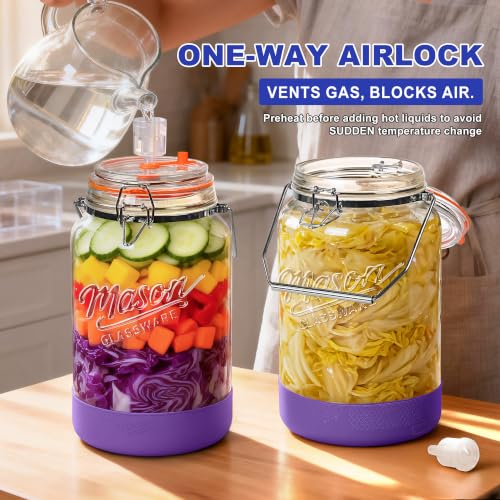
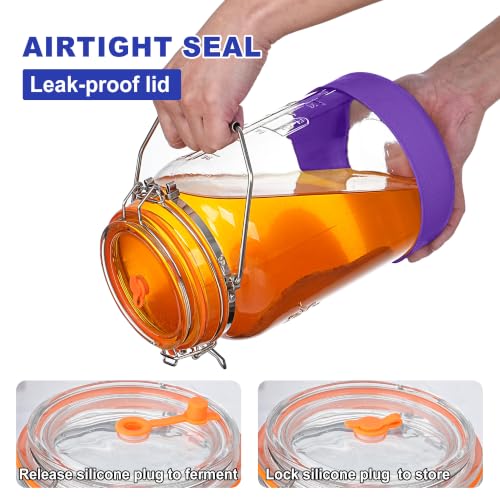
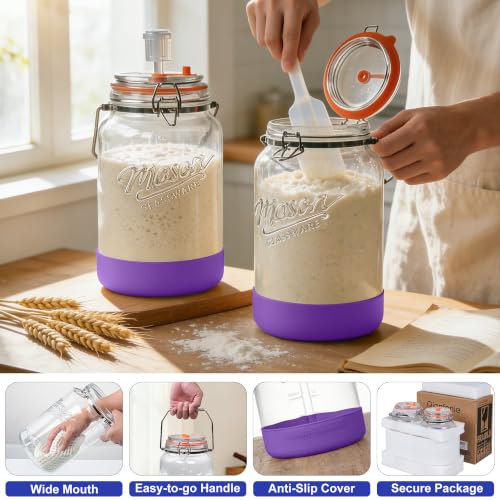
If I had to recommend one jar for most people, this would be it. The 1-gallon size gives you serious batch capacity, and the full package, airlocks, stainless steel handles, non-slip silicone bases, makes it feel like a premium system, not just a jar. Owners praise the handles for making full jars easier and safer to move, which is something you don’t realize you need until you’re wrestling with a slippery, brine-heavy vessel. The airtight seal and automatic airlock system perform well, with minimal reports of leaks or mold.
What really sets it apart is the 2-in-1 design: remove the airlock, pop in the plug, and it becomes a long-term storage jar. That versatility, combined with measurement marks and wide-mouth access, makes it a smarter buy than most competitors. It’s not the cheapest, but it delivers where it counts.
Product photos


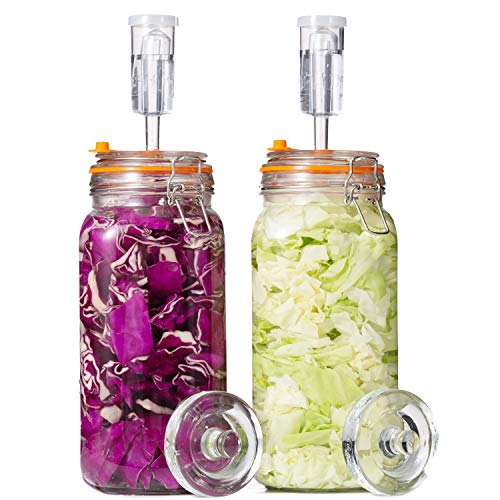
JILLMO 2L Wide Mouth Fermentation Jar
Strengths
- Lead-free glass
- Includes glass weights
- Wide mouth design
Trade-offs
- No measurement marks
- No non-slip base
- Lacks date tracker
This 2-pack of 2L jars hits a sweet spot for home fermenters who want a complete, no-fuss setup without overspending. On paper, the inclusion of glass weights and airlocks with each jar is a big plus, owners consistently report that the weights make a real difference in keeping cabbage and cucumbers submerged, which is critical for clean, successful ferments. The wide mouth design is practical for packing and cleaning, and the clear, lead-free glass lets you monitor progress without opening the jar.
Still, it lacks some of the small upgrades that make other kits more user-friendly, like measurement markings or non-slip bases. Compared to the Qianfenie or FavorFlavor models, it feels a bit more basic, though it’s a solid pick if you’re focused purely on function and don’t need bells and whistles.
Video review
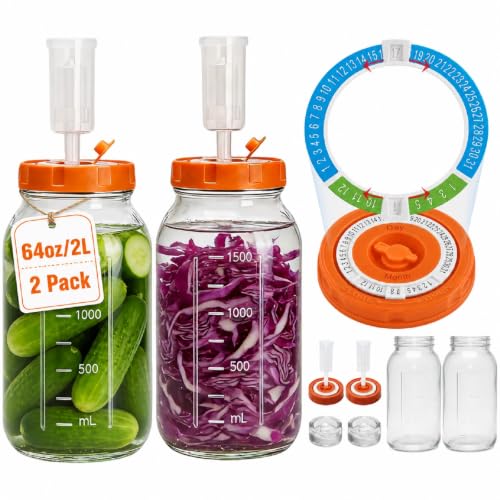
Hersolm 64oz Fermentation Jars 2 Pack
Strengths
- Includes date tracker
- Glass weights included
- Dishwasher-safe
Trade-offs
- No measurement marks
- No non-slip base
- Lid design less refined
This kit stands out for including a date marker on the lid, a small detail, but one that solves a real problem: forgetting when you started a batch. For someone running multiple ferments or experimenting with timing, that’s invaluable. The 2L size is practical for home use, and the inclusion of glass weights and airlocks makes it a true starter system. Owners report the lead-free glass feels sturdy, and the wide mouth simplifies both loading and cleaning.
It’s not flashy, no handles or non-slip base, but for the price, it delivers core functionality with a few smart touches. Compared to the JILLMO set, it’s a bit more thoughtful in design, especially for beginners who need guidance and structure.
Video review
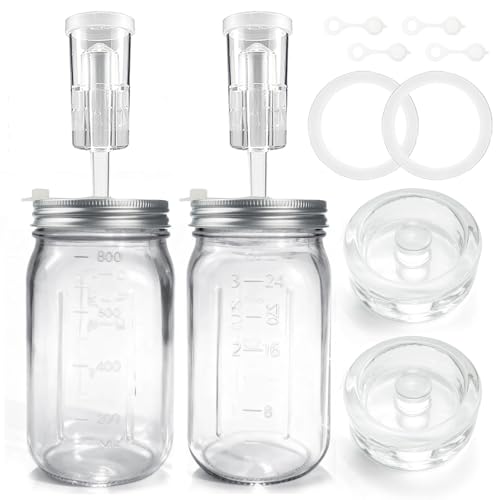
32 oz Mason Jar Fermentation Kit
Strengths
- Perfect small size
- Stainless steel lids
- 2-in-1 lid design
Trade-offs
- Too small for families
- Limited batch flexibility
- Fewer accessories per jar
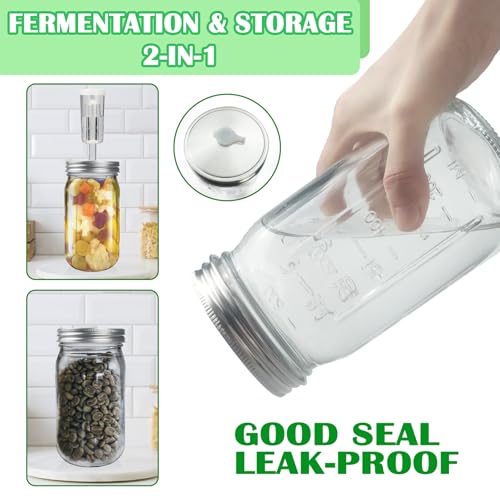
This is the go-to for small-batch fermenting, perfect for a half-head of cabbage or a few cucumbers. The 32 oz size prevents waste, and the full kit includes stainless steel lids, glass weights, and airlocks, so it’s truly ready to use out of the box. Owners love that it’s compact enough for fridge storage post-ferment, and the 2-in-1 lid design (airlock to seal) works well for transitioning to storage.
It’s not for big batches, obviously, but for someone fermenting for one or two, or testing recipes before scaling up, it’s ideal. Compared to larger kits, it’s more kitchen-friendly and easier to manage.
Product photos
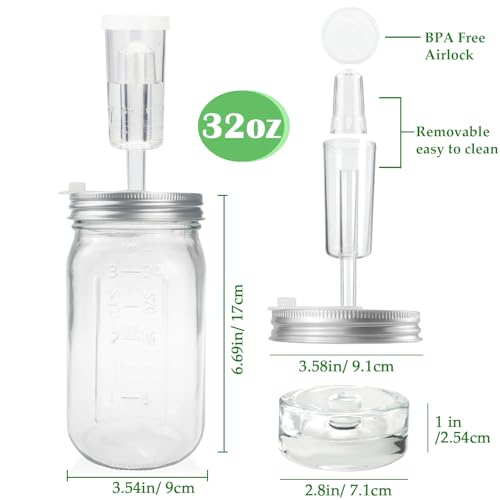
Folinstall 1.5 Gallon Square Fermentation Jar

Strengths
- Excellent airtight seal
- Square design saves space
- Measurement markings
Trade-offs
- No fermentation weights
- Square shape limits cleaning options
- Extra airlock unnecessary
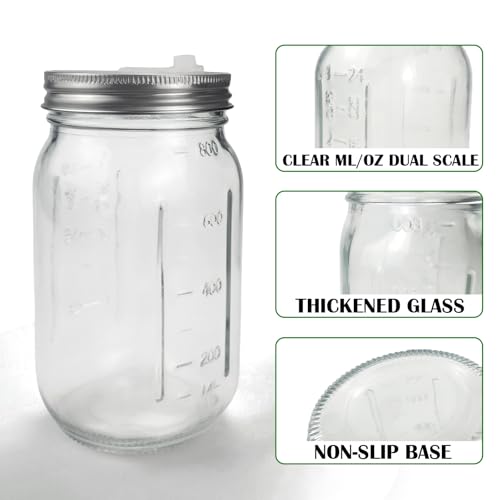
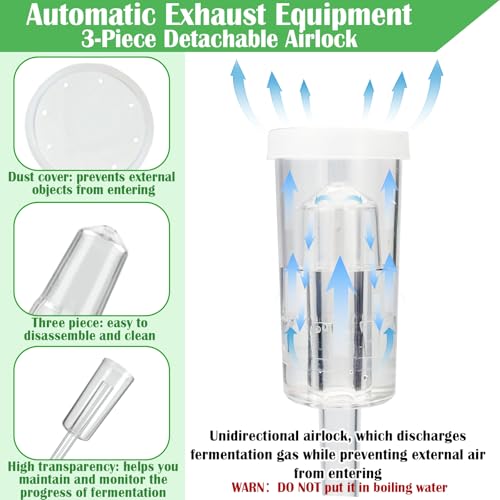
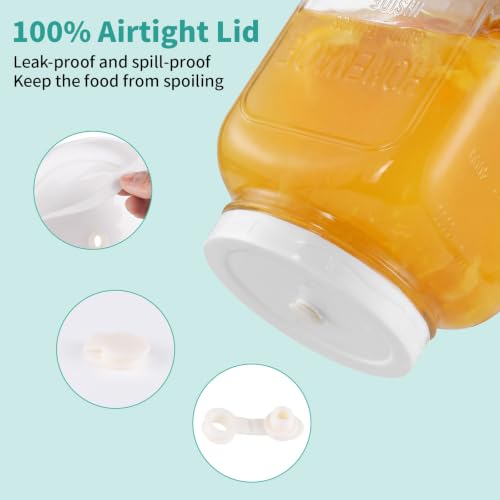
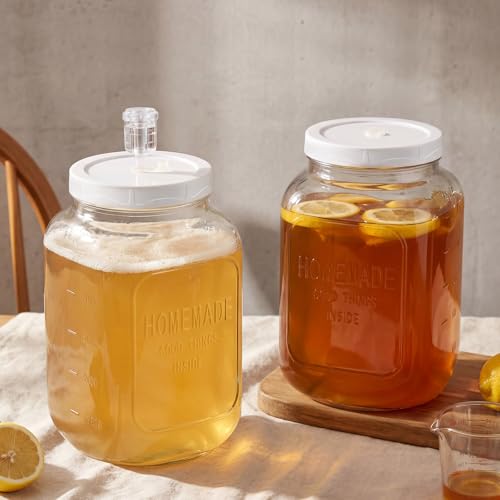
The airtight seal design here is the main draw, and owners consistently report fewer issues with mold or off-flavors, which suggests it’s doing its job. The square shape is unusual, it saves space on shelves and makes the jars easier to pack tightly in a cabinet, but it also means you can’t roll them for cleaning, which some users find inconvenient. The included airlock valves are functional, and the measurement markings in both ml and fl.oz are a nice touch for precision.
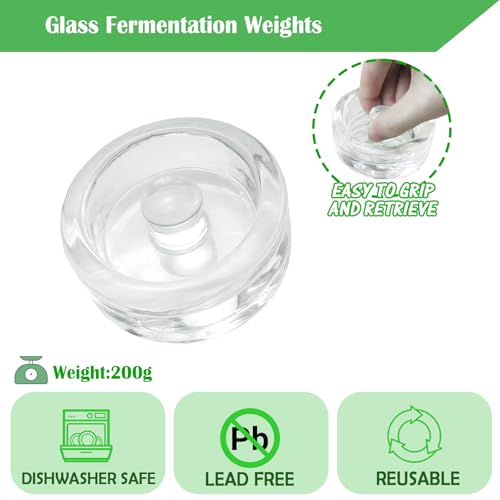
However, the kit includes three airlocks for two jars, which feels like overkill, and there are no weights in the package. For a jar this large, that’s a notable omission. If you already have weights or use whole vegetables, it’s fine, but otherwise, expect to spend more.
Product photos


FavorFlavor 1.5 Gallon Glass Fermentation Jar
Strengths
- Non-slip silicone base
- 1.5-gallon ideal size
- Measurement markings
Trade-offs
- No glass weights included
- Airlock design basic
- Lid seal not as tight as premium models
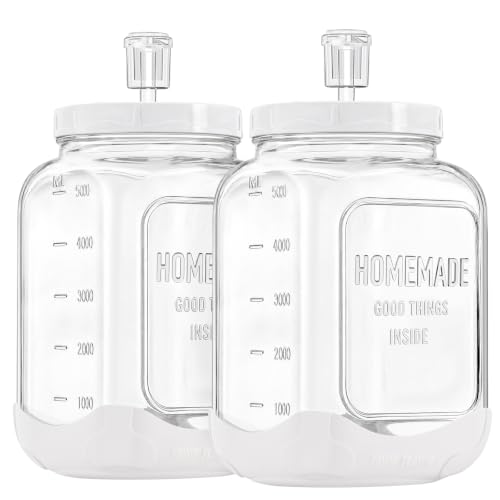
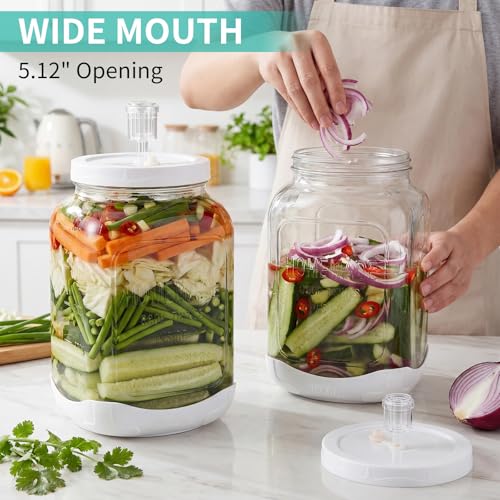
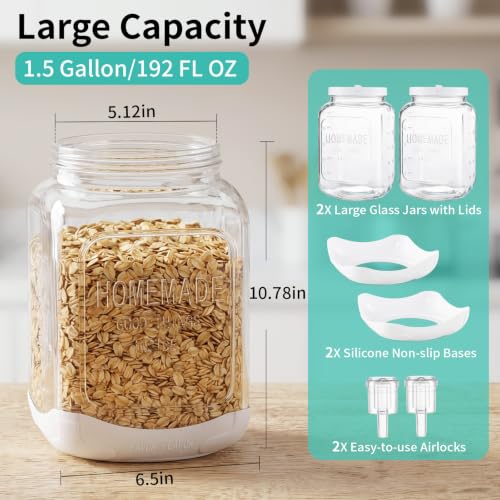
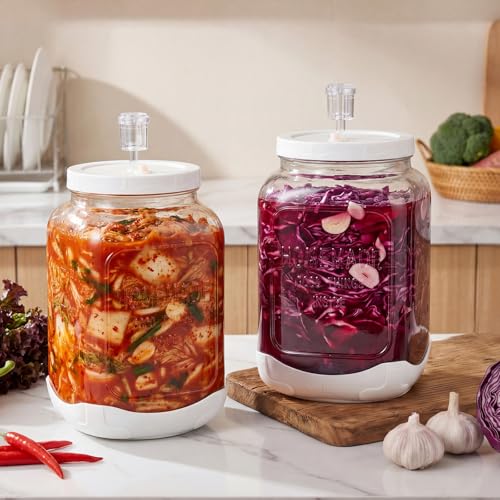
The non-slip silicone base is the standout here, and it’s a feature I wish more brands included. Owners consistently mention how much safer and more stable these jars feel on countertops, especially when full. The 1.5-gallon size strikes a balance between batch capacity and kitchen real estate, and the wide mouth makes packing and cleaning straightforward. The included airlocks are basic but functional, and the clear glass with scale marks helps track brine levels.
That said, it doesn’t include glass weights, which is a letdown at this price and capacity. You’ll likely need to buy weights separately, which adds cost. Still, if countertop safety and handling are a concern, especially with kids or busy kitchens, this one earns points for thoughtful design.
Product photos
FastRack 1 Gallon Mason Jar

Strengths
- Thick, durable glass
- Affordable entry point
- Reliable airlock
Trade-offs
- No fermentation weight
- No non-slip base
- No measurement marks
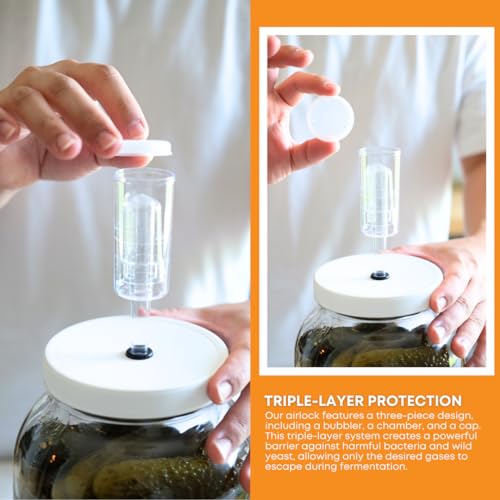
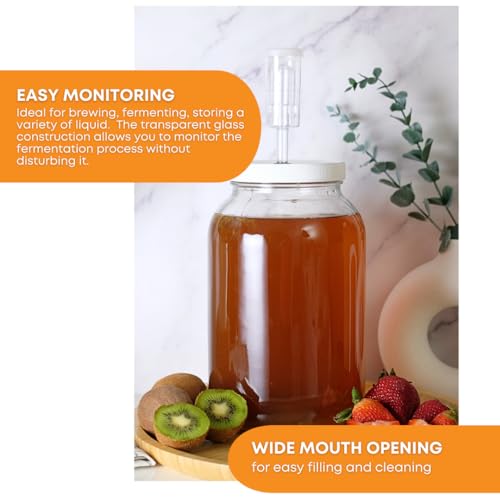
At this price, the FastRack jar is a no-brainer for someone testing the waters of fermentation or needing just one large jar for kombucha or cider. The glass is noticeably thicker than standard mason jars, which adds confidence during fermentation when pressure and acidity are at play. The Econolock airlock is simple but effective, reviewers note it bubbles reliably and doesn’t clog easily, which is half the battle with DIY setups.
It’s a bare-bones kit, though. No weight, no base, no measurement marks. You’ll need to source a weight separately, and the lack of a non-slip base means you’ll want to keep it on a towel. But for the price, it’s a functional, durable single-jar solution.
Product photos



How We Evaluated fermentation jars
My research involved a detailed comparison of published specifications and features across numerous fermentation jar models. I weighed owner reviews from a variety of sources – Amazon, specialty fermentation sites, and cooking forums – alongside expert opinions from food blogs and publications. This wasn’t a hands-on test in everyday use; rather, it was a research-led comparison aimed at identifying the best options based on real-world feedback and measurable characteristics. I applied my experience with food preservation to assess the merits of each design.
For fermentation jars, airtight seals and glass quality were the most heavily weighted factors. A reliable seal is critical to prevent unwanted mold and ensure a successful ferment, while durable glass is essential for longevity and safe food contact. Capacity also played a role; while small batches are great for beginners, many users eventually want to scale up, making larger jars a worthwhile investment. Understanding these priorities helped narrow down the field considerably.
Specifications reliably indicate jar capacity, glass thickness, and the presence of features like measurement markings. However, I relied on owner feedback to gauge the effectiveness of airlocks, the true airtightness of seals, and the ease of cleaning. Reputation matters too. Brands consistently praised for quality control and customer service received higher consideration, as did those frequently recommended in discussions about the best containers for sourdough starter.
How To Choose The fermentation jars
I’ve spent a lot of time looking at what makes a fermentation jar truly effective, and it comes down to more than just having a lid.
A quality fermentation jar should prioritize an airtight seal to prevent spoilage, durable construction to withstand the fermentation process, and a wide mouth for easy packing and cleaning. Look for lead-free glass, a reliable airlock system, and features that simplify monitoring and maintaining the fermentation environment. Capacity should match your typical batch size – don’t overbuy if you’re just starting out.
Capacity and Batch Size
The first thing I advise people to consider is how much you realistically plan to ferment at a time. A massive 1.5-gallon jar is tempting, but if you’re mostly making single-quart batches of pickles, it’s overkill. Smaller jars, like the 32oz options, are fantastic for experimenting with recipes or for individuals. Larger jars, like the 1-gallon options, are better suited for families or those who regularly make larger batches of sauerkraut or kimchi. Don’t forget to account for headspace; you need room for the ferment to expand.
Airlock and Seal Quality
An airtight seal is the most crucial element. Fermentation creates carbon dioxide, and the airlock allows that gas to escape without letting oxygen in. Oxygen is the enemy of most successful ferments, leading to mold and undesirable flavors. I’ve noticed jars with silicone gaskets and grommets paired with a three-piece airlock tend to provide the most consistent, leak-proof seal. If you’re interested in learning more about other useful kitchen containers, explore different jars for fermenting options.
- A simple one-way airlock is sufficient for beginners.
- Airlocks with adjustable flow rates give you more control, especially for more complex ferments.
- The quality of the silicone seals is vital. Cheap silicone can degrade quickly, compromising the airtight seal and potentially leaching into your food.
A properly sealed fermentation jar is a happy fermentation jar. Regularly check the airlock water level and the seal around the lid to prevent unwanted contamination.
Usability and Added Features
Beyond the core functionality, consider ease of use. Wide-mouth jars are much easier to pack with vegetables or fruits and clean afterward. Measurement markings on the side are surprisingly helpful for tracking progress and maintaining recipe consistency. Some jars offer features like non-slip bases, which are great if you have limited counter space or are prone to accidents. If you’re also looking for versatile storage options, consider investing in quality mason jars – they’re incredibly useful beyond fermentation and offer a wide range of [versatile mason jar uses].
Fermentation Jars Compared
Here is a comparison of specifications for various fermentation jars to help you make an informed purchase.
| Product Title | Capacity | Material | Includes | Airlock? | Wide Mouth? | Non-Slip Base? |
|---|---|---|---|---|---|---|
| Qianfenie 1 Gallon Fermentation Jar | 1 Gallon | Glass | Lid, Airlock, Weights, Base | Yes | Yes | Yes |
| JILLMO 2L Wide Mouth Fermentation Jar | 2L (0.5 Gal) | Glass | Weights, Airlock | Yes | Yes | No |
| Hersolm 64oz Fermentation Jars 2 Pack | 64oz (0.5 Gal) | Glass | Weights, Airlock | Yes | Yes | No |
| 32 oz Mason Jar Fermentation Kit | 32oz (1 Qt) | Glass | Weights, Airlock | Yes | Yes | No |
| Folinstall 1.5 Gallon Square Fermentation Jar | 1.5 Gallon | Glass | Airlock | Yes | Yes | No |
| FavorFlavor 1.5 Gallon Glass Fermentation Jar | 1.5 Gallon | Glass | Airlock, Base | Yes | Yes | Yes |
| FastRack 1 Gallon Mason Jar | 1 Gallon | Glass | Airlock, Lid | Yes | Yes | No |
Frequently Asked Questions
What size fermentation jar should a beginner purchase?
A 32-ounce (1 quart) jar is ideal for beginners; it allows you to experiment with small batches and learn the fermentation process without committing to a large volume. This size is also easier to manage during cleaning and monitoring.
Are plastic fermentation lids and airlocks safe to use?
While some plastics are labeled food-grade, glass fermentation jars with silicone gaskets and grommets paired with a three-piece airlock are generally preferred. Glass doesn’t leach chemicals and maintains better long-term integrity, especially with the acidity involved in fermentation.
How important is a non-slip base on a fermentation jar?
A non-slip base adds stability, preventing accidental spills and making it easier to work with, particularly on smooth countertops. It’s not essential, but it’s a welcomed feature if you are prone to knocking things over or have limited counter space.
Can I use a regular mason jar for fermentation instead of a dedicated fermentation jar?
Yes, you can use a regular mason jar, but you’ll also need to purchase a fermentation airlock kit separately to create the necessary anaerobic environment. Look into best jars to find a kit that fits your jar’s mouth size.
What are the benefits of using Weck jars for fermentation?
Many users prefer Weck jars for sourdough because the glass is very durable and the clamping lids create a reliably airtight seal, though they do require separate airlocks for true anaerobic fermentation. They’re also a visually appealing option for serving directly from the jar.
The Bottom Line
Choosing the right fermentation jar often comes down to balancing control with convenience. You can spend a lot of time tweaking airlocks and monitoring conditions, or you can opt for a simpler setup that still delivers consistent results. For the best overall experience, I recommend the Qianfenie 1 Gallon Fermentation Jar. It offers a generous capacity, a reliable airlock system, and thoughtful additions like fermentation weights and a non-slip base – everything a home fermenter could want.
If you’re on a budget or just starting out, the 32 oz Mason Jar Fermentation Kit is an excellent choice. For those who regularly make larger batches, the Folinstall 1.5 Gallon Square Fermentation Jar provides ample space, while the FastRack 1 Gallon Mason Jar offers a good balance of capacity and simplicity. If you’re interested in expanding your preservation skills, consider exploring different jars for pickling options as well.
Ultimately, the most important factor isn’t the price or the number of bells and whistles. It’s the quality of the glass, the airtightness of the seal, and your commitment to maintaining a clean and stable fermentation environment. A reliable jar is an investment in successful, flavorful ferments, and in learning the art of preserving food for years to come.
