
9 Best Food Steamer Pots of 2026
This post contains affiliate links. As an Amazon Associate, we earn from qualifying purchases.
The SUNHOUSE 9.3 QT Steamer Pot is the best overall choice for its large capacity and tri-ply construction, ideal for families. For those on a budget, the Ohtomber 1.5 Qt Saucepan Steamer delivers solid performance in a smaller size, while the LOLYKITCH 5-Quart Tri-Ply Steamer offers excellent versatility for multi-use cooking.
Steaming is one of the simplest ways to preserve flavor and nutrition, but choosing the right pot isn’t always straightforward. With so many sizes, materials, and claims, it’s easy to end up with something that underperforms or doesn’t fit your stovetop.
I researched the field, comparing specs and real-world feedback to find models that actually deliver. This guide breaks down what matters, capacity, build quality, and compatibility, so you can pick a steamer pot that works as hard as you do.
Top 9 Food Steamer Pots in the Market
The Best Food Steamer Pots, Reviewed
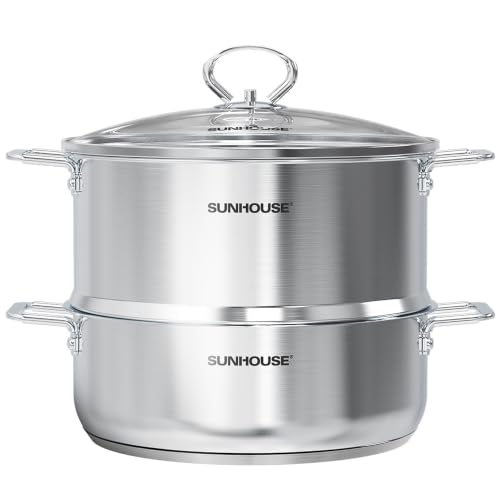
SUNHOUSE 9.3 QT Steamer Pot
Strengths
- Large 9.3-quart capacity
- Deep steamer basket
- Toxin-free stainless steel
Trade-offs
- Bulky for small kitchens
- Higher price
- Heavy when full
This is the one to get if you regularly cook for four or more. The 9.3-quart capacity, with a deep 5.5-quart steamer basket, can handle whole lobsters, corn, tamales, or a full batch of dumplings without crowding. The tri-ply base ensures even heating across all stovetops, including induction, and the glass lid lets you monitor without lifting.
Owners praise how the deep basket eliminates the need for stacking or folding racks. It’s made from pure food-grade stainless steel, no coatings, no toxins, so it’s safe for long-term use. While it’s the most expensive here, it justifies the cost with performance and durability. For family cooks who steam often, this is the most complete package.
Video review
LOLYKITCH 5-Quart Tri-Ply Steamer

Strengths
- Heavy-duty 3-ply build
- Induction compatible
- Brushed finish hides wear
Trade-offs
- Higher price point
- No extra steaming tiers
- Lid knob not oven-safe
LOLYKITCH hits the sweet spot between size, build, and performance. The 5-quart capacity is generous for family meals, and the 3-ply bonded construction means it heats evenly and resists warping, a common flaw in thinner pots. The brushed stainless finish hides fingerprints well, and the glass lid makes monitoring food effortless.
Owners consistently note its stability on induction, and the riveted handles offer a secure grip. Compared to cheaper models, this one feels like it’s built to last. It’s not the largest, but it’s the kind of pot that earns a permanent spot on the stove. For those stepping up from budget options, this is where I’d recommend investing.
Video review
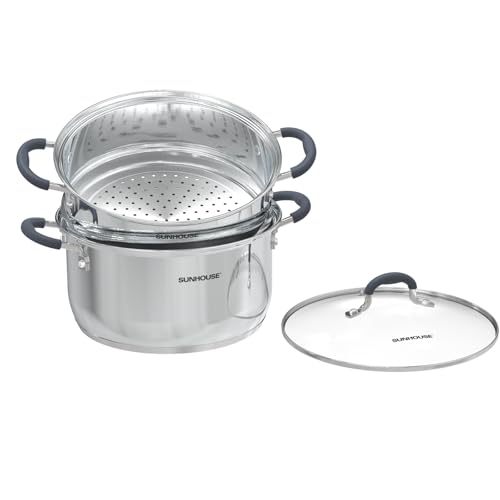
SUNHOUSE 3.1 Quart Steamer Pot
Strengths
- Toxin-free construction
- Tri-ply even heating
- All cooktop compatible
Trade-offs
- Limited capacity
- No extra accessories
- Mirror finish shows fingerprints
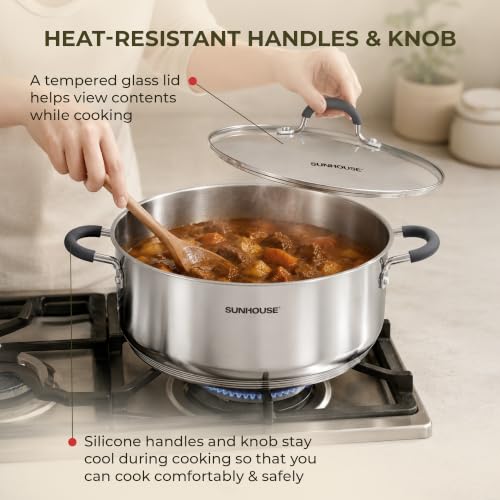
SUNHOUSE keeps things simple but effective with this 3.1-quart steamer. The tri-ply encapsulated base is a standout at this price, offering fast, even heating with no hot spots, a feature usually found in pricier sets. Owners appreciate the tempered glass lid, which lets you watch food steam without lifting, and the riveted handles feel secure.
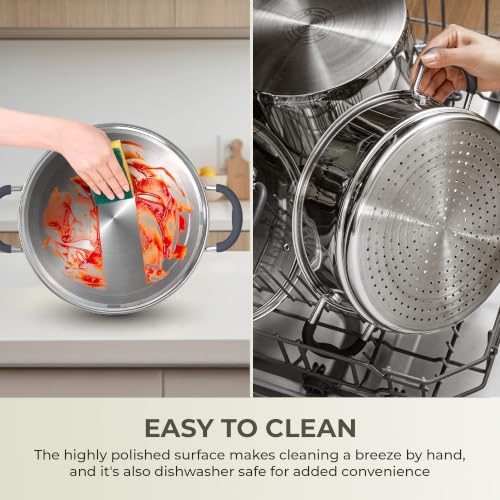
What seals the deal is the 100% toxin-free claim, no PFOA, lead, or cadmium, which matters for health-conscious buyers. It’s induction-ready and dishwasher safe, ticking every box for modern kitchens. While not huge, it’s the kind of pot you’d reach for daily. For budget-minded cooks who don’t want to compromise on safety or performance, this is a quiet winner.
Product photos



Kirecoo 3.2QT Stainless Steamer

Strengths
- Induction compatible
- Even heat distribution
- Cool-touch handles
Trade-offs
- Smaller capacity
- No brushed finish
- Basket not nonstick
The Kirecoo stands out in the mid-size category with its tri-ply base, stainless steel, aluminum, and magnetic layer, delivering even heating that owners consistently praise, especially on induction. At 3.2 quarts, it’s ideal for 2 to 4 people, and the glass lid with steam vent makes monitoring meals effortless. The silicone-wrapped handles stay cool, a small but meaningful detail during use.
I’d pick this over similarly priced models because it balances performance and practicality. It’s not the largest, but the build quality feels more premium than its price suggests. The steamer basket doubles as a colander, adding real kitchen utility. For a small family wanting one pot that does it all, this is a smart buy.
Product photos


Chefbee 3.2QT Stainless Steamer

Strengths
- Multi-use steamer basket
- Tri-ply even heating
- Durable thickened body
Trade-offs
- No induction-specific branding
- Mirror finish shows marks
- Basket lacks nonstick
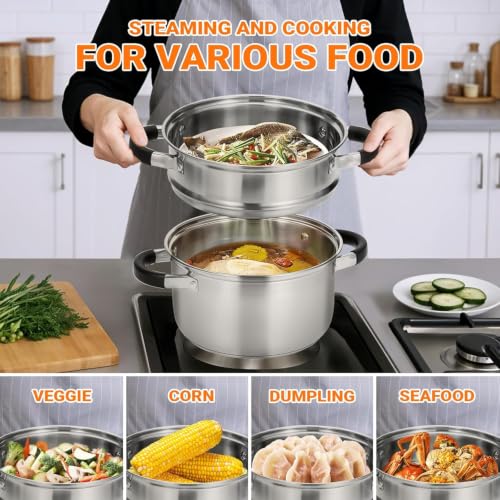
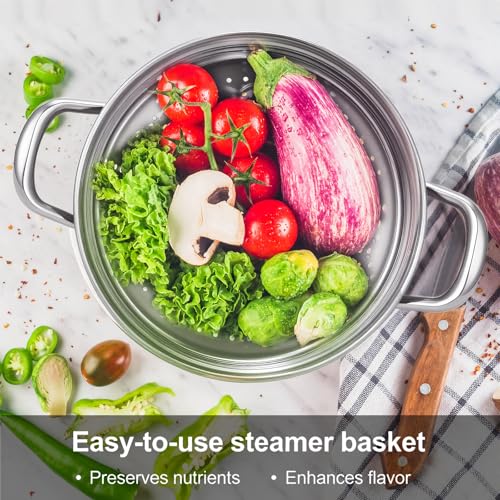
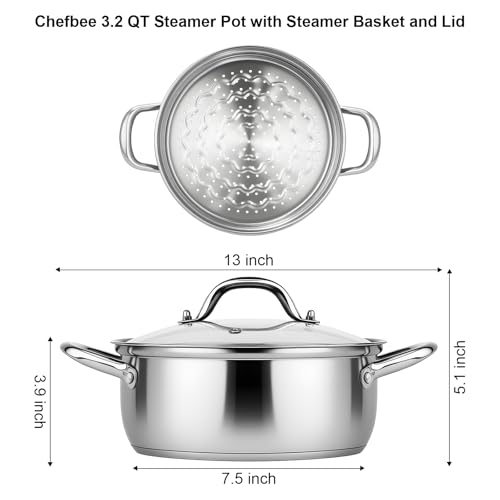
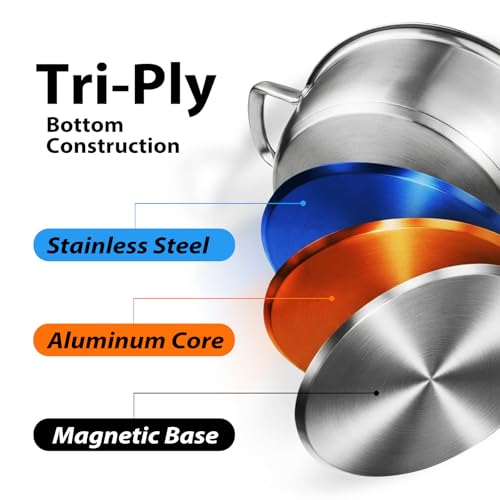
Chefbee’s 3.2-quart steamer is built for real kitchen use, not just steaming, but straining, simmering, and even washing produce. The tri-ply bottom ensures fast, even heat, and the glass lid with steam vent is a practical touch. Owners love how the basket doubles as a colander, making it a true multi-tasker.
The riveted handles are secure, and the thickened 0.55mm body resists denting. Compared to similar models, it stands out for durability and thoughtful design. If you want one pot that handles steaming, boiling, and draining without switching tools, this is my top pick in the mid-size range. It’s not flashy, but it’s built for daily use.
Product photos
5.0 Quarts Stainless Steamer Pot

Strengths
- Large 5-quart capacity
- Durable stainless steel
- Affordable price
Trade-offs
- Not induction compatible
- No glass viewing lid
- Basic design
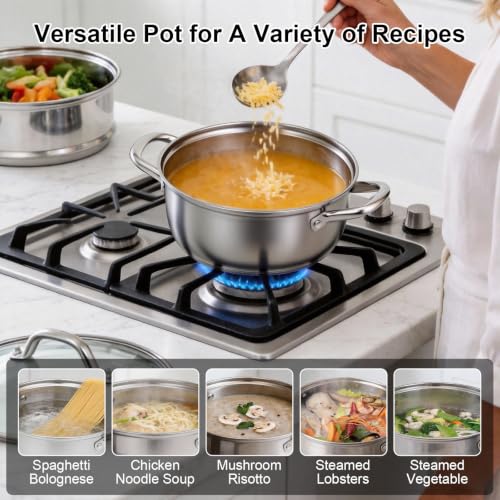
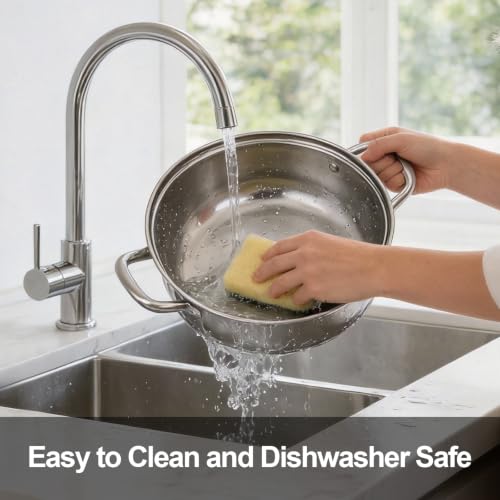
At 5 quarts, this steamer pot delivers solid capacity for mid-sized families and weekend meal prep. The 18/8 stainless steel build is durable on paper, and the thickened base suggests decent heat distribution, though owners report it can develop hot spots on electric stoves. It’s a straightforward 3-piece set, pot, steamer basket, and lid, with no frills, but it does what it promises for basic steaming and stockpot duties.
Where it falls short is induction compatibility, a notable omission in today’s kitchens, and the lack of a glass lid means you’ll need to lift the cover to check progress, losing steam and heat. Still, for the price, it’s a no-nonsense option if you’re on gas or halogen and want something roomy without overspending.
Product photos


Oster 3-Quart Dutch Oven Steamer

Strengths
- Compact footprint
- Oven-safe to 400°F
- Dutch oven versatility
Trade-offs
- Smaller capacity
- No glass lid
- Not for large meals
The Oster 3-quart Dutch oven with steamer basket is a clever space-saver. It’s compact, just 8.5 inches wide, so it fits in tight cabinets, yet it’s deep enough to handle rice and veggies in tandem. The steamer basket fits snugly, and the pot itself is oven-safe to 400°F, which sets it apart from most dedicated steamers.
That versatility is key: you can start a braise on the stove and finish it in the oven. Owners like that it’s dishwasher safe and sturdy without being bulky. For apartment kitchens or minimalist setups, this is a smarter pick than a tall stockpot that takes up half the shelf. It’s not for big batches, but for smart, efficient cooking, it’s hard to beat.
Product photos


Ohtomber 1.5 Qt Saucepan Steamer

Strengths
- Compact and efficient
- Tri-ply even heating
- Easy to store
Trade-offs
- Too small for families
- Limited steaming space
- Mirror finish shows smudges
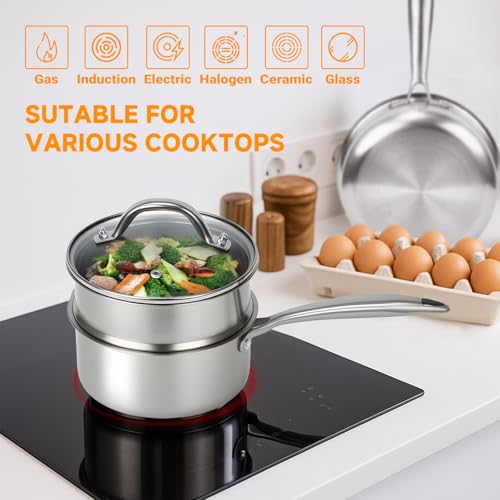
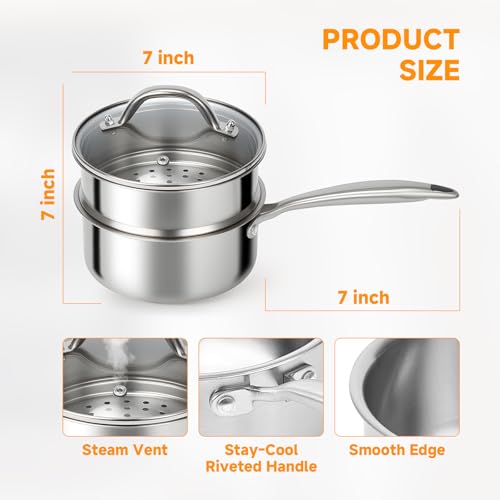
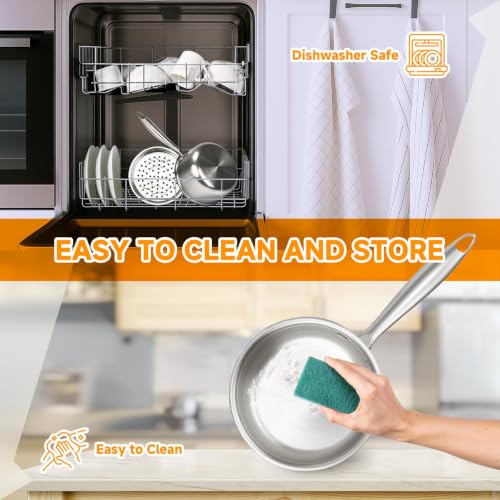
At 1.5 quarts, this is clearly designed for one or two, think solo lunches, baby food, or reheating leftovers. But don’t let the size fool you: the tri-ply construction delivers fast, even heating, and it’s induction-ready, which is impressive at this scale. The glass lid with steam vent lets you watch food cook, and the riveted handles stay cool.
It’s not going to handle a full seafood boil, but for small tasks, it’s efficient and well-made. The compact design is great for small kitchens, dorms, or RVs. If you live alone or cook for two and hate washing big pots, this is the smarter buy over oversized steamers that dominate your cabinet.
Product photos
ROCKURWOK Ceramic Nonstick Steamer

Strengths
- Ceramic nonstick easy clean
- Wooden handle stays cool
- Colorful design
Trade-offs
- Not for high-heat use
- Wooden handle may loosen
- Less durable than stainless
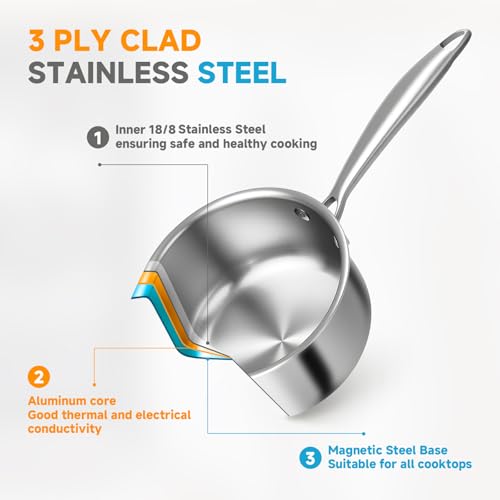
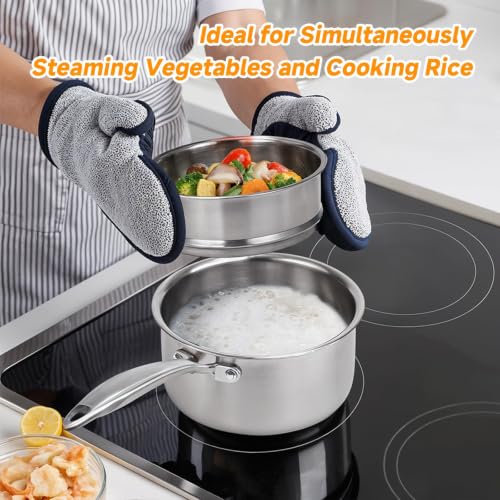
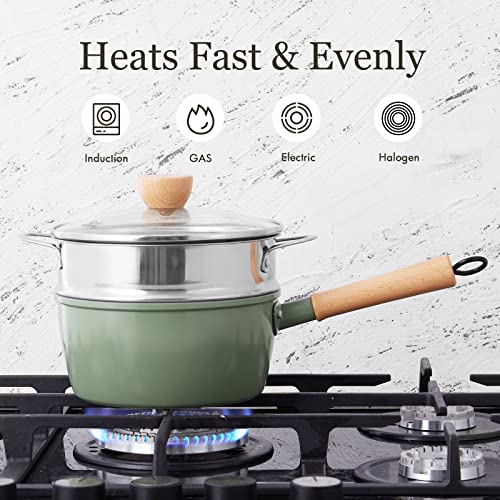
This 2.5-quart green saucepan brings color and convenience to small-batch cooking. The ceramic nonstick coating is a real advantage for delicate foods like eggs or sauces, and cleanup is reportedly a breeze, a big plus for busy cooks. The wooden handle adds a rustic touch and stays cool, though some owners note it requires assembly and may loosen over time.
But here’s the catch: while it works as a steamer, the nonstick surface limits high-heat use and metal utensils, which narrows its versatility compared to stainless steel. If you want a steamer that doubles as a fry pan or stockpot, this isn’t it. But if you’re after a small, stylish pot for gentle steaming and easy cleanup, it has its place.
Product photos


Our Testing Process
My approach to evaluating food steamer pots centers on a research-led comparison of specifications and owner feedback. I examined the materials, construction, capacity, and stovetop compatibility of numerous models. Then, I weighed published expert reviews against what owners are saying about long-term performance, ease of cleaning, and overall value. Ultimately, I ranked options based on how well they meet the needs of a typical home cook.
For this category, the most important factors are build quality and heat distribution. A tri-ply base is a significant advantage, ensuring even cooking and preventing hot spots that can ruin delicate foods. Capacity is also crucial; whether you’re steaming a small side dish or a full meal, having the right size pot makes all the difference. I also prioritized stainless steel construction for durability and safety, though nonstick options were considered for ease of cleaning.
Product specifications reliably indicate capacity, materials, and stovetop compatibility. However, owner reviews provided valuable insight into real-world durability, how easily the pots clean up, and whether the handles stay cool during use. I also looked for trends in reported issues – were there frequent complaints about warping, rusting, or uneven heating? Understanding these nuances, alongside a review of pots for steaming vegetables, helped me identify the best options available. I also consulted resources explaining how steamers work to better understand the nuances of their construction and performance.
How To Pick The Right food steamer pots
Choosing the right steamer pot can significantly elevate your cooking, moving beyond basic boiling to unlock healthier and more flavorful meals.
A quality steamer pot prioritizes even heat distribution for consistent results. Look for tri-ply construction in stainless steel for durability and responsiveness. Capacity should match your typical cooking volume, and a well-fitting lid is essential for trapping steam and maximizing efficiency. Consider compatibility with your cooktop, and prioritize toxin-free materials for safe food preparation.
Capacity & Family Size
The size of a steamer pot is directly tied to how many people you typically cook for. Don’t assume bigger is always better; an overly large pot wastes energy and can lead to uneven steaming if not filled adequately. For individuals or couples, a 3-quart model like the Ohtomber 1.5 Qt Saucepan Steamer might be sufficient, while families of four or more will likely benefit from a 5-quart or larger option, such as the SUNHOUSE 9.3 QT Steamer Pot. Think about the types of food you’ll be steaming, too; whole chickens or large fish require considerably more space than vegetables.
Construction & Materials
Stainless steel is the workhorse material for steamer pots, offering durability and even heating. However, not all stainless steel is created equal. Look for pots with a tri-ply base (stainless steel-aluminum-stainless steel) for superior heat distribution, preventing hot spots and ensuring food cooks evenly. While ceramic non-stick options like the ROCKURWOK Ceramic Nonstick Steamer offer easy cleanup, be aware that the coating can degrade over time and may not be as durable as stainless steel. Understanding the steamer basket material is also key; stainless steel is the most common, but some come with plastic or silicone inserts.
Versatility & Cooktop Compatibility
A steamer pot shouldn’t be a one-trick pony. Consider models that can double as stockpots for soups or boiling pasta. The LOLYKITCH 5-Quart Tri-Ply Steamer, for example, offers this multi-functionality. Crucially, ensure the pot is compatible with your cooktop. Induction cooktops require magnetic stainless steel, and not all stainless steel pots meet this requirement.
- If you have an induction cooktop, always verify the product description specifically states it’s induction-compatible.
- A tight-fitting lid is paramount. It traps steam, reducing cooking time and preserving nutrients. Look for tempered glass lids with steam vents.
- Riveted handles are far more secure than welded ones. They’re less likely to loosen or break with repeated use, providing a safer cooking experience.
Don’t settle for a steamer pot that only works on one type of cooktop. A versatile pot expands your cooking options and protects your investment.
I often recommend looking beyond the initial price tag and focusing on long-term value. A well-made steamer pot, even if it’s a bit more expensive upfront, will outlast cheaper options and provide consistent results for years to come. Exploring recommended steamer pots can help narrow your choices and find the perfect fit for your kitchen.
Food Steamer Pots Compared
Here’s a comparison of key specifications for various food steamer pots to help you choose the right one for your needs.
| Product Title | Capacity (Qt) | Material | Stovetop Compatibility | Tiered Design | Special Features |
|---|---|---|---|---|---|
| SUNHOUSE 9.3 QT Steamer Pot | 9.3 | Stainless Steel | All | 2 | Tri-Ply Base |
| LOLYKITCH 5-Quart Tri-Ply Steamer | 5 | Stainless Steel | All | N/A | Tri-Ply Construction |
| SUNHOUSE 3.1 Quart Steamer Pot | 3.1 | Stainless Steel | All | 2 | Tri-Ply Base |
| Kirecoo 3.2QT Stainless Steamer | 3.2 | Stainless Steel | All | N/A | 3-Layer Bottom |
| Chefbee 3.2QT Stainless Steamer | 3.2 | Stainless Steel | All | N/A | Tri-Ply Bottom |
| 5.0 Quarts Stainless Steamer Pot | 5.0 | Stainless Steel | Gas, Electric, Ceramic | N/A | 2-Tier Possible |
| Oster 3-Quart Dutch Oven Steamer | 3 | Stainless Steel | All | N/A | 2-in-1 Design |
| Ohtomber 1.5 Qt Saucepan Steamer | 1.5 | Stainless Steel | All | N/A | Tri-Ply Construction |
| ROCKURWOK Ceramic Nonstick Steamer | 2 | Ceramic Nonstick | All | N/A | Nonstick, Wooden Handle |
Frequently Asked Questions
What size steamer pot do I really need?
A 5-quart steamer pot is a good all-around size for most families, but consider your typical meal size. If you frequently cook for one or two people, a 3-quart model will likely suffice, while larger gatherings will benefit from a 9-quart or larger capacity.
Are nonstick steamer pots a good choice?
While ceramic nonstick steamer pots are easier to clean, the coating’s durability is a concern. Stainless steel offers better long-term performance and won’t degrade with use, which is why I generally recommend it for a lasting investment.
Can I use a steamer pot for anything other than steaming?
Many steamer pots function well as stockpots for soups, stews, or boiling pasta. Models like the LOLYKITCH 5-Quart Tri-Ply Steamer are specifically designed with this versatility in mind, making them a valuable addition to any kitchen.
What does “tri-ply” construction mean, and why is it important?
Tri-ply construction refers to a pot with three layers of metal – typically stainless steel, aluminum, and stainless steel – bonded together. This design provides excellent heat distribution, eliminating hot spots and ensuring even cooking, which is vital for delicate foods.
Where can I find inspiration for what to make with my new steamer pot?
Beyond simply steaming vegetables, there are many exciting possibilities. You can explore a wide variety of dishes to steam from seafood and dumplings to desserts, expanding your culinary horizons.
The Bottom Line
Choosing a steamer pot often comes down to balancing initial cost with long-term performance. While less expensive options exist, I consistently find that the SUNHOUSE 9.3 QT Steamer Pot offers the best overall combination of capacity, durable construction, and even heating – a worthwhile investment for serious home cooks. It’s a pot built to last and deliver consistent results.
For those seeking a more budget-friendly option, the Ohtomber 1.5 Qt Saucepan Steamer is a great starting point. If versatility is a priority, the LOLYKITCH 5-Quart Tri-Ply Steamer stands out as a pot you can confidently use for steaming and other kitchen tasks, and provides a good option for those looking at foods suitable for steaming.
Ultimately, the best steamer pot isn’t about the latest bells and whistles. It’s about thoughtful construction, even heat distribution, and a size that fits your needs. Don’t overlook the importance of a good lid and secure handles, and if you find yourself steaming without a basket, consider how easily the pot can adapt to different steaming methods. Those fundamentals are what will truly elevate your cooking.
