
7 Best Glass Pots and Pans of 2026
This post contains affiliate links. As an Amazon Associate, we earn from qualifying purchases.
The Visions 1L Amber Saucepan stands out as the best overall glass pot for its rugged glass-ceramic build and broad stovetop compatibility, while the Crystalbru 2L Glass Simmer Pot is a solid budget pick with reliable borosilicate construction and full heat source flexibility. For those wanting a set, the Hsei 3-Piece Glass Pot Set offers rare induction-safe options at a reasonable price.
Most people shopping for glass pots and pans want the clarity to watch food cook without losing heat by lifting the lid, but they quickly run into questions about safety, durability, and whether these pieces will actually work on their stove. After comparing the field and analyzing owner feedback, I focused on models that use borosilicate glass or proven glass-ceramic, handle heat changes well, and fit real kitchen needs.
This guide cuts through the clutter to highlight top performers based on material quality, heat compatibility, and practical design, not just looks. These picks reflect what actually works in home kitchens, from stovetop reliability to long-term durability.
Top 7 Glass Pots And Pans in the Market
The Best Glass Pots And Pans, Reviewed
Crystalbru 2L Glass Simmer Pot

Strengths
- Large 2L capacity
- Includes strainer and recipes
- Thick, durable glass
Trade-offs
- Not induction compatible
- No wooden handle
- Higher price than basics
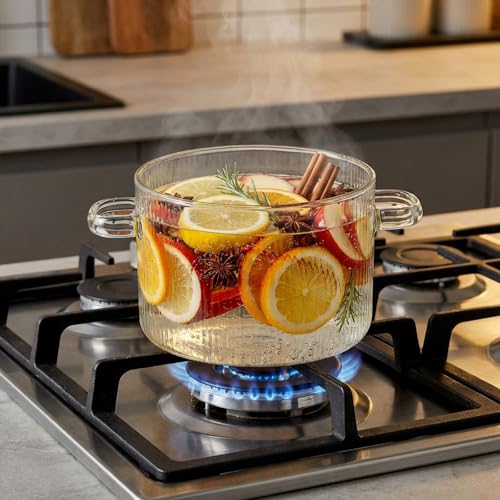
If you’re looking for the most balanced package in this category, the Crystalbru 2L pot stands out. It’s not the cheapest, but it delivers where it counts, thick 3.5mm borosilicate glass, a smart anti-scald handle design, and a bonus strainer and recipe e-book. The 2L capacity makes it useful for actual meal prep, not just side dishes, and owners consistently note how well it handles soups, pasta, and even potpourri without clouding or staining.
What really sets it apart is the thoughtful design. The lid handle stays cool, the pot heats evenly on medium settings, and the transparency works as advertised. It’s compatible with gas, electric, and infrared, just not induction. When compared to the AEFPOYMXU or Jucoan models, this one feels like a real kitchen workhorse.
Video review
AEFPOYMXU 1.5L Clear Glass Pot

Strengths
- Affordable
- Non-toxic material
- Easy to clean
Trade-offs
- Not induction compatible
- Fragile with thermal shock
- No extra accessories
At this price, the AEFPOYMXU 1.5L glass pot is clearly targeting budget buyers who want transparency and simplicity in a single saucepan. On paper, it checks the basics, made from food-grade borosilicate glass, non-toxic, and safe for stovetop, oven, and microwave use. Owners consistently report it works fine for small tasks like warming milk, making baby food, or simmering small batches of sauce. But the lack of compatibility with induction cooktops and the very limited capacity make it a narrow-use tool.
The warnings in the features are telling, sudden temperature shifts can crack it, and it demands low heat. That’s standard for glass cookware, but this model doesn’t offer extras like a strainer or ergonomic handle to justify even minor upgrades. Compared to others in this list, it’s barebones.
Video review
Le’raze 1.6L Ribbed Glass Pot

Strengths
- Ribbed design for style
- Wooden handle
- Even heating
Trade-offs
- Ribbing not truly nonstick
- No strainer
- Fragile under thermal shock
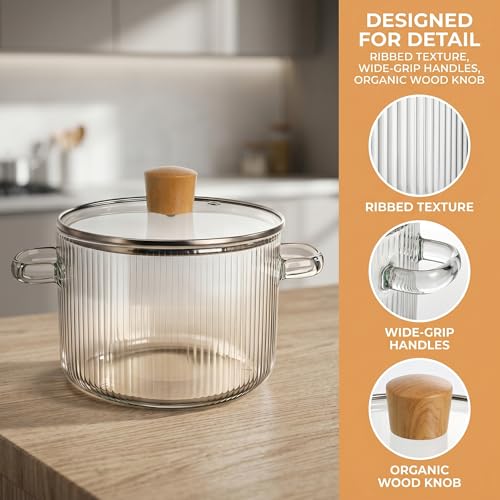
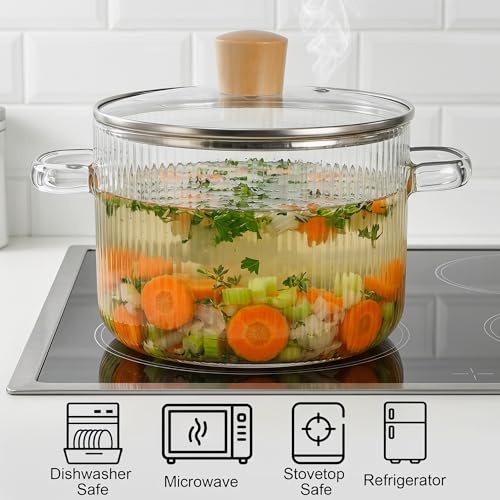
The ribbed interior is the Le’raze pot’s defining trait, marketed as nonstick and easier to clean, though in reality, it’s more about aesthetics than performance. The borosilicate glass body is solid, and the heat-resistant wooden handle adds comfort. At 1.6L, it’s a practical size for small families, and owners say it works well for soups, milk, and even light frying. The transparency helps monitor cooking, and the lid seals well.
But the ribbing doesn’t prevent sticking as claimed, glass is still glass, and without proper oil or heat control, food will catch. Still, for those who like a modern, textured look and want even heating across gas and electric stoves, this is a decent middle-ground option. It’s pricier than basic models but doesn’t offer enough extra to beat the Crystalbru.
Product photos


Hsei 3-Piece Glass Pot Set

Strengths
- Three useful sizes
- Even heat distribution
- Great for meal prep
Trade-offs
- Listing inaccuracies
- No induction compatibility
- Handles not heat-resistant
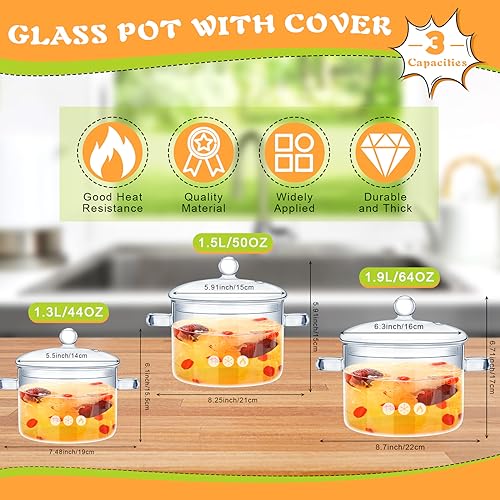
Owning three sizes in one set is a real advantage, and the Hsei 3-piece collection gives you 1.3L, 1.5L, and 1.9L pots, ideal for everything from sauces to small stews. The borosilicate glass is consistent across all three, and owners say they heat evenly and clean easily. The set’s real strength is versatility: you’re not stuck with one size, which makes it easier to scale recipes up or down.
But there’s a typo in the features that raises red flags, ‘Only suitable for induction cooker use’ contradicts the fact that glass pots like these typically don’t work on induction. Owners confirm they work on gas and electric, but not induction, so that’s likely a listing error. Still, the value of having multiple sizes in a matching set makes this a smart pick for families or frequent cooks.
Product photos

Visions 1L Amber Saucepan

Strengths
- Exceptional thermal shock resistance
- See-through cooking
- Oven and freezer safe
Trade-offs
- Very expensive
- Small capacity
- Heavy and bulky
This Visions saucepan is in a different league, both in price and design philosophy. It’s not just a pot, it’s a statement piece rooted in decades of tempered glass-ceramic engineering. The transparency works exactly as intended: you can watch liquids simmer without lifting the lid, which really does reduce steam loss and improve control. The material handles thermal shock better than most borosilicate options, and owners praise its resilience after years of use on gas and electric stoves.
But that comes at a steep cost. For a 1L pot, the price is hard to swallow when other full sets cost less. It’s also heavier than modern glass pots and lacks modern touches like wooden handles or strainers. Still, if you value heirloom-quality construction and timeless design over value, this is the one.
Product photos


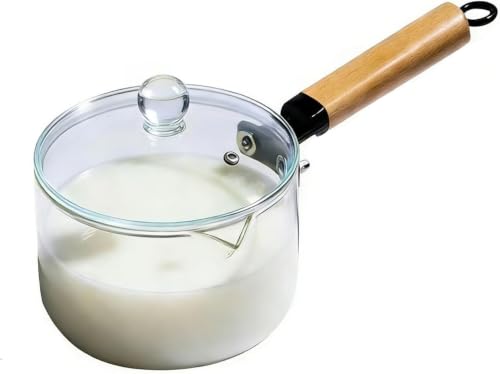
54oz Glass Pot with Wooden Handle
Strengths
- Wooden handle included
- Good capacity
- Affordable
Trade-offs
- Handle requires assembly
- No strainer
- Not for induction
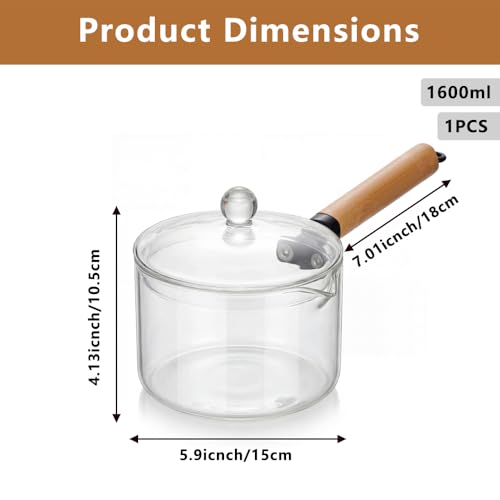
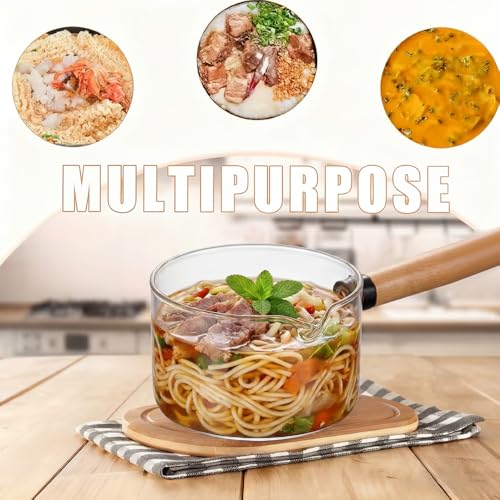
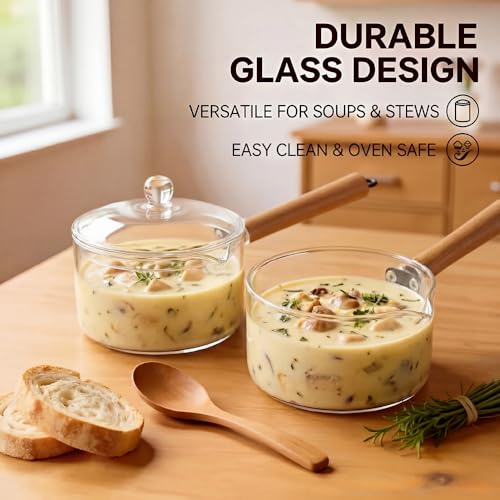
The wooden handle on this 1.6L pot is its standout feature, offering a cooler, more comfortable grip than all-glass designs. That makes it one of the more practical picks for moving a hot pot from stove to table. The borosilicate glass body is standard, with a 0°F to 400°F range, and owners find it reliable for everyday tasks like boiling noodles or heating soup. The overflow holes near the rim are a small but smart touch.
Assembly is required, though, attaching the handle with screws isn’t hard, but it’s an extra step most competitors avoid. And while it’s not the most durable or feature-rich, the balance of price, capacity, and usability makes it a solid value. Compared to the Le’raze model, it lacks ribbing but wins on simplicity and lower cost.
Product photos

Jucoan 1.8L Glass Saucepan

Strengths
- Good size for 1–2 people
- Dual handles
- Odor-free cooking
Trade-offs
- Lower heat tolerance
- No strainer
- No wooden handle
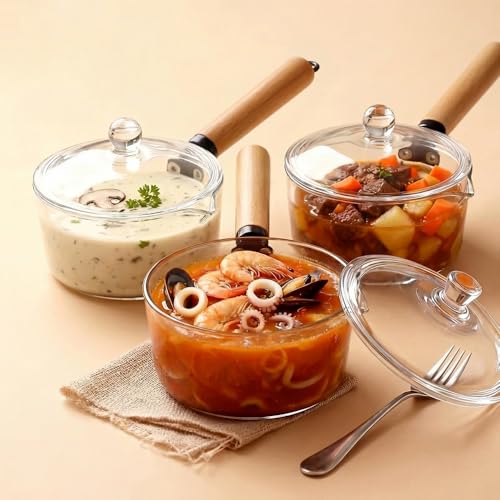
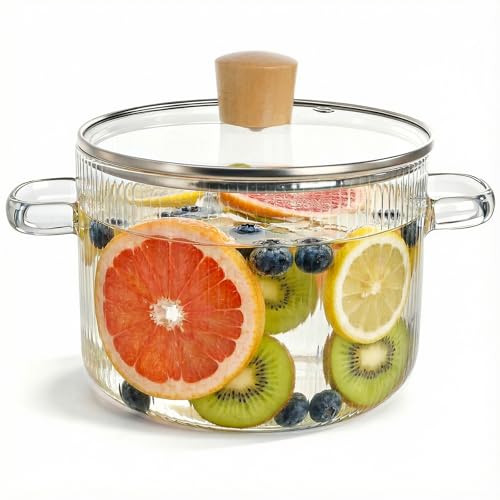
With a 1.8L capacity and a wide, short shape, this Jucoan pot is ideal for couples or solo cooks who need just enough room for a meal or two. The borosilicate glass is lead- and cadmium-free, and owners say it’s easy to clean and doesn’t retain odors. The dual handles make lifting safer, and the clear lid lets you monitor cooking without lifting. It’s frequently used for potpourri, which speaks to its fragrance-friendly, non-porous surface.
But the temperature limit is lower than others, only up to 300°F, so it’s not ideal for prolonged high-heat cooking. And while it’s dishwasher safe, the lack of a strainer or wooden handle makes it feel basic next to the Crystalbru or Le’raze. Still, for small households, it’s a sensible, no-frills pick.
Product photos
How We Picked These glass pots and pans
Rather than a hands-on lab test, my research for these recommendations focused on a detailed comparison of published specifications and features across numerous models. I weighed owner reviews from multiple retailers alongside professional reviews, looking for consistent feedback on performance and durability. As someone who’s spent years understanding what makes cookware perform, I then ranked options based on criteria specific to glass cookware – heat distribution, material quality, and overall practicality for everyday cooking.
For glass pots and pans, even heat distribution, durability, and safe material construction were the most important factors. A glass pot that heats unevenly or is prone to shattering isn’t useful, no matter how attractive. I also prioritized clarity, as the ability to monitor cooking progress without lifting a lid is a key benefit of glass cookware. Finding options that balance these qualities with affordability was also a key consideration, ensuring a range of choices for different budgets.
Specifications reliably indicate capacity, dimensions, and the type of glass used (borosilicate is essential for heat resistance). However, I relied heavily on owner feedback to gauge real-world durability and how well the pots hold up to repeated use. Reports of cracking or handle failures carried significant weight, as did comments regarding ease of cleaning and any lingering food odors. For those with glass cooktops, understanding safe cookware for glass stovetop is crucial, and I factored in suitability for various cooktop types. You can also find more specialized options in our guide to glass simmer pots.
How To Choose The glass pots and pans
Finding the right glass pots and pans can really elevate your cooking experience, but there’s more to it than just a clear view of what’s simmering.
A quality glass pot prioritizes borosilicate glass construction for thermal shock resistance, offers a capacity appropriate for typical household needs (generally 1.5L to 2L for smaller tasks), and includes thoughtfully designed handles for safe and comfortable handling. Consider stovetop compatibility and whether the lid fits securely to retain heat and moisture.
Material and Durability
The core of any good glass pot is, unsurprisingly, the glass itself. Borosilicate glass is the standard for a reason; it’s far more resistant to thermal shock – that’s the cracking you worry about when going from cold to hot – than standard glass. Look for pots specifying this type of glass. Thickness matters too; 3.5mm is a good baseline, and thicker is generally better, though it will add weight. While many brands tout durability, pay attention to owner reviews regarding chipping around the rim, as this is a common failure point. If you’re considering alternatives, explore options like ceramic non-stick for different cooking needs.
Heat Source Compatibility
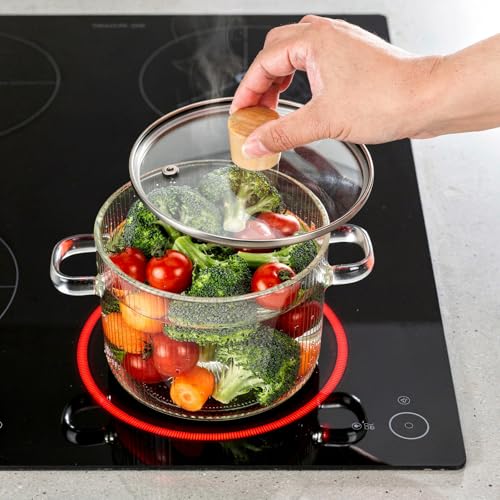
Not all glass pots play nicely with all stoves. Many, particularly the more affordable options, are not induction compatible. Carefully check the product specifications before buying if you have an induction cooktop. Beyond that, most are safe for gas, electric, and even ceramic stovetops, but always use lower to medium heat. Rapid temperature changes are still a risk, even with borosilicate glass. Some, like the Visions line, are genuinely oven-safe, which expands their versatility. Remember, a pot that’s limited in where you can use it isn’t a great value, no matter how pretty it looks.
Size, Features and Value
Capacity is a key consideration. A 1.5L to 2L pot is fantastic for sauces, side dishes, or small batches of soup, making it ideal for individuals or couples. Larger households will likely want to supplement with bigger pots. Beyond size, consider included features. Some pots come with strainers or recipe books, which can add value. Wooden handles, while aesthetically pleasing, require more care than stainless steel handles. Often, you’ll find these features are tied to price, so deciding what you really need versus what’s just “nice to have” is crucial. Don’t automatically assume a higher price equals better quality; research the best glass cooking pots to find the sweet spot between features and cost.
A good rule of thumb: always preheat a glass pot slowly. Start with low heat and gradually increase it, especially if the pot is cold.
Glass Pots and Pans Compared
Here’s a comparison of key specifications for various glass pots and pans to help you make an informed decision.
| Product Title | Capacity (L) | Stovetop Compatibility | Oven Safe | Dishwasher Safe | Material | Handle Material |
|---|---|---|---|---|---|---|
| Crystalbru 2L Glass Simmer Pot | 2 | Gas, Electric, Infrared | Yes | Yes | Borosilicate Glass | Anti-scald |
| AEFPOYMXU 1.5L Clear Glass Pot | 1.5 | Gas, Electric | Yes | Yes | Borosilicate Glass | N/A |
| Le’raze 1.6L Ribbed Glass Pot | 1.6 | Gas, Electric | N/A | N/A | Borosilicate Glass | Wooden |
| Hsei 3-Piece Glass Pot Set | N/A | Induction | N/A | N/A | Borosilicate Glass | N/A |
| Visions 1L Amber Saucepan | 1 | Gas, Electric, Halogen, Ceramic | Yes | N/A | Glass Ceramic | N/A |
| 54oz Glass Pot with Wooden Handle | 1.6 | Gas, Electric | Yes | N/A | Borosilicate Glass | Wooden |
| Jucoan 1.8L Glass Saucepan | 1.8 | Electric, Infrared | N/A | Yes | Borosilicate Glass | N/A |
Frequently Asked Questions
What’s the biggest advantage of glass cookware over stainless steel?
The primary benefit is visibility; you can easily monitor food as it cooks without lifting the lid, preventing heat loss and allowing for precise cooking, something stainless steel doesn’t offer.
Are glass pots truly as durable as stainless steel or cast iron?
Generally, no. While borosilicate glass is resistant to thermal shock, it’s more susceptible to breakage from drops or impacts than stainless steel or cast iron, and chipping around the rim is a common concern owners report.
Can I use my glass pots on an induction cooktop?
Not all can. Many affordable glass pots aren’t induction compatible, so verifying the specifications before purchase is essential if you have an induction range.
What’s the best way to clean glass cookware to prevent staining or odors?
Prompt cleaning with warm, soapy water is best. For stubborn stains, a paste of baking soda and water can be effective, and for those seeking easier cleanup, explore dishwasher safe cookware options.
Are there healthier alternatives to traditional non-stick cookware that still offer the visibility of glass?
Yes, you can find options that offer both benefits. Many cooks are turning to non-toxic ceramic pots and pans for a healthier cooking surface and still enjoy being able to see their food as it cooks.
The Bottom Line
Choosing glass cookware often comes down to balancing control over your cooking with convenience. While a full set of high-end pots and pans is lovely, the Crystalbru 2L Glass Simmer Pot offers an excellent starting point for most home cooks, delivering solid borosilicate construction and versatility at a reasonable price. It’s a practical choice that lets you experience the benefits of glass without a significant investment.
For those with specific needs, the market offers focused solutions. If induction compatibility is a must, the Hsei 3-Piece Glass Pot Set is a good option. And if you’re looking for a classic, durable piece with a long history, the Visions 1L Amber Saucepan remains a standout. Don’t forget to consider alternatives like ceramic cookware sets if you’re seeking a different material with unique qualities.
Ultimately, the best glass pot is the one you’ll use consistently. Don’t get hung up on chasing the latest features or highest price tag. Focus on finding well-made cookware – prioritizing borosilicate glass and a secure-fitting lid – and learning to manage heat carefully. A little attention to these fundamentals will ensure you get years of enjoyment and delicious results from your glass pots and pans, and will make cleanup a breeze with easy-clean cookware.
