
7 Best Induction Pots of 2026
This post contains affiliate links. As an Amazon Associate, we earn from qualifying purchases.
The All-Clad D3 3-Quart Saucepan is the best overall induction pot, delivering even heat and lasting quality. For a budget-friendly option, the Cuisinart 1.5 Qt Stainless Sauce Pan offers solid performance without the high price. If you need maximum versatility, the 6.5 Qt Tri-Ply Stainless Stock Pot handles everything from sauces to soups with ease.
Choosing the right induction pot isn’t just about magnetism, it’s about finding one that heats evenly, holds up over time, and fits how you actually cook. Too many pots claim to be induction-ready but fail when it comes to real kitchen demands, like resisting warping or maintaining a steady simmer.
As someone who’s spent years evaluating cookware materials and performance, I focused on construction, owner feedback, and long-term usability to narrow down the best options. These picks reflect what actually works in home kitchens, based on specs, design, and consistent user experiences.
Top 7 Induction Pots in the Market
The Best Induction Pots, Reviewed
Cuisinart 12-Piece Stainless Steel Set

Strengths
- Full tri-ply construction
- Includes steamer insert
- Oven safe to 500°F
Trade-offs
- Higher price point
- Heavier than non-clad sets
- Polished finish shows water spots
If you’re outfitting a kitchen and want one set to cover nearly every task, this is the smarter buy. The triple-ply construction with aluminum core runs through the entire body, not just the base, which means heat wraps up the sides, essential for reducing scorching when simmering risotto or reducing sauces. Owners consistently praise the even cooking and solid riveted handles, and the inclusion of a steamer insert adds real utility.
The 8-quart stockpot and two skillets make this versatile, and the 500°F oven-safe rating gives flexibility. Compared to the Michelangelo set, this is a full system with better heat management. Yes, it’s the most expensive option, but the long-term value justifies it for serious home cooks.
Video review
6.5 Qt Tri-Ply Stainless Stock Pot
Strengths
- True tri-ply construction
- Double-riveted handles
- Excellent value
Trade-offs
- Lid oven-safe only to 350°F
- No measurement markings
- Minimal branding or extras
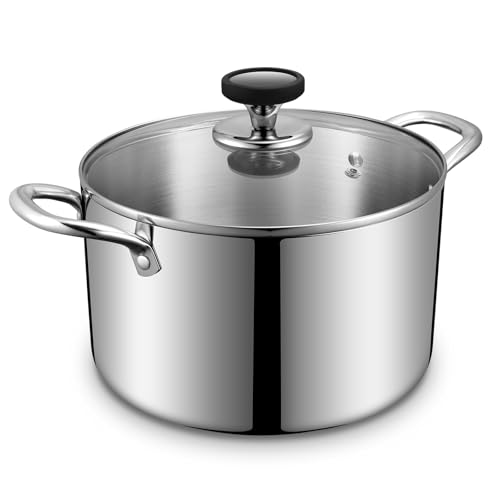
At under $25, this 6.5-quart pot is a standout for value. The tri-ply build, 18/8 stainless interior, aluminum core, magnetic exterior, delivers even heating and solid induction response, and owners confirm it boils water fast without warping. The double-riveted handles stay cool and offer secure grip, a big plus when moving a full pot. The glass lid with vent is standard but functional, and the mirror finish cleans easily.
It’s not flashy, but it’s honest: no false nonstick claims, no missing features. Compared to the Kirecoo, it’s smaller but better constructed for the price. My only gripe? The lid’s 350°F limit, same as others, limits oven use. But for weeknight pasta or small-batch soup, it’s a reliable pick.
Video review
Kirecoo 8 Qt Induction Stock Pot

Strengths
- Large 8-quart capacity
- 5-layer induction-ready base
- Dishwasher safe
Trade-offs
- Handles lack durability
- Nonstick claim overstated
- Lid not oven safe above 350°F
An 8-quart pot at this price is hard to ignore, and the 5-layer thickened base (10mm) gives it surprising heft for even heating on induction. On paper, it looks like a budget-friendly powerhouse, stainless steel build, tempered glass lid with vent, and riveted handles. But owner feedback reveals a split: some praise its capacity and quick boil times, while others note the handles feel flimsy over time and the so-called ‘nonstick interior’ is just a polished stainless surface that doesn’t live up to the claim.
It’s best viewed as a workhorse for big batches, boiling pasta, canning, or simmering stock, where precise heat control matters less. The 350°F oven limit (lid included) is a constraint compared to others in this list. Still, for occasional heavy-duty tasks, it delivers size and compatibility without breaking the bank.
Product photos


SENSARTE 1.5 Qt Granite Coating Pot

Strengths
- True nonstick coating
- Lightweight and compact
- Stay-cool handle
Trade-offs
- Low oven-safe limit
- Not metal utensil safe
- Shorter lifespan than stainless
This is the rare truly nonstick option here, thanks to the Swiss ILAG granite coating, which owners confirm delivers slick release and easy cleanup, perfect for eggs, oatmeal, or sticky sauces. The cast aluminum core heats quickly and evenly on induction, and the compact 1.5-quart size is ideal for one or two people. The stay-cool handle and drip-free spout add practicality, and the PFOA-free label brings peace of mind.
But it’s a trade-off: nonstick means lower heat tolerance (302°F max) and a shorter lifespan than stainless. It won’t sear or brown, and metal utensils are off-limits. For small, low-heat tasks, it’s brilliant. For anything more, stick with stainless.
Product photos


MICHELANGELO Stainless Saucepan Set 6pcs

Strengths
- 18/10 stainless steel
- Impact-bonded base
- Cool grip handles
Trade-offs
- Misleading nonstick claim
- Not full-clad construction
- Limited size range
This set markets itself as nonstick, but that claim feels misleading, there’s no mention of a coated surface in the core specs, and owners consistently report it behaves like standard stainless steel, meaning you’ll still need proper preheating and oil control. What it does deliver is a tidy, induction-ready trio of small saucepans with solid build quality for the price, thanks to the 18/10 stainless and aluminum core. The impact-bonded base is the real story here, offering even heat that helps avoid scorching delicate sauces.
The 1, 2, and 3-quart lineup covers most small-batch needs, and the glass lids with steam vents are a thoughtful touch. While not full-clad, the construction holds up across stovetops, and the cool-touch handles are a practical win. Still, calling it ‘nonstick’ blurs the line between marketing and reality in a way that could frustrate buyers expecting effortless release.
Product photos


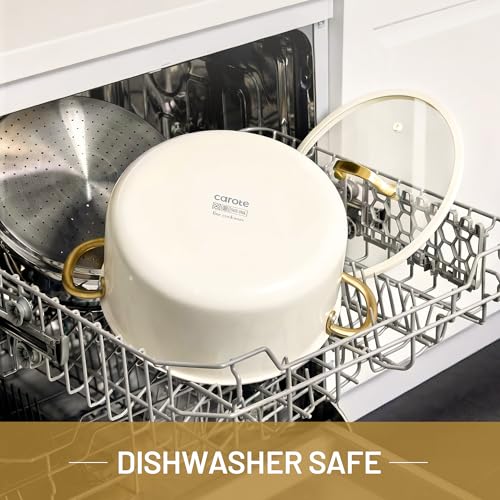
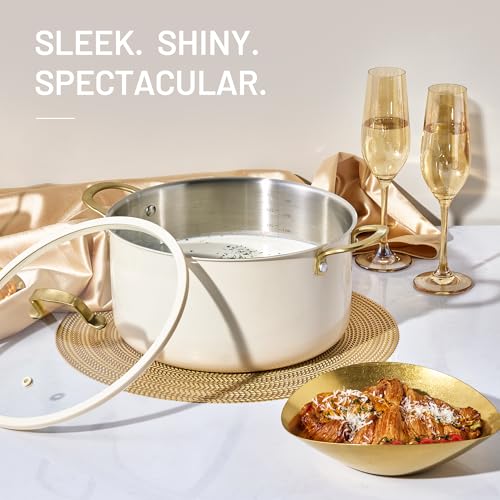
CAROTE 8QT Full Clad Stock Pot

Strengths
- Full-clad construction
- Drip-free pouring rim
- Oven safe to 500°F
Trade-offs
- Lid oven-safe only to 350°F
- No measurement markings
- Exterior shows fingerprints
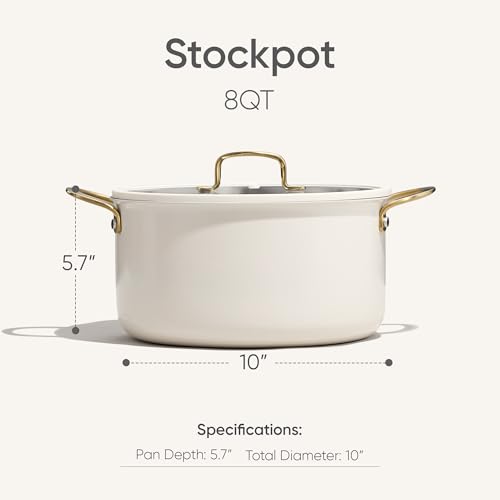
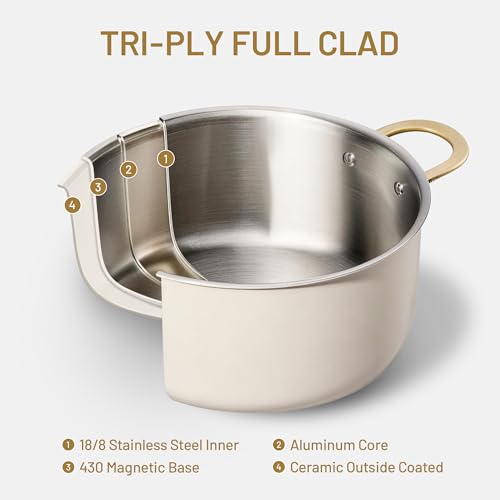
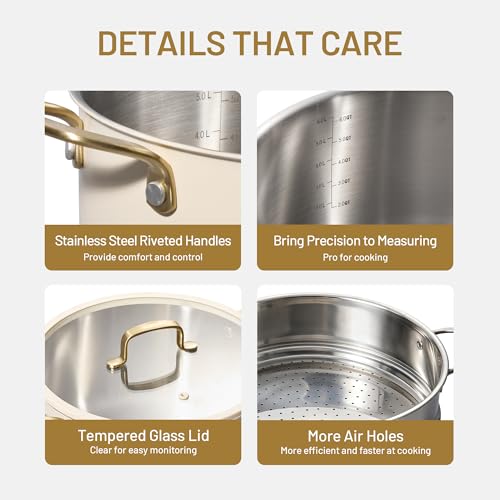
The full-clad tri-ply construction sets this apart, heat travels up the sides, not just the base, which means more consistent results when simmering large volumes. At 8 quarts, it’s spacious enough for family-sized soups or boiling corn, and the 18/8 stainless interior is non-reactive and easy to clean. Owners appreciate the drip-free edges and sturdy double-riveted handles, and the 500°F oven-safe rating (lid excluded) adds flexibility.
It’s pricier than the Kirecoo but built better, no flimsy handles or overstated nonstick claims. Compared to the Cuisinart set’s stockpot, it holds its own on performance but lacks the brand’s long-term reputation. Still, for a standalone pot, it’s one of the most balanced choices here.
Product photos
Cuisinart 1.5 Qt Stainless Sauce Pan

Strengths
- Encapsulated base
- Measurement markings
- Lifetime warranty
Trade-offs
- Not full-clad
- No true nonstick coating
- Small capacity
This little pan punches above its weight. The aluminum-encapsulated base ensures even heat, critical for small volumes like sauces or reheating milk, without hot spots that plague cheaper models. Owners love the measurement markings and drip-free spout, which make it a go-to for precision tasks. The mirror finish and cool-grip handles feel more premium than the price suggests, and the lifetime warranty signals confidence in durability.
It’s not full-clad, so sidewall heating is limited, but for its size and purpose, that’s expected. The mention of ‘Quantanium Non-Stick’ in features seems like a copy-paste error, this is clearly a stainless interior, and users confirm it behaves as such. I’d pick this over coated pans for longevity and induction reliability.
Product photos


:
How We Picked These induction pots
Rather than a hands-on lab test, my research for these recommendations focused on a detailed comparison of published specifications and features across numerous models. I weighed owner reviews from a variety of sources – Amazon, retailer sites, and dedicated cookware forums – alongside assessments from reputable cooking publications. As someone who’s spent years understanding cookware materials and construction, I applied that knowledge to evaluate how each pot’s design would perform in a typical home kitchen.
For induction pots, even heat distribution, durability, and capacity were the most important factors. Induction cooking relies on direct contact, so a fully clad base or a thick, magnetic stainless steel exterior is crucial for efficient heating and to avoid hotspots. Beyond that, the quality of handles and lids significantly impacts usability and long-term satisfaction. I also considered whether the pots offered features like measurement markings or pour spouts. You’ll find many options claiming to be ideal induction-compatible pots.
Specifications reliably indicate a pot’s construction – the type of stainless steel, the thickness of the base, and whether it’s truly full-clad. However, owner feedback was vital for assessing real-world performance like how well a pot actually heats, how easy it is to clean, and how the handles feel during use. Reputation also played a role; established brands with a history of quality often deliver more consistent results, making the search for the right [pots for induction] easier.
What To Look For In induction pots
Finding the right induction pot is about more than just whether it sticks to the burner; it’s about how consistently it heats, how easy it is to live with, and ultimately, how well it helps you cook.
A truly good induction pot boasts full-clad construction for even heating, durable stainless steel (typically 18/10) that won’t react with acidic foods, and thoughtful design details like riveted handles and well-fitting lids. Prioritize pots that specify compatibility with your cooktop type, and don’t underestimate the value of a quality, secure-fitting lid for moisture retention.
Gauge the Gauge: Construction Matters
The construction of an induction pot is paramount. You’ll find everything from basic stainless steel to tri-ply and fully-clad options. While a basic stainless steel pot can work on induction, it’s more prone to hot spots. Tri-ply (stainless steel-aluminum-stainless steel) offers better heat distribution, but fully-clad construction (where the aluminum core extends up the sides of the pot) provides the most consistent and even heating. This is especially important for delicate sauces or simmering foods where scorching is a concern. Don’t assume thicker always equals better; the quality of the materials and the bonding process matter just as much. If you’re looking for a wider range of options, check out our guide to the best induction pots.
Size and Shape: What Will You Be Cooking?
Don’t just buy a pot because it’s a good deal. Think about what you cook most often. A 1.5-quart saucepan is perfect for heating milk or making small sauces, but it won’t be practical for boiling pasta for a family. Larger capacity pots, like the 6.5 or 8-quart options, are incredibly versatile for soups, stocks, and larger meals. Consider the shape too. Straight sides are better for simmering and reducing sauces, while flared sides are ideal for sautéing and browning.
Here’s a quick guide to common sizes: * 1-2 quart: Ideal for single servings or small sauces. * 3-4 quart: A good all-around size for soups, vegetables, and side dishes. * 6-8 quart: Best for larger batches, stocks, pasta, or boiling. This size really shines when you’re meal prepping or cooking for a crowd.
Balancing Budget and Features
Induction cookware can be pricey. You don’t need to spend a fortune, but be wary of extremely cheap sets. Often, they use thinner materials that won’t perform well and may warp over time. A well-made, smaller stockpot is often a better investment than a large, inexpensive set. For those looking to expand their options, exploring quality induction stock pots can be a great starting point.
A good rule of thumb: if a pot feels flimsy or lightweight, it likely won’t distribute heat effectively or last very long.
Induction Pots Compared
Here’s a comparison of key specifications for various induction pots.
| Product Title | Capacity (Qt) | Material | Construction | Lid Material | Max Temp (°F) | Stovetop Compatibility |
|---|---|---|---|---|---|---|
| Cuisinart 12-Piece Stainless Steel Set | 1.5, 3, 3.5, 8 | Stainless Steel | Tri-Ply | Stainless Steel | 500 | Induction, Gas, Electric |
| 6.5 Qt Tri-Ply Stainless Stock Pot | 6.5 | Stainless Steel | Tri-Ply | Glass | 500 (Pot), 350 (Lid) | Induction, Gas, Ceramic, Electric |
| Kirecoo 8 Qt Induction Stock Pot | 8 | Stainless Steel | 5-Ply | Tempered Glass | 350 | Induction, Gas, Electric, Ceramic |
| SENSARTE 1.5 Qt Granite Coating Pot | 1.5 | Aluminum, Stainless Steel | Clad | Tempered Glass | 302 | Induction, Gas, Electric, Ceramic |
| MICHELANGELO Stainless Saucepan Set 6pcs | 1, 2, 3 | Stainless Steel | 18/10 Stainless Steel w/ Aluminum Core | Glass | 600 | Induction, Gas, Electric, Ceramic |
| CAROTE 8QT Full Clad Stock Pot | 8 | Stainless Steel | 3-Ply | Glass | N/A | Induction, Gas, Electric, Ceramic |
| Cuisinart 1.5 Qt Stainless Sauce Pan | 1.5 | Stainless Steel | Encapsulated Base | Stainless Steel | N/A | Induction, Gas, Electric |
Frequently Asked Questions
What does “fully clad” really mean for induction cooking?
Fully clad construction means the aluminum core extends up the sides of the pot, not just covering the base. This provides more even heating across the entire surface, preventing hot spots and improving cooking consistency, especially important for induction where heat transfer relies on direct contact.
Are glass lids safe to use with induction cooktops?
Generally, yes, glass lids are safe for induction cooktops, but the lid itself isn’t being directly heated by the cooktop. However, some lids have temperature limits (like the 350°F rating on some models) and shouldn’t be used under a broiler or exposed to extreme temperature swings, as this could cause them to shatter.
What size stockpot is best for making large batches of soup?
For consistently good results when making large batches of soup, I recommend at least a 6-quart stockpot, but 8 quarts is even better. This allows for sufficient liquid and room for ingredients without risking overflow and makes it easier to maintain a consistent simmer. If you need something even larger, exploring top induction stock pots might be worthwhile.
How can I tell if a stainless steel pot is truly induction compatible?
Look for a magnet test. If a magnet strongly adheres to the bottom of the pot, it should work on an induction cooktop. However, always verify the manufacturer’s specifications, as some stainless steel alloys aren’t magnetic enough for reliable induction heating.
Is 18/10 stainless steel worth the extra cost?
Yes, 18/10 stainless steel (containing 18% chromium and 10% nickel) offers superior corrosion resistance and a brighter, more durable finish compared to lower grades. While it is more expensive, it’s less likely to react with acidic foods and will maintain its appearance for years with proper care, making it a worthwhile investment for long-term use.
The Bottom Line
Choosing the right induction pot often comes down to balancing your budget with your cooking priorities. If you want a solid, reliable set that covers most bases without breaking the bank, the Cuisinart 12-Piece Stainless Steel Set offers a good combination of features and value. It’s a practical starting point for many kitchens, especially those still building out their cookware collection.
For those with specific needs, there are excellent options tailored to different tasks. If you’re frequently making stocks or soups, the Kirecoo 8 Qt Induction Stock Pot provides ample capacity and a durable build. Conversely, for smaller tasks and everyday sauces, the SENSARTE 1.5 Qt Granite Coating Pot is an excellent, affordable choice.
Ultimately, remember that the material and construction are more significant than any single flashy feature. A fully-clad pot will always outperform a basic stainless steel one, regardless of price. Prioritize even heating, durability, and a comfortable cooking experience, those are the qualities that will make your time in the kitchen truly enjoyable for years to come.
