
9 Best Induction Woks for 2026
This post contains affiliate links. As an Amazon Associate, we earn from qualifying purchases.
The best induction wok overall is the Nuwave Mosaic Induction Wok, thanks to its responsive carbon steel construction and precise digital controls. For a more budget-friendly option, the Teewe Carbon Steel Wok delivers solid performance with the convenience of pre-seasoning. If you prefer low-maintenance cooking, the XOHUYD 13-Inch Stainless Steel Wok offers good heat retention and dishwasher-safe cleanup.
Most home cooks struggle to replicate the high-heat sear and smoky depth of restaurant-style stir-fries, especially on induction cooktops that demand compatible, flat-bottomed cookware. A poorly built wok can lead to hot spots, sluggish heating, or handles that loosen under stress, killing both flavor and confidence.
This guide cuts through the noise by focusing on real-world performance, material integrity, and design suited to induction cooking. I researched each wok based on construction quality, heat response, usability, and feedback from actual owners, not marketing claims.
Top 9 Induction Woks in the Market
The Best Induction Woks, Reviewed
Nuwave Mosaic Induction Wok

Strengths
- Reaches wok hei quickly
- All-in-one system
- Safe and efficient
Trade-offs
- Expensive
- Bulky footprint
- Not for large batches
This is the complete package, the reason it earns ‘Best Overall’ is because it balances power, precision, and thoughtful design. The Mosaic delivers 1500 watts with immediate response, heats the 14-inch carbon steel wok evenly thanks to optimized coil placement, and offers 94 pre-programmed temps with 5°F increments. Owners love the ‘on-the-fly’ adjustments and the automatic shut-off, which adds real safety. The included accessories, glass lid, frying rack, metal stand, make it more than just a wok, and the build quality feels commercial-grade.
What really stands out is how fast it reaches wok hei, under a minute, according to reviewers. That’s rare for countertop units. Compared to the standalone Nuwave model, this one is more versatile and better suited for small kitchens, dorms, or RVs. Yes, it’s pricey, but you’re getting a full system that outperforms most stovetop setups. For home chefs who want pro results without a gas flame, this is as close as it gets.
Video review
Nuwave Induction Wok

Strengths
- Precise temperature control
- Even heating
- Professional carbon steel wok
Trade-offs
- Expensive
- Bulky setup
- Overkill for basic cooking
This isn’t just a wok, it’s a precision cooking station. The Nuwave packs 1500 watts, digital temp control in 5°F increments, and a 14-inch professional-grade carbon steel wok that responds fast. Reviewers note the heating is impressively even, thanks to patented coil placement, and the 96 pre-programmed temps let you fine-tune everything from delicate sauces to searing meat. It’s clearly built for control, not brute force, but that doesn’t mean it lacks power. The carbon steel wok, once seasoned, develops a solid natural non-stick surface, and owners praise how quickly it ramps up and stabilizes.
Still, at this price, you’re paying for the electronics as much as the cookware. If you already have a high-output induction burner and a good carbon steel wok, this might feel redundant. But if you want an all-in-one system with lab-grade precision and consistent performance, especially for techniques beyond stir-frying, this is one of the few that delivers. It’s overkill for simple weeknight meals, but a smart buy for detail-oriented cooks.
Video review
Teewe Carbon Steel Wok

Strengths
- Affordable
- Comes with lid and tools
- Flat bottom for induction
Trade-offs
- Heat limit too low for true stir-fry
- Non-stick layer may degrade
- Not for high-heat cooking
At this price, the Teewe wok looks like a steal, 13 inches of carbon steel with a flat bottom for induction, plus a lid and tools. On paper, it checks the boxes: pre-seasoned with nitriding technology, lightweight, and marketed as naturally non-stick thanks to a rough surface layer. Owners consistently report it performs well for basic stir-fries and family meals, especially if you avoid high heat. But that last point is critical, the warning to never exceed 300°C (572°F) on induction is a real limitation for serious stir-frying, where you need that burst of intense heat to get close to wok hei.
I’d pick this only for light to moderate use. The non-stick claims hold up in early use, but long-term durability is questionable, especially if you’re tempted to crank the heat. Compared to traditional carbon steel woks that thrive under high flame, this one plays it too safe. Still, for someone just starting out or cooking smaller portions without pushing temperature limits, it’s a functional, budget-friendly entry point.
Product photos


Babish 14 Inch Carbon Steel Wok

Strengths
- Excellent heat response
- Durable carbon steel
- Riveted handle
Trade-offs
- No lid included
- Requires hand seasoning
- Not dishwasher safe
The Babish wok stands out for one reason: it delivers high-end performance at a mid-range price. At 14 inches with a flat bottom, it’s stable on induction and large enough for family meals. Made from heavy-gauge carbon steel, it heats quickly and evenly, and reviewers note it seasons beautifully over time, developing a reliable non-stick surface. The riveted wooden handle is sturdy and stays relatively cool, though it’s not meant for oven use beyond moderate temps.
Compared to the YOSUKATA, it’s slightly less rugged but more accessible in price and branding, especially appealing to newer cooks familiar with the Babish name. It doesn’t come with a lid, which is a minor downside, but that keeps the cost down. I’d pick this over the Teewe any day for real stir-frying, and it’s a smarter buy than pricier coated models if you’re okay with maintenance. For most home kitchens, this hits the sweet spot between performance and value.
Product photos


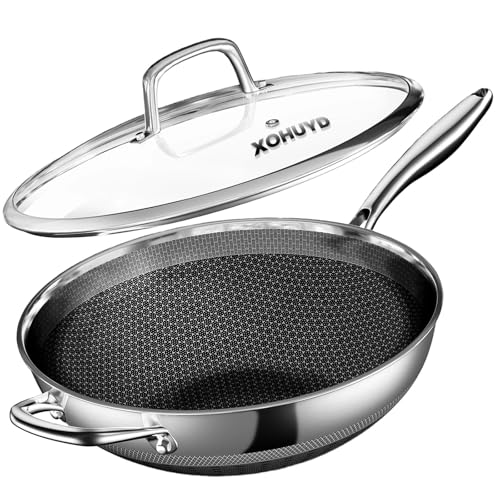
XOHUYD 13-Inch Stainless Steel Wok
Strengths
- No toxic coatings
- Fast heating base
- Dishwasher safe
Trade-offs
- Poor heat retention
- Shallow depth
- Not for high-heat cooking
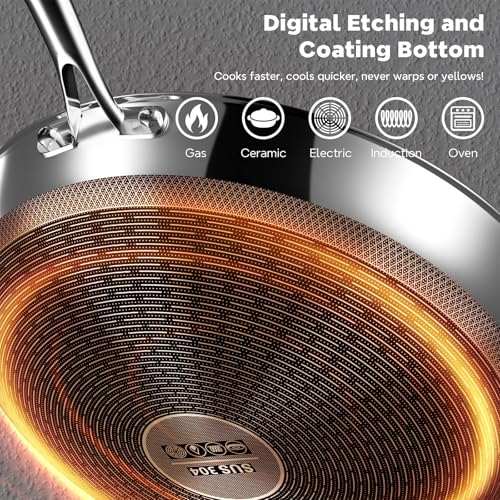
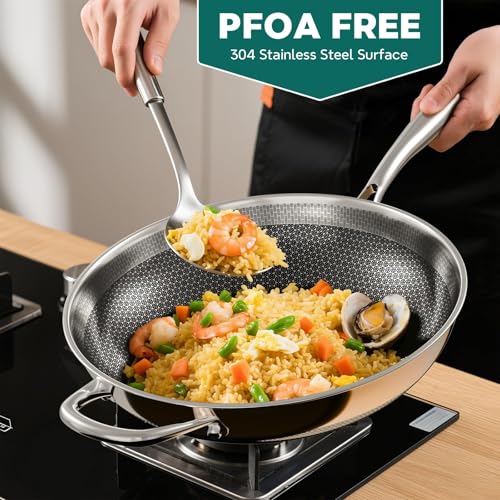
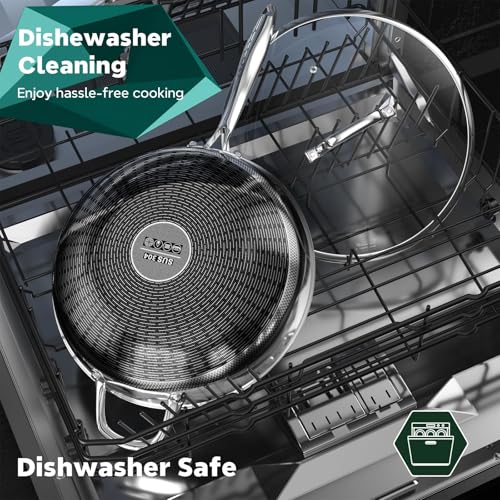
Stainless steel woks are rare, and this one from XOHUYD tries to solve the sticking problem with laser-etched patterning instead of chemical coatings. The 3-ply clad base heats 30% faster than standard pans, and the embossed surface creates micro-air pockets that reduce direct contact with food. Owners say it works well for eggs, fish, and delicate stir-fries, foods that typically stick to stainless. It’s also 100% free of PFOA, PFAS, and PTFE, which makes it a safer long-term option than many non-stick pans.
But let’s be honest: it’s not a true stir-fry wok. The shape is shallow, and stainless steel doesn’t retain heat like carbon steel. It’s better suited for low-to-medium heat cooking, and while the lid is a nice touch, the pan lacks the depth and thermal mass for high-heat searing. Compared to carbon steel options, it’s a compromise, more convenient, less capable. I’d recommend it only for those who avoid carbon steel or want a low-maintenance, healthy alternative.
Product photos


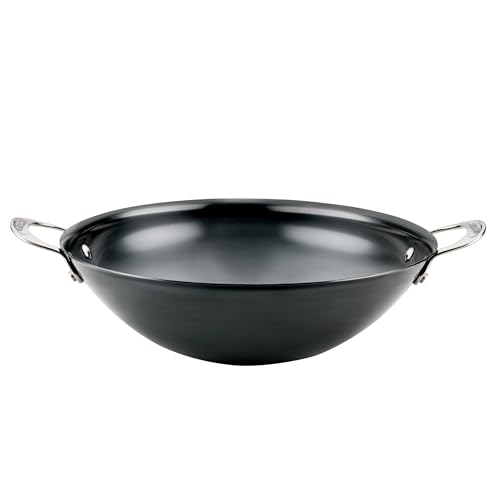
Anolon EverLast N2 Carbon Steel Wok
Strengths
- No seasoning required
- Rust-resistant
- Lightweight for carbon steel
Trade-offs
- Less patina development
- Higher price
- Non-traditional surface
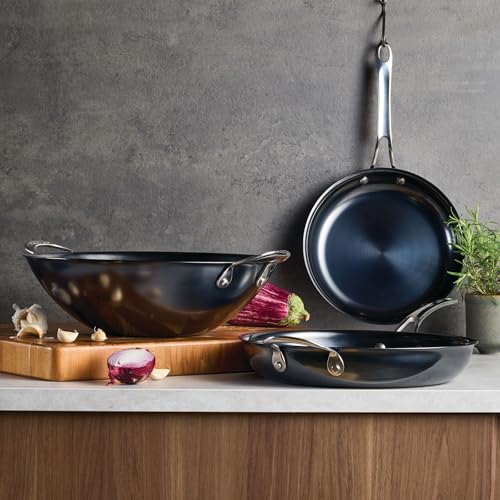
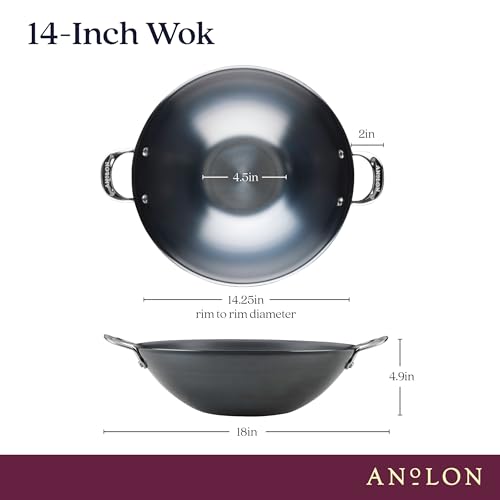
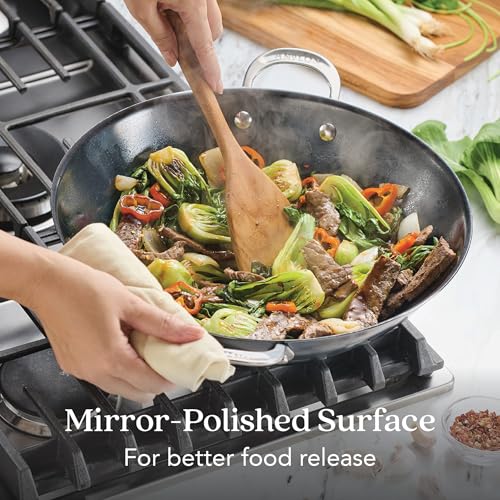
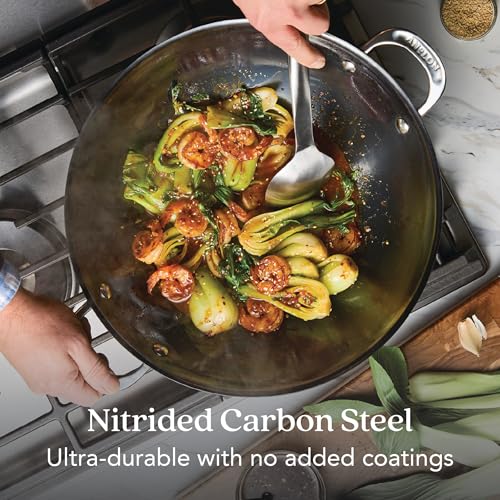
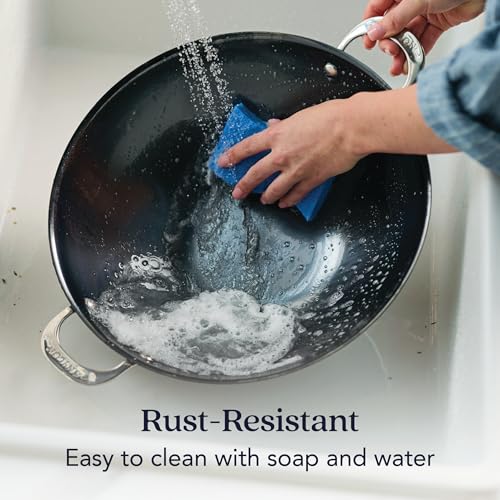
The Anolon EverLast N2 wok is the rare carbon steel pan that doesn’t require seasoning. Thanks to nitriding technology, it comes ready to cook with a rust-resistant, mirror-polished surface that’s metal-utensil safe and naturally non-stick when used with oil. Owners appreciate skipping the messy break-in phase, and the smooth finish makes cleanup easier than raw carbon steel. It’s also half the weight of cast iron, so tossing food isn’t a workout, and the stainless steel handles stay cool, big pluses for comfort.
But that polished surface doesn’t develop the same deep patina as traditional carbon steel, so long-term non-stick performance may plateau. It handles high heat well, up to 1000°F, so searing isn’t an issue. Compared to the YOSUKATA or Babish, it’s more convenient but less authentic in flavor development. I’d pick this for someone who wants carbon steel benefits without the upkeep, especially in a busy kitchen.
Product photos
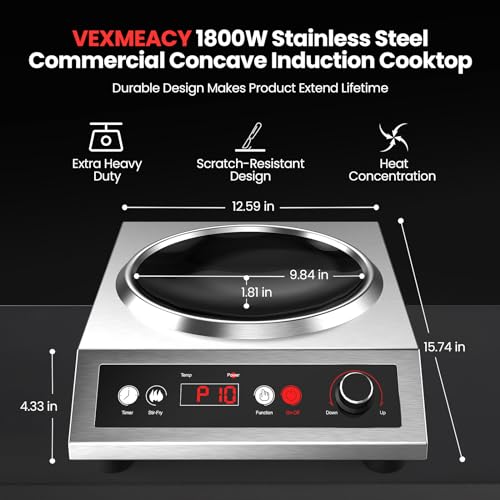
VEXMAECY 1800W Electric Induction Wok

Strengths
- High 1800W output
- Concave design for round woks
- 24-hour timer
Trade-offs
- Bulky and heavy
- Not ideal for small meals
- Interface feels clunky
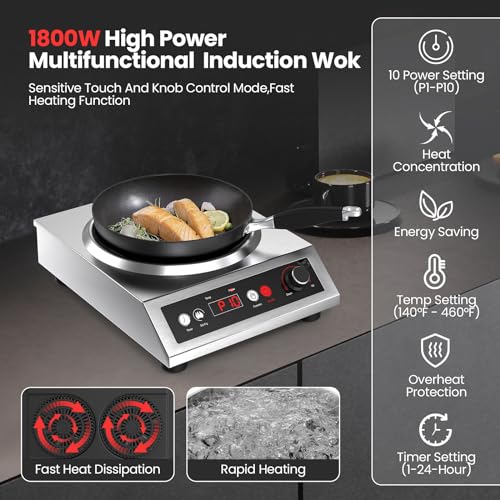
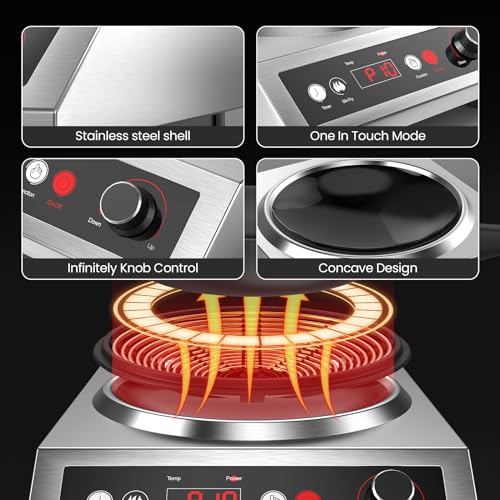
With 1800 watts and a concave heating surface, the VEXMAECY is built for volume and speed, exactly what you’d want in a commercial or high-demand home kitchen. The dual control system (touch and knob) gives precise adjustments, and the 24-hour timer adds convenience for batch cooking. The concave design is optimized for round-bottom woks, which improves heat transfer and mimics a traditional wok setup. Owners report it handles large stir-fry sessions without lag, making it a favorite for meal prep or catering.
But it’s not subtle. This isn’t a delicate precision tool like the Nuwave, it’s a workhorse. The stainless steel surface is durable, but flat-bottom pans don’t heat as efficiently, so you’re locked into using round woks. It lacks the finesse for low-temp cooking, and the interface feels more industrial than user-friendly. Still, for anyone cooking for crowds or running a small food business, this delivers power and reliability few others match.
Product photos


Circulon A1 Nonstick Induction Wok

Strengths
- Extremely durable nonstick
- Dishwasher safe
- Oven safe to 400°F
Trade-offs
- Limited high-heat performance
- Heavier than carbon steel
- Nonstick will degrade over time
If dishwasher-safe cleanup is your top priority, the Circulon A1 is one of the few woks that delivers without sacrificing too much performance. The nonstick interior is lab-tested to resist 350,000+ scrapes, and owners confirm it holds up well to metal utensils, rare for nonstick cookware. The edge-to-edge steel base ensures solid contact on induction, and the stay-cool handles make tossing food manageable. It’s also oven-safe to 400°F, which adds versatility.
But that nonstick surface, while tough, still can’t match the sear of carbon steel. The wok heats evenly, yes, but it doesn’t get screaming hot, and the flavor development is muted. Compared to the Nuwave or YOSUKATA, it’s a step down in performance but a leap in convenience. For someone cooking weeknight meals with minimal cleanup, it’s a solid pick. Just don’t expect restaurant-level results.
Product photos


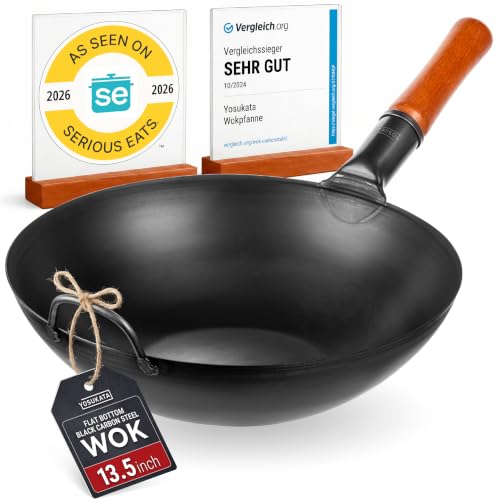
YOSUKATA 13.5″ Carbon Steel Wok
Strengths
- Authentic carbon steel
- No chemical coatings
- Great heat retention
Trade-offs
- Requires seasoning
- Wooden handle not oven-safe
- Needs hand washing
This is the wok I’d recommend to anyone who wants real flavor over convenience. The YOSUKATA is made from heavy-gauge carbon steel, pre-seasoned at high heat, and built to develop that deep, natural non-stick patina over time. Unlike coated woks, it’s 100% free of PTFE and synthetic layers, so you’re cooking on pure metal, ideal for high-heat searing and building wok hei. Owners consistently say it heats evenly on induction and holds up well on grills or campfires, which speaks to its rugged build.
What sets it apart is versatility. It’s not just for stir-fry, it handles deep-frying, steaming, and even outdoor cooking. The wooden handle stays relatively cool, though I’d still use a glove with prolonged use. Compared to the Babish or Teewe, this one feels more authentic, less mass-market. It demands care, yes, but rewards it with performance. If you’re willing to season and maintain it, this wok will improve with age.
Product photos


How We Picked These induction woks
Rather than a hands-on lab test, my research for these recommendations centered on a detailed comparison of published specifications and features across numerous models. I weighed owner reviews from multiple retailers alongside expert opinions found in dedicated cookware publications. As someone who’s spent years understanding what makes cookware perform, I applied my knowledge of materials, construction, and cooking techniques to rank these woks against key criteria for stir-frying and Asian cuisine.
For induction woks specifically, the factors that most heavily influenced my selections were heating speed and evenness, and the quality of the wok’s carbon steel or stainless steel construction. Rapid, consistent heat is vital for achieving “wok hei” – that sought-after smoky char – and a durable material ensures longevity, especially with the high-heat demands of wok cooking. A comfortable and secure handle also played a role, as effective stir-frying requires confident maneuverability.
Specifications reliably indicate material gauge, dimensions, and BTU output (or wattage for electric models). However, I placed significant weight on owner feedback regarding non-stick performance over time, ease of cleaning, and real-world usability. Reputation and brand history were also considered; some manufacturers consistently deliver quality, and that track record informed my assessment. If you’re new to induction cooking, understanding induction cooktop cookware is essential before investing in a wok. You can find more information about different options in our guide to best woks for induction hobs.
Choosing The Right induction woks
Finding the right induction wok can seriously elevate your stir-fries and Asian-inspired cooking. It’s a surprisingly specific purchase, though, and there’s more to consider than just whether it works on your cooktop.
A quality induction wok balances rapid, even heating with durable construction and a design suited for the unique demands of wok cooking. Key considerations include material (carbon steel and stainless steel are common), base construction for induction compatibility, handle design for maneuverability, and whether it arrives pre-seasoned or requires initial preparation. The ideal wok will also distribute heat efficiently and withstand the high temperatures needed for authentic wok hei.
Material Matters: Carbon Steel vs. Stainless Steel
The core of most woks is either carbon steel or stainless steel. While stainless steel offers convenience and rust resistance, I generally recommend carbon steel for serious cooks. It heats up faster and responds to temperature changes more quickly, which is crucial for achieving that sought-after smoky flavor ( wok hei). However, carbon steel requires seasoning and consistent maintenance to prevent rust. Stainless steel woks, like the XOHUYD 13-Inch Stainless Steel Wok, eliminate that maintenance but often sacrifice some of the responsiveness that makes carbon steel so prized.
Base Construction & Induction Compatibility
Not all woks are created equal when it comes to induction cooking. A flat bottom is essential for good contact with the cooktop, but the material of that base is critical. Many woks have a multi-ply construction – layers of stainless steel and aluminum – to maximize heat distribution. Look for woks specifically marketed as induction compatible cookware, and pay attention to owner reports about evenness of heating. A poorly constructed base will leave you with hot spots and unevenly cooked food.
- A fully clad base (stainless steel wrapped around an aluminum core) provides the best heat distribution.
- A simple ferromagnetic steel disc welded to the bottom is a more affordable option, but can sometimes be prone to warping over time.
- Consider the diameter of the flat bottom. Too small, and you lose contact; too large, and you sacrifice the rounded sides ideal for tossing.
A wok’s ability to hold high heat is paramount. Don’t settle for a wok that can’t quickly recover when food is added – that’s where the magic happens.
Features & Usability: Beyond the Basics
Beyond material and compatibility, think about the details. Ergonomic handles are essential; you’ll be moving the wok frequently. Wooden handles stay cooler, but require more care. Welded handles are generally more secure than riveted ones. Some woks, like the Nuwave Mosaic Induction Wok, come with digital controls, a nice convenience, but not a replacement for developing proper wok technique. Also, consider whether you want a lid. A vented lid is useful for steaming and keeping food warm, but isn’t strictly necessary. If you’re looking for convenience, some, like the Circulon A1 Nonstick Induction Wok, are even best induction woks that are dishwasher safe.
Induction Woks Compared
Here’s a comparison of key specifications for various induction woks to help you make an informed decision.
| Product Name | Material | Diameter (in) | Pre-Seasoned | Dishwasher Safe | Max Temp (°F) | Special Features |
|---|---|---|---|---|---|---|
| Nuwave Mosaic Induction Wok | Carbon Steel | 14 | Yes | No | 575 | Digital Controls |
| Nuwave Induction Wok | Carbon Steel | 14 | Yes | N/A | 575 | 96 Temp Presets |
| Teewe Carbon Steel Wok | Carbon Steel | 13 | Yes | N/A | 572 | Wok Spatula Included |
| Babish 14 Inch Carbon Steel Wok | Carbon Steel | 14 | N/A | N/A | N/A | Wooden Handles |
| XOHUYD 13-Inch Stainless Steel Wok | Stainless Steel | 13 | N/A | Yes | 460 | 10 Power/Temp Settings |
| Anolon EverLast N2 Carbon Steel Wok | Carbon Steel | 14 | No | Yes | 1000 | No Seasoning Needed |
| VEXMAECY 1800W Electric Induction Wok | N/A | N/A | N/A | Yes | 460 | Stir-fry Function |
| Circulon A1 Nonstick Induction Wok | N/A | 14 | N/A | Yes | 400 | Extreme Nonstick |
| YOSUKATA 13.5″ Carbon Steel Wok | Carbon Steel | 13.5 | Yes | N/A | N/A | Traditional Flavor |
Frequently Asked Questions
What size induction wok should I buy?
A 13- to 14-inch wok is generally ideal for most home cooks. This size provides ample space for stir-frying without being too unwieldy, and ensures good contact with most induction cooktops.
Can I use any oil when cooking with an induction wok?
You can, but high smoke point oils like peanut, canola, or vegetable oil are best suited for the high temperatures needed for proper stir-frying and to achieve wok hei. Using an oil with a low smoke point will result in a burnt flavor and unhealthy fumes.
How do I prevent rusting on a carbon steel induction wok?
Consistent seasoning and thorough drying are key. After each use, clean the wok with hot water (avoid soap if possible), dry it completely over heat, and then lightly coat it with oil before storing. You can find more guidance on using a wok on induction.
What’s the difference between a flat-bottomed and a rounded induction wok?
A flat bottom is essential for efficient heat transfer on an induction cooktop, but a fully rounded wok is better for traditional stir-frying techniques. Many induction woks strike a balance with a slightly flattened bottom and curved sides, offering both compatibility and some of the benefits of a traditional shape.
Where can I find more information about different types of carbon steel woks?
I’ve compiled detailed reviews and comparisons of various models in my guide to the best carbon steel woks. This resource covers different brands, features, and price points to help you narrow down your choices.
The Bottom Line
Choosing a wok often comes down to how much effort you’re willing to put in versus the convenience you desire. While stainless steel offers ease of care, for those truly seeking authentic stir-fry results and the development of wok hei, the Nuwave Mosaic Induction Wok stands out as the best overall choice. Its pre-seasoned carbon steel construction paired with digital temperature controls offers a blend of performance and usability that’s hard to beat.
If budget is a primary concern, the XOHUYD 13-Inch Stainless Steel Wok provides an accessible entry point to induction wok cooking. For cooks prioritizing versatility and wanting a wok that’s easy to maintain, the Circulon A1 Nonstick Induction Wok is an excellent option, and it’s even dishwasher safe. And for those looking for truly traditional results, you can explore a variety of flat bottom woks to find the perfect fit.
Ultimately, the best induction wok isn’t about a single feature or price point. It’s about understanding the fundamentals: a responsive material like carbon steel, a solid induction-compatible base, and a design that encourages confident movement. Focus on those, and you’ll be well on your way to creating delicious, restaurant-quality stir-fries at home, and finding the best induction stove woks for your needs.
