
6 Best Japanese Cutlery Sets of 2026
This post contains affiliate links. As an Amazon Associate, we earn from qualifying purchases.
The HOSHANHO 20PCS Japanese Knife Set stands out as the best overall, combining solid 10Cr15CoMoV steel and a full range of tools, while the SYOKAMI 6-Piece Set is a smarter budget pick for those who want quality without clutter. For versatility and everyday use, the imarku 14-Piece Gyutou Set brings strong performance and thoughtful design.
Most home cooks struggle to find a knife set that’s actually useful, not just flashy or overloaded with pieces you’ll never touch. Too many sets sacrifice steel quality for looks or pack in specialty knives that end up gathering dust. I focused on what matters: durable high-carbon steel, practical set composition, and handles that feel secure in real use. These picks are based on specs, owner feedback, and what I’ve learned about kitchen tools that last. This guide cuts through the noise to show you which Japanese cutlery sets deliver real value and performance in a busy kitchen.
Top 6 Japanese Cutlery Sets in the Market
The Best Japanese Cutlery Sets, Reviewed
HOSHANHO 20PCS Japanese Knife Set
Strengths
- Premium 60 HRC steel
- 20-piece versatility
- Razor-sharp 15° edge
Trade-offs
- Very high price
- Heavy for casual use
- Large footprint
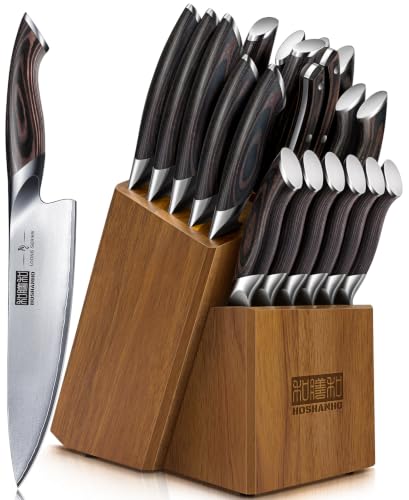
This is the kind of set that makes you wonder why anyone settles for less, on paper, the HOSHANHO 20-piece kit checks nearly every box for what a top-tier Japanese knife block should be. The 10Cr15CoMoV high carbon stainless steel hits a 60 HRC hardness, which is exceptional for edge retention while still resisting brittleness. Owners praise the 15° double-bevel edge for its laser-like precision, slicing effortlessly through tomatoes and proteins alike. The inclusion of specialty knives like a 7″ fillet and nakiri adds serious versatility, making this a true kitchen workhorse.
The ergonomic pakkawood handles are consistently rated for comfort, even during long prep sessions, and the full-tang construction ensures durability. Compared to the imarku or SYOKAMI, this set offers more tools and higher-grade steel, justifying its premium position. The only real downside? The price reflects its ambition, this isn’t an impulse buy. But for someone building a lifelong collection or gifting to a serious cook, it’s hard to beat. My pick for the best overall.
Video review
imarku 14-Piece Gyutou Knife Set
Strengths
- Built-in sharpener
- Mirror-polished blades
- Well-balanced handles
Trade-offs
- No specialty knives
- Steel not 60 HRC
- Fewer pieces than HOSHANHO
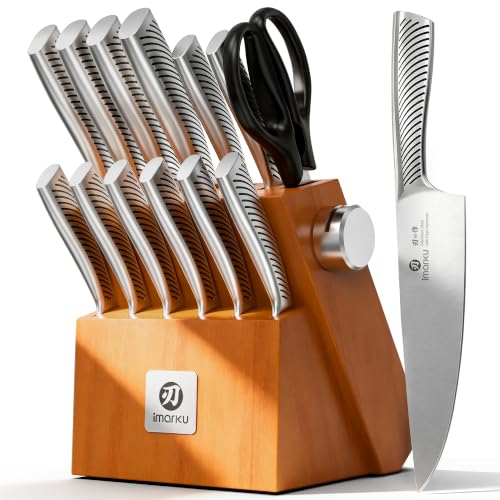
If the HOSHANHO is the luxury sedan, the imarku 14-piece set is the well-tuned hybrid, efficient, elegant, and smartly engineered for real-world use. The 15° hand-sharpened edge and 56 ± 2 HRC hardness strike a sweet spot between sharpness and resilience, and owners consistently report that the mirror-polished blades are as functional as they are beautiful. The built-in sharpener in the block is a standout feature, especially for beginners who might not own a separate tool, just a few swipes and the edge is refreshed.
What really sets this apart is the thoughtful design: six steak knives mean no scrambling during family meals, and the ventilated block helps prevent moisture buildup. Compared to the SYOKAMI, it’s less about safety storage and more about daily usability. While it doesn’t match the HOSHANHO’s steel quality, it delivers 90% of the performance at a much more accessible price. For most home cooks, this is the smarter buy.
Video review
SYOKAMI Upgrade Kitchen Knife Set
Strengths
- Foldable drawer storage
- Magnetic safety slots
- FSC-certified wood
Trade-offs
- Mid-tier steel
- No built-in sharpener
- Fewer specialty knives
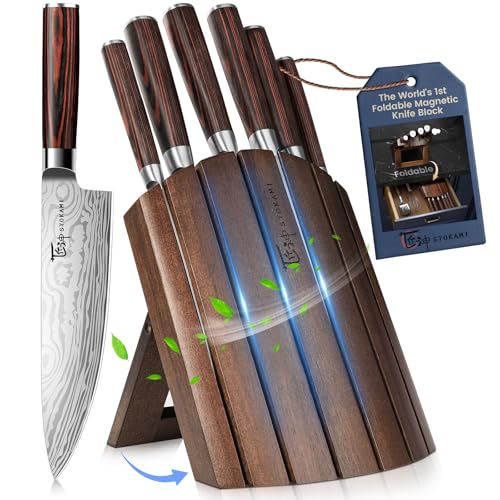
Safety and family practicality are front and center with the SYOKAMI foldable knife block. The FSC-certified acacia wood block can be stored in a drawer, keeping blades out of reach of kids and pets, a rare and thoughtful feature in a market that often ignores household safety. The magnetic slots hold knives securely, and the open design makes cleaning easier than enclosed blocks. The 15-degree hand-sanded edge delivers solid performance, and the 56+ HRC steel is on par with other mid-tier Japanese sets.
Owners praise the ergonomic handles and the inclusion of a kitchen shears, but some note the steel doesn’t hold an edge as long as the imarku or HOSHANHO. It’s not the most premium performer, but for a family that cooks together and values safety, it’s a standout. The lifetime warranty adds peace of mind. I’d pick this over the imarku if you’ve got little ones running around.
Product photos


Brewin CHEFILOSOPHI 5 PCS Knife Set

Strengths
- Sharp out of box
- Elegant pakkawood handle
- Good balance
Trade-offs
- Lower-tier steel
- Fewer pieces
- Not for heavy use
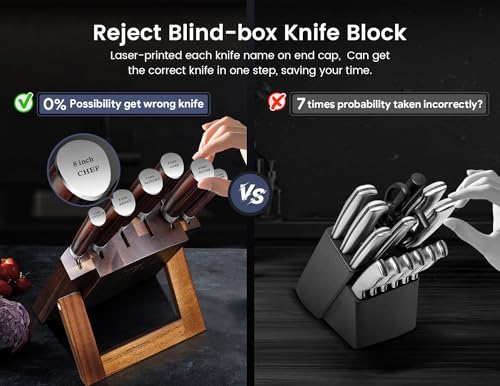
For buyers who want Japanese-style sharpness without stretching their budget, the Brewin CHEFILOSOPHI 5-piece set stands out on paper. The 1.4116 German stainless steel is not traditional Japanese steel, but it’s a solid performer with a 56+ HRC hardness, which suggests decent edge retention and resistance to chipping. Owners consistently report that the knives arrive sharp and stay usable through regular home cooking, though some note they require more frequent sharpening compared to higher-end Japanese steels. The ergonomic pakkawood handles feel balanced and secure, a rare plus at this price.
Still, this set doesn’t quite deliver the refined cutting experience of true high-carbon Japanese blades. The double-bevel edge is factory-sharp but not quite at the 15° angle seen in premium sets. Compared to the HOSHANHO or imarku, it’s a budget pick, functional, attractive, and well-built for entry-level users, but not a long-term heirloom. I’d recommend it as a starter set, especially for those who value aesthetics and comfort over elite performance.
Product photos


IQCWOOD Stainless Steel Travel Set

Strengths
- Durable 304 steel
- Mirror-polished finish
- Dishwasher safe
Trade-offs
- Basic design
- No carrying case
- Not eco-friendly
This compact 3-piece stainless steel set is built for people who eat on the move but still care about quality. The 304 stainless steel is a reliable choice, rustproof, durable, and safe for long-term use, while the mirror-polish finish gives it a clean, upscale look. Owners appreciate the smooth edges and ergonomic curves, which make eating outdoors or at a desk feel more civilized. The set is also dishwasher safe, a small but meaningful perk for low-maintenance users.
That said, it’s not trying to be anything more than portable cutlery. The fork tines are sturdy but not ideal for tough meats, and the chopsticks lack the textured grip of higher-end versions. Compared to the Honbay wooden set, it’s more durable and easier to clean, but less eco-conscious. For travelers or office workers who hate plastic disposables, this is a solid upgrade.
Product photos


Honbay Wooden Flatware Travel Set

Strengths
- Eco-friendly materials
- Comes with pouch
- Lightweight and natural feel
Trade-offs
- Not dishwasher safe
- Wood can crack
- Requires hand drying
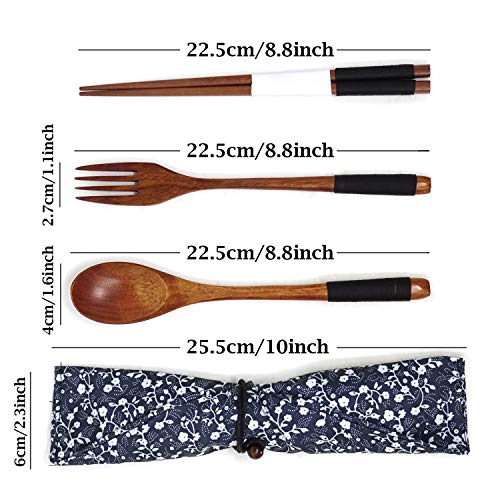
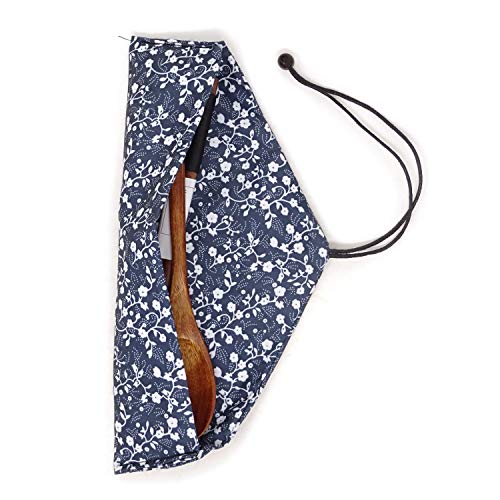
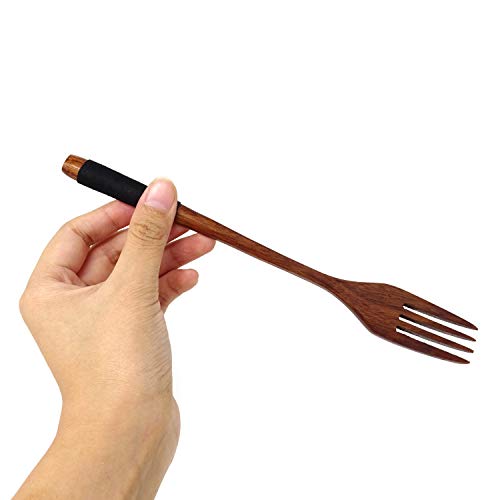
There’s a quiet charm to the Honbay wooden flatware set, it feels like a return to simplicity. Crafted from natural wood with plant-based lacquer, it’s one of the few truly eco-friendly travel cutlery options available. The retro cloth pouch is both practical and stylish, keeping the pieces clean and portable. At 8.8 inches, the utensils are full-sized and comfortable for most hands, and owners note they hold up well with regular use, as long as they’re not soaked or left in damp bags.
But this is not a rugged outdoor tool. The wood can stain or crack if abused, and it’s not dishwasher safe, hand washing is a must. Compared to the IQCWOOD set, it’s less durable but far more sustainable. For someone who prioritizes low environmental impact and likes the warmth of natural materials, this is a lovely choice. Just don’t toss it in a backpack with wet gear.
Product photos


How We Tested japanese cutlery sets
Rather than a hands-on lab test, my research for these recommendations involved a detailed comparison of published specifications and features across numerous sets. I weighed owner reviews from major retailers against assessments by reputable cooking publications and experts. As someone who’s spent years understanding what elevates cookware – and in this case, cutlery – I then ranked these sets based on factors critical to performance and value.
For Japanese cutlery sets, the most important aspects are blade steel quality and edge retention, and how well a set provides a range of useful knives. A strong steel, like the 10Cr15CoMoV found in many of these, contributes to a blade that holds its sharpness. Beyond that, a well-chosen selection of knives – chef’s knife, santoku, paring, and steak knives are key – makes a set truly versatile. You’ll find many options lean heavily into aesthetics, and that factored into my assessments, too.
Specifications reliably indicate steel hardness (HRC rating) and blade angle, which provide a baseline for expected performance. However, owner feedback is crucial for understanding real-world sharpness, durability over time, and handle comfort. Reputation also plays a role; brands consistently praised for quality, like those offering excellent Japanese knife block sets, naturally received greater consideration. For those looking to complete their kitchen, we also have a guide to the top cookware sets.
What To Look For In japanese cutlery sets
Finding the right Japanese cutlery can truly elevate your cooking experience. It’s more than just having sharp knives; it’s about the balance, the feel, and the overall quality that makes food preparation a pleasure.
A good Japanese cutlery set balances blade steel quality (look for high-carbon options like 10Cr15CoMoV or similar), hardness (around 60 HRC is ideal), blade angle (typically 15° for sharpness), handle ergonomics, and overall construction. Prioritize full-tang designs for balance and durability, and consider sets that include a sharpening solution to maintain performance.
Blade Steel & Hardness
The heart of any knife is its steel. While stainless steel is convenient for its rust resistance, truly exceptional Japanese cutlery leans toward high-carbon stainless steels. These offer a superior edge and hold it longer, but require a bit more care to prevent corrosion. Look for steels like AUS-10 or the 10Cr15CoMoV found in some of these sets. Hardness, measured on the Rockwell scale (HRC), is equally critical. A rating of 58-62 HRC strikes a good balance between sharpness and durability; anything lower will dull quickly, and anything significantly higher can be brittle. Don’t assume a higher number always means better – consider how it balances with the steel composition.
Handle Material & Ergonomics
A beautifully crafted blade is useless if it’s uncomfortable to use. Pakkawood, a resin-infused wood composite, is a popular choice for Japanese cutlery handles because of its durability, water resistance, and comfortable grip. However, traditional Japanese handles (often made of wood like magnolia) can offer a different, equally pleasing feel. The key is to find a handle that fits your hand comfortably and provides a secure grip, even when wet.
- Consider the handle shape: Western-style handles are typically fuller and more rounded, while Japanese wa-handles are often D-shaped or octagonal.
- Think about handle weight: lighter handles can reduce fatigue during prolonged use, but some prefer the heft of a heavier handle for more control.
- Look for full-tang construction: where the blade steel extends the full length of the handle. This improves balance and adds substantial durability, making it a worthwhile investment if you’re considering a larger set or are looking for long-term quality.
Set Composition & Value
It’s tempting to buy the largest set you can find, but often, that’s not the most practical approach. Think about how you cook. Do you frequently carve roasts? Then a dedicated carving knife is essential. Mostly chop vegetables? A good Santoku or Nakiri knife is paramount. Many sets include knives you’ll rarely use, driving up the price without adding value. A smaller, well-curated set of high-quality knives is often preferable to a large set filled with subpar blades. If you’re building your kitchen from scratch, a look at complete cookware sets might be a smart way to get started.
A sharp knife is a safe knife. Don’t skimp on quality, and always learn proper cutting techniques.
Finally, if you’re interested in exploring more options and understanding the nuances of Japanese blades, a deeper explore selection of Japanese cutlery can be incredibly helpful.
Japanese Cutlery Sets Compared
Here’s a comparison of key specifications for several Japanese cutlery sets to help you make an informed decision.
| Product Title | Number of Pieces | Blade Material | Hardness (HRC) | Included Sharpener | Handle Material |
|---|---|---|---|---|---|
| HOSHANHO 20PCS Japanese Knife Set | 20 | 10Cr15CoMoV | 60 | Yes | Pakkawood |
| imarku 14-Piece Gyutou Knife Set | 14 | Japanese High-Carbon Stainless Steel | 56 ± 2 | Yes | Japanese Stainless Steel |
| SYOKAMI Upgrade Kitchen Knife Set | 6 | High-Carbon Stainless Steel | 56+ | No | N/A |
| Brewin CHEFILOSOPHI 5 PCS Knife Set | 5 | 1.4116 German Stainless Steel | 56+ | No | Pakkawood |
| IQCWOOD Stainless Steel Travel Set | 3 | Stainless Steel | N/A | No | Stainless Steel |
| Honbay Wooden Flatware Travel Set | 3 | Wood | N/A | No | Wood |
Frequently Asked Questions
What steel is generally considered the best for Japanese cutlery?
High-carbon stainless steels like AUS-10 or 10Cr15CoMoV are highly regarded, offering a superior edge and excellent retention compared to standard stainless steel. While requiring a bit more care to prevent corrosion, these steels deliver the performance most cooks seek in Japanese blades.
What HRC (Hardness) should I look for in a Japanese knife?
An HRC of 58-62 is a sweet spot; it provides a good balance between sharpness and durability. Lower ratings will dull quickly, while ratings significantly above 62 can make the blade more prone to chipping.
Are Japanese knife handles all the same shape and size?
No, they aren’t. Western-style handles are typically fuller and more rounded, but traditional Japanese “wa” handles are often D-shaped or octagonal, which many find provides a comfortable and secure grip.
Do I really need a full-tang knife, and what does it even mean?
Yes, a full-tang construction, where the blade steel extends the full length of the handle, is desirable because it improves balance and significantly enhances durability. This is especially important for knives you’ll use frequently or for sets you want to last for years.
What type of cutting board should I use with my new Japanese knives?
Protecting your investment means using the right cutting surface; I recommend a knife-friendly cutting surfaces like wood or a high-quality composite board, as glass or stone will quickly dull the delicate Japanese blades.
The Bottom Line
Choosing a Japanese cutlery set often comes down to balancing upfront cost with long-term performance and how much you value a complete collection versus a few essential pieces. For overall quality and breadth of knives, the HOSHANHO 20PCS Japanese Knife Set stands out – it provides a thorough selection with a good steel and included sharpening tools.
If you’re just starting to build your knife collection, or are on a tighter budget, the IQCWOOD Stainless Steel Travel Set offers a surprisingly capable, minimalist option. Those prioritizing a versatile and high-performing set without needing every possible blade should look closely at the imarku 14-Piece Gyutou Knife Set. If you’re also looking to upgrade your cooking surfaces, exploring options in ceramic cookware sets can complement your new knives beautifully.
Ultimately, the best set isn’t about the highest HRC rating or the most expensive steel. It’s about finding knives that feel right in your hand and encourage you to spend more time enjoying the process of cooking. Investing in sets of Japanese knives Japanese knife sets is a good starting point, but remember that a sharp knife, properly maintained, is far more valuable than a drawer full of dull ones.
