
7 Best Japanese Fillet Knives of 2026
This post contains affiliate links. As an Amazon Associate, we earn from qualifying purchases.
The Shun Classic 6″ Boning & Fillet stands out as the best overall Japanese fillet knife, combining reliable flexibility with high-quality VG-MAX steel. For those on a budget, the imarku 7 Inch Fillet delivers impressive performance at a lower price, while the SYOKAMI 9 Inch Fillet offers superior reach and flexibility for larger fish.
Choosing the right Japanese fillet knife isn’t just about sharpness, it’s about finding a balance of flexibility, control, and durability that matches how you work with fish. Too stiff, and you tear the flesh; too flimsy, and you lose precision.
This guide cuts through the noise by focusing on what matters: blade flex, steel quality, and handle comfort, all evaluated through specs, owner experiences, and the standards I’ve come to expect from well-made Japanese knives.
Top 7 Japanese Fillet Knives in the Market
The Best Japanese Fillet Knives, Reviewed
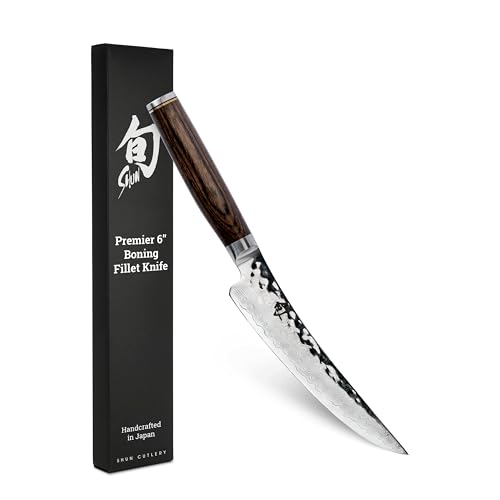
Shun Premier 6″ Boning & Fillet Knife
Strengths
- VG-MAX steel with 68-layer cladding
- Tsuchime hammered finish
- Superior edge retention
- Ergonomic contoured handle
- Free sharpening support
Trade-offs
- Most expensive option
- Shorter blade limits large fish use
If you’re looking for the best overall Japanese fillet knife, the Shun Premier is hard to ignore. It shares the same VG-MAX core and 68-layer Damascus cladding as the Classic, but adds a hammered tsuchime finish that reduces drag and improves food release, a real advantage when working sticky fish skin. The contoured Pakkawood handle feels more refined in hand, offering better ergonomics during long prep sessions.
Owners praise its balance and precision, and the 16-degree edge stays sharp longer than most. It’s also backed by Shun’s free sharpening support, which adds long-term value. Yes, it’s the most expensive here, but it’s built to last decades with care. For someone who fillets regularly and wants a knife that performs like a pro tool, this is the one to beat.
Video review
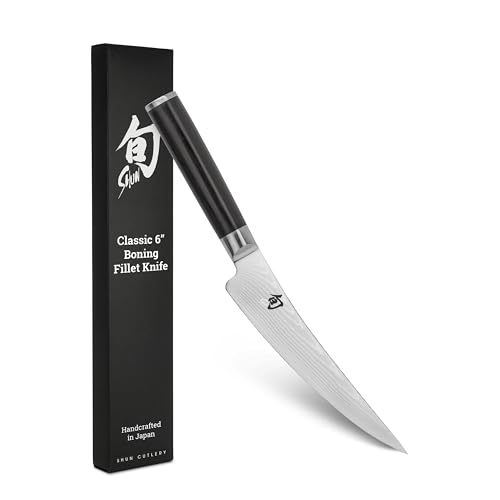
Shun Classic 6″ Boning & Fillet Knife
Strengths
- VG-MAX steel core
- 68-layer Damascus cladding
- 16-degree precision edge
- Pakkawood D-handle
- Handcrafted in Japan
Trade-offs
- Less flexible than longer fillet knives
- Higher price than mid-tier options
The Shun Classic 6-inch strikes a smart balance between precision and durability, making it a standout in the premium fillet knife space. On paper, the VG-MAX steel core with 68 layers of Damascus cladding delivers the kind of edge retention and corrosion resistance that serious home cooks expect from Japanese craftsmanship. The 16-degree angle is aggressive enough for clean cuts through delicate fish, and owners consistently report it handles both filleting and light boning with confidence.
Where it really shines is in the details, the D-shaped Pakkawood handle offers reliable grip and comfort, and the hand-finished blade from Japan reflects a level of care that mass-market knives often miss. It’s not the most flexible in the lineup, so if you’re working large salmon or whole turkeys, you might want something longer or more pliable. But for everyday precision, it’s hard to beat.
Video review
imarku 7 Inch Fillet Knife

Strengths
- Good flexibility for fish
- Affordable price
- FSC-certified Pakkawood handle
- Thin, precise blade
- Razor-sharp out of box
Trade-offs
- Steel not as durable as premium options
- Edge may dull faster with heavy use
For the price, the imarku 7-inch delivers a surprising amount of performance. The 10Cr15CoMoV steel isn’t top-tier, but with a 59±2 HRC hardness, it holds a decent edge and resists rust well, important for a knife that sees frequent fish prep. The flexibility is spot-on for medium-sized fish, and the thin blade helps minimize waste, which reviewers appreciate when portioning delicate fillets.
The Pakkawood handle feels solid and is contoured to reduce fatigue, though it doesn’t have the same refined balance as the Shun models. Still, for someone upgrading from a stiff, generic boning knife, this is a noticeable leap. It’s not built for heavy-duty hunting or daily commercial use, but for home cooks on a budget, it’s one of the smarter buys.
Product photos



SYOKAMI 7.2 Inch Fillet Knife

Strengths
- Under $40 price
- Blade suspension design
- Anti-slip spine teeth
- FSC-certified wood handle
- Sharp out of box
Trade-offs
- German, not Japanese steel
- Less brand prestige
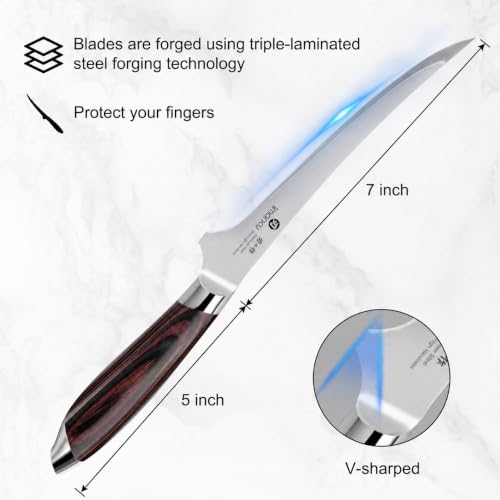
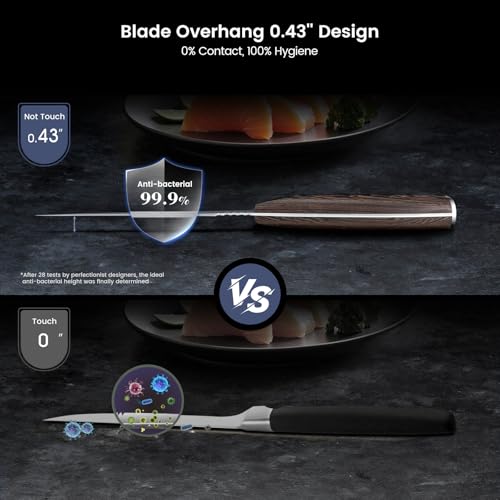
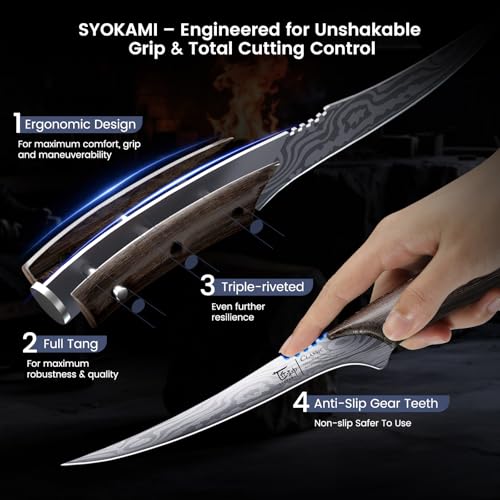
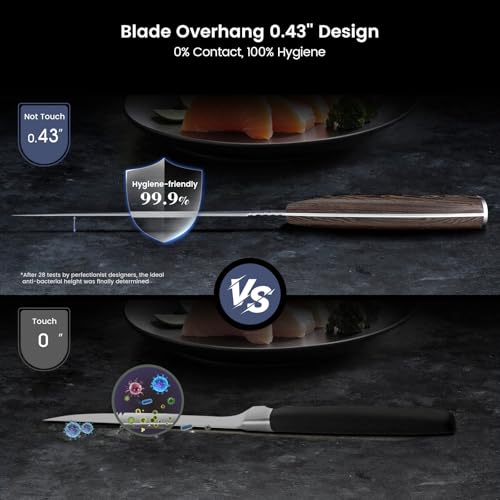
Priced under $40, this SYOKAMI 7.2-inch model is one of the most compelling budget picks. It uses German 50CrMoV15 steel, not Japanese, but still high carbon, and owners say it arrives sharp and holds its edge well for home use. The 0.43-inch blade suspension is a clever design: it keeps the edge off the cutting board, reducing contamination and wear, a detail that’s surprisingly rare at this price.
The ergonomic handle with rear sharpened curve offers solid control, and the anti-slip gear teeth on the spine help maintain grip. It’s not as refined as the Shun or HOSHANHO, but for occasional fish prep or weekend anglers, it delivers solid value. I’d pick this over the imarku if you want something slightly longer and more innovative at a lower cost.
Product photos


HOSHANHO 7 Inch 9-Layer Fillet Knife
Strengths
- 9-layer HRC 62 steel
- G10 and rosewood handle
- Frosted non-stick texture
- Lightweight and balanced
- Good flexibility
Trade-offs
- Limited brand service support
- Less name recognition
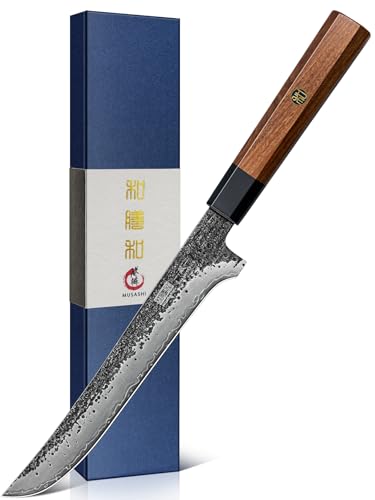
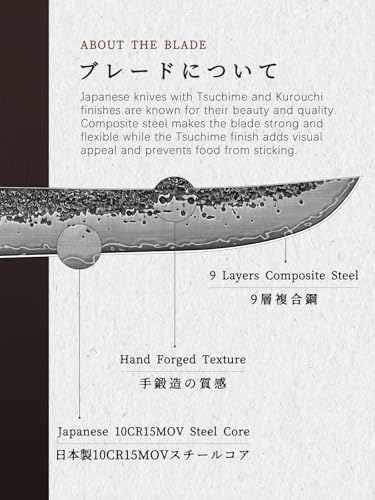
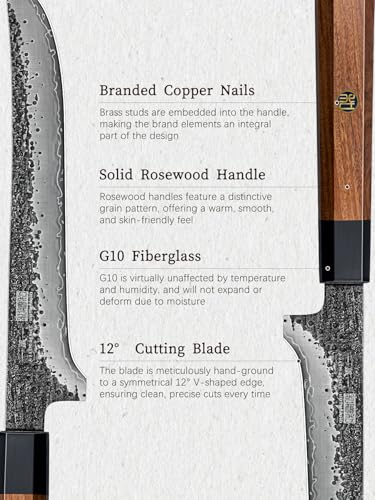
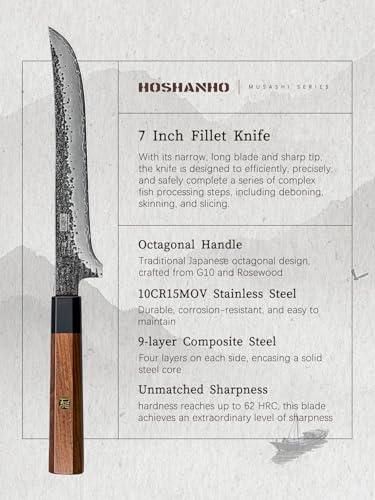
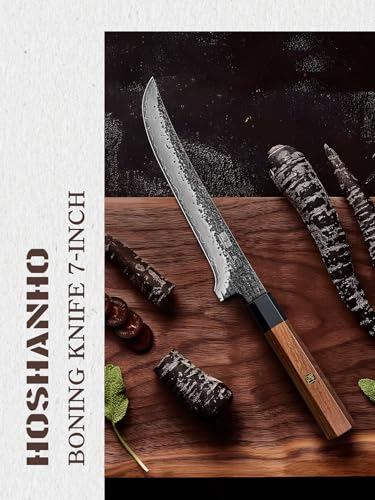
The HOSHANHO 7-inch knife packs a lot of engineering into a mid-range price. Its 9-layer composite steel blade, hardened to HRC 62, suggests serious durability, higher than most in this category, and owners report it stays sharp through repeated use. The G10 and rosewood handle is a standout: it’s non-slip, stable in wet conditions, and provides excellent balance during detailed work.
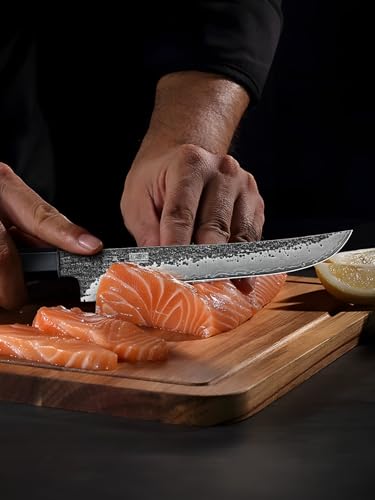
The frosted texture on the blade seems to help with release, and the flexibility is well-tuned for trout or sea bass. It’s not as flashy as the Shun Premier, but it offers similar handling at half the cost. Where it falls short is brand support, no free sharpening or long-term service network like Shun offers. Still, for the performance, it’s a strong contender.
Product photos
SYOKAMI 9 Inch Fillet Knife
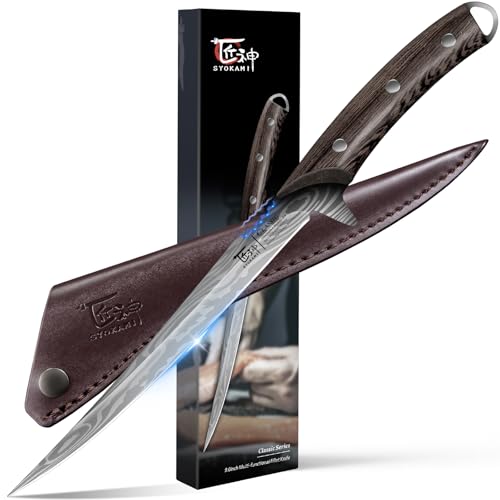
Strengths
- 9-inch flexible blade
- Wenge wood moisture-resistant handle
- Stepped blade reduces sticking
- Includes leather sheath
- FSC-certified wood
Trade-offs
- Blade may be too long for small fish
- Sheath quality is average
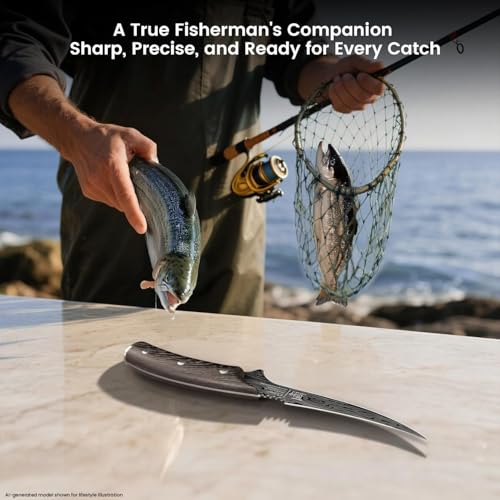
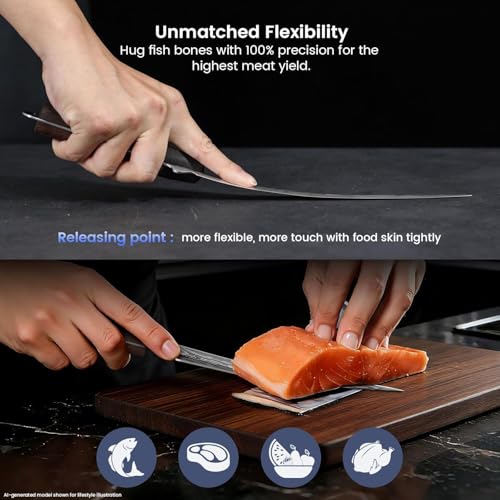
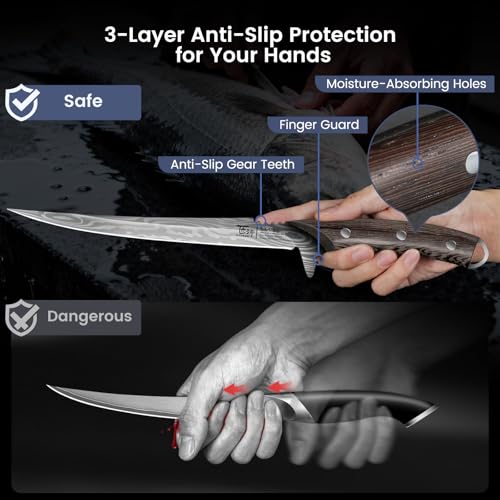
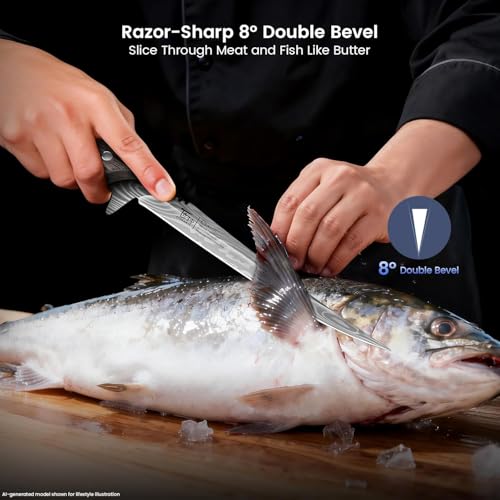
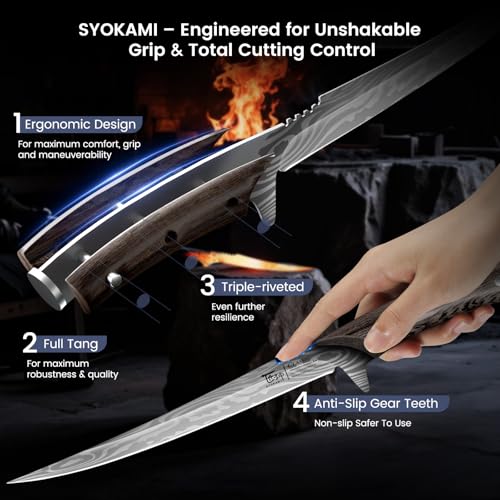
At 9 inches, this SYOKAMI knife is built for anglers and outdoor cooks tackling big fish, its length and gradual taper give it serious reach and control along the backbone. The wenge wood handle stands out not just for looks but for function, with moisture-absorbing properties and a textured spine that owners say stays grippy even with wet or bloody hands. The extended finger guard adds a layer of safety that’s welcome during prolonged use.
The stepped thickness design is an interesting touch, reviewers note it does reduce sticking, though it’s not a total standout. Where this knife pulls ahead is versatility: it’s clearly designed for fishing trips but holds its own in the kitchen for turkey deboning or trimming brisket. The included leather sheath makes it a solid pick for portable use.
Product photos
RyoriNinja 8.5″ Honesuki Fillet Knife

Strengths
- Single-bevel 9° edge
- AUS-8 vacuum-treated steel
- Sakura wood handle
- Damascus pattern
- Good balance
Trade-offs
- Single-bevel requires skill
- Not ideal for left-handed users
- Less versatile for general tasks
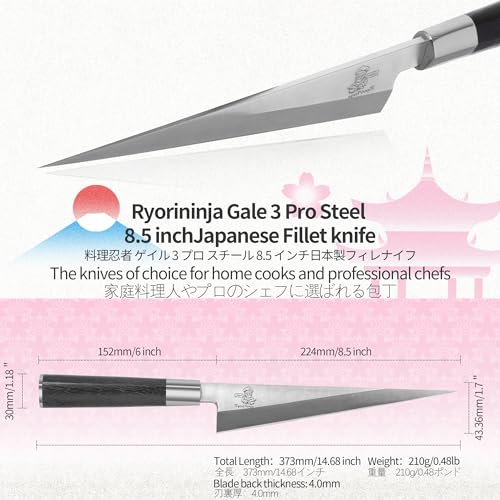
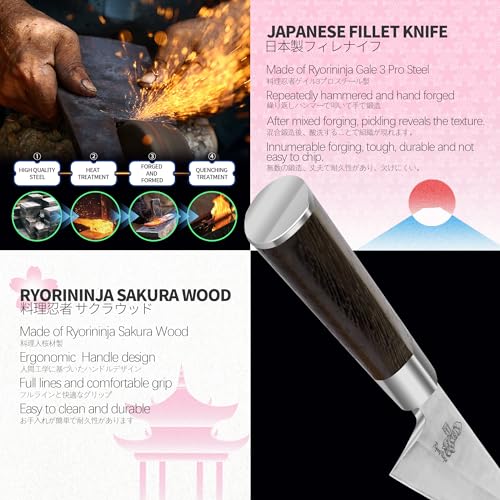
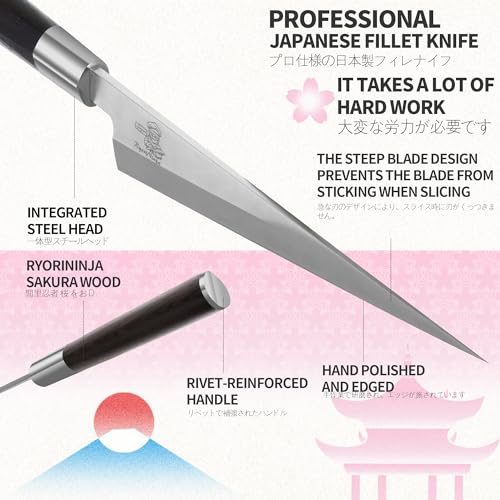
The RyoriNinja stands out for one reason: its single-bevel 9° edge, a rarity in Western-style fillet knives. This design allows for ultra-thin, precise cuts, ideal for sashimi or delicate fish prep, and reviewers note it glides through flesh with minimal drag. The AUS-8 core is heat-treated for better hardness and edge retention than standard stainless, though it won’t match Shun’s VG-MAX.
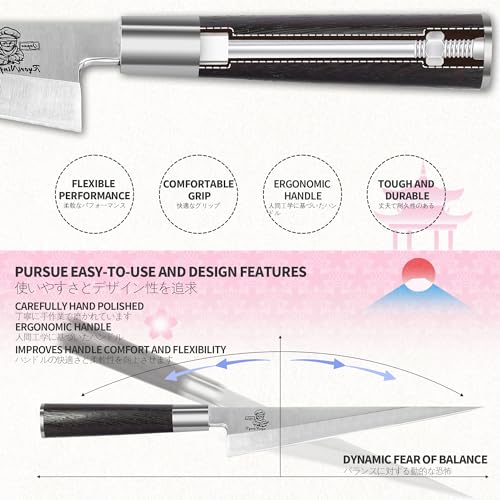
The sakura wood handle feels warm and secure, and the damascus pattern adds visual appeal. But the single-bevel edge means it’s less forgiving for beginners, it demands proper technique and care. Left-handed users may also struggle, despite claims of ambidextrous design. If you’re after authenticity and precision, this knife has character.
Product photos
How We Chose These japanese fillet knives
Rather than a hands-on lab test, my research for these recommendations centered on a detailed comparison of published specifications and features across numerous models. I weighed owner reviews from a variety of sources – paying close attention to recurring praise and complaints – alongside assessments from reputable culinary experts. As someone who’s spent years understanding what makes cookware perform, I applied that knowledge to assess which knives truly stood out based on their intended use and build quality.
For Japanese fillet knives, three factors proved most important. Blade flexibility is paramount for cleanly separating fish from bone, so I prioritized knives designed with that in mind. Steel quality and hardness also heavily influenced my rankings; a durable, sharp edge is essential. Finally, handle ergonomics played a key role, as comfortable control is vital for precision and safety during extended use.
Specifications reliably indicate the steel type, hardness (Rockwell C scale), and blade dimensions. However, owner feedback offered crucial insight into real-world sharpness retention, how well a knife handles different types of fish, and overall balance. I also considered the reputation of the manufacturer, noting that brands known for consistently producing high-quality Japanese knives generally deliver a more reliable product. Proper care is also key, so understanding the right cutting boards for Japanese knives is critical for preserving those delicate edges.
What To Look For In japanese fillet knives
Finding the right Japanese fillet knife can dramatically improve your fish preparation, but the sheer number of options can be overwhelming. It’s not simply about sharpness; it’s about how the blade’s design interacts with the fish, the comfort during extended use, and the quality of the steel itself.
A truly excellent Japanese fillet knife balances flexibility, sharpness, and control. Look for blades crafted from high-carbon steel like VG-MAX or AUS-8, a length appropriate for the size of fish you typically prepare, and a handle that provides a secure, comfortable grip even when wet. Blade flexibility is crucial for navigating bones, while a sharp edge minimizes waste.
Blade Flexibility and Length
The core function of a fillet knife is to separate flesh from bone with minimal waste. Flexibility is paramount; a rigid blade forces you to saw, tearing the delicate meat. I’ve seen many cooks struggle with knives that simply don’t yield to the fish’s structure. The length of the blade should align with the fish you’re most often working with. Shorter (6-inch) knives like the Shun Classic are excellent for smaller fish like trout or panfish, offering greater control. Longer blades (9-inch and up), such as the SYOKAMI 9 Inch, handle larger species like salmon or tuna more efficiently.
Steel Quality & Edge Retention
Japanese knives are renowned for their steel, and for good reason. The steel dictates how well the knife holds an edge and how easily it can be sharpened. VG-MAX steel, commonly found in Shun knives, is a popular choice, known for its hardness and corrosion resistance. However, don’t dismiss knives using other high-carbon steels. The imarku 7 Inch Fillet Knife, for example, uses 10Cr15CoMoV steel which, while less expensive, still offers impressive performance. When comparing steels, consider these factors:
- Hardness (Rockwell C Scale): Higher numbers (58-62 HRC) generally mean better edge retention but can also make the blade more brittle.
- Steel Composition: The addition of elements like vanadium and molybdenum can improve toughness and corrosion resistance.
- Cladding: Many Japanese knives feature Damascus cladding, not just for aesthetics, but to add flexibility and protect the core steel. If you’re looking to learn more about the materials used, exploring Japanese steel knives is a great place to start.
Handle Ergonomics and Construction
A comfortable and secure handle is often overlooked, but it’s critical, especially during longer filleting sessions. Pakkawood, a resin-impregnated wood composite, is a common material. It’s durable, water-resistant, and offers a good grip. Look for handles that are contoured to fit the hand naturally, minimizing fatigue. The HOSHANHO 7 Inch Fillet Knife, with its G10 and rosewood combination, demonstrates a thoughtful approach to handle design.
A dull knife is always more dangerous than a sharp one; invest in a honing steel and learn how to maintain your edge.
Ultimately, choosing the right knife depends on your individual needs and preferences. If you’re new to Japanese filleting knives, it’s useful to read up on fish filleting knives to understand the different styles available. And don’t hesitate to consider specialized Japanese fillet knives if you plan on focusing on specific types of fish.
Japanese Fillet Knives Compared
Here is a comparison of specifications for several popular Japanese fillet knives.
| Product Title | Blade Length (in) | Steel Type | Hardness (HRC) | Handle Material | Blade Flexibility | Edge Angle (degrees) |
|---|---|---|---|---|---|---|
| Shun Premier 6″ Boning & Fillet | 6 | VG-MAX Damascus | N/A | Pakkawood | Moderate | 16 |
| Shun Classic 6″ Boning & Fillet | 6 | VG-MAX Damascus | N/A | Pakkawood | Moderate | 16 |
| imarku 7 Inch Fillet | 7 | 10Cr15CoMoV | 59±2 | Pakkawood | High | N/A |
| SYOKAMI 7.2 Inch Fillet | 7.2 | 50CrMoV15 | N/A | N/A | High | 10 |
| HOSHANHO 7 Inch 9-Layer Fillet | 7 | 9-Layer Composite | 62 | G10/Rosewood | Moderate | N/A |
| SYOKAMI 9 Inch Fillet | 9 | N/A | N/A | Wenge Wood | Very High | N/A |
| RyoriNinja 8.5″ Honesuki Fillet | 8.5 | AUS-8 | N/A | Sakura Wood | N/A | 9 (Single Bevel) |
Frequently Asked Questions
What’s the difference between a Japanese fillet knife and a Western fillet knife?
Japanese fillet knives generally prioritize blade flexibility and thinness to a greater degree than their Western counterparts. This allows for more precise cuts and less waste when separating fish from the bone, though Western knives often feature a heavier blade for more forceful cuts.
How often should I sharpen my Japanese fillet knife?
Sharpening frequency depends on usage, but generally, a honing steel should be used before and after each use to realign the blade. Professional sharpening is recommended every 3-6 months, or whenever you notice significant dulling, and exploring Japanese knife sharpeners can help you maintain that edge at home.
Can I use my Japanese fillet knife on poultry or other proteins?
While technically possible, it’s not ideal. The thin, flexible blade is optimized for fish, and using it on tougher proteins can dull or damage the edge. You’ll find better results with a knife specifically designed for poultry or meat, or even exploring top-rated Gyuto knives for all-purpose protein prep.
What’s the best way to care for a carbon steel Japanese fillet knife to prevent rust?
Immediately after use, wash the blade with mild soap and warm water, then completely dry it. Applying a thin coat of mineral oil to the blade after drying creates a protective barrier against moisture and helps prevent rust.
Are Damascus-clad Japanese fillet knives just for show?
Damascus cladding isn’t purely aesthetic; it often surrounds a harder, more brittle core steel, adding flexibility and impact resistance. This construction helps prevent chipping and allows the knife to better withstand the stresses of filleting, even if the core steel is very hard.
The Bottom Line
Choosing a Japanese fillet knife often comes down to balancing control and convenience. Do you prioritize the ultimate in finesse and are willing to commit to meticulous care, or do you need something that’s more forgiving and requires less frequent sharpening? For the vast majority of home cooks, the Shun Classic 6” Boning & Fillet strikes the best balance of performance, durability, and ease of maintenance.
If you’re on a tighter budget, the imarku 7 Inch Fillet offers exceptional value without sacrificing essential flexibility. For those tackling larger fish regularly, the SYOKAMI 9 Inch Fillet provides the reach and blade length needed for efficient work. And if you’re looking to expand your skills beyond fish, exploring Japanese meat knives can open up a whole new world of culinary possibilities.
Ultimately, the best knife is the one you’re most comfortable with and will maintain properly. Don’t get caught up chasing the highest HRC or most exotic steel; a consistently sharp edge and a comfortable grip are far more crucial than any single specification. Regular honing and occasional sharpening with quality whetstones for Japanese knives will ensure your knife remains a reliable partner in the kitchen for years to come.
