
7 Best Japanese Knife Sets of 2026
This post contains affiliate links. As an Amazon Associate, we earn from qualifying purchases.
The Atumuryou 3-Piece Damascus set stands out as the best overall for its exceptional VG10 steel, precise 12° edge, and beautiful stabilized wood handles. For a budget-friendly start, the imarku 3-Piece offers solid performance and comfort, while the HOSHANHO 20PCS delivers unmatched versatility with a full lineup of tools and solid 10Cr15CoMoV steel.
Most home cooks want knives that feel sharp, balanced, and reliable without needing constant maintenance. Too many sets either sacrifice edge retention for flashy looks or overload you with knives you’ll never use.
This guide cuts through the clutter by focusing on what actually matters, steel quality, blade geometry, and ergonomics, based on specs, owner feedback, and years of evaluating kitchen tools. These picks deliver real performance, whether you’re dicing herbs or breaking down proteins.
Top 7 Japanese Knife Sets in the Market
The Best Japanese Knife Sets, Reviewed
Atumuryou 3-Piece Damascus Knife Set

Strengths
- VG10 steel core
- 62 HRC hardness
- 67-layer Damascus blade
Trade-offs
- No specialty knives
- No storage block
- Higher maintenance
If you want performance, beauty, and heirloom potential in one package, this set delivers. The VG10 steel core at 62 HRC is among the hardest you’ll find in consumer Japanese knives, meaning exceptional edge retention and fine slicing power. The 12° edge per side is aggressively sharp, ideal for precision cuts on delicate ingredients like sashimi or herbs. Owners praise how effortlessly these knives glide through food, and the 67-layer Damascus cladding isn’t just for show; it adds corrosion resistance and structural integrity.
The stabilized wood and ocean-blue resin handles are stunning, each one unique, and the full tang construction ensures balance. While the set is small, it covers the essentials well. Compared to larger sets, this one feels curated, not cluttered. For the price, it’s a standout, offering pro-level materials and craftsmanship without the pro-level markup.
Video review
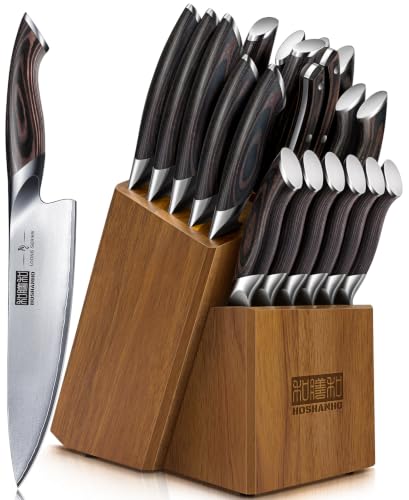
HOSHANHO 20PCS Knife Set with Block
Strengths
- High carbon steel
- 15° double bevel edge
- Includes steak knives
Trade-offs
- Bulky knife block
- Overkill for small households
- Premium price
This 20-piece set looks impressive on paper, plenty of knives, a sharpener, shears, and even six steak knives, all housed in a handsome wood block. The use of 10Cr15CoMoV high carbon steel with a 60 HRC hardness suggests solid durability and edge retention, and the 15° double bevel edge aligns with true Japanese knife geometry. Owners consistently report the blades feel razor sharp out of the box and hold up well with regular use, especially for home cooks who value precision.
Still, the sheer size of this set raises questions about necessity. Many users note they rarely reach for half the knives included, and the block takes up significant counter space. While the pakkawood handles feel balanced and durable, the premium price tag makes this a tough sell unless you’re cooking for a large household or entertaining frequently. Compared to more focused sets, this one leans more on volume than refinement.
Video review
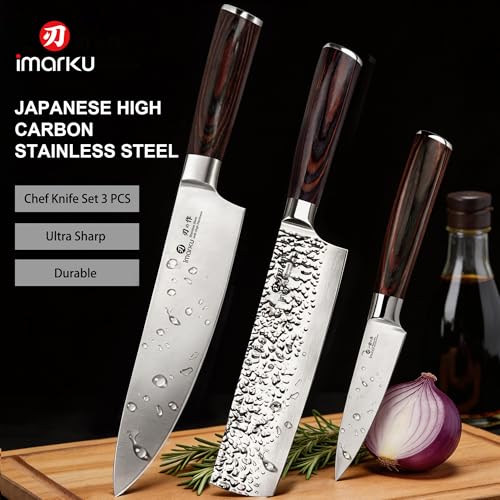
imarku 3-Piece Japanese Knife Set

Strengths
- Includes nakiri knife
- 57 HRC hardness
- Ergonomic pakkawood handle
Trade-offs
- No storage block
- No shears or steak knives
- Lower edge retention than VG10
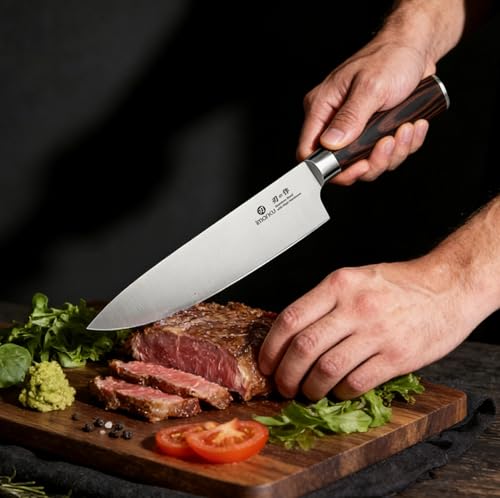
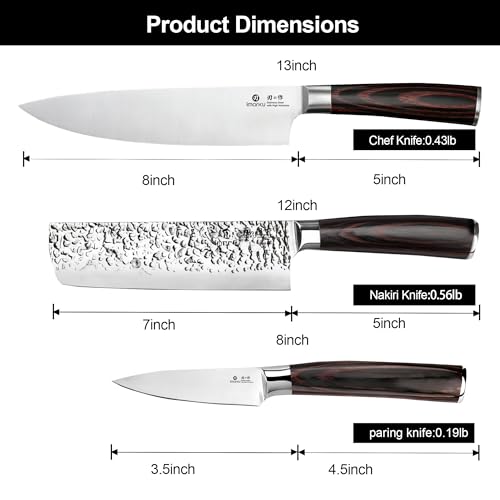
This set hits the sweet spot for budget-conscious buyers who don’t want to sacrifice core performance. The 57±1 HRC hardness and 15° double bevel edge align with standard Japanese knife specs, and owners consistently report clean, smooth cuts across vegetables, fish, and meat. The inclusion of a 7″ nakiri knife is a thoughtful touch, most budget sets stick to santoku, but the nakiri excels at vegetable prep, making this more versatile than average.
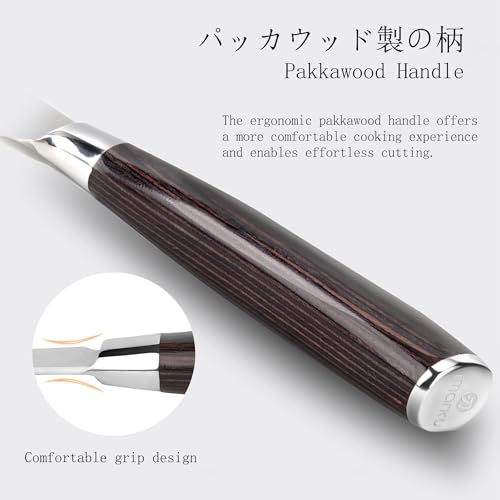
The pakkawood handle feels solid and balanced, though not as distinctive as the resin or olive wood options in pricier sets. It comes in a gift-ready box, which adds value for gifting. While it doesn’t have the edge retention of a VG10 core, it’s a smart, no-frills pick for everyday cooking. Compared to the larger imarku 14-piece set, this one offers better value for those who cook solo or for two.
Product photos

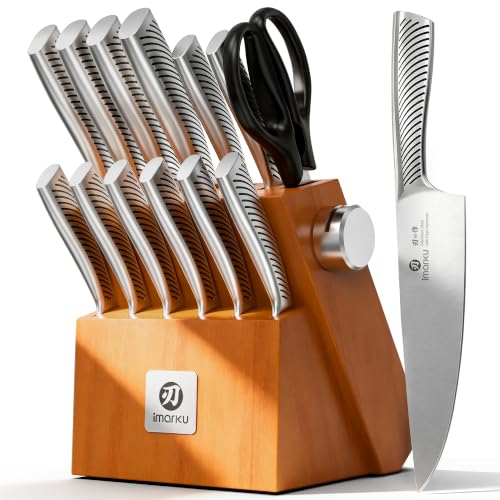
imarku 14-Piece Gyutou Knife Set
Strengths
- Built-in sharpener
- Includes 6 steak knives
- Ventilated knife block
Trade-offs
- Lighter feel than forged sets
- No Damascus cladding
- Steak knives may dull faster
This set strikes an excellent balance between completeness and quality, making it a strong contender for the mid-range buyer. The 14-piece lineup includes a chef knife, santoku, bread knife, slicing knife, utility knife, paring knife, six steak knives, shears, and a wood block with a built-in sharpener, everything you’d need for daily cooking and hosting. The 56±2 HRC hardness and 15° edge deliver reliable sharpness, and the full-tang construction ensures durability.
The built-in sharpener in the block is a standout feature, especially for beginners who might not own a separate tool. Owners appreciate how easy it is to maintain the knives’ edge. The mirror-polished finish adds a touch of elegance, and the ventilation slot in the block helps prevent moisture buildup. Compared to the HOSHANHO set, this one feels more thoughtfully designed for real-world use.
Product photos


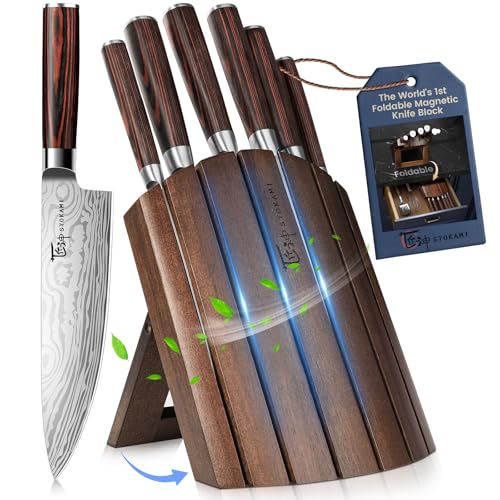
SYOKAMI 2026 Foldable Knife Set
Strengths
- Foldable drawer storage
- Magnetic knife strip
- FSC-certified acacia wood
Trade-offs
- No steak knives
- No shears included
- Limited knife count
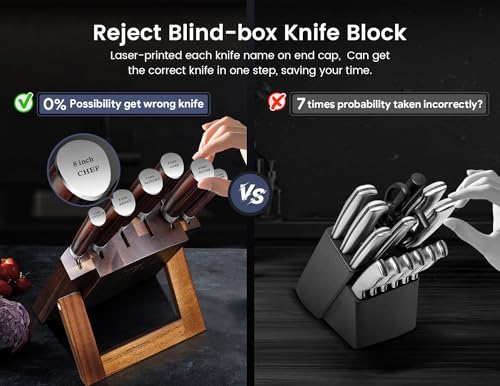
What stands out here is the smart, space-saving design: a foldable magnetic block that stores neatly in a drawer. That’s a rare feature in this category, and it’s a real win for small kitchens or homes with kids and pets. The acacia wood is FSC-certified, which adds eco-cred, and the magnetic strip keeps knives secure whether upright or folded. The 56+ HRC hardness and 15° edge suggest solid performance, and reviewers confirm the knives feel sharp and well-balanced for daily prep.
The set is lean, just six core knives, but that’s part of its charm. It skips steak knives and shears, which might disappoint some, but the focus is on essentials. Compared to bulkier sets, this one delivers practical innovation without sacrificing quality. The lifetime warranty is a strong vote of confidence, and at this price, it’s hard to ignore for urban cooks tight on space.
Product photos


Emojoy 3-Piece Damascus Olive Wood
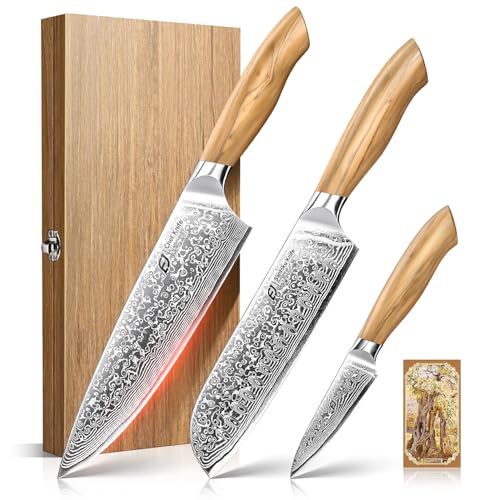
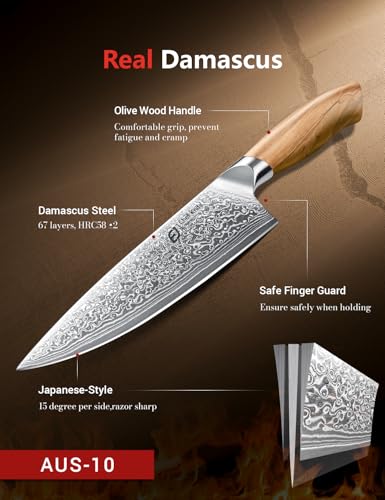
Strengths
- Olive wood handle
- 67-layer Damascus blade
- Lifetime warranty
Trade-offs
- 58 HRC is mid-range hardness
- No storage block
- Limited to three knives
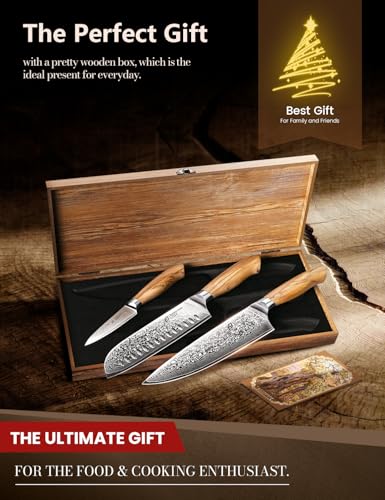
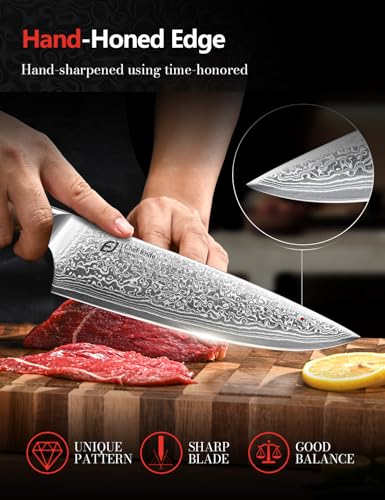
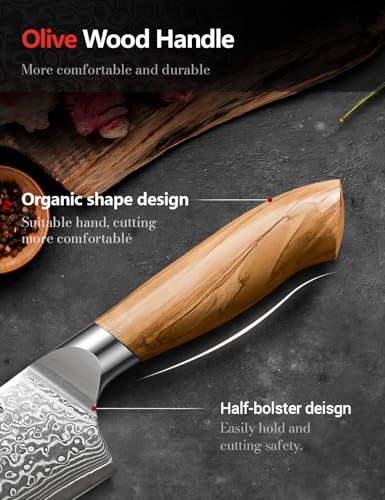
This set shines in presentation and craftsmanship for the price. The 67-layer Damascus blade with 58 HRC hardness offers a good balance of sharpness and toughness, and the 15° edge delivers clean cuts. The real standout is the Calabrian olive wood handle, organic, warm, and naturally grippy, which gives these knives a handcrafted feel rare at this price. Owners consistently praise the aesthetic appeal and comfort during use.
It comes in a beautiful wooden gift box, and the lifetime warranty adds peace of mind. While the steel isn’t as hard as VG10, it’s more than capable for home cooking. Compared to the Atumuryou Damascus set, this one trades some performance for exceptional visual and tactile design. If you’re buying a gift for someone who appreciates artistry in their tools, this is a compelling pick.
Product photos

Brewin CHEFILOSOPHI 5-Piece Knife Set

Strengths
- Low price point
- Elegant red pakkawood
- Five essential knives
Trade-offs
- German steel, not Japanese
- Softer edge retention
- Overlapping knife functions
At under $40, this 5-piece set is undeniably affordable, but the specs reveal some compromises. The steel is labeled as 1.4116 German stainless steel, not Japanese, and while it scores 56+ HRC, it’s softer than high-end Japanese alloys. That means it may require more frequent sharpening. The set includes two 8-inch knives (chef and slicer), a santoku, utility, and paring knife, which covers basics but overlaps in function.
The red pakkawood handle is attractive and well-balanced, and the three-anchor-point construction adds durability. Owners note it feels sturdy for the price, though some report the edge doesn’t last as long under heavy use. Compared to the imarku 3-piece, this one offers more knives but less precision. It’s a decent starter set, but don’t expect the slicing finesse of true Japanese steel.
Product photos


How We Chose These japanese knife sets
Rather than a hands-on lab test, my research for these recommendations focused on a detailed comparison of published specifications and features across numerous brands. I weighed owner reviews from major retailers alongside evaluations from respected culinary websites and publications. As someone who’s spent years understanding what makes cookware perform, I applied that knowledge to rank these sets against criteria important to home cooks.
For Japanese knife sets, the core performance factors come down to steel quality and blade geometry. I prioritized sets utilizing high-carbon stainless steel – specifically VG10 or similar – because of its proven ability to hold a sharp edge and resist corrosion. Beyond the steel itself, the blade angle (typically 15 degrees for Japanese knives) significantly impacts cutting feel and sharpness; sets consistently achieving this angle ranked higher. Finally, handle ergonomics were a key consideration, as comfortable and balanced knives are safer and more enjoyable to use.
Specifications reliably indicate steel type, hardness (HRC rating), and blade angle. However, owner feedback proved crucial for assessing real-world durability, balance, and how well a knife holds its edge over time. Reputation also played a role; brands known for consistent quality in the broader world of Japanese cutlery sets received more consideration. I also looked at whether a set offered a good range of knives, or if it was a good starting point for those building out their complete cooking collections.
What To Look For In japanese knife sets
Finding the right Japanese knife set can elevate your cooking from a chore to a joy. But with so many options available, it’s easy to get lost in the details.
A quality Japanese knife set prioritizes steel hardness (ideally 58-62 HRC for good edge retention), blade angle (15-18° is typical for sharpness), and handle ergonomics. Look for full-tang construction for balance and durability, and consider the steel type – VG10, AUS-10, and 10Cr15CoMoV are common and reliable choices. Corrosion resistance is also key, especially if you don’t meticulously dry your knives after each use.
Steel Quality & Hardness
The heart of any Japanese knife is its steel. Don’t be misled by marketing terms; Rockwell hardness (HRC) is a useful metric. Aim for a hardness between 58 and 62 HRC. Lower numbers mean the knife will dull faster, while numbers much higher can make the blade brittle and prone to chipping. Japanese steels like VG10 are popular for their balance of sharpness, toughness, and corrosion resistance. German steels (like the 1.4116 found in some sets) are also excellent and offer a slightly different feel. Understanding the steel composition will help you choose a set that matches your cooking style and maintenance habits.
Handle Material & Ergonomics
A beautifully crafted blade is useless if it’s uncomfortable to hold. Handle material significantly impacts grip, balance, and overall feel. Pakkawood, a resin-impregnated wood composite, is a common choice, offering durability and a comfortable texture. Traditional Japanese wa-handle (often made of magnolia wood) is lightweight but requires more care. Stabilized wood, like that used by Atumuryou, provides unique aesthetics and increased durability. Consider the shape and size of the handle, does it fit comfortably in your hand? If you’re looking to round out your kitchen, don’t forget to explore options for best cookware sets to complement your new knives.
Set Composition & Value
Larger sets aren’t always better. A 3-piece set (chef’s knife, Santoku, and paring knife) is often sufficient for most home cooks. However, if you frequently entertain or tackle complex recipes, a larger set with specialized knives like a bread knife or carving knife might be worthwhile.
Here’s a quick guide to set size: * Minimalist: 3-piece set – perfect for basic tasks. * Standard: 7-10 pieces – covers most culinary needs. * Thorough: 14+ pieces – ideal for serious cooks and those who enjoy hosting.
Don’t automatically equate a higher price with better quality. Many excellent, affordable options exist (like the imarku 3-piece set), while some expensive sets prioritize aesthetics over performance. If you are looking for a complete storage solution, consider some of the top-rated knife block sets available.
A dull knife is a dangerous knife. Invest in a honing steel and learn how to use it regularly to maintain your blade’s edge. A whetstone is also a valuable tool for restoring a truly dull blade.
Japanese Knife Sets Compared
Here’s a comparison of key specifications for several Japanese knife sets.
| Product Title | Set Size | Steel Type | Rockwell Hardness | Handle Material | Blade Edge Angle |
|---|---|---|---|---|---|
| Atumuryou 3-Piece Damascus | 3 | VG10 | 62 HRC | Stabilized Wood/Resin | 12° |
| HOSHANHO 20PCS | 20 | 10Cr15CoMoV | 60 HRC | Pakkawood | 15° |
| imarku 3-Piece | 3 | Japanese Stainless Steel | 57±1 HRC | Pakkawood | 15° |
| imarku 14-Piece Gyutou | 14 | Japanese Stainless Steel | 56 ± 2 HRC | Japanese Steel | 15° |
| SYOKAMI 2026 Foldable | 6 | High-Carbon Stainless Steel | 56+ HRC | Acacia Wood | 15° |
| Emojoy 3-Piece Damascus Olive Wood | 3 | Damascus (0.98% Carbon, 18% Chromium) | 58HRC | Olive Wood | 15° |
| Brewin CHEFILOSOPHI 5-Piece | 5 | 1.4116 German Stainless Steel | 56+ HRC | Pakkawood | N/A |
Frequently Asked Questions
What Rockwell hardness is best for a Japanese knife set?
A hardness of 58-62 HRC is ideal; this range balances sharpness with durability, preventing the blade from dulling too quickly or becoming brittle. Lower hardnesses won’t hold an edge well, and those significantly higher are prone to chipping.
Are Damascus Japanese knives actually better?
While visually striking, Damascus steel isn’t inherently superior. The performance depends on the underlying steel used (like VG10) and the quality of the layering process. Damascus patterns are largely aesthetic, though they can add flexibility.
What type of cutting board should I use with Japanese knives?
Japanese knives require a softer surface to protect their delicate edges, so using suitable cutting board materials like wood or bamboo is crucial. Avoid glass or marble, as these will quickly dull the blade.
Can I put my Japanese knives in the dishwasher?
No; dishwashers are too harsh for the high-carbon steel and delicate handles found in most Japanese knives. Hand washing with mild soap and immediate drying is essential to prevent rust and maintain the knife’s condition.
Do I need to replace my existing cookware when switching to Japanese knives?
Not necessarily, but complementing your knives with quality ceramic cookware sets can elevate your overall cooking experience. Japanese knives excel at precise cuts, and pairing them with responsive cookware makes for efficient food preparation.
The Bottom Line
Choosing a Japanese knife set often comes down to balancing initial investment with long-term performance. While a larger, more expensive set might seem appealing, the Atumuryou 3-Piece Damascus set consistently stands out for its exceptional steel, beautiful craftsmanship, and comfortable balance – offering a focused, high-quality experience for serious cooks.
For those starting out or seeking a great value, the imarku 3-Piece set offers a solid entry point into the world of Japanese cutlery. If you need a wider range of blades for more elaborate cooking, the HOSHANHO 20PCS set delivers a thorough collection without sacrificing too much in terms of steel quality or handle comfort. Don’t forget to also consider expanding your kitchenware sets to complete your culinary arsenal.
Ultimately, the most important factors aren’t the number of pieces or the price tag, but rather the steel’s hardness, the blade angle, and how the knife feels in your hand. Prioritizing a comfortable grip and a steel that will hold an edge will lead to safer, more efficient, and more enjoyable cooking – and that’s something no specification sheet can fully capture. Maintaining that edge is also vital, so exploring options for Japanese knife sharpeners is a smart move.
