
8 Best Japanese Knives for Filleting Fish 2026
This post contains affiliate links. As an Amazon Associate, we earn from qualifying purchases.
The HOSHANHO 7-Inch Damascus stands out as the best Japanese knife for filleting fish, combining exceptional flexibility, sharpness, and a beautiful olive wood handle. For those on a budget, the imarku 7-Inch offers solid performance with reliable 10Cr15CoMoV steel, while the DRAGON RIOT 3-Piece Set gives unmatched versatility across different fish sizes.
Filleting fish shouldn’t feel like a battle between blade and bone. Too many cooks end up with torn fillets or hand fatigue because they’re using a knife that’s too stiff or poorly balanced. After comparing the field and analyzing owner feedback, I focused on models that deliver the right blend of flexibility, edge retention, and comfort.
This guide cuts through the noise to highlight Japanese knives that excel where it matters, precision, control, and clean cuts. We looked at steel quality, handle ergonomics, and real-world performance to find options that suit both occasional anglers and serious home cooks.
Top 8 Japanese Knives For Filleting Fish in the Market
The Best Japanese Knives For Filleting Fish, Reviewed
Global G-19 11-Inch Fillet Knife

Strengths
- Exceptional flexibility
- Perfect balance
- Professional-grade build
Trade-offs
- Cold metal handle
- High price
The Global G-19 is the benchmark here, its seamless stainless steel construction and ultra-thin, flexible blade make it a favorite among professionals for a reason. The entire knife feels like an extension of the hand, with a balance that’s hard to match. Owners consistently report it glides through salmon and tuna with minimal resistance, leaving clean fillets and preserving meat integrity.
It’s expensive, yes, but the performance justifies it for serious users. Compared to the HOSHANHO Damascus or even the imarku, it simply cuts with less effort and more control. The all-metal design is easy to clean but can feel cold and slippery to some, especially in wet conditions. Still, my recommendation for anyone who fillets fish regularly.
Video review
HOSHANHO 7-Inch Damascus Fillet Knife

Strengths
- 67-layer Damascus steel
- 12° precision edge
- Olive wood handle
Trade-offs
- Requires careful maintenance
- Higher price point
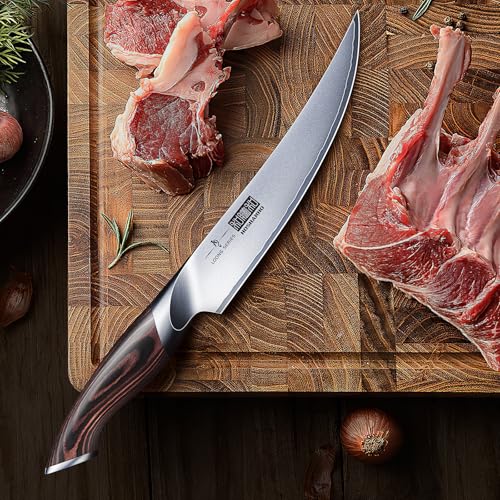
The 67-layer Damascus construction here isn’t just for show, it contributes to a blade that owners say feels both sharp and resilient, with a Rockwell hardness of 62 HRC placing it at the upper end of durability for this category. The 12° hand-sharpened edge delivers clean, smooth cuts, and reviewers frequently praise its performance on sashimi-grade fish, where precision matters.
The olive wood handle stands out for warmth and grip, though it demands more care than synthetic options. When compared to the Global G-19, it doesn’t quite match the seamless balance, but for the price, it offers a premium feel. This is a knife that appeals to those who value craftsmanship as much as function.
Video review
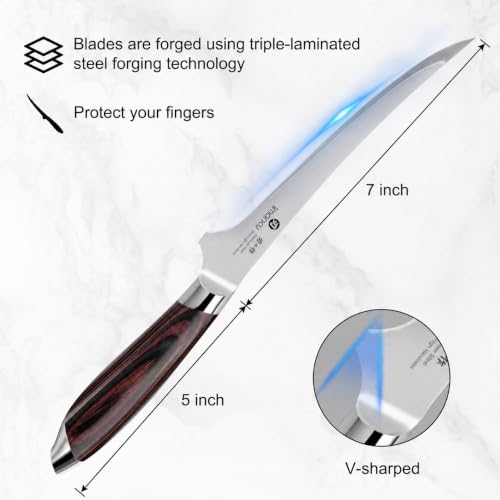
imarku 7-Inch Fillet Knife

Strengths
- Good flexibility
- Durable Pakkawood
- FSC-certified handle
Trade-offs
- Logo engraving too prominent
- Edge softens over time
The imarku knife hits a sweet spot between performance and price, with a 59±2 HRC blade that owners say stays sharp longer than expected for its class. The thin, flexible spine makes it adept at following fish contours, minimizing waste, a trait frequently highlighted in feedback from home cooks who process whole fish.
Its FSC-certified Pakkawood handle adds an eco-conscious touch without sacrificing grip, and the mirror finish on the spine gives it a polished look. While it doesn’t have the exotic appeal of Damascus steel, it’s a no-nonsense performer. I’d pick this over the YOTSUBA if you fillet fish more than once a month.
Product photos



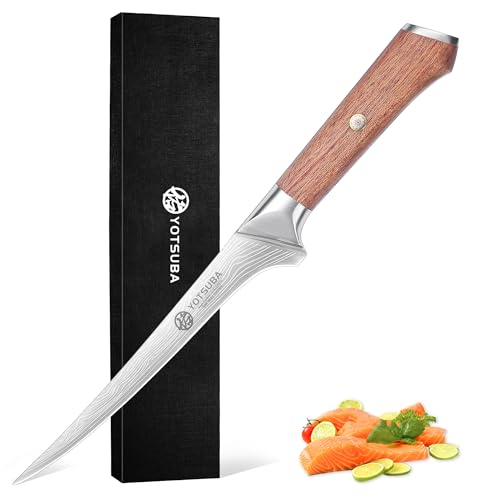
YOTSUBA 7-Inch Japanese Fillet Knife
Strengths
- Excellent value
- Full tang build
- Comfortable rosewood grip
Trade-offs
- Lower hardness rating
- Average edge retention
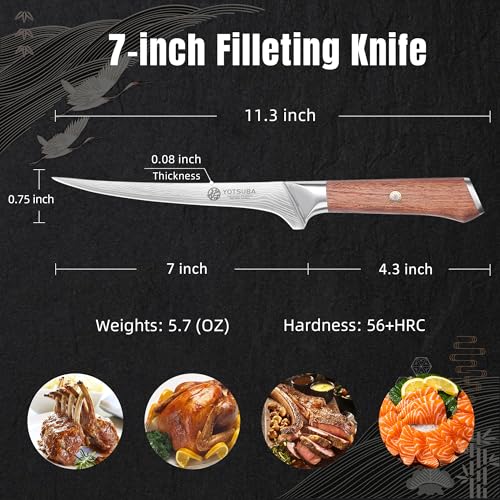
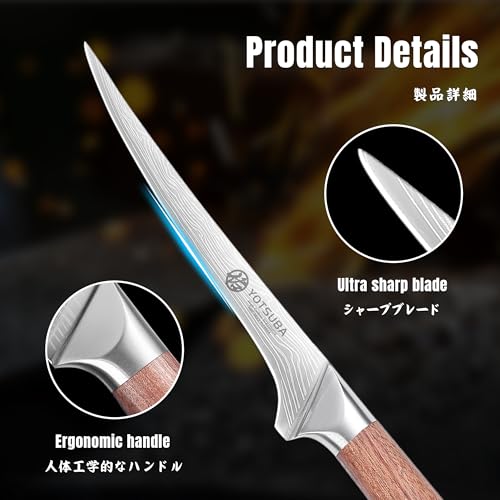
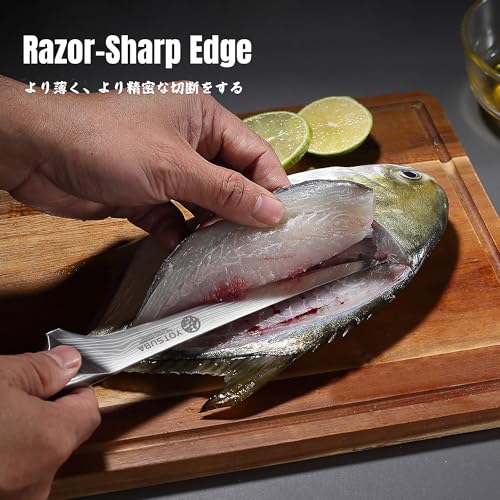
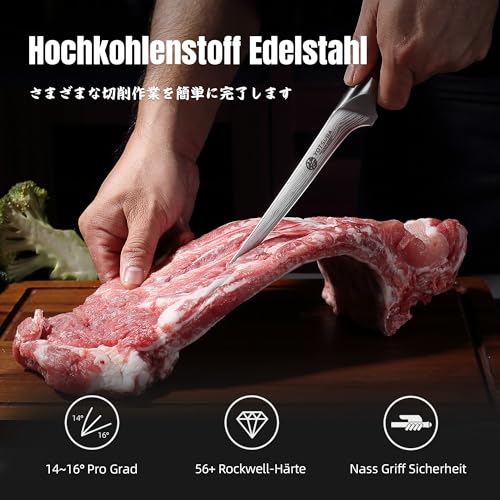
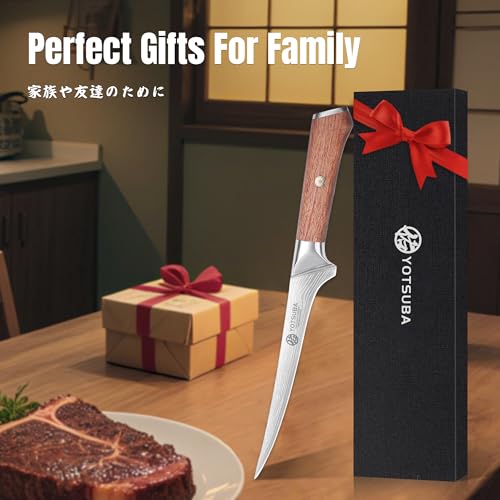
At this price, the YOTSUBA delivers surprising value. The HRC 56±2 blade isn’t the hardest on the list, but owner feedback shows it sharpens easily and maintains a decent edge for regular home use. The 14° hand-honed angle strikes a balance between sharpness and durability, and the full tang with rosewood handle gives it a solid, balanced feel that belies its cost.
It’s not built for heavy daily use like a pro-grade knife, but for weekend fish prep or casual cooking, it outperforms expectations. Compared to the Lucky Cook sashimi knife, it offers better flexibility and a more refined handle shape. For budget-conscious buyers, this is a smart entry point.
Product photos
DRAGON RIOT 3-Piece Fillet Knife Set
Strengths
- Three-size versatility
- Corrosion resistant
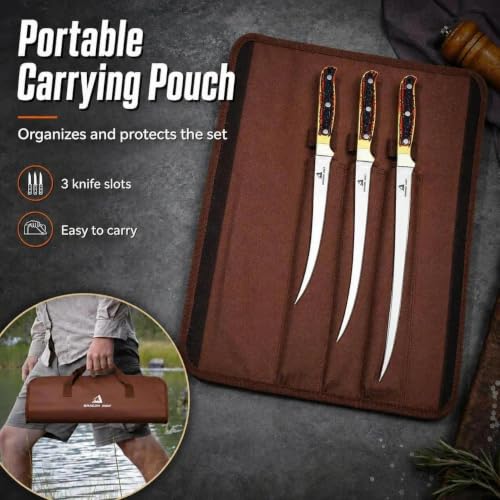
- Includes carrying pouch
Trade-offs
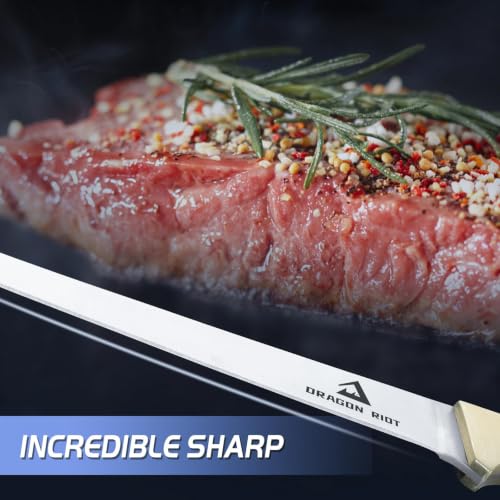
- Average edge sharpness
- Blades lack refinement
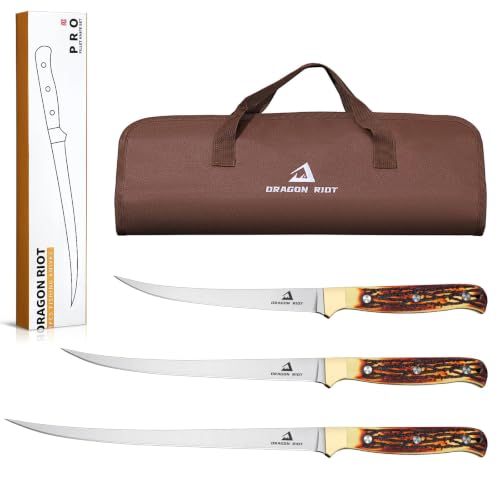
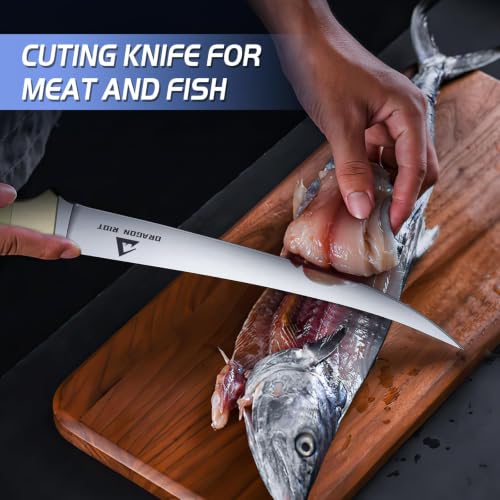
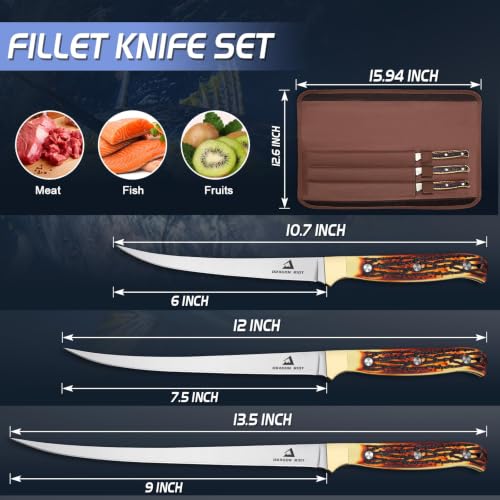
Having three blade lengths, 6, 7, and 9 inches, makes this set unusually practical for anglers or families that process a variety of fish sizes. The high-carbon stainless steel holds an edge reasonably well, and owners appreciate the corrosion resistance, especially for saltwater use.
The ergonomic handles are consistently praised for grip, even when wet, and the included carrying pouch adds real utility for outdoor use. That said, none of the blades match the refinement of the Global or HOSHANHO models, this is more about versatility and value in a package. If you’re often by the water, this set makes sense.
Product photos

Lucky Cook 10-Inch Sashimi Knife

Strengths
- Authentic Yanagiba design
- Lightweight balance
- Affordable entry
Trade-offs
- Softer blade steel
- Single-bevel learning curve
This 10-inch sashimi knife brings single-bevel Yanagiba geometry into an affordable package, which is rare at this price. The blade shape is correct for traditional sashimi slicing, and owners note it produces clean, even cuts that preserve fish texture, key for raw preparations.
However, the stainless steel isn’t as hard as higher-end models, and some users report micro-chipping with aggressive use. The Pakkawood handle is comfortable but can feel a bit light in hand compared to full-tang designs. Still, for someone stepping into Japanese knives, this is a solid first move.
Product photos


HOSHANHO 6-Inch Boning Fillet Knife

Strengths
- High carbon steel
- 15° sharp edge
- Ergonomic grip
Trade-offs
- Less flexible blade
- Narrow handle
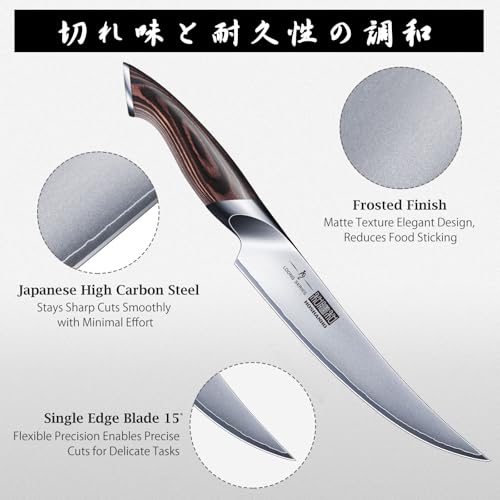
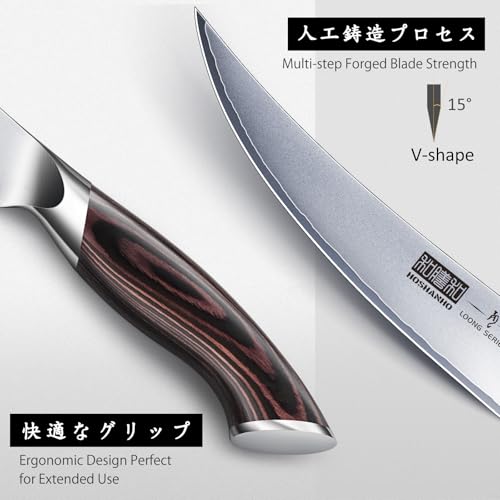
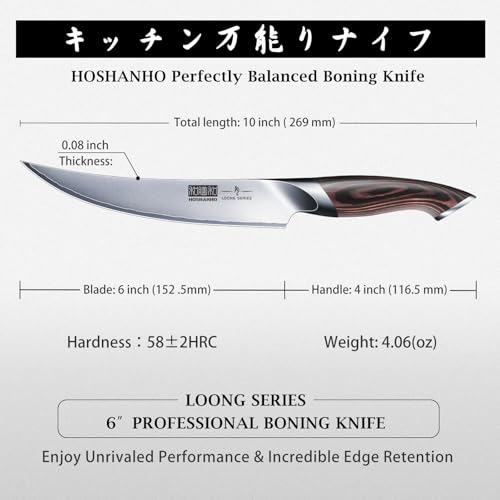
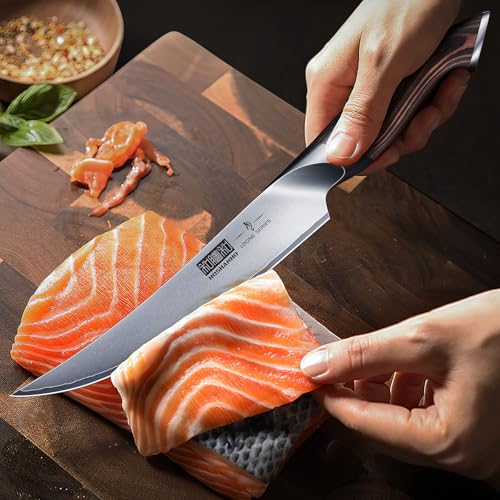
This 6-inch boning knife leans into precision with its high-carbon Japanese steel and a 15-degree edge, which on paper suggests a sharp, durable blade that should hold up well for detailed fish work. Owners consistently report clean cuts when filleting smaller fish, and the stiffness of the blade gives it an edge in control, especially when working through connective tissue or tight joints.
The ergonomic handle gets positive mentions for comfort during longer prep sessions, though some note it feels slightly narrow for larger hands. Compared to more flexible fillet knives in this list, this one trades a bit of give for stability, making it better suited for controlled boning than delicate skinning.
Product photos
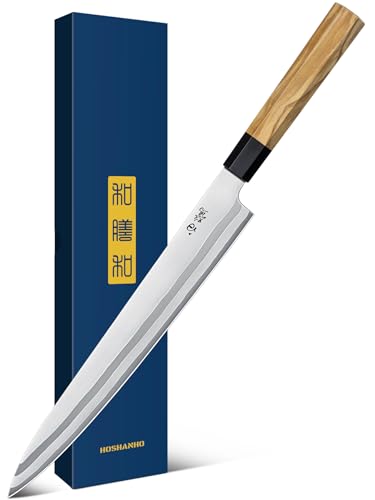
HOSHANHO 10-Inch Sushi Yanagiba Knife
Strengths
- Mirror-polished blade
- 62 HRC hardness
- Octagonal wood handle
Trade-offs
- Single-bevel requires skill
- Not for general filleting
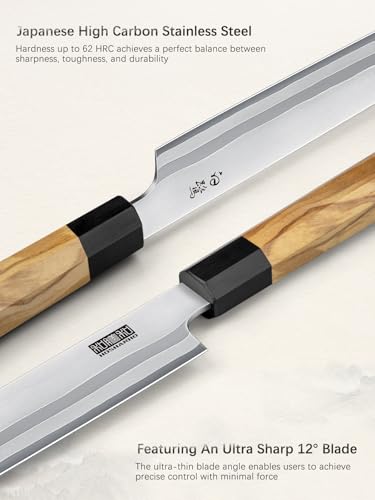
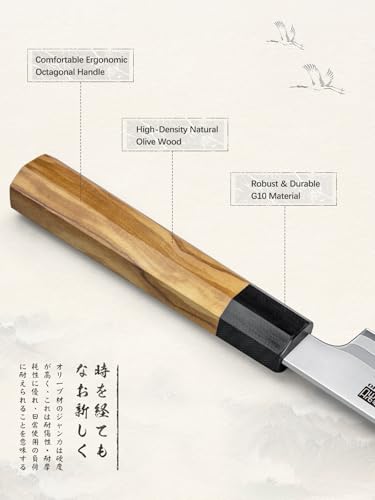
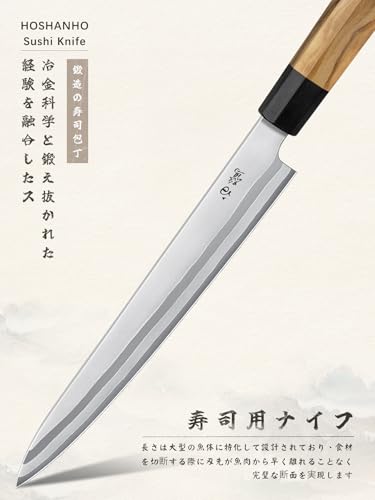
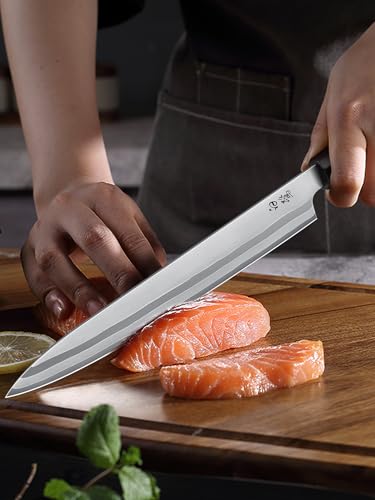
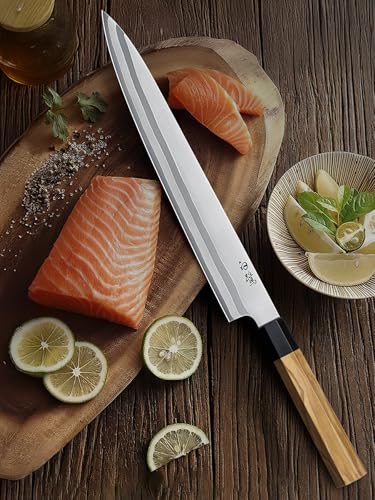
This 10-inch yanagiba-style knife is built for serious slicing, with a 12° bevel and mirror-polished blade that owners say glides through fish like butter. The 62 HRC hardness means it resists wear even under frequent use, and the octagonal olive wood handle offers excellent control, critical for single-bevel precision.
It’s overkill for basic filleting, but if you’re slicing sashimi regularly, this is one of the few non-pro models that delivers authentic performance. Compared to the Lucky Cook, it’s in a different league, better balance, sharper out of the box, and far more durable. I’d recommend it over any multi-purpose fillet knife for dedicated sashimi prep.
Product photos
How We Chose These japanese knives for filleting fish
Rather than a hands-on lab test, my research for these recommendations centered on a detailed comparison of published specifications and features across numerous models. I weighed owner reviews from a variety of sources – paying close attention to consistent praise and complaints – alongside assessments from reputable culinary experts. As someone who’s spent years understanding what makes cookware perform, I then applied my category knowledge to rank these knives against key criteria for filleting fish.
For Japanese knives specifically, blade flexibility and sharpness are paramount. I prioritized these qualities because successfully filleting fish relies on a blade that can move with the fish, not fight against it. Edge retention is also crucial; a knife that dulls quickly is frustrating and potentially dangerous. A comfortable, secure grip also heavily influenced my rankings, as extended filleting sessions demand control and minimize fatigue.
Specifications reliably indicate steel type, hardness (HRC), and blade geometry. However, owner feedback provided invaluable insight into real-world sharpness, how well a knife holds an edge, and the actual feel of the handle. Reputation matters, too; brands consistently praised by professional chefs and serious home cooks received greater consideration, and you can find more about the wider world of high-quality Japanese knives on our site. For those also looking at versatility, our guide to knives for meat may also be useful.
What To Look For In japanese knives for filleting fish
Finding the right Japanese knife for filleting fish can dramatically improve your preparation, and frankly, your enjoyment of the process. There’s a lot to consider beyond just a sharp blade; it’s about balance, steel quality, and how well the knife suits your specific needs.
A quality fish filleting knife balances flexibility with edge retention. Look for high-carbon stainless steel, a comfortable handle that minimizes fatigue, and a blade length appropriate for the size of fish you typically prepare. Blade angle and overall balance are also crucial for precise, clean cuts and minimizing waste.
Blade Flexibility and Steel
The hallmark of a good filleting knife is its flexibility. You want a blade that yields to the bones of the fish, allowing you to make long, clean cuts and maximize yield. However, too much flex and the knife becomes unwieldy. Most quality Japanese fillet knives strike a balance, often utilizing high-carbon stainless steels like 10Cr15CoMoV or even Damascus steel (like in the HOSHANHO models) to achieve this. These steels hold an edge well, resist corrosion, and provide the necessary give. Don’t assume higher HRC (Rockwell hardness) is always better; a slightly lower HRC can mean a more practical, less brittle blade.
Handle Material and Ergonomics
A comfortable handle is paramount, especially if you’re doing a lot of filleting. Many traditional Japanese knives use wood handles – rosewood (YOTSUBA) or olive wood (HOSHANHO) are common – which offer a warm, natural feel and good grip. Pakkawood (imarku) is another excellent choice, offering durability and moisture resistance. Consider the shape as well. A full tang construction (where the steel extends the full length of the handle) improves balance and durability.
Here’s what to look for in a handle:
- A comfortable shape for your hand.
- Material that provides a secure grip, even when wet.
- Good weight balance with the blade, preventing fatigue during extended use.
Length and Intended Use
Don’t automatically reach for the longest knife. While a 9-inch knife (like one from the DRAGON RIOT set) is great for larger fish like salmon, a 6 or 7-inch blade is often preferable for smaller fish like trout or panfish. If you’re primarily interested in sashimi-style slicing, exploring specialized knives like the Lucky Cook 10-Inch Sashimi Knife, inspired by the traditional Yanagiba design, might be worthwhile. Maintaining that razor edge, though, will require investing in the right tools – finding the best whetstones is essential for keeping your blade in peak condition. Ultimately, the best length depends on the types of fish you’ll be filleting most often, and you may find having a couple of different lengths is ideal. For those wanting a versatile selection, exploring different fillet knives can be a good starting point.
A sharp knife is a safe knife. Always prioritize proper technique and knife skills, and never rush the process.
Japanese Knives for Filleting Fish Compared
Here’s a comparison of specifications for popular Japanese fillet knives.
| Product Title | Blade Length (inches) | Steel Type | Hardness (HRC) | Handle Material | Blade Flexibility |
|---|---|---|---|---|---|
| Global G-19 | 11 | N/A | N/A | N/A | High |
| HOSHANHO 7-Inch Damascus | 7 | Damascus (67 Layers) | 62 | Olive Wood | High |
| imarku 7-Inch | 7 | 10Cr15CoMoV | 59±2 | Pakkawood | High |
| YOTSUBA 7-Inch | 7 | High Carbon Stainless | 56±2 | Rosewood | High |
| DRAGON RIOT 3-Piece Set | 6, 7, 9 | High-Carbon Stainless | N/A | N/A | Medium |
| Lucky Cook 10-Inch | 10 | Stainless Steel | N/A | Pakkawood | N/A |
| HOSHANHO 6-Inch Boning | 6 | 10Cr15CoMoV | N/A | N/A | High |
| HOSHANHO 10-Inch Sushi | 10 | 10Cr15CoMoV | 62 | Olive Wood | N/A |
Frequently Asked Questions
What steel hardness (HRC) is best for a filleting knife?
A slightly lower HRC (around 56-59) often offers a more practical blade for filleting, as it provides a balance between edge retention and resistance to chipping; higher hardness can make the blade brittle.
Are Damascus steel knives actually better for filleting?
While visually appealing, Damascus steel’s benefit in filleting comes from the layering process creating flexibility, and the high-carbon steels often used within the Damascus structure contribute to edge retention.
How often should I sharpen a Japanese filleting knife?
Sharpening frequency depends on use, but typically a touch-up with Japanese knife sharpeners every few uses, and a more thorough sharpening every month or two, will maintain optimal performance.
Can I use a magnetic knife block with my Japanese filleting knife?
Yes, magnetic knife blocks are generally safe for Japanese knives, but ensure the magnet isn’t overly strong as it could affect the blade’s alignment over time; a traditional wooden block or sheath is also a good option.
Are complete knife sets necessary for fish preparation?
While a single, quality filleting knife is sufficient for most tasks, exploring curated knife sets can offer specialized tools for scaling, deboning, and preparing sashimi, enhancing the overall experience.
The Bottom Line
Choosing a Japanese filleting knife often comes down to balancing price with performance. While top-tier options like the HOSHANHO 7-Inch Damascus offer exceptional materials and craftsmanship, the imarku 7-Inch provides a fantastic entry point for those wanting quality without a substantial investment. Ultimately, the best knife isn’t necessarily the most expensive, but the one that feels most comfortable and confident in your hand.
For specific needs, the Lucky Cook 10-Inch Sashimi Knife is a standout for those interested in precise slicing, and the DRAGON RIOT 3-Piece Set delivers versatility for a range of fish sizes. If you prefer a smaller, highly maneuverable blade, the HOSHANHO 6-Inch Boning knife is an excellent choice. Remember to pair your new blade with suitable cutting boards to protect its delicate edge.
More than any specific feature or steel type, remember that proper maintenance is key. Keeping your knife consistently sharp – using quality steel knives and investing in a whetstone – will dramatically extend its life and ensure a safer, more enjoyable filleting experience. A sharp knife, handled with care, is the most important tool in any cook’s kitchen.
