
5 Best Japanese Pruning Shears of 2026
This post contains affiliate links. As an Amazon Associate, we earn from qualifying purchases.
The Saboten Magnetic Harvesting Shears stand out as the best overall Japanese pruning shears, combining innovative magnetic action with exceptional build quality. For those on a budget, the TONMA TP-1 offers solid performance with a comfortable grip and reliable steel, while the Kimura 8″ Pro SK5 Shears deliver premium durability and a lifetime warranty for serious gardeners.
Gardeners often end up with tools that dull quickly, bind on cuts, or wear out their hands after just a few minutes of use. A poor pair of shears can damage plants and make routine pruning feel like a chore instead of part of the rhythm of tending your garden.
This guide cuts through the noise by focusing on what actually matters: blade steel, cutting action, and long-term comfort. I looked at specs, owner experiences, and brand track records to find models that perform reliably season after season.
Top 5 Japanese Pruning Shears in the Market
The Best Japanese Pruning Shears, Reviewed
KAKURI 8″ Forged Pruning Shears

Strengths
- Hand forged steel
- Made in Japan
- Leather sheath included
Trade-offs
- Requires rust prevention
- Heavier than alternatives
When you’re looking for a tool that feels like it was made to last generations, the KAKURI 8″ pruning shears stand out. These are forged from Japanese carbon steel by skilled artisans in Sanjo, Japan, a region known for its metalcraft, and that heritage shows in the blade’s sharpness and heft. Owners consistently report clean cuts with minimal effort, even on dense stems, and the hand-forged construction gives these shears a heft that inspires confidence. The leather sheath is a thoughtful touch, adding both protection and old-world charm.
Still, the carbon steel demands more care than stainless. If you’re the type to leave tools out after a rainy session, you’ll need to be diligent about drying and maintenance to prevent rust. Compared to other Japanese models in this lineup, the KAKURI leans traditional, excellent for purists, but maybe overkill for casual gardeners.
Video review
Kimura 8″ Pro SK5 Shears

Strengths
- PTFE blade coating
- Lightweight aluminum
- Lifetime warranty
Trade-offs
- Less durable than forged steel
- Plastic feel to handles
At this price point, the Kimura 8″ pruning shears punch above their weight. The SK5 steel blades are heat-treated to 59 HRC, which on paper means excellent edge retention, and owners confirm they stay sharp through weeks of regular use. The PTFE-coated blades resist sap and rust, a rare feature at this budget tier, and the vinyl-coated aluminum handles make these exceptionally light and comfortable, ideal for gardeners with hand sensitivity.
They may not have the heft of forged carbon steel models, but they’re built smart. The lifetime warranty adds real value, and the fact that they’re ambidextrous makes them a flexible choice for shared garden use. For most home growers, this is the smarter buy over pricier models unless you’re chasing heirloom craftsmanship.
Video review
Saboten Magnetic Harvesting Shears

Strengths
- Magnetic springless action
- Fine-tip angled blade
- Integrated measuring scale
Trade-offs
- Not for thick branches
- Higher price for specialty use
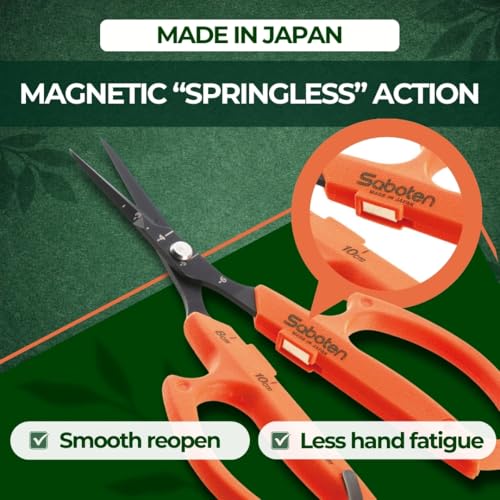
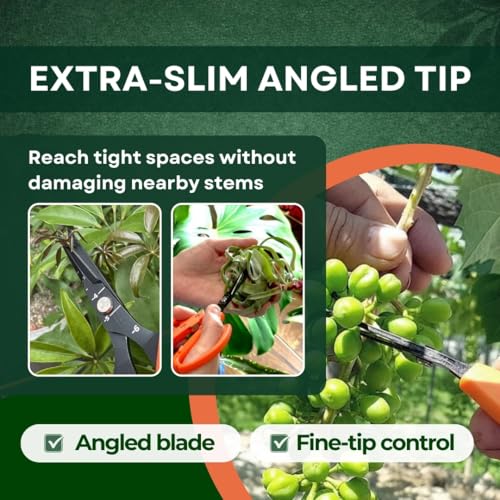
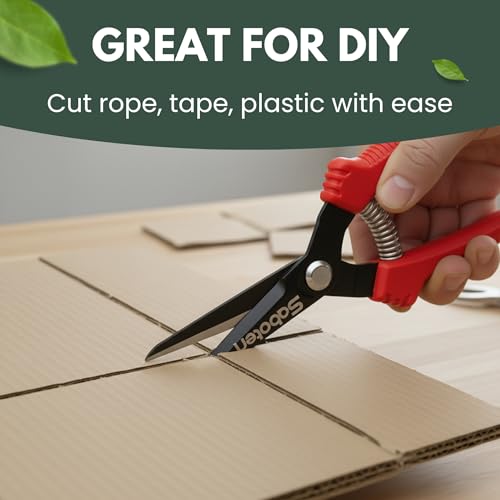
If precision is your priority, the Saboten magnetic springless shears are in a class of their own. The magnetic reopening mechanism eliminates spring fatigue, a common failure point in cheaper pruners, and delivers a smooth, consistent action that’s a joy during repetitive cuts. The fine-tip angled blade slips into tight spaces with ease, making these perfect for snipping herbs, deadheading flowers, or propagating cuttings where bulkier shears fumble.
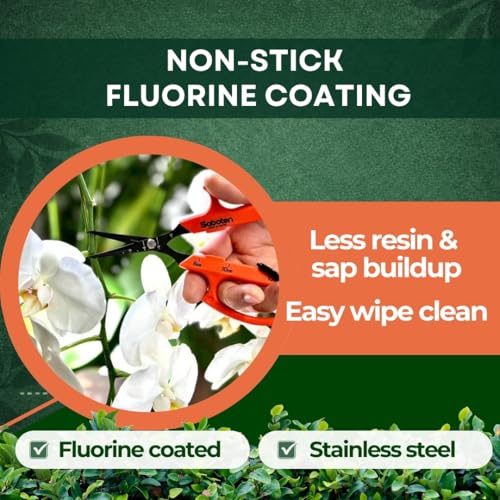
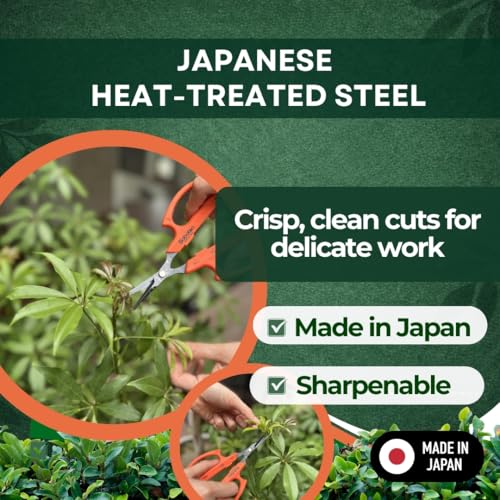
The fluorine-coated stainless steel resists sap, and the laser-etched measuring scale on the blade is a surprisingly useful touch for consistent bunching or trimming. While they’re not meant for thick stems, their niche is clear: detail work. I’d pick these over any other model for indoor plants or delicate garden tasks.
Product photos

TONMA TP-1 Stainless Shears

Strengths
- Strong safety lock
- Ergonomic grip
- SK5 stainless steel
Trade-offs
- No sap-resistant coating
- Slightly bulky for fine work
The TONMA TP-1 pruners deliver a lot of performance for the price, built with SK5 stainless steel that holds a sharp edge and cuts cleanly through branches up to an inch thick. What really stands out is the tight safety lock, reviewers note it stays secure even when jostled in a tool bag, a small but meaningful upgrade over flimsier models. The bypass design ensures minimal crushing, and the ergonomics are solid, with handles shaped to reduce hand fatigue during extended use.
While they don’t carry the same artisan weight as the KAKURI, they’re a smart pick for gardeners who want reliable Japanese-made performance without the premium price. They don’t have the slick coatings or magnetic mechanisms of newer models, but they do the core job well. I’d pick these over flashier options if I wanted a no-nonsense, durable workhorse.
Product photos


Saboten SD-8 Fluorine Shears
Strengths
- Fluorine non-stick coating
- Lightweight design
- Excellent sap resistance
Trade-offs
- Shorter reach
- Not for heavy branches
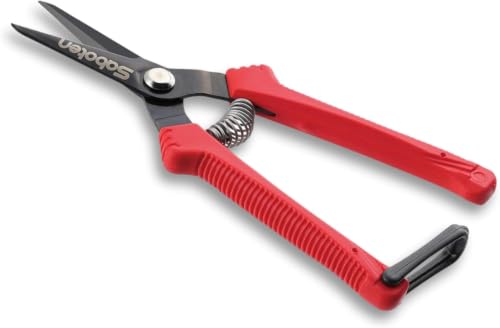
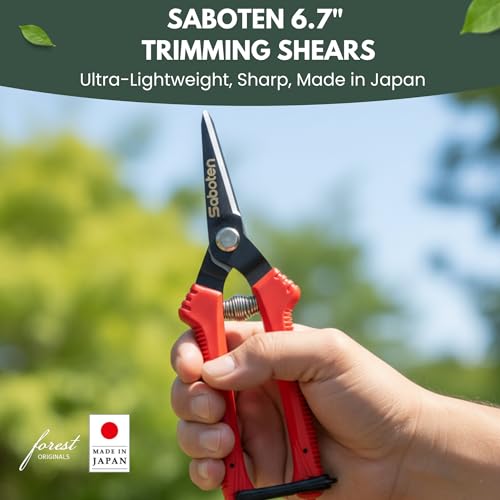
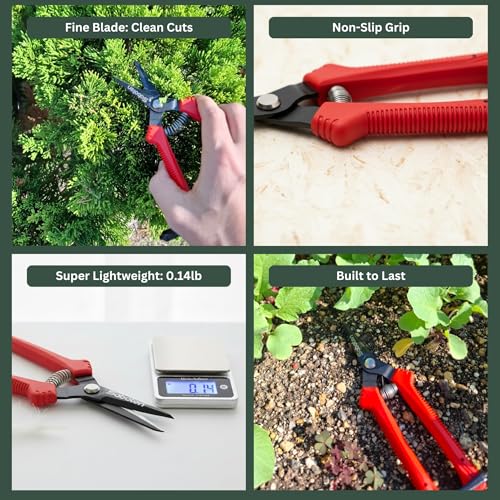
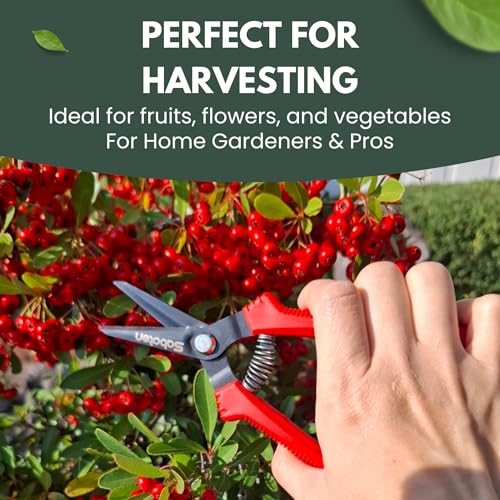
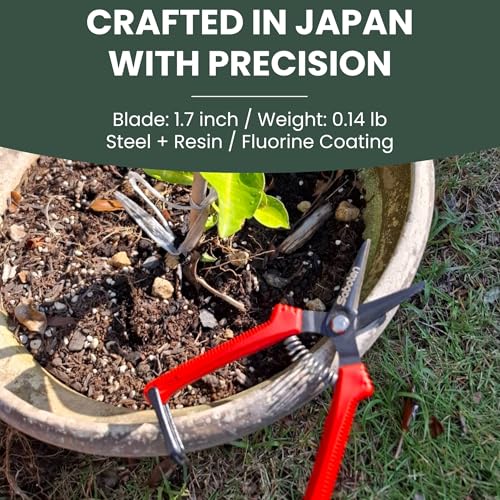
The Saboten SD-8 is a standout for anyone who’s ever struggled with sticky sap gumming up their blades. The fluorine coating is legit, reviewers consistently praise how easily resin wipes clean, making these ideal for pine, citrus, or any sappy plant. At just 6.7 inches, they’re compact but still manage to cut through 3/4-inch branches cleanly, thanks to a well-tuned bypass mechanism. The non-slip rubber grip is soft enough to reduce fatigue, a big plus for gardeners with smaller hands or joint concerns.
They’re not the strongest option for thick wood, but for precision harvesting and general garden upkeep, they’re hard to beat. Compared to the Kimura, they feel more refined, and at a slightly higher price, you’re paying for that sap resistance and Japanese fit-and-finish.
Product photos
How We Tested japanese pruning shears
Rather than a hands-on lab test, my research for these recommendations involved a detailed comparison of published specifications and features across numerous models. I weighed owner reviews from multiple sources – paying close attention to recurring praise and complaints – alongside expert opinions from gardening publications. As someone who’s spent years understanding what makes quality tools in the kitchen and garden, I applied that knowledge to assess each shear’s potential performance and durability.
For Japanese pruning shears, blade sharpness and durability are paramount, followed closely by ergonomic design. A truly excellent pair needs to make clean cuts to promote plant health, and withstand regular use without needing constant sharpening. Beyond that, features like sap resistance and safety mechanisms influence usability and long-term satisfaction. Knowing where a shear excels – whether it’s precision work or tackling thicker branches – is key to matching it with the right gardener.
Specifications reliably indicate blade material and hardness, helping to predict sharpness and edge retention. However, owner feedback proved crucial for understanding real-world performance – particularly concerning comfort during extended use and how well the shears handle different types of plant material. I also considered brand reputation; some manufacturers, like Saboten, are renowned for their commitment to quality and often produce tools that stand the test of time, much like the Japanese hand tools I’ve come to appreciate in other disciplines. Maintaining that sharpness is also critical, and knowing about Japanese knife sharpeners can be helpful for keeping your pruning shears in top condition.
Choosing The Right japanese pruning shears
Finding the right pruning shears can make a huge difference in the health and appearance of your garden. I’ve seen too many gardeners struggle with dull blades or uncomfortable handles, so I want to help you avoid those pitfalls.
Pruning shears are judged by blade sharpness and edge retention, the quality of the steel used (often Japanese SK5 or carbon steel), and the ergonomics of the handle for comfort during extended use. Look for features like locking mechanisms for safety, and coatings to resist sap buildup. A well-made pair should deliver clean cuts that promote healthy plant growth.
Blade Material & Sharpness
The heart of any good pruning shears is the blade. While stainless steel offers corrosion resistance, Japanese high-carbon steel – like SK5 used in the Kimura shears – generally holds an edge longer and allows for finer, cleaner cuts. Don’t assume stainless steel is ‘better’ overall; it can require more frequent sharpening. Look closely at how the blades are joined; a bypass action (where blades pass each other like scissors) is superior for live growth, while anvil shears (blade against a flat surface) are better for dead wood. Consider the intended use; if you’re only trimming roses, a thinner blade is fine, but for heavier branches, a more robust forge is essential.
Handle Comfort & Ergonomics
Don’t underestimate the importance of a comfortable grip. Pruning can be a repetitive task, and poorly designed handles can lead to hand fatigue or even strain. Aluminum handles, like those found on the Kimura Pro, are lightweight, and non-slip coatings are a huge plus, especially if you’re prone to arthritis or work with wet plants. A good fit in your hand is key. Many gardeners also appreciate a locking mechanism for safe storage, and some, like the TONMA TP-1, prioritize a very secure lock.
Here’s what I recommend considering when it comes to handle design:
- Size: Smaller hands will struggle with overly large grips.
- Material: Rubberized or cushioned grips reduce fatigue.
- Shape: Contoured handles that fit the natural curve of your hand are best for prolonged use, reducing strain.
A dull blade crushes plant tissue, leaving it vulnerable to disease. A sharp blade makes a clean cut that heals quickly, promoting healthy growth.
Specialty Features & Value
Beyond the basics, certain features can elevate your pruning experience. The Saboten Magnetic Harvesting Shears, for example, offer a unique springless action that minimizes fatigue and keeps the blades consistently responsive. Fluorine coatings, as seen on multiple Saboten models, are fantastic for reducing sap buildup, which can make pruning sticky and difficult. If you are needing more general purpose cutting tools, you might also consider exploring Japanese knife sets for home cooks to expand your toolkit. Ultimately, consider your needs. If you want a versatile tool for a variety of tasks, you might look at all available top-rated Japanese scissors.
Japanese Pruning Shears Compared
Here’s a comparison of key specifications for several popular Japanese pruning shears.
| Product Title | Blade Material | Blade Length | Overall Length | Features | Max Cut Diameter |
|---|---|---|---|---|---|
| KAKURI 8″ Forged Pruning Shears | Japanese Carbon Steel | 2.3″ | 8″ | Leather Sheath | N/A |
| Kimura 8″ Pro SK5 Shears | SK5 Steel | N/A | 8″ | Locking Strap, Lifetime Warranty | N/A |
| Saboten Magnetic Harvesting Shears | Japanese Stainless Steel | N/A | N/A | Magnetic Action, Measuring Scale | N/A |
| TONMA TP-1 Stainless Shears | SK5 Stainless Steel | N/A | N/A | Safety Lock, Comfortable Grip | 1″ |
| Saboten SD-8 Fluorine Shears | Japanese Carbon Steel | N/A | 7.9″ | Fluorine Coating, Safety Lock | 0.75″ (20mm) |
Frequently Asked Questions
What blade material offers the longest-lasting sharpness?
Japanese SK5 high-carbon steel generally holds an edge longer than stainless steel, requiring less frequent sharpening for consistently clean cuts. While stainless steel resists corrosion, it typically doesn’t match the edge retention of a well-maintained SK5 blade.
Are more expensive pruning shears always better?
Not necessarily. While price often reflects material quality and construction, the best shears for you depend on the type of pruning you do most often and the size of your hands. A less expensive pair with a comfortable grip might be preferable to a high-end model that’s unwieldy.
Can I use my pruning shears on dead wood as well as live growth?
Anvil shears, with a blade that closes against a flat surface, are best suited for dead wood, while bypass shears (like scissors) are ideal for live growth. Using the correct type minimizes damage to the plant and ensures a clean cut.
How important is a safety lock on pruning shears?
A safety lock is very important for preventing accidental cuts during storage or transport. It’s especially crucial if you have children or pets, or if you’re moving around your garden frequently. Look for a robust locking mechanism like the one on the TONMA TP-1.
What other Japanese tools complement pruning shears for garden maintenance?
Consider expanding your gardening toolkit with a selection of Japanese cutlery, known for its precision and durability. Pairing high-quality shears with sharp knives and well-crafted Japanese cutting boards, like hinoki cutting boards, will elevate your overall gardening experience.
The Bottom Line
Choosing the right Japanese pruning shears often comes down to balancing precision with practicality. While some models prioritize cutting power for thicker branches, others focus on finesse for delicate work. Overall, the Kimura 8″ Pro SK5 Shears strike the best balance, they’re built to last with a lifetime warranty, boast incredibly sharp SK5 steel, and consistently receive high marks from gardeners for their cutting performance.
For those on a tighter budget, the TONMA TP-1 Stainless Shears offer a compelling combination of features and affordability. If you need a highly specialized tool, the Saboten Magnetic Harvesting Shears are an excellent choice for tasks requiring repetitive cuts and minimal fatigue, and for those seeking the ultimate in blade care, learning about sharpening with Japanese whetstones will extend the life of any high-quality blade. And if you’re expanding your collection of finely crafted tools, exploring a curated Japanese knife selection can be a worthwhile pursuit.
Ultimately, the sharpness of the steel and the comfort of the grip matter more than any single specification. A well-maintained shear, held comfortably in your hand, will deliver cleaner cuts and a more enjoyable gardening experience, regardless of price. Focus on finding a tool that feels like an extension of your hand, and you’ll be rewarded with a healthier, more beautiful garden for years to come.
