
7 Best Jars for Fermenting of 2026
This post contains affiliate links. As an Amazon Associate, we earn from qualifying purchases.
The Jiaiton 2L Glass Fermentation Jar stands out as the best overall pick, delivering a reliable airlock, date-tracking lid, and solid build. For those on a budget, the 32 oz Mason Jar Fermentation Kit offers excellent value without sacrificing core functionality. If you’re after versatility and larger batches, the FastRack 1 Gallon Fermentation Jar handles kombucha and big ferments with ease.
Fermenting at home should be simple and rewarding, not a battle against mold, leaks, or confusing setups. Too many people start with jars that look the part but fail when it matters, poor seals, flimsy lids, or glass that can’t handle the process.
I researched the most consistent performers by analyzing specs, real owner feedback, and key features like airlock reliability, glass quality, and ease of use. These picks are based on what actually works across a range of ferments, from sauerkraut to kombucha, so you can choose with confidence.
Top 7 Jars For Fermenting in the Market
The Best Jars For Fermenting, Reviewed
Jiaiton 2L Glass Fermentation Jar
Strengths
- Rotating date dials on lids
- Waterless airlocks included
- Spare parts provided
Trade-offs
- Airlocks sensitive to over-tightening
- Higher price point
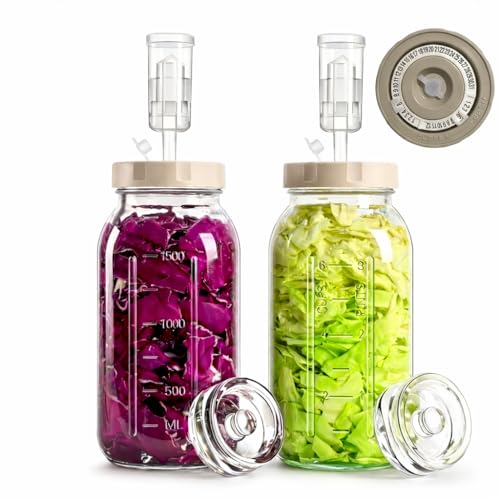
If I had to pick one kit for most home fermenters, it would be the Jiaiton 2L set. The rotating date-dial lids are a standout, no writing, no tape, just a twist to set the start date. Owners love how this small feature eliminates confusion and helps nail fermentation timing. The waterless airlocks are another win, reducing maintenance and evaporation risk, and the kit includes spares, which speaks to thoughtful design. With two heavy-duty jars, glass weights, silicone grommets, and a full accessory set, it’s one of the most complete options here.
The thick, lead-free glass feels substantial, and the wide mouths make packing and cleaning easy. Some users note the airlocks can be sensitive to over-tightening, but overall, the feedback is overwhelmingly positive. Compared to the Hersolm and JILLMO kits, this one combines the best features, date tracking, durability, and full accessories, into a single polished package.
Video review
50OZ Glass Fermentation Jar Kit
Strengths
- Beginner-friendly manual included
- Airlock requires minimal water
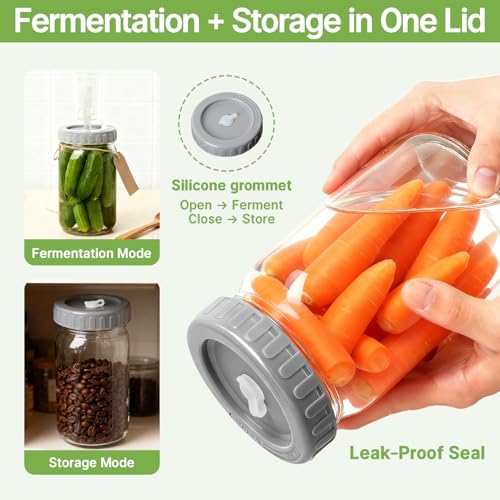
- Lid converts to storage mode
Trade-offs
- No fermentation weights
- Glass feels less durable
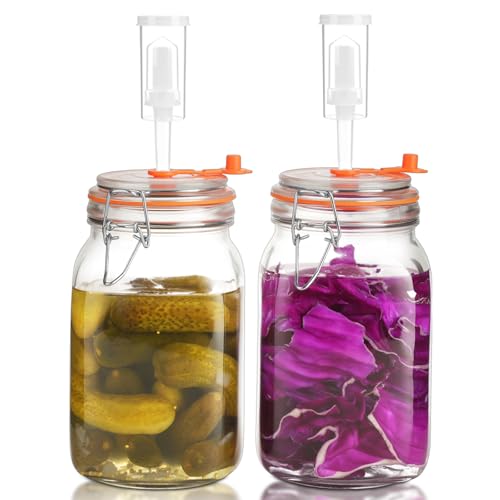
At this price, the 1.5L kit punches above its weight, especially for beginners dipping their toes into fermentation. The inclusion of a detailed instruction manual is a standout, covering brine ratios, salt types, and safety tips in a way that makes first-time fermenting far less intimidating. Owners praise how the one-way airlock works reliably with minimal water, reducing maintenance and mess. The wide mouth and dishwasher-safe parts add to the ease, and the silicone plug in the lid is a smart touch, letting you switch from fermentation to storage without swapping lids.
Still, these are thinner than premium jars, and while they’re made of food-grade glass, long-term users note they feel less sturdy than heavier models. There are no weights included, which means you’ll need to source them separately or improvise with smaller jars, something that could frustrate true beginners. Compared to similarly priced kits, this one wins on usability and guidance, but it’s not built for heavy rotation.
Video review
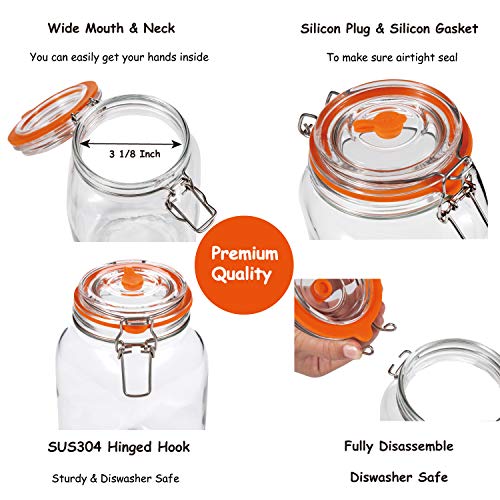
JILLMO 2L Wide Mouth Fermentation Jar
Strengths
- Complete kit included
- 2L capacity ideal for large batches
- Wide mouth for easy use
Trade-offs
- No date markers on lids
- Clamp lids can leak if misaligned
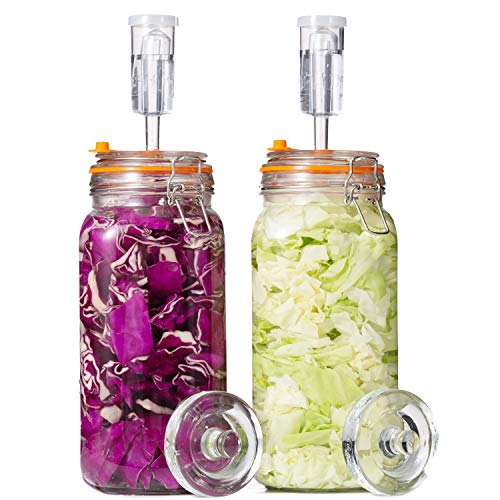
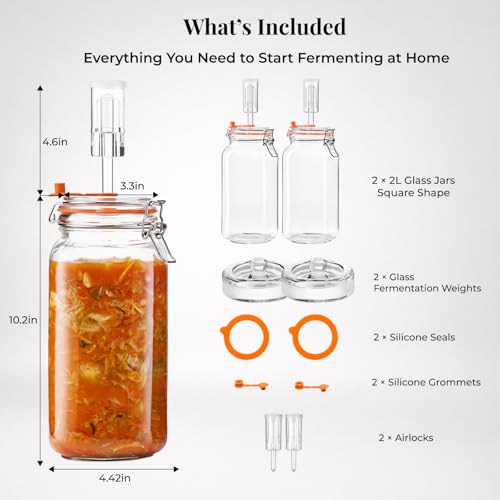
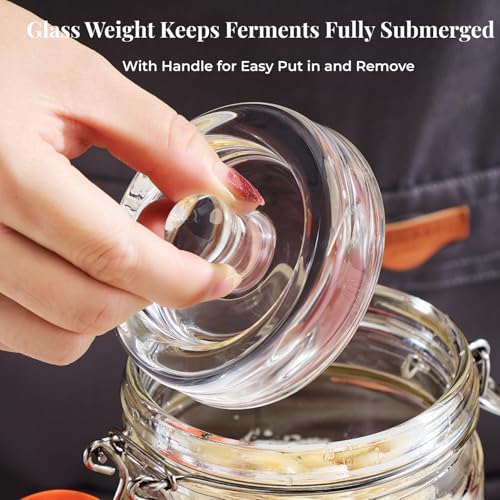
For anyone planning to ferment larger batches of sauerkraut or kimchi regularly, the JILLMO 2L jars offer solid value. The 2-liter capacity gives you room to work without overcrowding, which owners consistently say helps prevent brine overflow during active fermentation. The complete kit, glass weights, airlocks, grommets, and seals, means you won’t need to hunt down accessories, and the wide mouth makes packing and cleaning noticeably easier than with narrow jars.
On paper, the thick, lead-free glass stands up well to repeated use, and reviewers often highlight how the glass weights do their job reliably, keeping veggies submerged. The clamp-style lids with silicone seals create a decent airtight environment, though a few users report occasional leaks if the gasket isn’t seated perfectly. Compared to budget kits, this set feels more durable and thoughtfully assembled, though it lacks built-in date tracking, which I consider a missed opportunity.
Product photos

32 oz Mason Jar Fermentation Kit
Strengths
- All essentials included
- Compact, beginner-friendly size
- Glass weights stay effective
Trade-offs
- Limited batch size
- No labeling system
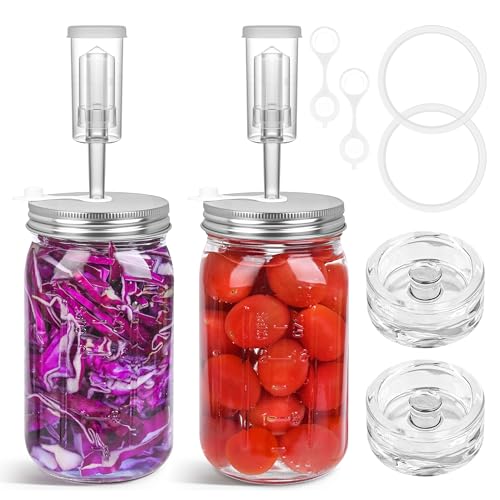
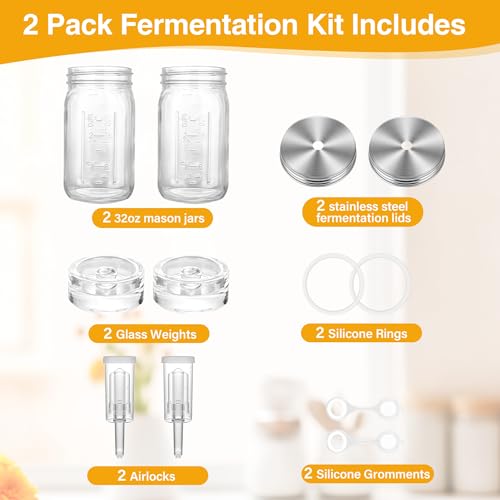
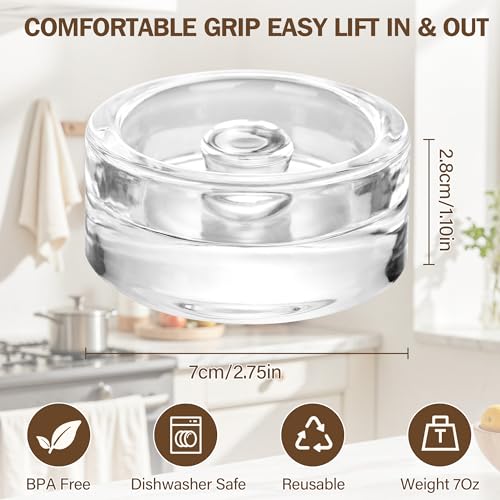
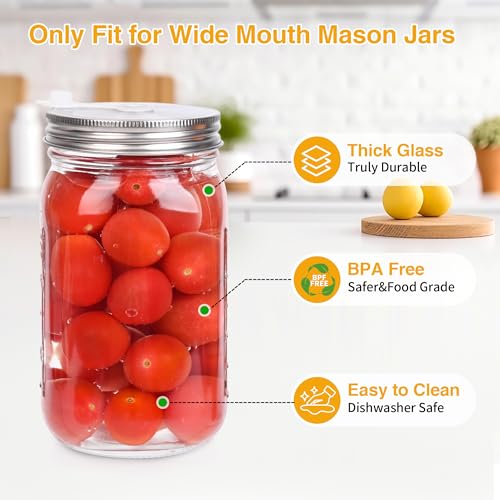
This compact kit is the perfect starting point for someone testing the waters with fermentation. The 32 oz size is manageable, small enough to fit in tight spaces, large enough to make a meaningful batch of sauerkraut or pickles. Everything you need is included: jars, weights, lids, airlocks, and gaskets, and owners consistently say setup is straightforward with no compatibility issues. The glass weights are dense and effective, and the wide mouth makes packing and cleaning a breeze.
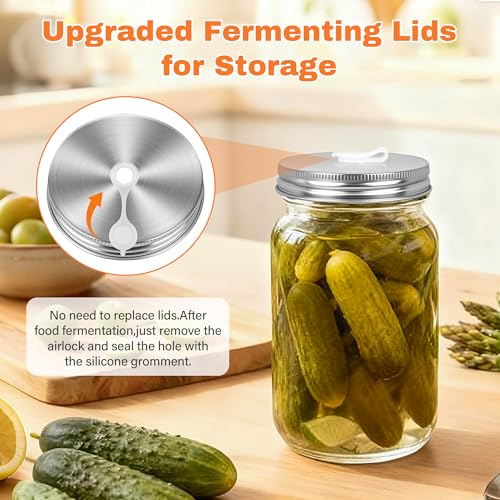
While it doesn’t offer the volume or advanced features of larger kits, it excels in simplicity. The stainless steel lids with silicone grommets hold up well, though they may show wear over time. Compared to the 4-pack, this is the better pick for minimalists or gift-givers, it’s affordable, complete, and uncluttered. I’d recommend it as a first kit, but not for anyone planning to scale up.
Product photos
4-Pack Mason Jar Fermentation Kit
Strengths
- Four jars for multiple batches
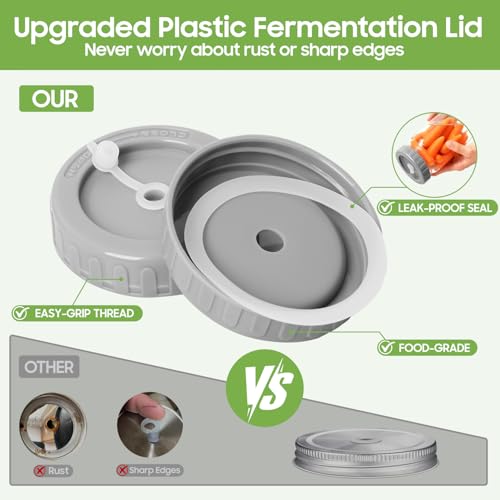
- Plastic lids resist rust
- Includes 20 labeling tags
Trade-offs
- Jars are thinner glass
- Plastic lids less premium feel
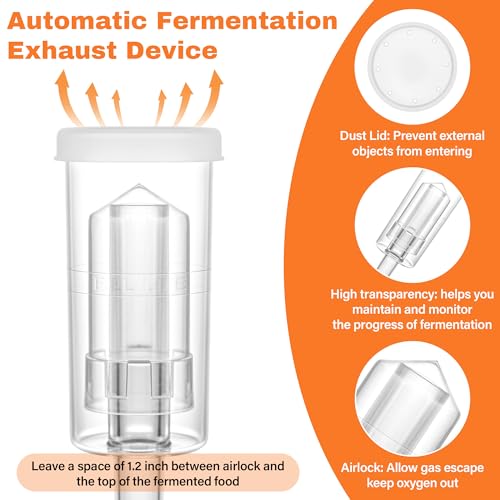
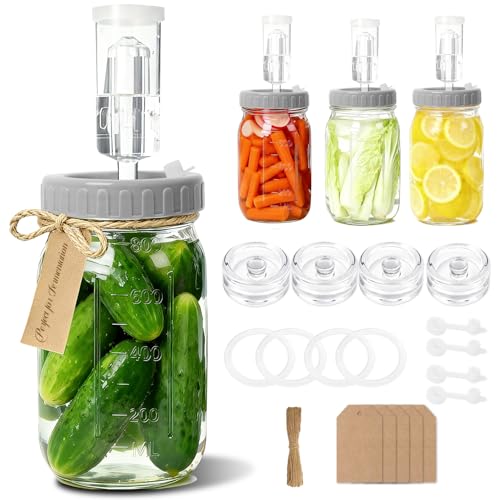
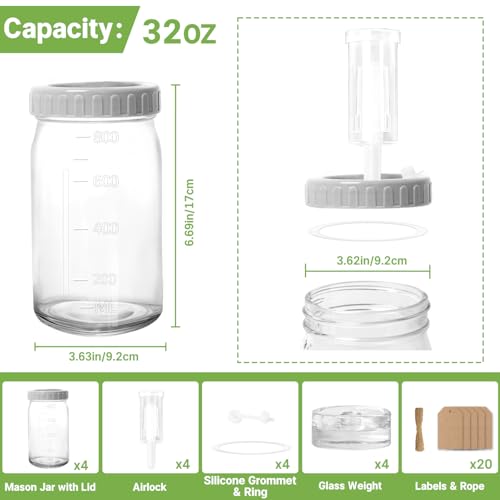
For fermenters who want flexibility and clean labeling, this 4-pack stands out. Having four 32 oz jars means you can run multiple small batches, kimchi one week, pickles the next, kombucha scobys on hold, without cross-contamination. The plastic lids with dual-channel airlocks are a smart upgrade over metal, eliminating rust concerns and offering a longer lifespan than silicone-heavy designs. Owners appreciate the 20 included date-and-note tags, which make labeling easy and eliminate guesswork down the line.
The wide mouths and volume markings are practical, and the glass weights are dense enough to keep contents submerged. That said, the plastic lids, while durable, don’t feel as premium as glass or stainless steel. And at this price, you’re paying for quantity over heft, the jars are thinner than 1-gallon models, so they’re not ideal for long-term kombucha brewing. Compared to the 2-jar kits, this is the smarter buy if you ferment often and want variety.
Product photos


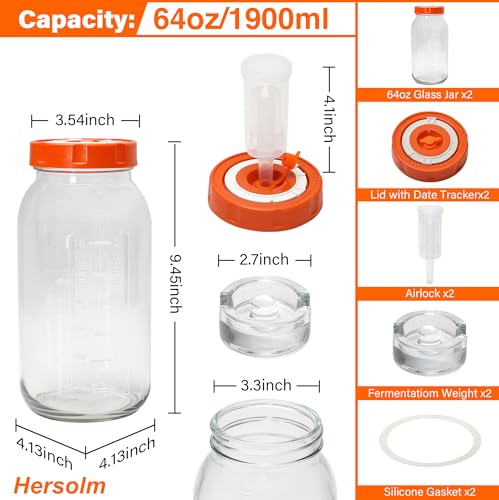
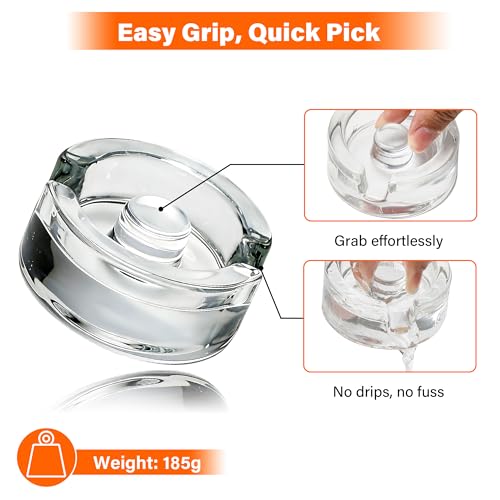
Hersolm 2L Fermentation Jars with Date Marker
Strengths
- Lids with date tracking
- Includes weights and airlocks
- Dishwasher safe
Trade-offs
- Airlocks can be tricky to install
- Date dials less precise
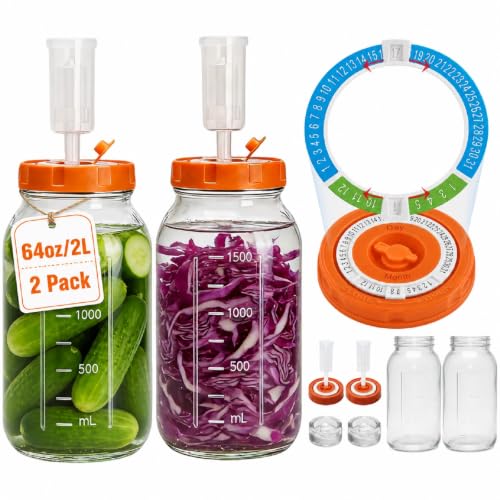
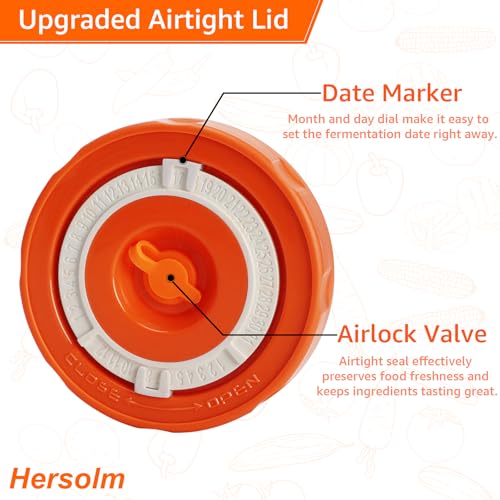
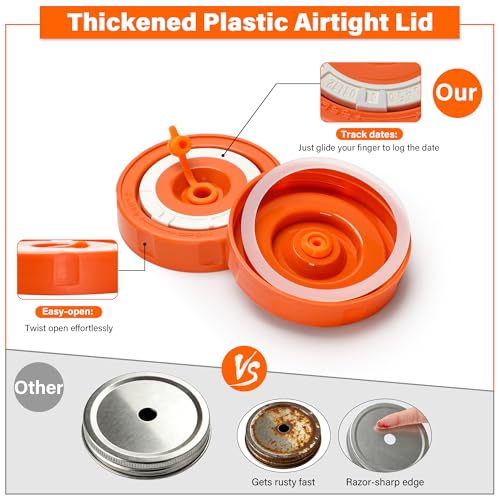
If you run multiple batches or like to experiment with different ferments at once, the built-in date markers on the Hersolm lids are a standout. No more guessing when you started that sauerkraut or mixing up kimchi batches, owners consistently report this small feature makes a big difference in tracking progress. The 2L size is practical for family-sized ferments, and the thick, lead-free glass feels solid in hand, with wide mouths that simplify both packing and cleaning.
The kit includes weights and airlocks, and the silicone seals do a decent job of maintaining an anaerobic environment. That said, some users mention the airlocks can be finicky to assemble, and the date dials, while useful, aren’t as precise as rotating dials on higher-end models. Compared to the JILLMO set, this one offers better time tracking but feels slightly less polished in execution. Still, for the price, it’s a smart pick if you value organization.
Product photos

FastRack 1 Gallon Fermentation Jar

Strengths
- 1-gallon size ideal for kombucha
- Thick, durable glass
- Rust-proof BPA-free lid
Trade-offs
- Sells as single jar only
- No weights included
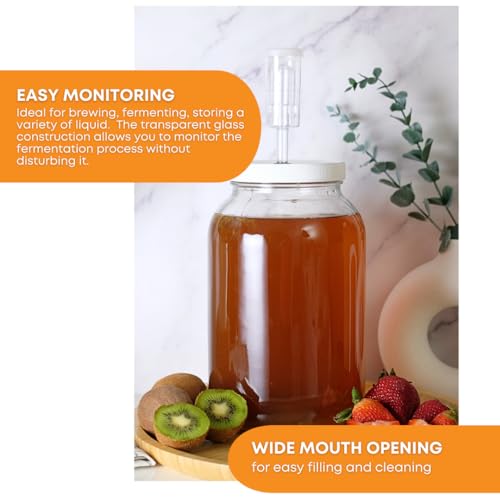
When it comes to kombucha or water kefir, the 1-gallon size is essential, and the FastRack jar delivers on capacity and simplicity. The thicker glass feels more durable than standard mason jars, and owners report it holds up well during long brews. The Econolock airlock is basic but effective, allowing CO2 to escape without letting oxygen in, which is critical for consistent kombucha results. The BPA-free lid with built-in grommet eliminates rust issues common with metal lids, a small but meaningful win.
Still, this is a bare-bones kit: just one jar, one lid, one airlock. There are no weights, no date markers, and no extra parts. If you’re brewing kombucha, that’s often enough, but for vegetable ferments, you’ll need to buy weights separately. Compared to multi-jar kits, it’s not a value play, but for dedicated brewers, it’s a no-fuss, high-capacity workhorse.
Product photos



How We Tested jars for fermenting
My approach to evaluating jars for fermenting, as with all cookware at CookwareCanvas, isn’t about long-term personal use – rather, it’s a research-led comparison of published specifications and owner feedback. I examined features across numerous models, then weighed those against reviews from experienced fermenters and reputable sources. This allowed me to build a ranking based on what consistently delivers successful results, across a range of fermenting projects.
For this category, airtight seals and glass weight effectiveness were heavily weighted. A good ferment relies on an anaerobic environment, and consistently submerged vegetables are critical to prevent mold. Beyond that, ease of use – things like wide mouths for packing and cleaning – played a significant role. These factors directly impact the likelihood of a successful and enjoyable fermentation experience.
Specifications reliably indicate jar capacity and glass thickness, which speak to durability and batch size. However, I placed greater emphasis on owner reports regarding lid sealing effectiveness and the airlock’s performance over time. Those real-world experiences, combined with expert opinions on materials like lead-free glass, helped me separate truly reliable options from those that might appear good on paper but fall short in practice. If you’re also looking for options for other preserving methods, you might find our guide to best jars helpful.
How To Pick The Right jars for fermenting
Finding the right vessel is key to successful fermentation, and there’s a surprisingly wide range of options available. It’s about more than just a jar; it’s about creating the correct environment for beneficial bacteria to thrive.
A quality fermentation jar will be made from durable, lead-free glass, offer an airtight seal to prevent spoilage, and incorporate a reliable airlock system to manage gas buildup. Consider the size based on batch needs, ease of cleaning, and whether features like date tracking are important for monitoring progress. Weighting systems are also crucial to keep solids submerged, avoiding mold and unwanted bacteria.
Size and Capacity
The size of the fermentation jar should directly reflect how much you typically ferment at once. Don’t overbuy – a massive gallon jar isn’t helpful if you’re usually making small batches of pickles. I often recommend starting with a couple of smaller jars (around 32oz or 1L) to experiment with different recipes before investing in larger capacities. Larger sizes, like the 1-gallon options, are fantastic for kombucha or larger-scale vegetable fermentation, but can be unwieldy for everyday use. Consider how much storage space you have available, too. If you’re looking into a variety of options, exploring different fermenting jars is a good place to start.
Airlock System and Sealing
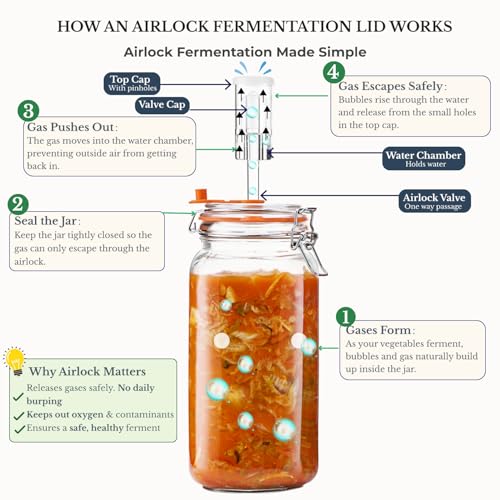
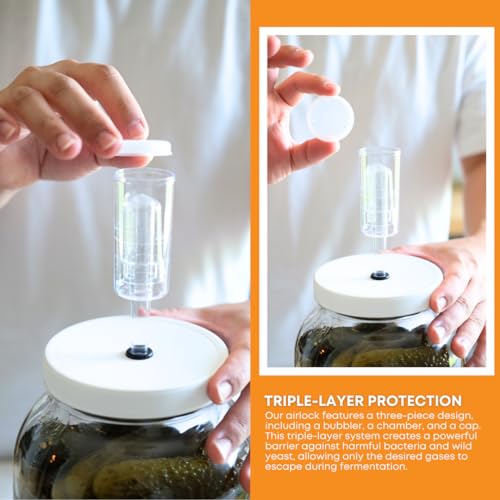
Airlocks are essential. They allow carbon dioxide, a natural byproduct of fermentation, to escape while preventing oxygen and unwanted microorganisms from entering. There are different kinds: the traditional three-piece airlocks filled with water, and simpler one-way valve systems. While waterlocks are visually reassuring, they require maintenance (topping off with water) and can be prone to evaporation. One-way valves are generally more convenient, especially for beginners. Pay attention to the seal around the lid; a poor seal compromises the entire process. Look for silicone gaskets that create a tight, reliable closure.
- A simple silicone stopper is fine for short-term, cold-weather ferments, but isn’t as robust as a proper airlock.
- An airlock with multiple channels (like those found on some of the 4-packs I’ve seen) can offer more reliable gas release, particularly for vigorous ferments.
- Ensure the lid and airlock are compatible with the jar’s opening to guarantee a truly airtight environment. A loose fit defeats the purpose of the entire system.
A good rule of thumb is to always ensure the vegetables or ingredients remain fully submerged under the brine. This is where fermentation weights come in handy; they prevent mold growth and ensure consistent fermentation.
Material Quality and Ease of Use
The material of the jar itself is paramount. Always opt for thick, lead-free glass. Thin glass is prone to cracking, particularly with temperature fluctuations, and lead contamination is a serious health concern. I’ve found that investing in high-quality glass jars pays off in the long run. Beyond the glass, consider the usability of the kit. Date-tracking lids, like those on the Jiaiton jars, are a brilliant addition for anyone who likes to experiment and track fermentation times. Wide-mouth openings are also a massive convenience for filling, packing, and cleaning.
Jars for Fermenting Compared
Here’s a comparison of key specifications for various fermentation jars to help you choose the right one for your needs.
| Product Title | Capacity | Material | Includes Weights? | Includes Airlock? | Lid Type | Special Features |
|---|---|---|---|---|---|---|
| Jiaiton 2L Glass Fermentation Jar | 64 oz (1.9L) | Glass | Yes | Yes | Date-Dial | Date Tracking |
| 50OZ Glass Fermentation Jar Kit | 50 oz (1.5L) | Glass | No | Yes | Silicone Gasket | Instruction Manual |
| JILLMO 2L Wide Mouth Fermentation Jar | 2L (68oz) | Glass | Yes | Yes | Clamp Lid | Wide Mouth |
| 32 oz Mason Jar Fermentation Kit | 32 oz (950ml) | Glass | Yes | Yes | Fermenting Lid | ML/OZ Markings |
| 4-Pack Mason Jar Fermentation Kit | 32 oz (950ml) | Glass | Yes | Yes | Plastic | Date Tags |
| Hersolm 2L Fermentation Jars with Date Marker | 2L (68oz) | Glass | Yes | Yes | Date Marker | Date Tracking |
| FastRack 1 Gallon Fermentation Jar | 1 Gallon (3.8L) | Glass | No | Yes | BPA-Free | Larger Capacity |
Frequently Asked Questions
What size jar is best for a beginner fermenter?
I recommend starting with a 32oz (950ml) jar. It’s a manageable size for experimenting with small batches and learning the process without committing to a large capacity you might not use.
Can I use regular mason jars for fermentation, or do I specifically need fermentation jars?
While you can use regular mason jars, especially those designed for jars suited for canning, dedicated fermentation jars offer advantages like built-in airlocks and weights, which make maintaining an anaerobic environment easier.
What’s the difference between a one-way valve airlock and a traditional three-piece airlock?
A one-way valve airlock is simpler to use and requires less maintenance as it doesn’t need refilling with water, but a three-piece airlock can be more visually reassuring in confirming gas release. Both effectively prevent oxygen from entering the jar.
What should I look for in the glass quality of a fermentation jar?
Always choose jars made from thick, lead-free glass to ensure durability and safety. Thicker glass is less prone to cracking during temperature changes, and avoiding lead prevents potential health risks when storing food in ideal food preservation jars.
How important are fermentation weights, and what can I use if my kit doesn’t include them?
Fermentation weights are very important; they keep vegetables submerged below the brine, preventing mold and ensuring even fermentation. If your kit doesn’t include them, you can use a clean glass or food-grade plastic bag filled with water as a temporary substitute.
The Bottom Line
Fermenting jars represent a trade-off between initial cost and long-term success. While you can get started with a basic kit, consistently reliable results depend on a quality seal and effective airlock. For overall performance and features, I believe the Jiaiton 2L Glass Fermentation Jar strikes the best balance; the date-tracking lid is a particularly thoughtful touch for developing your fermentation skills.
If you’re just starting out, or looking for a budget-friendly option, the 32 oz Mason Jar Fermentation Kit provides a solid entry point. For those planning larger batches – perhaps kombucha or substantial vegetable preserves – the FastRack 1 Gallon Fermentation Jar offers the capacity you’ll appreciate. And if you’re building out a broader preserving setup, exploring options among the best mason jars is a smart move.
Ultimately, the best jar is the one you’ll actually use. Don’t get bogged down in chasing the highest specifications or fanciest features. Focus on durable, lead-free glass, a secure seal, and a system for keeping your ferment submerged – those fundamentals are far more important than any single bell or whistle, and will give you the best chance of enjoying delicious, safely fermented foods for years to come.
