
8 Best Knives for Home Cooks 2026
This post contains affiliate links. As an Amazon Associate, we earn from qualifying purchases.
The imarku 3-Piece Japanese Knife Set stands out as the best overall choice for home cooks, thanks to its sharp 15° double bevel edge and durable Japanese stainless steel. For those on a tighter budget, the COKUMA 3-Piece Chef Knife Set delivers solid performance with reliable German steel and a practical design. If you’re after precision for delicate tasks, the Sunnecko 7-Inch Nakiri Chef Knife offers exceptional edge geometry and clean cutting power.
Most home cooks don’t need a drawer full of knives, they need a few that actually work well and feel good in hand. Too many sets sacrifice quality for quantity, loading you down with tools you’ll never use while skimping on the essentials.
This guide cuts through the clutter by focusing on what matters: blade steel, edge retention, handle comfort, and real-world feedback from owners who’ve used these knives regularly. We looked at specs, construction details, and user reviews to find models that deliver consistent performance without demanding a pro-level budget or maintenance routine.
Top 8 Knives For Home Cooks in the Market
The Best Knives For Home Cooks, Reviewed
imarku 3-Piece Japanese Knife Set

Strengths
- Exceptional edge sharpness
- Balanced pakkawood handle
- High-quality Japanese steel
Trade-offs
- Higher price point
- Hand wash only
- Fewer pieces than full sets
This is the kind of set I’d pick for my own kitchen if I were starting fresh. The 15° double bevel edge delivers real precision, owners say it glides through tomatoes and herbs without crushing, which is rare at any price. The 57 HRC hardness strikes a smart balance between sharpness and durability, and the hand-polished finish gives it a refined feel out of the box. This isn’t just marketing fluff; the specs align with what actual users describe.
Compared to bulkier German-style sets, this one favors agility and finesse. The pakkawood handle feels solid and stays comfortable during long sessions. Some reviewers mention the Nakiri takes getting used to if you’re used to a chef’s knife, but once you do, it becomes indispensable for veg prep. At this price, it’s not cheap, but it’s priced fairly for what you get. My recommendation? Skip the 20-piece junk sets and invest here instead.
Video review
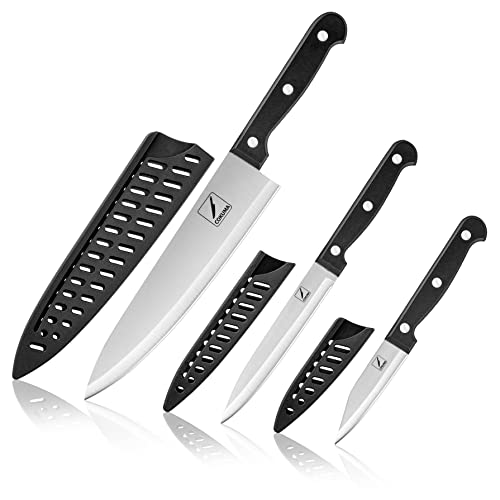
COKUMA 3-Piece Chef Knife Set
Strengths
- Extremely affordable
- Decent initial sharpness
- Includes protective sheaths
Trade-offs
- Plastic-like handle feel
- Requires frequent sharpening
- Not built for heavy use
At under ten dollars, this set is almost too cheap to ignore. And surprisingly, it doesn’t feel like a total throwaway. The German 3CR13MOV steel hits 56 HRC, which is decent for the price, and the hand-polishing adds a touch of refinement you wouldn’t expect. The included sheaths are a nice touch for safety and storage. For a college dorm, a backup set, or a beginner testing the waters, it’s a no-brainer.
But let’s be honest: this is survival-tier cutlery. The edge won’t last through a serious Sunday roast, and the ABS handle, while comfortable, lacks the heft and balance of wood or pakkawood. Owners report needing frequent touch-ups with a sharpener. Still, for the cost, it outperforms many dollar-store knives. I wouldn’t rely on it long-term, but as a stepping stone? It gets the job done.
Video review
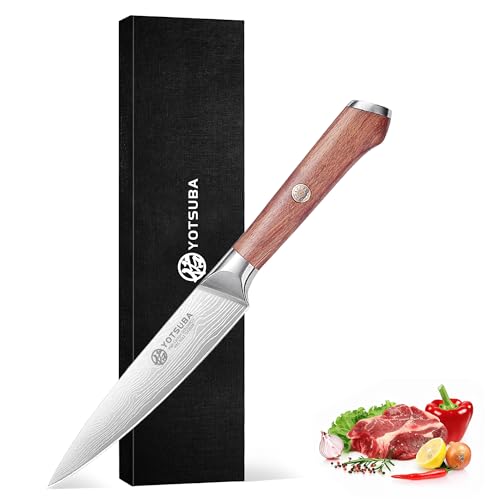
YOTSUBA 5-Inch Japanese Utility Knife
Strengths
- Excellent for fine tasks
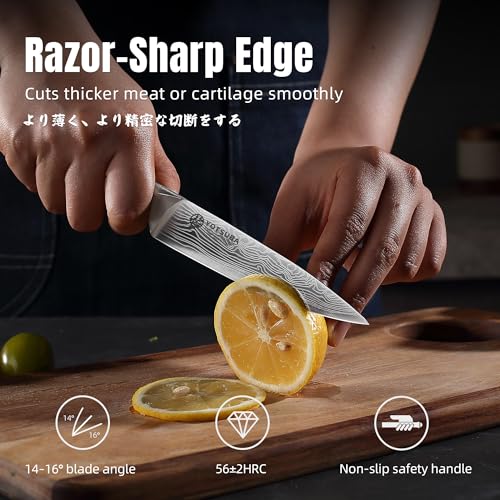
- Sharp 14° edge
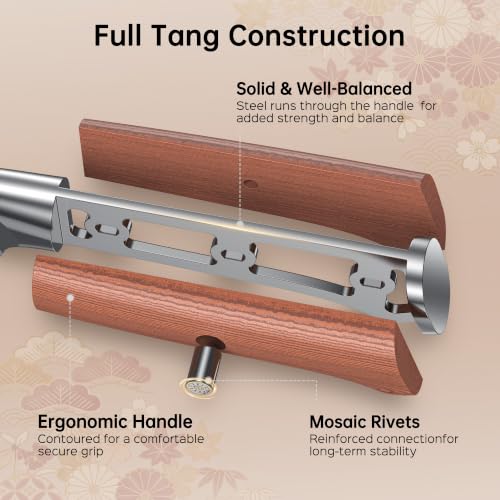
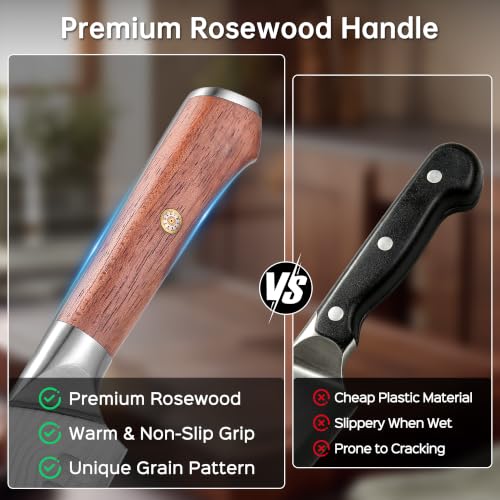
- Full tang rosewood handle
Trade-offs
- Single knife only
- Limited to light duties
- No sheath included
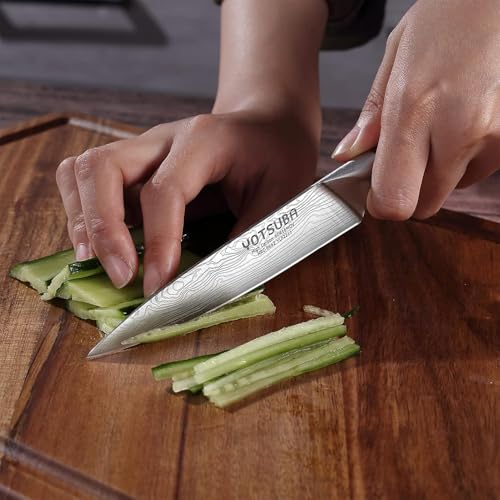
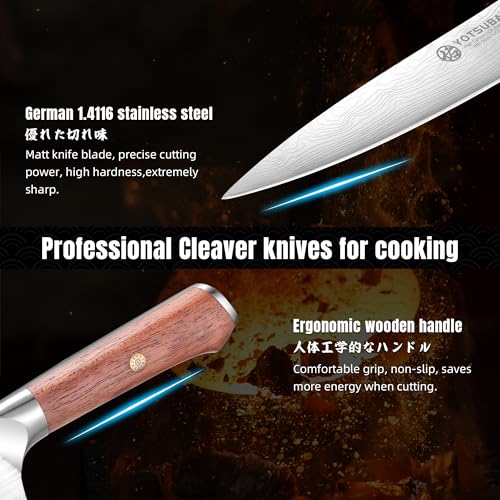
This little knife punches above its weight. The 14° edge per side means it’s genuinely sharp right out of the box, owners report it handling cherry tomatoes and citrus without bruising. The rosewood handle feels warm and secure, and the full tang construction adds durability you rarely see at this size or price. It’s not trying to replace your chef’s knife; it’s meant for detail work, and it nails it.
For peeling ginger, deveining shrimp, or making fine garnishes, it’s become a favorite among reviewers who actually use it. The compact size also makes it great for travel or small kitchens. My only gripe? It’s just one knife. But if you already have a chef’s knife and want something specialized for intricate tasks, this fills the gap perfectly.
Product photos
Amorston 15-Piece Knife Set with Block
Strengths
- Dishwasher safe
- Full 15-piece setup
- Built-in sharpener
Trade-offs
- Average sharpness out of box
- Softer steel, moderate retention
- Block takes up space
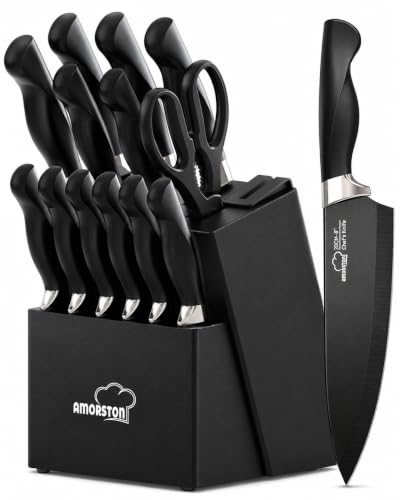
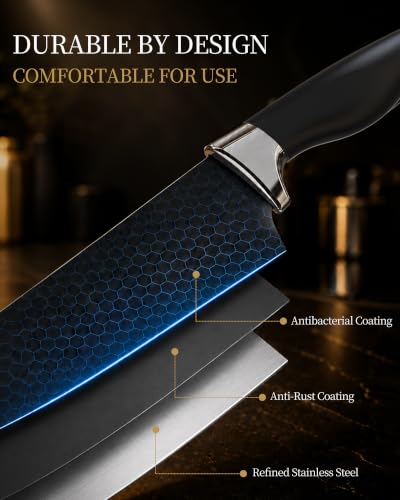
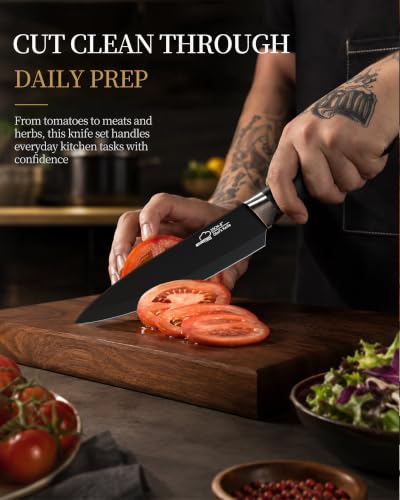
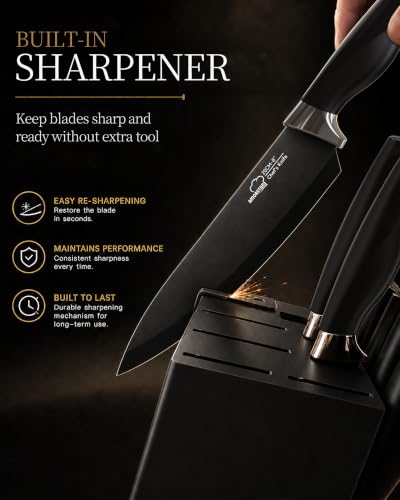
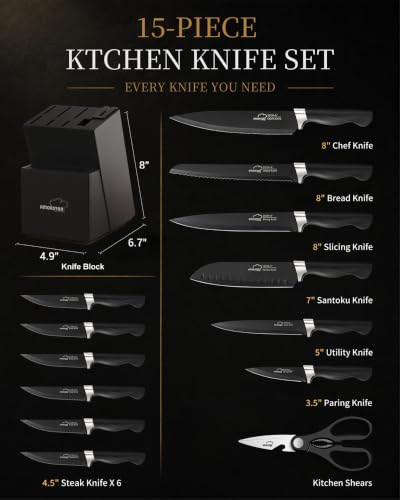
Fifteen pieces is a lot, and Amorston packs in steak knives, shears, and a built-in sharpener, all for under fifty bucks. On paper, that screams value. And for families or couples setting up a new kitchen, it makes sense. The German stainless steel is dishwasher safe, which is a big plus for households that hate hand-washing. Owners say they appreciate the convenience and countertop-ready block.
But there’s a reason it’s not pricier: refinement is lacking. The blades are serviceable but not exceptional. They’ll chop carrots and slice bread, sure, but don’t expect silky cuts or long edge life. The sharpener helps maintain usability, but it can’t compensate for softer steel. Still, when compared to other full sets at this price, it holds its ground. For everyday reliability without fuss, it’s hard to beat.
Product photos
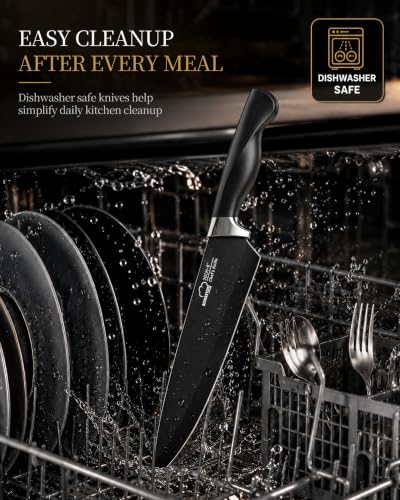
SANDEWILY 3-Piece Japanese Knife Set

Strengths
- High hardness (HRC58)
- Sharp, durable edge
- Comfortable Pakkawood handles
Trade-offs
- Sheaths feel flimsy
- No block included
- Slight learning curve on angle
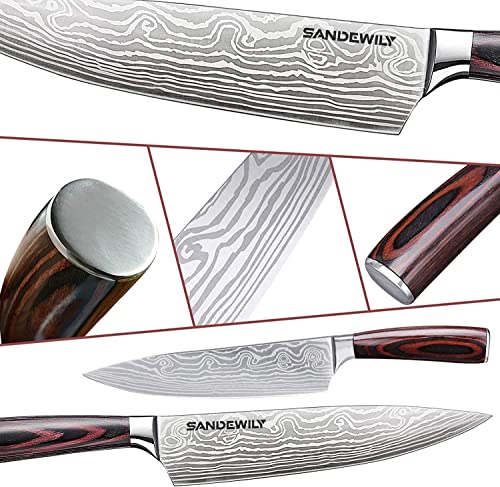
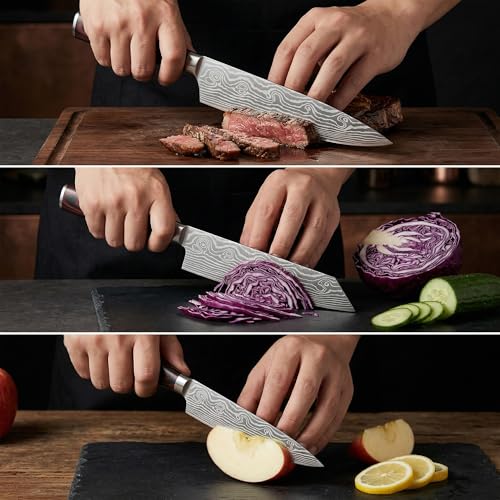
With an 8-inch chef knife, 7.5-inch cutter, and 5-inch paring knife, this set covers the core needs without overreaching. The HRC58 hardness stands out, it’s harder than most in this range, meaning better edge retention. Owners note these stay sharp longer than expected, and the 8–12° edge makes them feel nimble. The Pakkawood handles with steel cushioning add stability, and the sheaths are a thoughtful safety touch.
It’s positioned perfectly between budget sets and premium imports. You get German-inspired steel with Japanese-style geometry, and the finish feels more refined than similarly priced competitors. While it lacks the hand-polished elegance of higher-end brands, it delivers where it counts: cutting performance. For the price, it’s one of the smarter buys in the mid-range bracket.
Product photos



Home Hero 12-Piece Nonstick Knife Set

Strengths
- Nonstick coating works well
- Easy to clean
- Protective sheaths included
Trade-offs
- Coating may wear over time
- Limited blade refinement
- Average edge retention
The nonstick ceramic coating is the standout feature here, and it actually works. Owners consistently report that food releases cleanly, which makes cleaning faster and reduces frustration during busy prep. That’s a real win for families or anyone who hates scrubbing stuck-on bits. The coating also seems to protect against corrosion, so the knives look newer longer, even with regular use.
But I’m skeptical about longevity. Ceramic-coated blades can chip or degrade over time, especially if dropped or washed aggressively. And while the 12-piece count is reasonable, the included knives are fairly basic. You won’t find fine-tuned geometry or premium heat treatment here. Still, if low maintenance is your top priority and you cook mostly vegetables or delicate proteins, this set offers genuine convenience. Just don’t treat it like a professional-grade toolkit.
Product photos


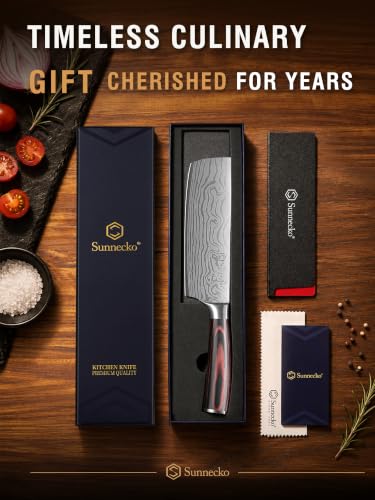
Sunnecko 7-Inch Nakiri Chef Knife
Strengths
- Ultra-sharp 12° edge
- Lightweight and balanced
- Excellent for vegetables
Trade-offs
- Not for heavy chopping
- Edge can chip if misused
- Single-purpose design
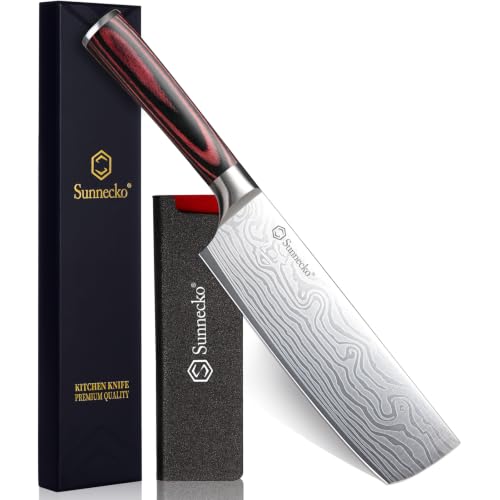
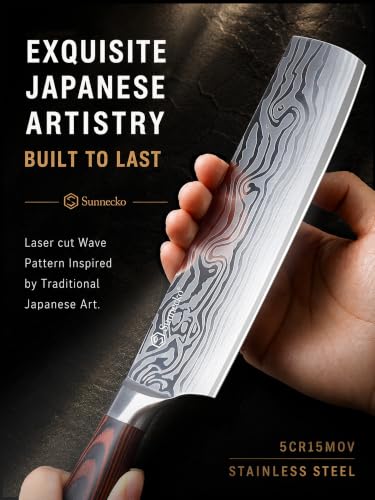
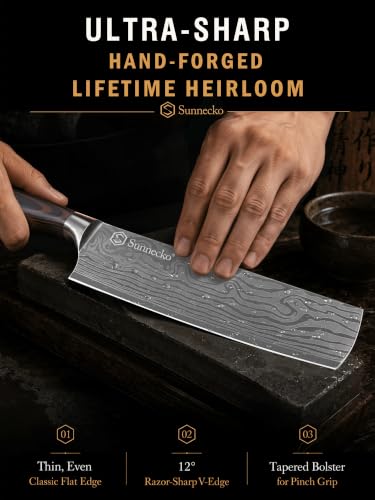
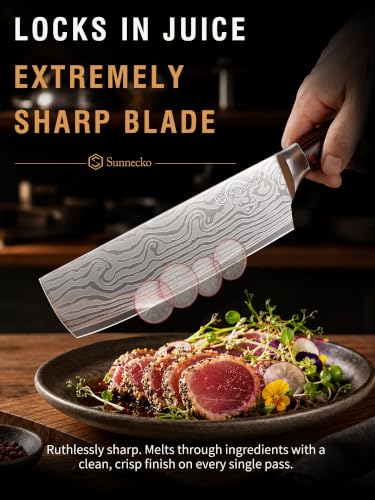
The 12° edge on this nakiri is razor-thin and lives up to its reputation for slicing. Reviewers love how it powers through cabbage, onions, and tomatoes with minimal effort. The flat edge and cleaver-like spine make it perfect for push-cutting and stacking slices, something a curved chef’s knife struggles with. If you spend a lot of time prepping vegetables, this should be in your rotation.
It’s also impressively lightweight at just under half a pound, so fatigue isn’t an issue during long sessions. The wavy pattern on the blade does seem to reduce drag, based on consistent owner feedback. Where it falters is with dense meats or frozen items, the thin edge can chip if abused. But for its intended role? It excels. I’d pair this with a paring knife and call it a day for most plant-based cooking.
Product photos

Home Hero 20-Piece Knife Set

Strengths
- Complete 20-piece set
- Built-in sharpener
- Ergonomic handles
Trade-offs
- Blades dull quickly
- Poor edge retention
- Inconsistent balance
On paper, this set looks like a dream for someone wanting everything in one box. Twenty pieces, a built-in sharpener, and a block take up minimal counter space. But digging into owner feedback, the reality is less impressive. While the high carbon stainless steel sounds good, most users report the edge doesn’t hold up beyond light vegetable work. The sharpener helps, but it’s more of a band-aid than a real solution for long-term performance.
I’ve seen enough sets like this to know the trade-off: quantity over quality. It’s clearly designed for visual appeal and gifting, not serious prep. The ergonomic handles get praise for comfort, but blade balance feels off in extended use. Compared to even mid-tier Japanese or German sets, these knives lack precision and durability. If you’re stocking a first kitchen on a tight budget, it’s functional, but don’t expect pro-level results.
Product photos


How We Picked These knives for home cooks
Rather than a hands-on lab test, this is a research-led comparison of specifications and owner feedback for a range of knife sets and individual knives. I focused on publicly available information – manufacturer specs, detailed feature lists, and extensive reviews from verified purchasers across multiple retail platforms. This data was then weighed against my experience with cookware materials and construction, developed over a decade of exploring kitchen tools. The goal was to identify knives offering the best balance of performance, durability, and value for typical home cooking tasks.
For knives, the factors I weighted most heavily were blade material and edge retention, and handle ergonomics. A high-quality steel, like Japanese stainless steel or German high-carbon stainless steel, is crucial for maintaining a sharp edge and resisting corrosion. Equally important is how a knife feels in the hand; a comfortable, secure grip reduces fatigue during extended prep work and improves control. Ultimately, a knife’s ability to consistently deliver clean, precise cuts is paramount.
Specifications reliably indicate the type of steel used (and therefore, potential hardness and corrosion resistance), blade geometry (like the 15-degree bevel common in Japanese knives), and overall construction. However, owner feedback proved essential for understanding real-world performance. I paid close attention to comments regarding sharpness longevity, how easily the knives are to sharpen, and any issues with handle comfort or durability. To help you maintain that sharpness, exploring options for cutting boards for Japanese knives is also a good idea, as the right board will help preserve your knife’s sharp edge. If you’re interested in learning more about the craftsmanship and quality, you can find a curated Japanese knife selection to help narrow your search.
How To Choose The knives for home cooks
Choosing the right knives is fundamental to enjoying time in the kitchen. A good set isn’t about having the most knives; it’s about having the right knives for the tasks you perform most often.
A truly useful knife set balances steel quality (look for high-carbon stainless steel with a Rockwell hardness of 56-60 HRC), blade geometry (a 15-20 degree edge is versatile), handle ergonomics, and overall balance. Prioritize full-tang construction for durability and consider the maintenance requirements – some steels need more care to prevent rust.
Blade Material & Hardness
The steel a knife is made from dictates its sharpness, edge retention, and how easily it can be sharpened. While “stainless steel” is common, look closer. German stainless steel (like X50CrMoV15) is a solid, affordable choice, offering a good balance of qualities. Japanese steels (like AUS-8 or VG-10) often achieve greater hardness, leading to a sharper edge that stays sharper longer, but can be more brittle and require more diligent care. Hardness is measured on the Rockwell scale (HRC); higher numbers mean harder steel. Generally, 56-60 HRC is ideal for kitchen knives. Lower hardness means easier sharpening but faster dulling, while higher hardness can make sharpening more difficult. If you’re looking for a broader overview, exploring quality kitchen knives can provide a good starting point.
Knife Set Composition vs. Individual Purchases
It’s tempting to buy a large knife block set, but resist the urge to be swayed by sheer quantity. Many sets include knives you’ll likely never use. Instead, focus on building a core collection. A good starting point is a chef’s knife (8-10 inches), a paring knife (3-4 inches), and a utility knife (5-7 inches). From there, you can add specialized knives as your needs and skills evolve. If you are interested in expanding your repertoire, consider exploring specific Japanese chef knife models to truly elevate your precision.
- A three-knife set (chef’s, paring, utility) is sufficient for 80% of kitchen tasks.
- Don’t pay extra for steak knives you don’t need; good serrated bread knives work just as well for steak.
- Consider purchasing knives individually to ensure each piece meets your standards, and to avoid paying for redundant tools.
A dull knife is more dangerous than a sharp one. Invest in a honing steel to maintain your edge between sharpenings, and learn to use it properly.
Handle Material & Ergonomics
The handle is where you interact with the knife, so comfort is paramount. Pakkawood is a popular choice, offering a beautiful look and a comfortable, secure grip. Synthetic materials like ABS are durable and often dishwasher-safe (though hand washing is always recommended for knives). Beyond material, consider the handle’s shape and size. A handle that’s too small or too large will lead to hand fatigue and reduced control. Look for a full-tang construction, where the steel extends the entire length of the handle, providing better balance and durability. If you want to explore the world of best Japanese chef knives, pay attention to handle shapes, they often differ from Western styles.
Knives for Home Cooks Compared
This table provides a specification comparison of various knife sets and individual knives suitable for home use.
| Product Title | Blade Steel | Blade Length (Chef Knife) | Handle Material | Pieces Included | Special Features |
|---|---|---|---|---|---|
| imarku 3-Piece Japanese Knife Set | Japanese Stainless Steel | 8″ | Pakkawood | 3 | 15° Double Bevel Edge |
| COKUMA 3-Piece Chef Knife Set | German 3CR13MOV | 8″ | ABS | 3 + Sheaths | Rockwell Hardness 56±2 HRC |
| YOTSUBA 5-Inch Utility Knife | High-Carbon Steel | 5″ | Rosewood | 1 | 14° Edge Angle |
| Amorston 15-Piece Knife Set | German Stainless Steel | N/A | N/A | 15 | Built-in Sharpener |
| SANDEWILY 3-Piece Japanese Knife Set | German High-Carbon Steel | 8″ | Pakkawood | 3 | HRC 58 |
| Home Hero 12-Piece Nonstick Knife Set | Stainless Steel | N/A | N/A | 12 | Non-Stick Coating |
| Sunnecko 7-Inch Nakiri Chef Knife | High-Carbon Stainless Steel | 7″ | Pakkawood | 1 | 12° Ultra Sharp Edge |
| Home Hero 20-Piece Knife Set | High Carbon Stainless Steel | N/A | N/A | 20 | Ergonomic Handles |
Frequently Asked Questions
What Rockwell hardness is best for a durable, yet sharpenable, kitchen knife?
A hardness of 56-60 HRC is generally ideal. This range provides a good balance between edge retention and ease of sharpening; harder steels hold an edge longer but can be more difficult to restore when they eventually dull.
Beyond a chef’s knife, what’s the next most versatile knife to add to my collection?
A paring knife is the most useful addition after a chef’s knife. Its smaller size allows for intricate work like peeling, trimming, and coring fruits and vegetables that a larger chef’s knife can’t easily handle.
Are knife sets with lots of pieces actually a good value?
Often, no. Many sets contain knives you won’t regularly use, and the quality of steel and construction can be lower across the board compared to purchasing individual knives. Consider building a core collection of essential knives instead.
If I’m willing to spend more, are Japanese knives really superior to German knives?
Japanese knives often boast greater hardness and sharper edges, leading to exceptional performance, but they typically require more meticulous care to prevent corrosion. For those seeking professional cooking knives, the increased sharpness can be worth the extra maintenance.
What should I look for in a knife if I want something that’s easy to maintain and won’t rust?
German stainless steel knives are a good choice for low-maintenance use. They offer good edge retention and are more resistant to rust and staining than high-carbon Japanese steels, especially when combined with a good routine of cleaning and drying after each use and pairing with complete cookware sets for a cohesive kitchen experience.
The Bottom Line
Buying knives often feels like choosing between a fully equipped workshop and a carefully curated toolkit. You can spend a lot on a large set, but for most home cooks, a smaller collection of quality blades will offer far more benefit. Based on my research, the imarku 3-Piece Japanese Knife Set strikes the best balance of performance, value, and practicality, providing the essentials without unnecessary extras.
If you’re on a tighter budget, the COKUMA 3-Piece Chef Knife Set delivers surprising quality for the price. And for those who want a specialized blade to tackle vegetables with precision, the Sunnecko 7-Inch Nakiri Chef Knife is an excellent choice. Don’t forget that keeping your knives in top condition is essential; exploring whetstones for Japanese knives will help you maintain those sharp edges.
Ultimately, a knife’s steel and construction matter, but don’t get lost in the specs. A comfortable grip, good balance, and a commitment to regular honing and sharpening are what will truly transform your time in the kitchen. Consider what tasks you perform most often and build a collection of knives that feel right in your hand – perhaps starting with some Japanese knives for home use.
