
7 Best Large Stock Pots of 2026
This post contains affiliate links. As an Amazon Associate, we earn from qualifying purchases.
The All-Clad Simply Strain 16 Qt Multipot is the best overall large stock pot for its even heating and smart straining design, while the HOMICHEF 24 Quart Nickel-Free Stockpot stands out for those wanting a larger, non-reactive option. For budget-focused cooks, the Amazon Basics 8 Quart Stock Pot delivers solid performance at a low price.
If you’ve ever struggled with a pot that heats unevenly, leaks steam, or takes up too much cabinet space, you know how much the wrong stock pot can disrupt your rhythm. Big cooking jobs demand reliable gear that won’t scorch your broth or buckle under frequent use.
In this guide, I’ll walk you through the top picks based on capacity, construction quality, and real-world feedback. These were chosen not just for size, but for how well they perform over time, whether you’re simmering bone broth, canning tomatoes, or feeding a crowd.
Top 7 Large Stock Pots in the Market
The Best Large Stock Pots, Reviewed
All-Clad Simply Strain 16 Qt Multipot

Strengths
- Includes strainer insert
- Even heat distribution
- Lifetime warranty
Trade-offs
- Higher price point
- Insert takes up storage space
- Heavier than standard pots
This All-Clad is the most innovative pot here, and I’d pick it as the best overall for home cooks who value versatility. The 16-quart capacity is practical, not overwhelming, and the included strainer insert is a standout. You can boil potatoes, then lift them out cleanly, or simmer mussels and drain broth in seconds. No more fishing with a colander or risking spills.
The build is classic All-Clad: 90% recycled stainless steel, induction-safe, oven-safe to 600°F, and with a base that heats evenly. The wide handles stay cool and offer great grip, even with oven mitts. Yes, it’s the most expensive, but owners consistently say it earns its place on the stove. Compared to basic stock pots, this one replaces multiple tools, pot, steamer, and colander, in one.
Video review
VEVOR 42QT Stainless Steel Stockpot

Strengths
- Massive 42-quart capacity
- Commercial-grade 18/8 steel
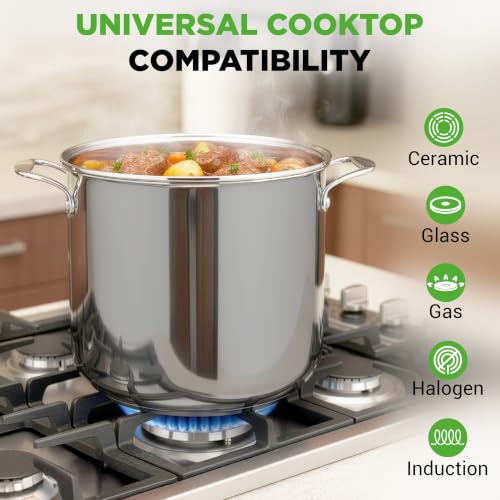
- Induction and flame compatible
Trade-offs
- Extremely heavy when full
- Bulky for home storage
- Finish is rough, not polished
At 42 quarts, this VEVOR pot isn’t just large, it’s built for feeding a small army. It’s clearly designed with caterers, church kitchens, or backyard boil enthusiasts in mind. The 18/8 stainless steel body resists corrosion, even with acidic broths or tomato sauces, and the composite base delivers solid heat transfer across induction and open-flame setups.
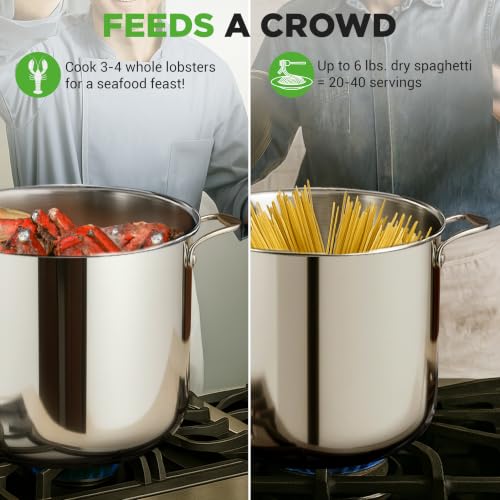
Still, its size is a double-edged sword. Owners report it’s unwieldy without two people to lift it, and storage is a challenge unless you have a commercial-style kitchen. The riveted handles are sturdy, but the finish is more utilitarian than polished. If you regularly host large events or process whole turkeys and lobsters, this is a workhorse. But for most home kitchens, it’s massive overkill.
Video review
Stainless Steel Stockpot 20 Quart

Strengths
- 18/8 stainless steel
- Impact-bonded base
- Oven and induction safe
Trade-offs
- Heavy when full
- Higher price than basic models
- Mirror finish shows water spots
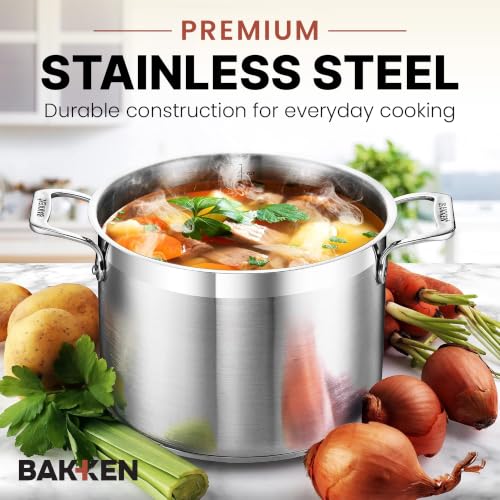
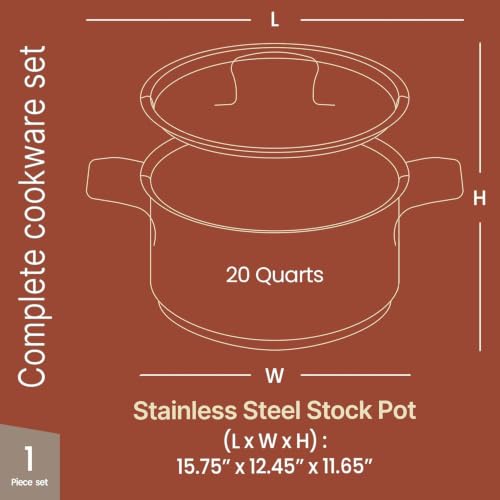
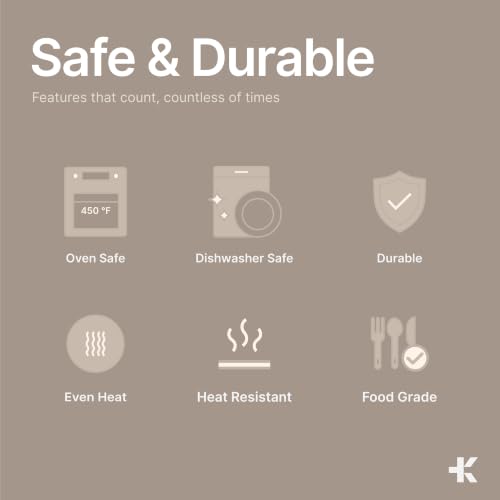
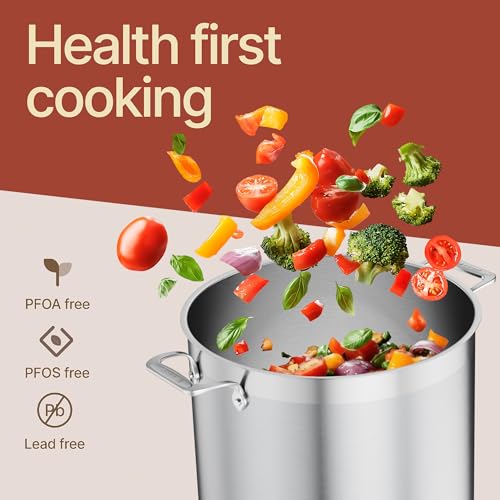
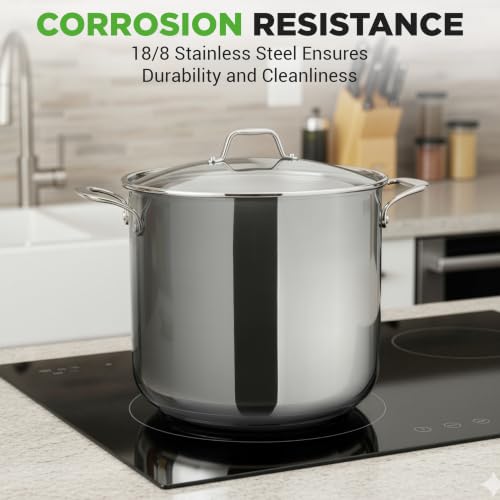
This 20-quart stockpot stands out in the mid-tier market by combining true 18/8 stainless steel with a thick impact-bonded base, two features I always look for in reliable cookware. The base, at nearly 4mm thick, spreads heat far better than budget models, reducing scorching risks during long simmers. It’s also fully induction-compatible, oven-safe to 500°F, and built with polished, ergonomic handles that don’t wobble over time.
Reviewers note it’s heavier than it looks, but that’s a trade-off for durability. Compared to the IMUSA model, this one resists warping and reacts better to temperature changes. The polished finish looks sharp on any stove, and the snug-fitting lid locks in moisture well. For home cooks who regularly make big batches but don’t need commercial scale, this hits the sweet spot between performance and price.
Product photos
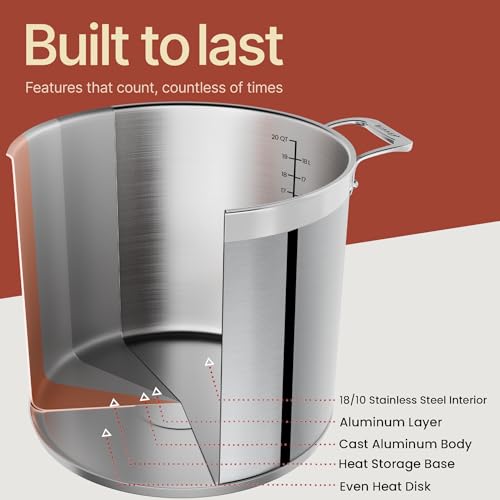
HOMICHEF 24 Quart Nickel-Free Stockpot

Strengths
- Nickel-free stainless steel
- Thick 3-ply base
- Induction and oven compatible
Trade-offs
- Heavy and bulky
- Glass lid not oven-safe
- Higher price for niche benefit
The HOMICHEF stands out for one reason: it’s made with nickel-free stainless steel, a rare feature in mainstream cookware. For anyone sensitive to nickel or concerned about long-term leaching, especially during acidic cooking, this is a serious advantage. The 24-quart capacity gives you room for big jobs, and the 4.2mm triple-ply base ensures excellent heat retention and distribution.
It’s induction-ready, oven-safe (without the glass lid), and built with solid riveted handles that stay cool. Owners report it’s heavy but stable, and the polished finish adds a touch of elegance. Compared to the NutriChef, it trades the glass lid’s visibility for safer materials. If health-conscious cooking is your priority, this is the smarter buy, even if it means a higher price and no strainer.
Product photos
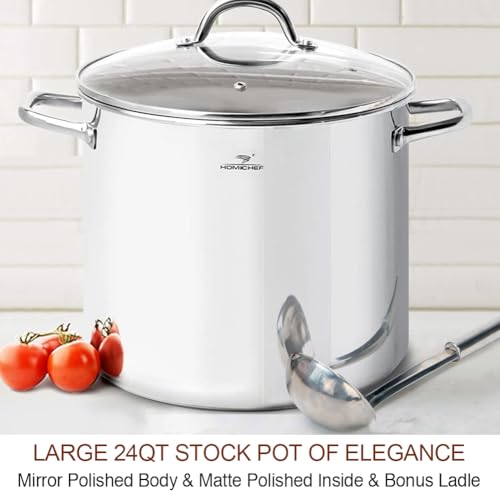


IMUSA 20 Quart Stainless Steel Stock Pot

Strengths
- Large 20-quart capacity
- Durable stainless steel
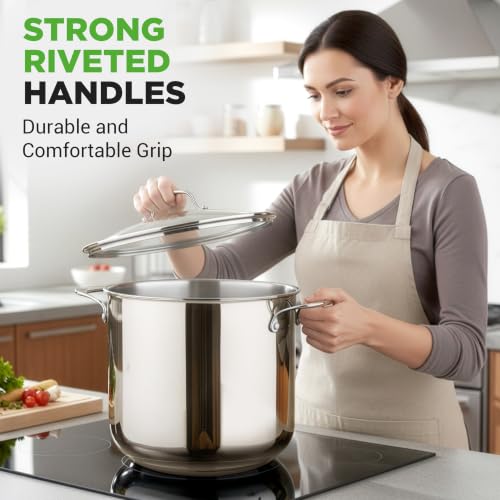
- Riveted handles
Trade-offs
- No encapsulated base
- Lower alloy steel
- Potential for hot spots
At 20 quarts, this IMUSA pot delivers serious volume at a price that won’t make you blink. On paper, it’s a no-brainer for anyone needing a big pot on a tight budget, perfect for boiling corn, cooking stock, or simmering chili for a crowd. The stainless steel build holds up to daily use, and the riveted handles offer a secure grip when moving it full.
Owners consistently report it heats reasonably well on gas and electric stoves, though it lacks an encapsulated base, so expect some hot spots, especially on flat-top ranges. The included lid fits snugly, which helps retain moisture, but the steel isn’t 18/8 grade, so long-term resistance to pitting and staining may lag behind pricier options. Still, for occasional large-batch cooking, it’s hard to beat the value.
Product photos
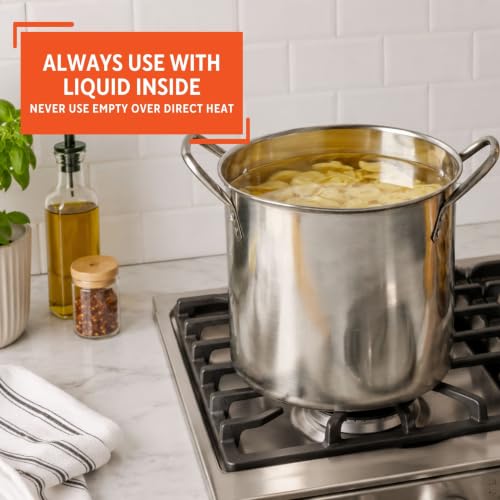


Amazon Basics 8 Quart Stock Pot

Strengths
- Induction compatible
- Glass lid with vent
- Affordable price
Trade-offs
- Only 8 quarts
- Not for large batches
- Base thinner than premium models
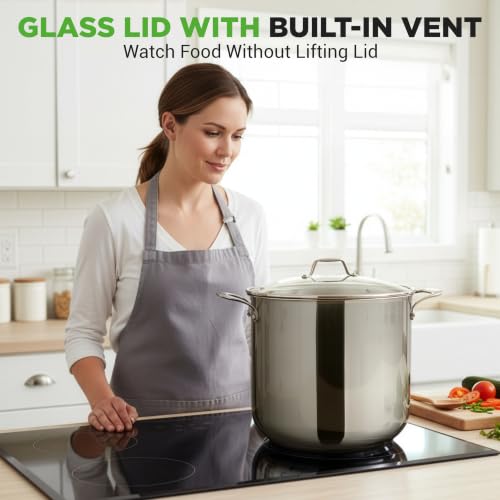
At 8 quarts, this Amazon Basics pot is the smallest in the lineup, and it shows. It’s not a true “large” stock pot, but it’s a solid pick for smaller households or those just dipping into batch cooking. The aluminum-encapsulated base delivers even heating for its class, and the tempered glass lid lets you monitor food without lifting, handy when simmering sauces or boiling pasta.
It’s induction-ready and oven-safe (lid off), which adds flexibility, but the capacity limits its use for true stock-making or big soups. Compared to the 20-quart models, it’s more of a utility pot than a centerpiece. Owners appreciate its reliability and low price, but anyone regularly cooking for more than four should look bigger.
Product photos


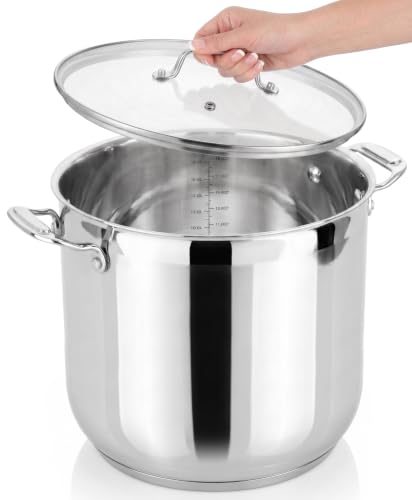
NutriChef 19-Quart Induction Stockpot
Strengths
- Thick impact-bonded base
- See-through glass lid
- 18/8 stainless steel
Trade-offs
- Mirror finish shows marks
- No strainer insert
- Lid handle not oven-safe
The NutriChef 19-quart pot is a strong contender for induction users who want a balance of size, performance, and visibility. The 18/8 stainless steel body resists corrosion, and the 0.228-inch impact-bonded base is among the thickest in this group, great for preventing hot spots. The see-through glass lid is a standout, letting you monitor cooking without losing steam.
It’s slightly smaller than the 20-quart models but still handles large batches with ease. Owners praise its even heating and solid handle attachment, though some note the mirror finish shows fingerprints. Compared to the HOMICHEF, it lacks nickel-free construction, but it’s more widely available and easier to store. For induction kitchens, this is a smart, well-rounded pick.
Product photos
How We Picked These large stock pots
Rather than a hands-on lab test, my research for these recommendations involved a detailed comparison of published specifications and features across numerous models. I weighed owner reviews from multiple sources – looking for consistent praise and complaints – alongside expert opinions from established cooking publications. As someone who has spent years understanding what makes cookware perform, I then ranked these pots based on what I believe matters most for a versatile, long-lasting stock pot.
For large stock pots, capacity, material quality, and heat distribution are paramount. A generous size is essential for batch cooking and simmering stocks, and as I’ve found with many readers looking for the right equipment for making soup, a good capacity is frequently a determining factor when exploring options like those in our guide to the stock pots for soup. Stainless steel construction is vital for durability and avoiding reactivity with acidic foods. Finally, even heating prevents scorching and ensures consistent results.
Specifications reliably indicate capacity, materials (like stainless steel gauge and construction), and stovetop compatibility. However, owner feedback provided crucial insight into real-world performance – how handles hold up over time, how easily the pots clean, and whether they truly deliver even heating. Reputation also played a role; brands known for quality generally maintained that standard in these larger vessels, though there were exceptions. If you’re after something a little smaller, you might also want to review our guide to 12-quart stock pots.
How To Pick The Right large stock pots
Finding the right stock pot can truly elevate your cooking, moving beyond simple boiling to unlocking flavorful stocks, impressive soups, and effortless batch cooking.
A good stock pot offers substantial capacity, durable construction, typically stainless steel, and even heat distribution. Consider the material’s reactivity, the sturdiness of the handles, and whether it suits your cooktop, particularly if you’re invested in induction. Prioritize a lid that fits securely to retain heat and moisture, and look for features like measurement markings for added convenience.
Capacity: Scaling to Your Needs
The size of a stock pot is the first thing to nail down. Don’t just think about today’s dinner; consider your typical cooking style. A smaller 8-quart pot, like the Amazon Basics 8 Quart Stock Pot, is excellent for everyday use, especially if you’re cooking for one or two people. However, if you frequently cook for a crowd, preserve garden harvests, or make large batches of soup for the week, you’ll want to jump to 16 quarts or higher. The VEVOR 42QT Stainless Steel Stockpot is an extreme example, geared towards catering or very large-scale operations, but illustrates the upper end of available sizes. Remember, a larger pot also means more storage space required.
Stainless Steel Grade & Construction
Stainless steel is the dominant material for stock pots, and for good reason. But not all stainless steel is created equal. 18/8 stainless steel (containing 18% chromium and 8% nickel) is a common standard, offering good corrosion resistance. However, some manufacturers, like HOMICHEF, are now opting for nickel-free stainless steel, addressing concerns about potential nickel leaching. The construction method also matters. Impact-bonded bases, as seen in the Stainless Steel Stockpot 20 Quart, provide far more even heat distribution than thinner bases, preventing scorching.
- A fully clad pot (stainless steel layers surrounding an aluminum core) provides the most even heating, but comes at a premium price.
- A disc-bottom pot (aluminum disc bonded to the base) is a more affordable option, still offering improved heat distribution over a simple stainless steel base.
- Consider the steel gauge (thickness). A heavier gauge generally indicates better durability and heat retention, but also adds to the pot’s weight.
Features & Value: Beyond the Basics
Beyond capacity and construction, consider features that will enhance your cooking experience. A well-fitting lid is crucial, and tempered glass lids with steam vents, as found on the HOMICHEF 24 Quart Nickel-Free Stockpot, allow you to monitor cooking without lifting the lid and losing heat. Handles should be securely riveted, not welded, for long-term durability. If you’re looking for something versatile, explore options like the All-Clad Simply Strain 16 Qt Multipot which combines a pot and strainer in one. Many shoppers also benefit from looking at options for smaller needs, such as our guide to 10-quart stock pots.
Don’t overspend on features you won’t use. A simple, well-made stock pot will outperform a feature-rich model made with inferior materials.
Large Stock Pots Compared
Here’s a comparison of key specifications for several large stock pots to help you choose the right one.
| Product Title | Capacity (Quarts) | Material | Stovetop Compatibility | Oven Safe (°F) | Lid Material |
|---|---|---|---|---|---|
| All-Clad Simply Strain 16 Qt Multipot | 16 | Stainless Steel | Any | 600 | Stainless Steel |
| VEVOR 42QT Stainless Steel Stockpot | 42 | Stainless Steel | Induction, Open Flame | N/A | Stainless Steel |
| Stainless Steel Stockpot 20 Quart | 20 | Stainless Steel | Any | 500 | Stainless Steel |
| HOMICHEF 24 Quart Nickel-Free Stockpot | 24 | Nickel-Free SS | Any | N/A | Glass |
| IMUSA 20 Quart Stainless Steel Stock Pot | 20 | Stainless Steel | N/A | N/A | Stainless Steel |
| Amazon Basics 8 Quart Stock Pot | 8 | Stainless Steel | Any | 500 | Glass |
| NutriChef 19-Quart Induction Stockpot | 19 | Stainless Steel | Induction | 500 | Glass |
Frequently Asked Questions
What size stock pot do most professional chefs recommend?
A 12- to 20-quart stock pot is often favored by professionals, offering a balance between capacity for large batches and manageability on the stovetop. While size depends on needs, many chefs find a larger pot like these 20-quart stock pots versatile enough for stocks, soups, and pasta.
Are aluminum stock pots a good alternative to stainless steel?
Generally, no. While aluminum heats quickly, it’s reactive with acidic foods and lacks the durability of stainless steel. Stainless steel stock pots offer a safer, longer-lasting cooking surface, and you can find options with aluminum cores for enhanced heat distribution.
What’s the difference between an impact-bonded base and a fully clad stock pot?
An impact-bonded base has an aluminum disc fused to the bottom of the pot, improving heat distribution. A fully clad pot has layers of stainless steel and aluminum extending up the sides, providing the most even heating, but at a higher price point than impact-bonded options.
Can I use a stock pot on an induction cooktop?
It depends on the material. Stainless steel stock pots are generally induction-compatible, but the pot’s base must contain magnetic stainless steel or a ferrous metal. Always check the manufacturer’s specifications to confirm compatibility before use.
How can I best prevent sticking and scorching when using a stock pot?
Using enough liquid is the first step, but choosing a quality stock pot with even heat distribution is also critical. Look for pots with a thick base, such as those made with quality stainless steel, and avoid overheating the pot when it’s empty, as well as exploring options among the best stainless steel stock pots.
The Bottom Line
Choosing a large stock pot often comes down to balancing how much you want to spend against how much control you desire over the cooking process. While a premium, fully clad pot like the All-Clad Simply Strain 16 Qt Multipot offers exceptional heat distribution and durability, the Stainless Steel Stockpot 20 Quart delivers excellent value and performance for most home cooks. Ultimately, the “best” pot depends on your cooking habits and budget.
For those prioritizing affordability, the Amazon Basics 8 Quart Stock Pot is a solid choice, especially if you don’t need a massive capacity. If you are looking for a versatile option, the All-Clad Simply Strain 16 Qt Multipot offers the convenience of a built-in strainer, while cooks interested in learning about the nuances of different metals will find our guide to stock pot materials helpful. And for those needing to cook for a large group, the VEVOR 42QT Stainless Steel Stockpot is a workhorse.
Beyond any specific feature or price point, remember that consistent heat, durable construction, and a well-fitting lid are the cornerstones of a great stock pot. Don’t get caught up in chasing the latest trends or highest specs; instead, focus on finding a pot that feels sturdy, heats evenly, and aligns with your cooking style. A thoughtfully chosen pot will serve you well for years to come, becoming an indispensable part of your kitchen.
