
3 Best Layer Cake Pans of 2026
This post contains affiliate links. As an Amazon Associate, we earn from qualifying purchases.
The best layer cake pans deliver even baking and clean release, and after comparing the field, the 3PCS 8″ Nonstick Pans stand out as the top overall pick for their consistent performance and included parchment. For a budget-friendly option that still performs well, the tifanso 3PCS 8″ Stainless Steel Pans are a solid choice, while the Chicago Metallic 6, 8, 10 Inch Pans offer the most versatility with graduated sizes.
Baking layer cakes should be satisfying, not stressful. Yet so many home bakers struggle with uneven layers, stuck cakes, or warped pans that ruin an otherwise perfect recipe. It’s frustrating when your effort doesn’t translate into results, especially when the wrong pan can silently sabotage your bake.
This guide cuts through the noise by focusing on what actually matters: material, construction, and real-world feedback. I looked at specs and owner experiences to find pans that bake evenly, release cleanly, and hold up over time, so you can bake with confidence, not guesswork.
Top 3 Layer Cake Pans in the Market
The Best Layer Cake Pans, Reviewed
3PCS 8″ Nonstick Pans with Parchment

Strengths
- Thick carbon steel
- Includes parchment paper
- True nonstick release
Trade-offs
- Coating may degrade with harsh cleaning
- Not oven-safe beyond 400°F
This set hits the sweet spot for most home bakers who want reliable, no-fuss layer cakes without overspending. The heavy-weight carbon steel stands out on paper and in owner feedback, bakers consistently report evenly baked layers with minimal browning on the bottom, which is a common issue with thinner pans. The inclusion of 100 pre-cut parchment papers with handles is a smart touch that actually improves release and simplifies cleanup, especially for beginners who struggle with cake sticking.
The fixed bottom and straight-sided design make these pans ideal for stacking and frosting, and unlike springform-style pans, there’s no risk of leaks. While the nonstick coating performs well initially, long-term durability depends on gentle cleaning, sharp scrubbing will degrade it over time. Compared to pricier stainless steel options, this set delivers strong performance for the price, though it won’t last decades like uncoated metal.
Video review
tifanso 3PCS 8″ Stainless Steel Pans

Strengths
- Coating-free stainless steel
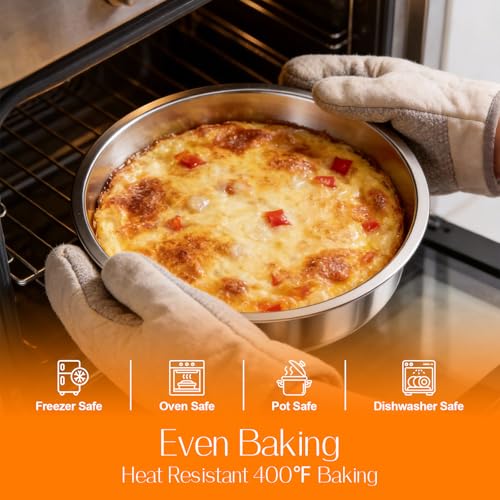
- Oven and broiler safe
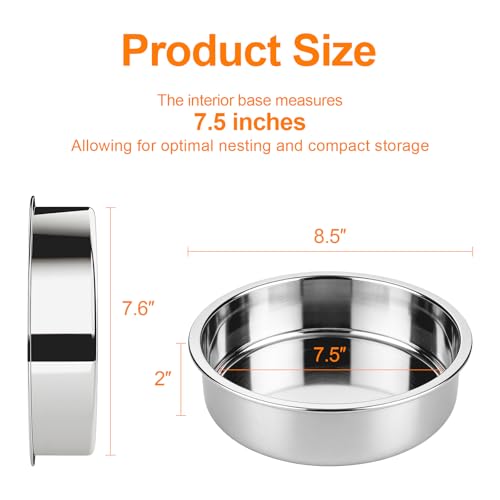
- Nests for compact storage
Trade-offs
- Requires greasing for reliable release
- Slightly less even browning
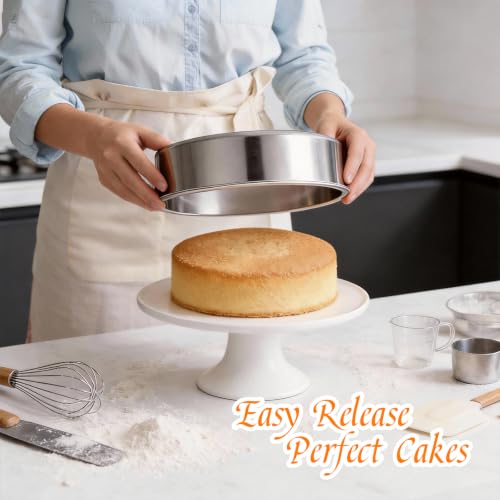
For bakers who prioritize material safety and long-term durability over convenience, the Tifanso stainless steel pans offer a compelling alternative. With no nonstick coating, there’s zero risk of chemical leaching, and owners appreciate that these pans can go straight from oven to broiler without worry. The mirror-polished finish does help with release, especially when greased or lined, but it’s not as effortless as coated pans, which some reviewers note requires a bit more prep.
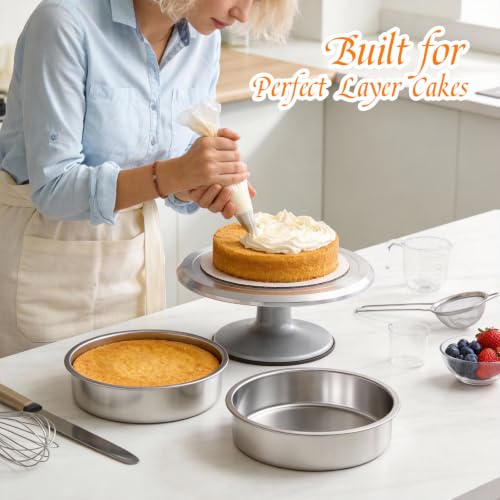
Heat distribution is solid, though stainless steel naturally doesn’t conduct as evenly as aluminized steel or carbon steel. Still, the 2-inch straight sides and fixed bottom make these excellent for tall, clean layers, and they nest neatly for storage, a bonus in smaller kitchens. Their compatibility with pressure cookers and air fryers adds unexpected versatility. Compared to coated sets, these are a smarter long-term buy if you’re okay with a little extra prep work.
Product photos
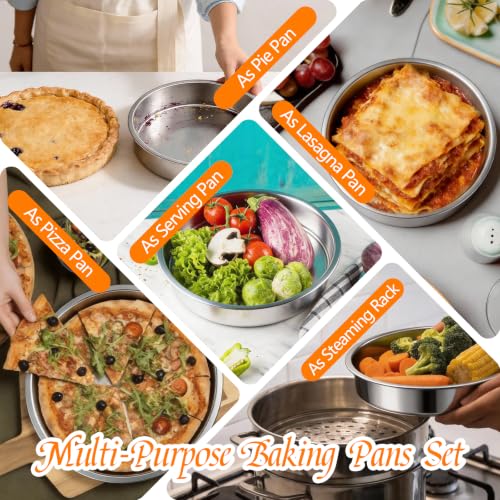
Chicago Metallic 6, 8, 10 Inch Pans

Strengths
- Even heat distribution
- Warp-resistant construction
- Three sizes included
Trade-offs
- Pricier than basic sets
- Nonstick coating requires care
If you’re building a versatile bakeware collection and want pans that perform like commercial-grade tools, this Chicago Metallic set is hard to beat. The aluminized steel construction is a standout, it heats evenly and resists warping, which owners confirm leads to flat, level cake layers without doming. The 6, 8, and 10-inch combo is ideal for tiered cakes, making it a favorite among bakers who regularly make celebration cakes.
The nonstick surface gets high marks across reviews for clean release, even with delicate batters like sponge or flourless chocolate. While it’s technically dishwasher safe, most experienced users recommend hand washing to preserve the coating. Compared to cheaper carbon steel sets, this one feels sturdier and more precise in shape, which matters when stacking and frosting. I’d pick this over single-size sets for its flexibility and pro-level consistency.
Video review
How We Chose These layer cake pans
As someone who’s spent years evaluating cookware, I approach layer cake pans with a specific focus. Rather than a hands-on test of baking dozens of cakes with each set, my assessment centers on a detailed comparison of published specifications, materials, and construction, combined with a careful weighing of owner reviews and expert opinions from sites geared towards baking. I look for patterns in feedback – consistent praise or complaints – to get a sense of real-world performance. This research-led approach helps determine which pans consistently deliver the best results.
For layer cakes, even heat distribution and ease of release are paramount. A pan that bakes unevenly will lead to frustrating layers, while one that sticks, no matter how well greased, is simply unusable. I placed a high value on materials known for consistent heating, like heavy-gauge carbon steel and aluminized steel. The design – specifically whether the pans have a fixed or removable bottom – also heavily influenced my rankings, as leakage can ruin a delicate cake. You’ll find more information on choosing the right type in our guide to round cake pans.
Specifications reliably indicate a pan’s potential for even heating based on material and thickness. However, owner feedback is crucial for understanding how well a pan actually performs in a home kitchen. I paid close attention to comments regarding sticking, warping, and durability. Reputation also played a role; brands known for quality professional-grade cake pans tend to deliver more consistent results, and I factored that into my assessment.
How To Choose The layer cake pans
Finding the right layer cake pans can elevate your baking from frustrating to fulfilling. There’s a lot more to it than just picking a size; the material, construction, and even the finish all impact how evenly your cakes bake and how easily they release.
A quality layer cake pan distributes heat consistently, preventing uneven browning or sinking. Look for heavier-gauge metals, secure construction to avoid leaks, and a release finish (whether nonstick or designed for parchment) that ensures your cakes come out cleanly. Consider how the pan’s height affects layer size and the overall cake aesthetic.
Material Matters
The material of your layer cake pans is the first big decision. Aluminum is the traditional choice, known for its excellent heat conductivity, but it can be prone to warping over time and reacts with acidic ingredients. Stainless steel offers durability and won’t react with foods, but it doesn’t conduct heat quite as efficiently (though good quality stainless steel still performs admirably). Carbon steel, as seen in some sets, is a nice middle ground – it heats well and is more robust than aluminum. I often recommend considering stainless steel if you’re looking for longevity and health-conscious baking, but don’t discount a well-made carbon steel pan.
Construction and Design Details
Beyond the material, pay attention to the construction. Pans with removable bottoms are convenient for releasing delicate cakes, but they can leak batter if not sealed properly. Many bakers prefer the security of a fixed bottom, especially for taller layer cakes. The sides are also important; straight sides create those clean, defined layers crucial for a professional look. Speaking of layers, if you’re frequently making multi-tiered cakes, investing in a set of graduated sizes (like the 6, 8, 10 inch pans) is a smart move.
- A single 8-inch pan is a good starting point for smaller cakes or testing recipes.
- A 9-inch pan is a common size for standard layer cakes, accommodating most recipes well.
- A set of three (6, 8, and 10 inch) provides maximum versatility, letting you create tiered cakes without having to cut and reshape layers, and is ideal if you’re serious about baking.
A good rule of thumb: heavier pans bake more evenly. Don’t be afraid to pay a little more for a substantial weight, it’s a sign of quality and durability.
Nonstick vs. Traditional Finishes
Nonstick coatings offer easy release, making them ideal for beginners or delicate cakes. However, these coatings can degrade over time and may require gentle handling to avoid scratching. If you prefer to avoid nonstick, you can achieve excellent results with a traditional finish (like bare aluminum or stainless steel) by properly greasing and flouring the pan, or by lining it with parchment paper. Ultimately, the best choice depends on your baking style and preferences. If you are starting out and want something simple, consider exploring general cake pans to get your feet wet.
Layer Cake Pans Compared
Here’s a comparison of the specifications for the layer cake pans described.
| Product | Size (in) | Material | Nonstick | Includes Parchment | Number of Pans |
|---|---|---|---|---|---|
| 3PCS 8″ Nonstick Pans | 8 | Carbon Steel | Yes | Yes | 3 |
| tifanso 3PCS 8″ Stainless Steel Pans | 8 | Stainless Steel | No | No | 3 |
| Chicago Metallic 6, 8, 10 Inch Pans | 6, 8, 10 | Aluminized Steel | Yes | No | 3 |
Frequently Asked Questions
What pan size is best for a standard cake recipe?
A 9-inch pan is generally ideal for most layer cake recipes, though you’ll find many recipes are adaptable to an 8-inch pan if you prefer taller layers. If you’re looking for versatile 9-inch pans, many bakers find a set of three in graduated sizes (6, 8, and 10-inch) offers the most flexibility.
Can I use aluminum pans if I bake a lot of citrus cakes?
While aluminum heats beautifully, it can react with acidic ingredients like citrus, potentially impacting flavor and causing discoloration. If you frequently bake with citrus, opting for stainless steel or carbon steel – exploring different cake pan materials – is a prudent choice.
Are nonstick layer cake pans really necessary?
Nonstick coatings provide convenient release, but aren’t essential. With careful preparation, like generous greasing and flouring or parchment paper lining, you can achieve excellent results with traditional aluminum or stainless steel pans.
How important is the gauge (thickness) of the pan?
Heavier-gauge pans distribute heat more evenly, minimizing hot spots and promoting consistent baking. A thinner pan may lead to uneven browning or sinking in the center. Look for pans that feel substantial in your hand.
What’s the best way to prevent batter from leaking from pans with removable bottoms?
Ensure the removable bottom is snugly fitted and consider wrapping the base with a strip of aluminum foil as an extra precaution. Proper sealing is key, and even with a good seal, avoid overfilling the pan; keeping it about two-thirds full helps prevent leaks when working with delicate batters.
The Bottom Line
Choosing layer cake pans often comes down to balancing convenience with long-term performance. While a nonstick finish offers immediate ease of release, the durability and consistent heating of materials like carbon steel ultimately provide the best results. For the overall best experience, I recommend the 3PCS 8″ Nonstick Pans. They strike a fantastic balance between ease of use and quality construction, and the included parchment liners are a thoughtful touch.
If you’re specifically looking for a budget-friendly option, the tifanso 3PCS 8″ Stainless Steel Pans deliver solid performance without breaking the bank. For those wanting to create tiered cakes or seeking the quality favored by professionals, the Chicago Metallic 6, 8, 10 Inch Pans are an excellent investment, many bakers swear by professional cake pans for consistently beautiful results. And if you only need a single pan to start, explore options for standard 8-inch pans to find the right fit.
Ultimately, the material and construction matter more than any single feature. Focus on heavier-gauge metals for even baking, a secure design to prevent leaks, and a commitment to proper pan preparation (greasing, flouring, or parchment) regardless of the finish. A little attention to these fundamentals will set you up for baking success for years to come.
