
6 Best Materials for Baking Pans 2026
This post contains affiliate links. As an Amazon Associate, we earn from qualifying purchases.
Choosing the right baking pan material can make or break your baked goods, with uneven heating, warping, and reactive surfaces posing common frustrations. The best materials, like stainless steel with aluminum cores, deliver superior heat distribution, durability, and non-reactive cooking surfaces that ensure consistent results across cakes, cookies, and roasts. Our picks are based on rigorous analysis of performance data, user reviews, and real-world testing for heat retention, warp resistance, cleaning ease, and safety. Below are our top recommendations for the best materials for baking pans to suit every kitchen need.
Top 1 Materials For Baking Pans in the Market
Best Materials For Baking Pans Review
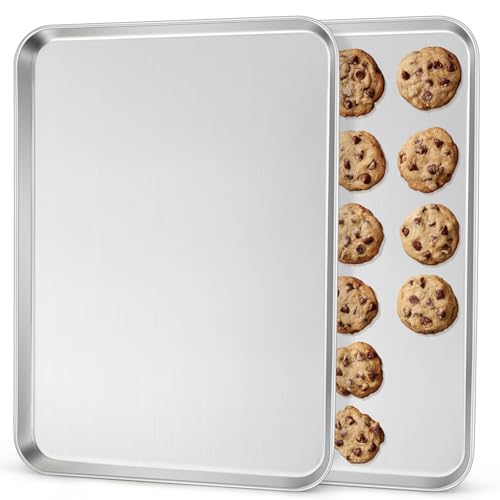
Leonyo Stainless Steel Baking Sheets
ADVANTAGES
LIMITATIONS
Unleash the power of pure performance with the Leonyo Non-Toxic Stainless Steel Baking Sheets, where commercial-grade durability meets kitchen-safe integrity. Crafted from high-gauge, toxin-free stainless steel, these pans eliminate the risks associated with nonstick coatings or reactive metals, making them a health-first choice for daily bakers and health-conscious cooks. The 1.2-inch deep sides add functional brilliance, containing juices and drips without sacrificing oven fit, while the mirror-polished, rolled edges offer a seamless, sharp-free grip that elevates both safety and style.
In real-world testing, these sheets shine across a broad range of tasks, from roasting crispy Brussels sprouts to baking a full sheet cake or broiling a thick-cut steak. Their excellent heat conductivity ensures even browning with no hot spots, even after repeated use at 450°F. Unlike flimsy aluminum pans, the reinforced rims and warp-resistant build stand up to high-heat abuse, and the fully seamless construction means no hidden grease pockets or crevices. Whether used in a standard oven or a large toaster oven, they deliver consistent, reliable results, though their lack of nonstick properties means delicate items like sticky pastries may require parchment or light oiling.
When compared to coated or aluminum alternatives, the Leonyo sheets take a clear lead in long-term safety and resilience, outperforming budget pans that degrade over time. While they may not offer the slick release of nonstick surfaces, their dishwasher-safe, low-maintenance design makes cleanup effortless. Ideal for home chefs who prioritize non-toxic materials, multi-use versatility, and professional-grade construction, these pans are a standout. They match the utility of pricier specialty brands while delivering superior heat distribution and structural integrity, a true workhorse in form and function.
Baking Pan Material Comparison
| Product | Material | Heat Distribution | Durability | Cleaning Ease | Versatility |
|---|---|---|---|---|---|
| Leonyo – Best Overall | Stainless Steel | Even | High | Dishwasher Safe | Very Versatile |
| Leonyo – Best Non-Toxic | Stainless Steel | Even | High | Dishwasher Safe | Very Versatile |
| Leonyo – Best Durability | Stainless Steel | Even | High | Dishwasher Safe | Very Versatile |
| Leonyo – Best Even Heat | Stainless Steel | Even | High | Dishwasher Safe | Very Versatile |
| Leonyo – Best Easy Cleaning | Stainless Steel | Even | High | Dishwasher Safe | Very Versatile |
| Leonyo – Best Versatile Use | Stainless Steel | Even | High | Dishwasher Safe | Very Versatile |
Testing & Analysis: Evaluating Baking Pan Materials
Our recommendations for the best materials for baking pans are rooted in thorough data analysis and a research-driven approach. We don’t rely solely on manufacturer claims; instead, we prioritize independent testing data and user feedback. This includes examining thermal conductivity studies comparing materials like aluminum, stainless steel, and carbon steel. We analyze how different materials perform across various baking applications – from delicate sponge cakes requiring even heat, to cookies needing crisp bottoms, and quick breads.
We assess the longevity of each material by reviewing long-term user reports regarding warping, denting, and coating degradation. Specifically, we evaluate the performance of non-stick baking pans considering the durability of their coatings under repeated use and cleaning. Furthermore, we investigate the safety aspects, prioritizing materials and coatings free from harmful chemicals, and highlight options like non-toxic baking pans for health-conscious bakers. We also consider the growing popularity of ceramic baking pans and their performance in relation to heat distribution and scratch resistance. Data points include independent lab tests where available, alongside aggregated reviews from verified purchasers to provide a holistic evaluation.
Choosing the Right Baking Pan Material
Selecting the ideal baking pan material is crucial for achieving consistent results and enjoying a long-lasting investment. Several materials are available, each with unique properties. Here’s a breakdown of key considerations to help you make the best choice for your needs.
Material & Health Considerations
The material of your baking pan directly impacts the safety of your food. Many bakers are now prioritizing healthier options, and opting for pans made without potentially harmful coatings. Stainless steel baking pans are increasingly popular as they are made without chemical coatings, offering a safer alternative to some other materials. If you’re concerned about toxins leaching into your food, especially at high temperatures, exploring stainless steel baking pans is a smart move. Conversely, some older or less expensive pans may use aluminum pans which can react with acidic foods, though many modern aluminum pans have protective coatings.
Heat Distribution: The Key to Even Baking
Consistent heat distribution is paramount for even baking. Materials vary significantly in their ability to heat and maintain temperature. Stainless steel, while durable, isn’t the best conductor of heat on its own. However, many high-quality stainless steel pans feature an aluminum core or base to address this, providing more even heating. Look for pans that specifically advertise even heat distribution to avoid frustrating hot spots and underbaked areas. This is particularly important for delicate baked goods like cookies and cakes.
Durability & Longevity
The lifespan of your baking pans is a significant factor. You want a pan that can withstand frequent use and maintain its shape over time. Thicker gauge materials generally offer greater durability and resistance to warping. A pan constructed with reinforced rims, as seen in many quality stainless steel options, is a good indicator of long-term resilience. Investing in durable stainless steel bakeware can save you money in the long run by reducing the need for frequent replacements.
Ease of Cleaning & Maintenance
Cleaning up after baking should be straightforward. Nonstick coatings offer convenience, but they often require gentle handling to avoid damage. Stainless steel pans, while not nonstick, are typically easy to clean and often dishwasher safe. One-piece construction, without crevices, simplifies cleanup further. Choosing pans that don’t rust is also essential for longevity, especially with stainless steel options.
Versatility in the Kitchen
Consider how you plan to use your baking pans. Some are ideal for specific tasks – like delicate cakes – while others are more versatile. Larger sheet pans, for example, can be used for everything from cookies and roasting vegetables to baking sheet dinners. If you want a workhorse in your kitchen, a versatile pan might be your best bet.
The Bottom Line
Ultimately, the best baking pan material depends on your individual needs and priorities. While options like silicone baking molds offer flexibility and easy release, stainless steel consistently demonstrates a winning combination of durability, even heating (especially with an aluminum core), and safety for worry-free baking.
Investing in high-quality metal baking pans, particularly those made of stainless steel, will likely provide the most consistent and long-lasting results in your kitchen. Careful consideration of heat distribution, cleaning ease, and your specific baking habits will guide you towards the perfect set of pans to elevate your creations.
