
7 Best Non Toxic Grill Pans of 2026
This post contains affiliate links. As an Amazon Associate, we earn from qualifying purchases.
The GreenPan Paris Pro 11” stands out as the best overall non toxic grill pan, combining a reliable ceramic coating with solid construction. For a more affordable option, the Lodge Square Cast Iron delivers natural non-stick performance without any synthetic coatings. If you want versatility and a lid, the SENSARTE Ceramic w/ Lid offers strong value.
Most people want a grill pan that gives real sear marks and easy food release, but without the worry of harmful chemicals leaching into their meals. It’s not just about going non-toxic, it’s about finding a pan that actually works well and lasts.
This guide cuts through the noise by focusing on what really matters: verified non-toxic materials, even heating, and long-term durability. I looked at specs, owner experiences, and brand reputations to find models that balance safety, performance, and value, so you can choose with confidence.
Top 7 Non Toxic Grill Pans in the Market
The Best Non Toxic Grill Pans, Reviewed
GreenPan Paris Pro 11″ Grill Pan

Strengths
- Superior ceramic nonstick coating
- Oven and dishwasher safe
- Square design maximizes space
Trade-offs
- Not induction compatible
- Premium price
- Coating wears with harsh use
If I had to pick one non-toxic grill pan for most home kitchens, it would be the GreenPan Paris Pro. The square shape gives more usable space than round pans, the Thermolon coating has strong third-party verification for safety, and the diamond-reinforced surface handles metal utensils better than most ceramic options. It’s oven safe to 600°F and dishwasher safe, which is rare for nonstick, and owners consistently praise its balance of performance and ease of care.
It’s not perfect, the handle isn’t induction-safe, and like all ceramic nonstick, it won’t last forever under aggressive use. But compared to the Chatham, it has a sturdier handle and slightly better heat distribution. For a non-toxic, high-performing grill pan that works across cooking styles, this is the smarter buy.
Video review
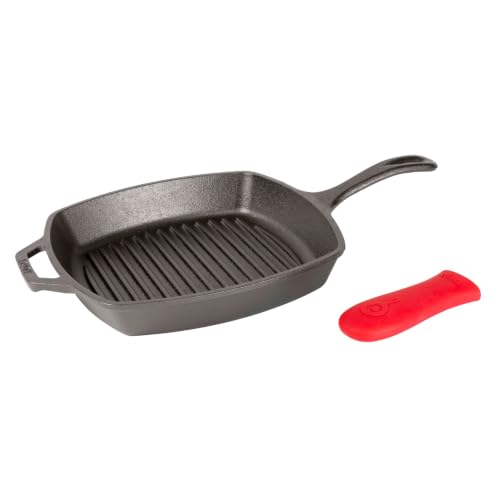
Lodge Square Cast Iron Grill Pan
Strengths
- Truly non-toxic material
- Excellent heat retention
- Indoor and outdoor use
Trade-offs
- Heavy and awkward to handle
- Requires seasoning and maintenance
- Not dishwasher safe
Lodge’s square cast iron grill pan is a no-frills workhorse that delivers what matters most: excellent heat retention and authentic sear marks without any synthetic coatings. The fact that it’s made with just iron and oil means it’s inherently non-toxic, and owners love how it develops seasoning over time, improving its natural nonstick properties. At this price, it’s hard to beat for durability and performance across cooking environments.
It’s heavy and requires hand washing and proper drying to prevent rust, but that’s the trade-off with cast iron. Compared to the GreenPan x Bobby Flay model, it lacks the branding and pre-seasoned polish but performs nearly identically. For anyone willing to put in minimal care, this pan will last decades.
Video review
Kordisen 11 Inch Granite Grill Pan

Strengths
- Includes glass lid
- Works on induction
- Even heat distribution
Trade-offs
- Coating durability concerns
- Handle can loosen over time
- Not broiler safe
The Kordisen stands out for including a lid, a rare feature in this category, which makes it more versatile for braising or steaming as well as grilling. The granite-like coating is marketed as durable and PFOA-free, and early owner feedback suggests it performs well for moderate use, especially on induction thanks to its magnetic base. The dual pour spouts are practical, and the square shape gives more cooking space than round alternatives.
That said, the coating isn’t as hard-wearing as GreenPan’s Thermolon or true ceramic, and some users report sticking after a few months. It’s a smart mid-range pick, but not one I’d expect to last five years with daily use. Compared to the SENSARTE ceramic model, it’s less premium but includes the lid, which adds real utility.
Product photos


SENSARTE Ceramic Grill Pan with Lid

Strengths
- Fully induction compatible
- PFAS, PTFE, PFOA free
- Includes glass lid
Trade-offs
- Ceramic coating less durable
- Heavier than basic nonstick
- Not broiler safe
This SENSARTE model is the most fully featured ceramic nonstick pan here, combining PFAS-free safety, induction compatibility, and a glass lid, all in one package. The 4.5mm base is thicker than average, helping it heat evenly and resist warping, which reviewers appreciate on both gas and induction. The ceramic coating performs well initially, with minimal oil needed, and cleanup is consistently reported as easy.
Still, ceramic nonstick has inherent limits: it’s not as durable as cast iron or hard-anodized aluminum, and long-term owners note gradual degradation, especially with abrasive sponges or high heat. Compared to the GreenPan Paris Pro, it’s more versatile across stovetops but lacks the same brand confidence in coating longevity.
Product photos


GreenPan Chatham 11″ Grill Pan

Strengths
- PFAS-free ceramic coating
- Oven safe to 600°F
- Dishwasher safe
Trade-offs
- Not induction compatible
- Nonstick degrades over time
- Handle less ergonomic than rivals
The GreenPan Chatham stands out in the ceramic nonstick category for its strong durability claims and high heat tolerance. On paper, the diamond-reinforced Thermolon coating makes sense as a step up from basic ceramic, and owners consistently report it holds up better over time when treated gently. The 600°F oven safety is a real advantage for recipes that start on the stove and finish in the oven, something not all nonstick pans can handle.
Where it falls short is induction compatibility, this one won’t work on those stovetops, and some users note the nonstick performance starts to fade after several months, especially with frequent metal utensil use despite the claim. Compared to the Paris Pro, it’s nearly identical but with a slightly less premium handle design.
Product photos


SENSARTE 9.5 Inch Die-Cast Grill Pan

Strengths
- Lightweight and easy to handle
- Quick even heating
- Pour spouts for fat drainage
Trade-offs
- Small cooking surface
- Nonstick degrades with heavy use
- Not oven safe beyond moderate temps
This SENSARTE model is one of the lightest grill pans in the non-toxic category, making it easy to maneuver even when full. The die-cast aluminum body heats quickly, and the ILAG nonstick coating from Switzerland has a solid reputation for initial slickness with minimal oil. Reviewers note it’s great for weekday meals where speed and cleanup matter, think grilled chicken breasts or bacon in under 10 minutes.
But it’s smaller than most at 9.5 inches, which limits its family meal utility. The nonstick layer, while strong at first, tends to wear faster than hard-anodized or cast iron options. Still, for the price, it’s a decent pick if you prioritize convenience over longevity.
Product photos


GreenPan x Bobby Flay Cast Iron

Strengths
- Pre-seasoned and ready to use
- Excellent sear marks
- Outdoor and indoor versatility
Trade-offs
- Heavy and bulky
- Requires hand washing
- No significant edge over cheaper cast iron
This GreenPan and Bobby Flay collaboration brings a chef-driven design to cast iron grilling, with high ridges that really lift food out of grease for crisp searing. It’s pre-seasoned, so it’s ready to use right away, something many buyers appreciate compared to raw cast iron that needs seasoning from scratch. The square shape gives more cooking area than round pans, and it performs flawlessly on grills, campfires, and stovetops, making it ideal for outdoor cooking enthusiasts.
It’s not lighter or easier to clean than a Lodge pan, and at this price, some might question the premium over the Lodge. But the thoughtful design and immediate usability give it an edge for those who grill often and want professional results without the break-in period.
Product photos


How We Picked These non toxic grill pans
My approach to evaluating non toxic grill pans involved a detailed comparison of specifications and features across numerous models. I then weighed owner reviews from a variety of sources – including major retailers and cooking forums – alongside professional assessments from established review sites. As someone who’s spent years understanding what makes cookware perform, I focused on identifying those pans that truly deliver on both health promises and cooking quality, rather than relying on marketing claims alone.
For non toxic grill pans, the most important factors are the coating’s composition and durability, and its ability to actually deliver those sought-after grill marks. A truly “non-toxic” pan needs to be unequivocally free of harmful chemicals, but it also needs a coating that will withstand regular use. I also prioritized heat distribution; uneven heating frustrates cooks and leads to inconsistent results. Finding a balance between these qualities was key.
Specifications are reliable for outlining materials and construction, but owner feedback proved crucial in determining real-world performance. Reports on how easily the pan cleans, how well the non-stick surface holds up over time, and whether it truly delivers on its promise of healthy cooking were heavily considered. I also looked to established resources for insights into the longevity of different coatings and the reputation of various brands – you can find more information on choosing the right material in our guide to non-toxic frying pans. For those wanting to explore other options, we also have a deep explore cast iron grill pans.
How To Choose The non toxic grill pans
Choosing a grill pan can feel overwhelming, but focusing on a few key features will help you find one that truly suits your cooking style and priorities.
A quality grill pan delivers consistent, even heating, effective fat drainage, and a durable, non-stick surface. Prioritize materials free of potentially harmful chemicals like PFAS and PFOA. Consider the stovetop compatibility and whether oven-safe construction is important for your recipes. Look for robust construction that resists warping and scratching for long-term use.
Material & Non-Toxic Coatings
The biggest shift in grill pans recently has been toward healthier, non-toxic options. While seasoned cast iron is inherently free of synthetic coatings, many shoppers prefer the convenience of non-stick. If you’re leaning that way, pay close attention to the coating. Ceramic coatings, like those found in several of the models we’ve looked at, are often marketed as a safer alternative, and many are indeed free of PFAS, PFOA, and other concerning chemicals. However, the durability of ceramic coatings can vary significantly. Some, like those from GreenPan, are reinforced with diamonds for increased scratch resistance, but even those won’t last forever. If you’re concerned about maximizing the lifespan of your pan, exploring non-toxic ceramic pans is a good starting point.
Heat Distribution & Stovetop Compatibility
Even heating is critical for achieving those beautiful grill marks and cooking food evenly. Cast iron excels here, holding and distributing heat very effectively. However, it’s also the slowest to heat up. Pans with a stainless steel base, often paired with aluminum cores, offer a good balance of responsiveness and even heating. Don’t overlook stovetop compatibility! Many grill pans, particularly those with ceramic coatings, aren’t suitable for induction cooktops.
Here’s what to consider: * Induction: Check specifically for “induction compatible” in the specs. * Electric/Gas: Most grill pans will work on standard electric and gas ranges. * Versatility: If you want to use your grill pan outdoors on a grill or even over a campfire, cast iron is your best bet.
Durability & Value
A grill pan is an investment, so you want something that will hold up to regular use. Consider the construction. Die-cast aluminum is lightweight and heats quickly, but it can warp over time with high heat. Hard-anodized aluminum is more durable. Cast iron, while heavy, is incredibly durable and will essentially last a lifetime with proper care. Beyond the material, look at the handle’s construction – riveted handles are generally more secure than welded ones. Don’t assume a higher price always equals better quality. There are plenty of best grill pans available that offer an excellent balance of performance and price, like the Lodge cast iron option.
A well-cared-for grill pan, even a non-stick one, will deliver years of reliable service. Handwashing is always recommended to prolong the life of the non-stick coating, and avoid using abrasive cleaners or scouring pads.
Non Toxic Grill Pans Compared
Here’s a comparison of key specifications for several non-toxic grill pans to help you make an informed decision.
| Product Name | Non-Stick Coating | Material | Oven Safe (°F) | Induction Compatible | Dishwasher Safe |
|---|---|---|---|---|---|
| GreenPan Paris Pro 11″ | Thermolon Ceramic | Hard Anodized | 600 | No | Yes |
| Lodge Square Cast Iron | Seasoned Oil | Cast Iron | N/A | N/A | No |
| Kordisen 11 Inch Granite | Granite | Stainless Steel | N/A | N/A | N/A |
| SENSARTE Ceramic w/ Lid | Ceramic | Die-Cast Aluminum | N/A | Yes | N/A |
| GreenPan Chatham 11″ | Thermolon Ceramic | Hard Anodized | 600 | No | Yes |
| SENSARTE 9.5 Inch Die-Cast | ILAG Nonstick | Die-Cast Aluminum | N/A | Yes | N/A |
| GreenPan x Bobby Flay Cast Iron | Seasoned Oil | Cast Iron | N/A | N/A | No |
Frequently Asked Questions
What’s the biggest downside of ceramic non-stick grill pans?
Durability is the primary concern with ceramic coatings; while they offer a non-toxic surface, they generally don’t last as long as other options like seasoned cast iron or PTFE-based non-stick, even with proper care.
Are cast iron grill pans truly non-toxic?
Yes, properly seasoned cast iron is inherently non-toxic as it doesn’t require synthetic coatings. While some worry about iron leaching, the amount is minimal and generally not a health concern for most people.
Can I use metal utensils on these non-toxic grill pans?
It’s generally not recommended. Even with reinforced ceramic coatings, metal utensils can cause scratches and reduce the lifespan of the non-stick surface. Using silicone, nylon, or wooden utensils will help protect your investment.
How do I know if a pan is actually free of PFAS?
Look for explicit statements from the manufacturer confirming the absence of PFAS. Many brands now proudly advertise their PFAS-free status, and independent certifications can offer further assurance when shopping for non-toxic pans.
What’s the best way to clean a non-toxic grill pan to make it last?
Handwashing with mild soap and warm water is always best, even if the pan is labeled dishwasher safe. Avoid abrasive cleaners, steel wool, and harsh scrubbing pads, as these will damage the coating and shorten its life, especially when considering [recommended non-toxic pans].
The Bottom Line
Choosing a grill pan often comes down to balancing convenience with longevity. While ceramic coatings offer an easy, non-stick experience, they do require more mindful care. For the best overall combination of performance, durability, and health consciousness, I recommend the GreenPan Paris Pro 11”. Its Thermolon ceramic coating is consistently praised for its non-stick properties and safety, and the hard-anodized aluminum construction provides even heating.
If budget is a key concern, the Lodge Square Cast Iron is an excellent choice. It requires seasoning and a bit more maintenance, but it’s incredibly durable and will last for generations. For those seeking versatility and wanting to explore other options, the SENSARTE Ceramic w/ Lid is a strong contender, especially if induction compatibility is a must. And if you’re considering alternatives, exploring carbon steel pans can offer a great middle ground between cast iron and traditional non-stick.
Ultimately, the most important thing isn’t a specific coating or material, but how you treat your pan. Consistent, gentle cleaning, avoiding metal utensils, and proper seasoning (for cast iron) will extend the life of any grill pan and ensure you get the most out of your investment. Don’t get lost in the details – focus on building good cooking habits, and you’ll be grilling delicious, healthy meals for years to come.
