
7 Best Non-Toxic Non-Stick Pan Materials 2026
This post contains affiliate links. As an Amazon Associate, we earn from qualifying purchases.
The Redchef Ceramic Frying Pans Set stands out as the best overall non-toxic non-stick option, combining strong safety credentials with solid performance. For a budget-friendly pick, the CAROTE granite skillet sets deliver reliable value, while the SENSARTE 9.5″ pan offers excellent durability for those willing to invest in a single high-quality piece.
Choosing a non-toxic non-stick pan shouldn’t mean sacrificing performance or constantly replacing worn-out cookware. Too many people end up frustrated with pans that chip, warp, or stop releasing food after a few months, all while worrying about what chemicals might be leaching into their meals.
This guide cuts through the noise by focusing on what actually matters: verified non-toxic materials, real-world durability, and consistent cooking performance. I looked at specs, owner feedback, and expert insights to find pans that balance safety, function, and value, so you can cook with confidence, not compromise.
Top 7 Non Toxic Pan Material Non Stick in the Market
The Best Non Toxic Pan Material Non Stick, Reviewed
Redchef Ceramic Frying Pans Set

Strengths
- Oven safe to 842°F
- Forged aluminum core
- Sturdy stainless handle
Trade-offs
- Premium price
- Coating not metal-safe
- Hand wash recommended
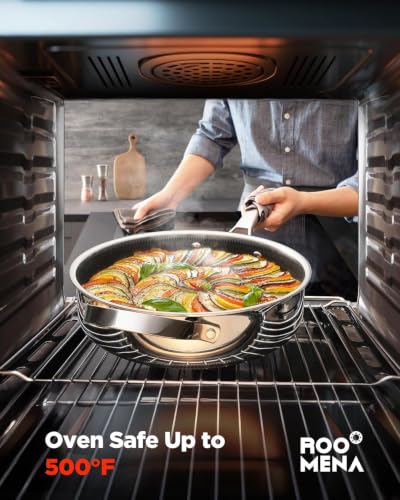
Redchef positions this trio as a premium ceramic option, and on specs alone, it’s hard to argue. The forged aluminum body promises even heat, and the 842°F oven-safe rating, handle and all, is exceptional. Owners confirm it handles searing, browning, and oven finishing better than most ceramic pans, which usually cap at 450°F.
The ceramic coating is slick out of the box, great for eggs and fish, but some long-term reviewers note gradual degradation after heavy use. Still, the stainless steel handle is double-riveted and stays cool, a rare win in this category. Compared to the Blue Diamond, it’s more durable and induction-ready; against SENSARTE, it offers better heat control. For an all-around performer, this is my top pick.
Video review
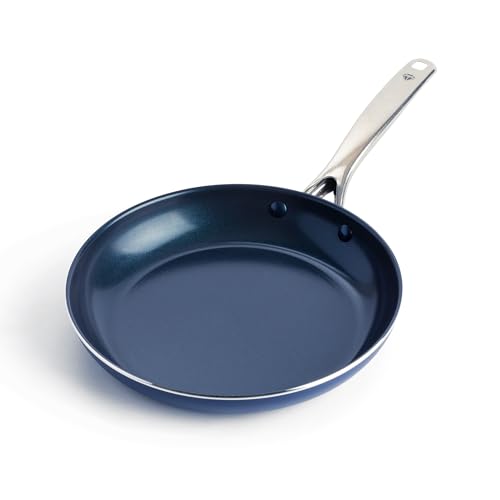
Blue Diamond 10″ Ceramic Pan
Strengths
- Affordable price
- Strong scratch resistance
- Dishwasher safe
Trade-offs
- Not induction compatible
- Short handle reach
- Coating fades over time
Blue Diamond leans hard into marketing with ‘diamond-infused’ coating, but the real story is a budget-friendly pan with surprisingly solid specs. The ceramic is PFAS-free, and the 5x hardness claim aligns with owner reports of better scratch resistance than average. It heats quickly, diamonds do improve conductivity, and cleanup is effortless, even after sticky sauces.
But there’s a dealbreaker: it’s not induction-compatible. That instantly rules out a huge segment of modern kitchens. For gas or electric users, it’s a steal at under $20. The stainless handle is riveted and comfortable, and the 600°F oven-safe rating is decent. Still, for just a few dollars more, the Redchef offers better versatility. This is the smarter pick only if you’re on a tight budget and off induction.
Video review
SENSARTE 9.5″ Ceramic Frying Pan

Strengths
- True PFAS-free ceramic
- Excellent egg release
- Oven safe to 550°F
Trade-offs
- Handle not oven-safe
- No stainless steel base
- Not ideal for searing
If you’re after a dedicated egg pan that won’t leach chemicals, this 9.5-inch SENSARTE skillet is a strong contender. It’s PFAS-free, uses natural ceramic coating, and owners rave about eggs sliding out effortlessly, even when slightly overheated. The cast aluminum body heats quickly and evenly, and the 550°F oven-safe rating (handle removed) adds versatility for finishing omelets.
The bakelite handle stays cool and feels secure, though it’s not as ergonomic as silicone-over-stainless designs. It’s not dishwasher-safe by recommendation, but most users say a quick hand wash is all it takes. Compared to the CAROTE set, this pan offers better coating integrity for delicate tasks, though it’s less suited for aggressive cooking.
Product photos


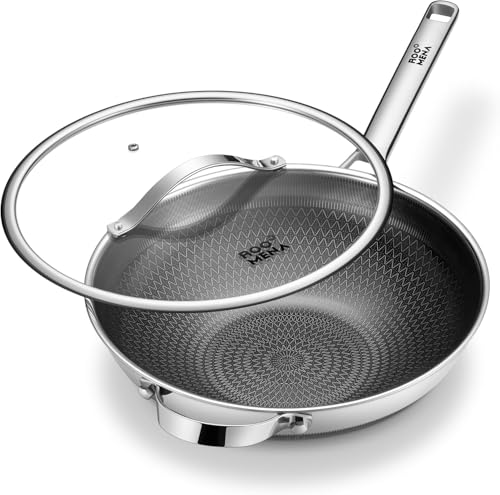
Hybrid Ceramic 13″ Tri-Ply Wok
Strengths
- Tri-ply stainless construction
- Even heat distribution
- Metal utensil resistant
Trade-offs
- Heavy for a non stick
- Ceramic wears with high heat
- Hand drying recommended
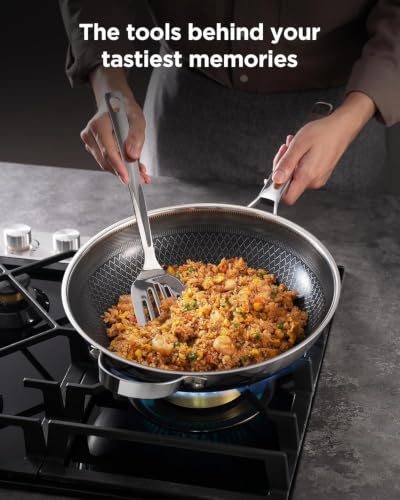
This wok stands out in a sea of flimsy ceramic-coated pans by combining tri-ply stainless steel with hybrid ceramic non stick, essentially giving you the durability of professional cookware with the convenience of non stick release. The Helianthus coating claims metal-utensil resistance, which is rare, and owner feedback supports that it holds up better than standard ceramic under moderate use.
Heat distribution is where it really shines. The impact-bonded base spreads heat evenly, critical for stir-frying, and works flawlessly on induction. Some users report the ceramic surface starts degrading after months of heavy use, but that’s typical in this category. Still, for high-heat cooking, this is one of the few ceramic options that doesn’t feel like a compromise.
Product photos


SENSARTE 14-Piece Ceramic Cookware Set

Strengths
- Complete 14-piece kit
- Thick induction-ready base
- PFAS-free ceramic coating
Trade-offs
- Coating durability moderate
- Utensils not high-end
- Lids lack straining function
This 14-piece set is one of the few full ceramic non stick kits under $80 that actually feels complete, two frying pans, sauté pan, casserole, saucepan, utensils, and lid protectors. The coating is PFAS, PTFE, and PFOA free, and owners confirm it performs well for low-oil cooking. The 4.8mm stainless steel base improves induction compatibility and reduces warping, a real upgrade over thinner budget sets.
Die-cast aluminum construction means decent heat retention, though not as fast as forged pans. Some users report minor coating wear after six months, especially with abrasive sponges. Still, for families wanting a full non toxic lineup without investing in multiple brands, this set covers the essentials. It doesn’t match high-end clad performance, but it’s the smart buy for everyday health-conscious cooking.
Product photos


CAROTE 4-Cup Nonstick Egg Pan

Strengths
- 4-cup egg design
- Fast even heating
- Easy one-wipe cleanup
Trade-offs
- Not induction compatible
- Limited cooking versatility
- No oven-safe handle
This niche pan solves a real breakfast problem: cooking multiple eggs or egg muffins evenly without sticking. The 4-cup design is clever, and owners love how cleanly eggs release, no oil needed. The granite coating is PFOS and PFOA free, and the rivetless interior makes wiping down a breeze. It heats quickly thanks to the extended base, though it’s not induction-compatible, which is a notable gap.
It’s not a do-it-all pan, but for breakfast prep, it’s efficient. The 5mm coating thickness is above average for this price, and durability feedback is mostly positive for light use. Compared to standard skillets, it’s more specialized but far more effective for its purpose. If you make egg bites or breakfast sandwiches often, this earns its counter space.
Product photos


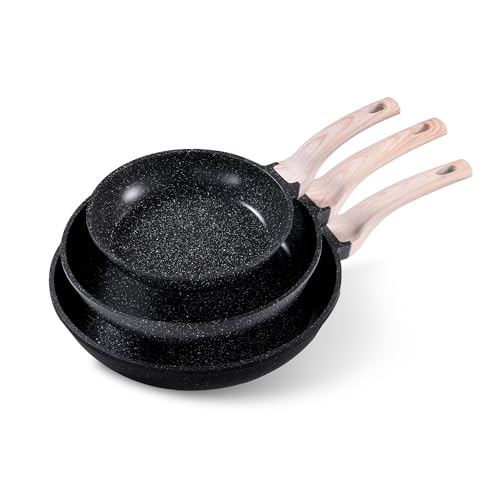
CAROTE 8″+10″+12″ Granite Skillet Set
Strengths
- PFOS PFOA free
- All stovetops compatible
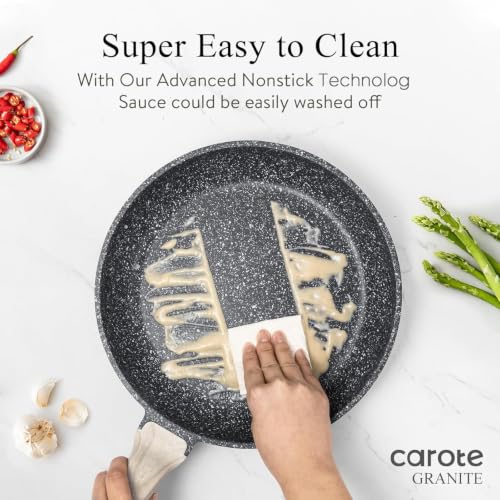
- Easy wipe-clean surface
Trade-offs
- Prone to hot spots
- Coating longevity average
- No glass lids included
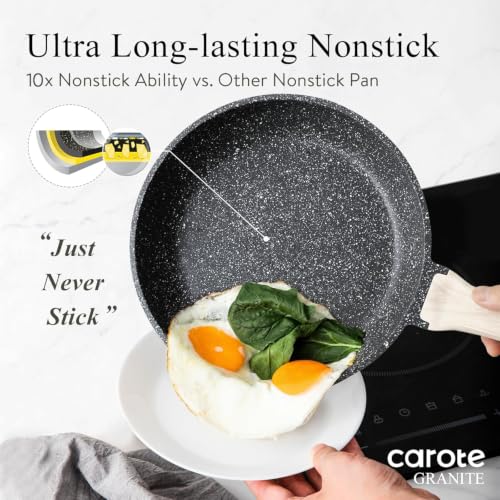
This three-pan granite set from CAROTE delivers solid value for anyone wanting a non toxic non stick upgrade without stretching the budget. The coating is PFOS and PFOA free, which checks the basic safety box, and owners consistently report eggs and pancakes releasing cleanly with minimal oil. On paper, the extended bottom design should help with even heating, though some users note hot spots on larger burners, common in budget aluminum cores.
It’s not the most durable ceramic non stick I’ve seen, but for light to moderate use, it holds up reasonably well if you avoid metal utensils and high heat. The set covers the most-used skillet sizes, making it a practical starter kit. Compared to pricier ceramic sets, it doesn’t wow with build refinement, but for the price, it’s a functional, no-frills option.
Product photos



How We Evaluated non toxic pan material non stick
My approach to evaluating non-stick pan materials centers on a detailed comparison of published specifications and features, combined with a careful consideration of owner and expert reviews. Rather than a hands-on lab test, this is a research-led comparison, focusing on how well each pan’s construction and coating translate to real-world cooking performance. I weigh factors like coating durability, heat conductivity, and reported ease of cleaning to arrive at recommendations.
For this category, the most important factors are the health safety of the coating and its genuine non-stick capabilities. A pan can conduct heat beautifully, but if it’s leaching chemicals or food sticks relentlessly, it misses the mark. Equally crucial is long-term durability; a non-stick pan that loses its properties after a few months isn’t a good value, no matter how affordable. Understanding these priorities helps differentiate truly worthwhile options.
Specifications reliably indicate material composition (aluminum, stainless steel, etc.) and maximum heat tolerance. However, I placed greater weight on owner feedback regarding how well the non-stick surface holds up to everyday use and cleaning. Expert reviews were particularly helpful in evaluating non-toxic pans and assessing the validity of manufacturer claims about coating longevity. Ultimately, I looked for consistent positive reports across a range of sources, alongside thoughtfully designed features, when considering the various non-stick pan types.
What To Look For In non toxic pan material non stick
Choosing cookware that’s both non-stick and safe for your family requires a bit more consideration than simply grabbing the cheapest option. It’s about understanding materials, construction, and how those elements impact your cooking experience and well-being.
A truly good non-stick pan balances food release with long-term durability and health considerations. Look for materials certified free of harmful chemicals, even heat distribution for consistent cooking, and a construction that resists warping or degradation over time. Pay attention to handle design for comfort and oven-safe ratings for versatility.
Understanding Ceramic Coatings
Ceramic non-stick is incredibly popular right now, and for good reason. Many shoppers are actively seeking out alternatives to traditional PTFE (Teflon) coatings. However, the term “ceramic” can be misleading. It often refers to a sol-gel coating that’s based on silicon, but performance varies wildly between brands. Cheaper ceramic pans can lose their non-stick properties quickly, sometimes within months, and may be more prone to chipping. I’ve seen a lot of feedback suggesting longevity is a key differentiator, so looking at brands like Blue Diamond, which tout a diamond-infused ceramic, or SENSARTE, which emphasizes a more durable ceramic formulation, might be a good starting point. Remember to research the specific composition and read owner reviews to get a better sense of real-world performance.
Heat Distribution & Base Construction
Even heating is critical for consistent results, and it’s often overlooked. Thin, flimsy pans will develop hot spots, leading to unevenly cooked food and frustrating experiences. Look for pans with a thick, forged aluminum base, or even better, tri-ply construction (like the Hybrid Ceramic Wok). Tri-ply, with a core of aluminum sandwiched between layers of stainless steel, provides exceptional heat conductivity and prevents warping. It’s an investment, but one that translates to more enjoyable cooking. The SENSARTE 9.5″ frying pan uses a heavy-duty cast aluminum base, which is a solid step up from thinner options.
- Pay attention to base thickness: A thicker base generally means better heat retention and distribution.
- Consider the cooktop: If you have an induction cooktop, ensure the pan is specifically labeled as induction-compatible. Not all non-stick pans are!
- Look for flat bottoms: A warped bottom creates uneven contact with the heat source, leading to hot spots and inconsistent cooking. A flat bottom is a sign of quality construction.
Balancing Performance and Value
It’s easy to get caught up in the pursuit of the “perfect” pan, but sometimes a good value is the smartest choice. The CAROTE sets demonstrate how to get a lot of pan for your money, offering granite non-stick surfaces at a competitive price point. Still, remember that cheaper pans may require more frequent replacement. If you’re serious about healthy cooking, and want to avoid constantly replacing cookware, investing in higher-quality materials and construction is often worth the extra cost. You can learn more about the different non-stick surfaces available and their pros and cons to help make an informed decision. It’s also worth exploring non-toxic cookware options to ensure you’re prioritizing your family’s health.
Don’t fall for marketing hype. A higher price tag doesn’t always guarantee better performance, but neglecting the base material and construction will almost always lead to disappointment.
Non Toxic Pan Material Non Stick Compared
Here’s a comparison of key specifications for non-toxic, non-stick pans.
| Product | Coating Material | Max Temp (°F) | Induction Compatible | Dishwasher Safe | PFOA/PFAS Free |
|---|---|---|---|---|---|
| Redchef Ceramic Frying Pans Set | Ceramic | 842 | Yes | Yes | Yes |
| Blue Diamond 10″ Ceramic Pan | Ceramic | 600 | No | Yes | Yes |
| SENSARTE 9.5″ Ceramic Frying Pan | Ceramic | 550 | Yes | No | Yes |
| Hybrid Ceramic 13″ Tri-Ply Wok | Ceramic | N/A | Yes | Yes | N/A |
| SENSARTE 14-Piece Cookware Set | Ceramic | N/A | Yes | No | Yes |
| CAROTE 4-Cup Nonstick Egg Pan | Granite | N/A | N/A | N/A | Yes |
| CAROTE 8″+10″+12″ Granite Skillet Set | Granite | N/A | Yes | N/A | Yes |
Frequently Asked Questions
What’s the difference between ceramic and PTFE non-stick coatings?
PTFE (like Teflon) is a synthetic fluoropolymer, while ceramic coatings are generally silicon-based. Though both offer non-stick properties, ceramic is often favored by those seeking alternatives to PTFE due to health concerns, though the durability of ceramic coatings can vary significantly between brands.
How can I extend the life of my non-stick pan?
Avoid using metal utensils, high heat, and abrasive cleaners, as these can damage the non-stick surface. Hand washing is often recommended, even if the pan is labeled dishwasher-safe, to preserve the coating’s integrity for longer.
Are granite non-stick pans truly non-toxic?
While marketed as a healthier option, “granite” non-stick pans aren’t actually made of granite. They have a coating that mimics the look of granite, and these coatings are generally PFOA and PFAS-free, but it’s still wise to research the specific composition and manufacturer’s claims to understand its safety profile.
What temperature is too hot for non-stick cookware?
Generally, exceeding 500°F (260°C) can begin to break down most non-stick coatings, potentially releasing fumes and diminishing the pan’s non-stick properties. Always use medium or medium-high heat for optimal performance and longevity. You can find more information on safe ceramic cookware on our site.
Where can I find more information on choosing safe ceramic cookware?
We’ve compiled a detailed guide to help you navigate the world of ceramic cookware, covering material safety and performance characteristics. You can explore our resources on non-toxic ceramic sets to make an informed decision.
The Bottom Line
Ultimately, choosing a non-stick pan often comes down to balancing upfront cost with long-term satisfaction. While many options promise exceptional performance, the SENSARTE 9.5″ Ceramic Frying Pan consistently receives high marks for its durable ceramic coating and solid construction, making it a strong all-around choice for most kitchens. It represents a sweet spot between price and quality, offering a reliable cooking surface without breaking the bank.
For those prioritizing a specific need, several other pans stand out. If you’re seeking a budget-friendly option, the CAROTE 4-Cup Nonstick Egg Pan delivers surprising value. And if you want a versatile workhorse for stir-fries and larger dishes, the Hybrid Ceramic 13″ Tri-Ply Wok is a standout, offering excellent heat distribution and durability. Those seeking to avoid all traces of traditional non-stick coatings should explore non-Teflon pans.
At the end of the day, the best non-stick pan isn’t about a single feature or material. It’s about finding a pan that feels comfortable to use, heats evenly, and delivers consistent results. Prioritize a heavy base, a reputable brand, and positive owner feedback – these fundamentals matter far more than any advertised “innovation” when you’re looking for safe non-stick options.
