
6 Best Non Toxic Woks of 2026
This post contains affiliate links. As an Amazon Associate, we earn from qualifying purchases.
The Sumeiguan 13″ Titanium Hybrid Wok stands out as the best overall non-toxic wok for its durability and high-heat performance, while the Kordisen 12″ Ceramic Non Toxic Wok is a solid budget-friendly pick that doesn’t compromise on safety. For those who want versatility and a trusted ceramic coating, the GreenPan Lima 12.5″ Ceramic Wok is worth considering.
Most home cooks want a wok that heats evenly, won’t leach harmful chemicals, and actually lasts, without needing a chemistry degree to decode the marketing. The real challenge isn’t just finding a wok labeled “non-toxic,” but identifying one that delivers on performance without cutting corners on safety or build quality.
This guide cuts through the noise by focusing on verified materials, owner experiences, and practical features like induction compatibility and heat distribution. I looked at what makes each wok tick, coating type, construction, and long-term reliability, so you can choose with confidence.
Top 6 Non Toxic Woks in the Market
The Best Non Toxic Woks, Reviewed
Sumeiguan 13″ Titanium Hybrid Wok

Strengths
- Coating-free titanium surface
- No seasoning required
- Includes lid and spatula
- High heat compatible
Trade-offs
- Not fully metal utensil safe
- Heavier than average
- Surface needs care
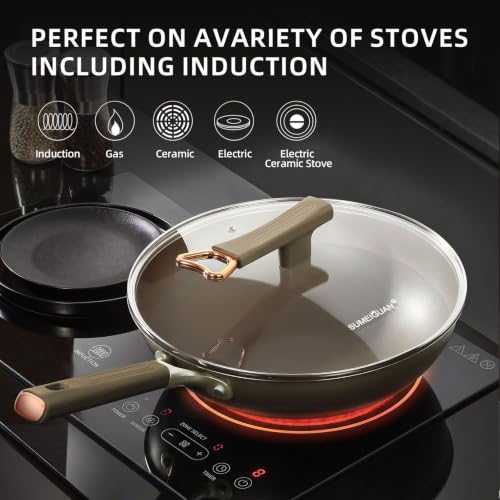
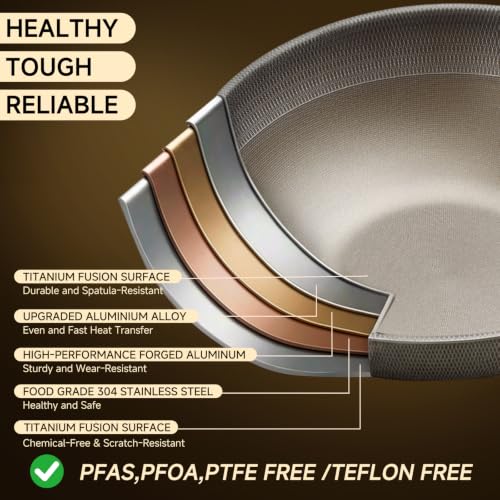
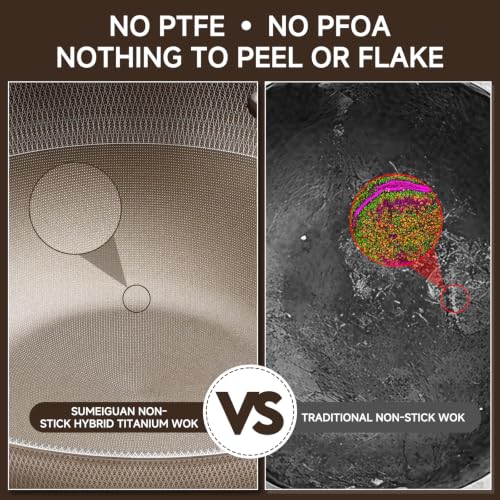
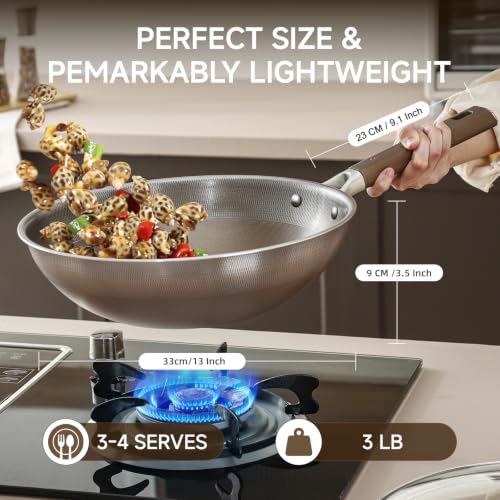
This SUMEIGUAN wok is the most innovative in the lineup, not because it has a coating, but because it doesn’t. Instead, it uses a titanium alloy surface with a specialized treatment for natural nonstick performance, eliminating the risk of flaking or peeling common in ceramic coatings. It’s coating-free, PFAS-free, and built for high-heat cooking without warping, thanks to its tri-ply aluminum-core construction.
Owners praise its durability and the included spatula and lid, which add real value. The surface isn’t completely immune to scratching, soft tools are still recommended, but it’s far more resilient than traditional nonstick. Compared to the GreenPan models, it doesn’t offer the same slick release out of the box, but it improves with use and won’t degrade over time. For anyone tired of replacing nonstick pans every few years, this is the smarter long-term buy.
Product photos
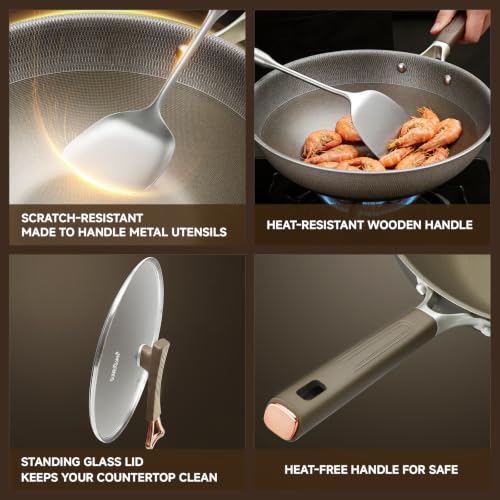
Kordisen 12″ Ceramic Non Toxic Wok

Strengths
- Induction compatible
- Includes glass lid
- Affordable price
- Even heat distribution
Trade-offs
- Not metal utensil safe
- Lightweight build
- Coating durability concerns
At this price, the Kordisen delivers surprising value. It’s one of the few truly budget-friendly non toxic woks that still includes a glass lid and works on induction, thanks to its magnetic stainless steel base. The ceramic nonstick interior is PFOA and PFAS free, and reviewers note it performs well for everyday stir-fries and sautéing with minimal oil. The die-cast aluminum construction promises even heating, and the bakelite handle stays cool, which is a practical plus during longer cooking sessions.
That said, it’s not built for heavy-duty use. The nonstick surface, while smooth and easy to clean, isn’t reinforced for metal utensils, and some owners report early signs of wear after a few months. It’s also lighter than most, which can make tossing food feel less stable. But for someone just starting out or cooking for one to four people regularly, it covers the basics without breaking the bank.
Video review
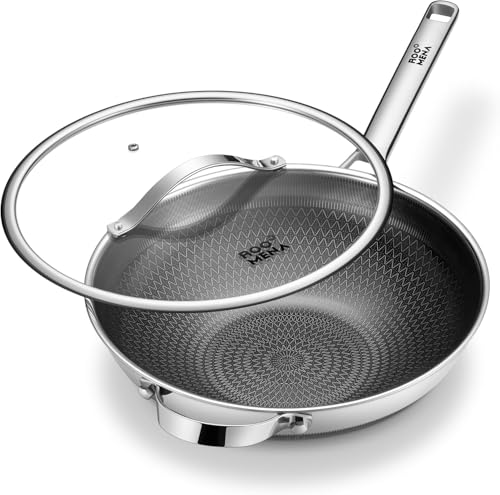
Hybrid 13″ Tri-Ply Stainless Wok
Strengths
- Includes glass lid
- Induction compatible
- Dishwasher safe
- Even heat base
Trade-offs
- Coating not fully metal-safe
- Average browning performance
- Some durability reports
This 13-inch tri-ply wok hits a sweet spot between performance and practicality. The Helianthus hybrid ceramic coating is designed for long-term durability, and owners say it handles metal utensils better than most ceramic nonstick surfaces, though not as confidently as the NutriChef or GreenPan APEX. What stands out is the full package: it includes a lid, works on all stovetops including induction, and has a dishwasher-safe design, which many competitors skip.
The reinforced base promises even heating, and the stainless steel build feels sturdy. But some reviewers note the nonstick performance degrades slightly after several months of heavy use. Still, for a kitchen that values convenience and versatility, this is a solid all-rounder. It doesn’t excel in one area like the GreenPan APEX or SUMEIGUAN, but it covers more bases than most.
Video review
GreenPan Lima 12.5″ Ceramic Wok

Strengths
- PFAS-free coating
- Oven safe to 600°F
- Hard anodized body
Trade-offs
- Not induction compatible
- No lid included
- Hand wash only
The GreenPan Lima stands out in the non toxic wok category for its genuinely high heat tolerance and clean coating story. Its Thermolon ceramic nonstick is PFAS-free and safe up to 600°F, which means no toxic fumes even if you accidentally overheat it, a real win for safety-conscious cooks. The hard-anodized body adds durability, and owners consistently report it holds up well to regular use, though it’s not marketed as metal-utensil safe.
Where it stumbles is compatibility, it doesn’t work on induction, which rules out a growing number of kitchens. And while the stainless steel handle is solid and riveted, the lack of a glass lid in the package feels like a missed opportunity at this price. Compared to newer hybrid models, it’s a bit behind on versatility, but for gas or electric users who want a simple, oven-safe ceramic nonstick wok, it’s still a strong contender.
Product photos


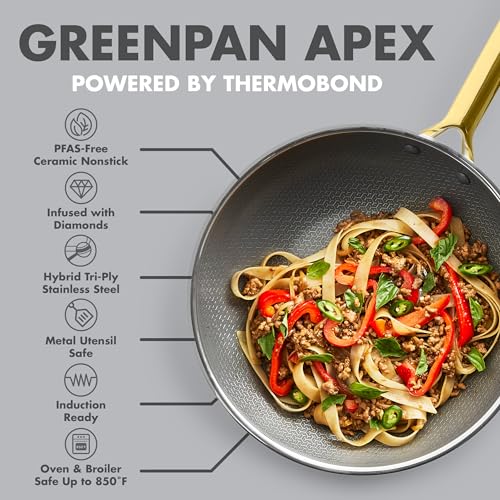
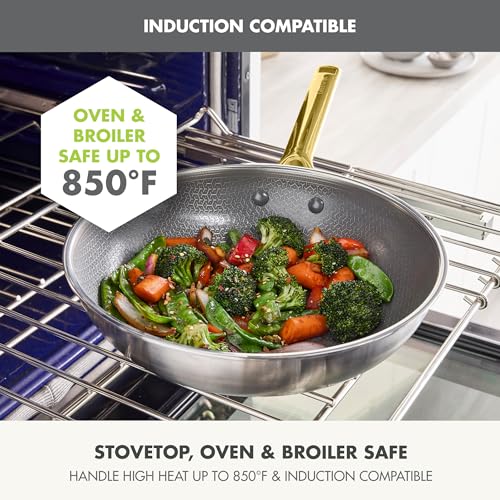
GreenPan Hybrid APEX 11″ Wok

Strengths
- Metal utensil safe
- Diamond-infused coating
- Excellent searing
- Dishwasher safe
Trade-offs
- No lid included
- Smaller cooking surface
- Higher price point
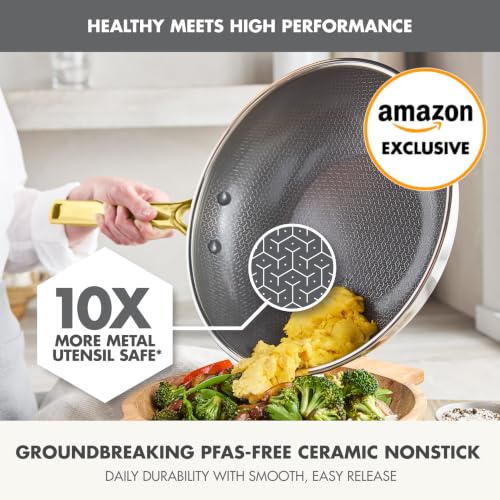
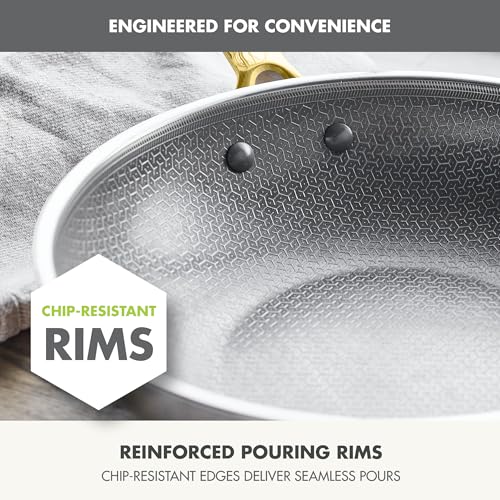
This is GreenPan’s answer to the durability problem that plagues most ceramic nonstick pans: diamond-infused hybrid technology fused with an etched stainless steel pattern. The result? A wok that’s 10x more resistant to metal utensils than their older models. That’s a big deal if you’ve ever ruined a nonstick pan by accident. The raised Apex pattern also helps with searing, something most non toxic woks struggle with.
It’s not the largest at 11 inches, so it’s better for 1–3 people, and it lacks a lid, which feels like an oversight. But the build quality is strong, and owners report it cleans easily and maintains performance over time. Compared to the NutriChef, it offers a more premium cooking experience with better browning, though at nearly double the price. If you want pro-level durability without toxic coatings, this is where I’d lean.
Product photos
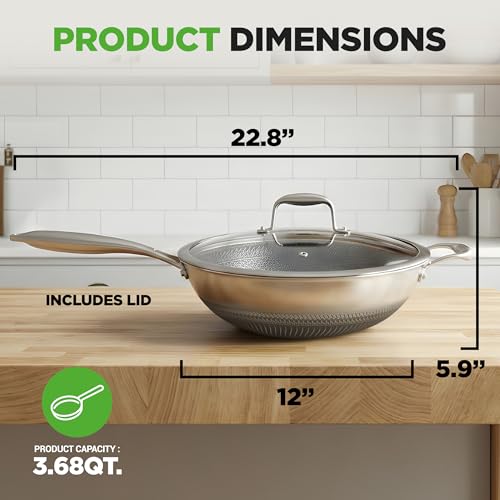
NutriChef 12″ Honeycomb Textured Wok
Strengths
- Metal utensil safe
- Induction compatible
- Tri-ply heat distribution
- Cool-touch handle
Trade-offs
- Nonstick coating is average
- Handle could be longer
- No coating warranty mentioned
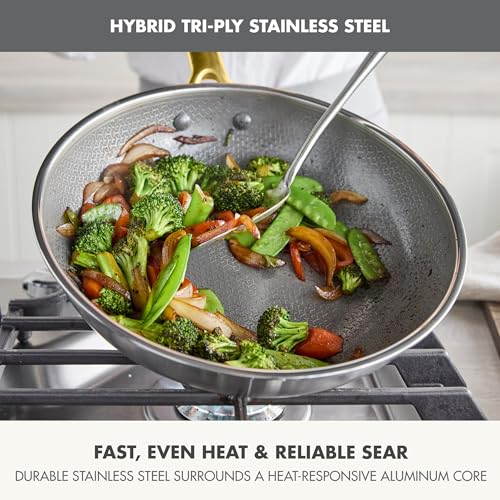
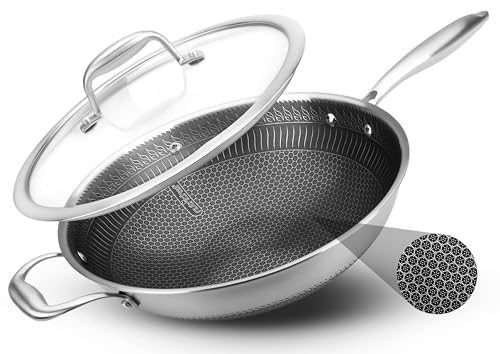
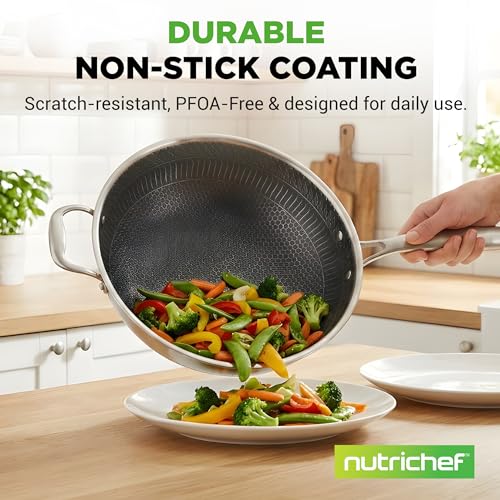
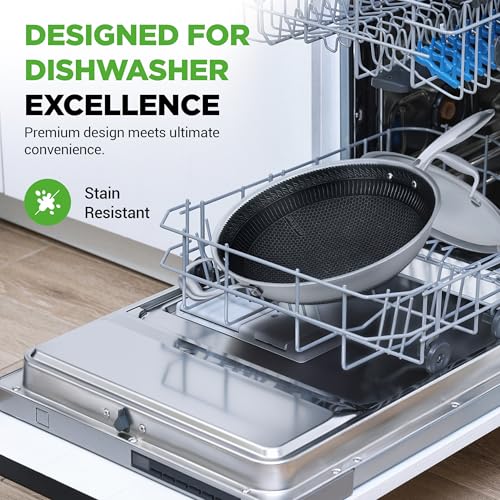
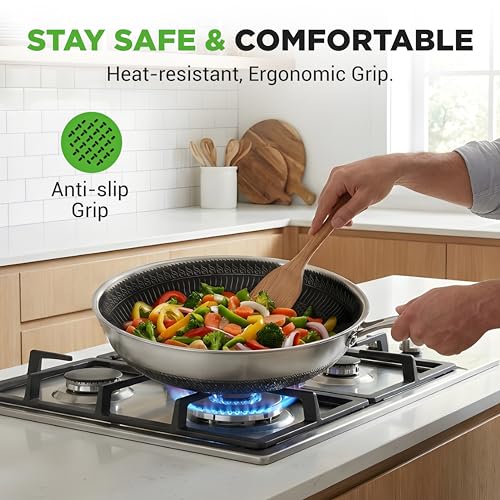
What makes the NutriChef stand out is its honeycomb fire textured surface, a clever etching that boosts scratch resistance and allows metal utensil use without immediate damage to the coating. That’s rare in this category, where most nonstick woks demand plastic or wood tools. The tri-ply construction with an aluminum core delivers solid heat distribution, and it’s induction-ready, making it adaptable across stovetops.
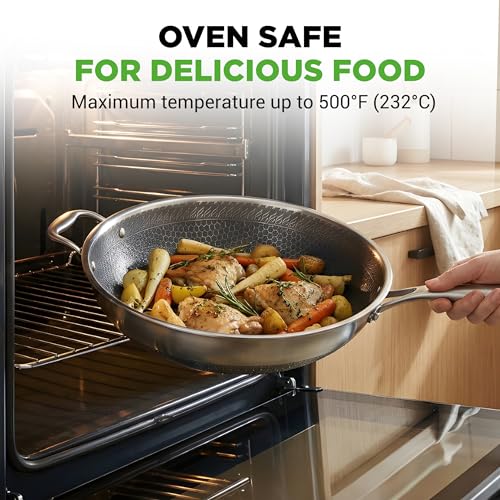
Owners appreciate its durability and the cool-touch handle, though some note the nonstick performance isn’t as slick as ceramic-coated rivals. It’s not the most refined in terms of release, but if you’re someone who hates worrying about scratching your pan, this is a smart trade-off. Compared to GreenPan’s Hybrid APEX, it lacks the same searing power, but it’s far more affordable and still oven-safe to 500°F.
Product photos
Our Testing Process
My approach to evaluating non-toxic woks began with a detailed comparison of published specifications and features. I weighed those against extensive owner reviews and assessments from trusted cooking experts. As someone who’s spent years understanding what truly makes cookware perform, I focused on identifying the materials and construction techniques that genuinely deliver a safer, more effective cooking experience. This wasn’t about hands-on testing of each wok, but a research-led comparison against clear criteria.
For non-toxic woks, the most important factors are the coating material and the wok’s base construction. A truly non-toxic wok needs to be free of PFAS, PFOA, and other potentially harmful chemicals, and I prioritized models explicitly stating these certifications. Equally crucial is the ability to handle high-heat cooking – stir-frying demands responsiveness, and a wok that warps or doesn’t heat evenly is simply unusable.
Specifications reliably indicate the materials used (stainless steel, ceramic, titanium) and construction (tri-ply, single-layer). However, I leaned heavily on owner feedback to gauge real-world durability and non-stick performance. Many claim excellent non-stick properties, but consistent reports of chipping or flaking quickly disqualify a model. I also considered long-term performance; exploring resources on non-toxic cookware helped me understand which materials consistently prove their worth. If you’re also looking to upgrade other pieces, exploring safe cookware options can be a great starting point.
How To Choose The non toxic woks
Finding the right wok can be a bit overwhelming, given the variety of materials and features available. I’ve spent years looking at what truly separates a good wok from one that will end up gathering dust.
A quality wok should prioritize even heating for effective stir-frying, durability to withstand high temperatures, and a surface that facilitates easy food release and cleanup. Consider the material composition, handle ergonomics, and compatibility with your cooktop for optimal performance. Look for woks constructed with a thick gauge of metal to prevent warping.
Material Matters Most
The material a wok is made from is, unsurprisingly, the biggest factor in its performance. Traditional carbon steel woks are beloved by many for their responsiveness and ability to develop a natural patina, but they require diligent seasoning and are prone to rust. For those seeking a lower-maintenance option, stainless steel woks (often with an aluminum core for heat distribution) are a great choice. Increasingly, we’re seeing titanium and ceramic options entering the market, promising non-stick performance without the concerns around traditional coatings like PTFE and PFOA. If you’re concerned about the health implications of your cookware, exploring options like those discussed in our guide to safe non-stick woks is a wise move.
Assessing Non-Stick Performance
Non-stick surfaces are appealing, but not all are created equal. Many woks advertise “non-stick” properties due to coatings, and it’s crucial to understand what those coatings are. Ceramic coatings, like those found in the GreenPan models, are often marketed as a healthier alternative, but their durability can be a concern. Hybrid approaches, like those used by Sumeiguan and GreenPan’s APEX line, attempt to combine the benefits of stainless steel with ceramic non-stick, offering improved durability. Metal utensil safety is a key indicator of a robust non-stick surface; if a wok claims to be metal-utensil safe, it generally indicates a more resilient coating.
Here’s what to consider when evaluating non-stick: * Coating type: Ceramic is popular for its perceived safety, but may not last as long. * Durability claims: Look for woks that explicitly state their resistance to scratching and chipping. * Metal utensil compatibility: If you prefer using metal tools, prioritize woks specifically designed for them (like the GreenPan Hybrid APEX).
Beyond the Cooking Surface
Don’t overlook the practical considerations. A comfortable, stay-cool handle is essential, especially for stir-frying which often involves quick movements. Riveted handles are generally more secure than welded ones. Consider the weight of the wok; a heavier wok will retain heat better but can be more challenging to maneuver. Finally, think about your cooktop. Induction cooktops require cookware with a magnetic base (stainless steel or cast iron), while glass-top stoves benefit from flat-bottomed woks to ensure even contact. For those looking to expand their healthy cooking options, be sure to check out our article on non-toxic frying pans for more information.
A wok’s ability to reach and maintain high heat is paramount. Don’t settle for a wok that warps or develops hot spots; even heating is crucial for successful stir-frying.
Non Toxic Woks Compared
Here’s a comparison of key specifications for several non-toxic woks to help you make an informed decision.
| Product Title | Diameter | Material | Nonstick Coating | Oven Safe (°F) | Induction Compatible |
|---|---|---|---|---|---|
| Sumeiguan 13″ Titanium Hybrid Wok | 13″ | Titanium/Stainless | Titanium Alloy | N/A | N/A |
| Kordisen 12″ Ceramic Non Toxic Wok | 12″ | Aluminum/Stainless | Ceramic | N/A | Yes |
| Hybrid 13″ Tri-Ply Stainless Wok | 13″ | Stainless Steel | Ceramic | N/A | Yes |
| GreenPan Lima 12.5″ Ceramic Wok | 12.5″ | Hard Anodized | Ceramic | 600 | No |
| GreenPan Hybrid APEX 11″ Wok | 11″ | Stainless Steel | Ceramic/Diamond | N/A | N/A |
| NutriChef 12″ Honeycomb Textured Wok | 12″ | Stainless Steel | DAKIN Etching | 500 | Yes |
Frequently Asked Questions
What wok size is best for a family of four?
A 12- to 14-inch wok is generally ideal for a family of four. This size provides ample surface area for stir-frying larger batches of food without overcrowding, which is essential for even cooking.
Are ceramic non-stick woks as durable as stainless steel?
Generally, no, ceramic coatings aren’t as durable as stainless steel. While ceramic offers excellent initial non-stick properties, it’s more prone to scratching and chipping over time, especially with frequent use and improper care.
Can I use metal utensils in a non-stick wok?
It depends on the coating; only woks specifically labeled as metal-utensil safe should be used with metal tools. Using metal on a standard ceramic coating will likely damage it, shortening the wok’s lifespan.
What’s the advantage of a titanium wok over stainless steel?
Titanium woks are lighter weight than comparable stainless steel options, offering easier maneuverability. They also tend to heat up slightly faster, but may not retain heat quite as effectively as a thicker stainless steel wok.
What should I look for if I have a gas stove?
When choosing a wok for a gas stove, prioritize models with a round bottom for optimal heat contact. You’ll also want to explore cookware for gas stoves to find options designed specifically for this cooktop type.
The Bottom Line
Choosing a non-toxic wok often comes down to balancing convenience with long-term durability. While ceramic coatings offer an easy, initially non-stick experience, the Sumeiguan 13″ Titanium Hybrid Wok strikes the best overall balance of performance and lasting quality. It’s a significant investment, but one that should deliver years of reliable stir-frying.
For those on a tighter budget, or those specifically wanting induction compatibility, the Kordisen 12″ Ceramic Non Toxic Wok is a solid choice. If you’re building out a full kitchen and want to explore other options, looking at complete non-toxic cookware sets can be a good way to ensure consistency and value. Alternatively, if you’re prioritizing a completely ceramic approach, explore our guide to non-toxic ceramic cookware.
Ultimately, the best wok isn’t about chasing the latest coating or highest price tag. It’s about finding a wok that heats evenly, feels comfortable in your hand, and inspires you to cook. Prioritize a thick gauge of metal, a secure handle, and a material that aligns with your cooking style and maintenance preferences – those fundamentals will matter far more than any single specification in the long run.
