
6 Best Oils for Cast Iron Pan 2026
This post contains affiliate links. As an Amazon Associate, we earn from qualifying purchases.
The Field Company Seasoning Oil Blend is the best overall for building a durable, reliable seasoning layer, while CLARK’S Cast Iron Seasoning Oil stands out as a top budget-friendly pick thanks to its unbeatable shelf life and resistance to rancidity. For those who prefer a spray option, Foodieville offers solid performance with convenient application.
Choosing the right oil for your cast iron isn’t just about preventing rust, it’s about building a surface that gets better with every use. Too many home cooks struggle with sticky residue, off-flavors, or seasoning that flakes off, often because they’re using an oil that doesn’t polymerize well or goes bad too quickly.
In this guide, I’ll walk you through the top options based on smoke point, polymerization ability, shelf life, and real-world feedback from users who’ve put these oils to the test. These picks reflect what actually works in home kitchens, not just lab specs or marketing claims.
Top 6 Oil For Cast Iron Pan in the Market
The Best Oil For Cast Iron Pan, Reviewed
Field Company Seasoning Oil Blend

Strengths
- Excellent polymerization
- Organic ingredients
- Beeswax for conditioning
Trade-offs
- Shorter shelf life
- Requires refrigeration after opening
If I had to pick one oil as the most balanced for overall performance, it’s this one from Field Company. The blend of organic grapeseed and sunflower oils is rich in polyunsaturated fats, which means it polymerizes efficiently when heated, owners consistently report a fast-developing, slick seasoning layer. The addition of beeswax gives it a slight protective edge, helping condition the surface without leaving buildup.
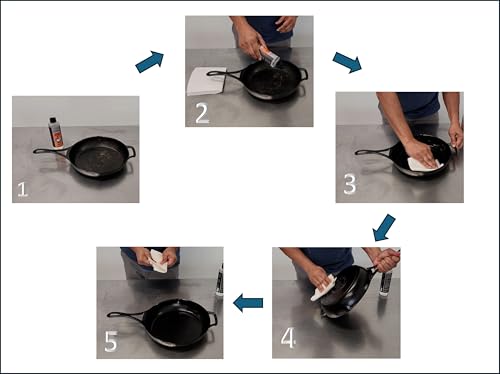
It’s designed for frequent use, wipe it on after every clean, and that’s where it excels. The instructions emphasize technique, which aligns with how seasoned cast iron users actually maintain their pans. Compared to single-oil formulas, this one offers both performance and care, making it a true all-rounder.
Video review
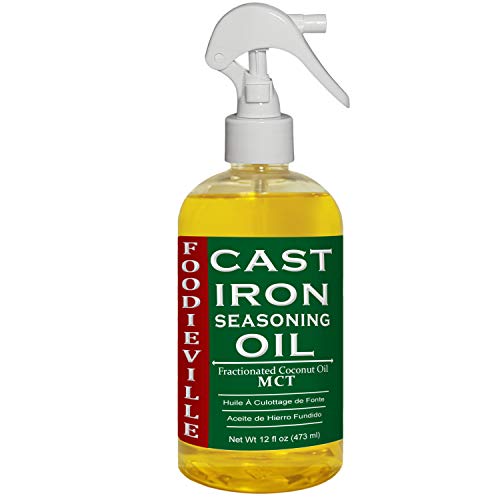
Foodieville Cast Iron Oil Blend
Strengths
- High smoke point
- Fast polymerization
- Larger bottle size
Trade-offs
- Sprayer mechanism issues
- Higher price point
This blend of flax, sesame, and MCT oils checks the box for high-temperature performance, flaxseed oil, in particular, is known in the cast iron community for its excellent polymerization, creating a hard, durable seasoning layer. The high smoke point (thanks to MCT and sesame) means it can handle oven seasoning without burning off, and owners say it builds a slick surface faster than most.
The spray applicator can be finicky, some users miss the on/off switch and think it’s broken, but once primed, it works. While the price is higher, the 12 oz size offers more volume than many competitors. Compared to simpler oils, this one is better for serious reconditioning, not just upkeep.
Video review
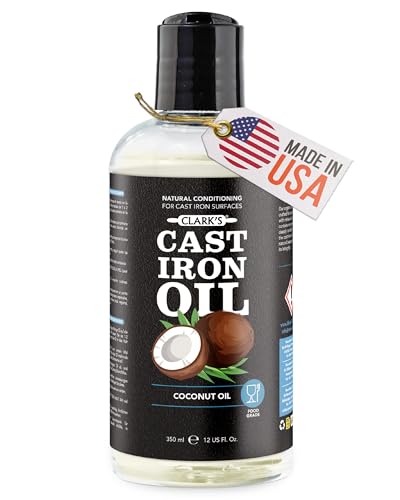
CLARK’S Cast Iron Seasoning Oil
Strengths
- Extremely long shelf life
- No refrigeration needed
- Refined coconut oil
Trade-offs
- Slower seasoning build
- Not high in polyunsaturated fats
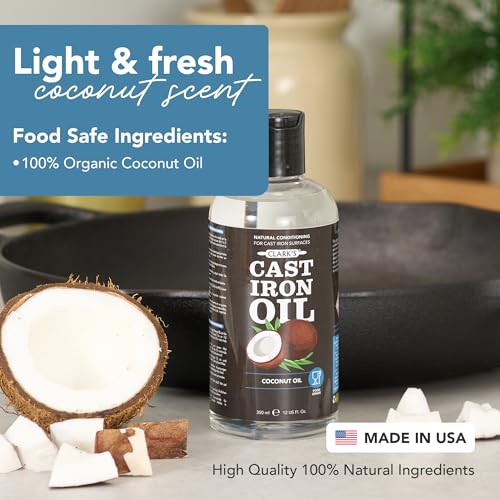
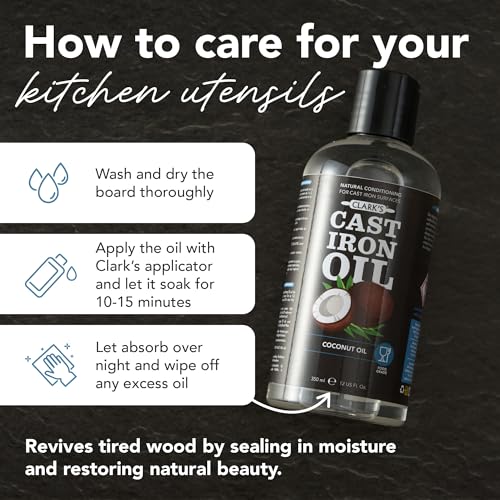
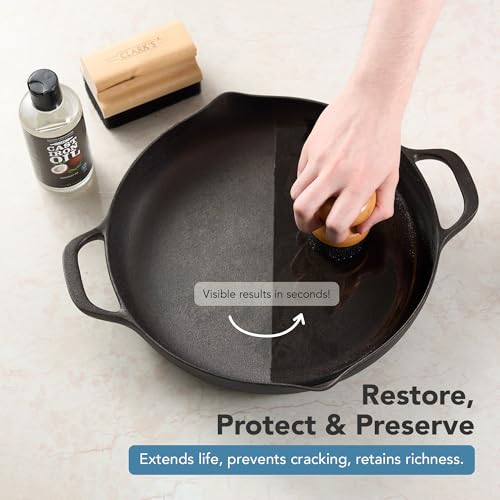
CLARK’S uses highly refined coconut oil, which the brand rightly touts for its resistance to going rancid, a real issue with oils like flaxseed or grapeseed that can spoil in months. On paper, this makes it one of the most shelf-stable options here, and owners confirm it lasts for years without odor or degradation. That’s a big plus if you hate rotating out old bottles.
It works fine for maintenance seasoning and rust prevention, but don’t expect a rapid polymerization boost. It’s not designed for rebuilding a crusty pan, but for keeping a healthy one healthy. Compared to high-smoke-point safflower or flax blends, it’s more about longevity than performance under fire.
Product photos


WALRUS OIL Cast Iron Oil
Strengths
- Very high smoke point
- NSF certified
- 100% natural and vegan
Trade-offs
- Smaller 8 oz size
- No rust-sealing wax
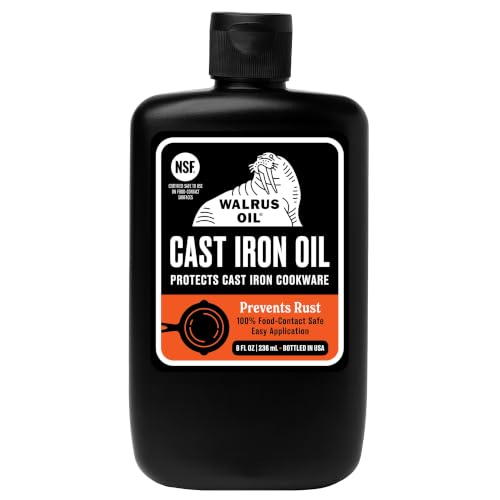
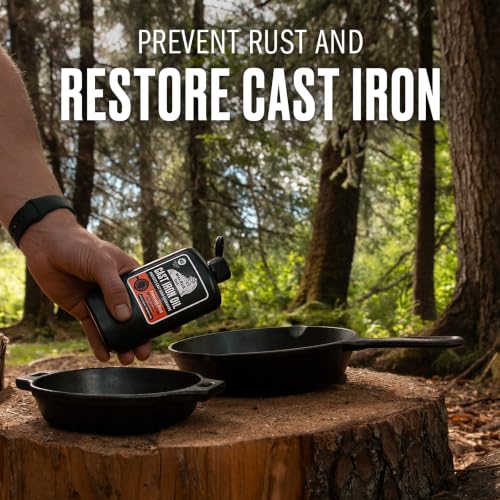
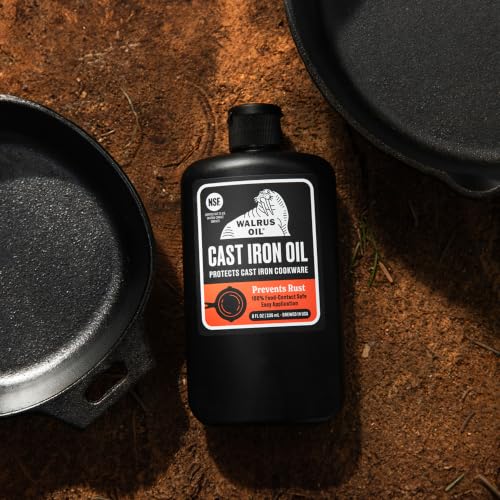
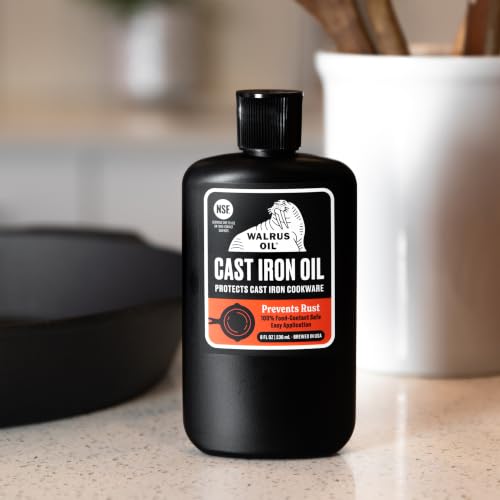
This version of Walrus Oil skips the beeswax and goes pure with high-smoke-point safflower oil, 450-500°F is no joke, and that’s where this product shines. Safflower oil is low in saturated fats and high in stability, making it a favorite for natural seasoning that won’t gunk up over time. NSF certification adds credibility for food-contact safety, and the fact that it’s 100% plant-based appeals to vegan users.
Owners note it soaks in well and heats cleanly, contributing to a smooth, hard seasoning over repeated use. Compared to the beeswax version, this one is better for active seasoning builds, not just protection. It won’t polymerize as fast as flaxseed, but it’s more reliable over time.
Product photos
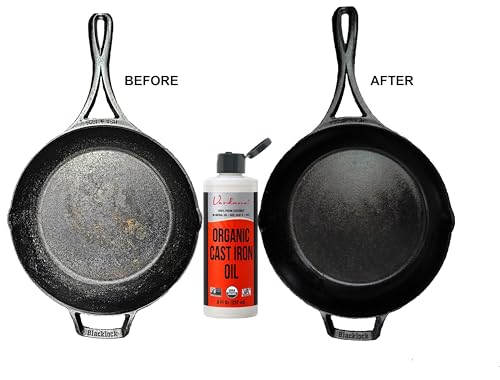
Verdana Cast Iron Seasoning Oil
Strengths
- Organic certified
- Odorless and tasteless
- No mineral oil
Trade-offs
- Slower polymerization
- Not ideal for heavy reseasoning
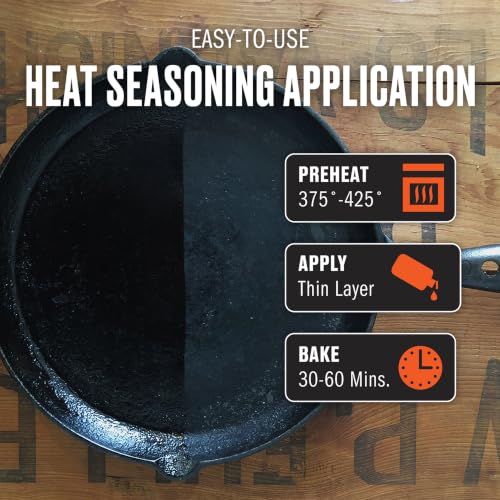
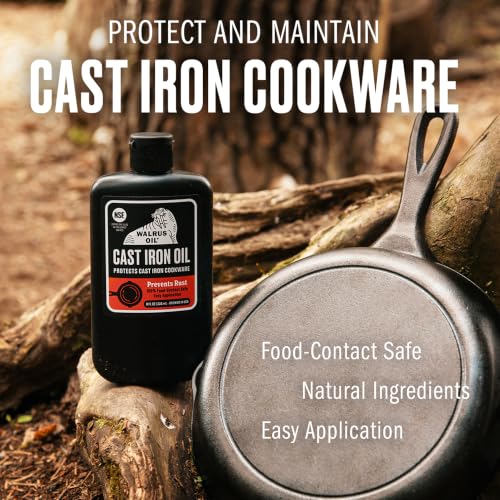
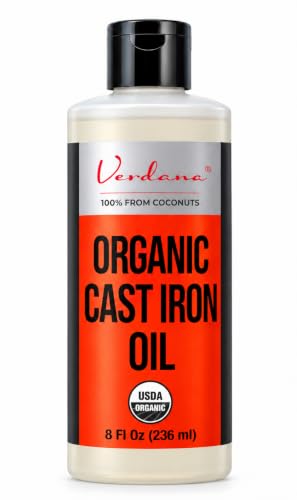
I like that Verdana leans into organic, food-grade fractionated coconut oil, which on paper is stable and resistant to rancidity, important for a product meant to live on your shelf between uses. It’s plant-based, free of mineral oil, and Kosher certified, which matters to buyers who prioritize clean ingredient lists. Owners consistently report it works well for light seasoning touch-ups and post-cleaning conditioning, though it doesn’t polymerize as aggressively as oils high in polyunsaturated fats.
That said, coconut oil isn’t the fastest to bond to metal under heat, so if you’re rebuilding a seasoning layer from scratch, this might not be your fastest path to a rock-hard finish. Still, for maintenance and rust prevention on a well-used pan, it holds up. Compared to flax-based blends, it’s less reactive but more shelf-stable.
Product photos



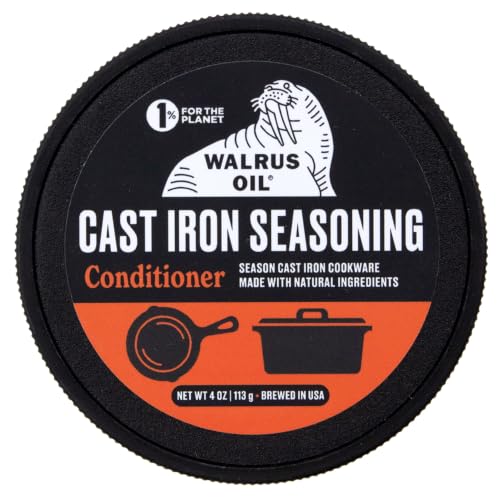
Walrus Oil – Cast Iron Seasoning
Strengths
- Beeswax for moisture protection
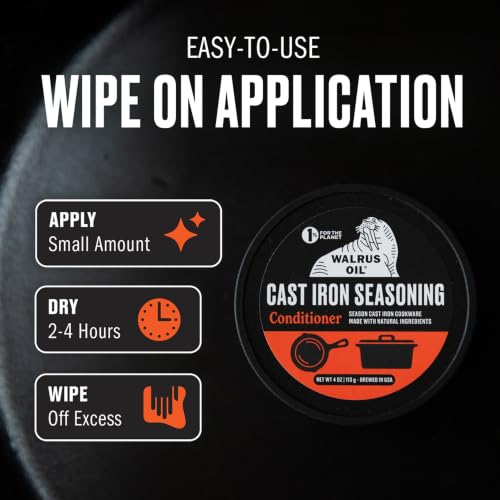
- Easy wipe-on application
- Rust-resistant formula
Trade-offs
- Thicker consistency
- Less effective for polymerization
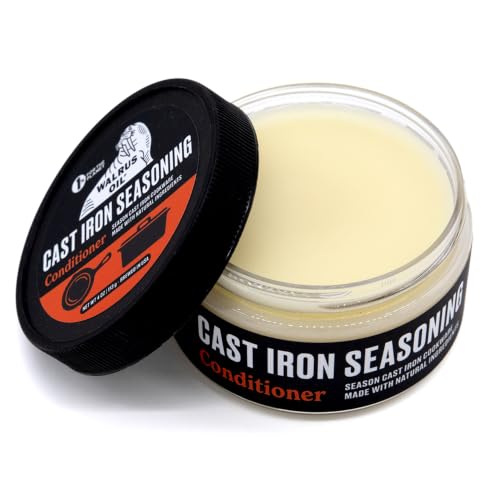
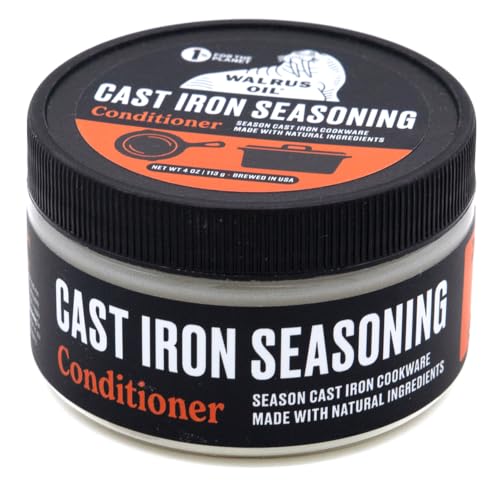
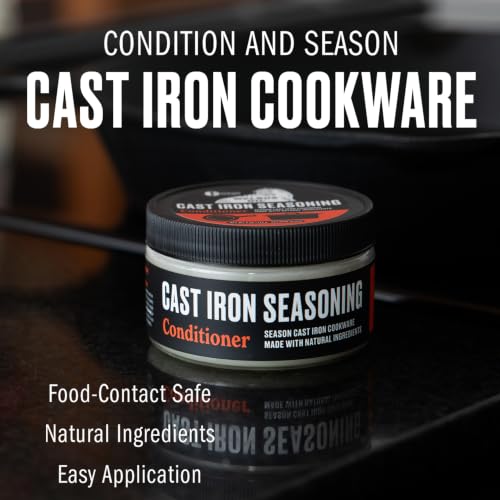
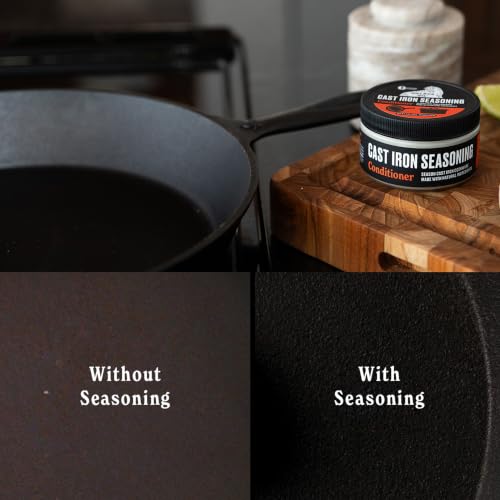
Walrus Oil stands out for its inclusion of beeswax, which reviewers say gives an extra layer of water resistance, this isn’t just oil, it’s a light conditioner that helps seal the metal. The safflower oil base is stable and food-safe, and with vitamin E added for shelf life, it’s a solid pick for long-term storage without degradation. I’ve seen consistent feedback that it leaves a nice sheen and helps prevent rust, especially in humid environments.
It’s not the fastest to build up a slick seasoning layer like flaxseed oil can, but it’s better suited for final protection than deep seasoning. Compared to pure oil formulas, this one behaves more like a hybrid treatment, great after cleaning, not ideal for oven-curing a stripped pan.
Product photos
How We Chose These oil for cast iron pan
Rather than a hands-on lab test, my research for these recommendations focused on a comparison of published specifications and features across numerous oil blends. I weighed owner reviews from multiple sources – paying close attention to recurring themes in both positive and negative feedback – alongside assessments from reputable cooking publications. As someone who’s spent years understanding the nuances of cookware, I applied my category expertise to rank these oils based on what truly matters for seasoning and long-term cast iron performance.
For cast iron, the most impactful factors are polymerization rate (how quickly the oil hardens into a non-stick layer) and stability. A high smoke point is also crucial, preventing breakdown and unpleasant flavors during cooking. Finally, resistance to rancidity impacts shelf life and usability; an oil that goes bad quickly isn’t practical, no matter how well it performs initially. These characteristics dictate how effectively an oil builds and maintains seasoning, and ultimately, how enjoyable your cooking experience will be.
Product specifications reliably indicate smoke points and oil composition. However, I placed more weight on owner feedback regarding real-world performance – how easily the oil applied, how well it seasoned, and how it held up over time. Reputation also played a role; brands consistently praised for quality in the cookware world, like Walrus Oil, naturally carried more weight. For more information on selecting the right oil, you can read our guide to the best oil for cast iron cookware. Understanding maintaining cast iron is also key to getting the most out of your cookware.
Choosing The Right oil for cast iron pan
Finding the right oil for maintaining cast iron isn’t about grabbing anything from the pantry. It’s about understanding how oils polymerize – that is, how they transform under heat into a hard, plastic-like coating that protects and creates the desirable non-stick surface.
A good cast iron seasoning oil should have a high smoke point, polymerize effectively with repeated heating, and be food-safe. Look for oils that are relatively thin and won’t leave a sticky residue, and consider whether shelf life or natural ingredients are a priority for your needs.
Smoke Point and Polymerization
The ability of an oil to withstand high heat without breaking down is critical. A low smoke point means the oil will begin to smoke, imparting an unpleasant flavor to your food and creating a gummy residue. More importantly, for proper seasoning, we need oils that readily undergo polymerization. Flaxseed oil was once hailed as the gold standard due to its high polyunsaturated fat content, but it’s prone to becoming sticky and can go rancid quickly. Modern blends, like those from Field Company and Foodieville, often combine multiple oils to balance polymerization with stability. Ultimately, a smoke point of 400°F or higher is a good benchmark, but the rate of polymerization is arguably more important than hitting a specific number.
Shelf Life and Rancidity
Some oils, particularly those high in unsaturated fats, are susceptible to oxidation and can go rancid over time. This isn’t just a matter of unpleasant odor; rancid oil can impart off-flavors to your food. Coconut oil, as used by CLARK’S and Verdana, offers exceptional stability and a very long shelf life, eliminating the need for refrigeration. However, while extremely stable, it can sometimes require more layers to build a comparable polymerized oil coating to oils with higher unsaturated fat content. Consider how often you’ll be seasoning and if you want the convenience of a long-lasting product.
Natural vs. Refined & Value
Many cooks prefer a natural approach, seeking oils derived from plants without heavy refining processes. WALRUS OIL, for instance, focuses on simplicity with a blend of safflower oil and beeswax. However, “natural” doesn’t automatically equate to “better.” Highly refined oils, like the food-grade coconut oil in CLARK’S, can offer superior stability and performance. Here’s a quick guide:
- A small bottle is fine if you cook with cast iron infrequently.
- Larger bottles provide better value if you’re a frequent user.
- Consider the applicator – Foodieville’s spray option is convenient, but some users report issues with the sprayer, so be sure it’s functioning properly.
It’s worth remembering that the best oil is the one you’ll consistently use. Don’t overthink it; a little diligence in applying and maintaining your seasoning will yield far greater results than obsessing over the “perfect” oil. For more information on the oils themselves, reading a guide on the best cooking oil for cast iron can be helpful.
A well-maintained, seasoned cast iron pan is worth the effort. Apply a very thin coat of oil after every wash, and you’ll be rewarded with a naturally non-stick surface that improves with age.
Oil for Cast Iron Pan Compared
Here’s a comparison of key specifications for popular cast iron pan oils to help you choose the best option for your needs.
| Product Name | Key Oils | Smoke Point (˚F) | Shelf Life | Rust Prevention | Food Grade |
|---|---|---|---|---|---|
| Field Company Seasoning Oil Blend | Grapeseed, Sunflower | N/A | 1 year (refrigerate) | Moderate | Yes |
| Foodieville Cast Iron Oil Blend | Flaxseed, Sesame, MCT | N/A | N/A | High | Yes |
| CLARK’S Cast Iron Seasoning Oil | Coconut | N/A | Never Rancid | High | Yes |
| WALRUS OIL Cast Iron Oil | Plant-Based | 450-500 | N/A | Moderate | Yes |
| Verdana Cast Iron Seasoning Oil | Coconut | N/A | N/A | Moderate | Yes |
| Walrus Oil – Cast Iron Seasoning | Safflower, Beeswax | N/A | N/A | High | Yes |
Frequently Asked Questions
What oil is best if I’m concerned about it going bad quickly?
Coconut oil, like that found in CLARK’S and Verdana, is exceptionally stable and doesn’t require refrigeration, making it a great choice if you want to avoid rancidity. Unlike some oils with unsaturated fats, it has a very long shelf life.
Is flaxseed oil still a good option for seasoning, despite its drawbacks?
While flaxseed oil was once popular, modern blends like Foodieville’s offer a better balance of polymerization and stability, making them generally preferable. Flaxseed oil can become sticky and is prone to rancidity, issues less common with newer formulations.
How important is the smoke point when choosing an oil?
A smoke point of 400°F or higher is a good starting point, but the rate of polymerization is more critical for building a strong seasoning. An oil that polymerizes quickly will create a durable, non-stick surface even at lower temperatures.
Can I use any cooking oil I already have in my pantry?
You can, but some oils are far better suited for cast iron than others. Oils like olive oil have low smoke points and don’t polymerize well, so they won’t build a durable seasoning. For optimal results, consider using an oil specifically designed for cast iron, or one of those recommended in the article.
What’s the difference between “curing” and “seasoning” cast iron?
The terms are often used interchangeably, but the curing process refers to the initial preparation of bare cast iron, while seasoning is the ongoing maintenance of that protective layer. Regular seasoning builds upon the initial cure, improving the pan’s non-stick properties over time.
The Bottom Line
Choosing an oil for cast iron often comes down to balancing convenience with control. You can spend time seeking the theoretically “perfect” blend, or you can focus on consistently applying any high-quality oil. For overall performance and a good balance of factors, I recommend Foodieville Cast Iron Oil Blend. It’s designed specifically for the task and consistently receives positive feedback from owners regarding its seasoning capabilities.
If you’re on a tighter budget, CLARK’S Cast Iron Seasoning Oil is an excellent choice. It offers exceptional stability and a very long shelf life, which is a significant benefit. For those prioritizing a natural approach, WALRUS OIL Cast Iron Oil provides a simple, plant-based option that many cooks appreciate, and can help build a durable seasoning layer.
Ultimately, the secret to a well-seasoned pan isn’t the oil itself, but the process. Regular, thin coats of oil applied after each use, coupled with consistent cooking, will create a natural non-stick coating far more impactful than any single ingredient or specification. Don’t get lost in the details – focus on building and maintaining that seasoning.
