
9 Best Panini Presses of 2026
This post contains affiliate links. As an Amazon Associate, we earn from qualifying purchases.
The Breville Sear and Press Grill is the best overall panini press for its powerful 1800-watt heating, large ceramic plates, and precise temperature control, while the Chefman 4-Slice offers solid performance at a budget-friendly price. For versatility, the Cuisinart 5-in-1 Griddler stands out, doubling as a full grill and griddle.
Most people buying a panini press want quick, restaurant-quality sandwiches with crisp bread and melted fillings, but too many models deliver uneven heat, flimsy construction, or frustrating cleanup. After comparing the field and analyzing owner feedback, I focused on what actually matters: consistent heating, durable plates, and smart design that fits real kitchen use.
This guide cuts through the noise to highlight presses that perform reliably, based on specs, build quality, and user experience. We looked at wattage, plate material, adjustability, and versatility to find models worth your counter space.
Top 9 Panini Presses in the Market
The Best Panini Presses, Reviewed
Chefman 4-Slice Panini Press
Strengths
- 4-slice capacity
- Even heating
- Lay-flat grilling
Trade-offs
- No temp control
- Plastic housing feels light
- Drip tray fills quickly
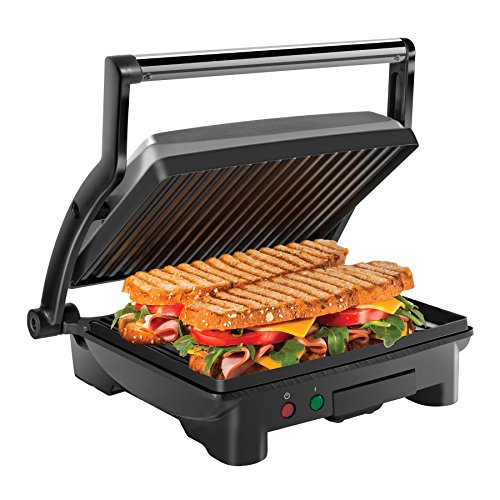
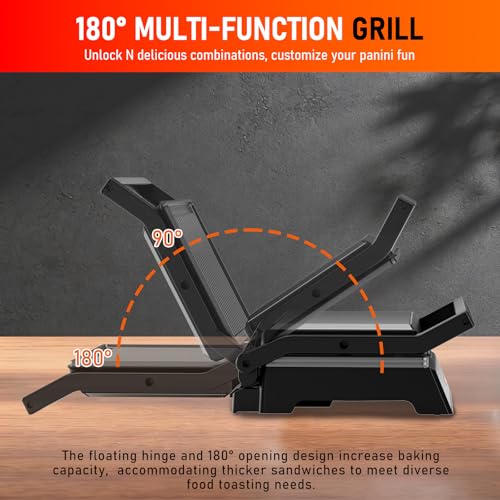
If you want more cooking real estate without jumping into premium-tier pricing, this 4-slice Chefman model is a smart middle ground. The same 1000-watt system drives it as the smaller sibling, but the expanded plates let you cook two full paninis or four sandwiches at once, ideal for families or weekend brunches. The floating hinge and 180-degree lay-flat design give it flexibility beyond sandwiches, and reviewers frequently mention using it for grilled chicken and veggies with solid results.
It doesn’t offer adjustable heat settings, which holds it back from true versatility, but for consistent, no-fuss performance across everyday meals, it outperforms many in its range. Compared to the OVENTE budget model, this one delivers better build quality and more surface area, making it my recommendation for those who cook in pairs or small groups regularly.
Video review
Cuisinart 5-in-1 Griddler Panini Press
Strengths
- 5-in-1 functionality
- Dual temp controls
- Dishwasher-safe plates
Trade-offs
- Steeper learning curve
- Plates can warp if overheated
- Heavier than most
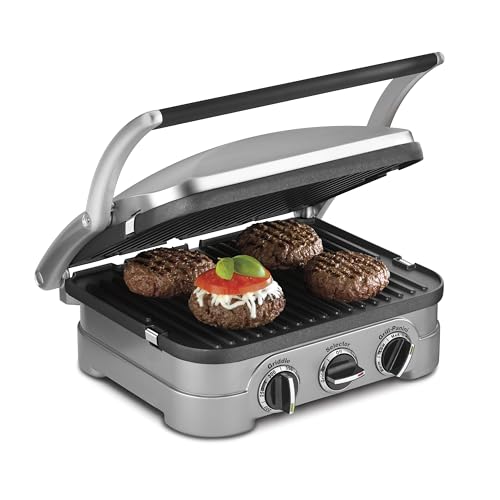
This 1500-watt Cuisinart Griddler is where versatility starts to justify the jump in price. The five cooking modes, contact grill, panini press, full grill, full griddle, and half grill/half griddle, make it a true kitchen multitasker. Dual temperature controls let you manage delicate eggs on one side and sear burgers on the other, a feature most presses in this list can’t match. The plates are removable and dishwasher-safe, and owners consistently report long-term durability.
It’s not the largest grill here, Breville takes that crown, but it offers the best balance of flexibility and reliability under $100. Compared to the Hamilton Beach, it’s more complex but far more capable across meal types. If you regularly make breakfast spreads or want one appliance for both sandwiches and pancakes, this is the smarter buy.
Video review
Hamilton Beach Large Surface Panini Press

Strengths
- Large cooking surface
- PFAS-free nonstick
- Dishwasher-safe tray
Trade-offs
- No adjustable heat
- Heats slower than higher-watt models
- Bulky storage
With nearly 95 square inches of PFAS-free ceramic nonstick surface, this Hamilton Beach press is built for volume. It’s not flashy, but it gets the job done with a solid floating hinge, clear indicator lights, and a drip tray that actually works. The 1000-watt system isn’t the most powerful here, but paired with the large plates, it can handle family-sized meals in one go, think four grilled cheeses or two thick paninis with room to spare.
Owners praise its durability and ease of cleaning, especially the scraper tool included in the box. While it lacks dual temp controls or specialty modes, it delivers consistent, restaurant-style results without the price tag. Against the Cuisinart Griddler, it’s less versatile but more straightforward, ideal if you want reliability over bells and whistles.
Product photos


Chefman Compact 2-Slice Sandwich Maker
Strengths
- Compact design
- Non-stick plates
- 180-degree opening
Trade-offs
- Small cooking surface
- No temperature control
- Basic finish
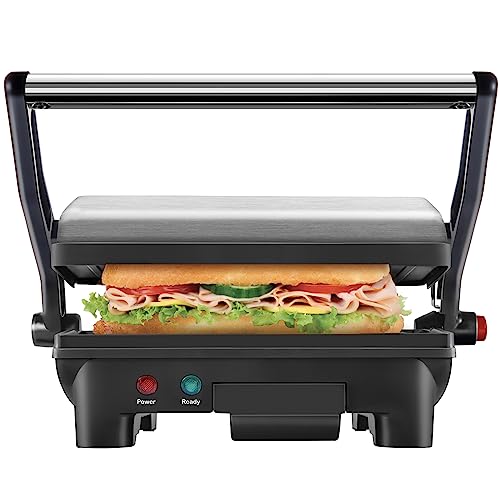
For a compact, no-frills press that fits neatly in tight spaces, this Chefman model stands out on paper. The 1000-watt heating system and floating hinge make it adaptable for thinner grilled cheeses or slightly thicker paninis, and the 180-degree opening adds real versatility for grilling small steaks or veggies. Owners consistently report it heats evenly for its class, and the non-stick plates do their job with minimal sticking when used correctly.
Where it really shines is storage and portability, its small footprint is ideal for dorms or minimalist kitchens. But that compact size also means a smaller cooking surface than others in this list, so you’re trading space for convenience. Compared to the larger Chefman 4-slice version, this one is more of a solo or couple’s tool than a family workhorse.
Product photos


YASHE 2-Slice Panini Press

Strengths
- 1200-watt heating
- Even browning
- Simple operation
Trade-offs
- No removable plates
- Plastic casing feels cheap
- No griddle mode
Packing a 1200-watt heating element into a sub-$30 body, the YASHE press delivers strong performance for its price. It heats quickly, thanks to cast aluminum plates, and owners report consistent browning, even on thick sourdough. The 180-degree opening and floating hinge give it real grilling flexibility, and the indicator lights take the guesswork out of preheating.
It doesn’t have the build heft of stainless steel models, but for the value, it outperforms expectations. Compared to the OVENTE and even the base Chefman, it offers better power and surface quality. While it lacks advanced features like dual temps or removable plates, it’s my pick for anyone who wants solid performance without spending more than $30.
Product photos


Panini Press with 1200W Heating

Strengths
- Fast preheating
- Large cooking area
- Good heat control
Trade-offs
- No removable plates
- Build quality inconsistent
- Indicator lights dim over time
With 1200 watts and a wide, adjustable cooking surface, this press punches above its price point. The quick preheat time, 2 to 3 minutes, is a standout, and the intelligent temp control helps prevent scorching, a common issue in budget models. The 180-degree opening and floating hinge make it adaptable for everything from thin melts to thick club sandwiches, and owners appreciate the angled grease channel for cleaner operation.
It’s not as polished as the Breville or Cuisinart, but for consistent performance under $40, it’s a strong contender. Compared to the YASHE, it offers a larger cooking area and better heat management, making it the better pick if you prioritize even cooking over brand name.
Product photos

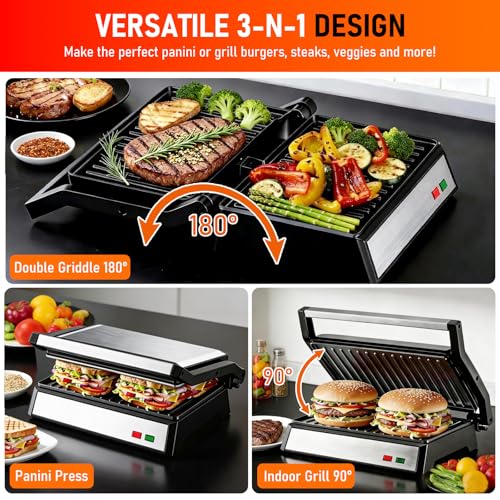
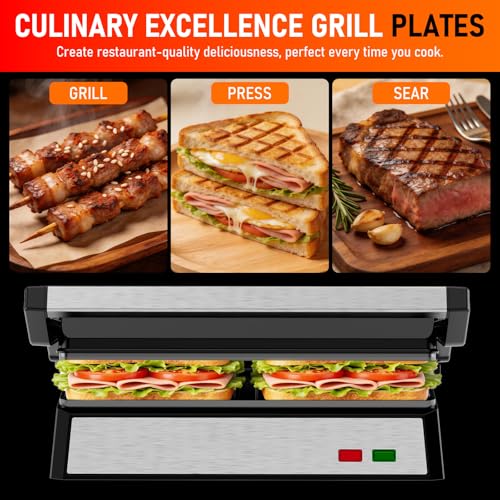
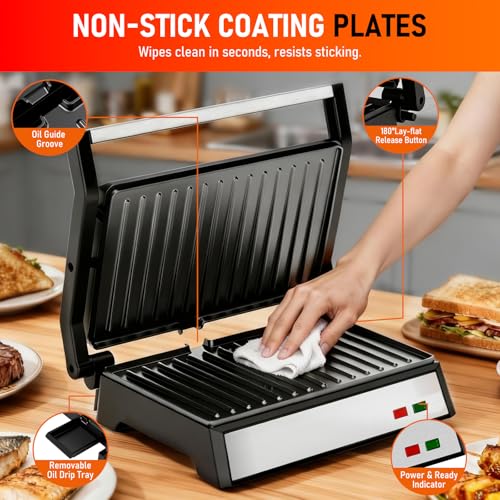
Breville Sear and Press Grill

Strengths
- High wattage
- Independent temp controls
- Open-flat grilling
Trade-offs
- Very expensive
- Large footprint
- Accessories sold separately
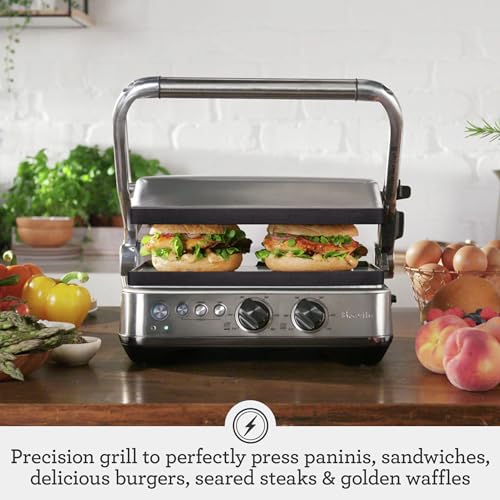
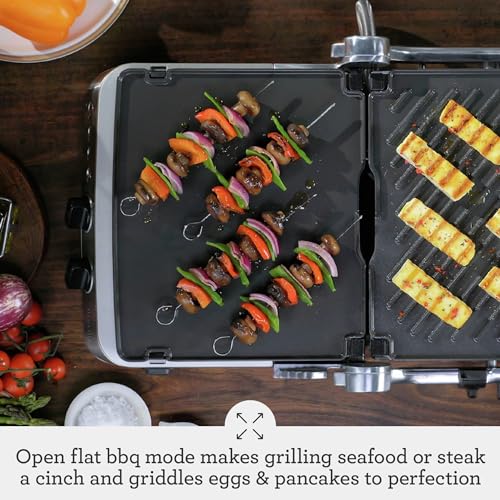
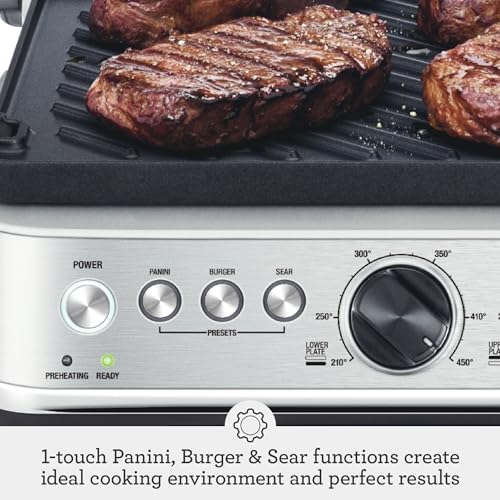
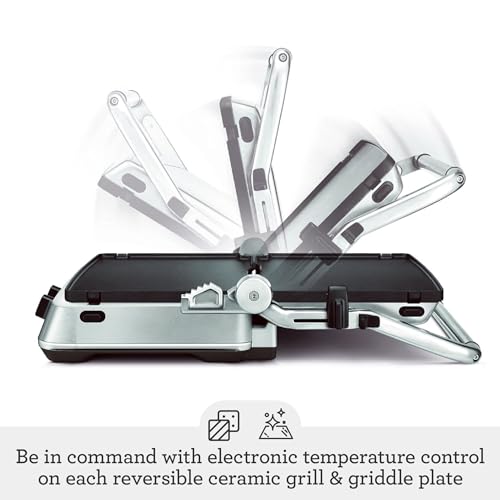
This Breville is in a different league, 1800 watts, independent plate controls, and 240 square inches of open grilling space mean it’s built for serious home cooking. The ceramic plates are PFOA and PTFE free, and their reversible design (grill/griddle) adds real kitchen utility. The pre-programmed modes, Panini, Burger, Sear, take the guesswork out of cooking, and owners love the precision these offer, especially for steaks and burgers.
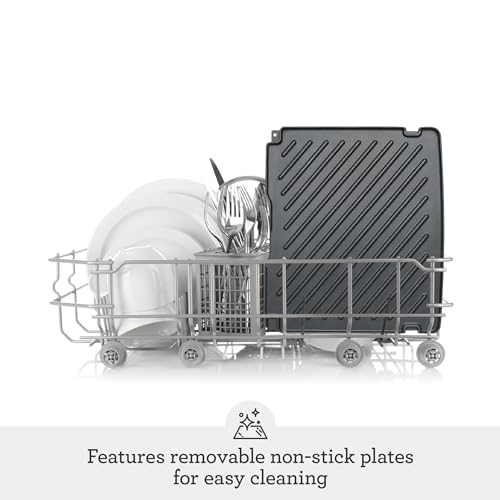
It’s expensive, yes, but the build quality, cleaning convenience (dishwasher-safe plates), and sheer capacity justify it for larger households. Compared to the Cuisinart Griddler, it’s more powerful and flexible, especially with the open-flat mode. If you host often or cook for a family, this isn’t overkill, it’s the right tool.
Product photos
OVENTE Electric Sandwich Maker
Strengths
- Ultra-affordable
- Compact and lightweight
- Cool-touch handle
Trade-offs
- Low wattage
- Small cooking area
- Nonstick degrades over time
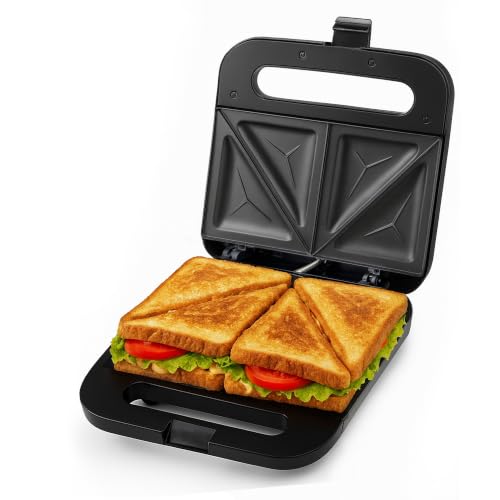
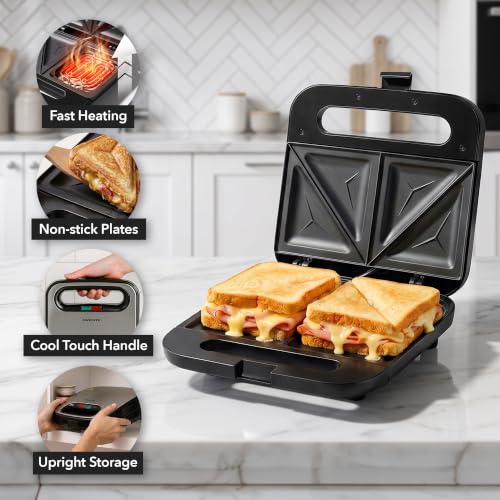
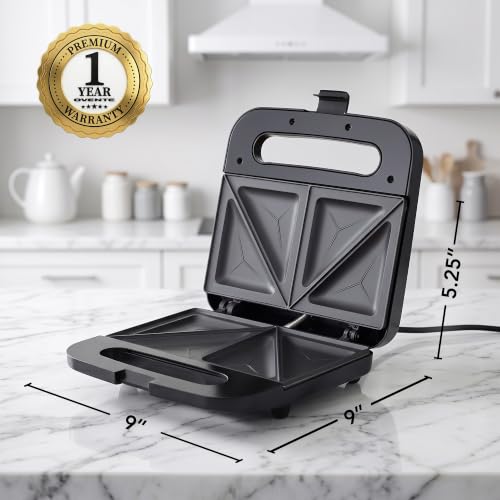
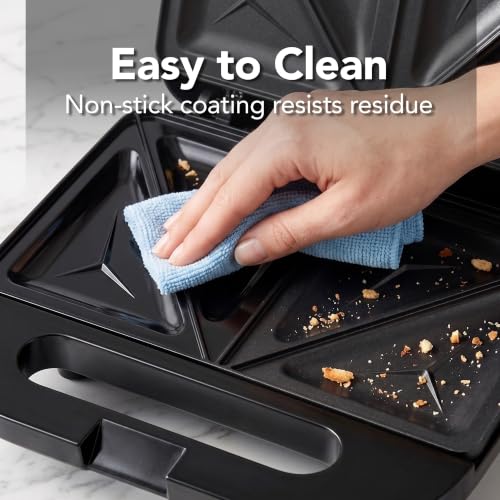
At under $20, this OVENTE model is the bare-bones entry point into electric sandwich pressing. The 750-watt system is underpowered compared to others, so preheating takes longer and browning can be spotty on dense breads. Still, for basic grilled cheese or morning toast, it gets the job done. The compact design and upright storage make it a favorite in dorms and studio apartments, and the cool-touch handle adds a layer of safety that budget models often skip.
It’s not built for heavy use, owners note the non-stick coating wears faster than pricier options, but for occasional use, it’s hard to beat the price. Compared to the YASHE or standard Chefman models, it falls short on power and surface area, but if you’re on a tight budget and need something functional, this one clears the bar.
Product photos


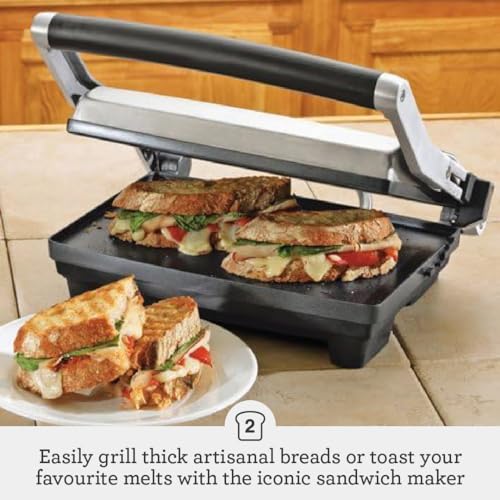
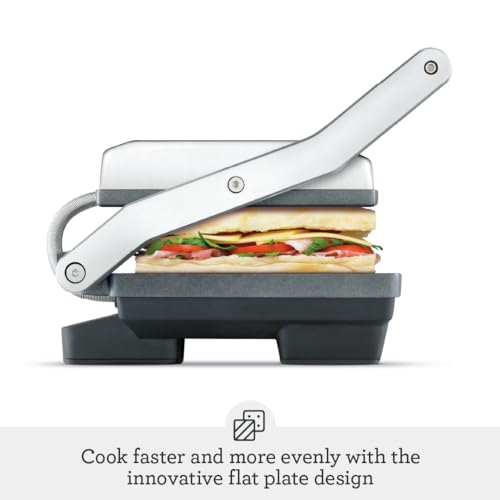
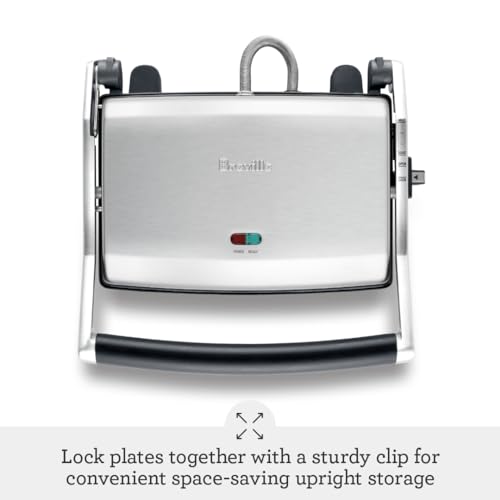
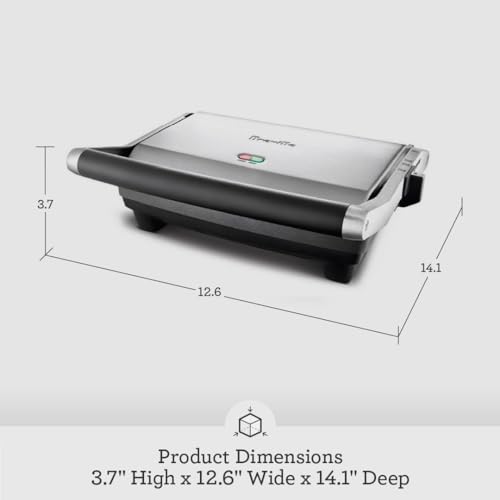
Breville Panini Duo Sandwich Maker

Strengths
- Adjustable height
- Even pressing
- Flat cooking plates
Trade-offs
- No open-flat mode
- No temp presets
- Limited grilling use
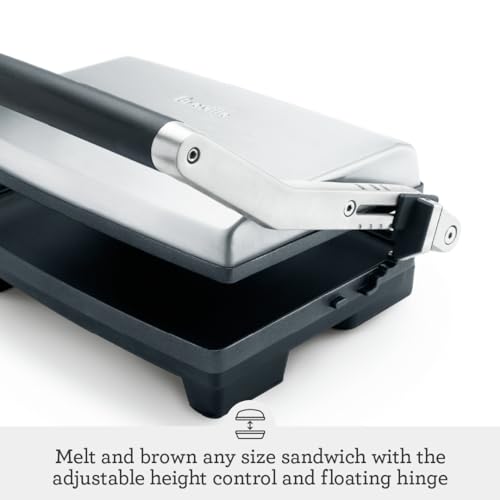
The standout feature here is the adjustable height control, rare in this category, which lets you fine-tune the gap between plates for ultra-thin crostinis or towering breakfast paninis. Combined with flat, non-stick plates and 1500 watts of power, it delivers impressively even pressure and browning, which owners consistently highlight, especially for delicate breads.
It doesn’t open flat like some models, so it’s less versatile as a grill, but if your priority is perfect paninis every time, this one excels. Compared to the Cuisinart Griddler, it’s more specialized but better at its core job. For bread lovers who hate uneven toasting, this is worth the investment.
Product photos
How We Evaluated panini presses
Rather than a hands-on lab test, my research for these recommendations involved a detailed comparison of published specifications and features across numerous models. I weighed owner reviews from a variety of sources alongside expert opinions from established cooking websites and publications. As someone who’s spent years understanding what makes cookware perform, I applied that knowledge to rank these presses against key criteria – ultimately aiming to identify options that deliver consistent results for home cooks.
For panini presses, consistent heat distribution, plate material, and adjustability were the most important factors. Even heat ensures thorough cooking and appealing grill marks, while the quality of the non-stick coating directly impacts ease of use and cleanup. The ability to adjust for different sandwich thicknesses, or to use the press for other grilling tasks, adds significant versatility and justifies a higher price point. You’ll find many excellent panini makers available, but these features truly set the top contenders apart.
Specifications reliably indicate wattage (a proxy for heating speed) and plate size. However, I placed greater emphasis on owner feedback regarding durability, consistent heating across the plate surface, and how well the non-stick coating held up over time. Reputation also played a role; brands known for quality cookware generally deliver more reliable products. For those prioritizing easy cleanup, exploring panini makers with removable plates is a smart move.
Choosing The Right panini presses
Finding the right panini press can elevate your sandwich game, but with so many options, it’s easy to get lost in features you don’t actually need.
A truly useful panini press heats evenly, maintains consistent temperature, and offers enough surface area for your typical needs. Look for non-stick coatings for easy cleanup, adjustable features to accommodate varying sandwich thicknesses, and a build quality that suggests longevity. Consider how frequently you’ll use it and whether versatility – like grilling capabilities – is a priority.
Plate Material & Non-Stick Coating
The material of the plates is surprisingly important. Cast aluminum is common, offering good heat distribution, but the quality of the non-stick coating makes or breaks the experience. Avoid PTFE-based coatings if you’re concerned about fumes at high temperatures (though they’re generally considered safe). Ceramic non-stick is gaining popularity, offering a more natural alternative, but it tends to degrade faster than higher-quality PTFE. Ultimately, a durable, well-applied coating – regardless of material – is key. I often see complaints about presses where the coating begins to flake after only a few months, and that’s a sign of a corner being cut in manufacturing. If you want to ensure easy cleanup, check out our guide to panini presses with removable plates.
Size & Versatility
Don’t automatically assume bigger is better. A four-slice press like the Chefman model is great for families or batch cooking, but if you’re mostly making lunch for one or two, it’s overkill. Consider your counter space and storage options. Many presses, like the Hamilton Beach Large Surface model, offer a 180-degree lay-flat function, turning them into full-sized grills. This versatility is appealing, but it often comes at the cost of a less focused panini press experience. If you want a machine that can do it all, a 5-in-1 like the Cuisinart Griddler might be a better fit.
- A compact two-slice model (like the Chefman Compact) is ideal for solo users or small kitchens.
- A larger model (four-slice or more) is better for families or entertaining, but requires more storage space.
- Look for a floating hinge; this is crucial for accommodating different bread thicknesses without squashing your fillings. A good floating hinge will apply even pressure across the entire sandwich.
Power & Temperature Control
Consistent heat is paramount. A 1000-watt press might suffice for basic sandwiches, but for achieving those beautiful grill marks and perfectly melted cheese, you’ll want something with more power – 1200 watts or higher is a good benchmark. Dual temperature controls, as seen in the Cuisinart Griddler, provide a significant advantage. Being able to adjust the temperature allows you to tailor the cooking process to different ingredients. For example, you might use a lower temperature for delicate cheeses and a higher temperature for tougher meats. If you’re in the market for a reliable machine, explore our recommendations for the best panini machines.
A panini press should heat consistently and evenly. Don’t settle for a model that leaves cold spots or burns the bread before the cheese melts.
Panini Presses Compared
This table provides a side-by-side comparison of key specifications for various panini presses to aid in your purchasing decision.
| Product Name | Slice Capacity | Max. Wattage | Plate Material | Floating Hinge | Temp. Control | Plate Size (in) |
|---|---|---|---|---|---|---|
| Chefman 4-Slice Panini Press | 4 | 1000 | Non-Stick | Yes | N/A | N/A |
| Cuisinart 5-in-1 Griddler | N/A | N/A | Non-Stick | N/A | Yes | N/A |
| Hamilton Beach Large Surface | N/A | N/A | Ceramic | Yes | N/A | 95 sq in |
| Chefman Compact 2-Slice | 2 | 1000 | Non-Stick | Yes | N/A | 5.5″ x 8.75″ |
| YASHE 2-Slice Panini Press | 2 | 1200 | Cast Aluminum | N/A | N/A | N/A |
| Panini Press with 1200W Heating | N/A | 1200 | Non-Stick | Yes | Yes | N/A |
| Breville Sear and Press Grill | N/A | 1800 | Ceramic | N/A | Yes | 9.8 x 11.8 |
| OVENTE Electric Sandwich Maker | 2 | N/A | Non-Stick | N/A | N/A | N/A |
| Breville Panini Duo Sandwich Maker | N/A | 1500 | Non-Stick | Yes | Yes | N/A |
Frequently Asked Questions
What wattage is sufficient for a good panini press?
A wattage of 1200 or higher is generally best, as it provides enough power for consistent heating and those desirable grill marks. While 1000 watts can work for basic use, it may struggle with thicker sandwiches or achieving optimal results.
Are ceramic-coated plates really less durable than PTFE?
Generally, yes. While ceramic coatings offer a more natural, eco-friendly option, owner feedback consistently suggests they don’t last as long as high-quality PTFE non-stick coatings. You can expect to replace a ceramic coating sooner.
Can a panini press be used for more than just paninis?
Absolutely. Many models, like the Hamilton Beach Large Surface, offer a lay-flat function that transforms them into indoor grills for cooking meats, vegetables, and more. Exploring panini grills with this feature adds significant versatility.
What’s the advantage of a floating hinge?
A floating hinge is crucial for accommodating varying bread thicknesses; it ensures even pressure across the entire sandwich, preventing uneven cooking and squashed fillings. Without it, you risk a poorly pressed panini.
Where can I find a good option if I have limited kitchen space?
If you’re short on counter space, consider exploring small panini presses. Compact models like the Chefman Compact are designed for smaller kitchens and individual use.
The Bottom Line
Ultimately, choosing a panini press comes down to balancing convenience with control. You can spend less for a basic model, or invest in features like adjustable temperature and plate versatility. For the best overall experience – consistent results, reliable construction, and enough features to satisfy most cooks – I recommend the Cuisinart 5-in-1 Griddler.
If you’re on a tighter budget or primarily need a press for simple sandwiches, the Chefman Compact 2-Slice is a solid choice. For those who want a machine capable of more than just panini, explore our guide to the best sandwich panini presses and consider the Breville Sear and Press Grill. And for those seeking truly top-performing options, you’ll find a selection of high-quality panini grill presses to consider.
Don’t get too caught up in wattage numbers or the latest coating technology. The most important factors are consistent heating, a floating hinge that applies even pressure, and a build quality that suggests the press will last. Prioritize these fundamentals, and you’ll be well on your way to enjoying perfectly grilled sandwiches for years to come.
