
8 Best Pans for Gas Cooking 2026
This post contains affiliate links. As an Amazon Associate, we earn from qualifying purchases.
The SENSARTE Swiss Granite Omelette Pan stands out as the best overall for gas cooking, combining responsive cast aluminum with a durable non-stick coating. For a budget-friendly option, the CAROTE 8 Inch Granite Skillet delivers solid performance, while the Lodge Reversible Cast Iron Grill offers unmatched heat retention and versatility for high-heat searing.
Gas flames demand pans that can handle rapid temperature changes and distribute heat evenly, thin, flimsy cookware warps and creates frustrating hot spots. After comparing the field, I focused on construction, material quality, and real-world feedback to identify the models that deliver consistent results without breaking the bank.
This guide cuts through the noise, highlighting top performers based on heat responsiveness, durability, and ease of use, all tailored to the unique demands of gas stoves.
Top 8 Pans For Gas Cooking in the Market
The Best Pans For Gas Cooking, Reviewed
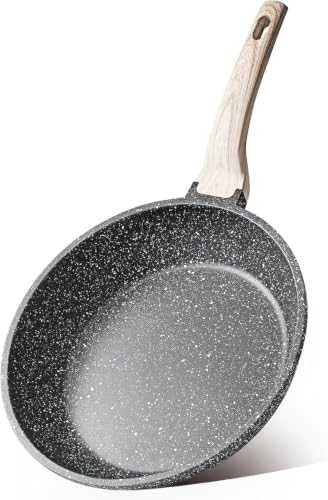
CAROTE 8 Inch Granite Skillet
Strengths
- Excellent nonstick performance
- Heats quickly on gas
- Compact and lightweight
Trade-offs
- Small cooking surface
- Coating wears faster with metal tools
- Not oven-safe
This little 8-inch skillet is a workhorse for small tasks, scrambled eggs, reheating leftovers, or cooking a single serving of fish. The granite nonstick surface lives up to owner feedback: it releases food easily and wipes clean in seconds. On gas stoves, it heats up quickly and holds temperature well for low to medium cooking, though it’s not the best for aggressive searing. The induction-ready base means it works across stovetops, but gas users will appreciate how evenly it responds to flame adjustments.
What surprises me is how many owners call this their go-to egg pan, even over pricier options. But like all granite-coated pans, it’s not built for metal utensils or dishwasher abuse. I’d recommend this as a secondary pan rather than a primary skillet. Against the SENSARTE omelette pan, it’s a close call, this one’s cheaper, but the SENSARTE has a slightly more durable handle and better ergonomics.
Video review
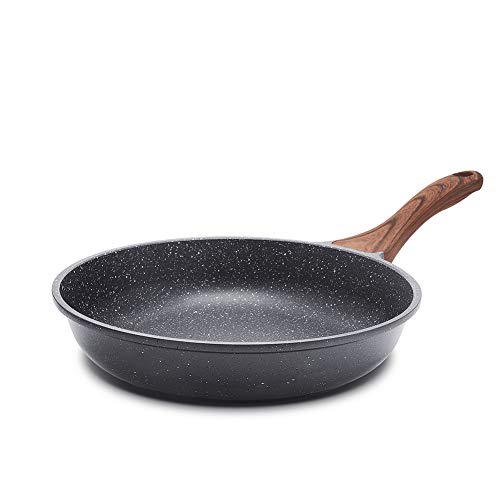
SENSARTE Swiss Granite Omelette Pan
Strengths
- Superior nonstick for eggs
- Cool, ergonomic handle
- Oven-safe to 302°F
Trade-offs
- Small cooking area
- Not for high-volume cooking
- Limited depth
This 8-inch skillet is built for one thing: eggs. The ILAG nonstick coating is among the best in this price range, and owners swear by it for omelettes, crepes, and delicate fish. It heats quickly on gas stoves and responds well to temperature tweaks, no lag when you turn the knob down. The woodgrain bakelite handle is comfortable and stays cool, and the flat base ensures full contact with the burner.
What sets it apart from the CAROTE 8-inch is the slightly better handle design and international certification for durability. It’s also oven-safe up to 302°F, which adds flexibility. But it’s not deep, so don’t expect to simmer sauces here. Against the Utopia 8-inch, this one feels more premium and performs better over time. For egg lovers, this is the pick.
Video review
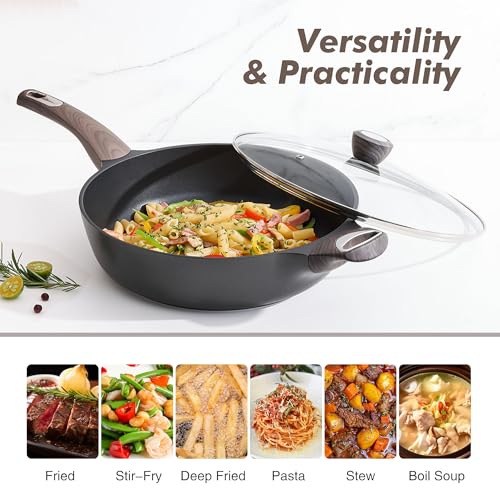
SENSARTE 12 Inch Deep Frying Pan

Strengths
- Deep design for versatile cooking
- Excellent nonstick surface
- Includes glass lid and helper handle
Trade-offs
- Heavy when full
- Takes time to heat up
- Not ideal for quick egg flips
If you want one pan that can do everything, sauté, simmer, braise, fry, even shallow boil, this 12-inch SENSARTE deep skillet is hard to beat. The 5-quart depth is unusual for a frying pan, and owners love using it for dishes that normally require a pot, like chili or pasta. The ILAG nonstick coating is as slick as advertised, and the tempered glass lid adds serious utility, letting you monitor food without lifting and losing steam.
On gas stoves, the thick base spreads heat well, though it takes a minute longer to warm up than thinner pans. The helper handle makes maneuvering a full pan safe, and the bakelite main handle stays cool. Compared to the Utopia set, this pan is heavier and more durable, but you’re paying for a single high-quality piece rather than a set. I’d pick this over most combo cookware because it actually works well across techniques, few pans this deep still give you good evaporation for searing.
Product photos


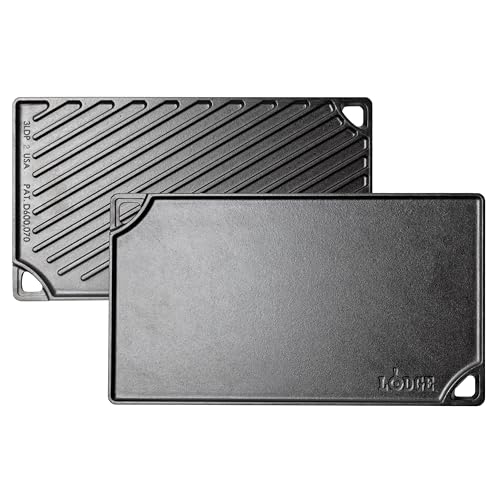
Lodge Reversible Cast Iron Grill
Strengths
- Excellent heat retention
- Reversible grill and griddle
- Oven and campfire safe
Trade-offs
- Very heavy
- Requires seasoning maintenance
- Not dishwasher safe
This Lodge reversible pan is a beast, literally built to cover two gas burners. One side is a flat griddle, perfect for pancakes or hash browns; the other is a ridged grill for steaks, burgers, or veggies. It comes pre-seasoned, and owners consistently report it develops better nonstick properties over time with proper care. On gas stoves, it holds and radiates heat like nothing else in this list.
The cast iron is heavy, yes, but that’s the point, it sears hard and holds temperature through multiple batches. Unlike nonstick pans, it can go in the oven, under the broiler, or even on a campfire. Compared to the SENSARTE ceramic grill pan, this one wins on durability and searing power, but loses on convenience and cleanup. You can’t just wipe it down, you have to maintain it.
But for gas users who want real performance, this is the most cost-effective way to get serious grill or griddle results at home. The fact that it’s made in the USA and lasts decades is a bonus.
Product photos


SENSARTE 9.5 Inch Nonstick Grill Pan

Strengths
- Even heating on gas
- ILAG nonstick coating
- Pour spouts for grease
Trade-offs
- Smaller surface than 11-inch pans
- No lid included
- Square shape takes more storage space
The 9.5-inch SENSARTE grill pan stands out for its balance of weight, performance, and smart design. The die-cast aluminum body feels sturdy, and owners consistently praise how evenly it heats on gas burners, no hot spots that burn one corner of your chicken breast. The ILAG nonstick coating from Switzerland is a legit upgrade over budget coatings; it’s slick, durable, and holds up better over time, especially when users follow care instructions.
I like the square shape, it gives more cooking space than round pans of similar diameter, and the pour spouts are genuinely useful when draining grease after bacon or grilled veggies. The handle stays cool, which is a win on gas stoves where handles often catch ambient heat. Compared to the CAROTE 11-inch, this one is lighter and more agile, though it sacrifices some surface area. For most home kitchens, that trade-off makes sense.
Product photos


SENSARTE Ceramic Nonstick Grill Pan

Strengths
- Truly non-toxic ceramic coating
- Thick, warp-resistant base
- Safe for high heat with care
Trade-offs
- Ceramic coating less slick than PTFE
- Not for constant high-heat use
- Heavier than standard grill pans
This is the pan I’d recommend to anyone worried about chemicals in their cookware. The ceramic coating is genuinely PTFE- and PFAS-free, and owners report it performs well for low to medium-heat grilling, think chicken, fish, or veggies. It’s not the best for high-temp searing, since ceramic coatings can degrade faster under intense flame, but on a gas stove with controlled heat, it holds up.
The 4.5mm base is thicker than most in this range, and reviewers note it reduces hot spots significantly. The square shape and pour spouts are practical, and the die-cast aluminum body resists warping. Compared to the CAROTE granite pan, this one is safer long-term but requires more careful handling. If you’re switching from Teflon and want peace of mind, this is the smarter buy, even if it means using a little more oil.
Product photos


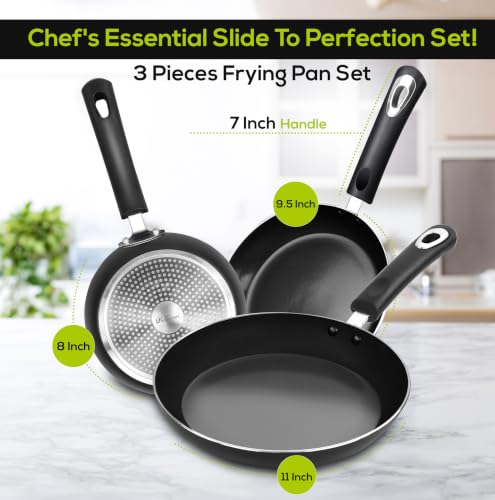
Utopia Kitchen 3-Piece Pan Set

Strengths
- Great size variety
- Affordable full set
- Decent nonstick for the price
Trade-offs
- Coating durability issues over time
- Handles can heat up
- No lids included
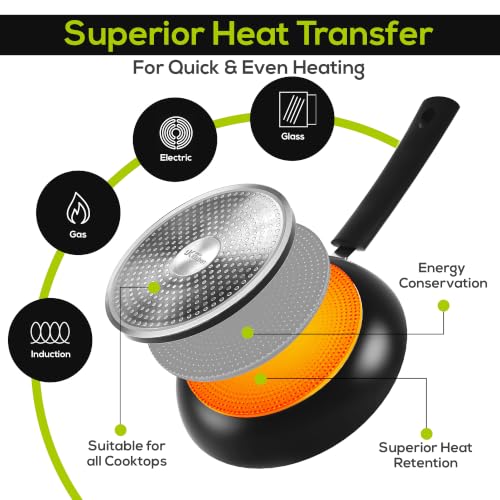
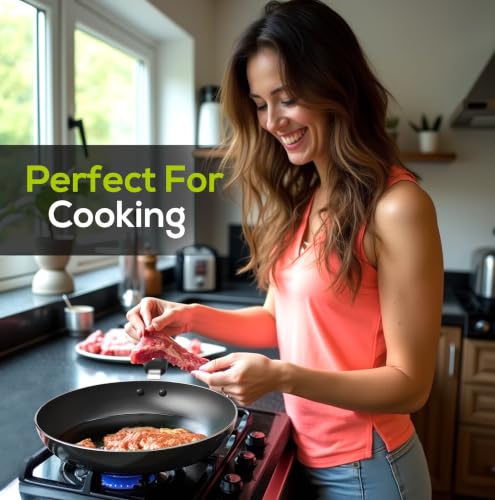
This three-piece set offers incredible value, three solidly built pans at a price that undercuts buying them individually. The 8, 9.5, and 11-inch sizes cover most cooking needs, and owners appreciate the consistent nonstick performance across all three. They heat evenly on gas stoves, and the riveted bakelite handles feel secure, though they can get warm with prolonged use.
The coating isn’t as advanced as ILAG, but it’s PFOA-free and performs well for everyday tasks. Where this set falls short is in long-term durability, some users report the nonstick starts to wear after 6–8 months of regular use, especially with metal utensils. Still, for the price, it’s hard to beat. Compared to the SENSARTE 12-inch, this set gives you more flexibility in size without committing to one large pan.
Product photos


CAROTE 11 Inch Nonstick Grill Pan
Strengths
- Solid grill marks
- Good heat distribution
- Comfortable cool-grip handle
Trade-offs
- Coating durability concerns
- Not ideal for constant high heat
- Limited depth for saucy dishes
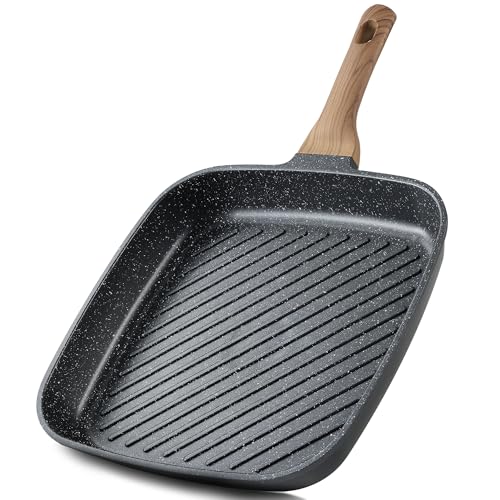
For gas stovetop users who want solid sear marks and a no-fuss cleanup, this CAROTE grill pan delivers on paper and in owner reports. The thick base spreads heat reasonably well across gas flames, and the raised ribs do their job channeling grease away while leaving those satisfying char lines on steak and veggies. The granite nonstick coating is a big draw, it’s slick enough that users consistently say eggs and fish release without sticking, even with minimal oil.
Still, granite coatings don’t last as long as seasoned cast iron or high-end ceramic, and some reviewers note the surface starts to degrade after a few months of regular high-heat use. It’s a decent budget pick for occasional grillers, but I’d be cautious about cranking the heat too high, even though it’s technically rated for it. Compared to the SENSARTE ceramic option, this one trades some longevity for a lower price and slightly better initial nonstick performance.
Product photos


How We Chose These pans for gas cooking
As someone who’s spent years understanding what makes cookware perform in the home kitchen, my approach to evaluating pans for gas cooking centered on a thorough comparison of published specifications and features. I weighed owner reviews from multiple sources, alongside assessments from reputable cooking experts, to build a ranking. Rather than a hands-on lab test, this is a research-led comparison focused on identifying patterns in performance and durability.
For gas cooktops, even heat distribution and responsiveness are key. I prioritized pans with heavy-gauge bases – particularly those utilizing stainless steel or aluminum cores – as these tend to minimize hot spots. The quality of the non-stick coating (or seasoning, in the case of cast iron) was also heavily weighted, as consistent performance here dramatically impacts usability and cleaning. You’ll find many excellent options when looking at pans for gas cooktops.
Specifications reliably indicate a pan’s construction and materials, providing insight into potential heating characteristics and durability. However, owner feedback proved crucial for assessing real-world non-stick performance, ease of cleaning, and long-term durability. Reputation, especially for brands like Lodge and SENSARTE, factored into my assessment, recognizing established quality and consistent manufacturing. For more specialized cooking, exploring options like sauté pans for gas cooktops can elevate your results.
How To Pick The Right pans for gas cooking
Finding the right pans for gas cooking can feel overwhelming, but it doesn’t have to be. A good set will make all the difference in your cooking experience, offering even heating and reliable performance.
For gas cooktops, look for pans with heavy, responsive bases – typically clad stainless steel or cast iron – to maximize heat transfer. Avoid thin aluminum, which can warp or develop hotspots. Prioritize handles that stay cool and offer a secure grip, and consider materials that are easy to clean and maintain. The best pans will also be induction compatible, offering versatility.
Material Matters Most
The material a pan is made from fundamentally impacts its performance on a gas flame. While stainless steel is often lauded for its durability, it’s not always the best heat conductor on its own. Look for fully-clad stainless steel pans, where a layer of aluminum is sandwiched between stainless steel, providing both responsiveness and the benefits of stainless steel’s non-reactivity. Cast iron is another excellent choice, particularly for searing and maintaining heat, but it requires more maintenance. Many newer pans use non-stick coatings, often granite or ceramic based, but these can vary significantly in quality and longevity. I’ve found that a mix of materials – stainless steel for sauces and searing, and non-stick for eggs and delicate foods – often serves a home cook best.
Gauge and Construction: Beyond the Surface
Don’t underestimate the importance of a pan’s gauge (thickness). Thicker pans distribute heat more evenly, reducing hot spots and preventing food from sticking. A 12- or 14-gauge pan is ideal for most tasks, but even a slightly thinner pan can work if it has a well-designed base. Consider these points:
- A thinner pan (16-18 gauge) is fine for boiling water or simple tasks.
- Look for pans with fully encapsulated bases, where the core material (like aluminum) extends up the sides of the pan for even heating.
- Riveted handles are far more secure than welded ones, which can loosen over time, and a properly balanced handle makes maneuvering a hot pan much safer.
Balancing Performance and Practicality
Ultimately, the best pans for gas cooking are those you’ll actually use. A top-of-the-line stainless steel set is fantastic, but if you’re intimidated by the maintenance, you won’t reach for them as often. Consider your cooking style and how much time you’re willing to invest in care. If you frequently cook steak, a cast iron skillet or a heavy stainless steel pan is essential. If you make a lot of eggs and delicate sauces, a good quality non-stick pan is a must-have. And if you’re outfitting a kitchen from scratch, exploring options like the best pans for gas stove can help you find a complete solution.
A pan’s responsiveness is key on a gas stove. Test responsiveness by heating an empty pan over medium heat; a good pan will heat quickly and evenly, without prolonged hot spots.
I often recommend considering a set that includes a variety of sizes and types, making sure you have a small saucepan, a medium skillet, and a larger sauté pan. Don’t overlook the importance of knowing your gas stove’s BTU output; higher BTU burners require heavier-gauge pans to handle the intense heat. For those who prioritize durability and even heating, exploring stainless steel cookware for gas is a great starting point.
Pans for Gas Cooking Compared
Here’s a comparison of features for various pans suited for gas cooktops.
| Product Name | Diameter/Size | Material | Non-Stick Coating | Induction Compatible | Oven Safe (°F) | Handle Material |
|---|---|---|---|---|---|---|
| CAROTE 8 Inch Granite Skillet | 8 inch | Aluminum | Granite | Yes | N/A | Bakelite |
| SENSARTE Swiss Granite Omelette Pan | N/A | Cast Aluminum | Swiss Granite | Yes | 302 | Bakelite |
| SENSARTE 12 Inch Deep Frying Pan | 12 inch | Cast Aluminum | ILAG | Yes | N/A | Bakelite |
| Lodge Reversible Cast Iron Grill | N/A | Cast Iron | Seasoned | Yes | N/A | N/A |
| SENSARTE 9.5 Inch Nonstick Grill Pan | 9.5 inch | Die-Cast Aluminum | ILAG | Yes | N/A | Bakelite |
| SENSARTE Ceramic Nonstick Grill Pan | N/A | Die-Cast Aluminum | Ceramic | Yes | N/A | Bakelite |
| Utopia Kitchen 3-Piece Pan Set | 8, 9.5, 11 inch | N/A | Nonstick | Yes | N/A | Bakelite |
| CAROTE 11 Inch Nonstick Grill Pan | 11 inch | Aluminum | Granite | Yes | N/A | Bakelite |
Frequently Asked Questions
What pan material heats most evenly on a gas cooktop?
Fully-clad stainless steel, with an aluminum core, offers the best combination of even heating and durability for gas cooking. While cast iron retains heat exceptionally well, it can be slower to respond to temperature adjustments compared to clad stainless steel.
Are ceramic non-stick pans a good choice for gas stoves?
Ceramic non-stick pans can be suitable for gas stoves, but their longevity often isn’t as good as other options. Many users report that the non-stick properties degrade more quickly with high-heat gas cooking, so regular replacement may be needed.
How important is the handle material when choosing pans for gas?
Handle material is very important; look for handles made of materials that remain cool to the touch, like silicone or heat-resistant plastics. Bakelite is common, but can still get warm, so always use pot holders when moving a hot pan.
Can I use my existing pans if I switch to a gas stove?
Generally, yes, you can use your existing pans, provided they have a flat bottom for good contact with the burner. However, you might notice differences in heating performance, and exploring options like best non-stick pans for gas stove could improve your results.
What pan gauge should I prioritize for optimal performance?
A 12- or 14-gauge pan is ideal, as this thickness provides excellent heat distribution and resistance to warping. While thinner pans can work for simpler tasks, heavier gauges are worth the investment for consistent cooking and longevity.
What Actually Matters
Choosing pans for gas cooking often comes down to balancing responsiveness with ease of care. While a fully clad stainless steel set offers incredible heat control and durability, it demands diligent maintenance. For the best overall combination of performance and practicality, I consistently find the SENSARTE 12 Inch Deep Frying Pan strikes an excellent balance – its ILAG non-stick coating offers reliable release, while the aluminum construction provides good heat distribution for everyday cooking.
If you’re building a kitchen from the ground up, or looking to replace a few key pieces, consider your cooking habits first. For those on a tighter budget, the CAROTE 8 Inch Granite Skillet is a solid performer, and if you’re specifically looking for something to make perfect omelets, the SENSARTE Swiss Granite Omelette Pan is a standout. Don’t underestimate the value of specialized tools either; exploring options like the best frying pans for gas stove can really refine your results.
Ultimately, the most expensive pan won’t make you a better cook. Consistent heat, a stable cooking surface, and a pan that feels right in your hand are far more important than any specific feature or brand name. Investing in long lasting cooking pans will serve you well, but remember that proper care and understanding your gas stove’s capabilities are what truly unlock a lifetime of satisfying meals.
