
7 Best Pans for Risotto 2026
This post contains affiliate links. As an Amazon Associate, we earn from qualifying purchases.
The best pan for risotto is the Made In 3QT Stainless Saucier, it heats evenly, holds temperature well, and its curved sides make stirring effortless. For a budget-friendly option, the VocVoi 12″ Stainless Steel Pan delivers solid performance. If you want versatility, the Inqibee 13″ Tri-Ply Paella Pan doubles as a great shallow skillet for searing and browning.
Risotto doesn’t forgive uneven heat or flimsy construction. Too often, home cooks end up with scorched rice or inconsistent texture because their pan can’t handle the constant stirring and gradual heat changes this dish demands. After comparing the field and analyzing owner feedback, I focused on pans that combine even heating, durable materials, and a shape that supports steady evaporation.
This guide cuts through the noise to highlight models that actually perform, based on construction quality, real-world reports, and how well they meet the specific demands of risotto, from initial toasting to the final creamy finish.
Top 7 Pans For Risotto in the Market
The Best Pans For Risotto, Reviewed
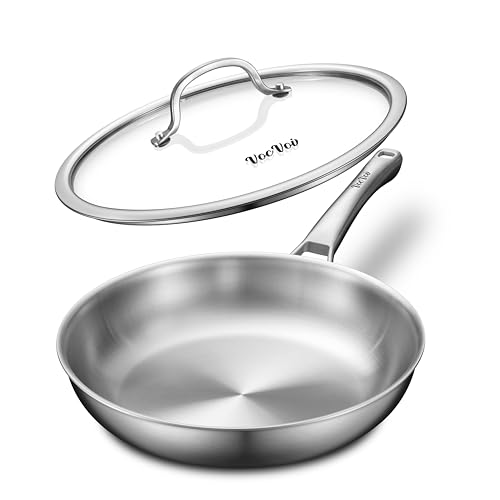
VocVoi 12″ Stainless Steel Pan
Strengths
- True tri-ply construction
- Uncoated stainless surface
- Oven and stove safe
- Affordable price
- All-stove compatibility
Trade-offs
- Flat bottom, steep sides
- No rounded corners for stirring
- Handle heats up
This pan claims to be the ‘best overall,’ but the specs tell a different story. It’s a tri-ply 12-inch frying pan, deeper than a skillet but not shaped like a saucier. That means sloped sides and less surface control, which isn’t ideal for risotto where even liquid spread matters. Still, the uncoated stainless interior is a plus for browning and flavor development, and owners appreciate the no-nonsense build.
It works on all stoves and handles oven use, but the lack of a rounded corner design makes stirring tedious. Compared to the Made In sauciers, it’s less specialized and more of a generalist. I’d pick it only if you need one pan for searing, frying, and occasional risotto, not because it excels at any one thing.
Video review
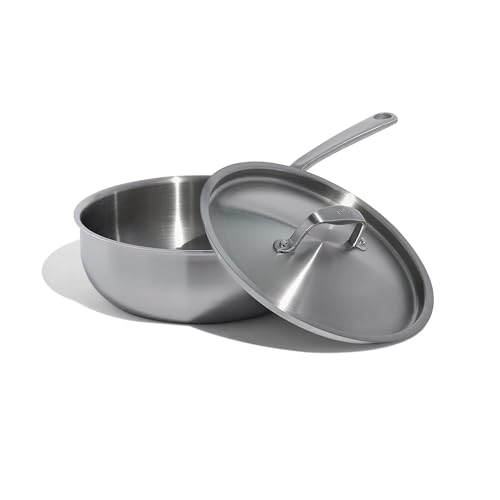
Made In 3QT Stainless Saucier
Strengths
- 5-ply clad construction
- Excellent heat distribution
- Stay-cool handle
- Oven safe
- Induction compatible
Trade-offs
- High price
- Heavier than average
- Limited capacity for large batches
This saucier is exactly what I look for when recommending premium stainless steel for risotto: a fully clad 5-ply construction means heat spreads fast and stays even, critical when stirring Arborio rice for 18 minutes. The rounded corners make stirring easier than in a square saucepan, and the depth gives room for expansion without splashing. Owners praise its responsiveness on induction and gas alike, and the stay-cool handle is a real perk during long cooking sessions.
Compared to cheaper tri-ply options, this pan performs closer to professional gear. While it’s pricier, the Italian craftsmanship and consistent feedback on browning control make it a smarter long-term buy than stacking multiple lower-tier pans. For risotto lovers, this is the kind of pan that earns its counter space.
Video review
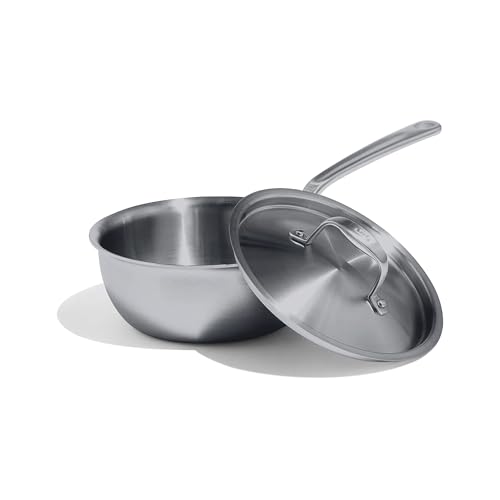
Made In 2QT Stainless Saucier
Strengths
- Perfect for 1–2 servings
- Fast, even heating
- Stay-cool handle
- Full 5-ply build
- Induction compatible
Trade-offs
- Too small for families
- Limited versatility beyond sauces
- Same price as larger competitors
At just 2 quarts, this is the smallest saucier here, but sometimes, that’s exactly what you need. For one or two servings of risotto, its compact size means better liquid-to-rice ratio and less wasted energy heating empty pan. The 5-ply construction ensures it heats fast and evenly, just like its bigger sibling, and the rounded corners make stirring effortless.
Reviewers love how it fits on small burners and doesn’t overwhelm tiny kitchens. While it can’t handle family meals, it outperforms most mini saucepans thanks to full cladding. If you live alone or cook for two, this is the smarter buy over oversized pans that scorch small batches.
Product photos


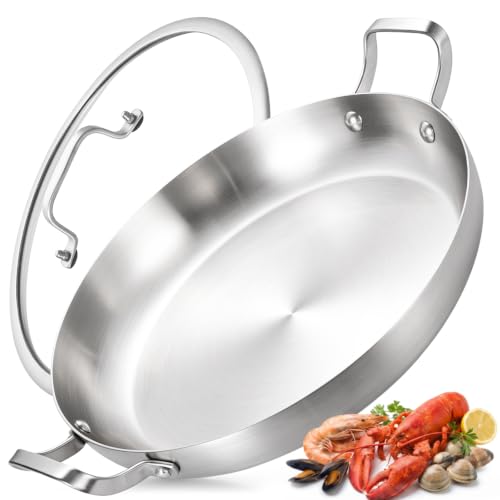
Inqibee 13″ Tri-Ply Paella Pan
Strengths
- Even tri-ply heating
- Large cooking surface
- Oven safe to 500°F
- Glass lid included
- Induction ready
Trade-offs
- Shallow depth
- Lid handle not stay-cool
- Not ideal for small batches
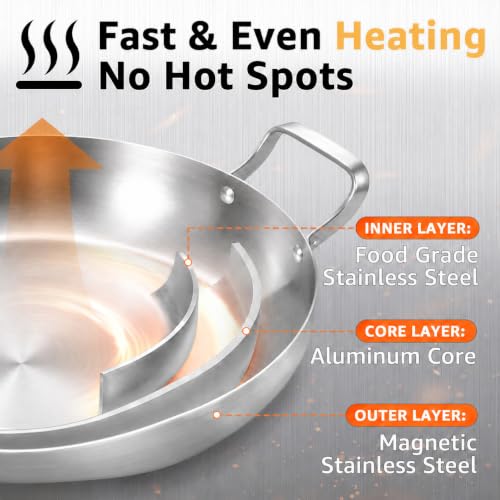
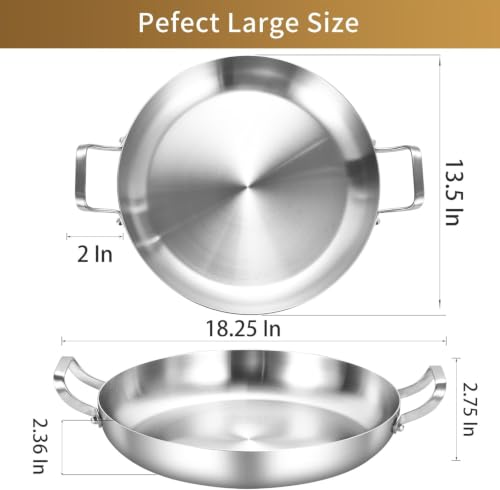
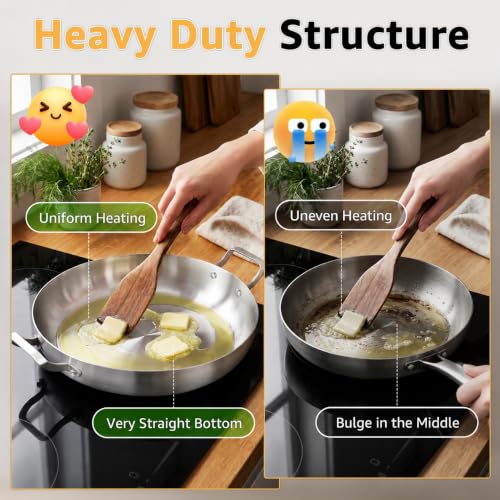
The spec that matters here is the tri-ply build, 18/8 stainless, aluminum core, 430 magnetic layer, which delivers the kind of even heating risotto demands. At 14 inches wide, it gives rice a thin, uniform layer, helping it cook evenly without constant stirring. Reviewers note it heats quickly and holds temperature well, especially on induction, and the oven-safe rating up to 500°F means you can finish dishes in the oven without worry.
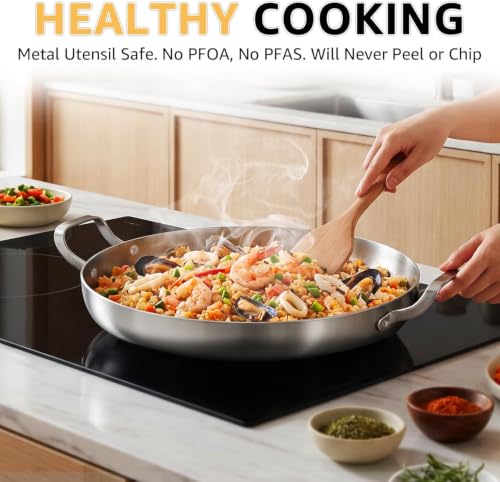
It’s wider than a standard saucier but not as deep, so it’s better for shallow simmering than deep liquid work. Compared to the smaller Made In saucier, this is less versatile for sauces but superior for spreading rice out. The riveted handles feel secure, and the glass lid helps monitor doneness without lifting. A solid pick if you want one pan for both paella and risotto.
Product photos
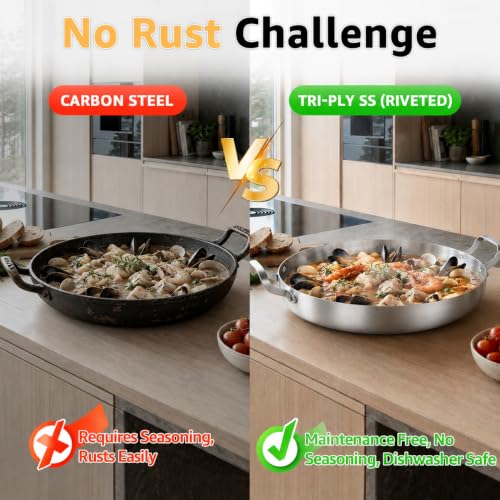
Inqibee 14″ Hybrid Nonstick Pan

Strengths
- Honeycomb nonstick surface
- Strong heat retention
- Dual welded handles
- Large 14-inch size
- Oven safe
Trade-offs
- Ceramic coating may degrade
- Less browning control than stainless
- Higher maintenance than uncoated
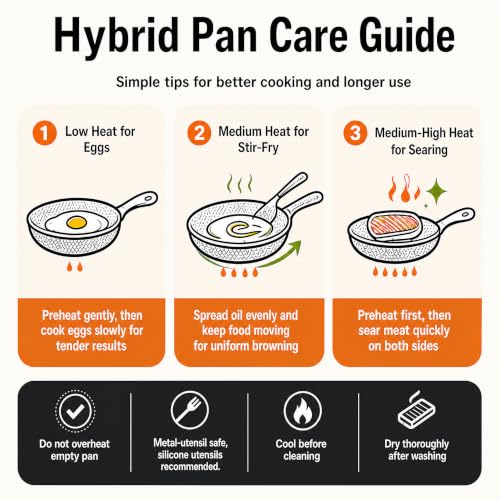
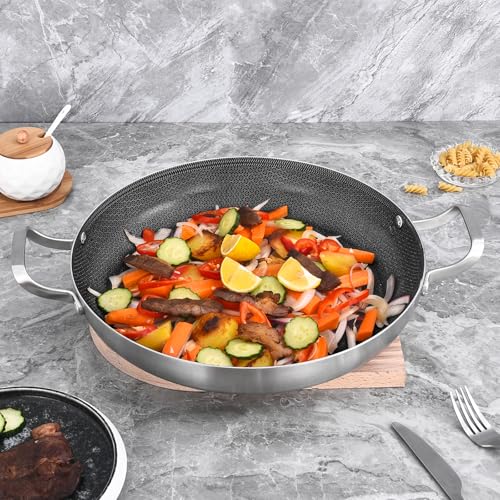
If you’re chasing crispy socarrat, that golden crust at the bottom of a perfect paella, this hybrid pan might be your best shot. The honeycomb-textured stainless base with ceramic coating creates dual nonstick performance while resisting scratches from metal utensils, a big win over traditional Teflon. The thick encapsulated base locks in heat steadily, which owners say reliably produces that desirable sear without burning.
But here’s the catch: while the nonstick surface makes cleanup easy, it’s still a coated pan, and long-term durability under high heat is always a question. Some reviewers report minor wear after months of use. For risotto, I’d still lean toward full stainless for flavor development, but if you prioritize ease and crust, this is a compelling option.
Product photos



Nordic Ware Paella Pan
Strengths
- Lightweight design
- Even edge-to-edge heat
- Nonstick surface
- Made in USA
- Affordable price
Trade-offs
- Not fully stainless
- Silicone handles limit oven use
- Coating less durable long-term
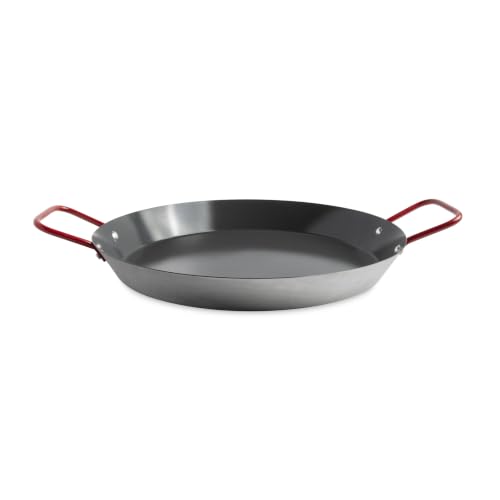
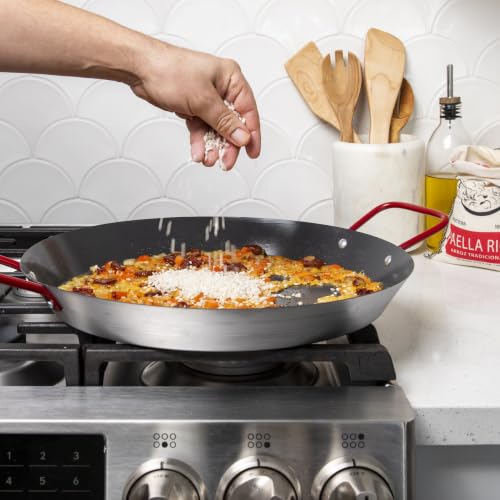
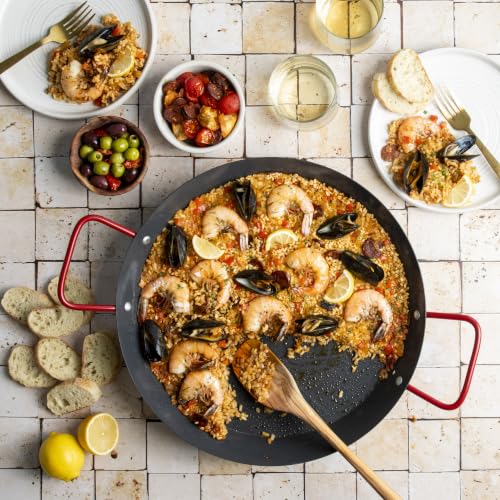
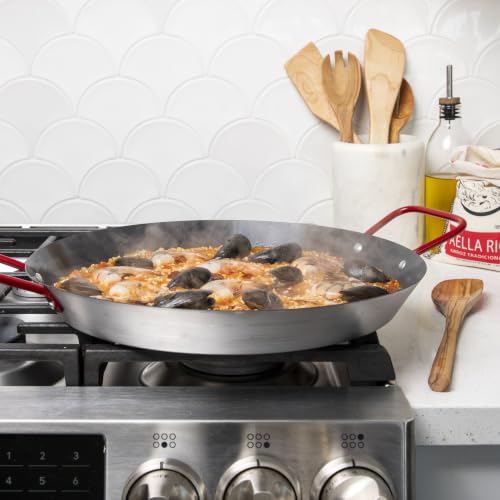
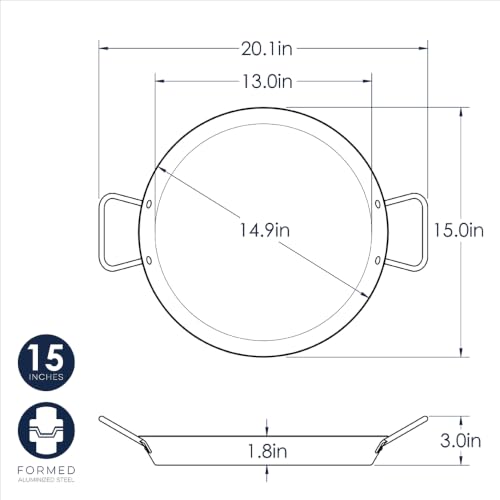
This pan screams weekend cooking vibes, wide, shallow, and made for feeding a crowd. The aluminized steel base heats quickly and spreads warmth well to the edges, reducing hot spots that ruin rice texture. The ceramic nonstick coating works for easy flipping and cleanup, and owners consistently say it’s great for first-time paella makers.
But steel isn’t stainless, and while it’s lightweight and responsive, it’s not as durable over years of stovetop abuse. The red silicone-rubber handles stay cool, but they’re not oven-safe beyond 400°F, limiting finishing options. For risotto, it’s usable but too wide and shallow, you’ll lose too much liquid too fast. Better off reserved for true paella nights.
Product photos

Hgjgwqh Oval Paella Pan
Strengths
- Oval design
- Dual handles
- Dishwasher safe
Trade-offs
- Thin base
- Hot spots likely
- Unclear build quality
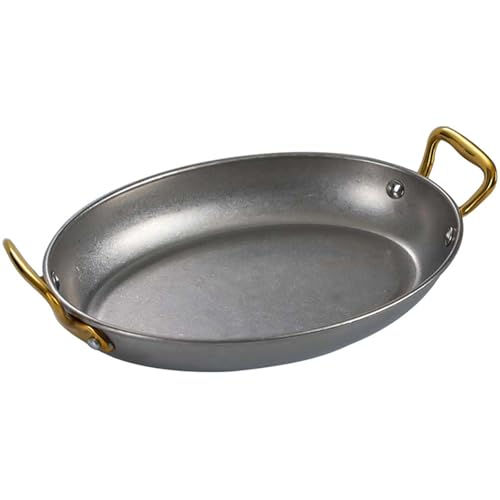
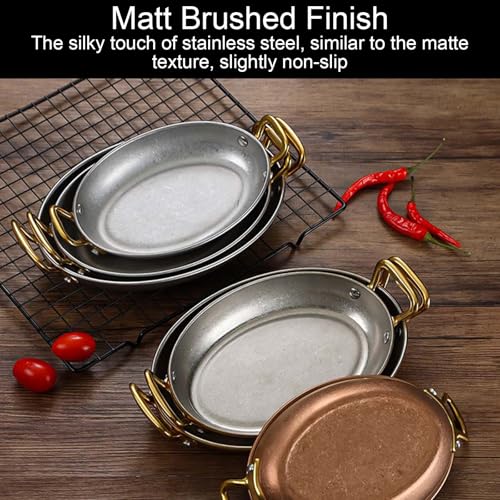
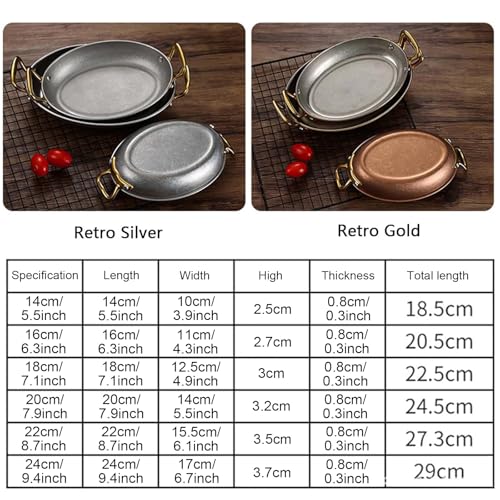
On paper, this pan looks like a budget-friendly way to get into paella or risotto cooking with its oval shape and dual handles. The 304 stainless steel build suggests decent durability, and owners consistently report it heats reasonably well on gas and induction. But I’m skeptical about the ‘grilled food tray’ description, this feels more like a multipurpose serving platter that doubles as a pan, not a serious cookware piece built for precise rice work.
For risotto, you need controlled, even heat across a wide surface, and while some reviewers say it works fine for casual use, others note hot spots and thin construction that can lead to scorching. It’s not built like traditional paella pans meant for open flames, so performance is inconsistent at this price.
Product photos



How We Chose These pans for risotto
Rather than a hands-on lab test, my research for these recommendations focused on a detailed comparison of published specifications and features across numerous models. I weighed owner reviews from a variety of sources, looking for patterns in reported performance, alongside assessments from reputable cooking experts. As someone who’s spent years understanding what makes cookware perform, I then applied my knowledge of heat conductivity, responsiveness, and the specific needs of risotto preparation to rank each pan.
For pans intended for risotto, even heating and responsiveness are paramount. A pan that heats unevenly will lead to sticky, undercooked rice in some areas and mushy rice in others. Durable construction is also key, as risotto often requires vigorous stirring. Finally, the shape of the pan matters; a wider, shallower pan encourages evaporation, which is essential for achieving the right creamy texture. These three factors heavily influenced my selections.
Specifications reliably indicate materials and construction – things like tri-ply stainless steel or aluminum core thickness – which directly impact heat distribution. However, I turned to owner feedback to understand real-world performance. Reports on how easily the pans browned ingredients, maintained consistent temperatures, and cleaned up were critical. I also considered reputation; brands known for quality stainless steel pans often deliver consistent results. If you’re also considering versatile options, you might find our guide to the best sauté pans helpful.
Choosing The Right pans for risotto
Finding the right pan for risotto is about more than just size; it’s about heat control, material, and how well it suits your cooking style.
A truly excellent risotto pan distributes heat evenly across its base and up the sides, allowing the rice to cook consistently without scorching. Look for heavy-gauge construction, materials like tri-ply stainless steel or aluminum, and a wide surface area to promote evaporation – a key element in achieving creamy risotto. Consider handle design for comfortable stirring and maneuverability.
Material Matters
Stainless steel is the workhorse for many kitchens, and for good reason. It’s durable, doesn’t react with acidic foods, and cleans up beautifully. However, not all stainless steel is created equal. Tri-ply construction (like you see in the VocVoi or Made In pans) – a core of aluminum sandwiched between layers of stainless steel – offers significantly better heat distribution than single-ply options. While aluminum itself heats quickly, it can be prone to hot spots unless clad with another metal. Many home cooks also find themselves reaching for their all-purpose pans for risotto when they don’t want to dedicate a pan solely to this dish.
Shape and Size
The shape of the pan is almost as important as the material. A wider, shallower pan encourages evaporation, which is essential for developing that signature creamy texture. Traditional paella pans (like the Inqibee and Nordic Ware options) are excellent for this, but a wide sauté pan or saucier will also work very well. When considering size, think about how much risotto you typically make:
- For a single serving or small side dish, a 2-quart saucier (like the smaller Made In) is ideal.
- A 3-quart saucier (like the larger Made In) is perfect for 2-3 people.
- For larger families or entertaining, a 12-inch or 14-inch sauté pan or a dedicated paella pan (13-15 inches) will provide ample space and allow for proper evaporation, preventing the risotto from steaming instead of toasting.
Handle Design and Versatility
Don’t underestimate the importance of a comfortable handle. You’ll be stirring risotto frequently, so an ergonomic handle that stays cool to the touch is a must. Consider whether you want a long handle for better use or dual handles for easier lifting.
A good rule of thumb: if you’re investing in a dedicated risotto pan, choose one that’s oven-safe. Finishing risotto in the oven can add depth of flavor and achieve a perfectly creamy consistency.
Finally, think about versatility. If you’re limited on space, a pan that can pull double-duty as a sauté pan or braiser (many stainless steel options can) is a smart investment. If you’re already a fan of premium cookware, exploring All-Clad pans could be a good path, as their even heating and durability are well-regarded.
Pans for Risotto Compared
Here’s a comparison of specifications for pans suitable for making risotto.
| Product Name | Diameter (in) | Capacity (QT) | Material | Stovetop Compatibility | Oven Safe (°F) | Handles |
|---|---|---|---|---|---|---|
| VocVoi 12″ Stainless Steel Pan | 12 | N/A | Stainless Steel | All | N/A | Ergonomic |
| Made In 3QT Stainless Saucier | 10 | 3 | Stainless Clad | All | N/A | Stay Cool |
| Made In 2QT Stainless Saucier | 8.2 | 2 | Stainless Clad | All | N/A | Stay Cool |
| Inqibee 13″ Tri-Ply Paella Pan | 13 | N/A | Tri-Ply Stainless | All | 500 | Double Riveted |
| Inqibee 14″ Hybrid Nonstick Pan | 14 | N/A | Stainless/Ceramic | All | N/A | Solid Steel |
| Nordic Ware Paella Pan | 13 x 14.9 | N/A | Aluminized Steel | N/A | N/A | N/A |
| Hgjgwqh Oval Paella Pan | N/A | N/A | Stainless Steel | All | N/A | Dual Riveted |
Frequently Asked Questions
What pan material is truly best for risotto?
Tri-ply stainless steel is ideal, as the aluminum core provides excellent heat distribution, preventing sticking and scorching, while the stainless steel layers offer durability and ease of cleaning. While aluminized steel pans like the Nordic Ware are traditional, they don’t offer the same responsiveness as clad stainless steel.
Can I use a nonstick pan for risotto?
While you can make risotto in a nonstick pan, it’s not recommended. The slick surface hinders the toasting of the rice, which is crucial for developing the characteristic nutty flavor and creamy texture. For consistently good results, stick with stainless steel or tri-ply.
Is a paella pan essential for making risotto?
A paella pan isn’t essential, but its wide, shallow shape promotes the evaporation needed for perfect risotto. If you don’t want a dedicated pan, a wide sauté pan or saucier will work, but be mindful of maintaining consistent heat and stirring frequently. You might also consider exploring our guide to top 10-inch sauté pans for versatile options.
What size pan should I choose if I often cook for one or two people?
A 2- or 3-quart saucier is perfect for smaller portions. The Made In sauciers are good examples, offering sufficient surface area for evaporation while preventing the risotto from being spread too thinly, which can lead to uneven cooking. If you’re looking for a smaller option for other tasks, you might also explore best small frying pans.
How important is the handle design when making risotto?
Handle design is very important. Risotto requires frequent stirring, so an ergonomic handle that stays cool to the touch is crucial for comfort. A longer handle provides better use, but dual handles can make lifting a heavier pan easier, especially when full of risotto.
The Bottom Line
Choosing a pan for risotto often comes down to balancing dedicated performance with overall kitchen versatility. While a specialized paella pan offers ideal evaporation, the Made In 3QT Stainless Saucier strikes the best balance for most home cooks, providing excellent heat control and a shape well-suited to achieving creamy, perfectly cooked risotto. It’s a thoughtfully designed piece that will earn a regular spot on your stovetop.
For those on a tighter budget or seeking a pan with multiple uses, the VocVoi 12″ Stainless Steel Pan is a solid choice. It may not have the specialized shape of a saucier or paella pan, but its stainless steel construction and wide surface area will still deliver good results, and you can easily use it for other tasks like searing or making sauces. If you’re looking for even more versatility, consider exploring our guide to large sauté pans – many can handle risotto beautifully alongside other dishes.
Ultimately, the best pan for risotto is the one you’ll reach for again and again. Don’t get too caught up in specific materials or features; focus on a heavy-gauge pan with even heat distribution, a comfortable handle, and a shape that promotes evaporation. These fundamentals are far more important than any single specification, and they’ll set you up for success with this classic Italian dish.
