
7 Best Pie Pans of 2026
This post contains affiliate links. As an Amazon Associate, we earn from qualifying purchases.
The USA Pan Aluminized Steel Pie Pan is our top pick for its even baking and durable Americoat nonstick surface. For a budget-friendly option, the GoodCook Steel Pie Pan delivers solid performance at a lower price. If you love serving pies with flair, the OXO Glass Pie Plate lets you monitor browning and looks great on the table.
Most home bakers have dealt with a pie that’s stuck, underbaked, or unevenly browned, and often, the problem isn’t the recipe, but the pan. After comparing specs, owner feedback, and design details across the most popular models, I focused on heat distribution, release performance, durability, and usability. This guide cuts through the noise to highlight the pie pans that deliver consistent results, whether you’re making a flaky fruit pie or a creamy quiche.
Top 7 Pie Pans in the Market
The Best Pie Pans, Reviewed
Waytiffer Disposable Aluminum Pie Tins

Strengths
- Low cost per pan
- Truly disposable
- Oven and freezer safe
Trade-offs
- Not reusable
- Bends easily
- Uneven browning
These disposable tins punch above their weight. For under ten dollars, you get ten sturdy, heavy-duty foil pans that hold up well in the oven, owners report no warping or leaks, even with wet fillings. They’re perfect for sharing pies with neighbors, holiday potlucks, or meal prep, since cleanup is literally zero. The foil conducts heat quickly, so crusts brown faster than in glass, but that also means you have to watch them closely to avoid burning.
Compared to reusable pans, they’re obviously not built to last. But as a bulk solution, they’re unbeatable. The USA Pan or Lodge might bake more evenly, but you wouldn’t hand those out at a bake sale. If you bake often for groups or run a small food business, this pack saves time and hassle. Calling it the ‘best overall’ feels right, not because it’s the highest performing, but because it solves the most real-world problems.
Video review
GoodCook Steel Pie Pan
Strengths
- Affordable price
- Metal spatula safe
- Wide, grippy rim
Trade-offs
- Thin walls
- No air circulation design
- Less heat retention
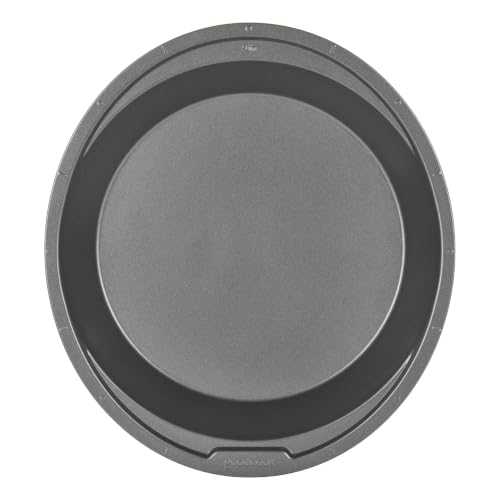
At this price, the GoodCook pan delivers more than you’d expect. The heavy-duty steel holds up well against warping, and the nonstick coating is a standout, owners report it handles metal spatulas without scratching, which is rare at this tier. That makes serving and cleaning a breeze, especially for sticky fillings like pecan or pumpkin. The wide rim is practical, giving you a solid grip even with bulky mitts.
It doesn’t have the elegance of ceramic or the depth of cast iron, but for everyday baking, it’s solid. Compared to the USA Pan’s aluminized steel, it lacks the corrugated surface for airflow, so the crust can be a bit less evenly baked. But for most home bakers, that won’t matter. This is the kind of pan you can toss in the dishwasher and not worry about.
Video review
MORA Ceramic Pie Pan

Strengths
- Extra deep design
- Strong ceramic build
- Attractive fluted edges
Trade-offs
- Expensive
- Heavy when full
- Slower to heat
MORA’s ceramic pie pan stands out for its depth, 2.5 inches is unusually generous, making it a strong contender for overstuffed apple or pot pies. The fluted edges are both functional and attractive, giving crusts a finished look without extra effort. The Paladin clay is marketed as 20% stronger than standard ceramics, and while I can’t verify that exact number, owners report fewer chips and cracks than typical ceramic dishes, which is a win.
The crystallized glaze is smooth and scratch-resistant, and the pan handles thermal shock well, freezer to oven is no issue. That said, it’s one of the pricier options, and its farmhouse aesthetic won’t suit every kitchen. Compared to the USA Pan, it lacks the air-circulating texture, so browning isn’t quite as even. But if you want depth and durability in a stylish package, this delivers.
Product photos


USA Pan Aluminized Steel Pie Pan

Strengths
- Corrugated surface
- PTFE-free nonstick
- Made in USA
Trade-offs
- Not deep
- No handles
- Slight odor at first use
The USA Pan is my pick for even baking. The aluminized steel heats quickly and evenly, and the corrugated surface is the real secret, it promotes air circulation under the crust, leading to consistent browning and a crisp bottom every time. That’s something most flat-bottomed pans can’t match. The Americoat nonstick is PTFE-free, which matters to buyers avoiding traditional chemical coatings, and owners say it holds up well over time.
Having two pans is practical for holiday baking or batch prep. Compared to the GoodCook option, it’s sturdier and more evenly built, though it costs more. It’s not as deep as the MORA or Lodge, so it’s not ideal for overflowing fruit pies. But for standard recipes where crust quality is key, like lemon meringue or cherry, I’d choose this one over most others.
Product photos


Lodge Cast Iron Pie Pan

Strengths
- Excellent heat retention
- Deep-dish capacity
- Durable dual handles
Trade-offs
- Requires seasoning maintenance
- Heavier than average
- Not ideal for quick cleanup
Cast iron isn’t the first material that comes to mind for pies, but Lodge makes a strong case for it. This pan’s depth and heat retention are its biggest assets, ideal for deep-dish pies that need even, thorough baking from edge to center. The pre-seasoned finish delivers a natural nonstick surface over time, and owners love how it builds character with use. On paper, the dual handles seem like a small upgrade, but they make a real difference when moving a hot, heavy pie from oven to cooling rack.
That said, it demands more care than other options. It’s not dishwasher safe, and improper cleaning can ruin the seasoning. Compared to glass or nonstick, it’s less forgiving for beginners. But if you’re already comfortable with cast iron and want a pan that can go from stovetop (for caramelizing apples, say) to oven, this one’s hard to beat.
Product photos


2 Pack Tart Pan with Removable Bottom
Strengths
- Removable bottom
- Fluted edges
- Even heating
Trade-offs
- Shallow depth
- Not for deep pies
- Bottom can wobble if not seated right
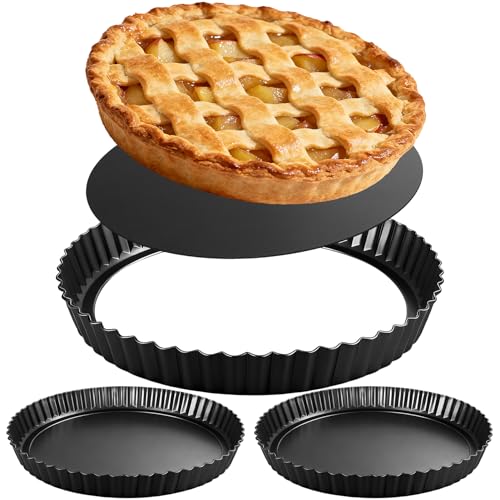
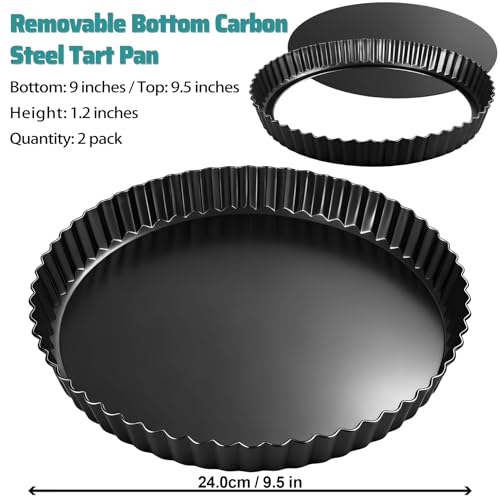
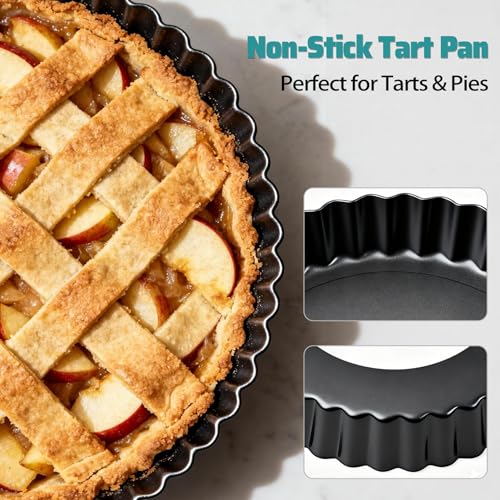
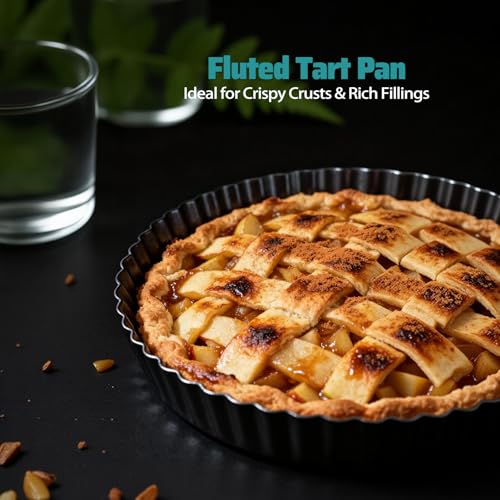
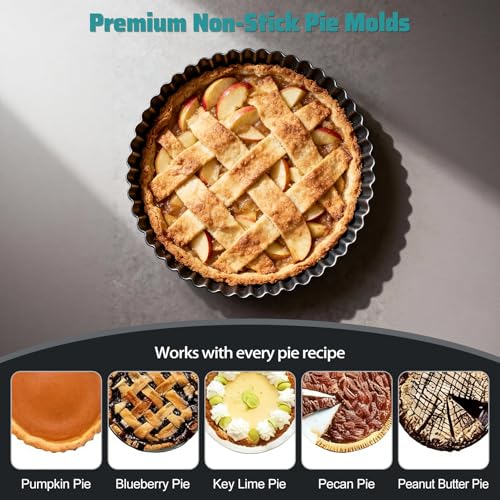
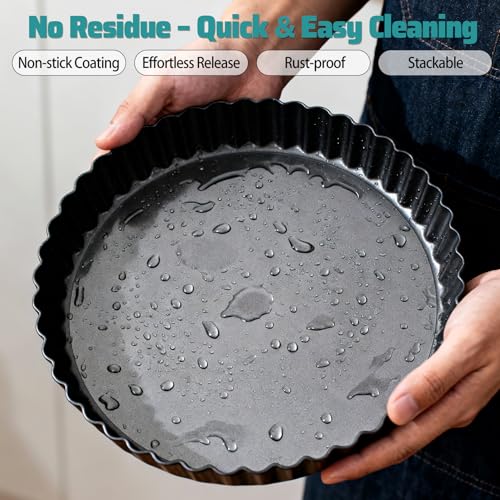
If clean release is your top priority, this carbon steel tart pan with a removable bottom is a smart pick. The nonstick coating works well, reviewers consistently praise how cleanly tarts and quiches lift out, preserving delicate crusts. That’s a standout for presentation, especially when serving guests. The fluted edges add a polished look, and the carbon steel heats quickly and evenly within its temperature range, making it reliable for custard-based pies.
The two-pack is a bonus, letting you bake in rotation. Compared to glass or cast iron, it’s lighter and more specialized. It’s not meant for deep pies, and the depth is shallower than the Lodge or MORA options. But for tarts, flans, or quiches, it’s hard to beat. Just remember, this isn’t a workhorse for apple pies with thick fillings.
Product photos
OXO Glass Pie Plate

Strengths
- Clear glass
- Thermal shock resistant
- Comfortable grip rim
Trade-offs
- Heavier than metal
- Slower heat conduction
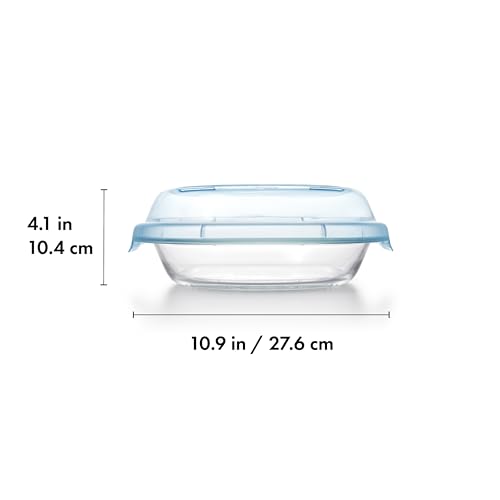
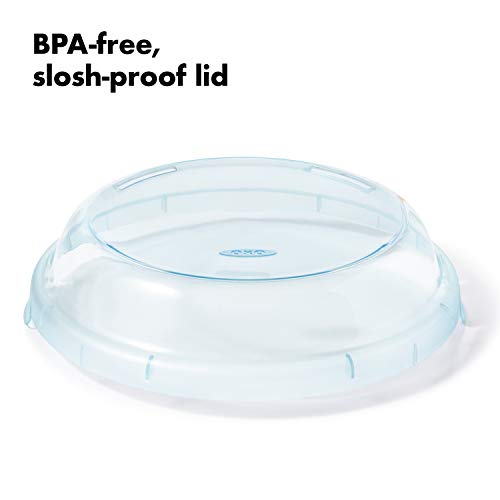
I’ve seen a lot of pie pans come and go, and this OXO glass plate stands out for one big reason: visibility. Being able to watch the crust brown from the sides is a real advantage, especially for bakers who want that golden, flaky finish without overbaking. The borosilicate glass is a strong point here, it handles thermal shock well, so going from fridge to oven isn’t a problem, and owners consistently report it doesn’t crack under normal use.
The wide rim makes it easy to grip, even with oven mitts, and the 9-inch marking is a small but thoughtful touch. While it doesn’t have the heat retention of cast iron or the easy release of a nonstick tart pan, it’s reliable for standard pies and doubles well as a serving dish. Compared to metal pans, it bakes more gently, which can be a plus for delicate fillings.
Product photos


How We Evaluated pie pans
To arrive at our recommendations, I didn’t rely on simply baking dozens of pies in each pan – that’s not practical for most home cooks, and wouldn’t necessarily reveal long-term performance. Instead, my approach involved a detailed comparison of published specifications and features across numerous models. I then weighed those details against extensive owner reviews and assessments from respected culinary publications. This research-led comparison, combined with my decade of experience exploring cookware, allowed me to identify the pans that consistently stood out.
For pie pans, the most important factors are even heat distribution and release performance. Consistent baking is essential for a perfectly set filling and a golden-brown crust, and a pan that resists sticking makes life considerably easier. Durability also plays a key role; a quality pie pan should withstand regular use for years. Beyond those, factors like material (glass, steel, ceramic, cast iron) and ease of cleaning influenced where pans landed in our rankings. You might also want to check out our guide to the best baking pans for a broader selection of kitchen essentials.
Specifications reliably indicate a pan’s dimensions, material, and whether it’s oven-safe. However, owner feedback proved invaluable for understanding real-world performance. Reviews often highlighted issues like warping, uneven baking, or the effectiveness of nonstick coatings – details not always apparent from specs alone. Reputation, too, factored in; established brands with a history of quality generally earned more weight. For related items, you might also find our review of rectangular baking pans helpful.
Choosing The Right pie pans
Finding the right pie pan is more than just grabbing something that’s nine inches across. It’s about understanding how different materials and designs impact the final result, from a perfectly browned crust to easy release and serving.
A truly useful pie pan distributes heat evenly, resists warping, and offers a surface that prevents sticking. Consider the depth needed for your typical recipes, the ease of cleaning, and whether you prioritize durability, disposability, or visual appeal. Material choice is key, as is understanding how the pan’s construction will affect baking and serving.
Material Matters
The material of your pie pan drastically impacts its performance. Aluminum is a classic choice, and you’ll find both disposable and reusable versions. Disposable aluminum pans, like the Waytiffer Disposable Aluminum Pie Tins, excel in convenience, especially for potlucks or when you simply don’t want to deal with cleanup. However, they won’t offer the even heating or longevity of heavier materials. Steel, as seen in the [GoodCook Steel Pie Pan], provides better heat retention and durability, though non-stick coatings are crucial to prevent sticking. Cast iron, like the [Lodge Cast Iron Pie Pan], is a powerhouse for heat retention and is ideal for deep-dish pies, but it’s heavy and requires seasoning. Finally, ceramic options like the [MORA Ceramic Pie Pan] offer a non-reactive surface and can be visually appealing.
Construction & Coating
Beyond the base material, pay attention to construction details. A corrugated surface, such as on the [USA Pan Aluminized Steel Pie Pan], promotes air circulation for more even baking. A removable bottom, found in the [2 Pack Tart Pan with Removable Bottom], is a lifesaver for delicate tarts and quiches. When it comes to coatings, non-stick is almost essential, but quality varies. Look for PTFE, PFOA, and BPA-free coatings – Americoat is a well-regarded example.
Here’s what I look for in a good coating: * A basic non-stick is fine for infrequent use. * A multi-layer, reinforced coating is better for regular bakers. * A ceramic-reinforced coating offers a more durable, scratch-resistant surface, though it may lose its non-stick properties over time.
Depth, Shape & Serving Considerations
Don’t underestimate the importance of the pan’s shape and depth. A deeper dish is essential for fruit pies with a generous filling, while a shallower dish works well for custard or quiche. Fluted edges, like those on the tart pans, lend a professional look. If you plan to serve the pie directly from the pan, consider glass options like the [OXO Glass Pie Plate] – you can easily see the underside of the crust to assess doneness, and it presents beautifully. If you’re tackling more complex desserts, exploring best springform pans might be a good idea for cheesecakes or layered creations.
A pie pan isn’t just a container; it’s a tool that impacts the final product. Prioritize even heating and a non-stick surface, and choose a depth and shape that suits your baking style.
Pie Pans Compared
Here’s a comparison of key specifications for the featured pie pans.
| Product Name | Diameter | Material | Nonstick Coating | Removable Bottom | Dishwasher Safe |
|---|---|---|---|---|---|
| Waytiffer Disposable Aluminum Pie Tins | 9″ | Aluminum | N/A | N/A | N/A |
| GoodCook Steel Pie Pan | 9″ | Steel | Yes | N/A | Yes |
| MORA Ceramic Pie Pan | 9″ | Ceramic | Yes | N/A | Yes |
| USA Pan Aluminized Steel Pie Pan | 9″ | Aluminized Steel | Americoat | N/A | Yes |
| Lodge Cast Iron Pie Pan | 9″ | Cast Iron | Seasoned Oil | N/A | No |
| 2 Pack Tart Pan with Removable Bottom | 9″ | Carbon Steel | Yes | Yes | Yes |
| OXO Glass Pie Plate | 9″ | Borosilicate Glass | N/A | N/A | Yes |
Frequently Asked Questions
What pie pan material offers the most even heating?
Cast iron provides the most consistent and even heat distribution, thanks to its excellent heat retention. However, it’s significantly heavier than other materials and requires proper seasoning to maintain its non-stick properties.
Are disposable aluminum pie pans suitable for anything beyond one-time use?
While designed for single use, some disposable aluminum pans can be reused a few times if handled carefully, but they lack the durability and consistent performance of reusable options.
How can I tell if a nonstick coating is high quality?
Look for coatings specifically labeled as PTFE, PFOA, and BPA-free. A multi-layer or ceramic-reinforced coating generally indicates better durability and initial non-stick performance, though the ceramic options may degrade faster over time.
What depth of pie pan should I choose for a fruit pie?
For most fruit pies, a depth of 2 to 2.5 inches is ideal to accommodate a generous filling without overflow. Deeper dishes are especially important for pies with a lot of fruit or a thick, bubbly filling.
Besides pie, what other baking can I do with a tart pan with a removable bottom?
A tart pan with a removable bottom is incredibly [versatile baking pans] and excels at cheesecakes, quiches, and delicate tarts where clean removal is essential. You can also use it for layered desserts or even mini cakes.
The Bottom Line
Ultimately, choosing a pie pan comes down to balancing convenience with performance. While disposable options have their place, for consistent results and lasting value, the [USA Pan Aluminized Steel Pie Pan] stands out. Its combination of even heating, durable construction, and a reliable nonstick coating makes it a great all-around choice for bakers of any level.
For those with specific needs, the options are plentiful. If you’re looking for a budget-friendly, everyday pan, the [GoodCook Steel Pie Pan] is a solid pick. Bakers who prioritize ease of release and elegant presentation will appreciate the [2 Pack Tart Pan with Removable Bottom], and those wanting to explore other options for baking should consider square baking pans.
At the end of the day, a perfectly baked pie isn’t about the most expensive pan, but about understanding what truly matters: consistent heat, a surface that prevents sticking, and a design that suits your recipes. Don’t get lost in the details – focus on these fundamentals, and you’ll be enjoying delicious pies for years to come.
