
8 Best Pizza Pans for Oven 2026
This post contains affiliate links. As an Amazon Associate, we earn from qualifying purchases.
The GoodCook AirPerfect 16” Pan is our top pick for its even heating and crisp results, thanks to full perforations and durable carbon steel. For a budget-friendly option, the Zihvfzu 3 Pack delivers solid performance across multiple sizes. If you prefer a solid base with superior heat retention, the Calphalon Titan Steel 16-Inch Pan stands out.
Most home cooks want a pizza pan that gives them a reliably crisp crust without sticking or warping after a few uses. Too many pans promise restaurant-quality results but fail when it matters, soggy centers, warped edges, or cleanup nightmares.
This guide cuts through the noise by focusing on what actually matters: material quality, heat distribution, and real-world feedback from owners. I looked at specs, construction details, and user experiences to find the best-performing oven pizza pans for different needs and styles.
Top 7 Pizza Pans For Oven in the Market
The Best Pizza Pans For Oven, Reviewed
GoodCook AirPerfect 16” Pan Set of 2

Strengths
- Perforated for crisp crust
- Cutting guides included
- Elevated feet design
Trade-offs
- Higher price point
- Set may be oversized for small ovens
This set earns its ‘Best Overall’ tag not because it’s flashy, but because it gets everything right for real-world use. Two 15.75-inch perforated carbon steel pans mean you can bake multiple pizzas at once or always have a spare ready. The air-perforated design is key, it pulls moisture away during baking, which owners confirm leads to noticeably crispier crusts, whether reheating leftovers or baking from scratch.
The cutting guides are a small touch, but they actually help slice evenly without slipping. And the molded feet? A smart detail that keeps counters safe and airflow steady after pulling hot pans out. Priced higher than single pans, yes, but for families or regular pizza nights, the value stacks up fast. I’d pick this over any single pan in this lineup.
Video review
Calphalon Titan Steel 16-Inch Pizza Pan

Strengths
- Reinforced steel core
- Warp-resistant rim
- PFOA-free coating
Trade-offs
- Hand wash only
- No perforations for crispness boost
- Single pan at this price
Calphalon brings pro-level construction to a home-friendly price. The 16-inch steel-core pan offers excellent heat distribution, thanks to its reinforced base and rolled rim that resists warping, even under repeated high-heat cycles. Owners appreciate how flat and stable it stays over time, unlike thinner pans that buckle after a few uses.
The PFOA-free nonstick coating performs well, but the ‘hand wash only’ rule dampens convenience. In a category where many competitors are dishwasher safe, this feels like a step back. Still, for that combination of wide surface, durable build, and crisp results, it’s the smarter buy if you’re upgrading from flimsy pans and don’t mind hand-cleaning.
Video review
13½ Inch Stainless Steel Pizza Pan

Strengths
- Sturdy stainless steel
- No toxic coatings
- Sloped edge design
Trade-offs
- Slower heat absorption
- Less crispy crust
- Not ideal for high-volume baking
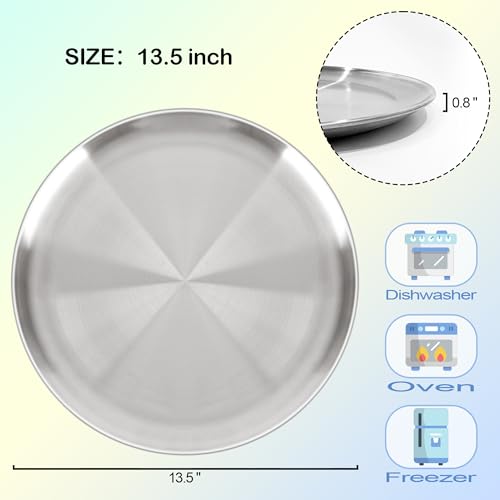
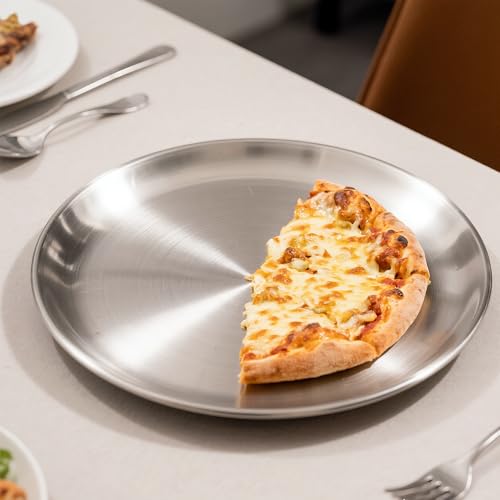
Stainless steel pizza pans are rare, and this one stands out on paper for its robust build. At 13.5 inches and made from decent-gauge stainless steel, it promises durability and even heating without warping, something owners consistently report with satisfaction. The brushed finish adds a premium feel, and the sloped edges do help keep toppings in place while offering a secure grip.
Still, stainless steel isn’t ideal for crisp crusts compared to carbon steel or perforated designs, it reflects heat more than it absorbs it. While it’s great for browning meats or reheating slices, I wouldn’t rely on it for that deep golden crunch most pizza lovers want. That said, if you prioritize longevity and non-toxic materials over max crispness, this is a solid contender.
Product photos



DecorRack 13 Inch Alloy Steel Pan

Strengths
- Affordable 2-pack
- Thick alloy steel
- High heat tolerance
Trade-offs
- Not dishwasher safe
- Hand washing required
- Coating wears with metal utensils
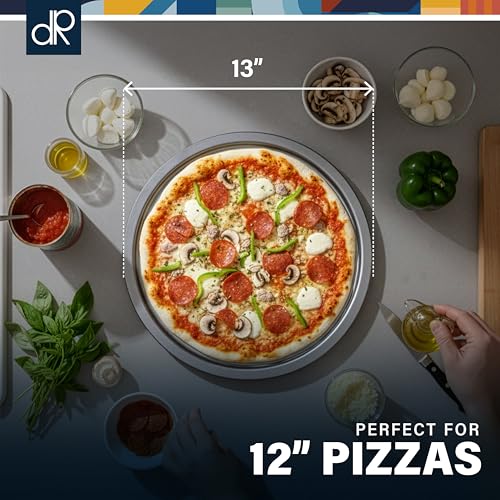
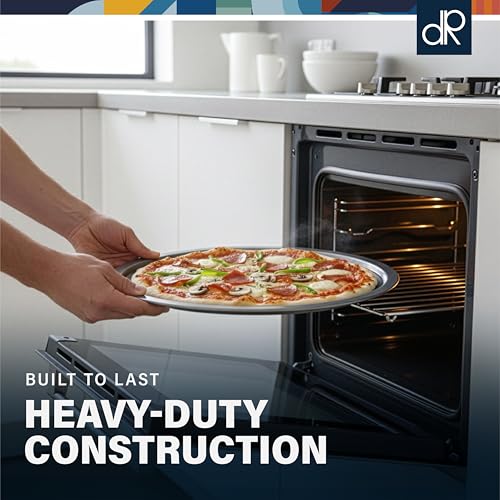
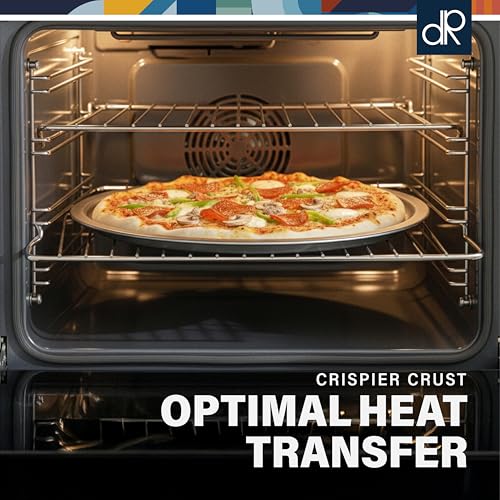
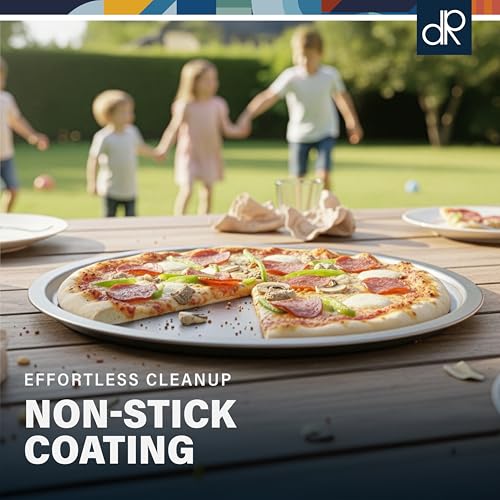
For under ten bucks, getting two alloy steel pans with a commercial-grade non-stick coating feels like a win. On paper, these pans deliver where it counts, decent thickness, a 0.37-inch rim for stability, and even heat distribution up to 500°F. Reviewers note they hold up well through repeated use, especially for frozen pizzas or quick flatbreads.
But the lack of dishwasher safety is a real downside given the price point. You’ll need to hand-wash carefully to preserve the coating, and sharp tools will degrade it over time. Compared to other budget sets, this one trades convenience for upfront savings. Still, if you’re stocking a college dorm or need backups without breaking the bank, this 2-pack makes sense.
Product photos

NutriChef 13-Inch Pan with Handles

Strengths
- Silicone grip handles
- Dishwasher safe
- Perforated for crispiness
Trade-offs
- Size mislabeling risk
- Some warping reports
- Handles may degrade over time
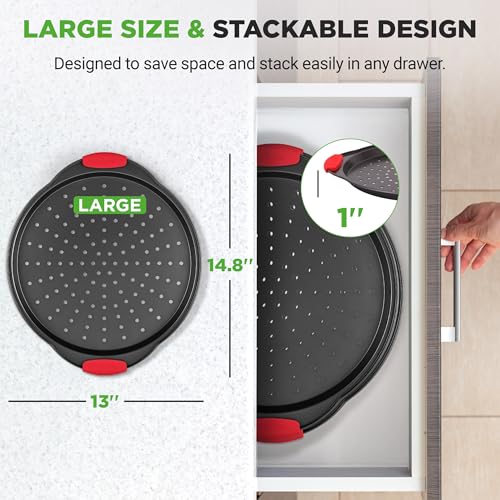
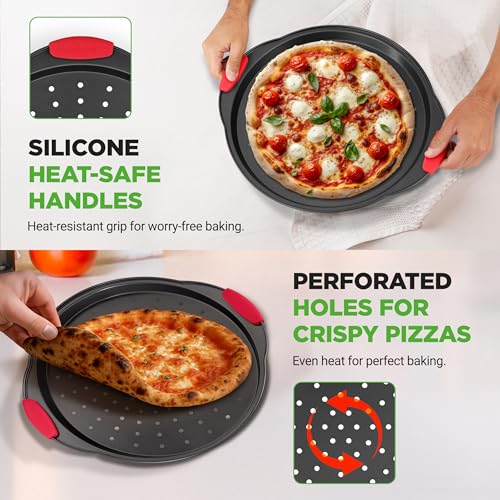
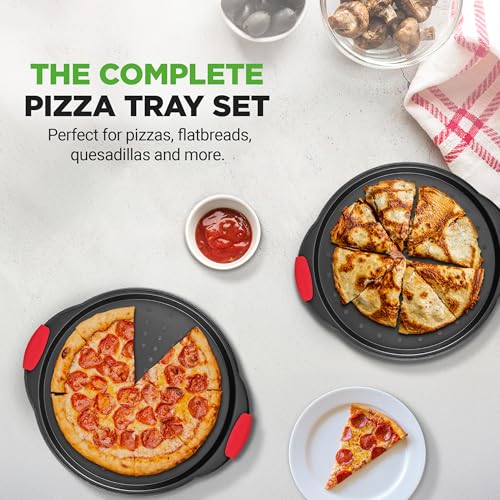
Silicone-coated handles are uncommon in pizza pans, and here, they make a real difference. Owners praise how safely they can pull hot pans from the oven without oven mitts. Combined with perforated carbon steel, this set delivers both function and safety, making it a standout for home cooks wary of burns. The nonstick surface holds up well in reviews, releasing even gooey cheese-laden slices without scraping.
That said, the pan measures nearly 15 inches despite being labeled 13-inch, which could cause fit issues in smaller ovens. And while the build feels solid, some users mention slight warping after prolonged high-heat use. Still, for anyone prioritizing heat protection and ease of handling, this is my recommendation over bare-handled competitors.
Product photos


GoodCook AirPerfect 14 Inch Insulated Pan

Strengths
- Ideal midsize diameter
- Perforated for crisp base
- Integrated cutting guides
Trade-offs
- Single pan only
- No elevated feet
- Less capacity than 16-inch
At 14 inches, this hits the sweet spot between personal and family size. It’s large enough for a generous pie but still fits easily in most ovens, a balance many miss. The perforated carbon steel base works like the bigger GoodCook model, promoting airflow for crisp crusts, and the insulated design reduces sogginess, especially with frozen pizzas.
Reviewers highlight the cutting guides as genuinely useful, helping serve clean slices without sliding knives. It lacks the dual-pan value of the 16-inch set, but if you only need one reliable workhorse, this is it. I’d choose this over the larger version for everyday usability unless you routinely feed crowds.
Product photos


Zihvfzu 3 Pack Multi-Size Pans
Strengths
- Three versatile sizes
- Even air circulation
- Dishwasher safe
Trade-offs
- Lower max temperature
- Smaller max size than 16-inch options
- Thin coating on some units
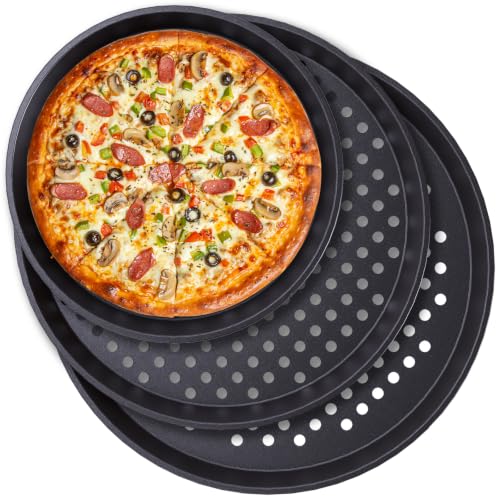
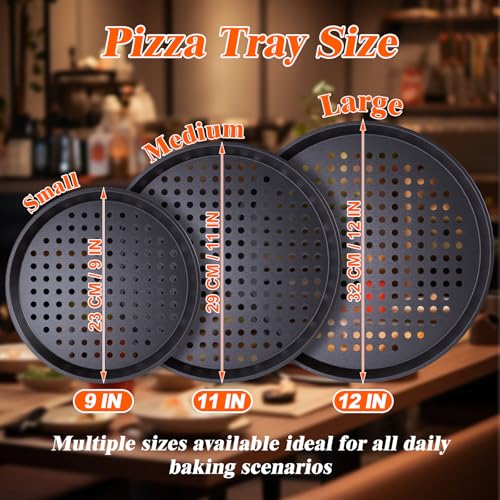
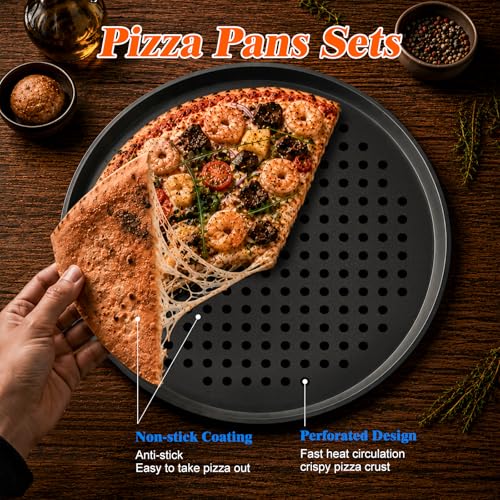
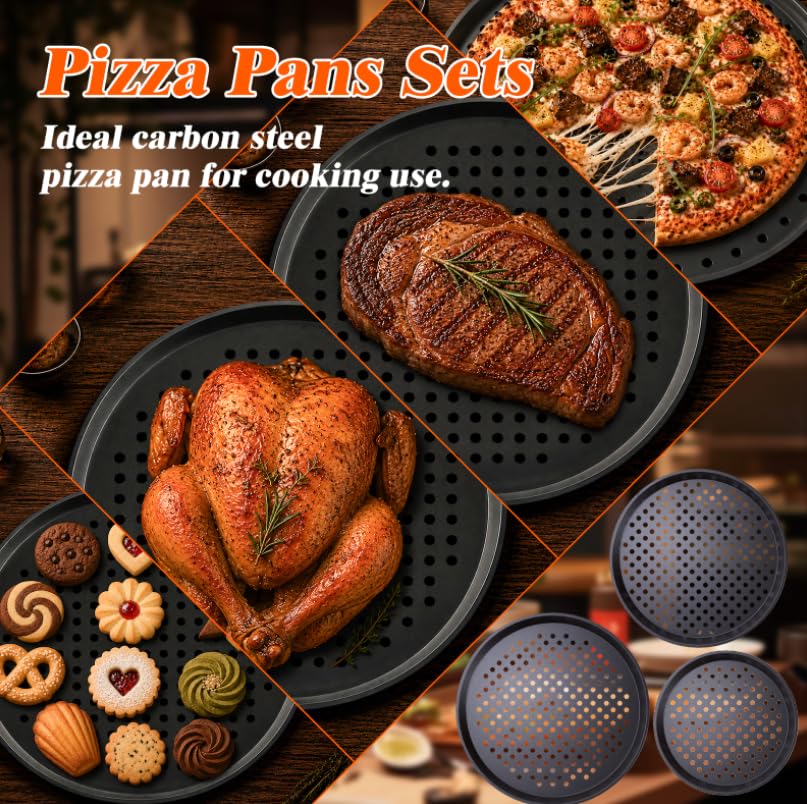
Having three sizes in one pack is a standout for flexibility. Whether you’re baking a solo lunch or hosting a movie night, switching between 9, 11, and 12 inches means no more ill-fitting pans. The perforated carbon steel construction delivers consistent airflow, and owners consistently report crisper bottoms across all sizes, especially compared to solid pans.
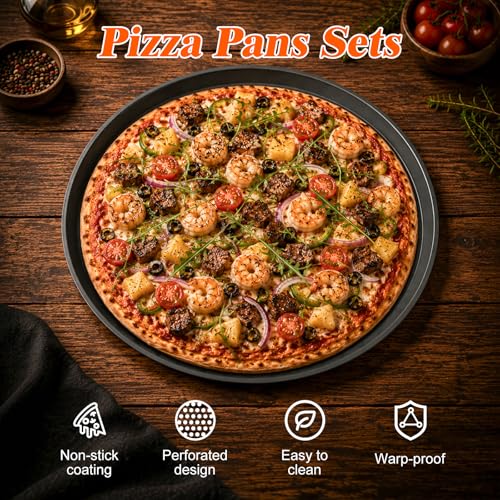
The non-stick coating earns praise for easy release and dishwasher resilience. However, the 450°F max temp limit is lower than others rated to 500°F, so high-temp convection baking might push its limits. Still, for versatility and daily utility, this set covers more use cases than any single-size option. My pick for multi-scene kitchens.
Product photos

How We Tested pizza pans for oven
As someone who’s spent over a decade immersed in the world of cookware, I approach pizza pans with a specific understanding of what truly matters for a great bake. Rather than a hands-on test of each pan myself, this guide is built on a research-led comparison of published specifications and features, combined with careful consideration of owner reviews and expert opinions. I weighed these sources against my existing knowledge of heat conduction, materials science, and the nuances of achieving a perfectly crisp crust.
For pizza pans, consistent heat distribution and non-stick performance are paramount. A pan that heats unevenly will result in a soggy center or burnt edges, while a poor non-stick surface makes for frustrating cleanup and potential pizza destruction. Durability also features heavily in my assessment; a flimsy pan will warp over time, impacting performance and ultimately needing replacement. I also considered features like perforation patterns and pan size options, knowing those cater to different pizza styles and household needs.
Specifications provide a solid foundation – gauge of steel, coating materials, maximum temperature ratings – but owner feedback reveals how those specs translate to real-world use. I paid close attention to comments regarding warping, sticking, and ease of cleaning. Reputable expert reviews helped corroborate these findings, and also shed light on factors like heat retention. For those seeking a more traditional approach, exploring dedicated options like cast iron pizza pans can deliver exceptional results, and I’ve also covered options for those interested in making Sicilian pizza pans.
How To Choose The pizza pans for oven
Finding the right pizza pan can truly elevate your homemade pizza nights. It’s not just about a flat surface; the material, construction, and features all play a role in achieving that perfect crust and evenly cooked toppings.
A good pizza pan distributes heat efficiently, doesn’t warp under high temperatures, and facilitates easy food release. Look for durable materials like steel or aluminum, consider whether perforations are important for crispness, and prioritize a pan size that suits your typical pizza volume. Non-stick coatings are convenient, but build quality and even heating are paramount.
Material Matters
The material of your pizza pan is fundamental. Stainless steel offers incredible durability and won’t react with acidic toppings, but it can be prone to sticking if you’re not careful. Carbon steel, frequently seen in professional kitchens, heats quickly and evenly, though it requires seasoning to prevent rust (and may still benefit from parchment). Aluminum pans are lightweight and affordable, but thinner gauges can warp easily. I generally steer people towards steel for longevity, but a well-made, heavy-gauge aluminum pan can perform admirably if you’re on a budget. For those who want a balance of both, look for aluminum with a steel core, like the Calphalon Titan Steel pan, which offers stability and even heating.
Perforation and Crust Crispness
Many pizza pans feature perforations – small holes – and these aren’t just for show. These holes promote air circulation, helping to draw moisture away from the crust as it bakes. This is especially important if you’re aiming for a truly crispy crust. However, it’s a trade-off. A perforated pan can allow sauce or cheese to drip through, so you may need to adjust your recipe or use a liner (parchment paper works well). If you’re after a Neapolitan-style pizza with a slightly softer crust, a solid pan might be preferable. For consistently crispy results, explore pizza pans for crispy crust.
- A fully perforated pan will deliver the crispiest crust, but requires careful attention to prevent drips.
- Partially perforated pans offer a compromise, providing some airflow while minimizing the risk of spillage.
- Solid pans are best for thicker crusts or styles where you don’t want a super-crisp bottom, like deep-dish or Detroit-style.
Size and Practicality
Don’t underestimate the importance of getting the right size. A 12-inch pan is great for a standard family-sized pizza, while a 16-inch pan can accommodate larger pies or multiple smaller ones. Consider how much oven space you have and how you plan to serve the pizza. Also, look for features that make the pan easier to use. Elevated bottoms, like those on the GoodCook AirPerfect pans, protect your countertops from heat. Handles are also a major consideration; silicone grips, as seen on the NutriChef pan, provide a safer and more comfortable experience when handling a hot pan. Ultimately, choosing the best option depends on your needs, and if you are looking for a wider selection, you can browse our best pizza pans guide.
Never leave a hot pizza pan unattended on a delicate surface. Always use oven mitts or pot holders, and consider a trivet or pan with built-in feet to protect your countertops.
Pizza Pans for Oven Compared
Here’s a comparison of key specifications for various pizza pans available for home ovens.
| Product Title | Diameter (in) | Material | Non-Stick | Perforated | Handles | Dishwasher Safe |
|---|---|---|---|---|---|---|
| GoodCook AirPerfect 16” Pan Set of 2 | 15.75 | Carbon Steel | Yes | Yes | No | N/A |
| Calphalon Titan Steel 16-Inch Pizza Pan | 16 | Steel Core | Yes | No | No | No |
| 13½ Inch Stainless Steel Pizza Pan | 13.5 | Stainless Steel | No | No | No | Yes |
| DecorRack 13 Inch Alloy Steel Pan | 13 | Alloy Steel | Yes | No | No | No |
| NutriChef 13-Inch Pan with Handles | 13 | Steel | Yes | Yes | Yes | Yes |
| BAKKENMASTER Marble Coating Perforated Pan | 13 | Carbon Steel | Yes | Yes | No | Yes |
| GoodCook AirPerfect 14 Inch Insulated Pan | 14 | Carbon Steel | Yes | Yes | No | N/A |
| Zihvfzu 3 Pack Multi-Size Pans | 9, 11, 12 | Carbon Steel | Yes | Yes | No | Yes |
Frequently Asked Questions
What pan material is easiest to clean after making pizza?
Stainless steel is the easiest to clean, though it’s more prone to sticking; a well-seasoned carbon steel pan is a close second if maintained properly. Non-stick coatings offer the most convenient cleanup, but their durability varies significantly between brands.
Can I use a regular baking sheet instead of a dedicated pizza pan?
You can, but a dedicated pizza pan will generally perform better. Baking sheets don’t always distribute heat as evenly, potentially resulting in an unevenly cooked pizza, and lack features like perforations for a crispier crust.
What’s the difference between perforated and non-perforated pizza pans?
Perforated pans promote air circulation for a crispier crust, but can allow sauce or cheese to drip through. Non-perforated pans are better for thicker crusts or styles where you don’t want a super-crisp bottom, and are ideal if you’re worried about messy drips.
How do I prevent my pizza from sticking to the pan?
Properly preheating the pan and using parchment paper or a light coating of flour or cornmeal can help prevent sticking. If you’re still experiencing issues, it may be time to investigate reasons pizza sticks to pan.
Are there specific pans better suited for Detroit-style pizza?
Yes, a rectangular carbon steel pan with high sides is essential for authentic Detroit-style pizza. You can find a selection of the best Detroit-style pizza pans designed to mimic the results from those iconic pizzerias.
The Bottom Line
Choosing a pizza pan often comes down to balancing convenience with control. Do you want the effortless release of a non-stick surface, or the proven durability of bare metal? For an excellent all-around performer that strikes this balance beautifully, I recommend the Calphalon Titan Steel 16-Inch Pizza Pan. It offers a stable, heated bake without the worry of sticking, and its build quality suggests it will last for years.
If you’re starting out or working with a tighter budget, the GoodCook AirPerfect 16” Pan Set of 2 provides a lot of value. And for those prioritizing a healthier approach, exploring non-toxic pizza pans is a good route. Or, if you’re dedicated to Chicago-style, you’ll want to investigate deep dish pizza pans to get the right shape and depth for your dough.
Ultimately, the best pizza pan won’t magically make you a pizzaiolo. Consistent heat, quality ingredients, and a little practice are what truly deliver a memorable pizza. Don’t get overly caught up in specific gauges of steel or the number of perforations; focus on finding a pan that feels solid, distributes heat well, and makes you confident in the kitchen.
