
8 Best Portable Induction Cookers of 2026
This post contains affiliate links. As an Amazon Associate, we earn from qualifying purchases.
The Nuwave Gold Precision Cooktop is the best overall portable induction cooker, offering precise temperature control and reliable performance. For a budget-friendly option, the Amazon Basics 1800W Induction Cooktop delivers solid basics without breaking the bank. If you want advanced features like probe monitoring, the Nuwave Diamond with Probe stands out for serious cooks.
Buying a portable induction cooker shouldn’t mean sacrificing control or safety. Many models promise high power but fall short on consistent heat or intuitive operation, leaving you frustrated during everyday cooking.
This guide cuts through the noise, focusing on real-world performance, safety, and usability. I researched each model based on specs, owner feedback, and my experience with cookware compatibility, so you can choose one that truly fits your kitchen needs.
Top 8 Portable Induction Cookers in the Market
The Best Portable Induction Cookers, Reviewed
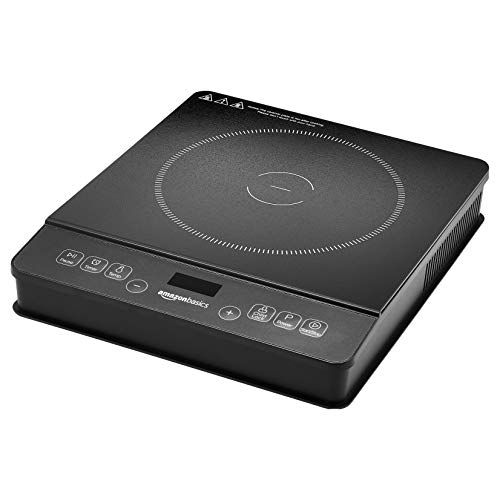
Amazon Basics 1800W Induction Cooktop
Strengths
- Affordable
- Easy cleanup
- Solid safety suite
Trade-offs
- No fine temp control
- Limited preset modes
For a no-frills, dependable induction burner that won’t drain your wallet, the Amazon Basics model stands out as the most sensible starting point. It delivers exactly what it promises: solid performance across eight power levels and a usable temperature range up to 440°F, which covers everything from simmering sauces to boiling pasta water. The LED display is clear, the controls are straightforward, and owners consistently report it holds up well under regular home use, especially in tight spaces like dorms or RV kitchens.
What makes this unit shine is its balance of safety and simplicity. With overheat protection, a child lock, and auto-pause functionality, it’s one of the more secure budget options on the market. While it lacks the ultra-fine tuning of pricier models, I’d still pick this over flashier units if you just need reliable, consistent heat without complications. Compared to others in this list, it doesn’t wow with specs, but for most casual users, it’s the smarter buy.
Video review
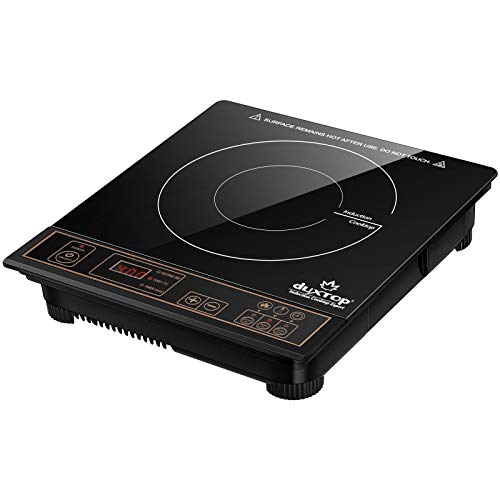
Duxtop 8100MC Portable Cooktop
Strengths
- Proven track record
- Fine power adjustment
- Error detection system
Trade-offs
- Basic interface
- Occasional high-pitch noise
Duxtop has been in the induction game longer than most, and their 8100MC reflects that experience, a no-nonsense workhorse favored by many who want consistency without bells and whistles. With 15 power levels and a wide temp range from 140°F to 460°F, it offers finer gradation than cheaper models, making low-temp tasks like melting butter or holding gravy more manageable. The countdown timer goes up to 170 minutes, which is useful for timed braises or overnight oat prep.
It’s not flashy, but reliability is where it wins. ETL approval and error diagnostics (like voltage warnings) add peace of mind, especially in older buildings with unstable circuits. While it doesn’t have preset menus like the AAOBOSI or probe tech like the Diamond, I see it as the best middle ground between raw function and thoughtful design. For buyers skeptical of newer brands, this one has years of owner validation behind it.
Video review
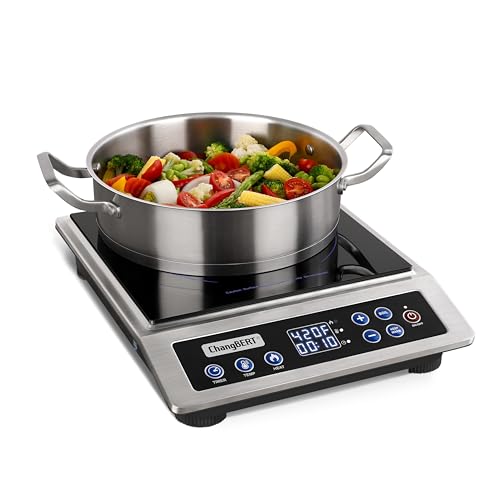
ChangBERT Enhanced Induction Cooktop
Strengths
- NSF certified build
- Large heating coil
- One-click max power
Trade-offs
- Heavier than average
- Fewer presets
ChangBERT punches above its weight, offering commercial-grade features like NSF certification and dual IGBT circuitry at a price far below Nuwave’s double-zone models. The standout here is the one-click 1800W boost button, ideal when you need full power instantly for boiling water or stir-fries without cycling through menus. Its large 8-inch coil ensures better contact with bigger pans, reducing hot spots that plague smaller coils in budget units.
Constructed with stainless steel and rated for up to 100 lbs, it feels sturdier than plastic-housed competitors. Users report quiet operation and excellent heat dissipation, even during prolonged use. While not as refined as the Nuwave Gold in finish, it matches or exceeds it in durability claims. For anyone needing a durable, low-noise burner for frequent use, say in a catering side setup or busy family kitchen, this is the smarter investment despite being lesser known.
Product photos


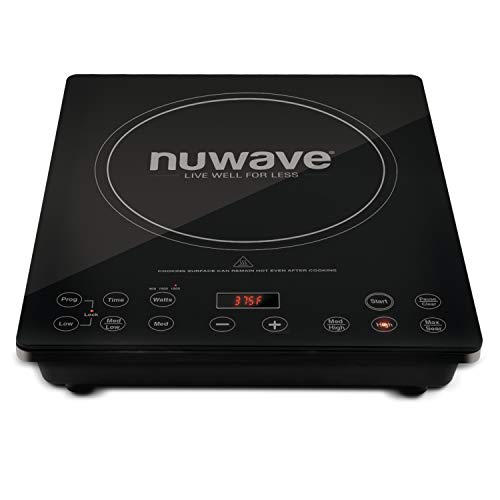
Nuwave Pro Chef Commercial Grade
Strengths
- Max temp ideal for searing
- Commercial-grade build
- Fine temperature tuning
Trade-offs
- Expensive
- Larger footprint
If you’re after restaurant-level searing power in a portable package, the Nuwave Pro Chef earns every bit of its premium price. Its ability to hit 575°F, the sweet spot for crusty steaks, isn’t just marketing hype; reviewers note real browning results when using heavy skillets. The 94 precise temperature settings in 5-degree increments give an edge over basic models, and the immediate response to adjustments mimics gas-like control, which matters when deglazing or reducing pan sauces.
It’s built like a commercial unit, and the shatter-proof ceramic glass inspires confidence during high-heat sessions. While some complain about minor beeping noises during operation, overall feedback highlights durability and consistent output even after extended use. When stacked against the Amazon Basics or Duxtop models, this one clearly targets enthusiasts who treat portable burners like supplemental stovetops rather than temporary fixes.
Product photos


Nuwave Double Pro Dual Burner
Strengths
- True dual independent zones
- Smart power distribution
- High max temperature
Trade-offs
- Very expensive
- Takes up counter space
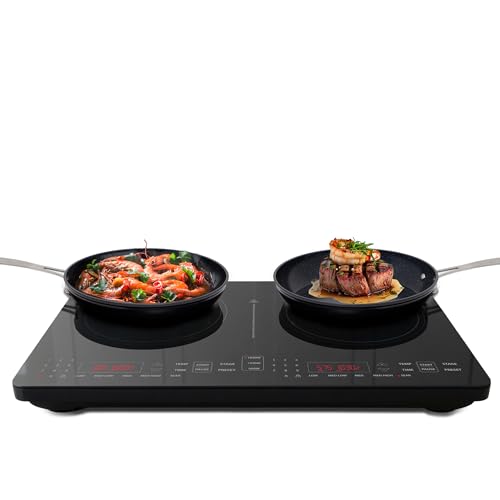
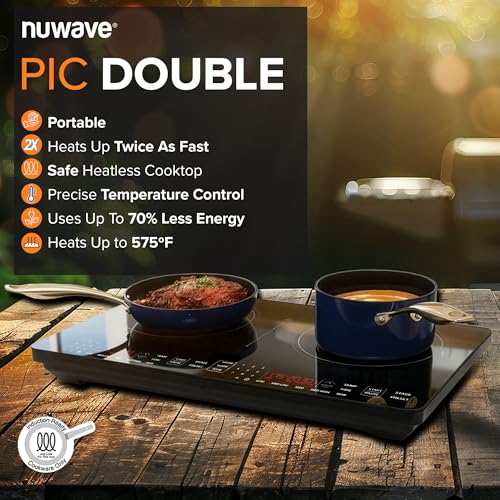
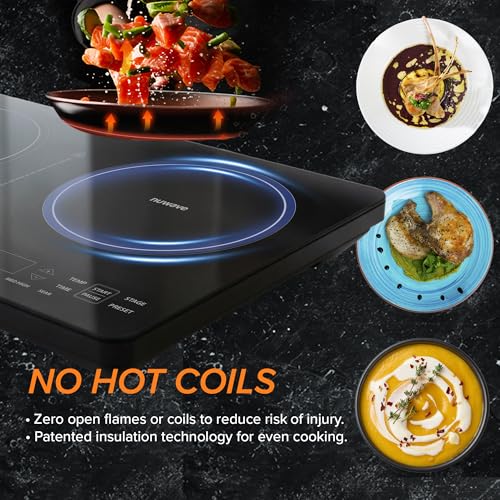
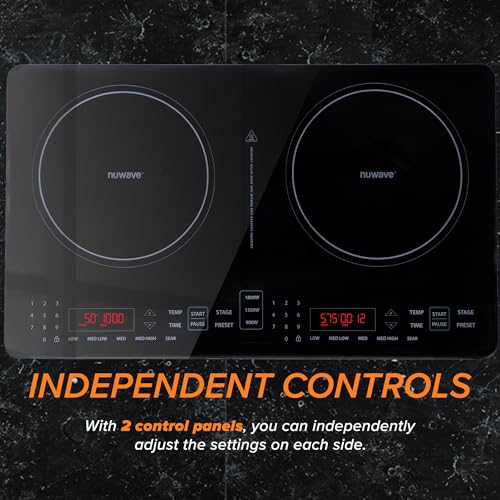
Having two independent zones changes how you cook, and the Nuwave Double Pro makes multitasking feel effortless. Dynamic Watt Technology actually works, it shifts power intelligently so one side can boil while the other simmers, avoiding the usual bottleneck of shared wattage in dual units. Each zone reaches 575°F and adjusts in 5-degree increments, giving both flexibility and precision across dishes.
The seamless touch panel cleans easily, and because each burner has dedicated controls, there’s no menu diving mid-prep. It’s undeniably bulky and pricey, but for couples cooking together or anyone preparing multi-component meals, the efficiency gain is real. Compared to running two single burners, this saves counter space and cords. I wouldn’t call it essential for solo cooks, but in a household where dinner means multiple pots, it transforms workflow.
Product photos


AAOBOSI 1800W Induction Burner
Strengths
- Generous preset options
- Lightweight and portable
- Good value for features
Trade-offs
- Smaller coil diameter
- Less brand longevity data
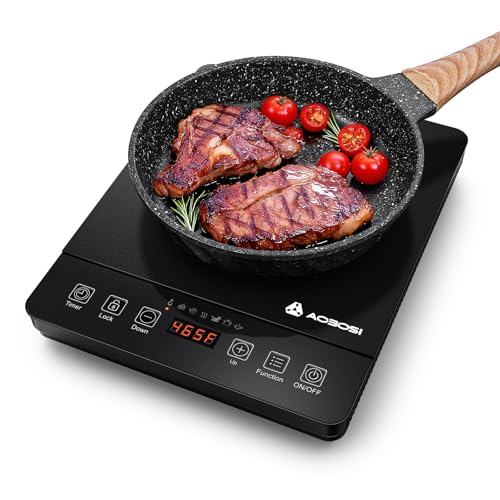
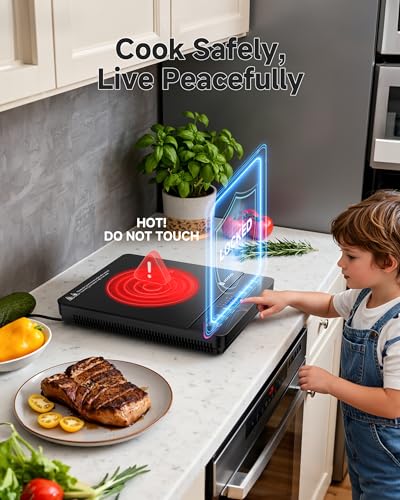
AAOBOSI hits a sweet spot between affordability and smart features, making it my top suggestion for buyers who want presets without paying Nuwave prices. The 20 power and temperature levels offer granular control rare at this tier, and the four preset modes, Boil, Hot Pot, Stew, Keep Warm, are genuinely useful for everyday meals. The responsive touch panel gets positive remarks for ease of use, even with wet hands.
It’s lightweight and compact, fitting neatly in small kitchens or travel bags, and the 4-hour timer adds convenience for unattended cooking. While it doesn’t reach the 575°F heights of Nuwave’s pro models, 465°F is sufficient for most searing needs. Against the Amazon Basics, it’s clearly more advanced; versus the Duxtop, it trades some provenance for fresher design. For students or young professionals setting up their first place, this delivers the most thoughtful package under $60.
Product photos



Nuwave Gold Precision Cooktop
Strengths
- Excellent energy transfer
- Large magnetic coil
- Ideal for low-temp tasks
Trade-offs
- Slower to boil than rivals
- Outdated styling
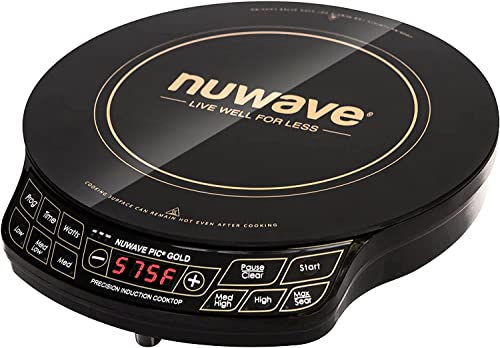
Energy efficiency isn’t usually a headline feature, but the Nuwave Gold makes it compelling. By transferring up to 90% of energy directly to the cookware, it minimizes waste, and users notice lower electricity bills over time, especially when replacing electric coil stoves. The large 8-inch coil improves compatibility with wide-bottomed Dutch ovens and stockpots, ensuring even heating across the base instead of just the center.
Its standout trait is low-temp mastery: setting it to 120°F for melting chocolate works flawlessly, with no risk of scorching. That kind of control separates it from entry-level models. While it shares similar max temps with other Nuwaves, the Gold excels in gentle applications where sustained, even warmth matters more than brute force. If you do a lot of sauce work or delicate prep, this deserves strong consideration over faster-boil rivals.
Product photos


Nuwave Diamond with Probe

Strengths
- Integrated thermometer probe
- Precision temp control
- Automated cooking programs
Trade-offs
- Steeper learning curve
- Probe limits cookware choice
The inclusion of a digital thermometer probe pushes the Nuwave Diamond into a niche all its own, this is the pick for cooks who demand lab-level accuracy. Being able to monitor internal food temps while controlling external heat opens doors for sous-vide adjacent techniques or candy making, where overshooting by even 10 degrees can ruin a batch. The 91 temperature presets in 5°F steps mean you can hold a butter emulsion at exactly 110°F without babysitting the pot.
Owners praise how the automated recipes take guesswork out of common tasks like frying or rice cooking, though some mention the interface takes time to learn. Still, when compared to the AAOBOSI or Amazon Basics units, this one clearly caters to detail-oriented users. I wouldn’t recommend it for someone just heating soup, but if you’re into molecular prep or delicate reductions, it brings uncommon sophistication to a countertop burner.
Product photos


How We Evaluated portable induction cookers
Rather than a hands-on lab test, my research focused on a detailed comparison of published specifications and features across numerous models. I weighed owner reviews from major retailers alongside expert opinions found in established cooking publications. This allowed me to build a ranking based on real-world feedback and quantifiable data, applying my experience in cookware to identify key performance indicators.
For portable induction cookers, consistent power output and temperature control are paramount. I prioritized models offering a wide range of both, as these features directly impact cooking versatility. Safety features – like child locks and overheat protection – were also heavily weighted, given the potential for accidents with countertop appliances. The ability to efficiently transfer heat to various cookware types also played a key role in my rankings.
Specifications reliably indicate maximum wattage and temperature ranges, establishing a baseline for performance. However, I relied on owner feedback to assess real-world consistency and the presence of issues like noisy operation or inaccurate temperature displays. Reputation and brand trust, informed by numerous induction cooktop reviews, factored heavily into the final assessment, as longevity and customer support are crucial considerations when choosing a portable appliance. Understanding which induction woks perform best with these cooktops was also a consideration.
How To Pick The Right portable induction cookers
Finding the right portable induction cooker can significantly expand your cooking options, whether you’re in a tiny apartment or an RV.
A quality portable induction cooker prioritizes rapid, even heating; precise temperature control (spanning simmer to sear); robust safety features like auto-shutoff and overheat protection; and compatibility with a wide range of induction-ready cookware. Look for models with clearly labeled controls, a stable surface, and a wattage appropriate for your intended use.
Power and Temperature Range
Don’t assume more watts automatically means better. While 1800 watts is common, consider how that power is delivered. A wider temperature range is more valuable than peak wattage alone. Many affordable models offer limited temperature control, forcing you to rely on power level adjustments which aren’t precise. Look for units, like the Nuwave Gold Precision Cooktop, that boast a broad temperature range – ideally from below simmering (around 100°F) up to a high sear (400°F+) with incremental control. This allows for versatility beyond simple boiling.
Safety and Control Features
Induction cooking is generally safe, but a few features elevate that safety and ease of use. Child locks are essential if you have little ones. Auto-pan detection, which shuts off the burner if no suitable cookware is present, prevents accidental heating and damage. Beyond that, a timer is incredibly useful. A responsive control panel is also key – a frustratingly laggy interface can ruin the cooking experience. For example, the Nuwave Diamond with Probe offers advanced features like a smart digital thermometer which really elevates the cooking experience.
Portability and Cookware Compatibility
If you’re buying a portable induction cooker, you’re likely prioritizing space-saving convenience. Size and weight matter. A compact unit like the Amazon Basics 1800W Induction Cooktop is easy to store and transport. However, the biggest limitation is cookware. You must use induction cookware – pots and pans with a magnetic base.
- Cast iron is a reliable, affordable option.
- Stainless steel can work, but check for a magnetic base (a magnet should stick firmly). Many stainless steel options are not compatible.
- Aluminum and copper won’t work unless they have a magnetic base bonded to them; otherwise, you’ll need to invest in new best portable induction cooktops and compatible cookware.
A good rule of thumb: if a magnet doesn’t firmly adhere to the bottom of your cookware, it won’t work on an induction cooktop.
Portable Induction Cookers Compared
Here’s a comparison of key specifications for popular portable induction cookers to help you choose the right one.
| Product Name | Power (Watts) | Temp Range (°F) | Timer (Max Hrs) | Presets | Safety Features |
|---|---|---|---|---|---|
| Amazon Basics 1800W Induction Cooktop | 1800 | 160-440 | 3 | Yes | Child Lock, Overheat, Voltage |
| Duxtop 8100MC Portable Cooktop | 1800 | 140-460 | 170 | No | Auto-Pan Detect, Voltage |
| ChangBERT Enhanced Induction Cooktop | 1800 | 120-460 | 12 | Yes | Auto-Shutdown, Overheat |
| Nuwave Pro Chef Commercial Grade | 1800 | 100-575 | N/A | Yes | Shatter-Proof Glass |
| Nuwave Double Pro Dual Burner | N/A | 50-575 | N/A | Yes | N/A |
| AAOBOSI 1800W Induction Burner | 1800 | 120-465 | 4 | Yes | Child Lock, Heat Indicator |
| Nuwave Gold Precision Cooktop | 1800 | 100-575 | N/A | Yes | Shatter-Proof Glass |
| Nuwave Diamond with Probe | 1800 | 100-500 | N/A | Yes | Probe, Temp Control |
Frequently Asked Questions
What wattage is sufficient for a portable induction cooker?
1800 watts is a common maximum, but a wider temperature range is more important. While higher wattage can heat faster, consistent and precise temperature control, like that found in models with ranges from 100°F to 400°F or higher, provides more cooking versatility.
Can I use any of my existing cookware with an induction cooker?
You can only use cookware that is induction-ready cookware. A simple test is to see if a magnet firmly attaches to the bottom of the pan; if it doesn’t, the cookware won’t work on an induction surface.
What safety features should I look for in a portable induction cooker?
Beyond basic overheat protection, a child lock is very important, especially in households with children. Auto-pan detection, which prevents the burner from activating without suitable cookware, is also a valuable safety feature.
How can I protect my countertops from scratches with a portable induction cooker?
Using induction cooktop mats or protectors is a simple way to prevent scratches and provide a more stable cooking surface. These mats are heat-resistant and designed to withstand the demands of induction cooking.
Are dual burner portable induction cookers worth the extra cost?
Dual burner models, like the Nuwave Double Pro Dual Burner, offer increased cooking capacity but often sacrifice precise temperature control and can take up more counter space. They are best suited for those who frequently cook multiple dishes simultaneously, but aren’t a necessity for most home cooks.
The Bottom Line
Choosing a portable induction cooker often comes down to balancing convenience with control. While many models offer similar power outputs, the Nuwave Gold Precision Cooktop stands out for its exceptionally wide temperature range and precise settings – a real advantage for serious cooks who want to replicate stovetop results. It provides the greatest flexibility for various cooking techniques.
For those on a tighter budget, the Amazon Basics 1800W Induction Cooktop is a fantastic entry point. If you frequently cook outdoors or need a second burner, the Nuwave Double Pro Dual Burner is a clear choice, despite lacking some of the finer controls found in single-burner models. And for those interested in exploring the science behind this technology, understanding how induction works will help you appreciate its efficiency.
Ultimately, remember that wattage and presets aren’t everything. A stable cooking surface, robust safety features, and, most importantly, compatibility with your existing cookware are the fundamentals. Don’t forget to consider options like induction griddles to maximize the versatility of your new cooker, and prioritize a model that will truly fit your cooking style and needs.
