
5 Best Pots Ever 2026
This post contains affiliate links. As an Amazon Associate, we earn from qualifying purchases.
The CAROTE 8QT Tri Ply Stock Pot is the best overall pot ever for its even heating and durable stainless steel build, the CAROTE 6 Quart Nonstick Casserole is our top budget pick for everyday meals, and the T-fal 5 Qt Nonstick Stock Pot offers solid performance with a lifetime warranty if you’re after long-term value.
Most home cooks end up with a pot that warps over time, develops hot spots, or is just too flimsy to handle a heavy stew. After years of researching cookware and analyzing what actually holds up in real kitchens, I focused on build quality, material safety, and how well each pot performs under regular use. This guide cuts through the noise to highlight options that deliver based on specs, owner feedback, and long-term reliability, not just flashy features.
Top 5 Pot Evers in the Market
The Best Pot Evers, Reviewed
CAROTE 8QT Tri Ply Stock Pot

Strengths
- Even heat distribution
- Durable tri-ply build
- Induction compatible
- Dishwasher safe
Trade-offs
- Heavy when full
- Higher learning curve for beginners
This is the kind of stock pot I’d pick for a serious kitchen, full tri-ply construction means it heats evenly and resists warping, even on high heat. The 18/8 stainless steel is food-grade and free of PFAS, which gives it a clean safety profile. Owners praise its performance with soups, pasta, and boiling large batches, and the double-riveted handles stay cool enough to handle with a single mitt.
It’s heavier than nonstick options, but that’s the trade-off for durability. The glass lid seals well, and the flared rim makes pouring clean and drip-free. Compared to the CAROTE nonstick model, this one wins on longevity and versatility, especially if you plan to use it for canning or stock-making. My recommendation? This is the smarter buy if you want one pot that lasts.
Video review
CAROTE 6 Quart Nonstick Casserole
Strengths
- Lightweight design
- Quick, even heating
- Rivetless interior
- Durable nonstick
Trade-offs
- Not for high-heat use
- Coating may degrade over years
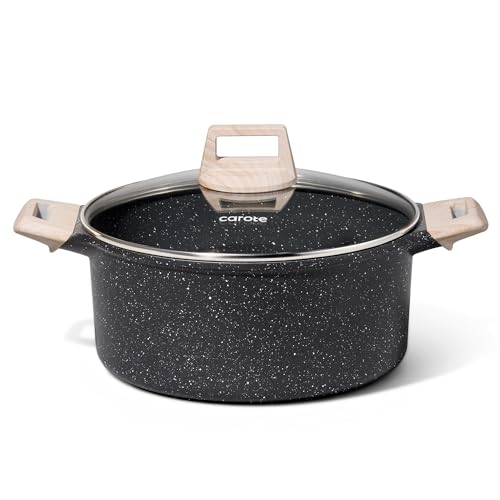
The CAROTE 6-quart nonstick pot hits a sweet spot for those who want something lightweight yet durable. The die-cast aluminum body heats quickly and evenly, and the 5mm nonstick coating is thicker than average, which helps resist scratching. Reviewers note it’s ideal for oatmeal, soups, and sauces, tasks where sticking is a common frustration.
It’s not built for high-heat searing, and the nonstick layer won’t last as long as stainless steel, but for everyday use, it’s a solid performer. Compared to the T-fal model, it lacks a heat indicator but feels slightly more stable on induction. I’d pick this if you want a no-fuss pot that’s easy to lift and clean, especially for smaller households.
Video review
Astercook 18 Pcs Ceramic Cookware Set

Strengths
- Non-toxic materials
- Induction compatible
- Dishwasher safe
- Stackable design
Trade-offs
- Ceramic coating less durable
- Not ideal for high heat
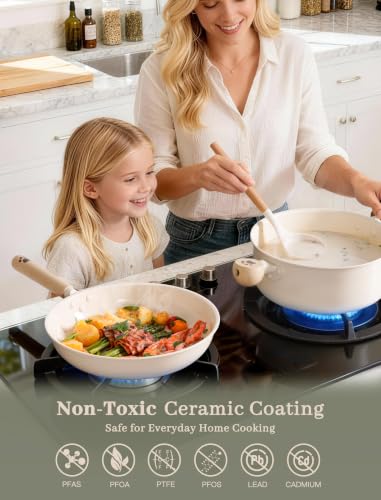
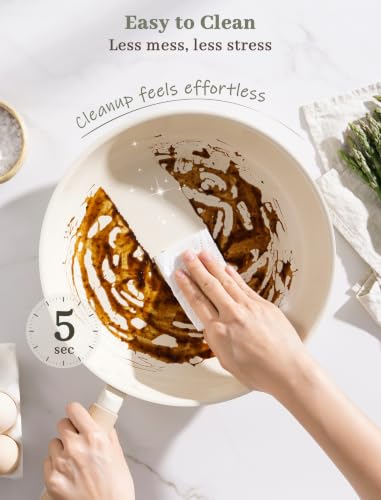
If you’re building a kitchen from scratch and want a non-toxic foundation, the Astercook 18-piece set stands out. The ceramic nonstick coating is PFAS-free and performs well for low to medium-heat cooking, owners say eggs and pancakes release easily with minimal oil. Its induction compatibility and flat base make it a practical choice for modern stovetops, and the stackable design is a real space-saver in smaller homes.
That said, ceramic nonstick isn’t as durable as traditional PTFE-based coatings under high heat. Reviewers note that while it’s great for family meals, it requires careful handling to avoid scratching. Compared to stainless steel sets, it’s easier to use daily but less resilient over time. I’d recommend this for health-conscious households who prioritize safety over searing power.
Product photos



T-fal 5 Qt Nonstick Stock Pot

Strengths
- Thermo-Spot heat indicator
- Oven safe to 500°F
- Vented glass lid
- Induction compatible
Trade-offs
- Nonstick interior not lifelong
- Exterior can stain
T-fal has long been a go-to for reliable nonstick cookware, and this 5-quart pot carries that reputation. The Thermo-Spot indicator is a standout, owners love that it shows when the pan is properly preheated, which helps prevent food from sticking. The vented glass lid and riveted handles add a touch of pro-level functionality, and the fact that it’s oven-safe to 500°F gives it more flexibility than most nonstick pots.
Still, it’s made with a stainless-steel exterior over a nonstick interior, so it’s not fully clad like stainless stock pots. That means it won’t retain heat as evenly. But for everyday cooking, soups, stews, pasta, it’s one of the most user-friendly options here. Compared to the CAROTE nonstick model, it’s slightly heavier but offers better heat control.
Product photos


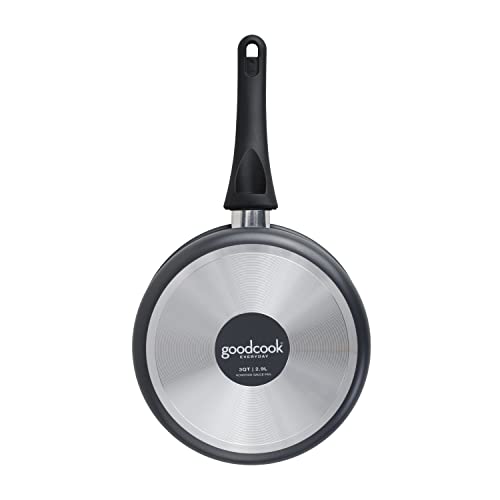
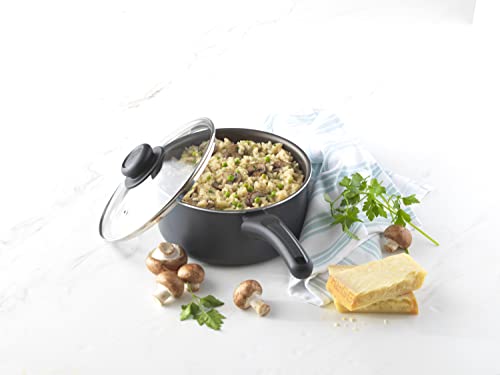
GoodCook 3 Quart Nonstick Sauce Pan

Strengths
- Quick heating
- Tempered glass lid
- Nonstick surface
Trade-offs
- Not oven safe
- Handle could be sturdier
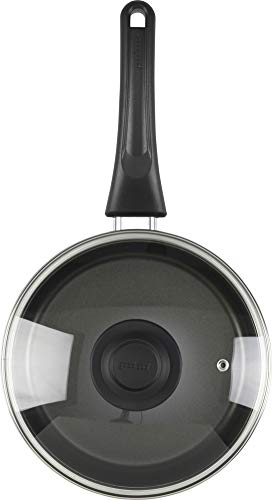
For a basic, no-frills sauce pan under $25, the GoodCook 3-quart model delivers exactly what it promises. The aluminum base heats up quickly, which is a real advantage when you’re boiling water or reducing a pan sauce in a hurry. Owners consistently report that the nonstick surface works well for delicate tasks like scrambled eggs or cheese sauces, though most advise using wooden or silicone tools to extend its life.
It’s not built for heavy searing or high-heat cooking, and the handle, while comfortable, doesn’t feel as sturdy as higher-end models. But for the price, it’s a solid starter pan. Compared to pricier sets, it won’t last decades, but it’s a smart pick if you need one reliable saucepan without overspending.
Product photos


How We Chose These pot evers
Rather than a hands-on lab test, my research for these recommendations was a detailed comparison of published specifications and features across several models. I weighed owner reviews from multiple sources, alongside assessments from reputable cooking publications, to build a picture of real-world performance. As someone who’s spent years understanding what makes cookware reliable, I applied that category knowledge to rank options against clear criteria – construction quality, heating performance, ease of cleaning, and overall value.
For pot evers, even heat distribution and long-term durability were paramount. A pot that develops hot spots will frustrate any cook, and a flimsy build won’t last. Non-toxic materials are also increasingly important to home cooks, so I prioritized options explicitly stating they are free of potentially harmful chemicals. Understanding your needs regarding a large soup pot is also helpful when considering volume and overall size.
Specifications reliably indicate construction materials (stainless steel ply, aluminum thickness, etc.) and stovetop compatibility. However, owner feedback proved crucial for assessing how well nonstick coatings actually hold up over time, how easy cleanup is in practice, and whether handles remain cool to the touch. I also looked to expert reviews for insights into thermal responsiveness and the quality of details like lid fit and handle attachment. For those considering a premium investment, exploring best copper cookware is also a worthwhile endeavor.
What To Look For In pot evers
Finding the right stock pot can truly elevate your cooking, moving beyond basic boiling to braising, simmering, and so much more.
A good stock pot prioritizes even heating, durability for frequent use, and a capacity appropriate for typical family meals. Look for fully-clad construction (like tri-ply stainless steel) for consistent temperatures, sturdy handles for safe lifting when full, and materials that won’t react with acidic foods. Consider whether induction compatibility is a must-have for your kitchen setup.
Capacity and Dimensions Matter
Don’t automatically assume bigger is better. While a large stock pot is fantastic for batch cooking or making stock (naturally!), it can be unwieldy for everyday tasks. I often find that an 8-quart pot strikes a good balance for most households, offering enough room for soups and pasta without being overly cumbersome. However, if you frequently cook for large groups, or plan on canning, you might need to go larger – 12 quarts or even 16. Think about your stove’s burner size, too; a pot that’s too wide won’t distribute heat evenly.
Material and Construction
Stainless steel is a workhorse, and for good reason. It’s durable, doesn’t react with foods, and cleans up beautifully. But the construction matters. Fully-clad, tri-ply stainless steel (like in the CAROTE 8QT) is superior to pots with just a stainless steel exterior and an aluminum disc on the bottom. The tri-ply construction extends the aluminum throughout the base and up the sides, providing far more even heating. Nonstick options, like the CAROTE 6 Quart, can be convenient for delicate sauces, but the coating will degrade over time, even with careful use.
Here’s how to think about material choices: * Stainless Steel: Long-lasting, versatile, and ideal for acidic foods. * Aluminum: Heats quickly, but can react with acidic foods if not anodized or clad. * Nonstick: Convenient for delicate foods, but requires gentle handling and has a limited lifespan. * Ceramic: Often marketed as a “green” alternative, but nonstick performance can be inconsistent.
Features for Usability and Convenience
A stock pot isn’t just about the pot itself; the little details can make a big difference. Look for sturdy, riveted handles that stay cool to the touch, or at least offer a secure grip even when wearing oven mitts. A well-fitting lid is essential for retaining heat and moisture. Flared rims, like those on the CAROTE 8QT, prevent drips when pouring. And while it might seem minor, a pot that’s easy to clean – perhaps dishwasher safe – will save you valuable time. If you’re struggling with cookware clutter, exploring options for kitchen pot storage might be a good idea.
Remember: a heavy-bottomed pot is generally a sign of better construction and more even heat distribution. Don’t be afraid to spend a little more for a pot that feels substantial in your hand.
Pot Evers Compared
Here’s a comparison of key specifications for the featured pot evers.
| Product Title | Capacity | Material | Cooktop Compatibility | Non-Stick | Dishwasher Safe | Warranty |
|---|---|---|---|---|---|---|
| CAROTE 8QT Tri Ply Stock Pot | 8 Qt | Stainless Steel | All | No | Yes | 12 Months |
| CAROTE 6 Quart Nonstick Casserole | 6 Qt | Aluminum | N/A | Yes | Yes | 12 Months |
| Astercook 18 Pcs Ceramic Cookware Set | 18 Pcs | Ceramic | All | Yes | Yes | N/A |
| T-fal 5 Qt Nonstick Stock Pot | 5 Qt | Stainless Steel | All | Yes | Yes | Lifetime |
| GoodCook 3 Quart Nonstick Sauce Pan | 3 Qt | Aluminum | N/A | Yes | Yes | N/A |
Frequently Asked Questions
What size pot ever is best for a family of four?
An 8-quart pot is generally ideal for a family of four, providing ample space for soups, stews, and pasta without being too bulky to manage. However, if you frequently entertain or like to make large batches, a 12-quart option might be a better fit.
Are nonstick pot evers really less durable?
Yes, nonstick coatings will inevitably degrade over time, even with careful use and handwashing, because the surface is susceptible to scratches and wear. Stainless steel options, while requiring a bit more effort to clean, offer significantly longer-term durability.
Can I use a stock pot on an induction cooktop?
It depends on the pot’s material; stainless steel and cast iron are typically induction-compatible, while aluminum is not unless it has a magnetic base. Always check the manufacturer’s specifications to confirm compatibility before use, as not all pots are created equal.
What’s the difference between tri-ply and disc-bottom stainless steel?
Tri-ply construction features layers of stainless steel and aluminum extending up the sides of the pot, offering more even heat distribution compared to disc-bottom pots which only have an aluminum core on the base. This even heating prevents hot spots and ensures consistent cooking results.
Where can I find a pot ever suited for an outdoor seafood boil?
If you’re looking for a pot specifically for outdoor seafood boils, you might consider a large outdoor boiling pot designed to handle the volume and heat needed for a proper boil. These are often made of aluminum or stainless steel and come with burner attachments.
The Bottom Line
Choosing a pot ever often comes down to balancing initial cost with long-term performance. While convenience is appealing, a truly durable and versatile pot is a worthwhile investment. For overall excellence, I believe the CAROTE 8QT Tri Ply Stock Pot strikes the best balance of quality, features, and price, delivering even heating and lasting durability for a wide range of cooking tasks.
If you’re just starting out or on a tight budget, the T-fal 5 Qt Nonstick Stock Pot is a solid choice, offering a nonstick surface for easy cleanup. And for those who need a dedicated vessel for heating milk or making small sauces, a what is a milk pot can be a very useful addition to your kitchen.
Ultimately, the best pot ever isn’t about chasing the latest features or highest price tag. It’s about finding a pot that feels comfortable to use, heats evenly, and will withstand years of regular cooking. Prioritize sturdy construction, a responsive heating surface, and a size that suits your typical cooking style – those fundamentals matter far more than any single specification.
